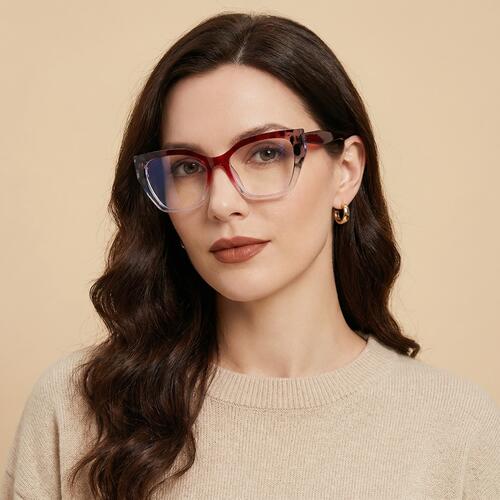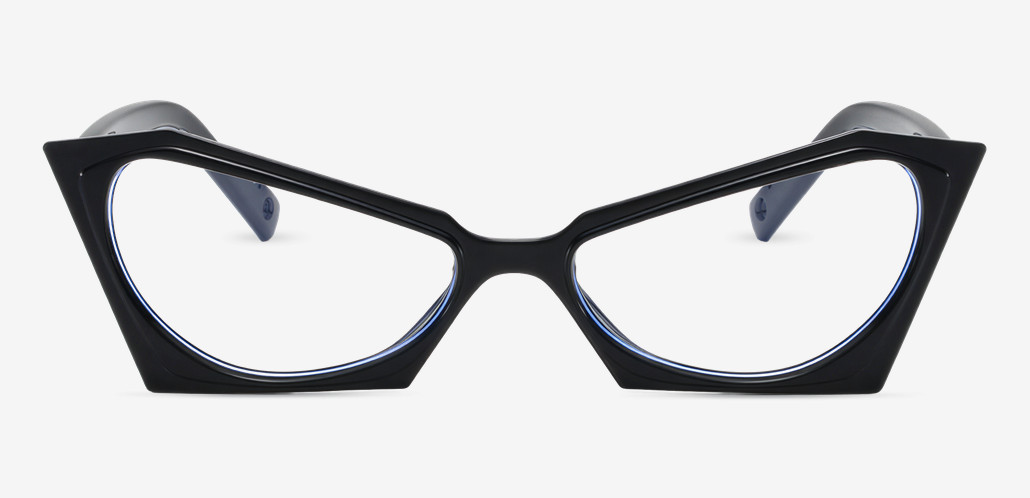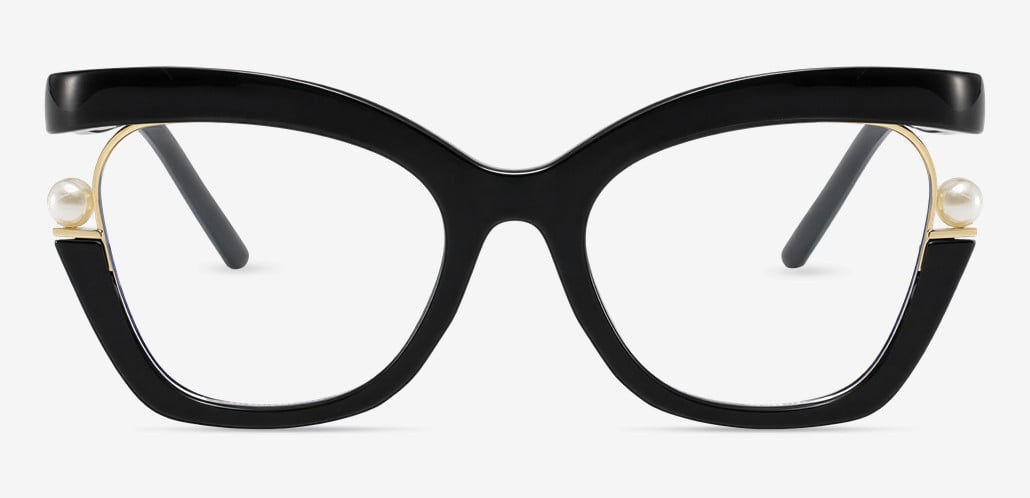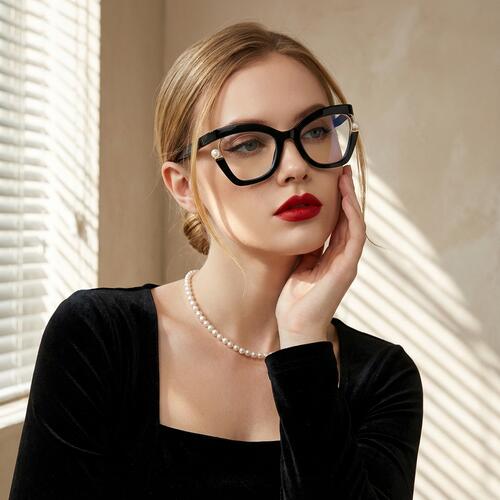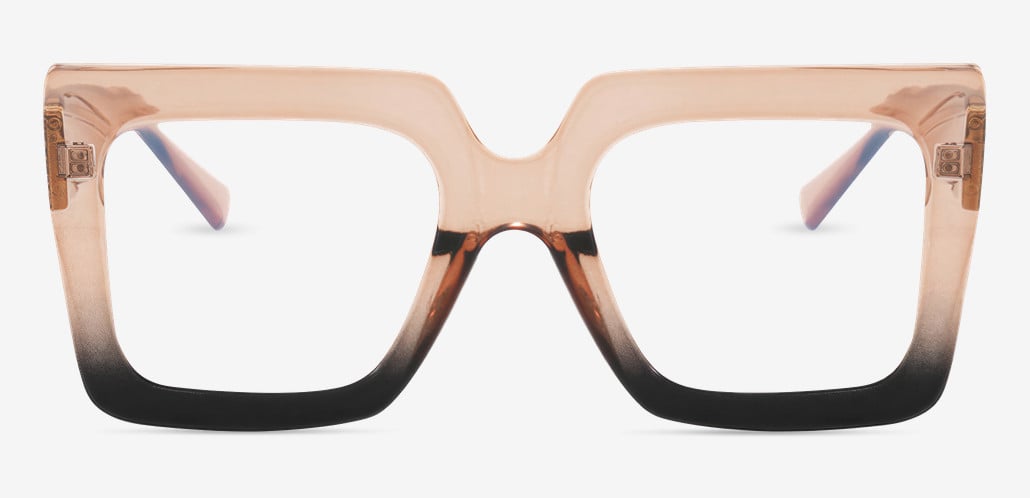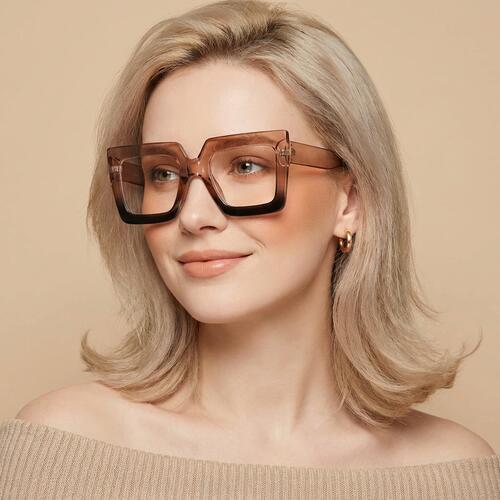

The Frame Color That Reads Expensive Without Looking Like It's Trying
If you've ever noticed that some people just look polished in their glasses — like the frame was chosen for them rather than picked off a wall — there's a decent chance you were looking at a champagne frame.
Champagne is the eyewear equivalent of stealth-wealth dressing. It doesn't shout the way black acetate does, it doesn't sparkle the way bright gold does, and it doesn't need a logo to look considered. It just works. Editors at Vogue, Harper's Bazaar, and The Cut have all flagged warm metallic neutrals as one of the most enduring frame trends of the past three years, and the rise of "quiet luxury" dressing has pushed champagne frames from "interesting alternative" into "the safe answer for the woman who wears Khaite, The Row, or Toteme."
That's what the fashion press says. Here's what an actual optician will tell you, which is the kind of advice this guide is built on: champagne frames are some of the most flattering, most forgiving, and most professionally appropriate glasses on the market — if you know how to pick the right warmth and shape for your face. About 60% of customers who try one on for the first time end up keeping it, which is the highest "first-pair conversion" rate of any color in the Aoolia eyewear collection.
This guide walks you through every decision that matters: who champagne flatters, how it differs from gold and rose gold, what shapes hold up best in this finish, and what you should realistically pay in 2026.
1. What "Champagne" Actually Means in Eyewear
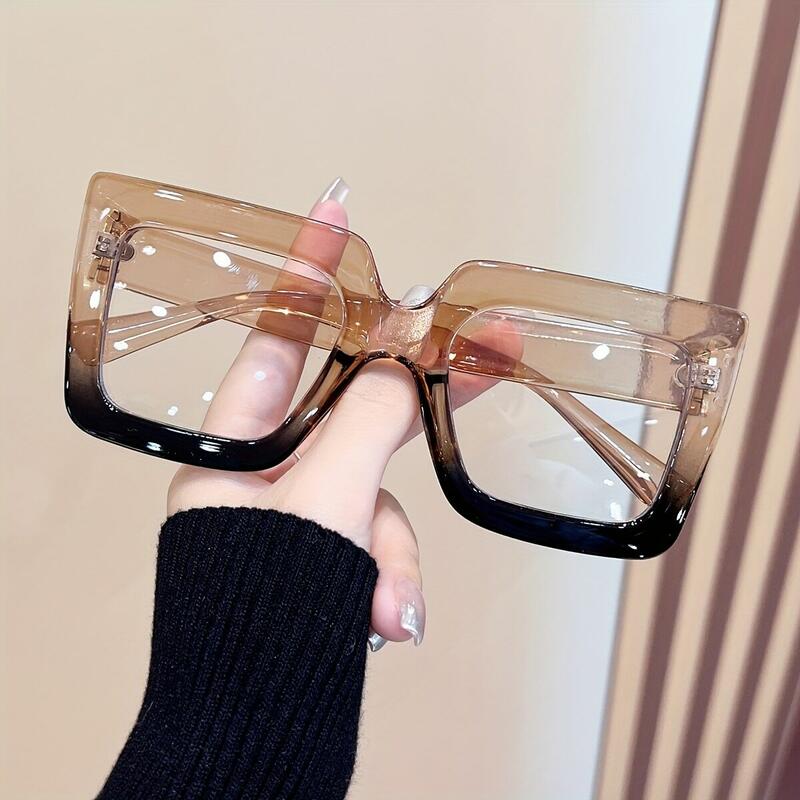
"Champagne" isn't one color — it's a family. Across the Aoolia champagne collection, you'll see at least three distinct interpretations of the finish, and knowing the difference is the single biggest predictor of whether you'll love your purchase:
Champagne acetate (warm beige with golden undertones). A translucent or semi-opaque finish that picks up gold light. This is the most-bought version because it flatters the widest range of skin tones. Think of it as a lighter, warmer cousin of honey tortoise.
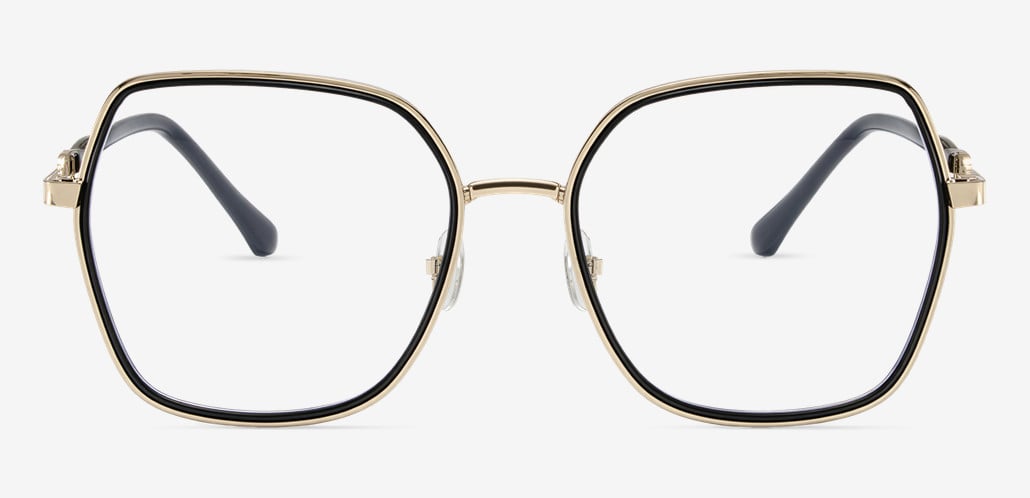
Champagne metal (pale gold with a satin or matte finish). Used in aviators, browline frames, and metal cat-eyes. Less yellow than true gold, less cool than silver. Reads minimal and modern.
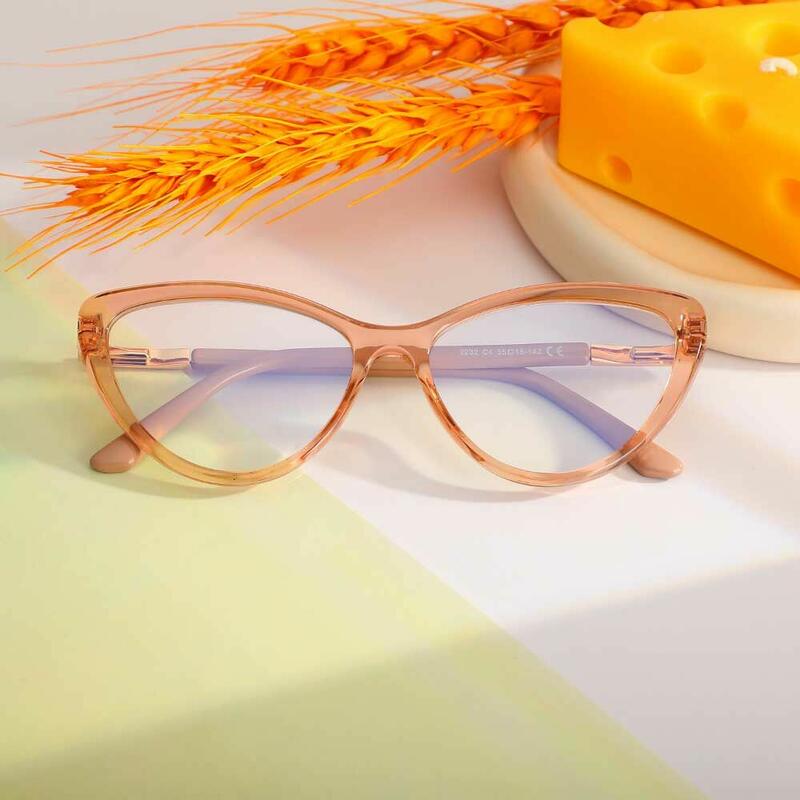
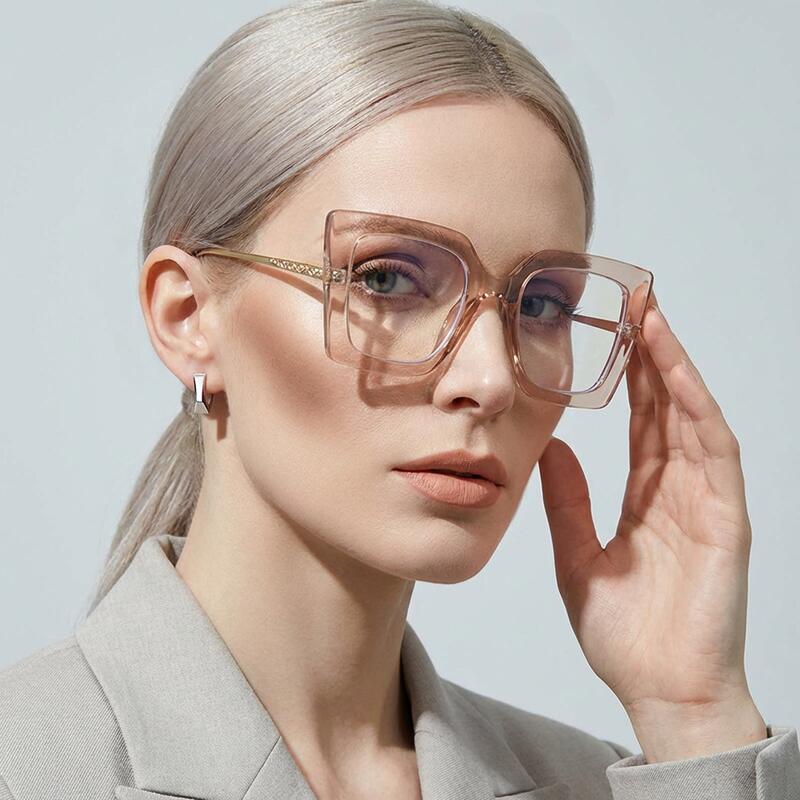
Champagne over clear (clear acetate with a champagne wash). The most contemporary interpretation — a transparent frame with a warm gold-tinted overlay. Looks light on the face but still has presence. The Mignon Square and Brook Cat-Eye are good examples.
When most people picture "champagne glasses," they're picturing the first one. But if your wardrobe is heavy on cool tones (black, navy, white, gray), the second metal version may serve you better — it has just enough warmth to flatter without clashing.
2. Who Champagne Glasses Flatter Most
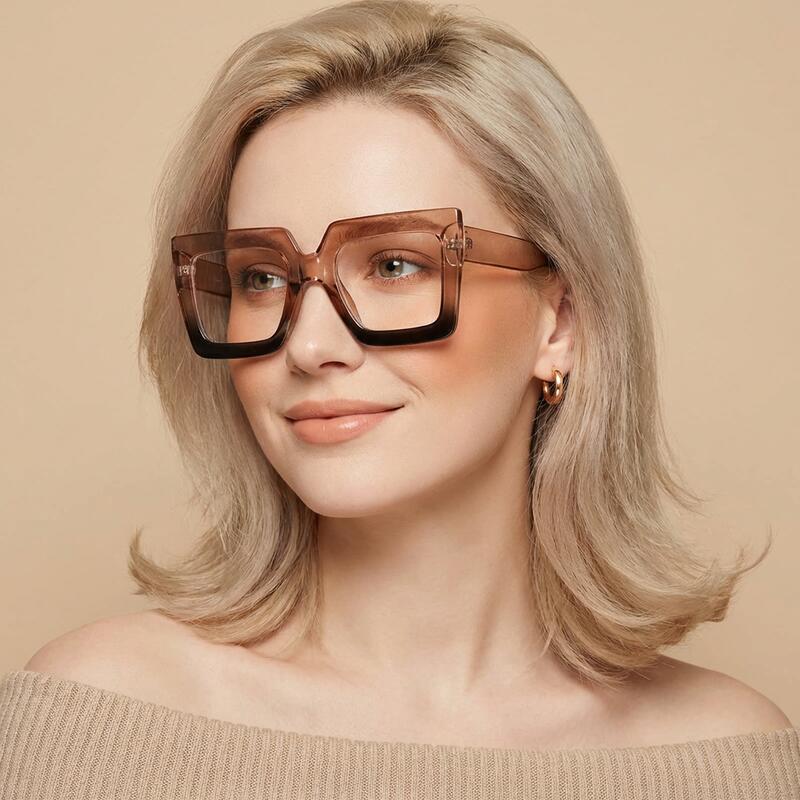
The honest answer — based on a decade of fitting and a lot of returned frames — is that champagne is the most universally flattering "warm" frame color, but it's not literally for everyone. Here's how to tell whether it's for you:
Skin undertone (the deciding factor)
Hold a piece of plain white paper next to a piece of cream or ivory paper near your jawline in natural light:
Cream/ivory looks better → warm undertones → champagne is excellent. You'll get a glowing effect because the frame echoes the gold tones already in your skin.
White looks better → cool undertones → champagne can still work, but lean toward the cooler "champagne metal" version. A warm acetate champagne next to cool skin can sometimes look slightly muddy.
Both look equal → neutral undertones → you can wear any version of champagne. Lucky you.
If you can wear gold jewelry without it looking off, you can wear champagne acetate. If you stick to silver and platinum, choose champagne metal or skip champagne altogether for a cooler neutral like silver or pale gunmetal.
Hair color
Blonde, golden brown, auburn, warm gray: Champagne acetate is exceptionally flattering — the frame and your hair are in the same color family.
Black, ash brown, cool gray, platinum: Stick with champagne metal or champagne-over-clear. Solid champagne acetate can compete with cool hair instead of complementing it.
Red: Champagne acetate is one of the best frame colors you can wear. The warm tones harmonize and intensify the red without overwhelming it.
Eye color
Brown, hazel, amber: Champagne intensifies the gold flecks in your iris — a noticeable "your eyes look more striking" effect.
Green: Champagne brings out the warm gold notes in green eyes especially well.
Blue, gray: Champagne creates a soft contrast that's pleasant but less dramatic. Still wearable; just less of a wow moment.
Age
I'm including this because it gets searched a lot: champagne is one of the most age-flexible frame colors there is. It reads modern on women in their 20s, professional in 30s and 40s, and elegant in 50s and beyond. Unlike trendy colors (translucent pink, neon, etc.), it doesn't carry a generational signal.
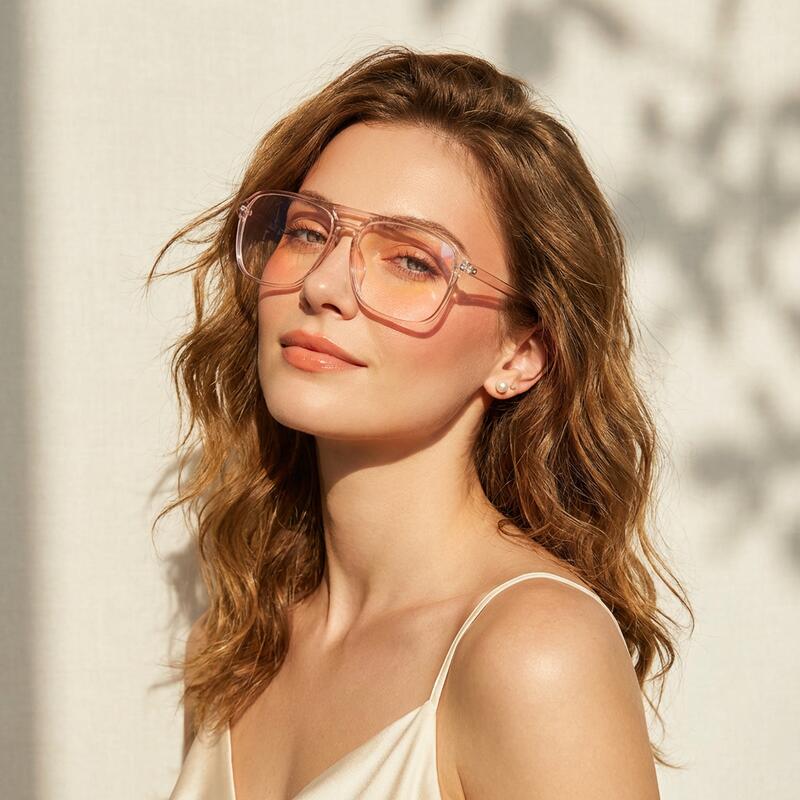
3. Champagne vs. Gold vs. Rose Gold vs. Tortoise
This is the comparison that actually drives most champagne purchases. Here's the optician's quick decode:
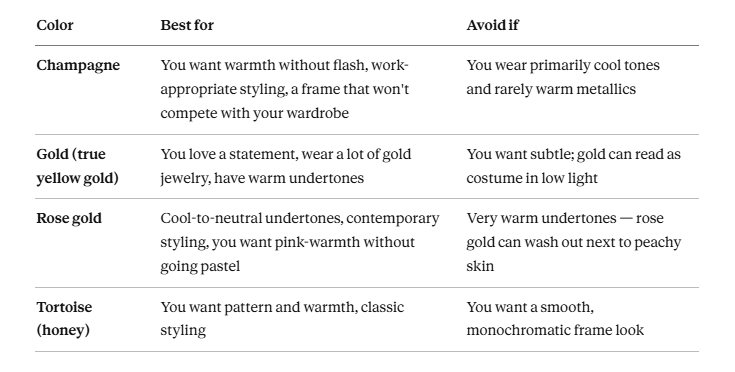
The simplest rule: if you've considered gold but worried it would be too much, champagne is the answer. It gives you 80% of the warmth at 20% of the visual volume.
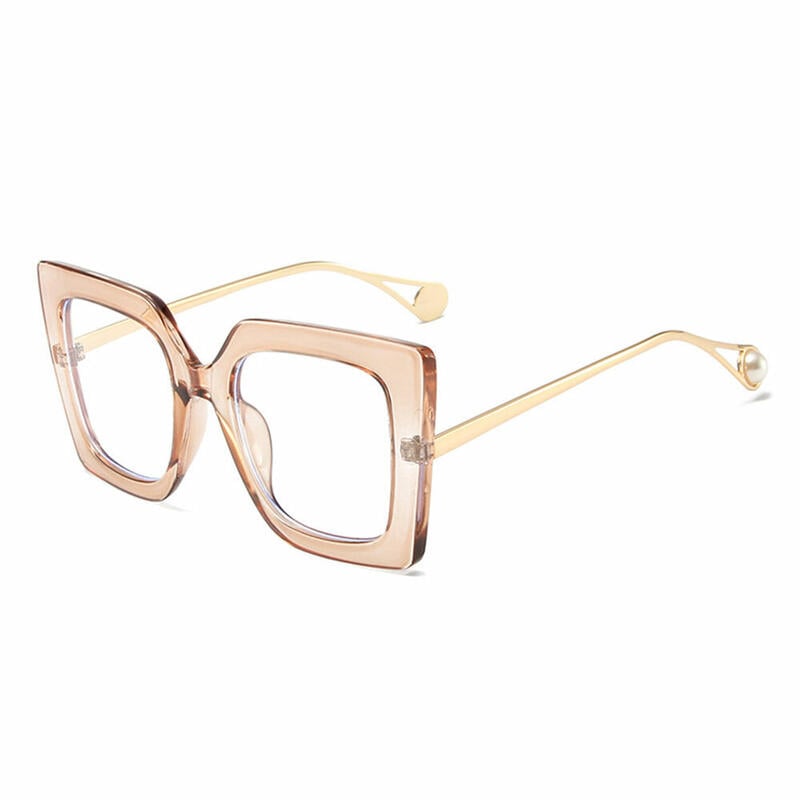
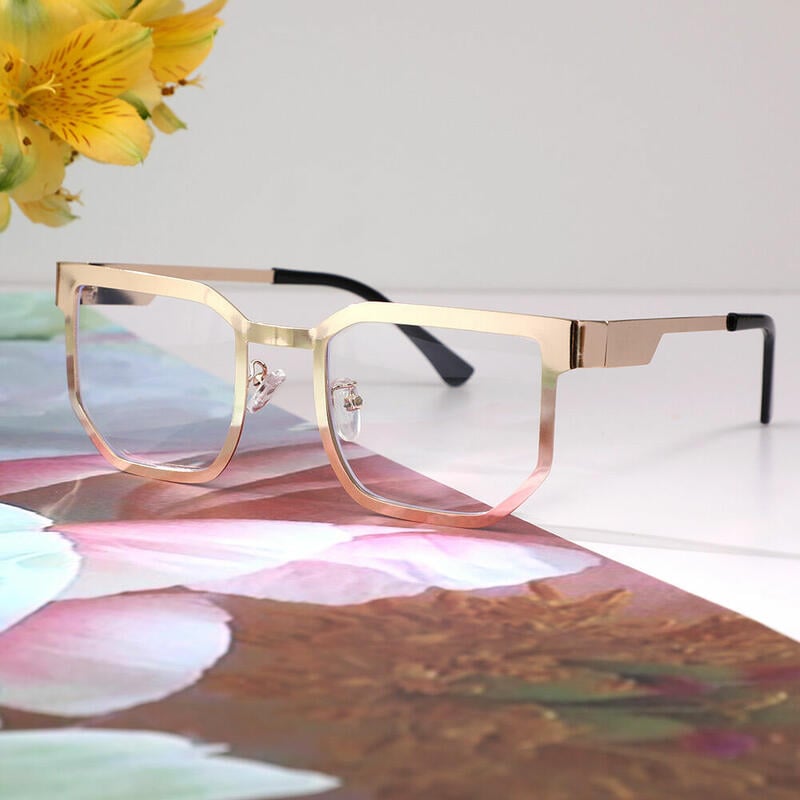
4. Frame Shapes That Work Best in Champagne
Not every shape benefits equally from a champagne finish. Some shapes were practically designed for it.
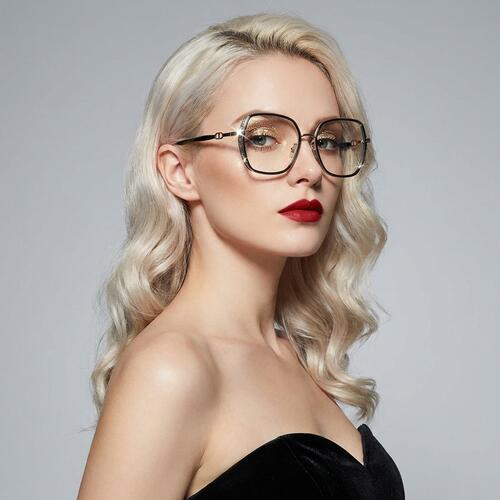
Square (the strongest category). Champagne softens the sharp lines of square frames in a way that few other colors do. The Candice, Macadam, Fay, and Mignon square styles in the Aoolia collection all demonstrate this — the warm tone reads professional without feeling severe. If you want one champagne frame for everyday and work, start here.
Cat-eye. A natural pairing. Cat-eye shapes already carry a vintage-feminine signal, and champagne amplifies it without going full retro. The Zara Cat-Eye and Brook Cat-Eye are popular for a reason.
Rectangle. Best for long or oval faces. The Carliy Rectangle is a good example — slightly wider lenses balanced by warm tone create a modern, minimal look that photographs well.
Aviator. This is where champagne metal shines (literally). The Truda Aviator gives you the iconic shape with less brashness than gold. Excellent for men who want a metallic frame that doesn't read flashy.
Geometric. Riskier — geometric shapes are already statement pieces, and adding warmth can tip them into "look at me." If you wear geometric frames, choose champagne over clear (lighter visual weight) rather than solid champagne acetate.
Browline. A modern, professional choice. The half-frame structure means less color on your face, which works well for people who want champagne as an accent rather than a focal point.
5. How to Style Champagne Frames
Most online frame guides stop at face shape. The real question — and the one I get asked most often by repeat customers — is how do I actually wear these with the rest of my outfit?
Jewelry pairing
Gold jewelry: Perfect match. Champagne frames sit in the same warm-metal family.
Silver jewelry: Surprisingly fine, especially with champagne metal frames. The contrast reads intentional rather than mismatched.
Mixed metals: Champagne is one of the few frame colors that genuinely works with mixed metals, because it's a hybrid color itself.
Pearls, opal, mother-of-pearl: Beautiful with champagne — the soft luminosity of both works in harmony.
Wardrobe colors that flatter most
The colors champagne loves: camel, cream, ivory, soft white, navy, forest green, burgundy, chocolate brown, warm grays, terracotta, dusty pink.
The colors champagne struggles with: bright cool blues, magenta, neon anything, true black-on-black-on-black with no warmth anywhere else. (You can absolutely wear black with champagne — just add one warm-toned accent like a tan bag or gold earrings.)
Makeup pairing
Champagne is a gift to anyone who wears warm-toned makeup. Bronzer, peach blush, copper or terracotta eyeshadow, nude-rose or coral lips — all of it sings next to a champagne frame. If you tend to wear cool-toned makeup (cool pinks, blue-reds, cool plums), the contrast can still work but feels more "intentional outfit" than effortless.
Lifestyle fit
Champagne frames are the best work-to-after-work color in eyewear, because they don't read as costume in either context. They're polished enough for a boardroom, soft enough for a date, and timeless enough for travel photos you'll still want to look at in five years.
6. Materials and How the Champagne Color Is Achieved
This is the part most product pages skip — and the part that determines whether your frames will still look champagne in two years.
Layered acetate (the premium method). Champagne color is built into the acetate by layering tinted sheets during manufacturing. The color is throughout the material, not painted on. If a corner gets scratched, the color underneath is the same. Most of Aoolia's mid-tier and designer-style champagne frames use this method.
TR90 with pigmented dye. A high-tech thermoplastic with the color mixed into the polymer. Lighter than acetate, more flexible, and the color is uniform throughout. Excellent for active lifestyles. The Zara Cat-Eye is a good example.
Metal with champagne plating (typically IP coating). Used on aviators, browlines, and metal-front frames. A high-quality IP (ion plating) coat is bonded to the metal at the molecular level — far more durable than electroplating, which can wear through at contact points within a year. Aoolia uses IP plating across all metal champagne frames.
Mixed material (acetate + metal). A champagne-acetate front with metal temples in a complementary tone. The Mignon Square is built this way. Good for people who break hinges easily.
Optician's note: When customers tell me their champagne frames "faded" or "turned silver," they almost always have lower-end electroplated metal frames, not IP-plated ones. The plating method matters more than the brand on the temple.
7. Prescription, Blue Light, and Lens Options
Champagne frames pair with every standard lens type, but a few things are worth knowing:
Single vision. Works in any champagne frame. For prescriptions stronger than -3.00, request high-index 1.67 or 1.74 lenses to keep the lens edge slim — this matters more in lighter-toned frames where a thick edge is more visible.
Progressive (multifocal). Best in deeper-lens shapes — square, rectangle, aviator. Avoid very small geometric or cat-eye frames; the progressive corridor needs vertical room.
Bifocal. Same rule — choose deeper lenses.
Blue light filter. The faint amber tint of blue-light lenses is virtually invisible in a champagne frame, because the warm tones harmonize with the frame color. This makes champagne one of the best frame colors for blue-light glasses cosmetically.
Photochromic / Transitions. Compatible, and they actually look natural in champagne frames because both the lens tint and frame color shift in warm tones.
Every prescription order at Aoolia is reviewed by an in-house optician before lenses are cut, so frame-shape and prescription mismatches are caught before they ship — not after.
8. How to Care for Champagne Frames
The basics are the same as any quality frame, with two champagne-specific notes.
Daily routine (30 seconds):
Rinse under lukewarm water.
Add one drop of plain dish soap (not antibacterial; not lotion-added).
Rub with fingertips — temples, bridge, lens surfaces, nose pads.
Rinse and dry with a microfiber cloth.
Champagne-specific cautions:
Avoid alcohol-based cleaners and hand sanitizer on metal champagne frames. Over time, alcohol can dull the IP coating.
Don't leave them in a hot car. Heat fades the warm tone in lower-quality plated metals faster than other colors.
Store in a hard case. Champagne acetate scratches at the same rate as any acetate, but scratches on a warm-toned frame are visually more obvious than on black.
A microfiber cloth and a hard case are included with every Aoolia order.
9. What Champagne Glasses Should Cost in 2026
The Aoolia champagne collection sits in the $9.95-$24.95 range for most styles, putting it firmly in the entry-to-mid band. The same in-house optician review happens regardless of frame price.
If you've never tried a champagne frame, my honest advice is to start in the $15-$25 range, wear it for two weeks, and then size up to a designer-style frame if you find yourself reaching for it daily. Champagne is the kind of color you either fall in love with or wear three times — better to find out at $20 than $200.
Why Buy from Aoolia
Practical reasons, no fluff:
1.In-house optician review on every prescription before lenses are cut. Catches mismatches between frame shape and Rx strength.
2.Free virtual try-on on every product page — see the frame on your face before ordering, which matters more for warm-toned colors than dark ones.
3.14-day free trial on prescription orders.
4.Honest pricing — no surprise lens fees at checkout.
5.Multiple champagne shapes in stock — square, cat-eye, rectangle, aviator, geometric, browline.
Frequently Asked Questions
Are champagne glasses the same as gold glasses?
No. Champagne is a softer, paler, more neutral version of gold — closer to warm beige with golden undertones than true yellow gold. Champagne reads professional and minimal; true gold reads as more of a statement. If gold feels like too much for daily wear, champagne is the answer.
Do champagne glasses look professional?
Yes — champagne is one of the most workplace-appropriate frame colors available. It's warm enough to feel approachable, neutral enough to read polished, and never carries the costume risk that bright colors or oversized statement frames sometimes do. It's a particularly good choice for client-facing roles, interviews, and on-camera work.
Will champagne frames fade or turn silver over time?
Quality layered acetate and IP-plated metal champagne frames hold their color for years of normal wear. Color loss is typically caused by lower-grade electroplated metal (not IP-plated), or by exposure to alcohol-based cleaners and prolonged direct sun. Aoolia's champagne metal frames use IP plating, which is bonded at the molecular level and significantly more durable than standard electroplating.
What skin tones look best in champagne glasses?
Warm and neutral undertones (skin that suits gold jewelry) get the most flattering result from champagne acetate frames. Cool undertones can still wear champagne, but should choose the cooler "champagne metal" or "champagne over clear" finishes rather than warm acetate. The frame is forgiving — it works for more skin tones than gold or rose gold do.
Can I get champagne glasses with my prescription?
Yes. Every champagne frame in the Aoolia collection supports single vision, progressive, bifocal, and blue light lens configurations. Prescriptions stronger than -3.00 should opt for high-index 1.67 or 1.74 lenses to keep the lens edge slim, which looks cleaner in lighter-toned frames.
Are champagne glasses good for men?
Yes — particularly in aviator, browline, and rectangle shapes. Champagne reads warmer than silver or gunmetal but more refined than full gold, which is why it's become a go-to for men who want a metallic frame without it feeling flashy. The Truda Aviator and similar styles are popular men's picks.
Do champagne glasses work for older women?
Excellent — arguably better than for any other age group. Champagne softens the face, doesn't draw attention to under-eye tones, and pairs beautifully with warm gray or silver hair. It's also an extremely flattering frame color for fine lines, because warm tones reflect light onto the skin rather than absorbing it the way black does.
What's the difference between champagne, beige, and nude eyeglasses?
Champagne has a clear gold or warm-metallic undertone — think pale gold reflecting in cream. Beige is flatter and more matte; nude tends to be pinker or more skin-toned. Of the three, champagne photographs best because the gold notes catch light.
Are champagne glasses still trendy in 2026?
Champagne has moved past trend status — it's now considered a permanent neutral in eyewear, similar to how camel is a permanent neutral in clothing. The "quiet luxury" wave has reinforced its position rather than dating it.
How much should I spend on a first pair of champagne glasses?
$15-$25 for a first pair is the sensible range. If you wear them daily for two weeks and reach for them often, upgrade to a $40-$60 designer-style frame next. Spending $200+ on a first champagne frame is reasonable only if you already know you love the color.
Ready to Try a Pair?
Browse the full champagne glasses collection on Aoolia — square, cat-eye, rectangle, aviator, browline, and geometric shapes for both men and women, every prescription reviewed by an in-house optician before it ships, and free virtual try-on on every product page.
If you're new to champagne frames, the safest first pair is a square or cat-eye in champagne acetate — these two combinations have the highest customer-keep rate in our collection.