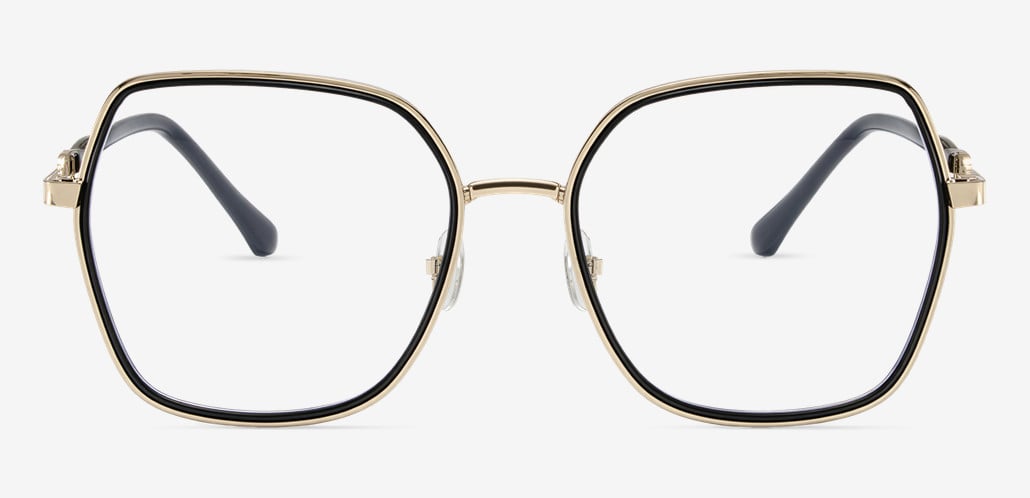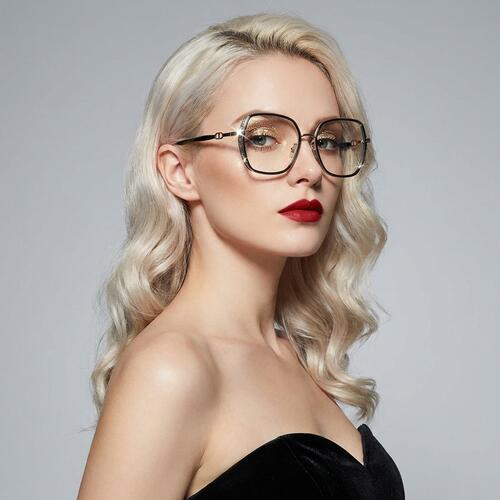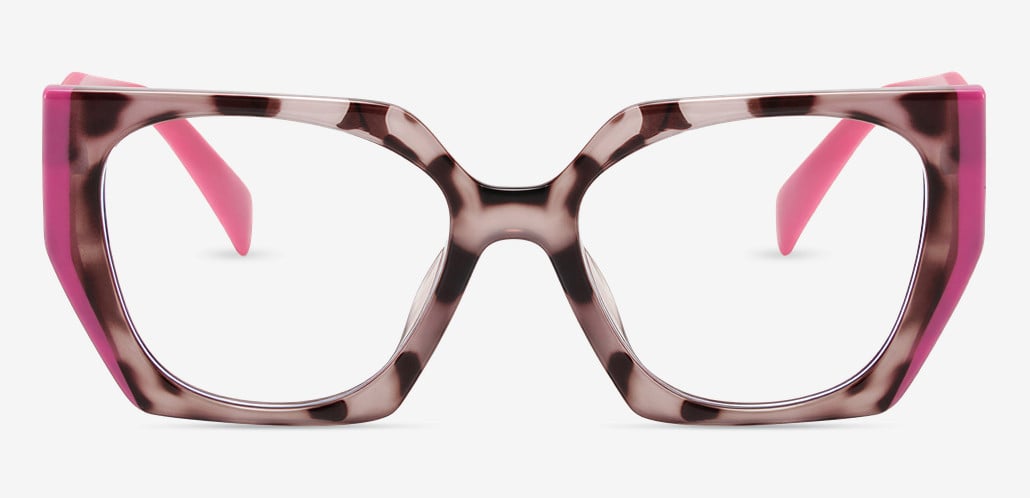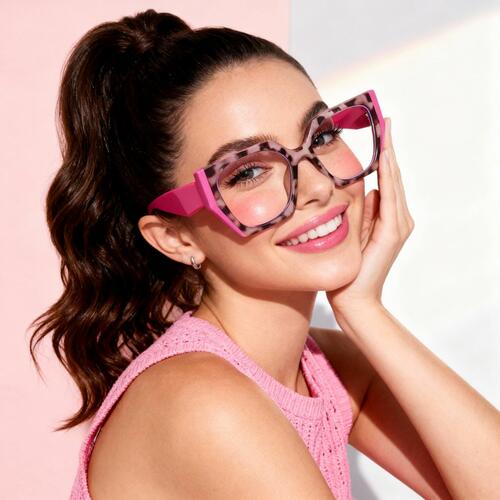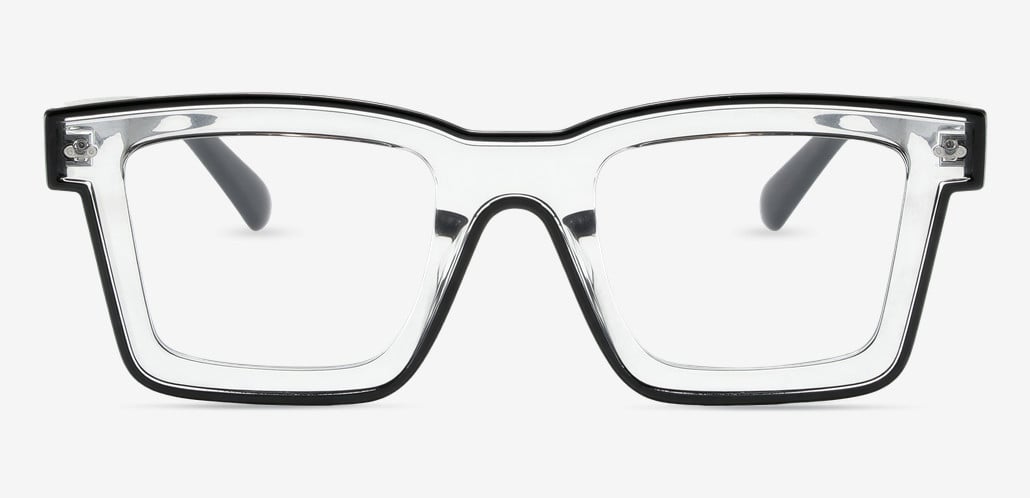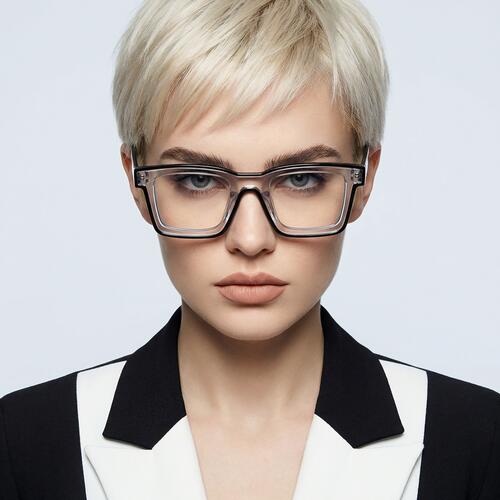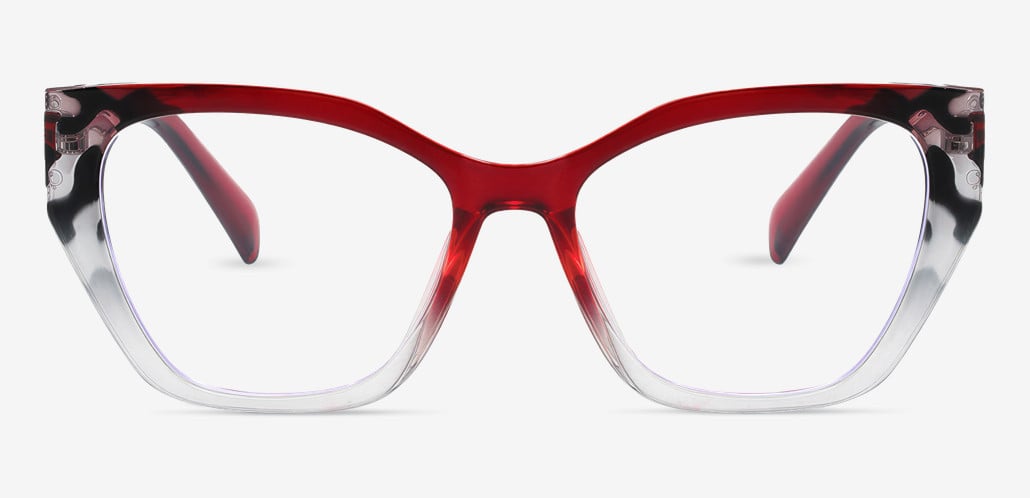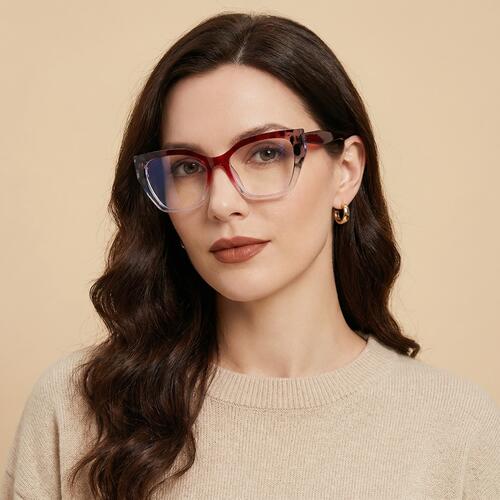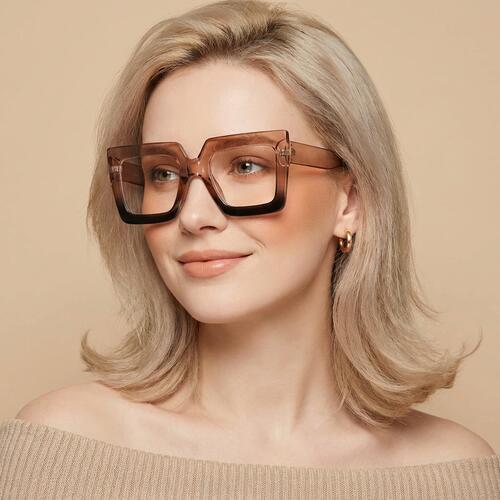

The Color That Either Makes You or Misses You
Red glasses divide opinion harder than any other frame color in eyewear. Half the people who look at a red frame on the wall think "that's my next pair." The other half think "I could never pull that off."
After more than a decade of fittings, here's what I can tell you with confidence: the people in the second group are almost always wrong about themselves — but they're often right about the specific frame they were looking at. Red isn't one color. It's at least six distinct shades that flatter completely different people in completely different ways. A wine-red frame on someone with cool undertones will look stunning; a cherry-red frame on the same face will look loud and unsettled.
This guide is built to fix that. It's the same conversation I'd have with a friend who walked into an optical shop and pointed at a red frame asking "is this me?" — what to look for, what to avoid, which shade flatters which face, and when red is genuinely a bad idea (it occasionally is).
Red eyewear has held a meaningful share of new frame purchases since 2018 according to The Vision Council's VisionWatch tracking, and editorial coverage in Vogue, Elle, and The Cut has consistently flagged red as one of the eyewear colors that comes back every season rather than cycling out. It's not a trend. It's a permanent option that more people should consider.
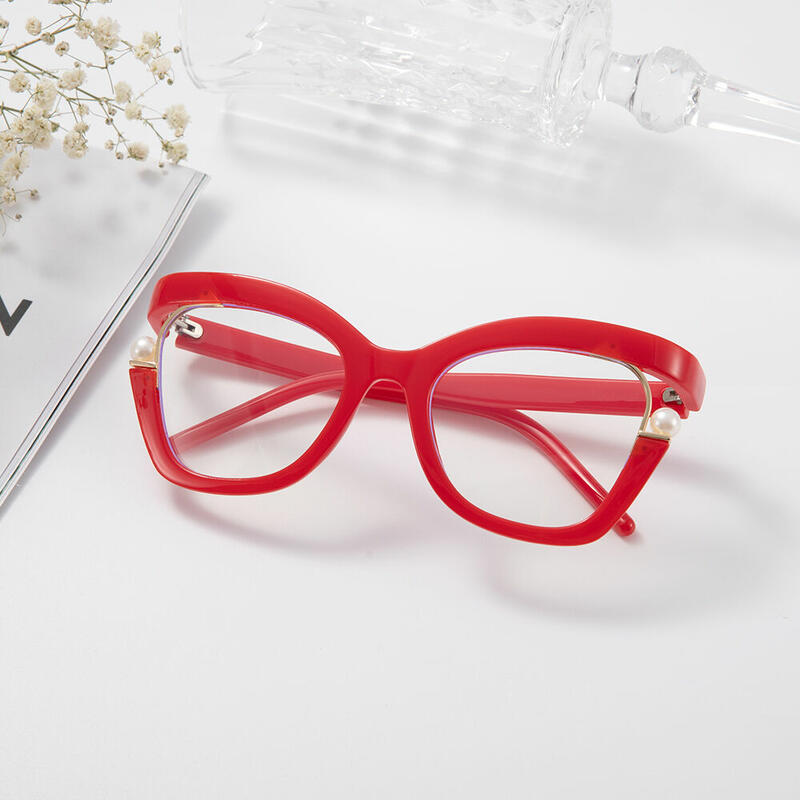
1. The Six Shades of Red — and Which Is for You
This is the single most important section in this guide. If you take nothing else away, take this: "red glasses" describes at least six different frame colors, and choosing the wrong shade for your coloring is the #1 reason people decide red "isn't for them."
Cherry red (bright, slightly cool). The classic "red glasses" most people picture. High visual impact, reads playful and confident. Best on cool-to-neutral undertones, dark hair, and people who already wear bold accessories.
Burgundy (deep, slightly blue-toned). The safest red. Dignified, professional, and the most workplace-friendly version. Burgundy reads almost like a dark neutral — closer to navy than to red in terms of how often you can wear it. If you're hesitant about red, start here.
Wine red (medium-dark, balanced). A step lighter than burgundy with more genuine red character. Works for almost everyone and is often the "compromise" shade for someone who wants more presence than burgundy but less drama than cherry.
Brick red (warm, rust-leaning). The most flattering red for warm undertones. Reads earthy, refined, and quietly artistic. If you wear a lot of camel, terracotta, olive, or rust in your wardrobe, brick red is almost guaranteed to work.
Coral red (warm, pink-orange leaning). The most playful red. Works beautifully on warm undertones with dark hair, but can wash out paler complexions. Best as a fun second pair rather than a daily driver.
Crimson / ruby (deep, jewel-toned). Saturated, rich, and slightly cool. The most "elegant" red. Excellent for evening wear, photography, and anyone with strong contrast between hair, skin, and eyes (dark hair, fair skin, dark eyes — the classic "high contrast" face).
The decision tree, simplified:
Want red but worried it's too much → burgundy
Want red and don't care if it's too much → cherry
Warm undertones, want red → brick or coral
Cool undertones, want red → wine or crimson
Need it to work in a corporate office → burgundy
Need it to photograph well for content/camera work → cherry or crimson

2. Who Red Glasses Flatter Most
Setting shade aside for a moment — some red glasses suit virtually every face. But certain combinations of skin, hair, and eye color make red genuinely transformative.
Skin undertone
Cool undertones (you suit silver jewelry, white shirts, true black): Burgundy, wine, crimson, and cherry are excellent. Avoid coral and brick — both can look orange against cool skin.
Warm undertones (you suit gold jewelry, cream shirts, camel): Brick, coral, and warm cherry are exceptional. Burgundy can occasionally look slightly heavy but generally works.
Neutral undertones: Almost every red works. Choose by mood.
Deep/rich skin tones: Red glasses are particularly striking — the contrast is dramatic. Crimson, wine, and bright cherry all photograph beautifully on deeper complexions.
Hair color
Dark hair (black, dark brown): Almost any red works. The contrast is built in.
Medium brown, auburn, red: Brick, wine, and burgundy harmonize beautifully. Avoid cherry on natural red hair — the two reds can compete.
Blonde (warm or cool): Cherry and crimson stand out dramatically. Burgundy can occasionally look severe; balance it with warm makeup.
Gray or silver: Red glasses are one of the most flattering frame colors for gray hair. The contrast adds vitality. Burgundy and wine are particularly elegant choices.
Eye color
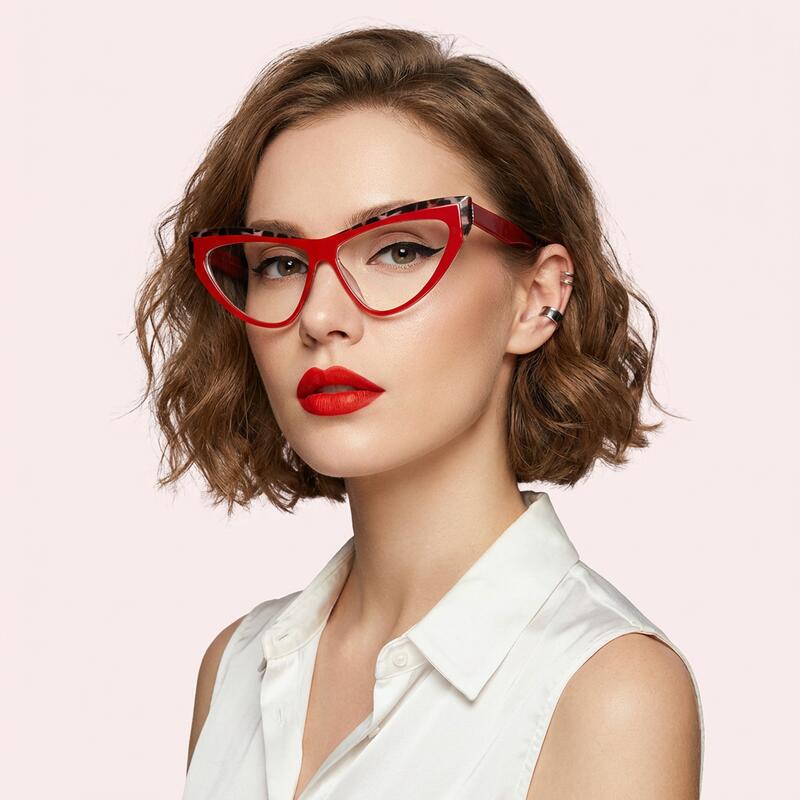
Green or hazel: Red is the literal opposite of green on the color wheel — meaning red glasses make green eyes look more vivid. This is the single most flattering pairing in eyewear color theory.
Blue: Red creates striking, intentional contrast. Best with burgundy or wine for subtlety, cherry for impact.
Brown: Warm reds (brick, coral) harmonize; cool reds (burgundy, wine) contrast — both work.
Personality fit
I'm including this because color choice is personality choice. Red glasses don't work on people who want to disappear in a room, and they're not supposed to. If your honest reaction to the idea of being looked at is "no thanks," red probably isn't your color — and that's fine. There are 12 other frame colors on the Aoolia site.

3. Are Red Glasses Too Much? The Workplace Question
This is the most-Googled question about red glasses, so it deserves a real answer.
The honest answer: it depends entirely on the shade and your industry.
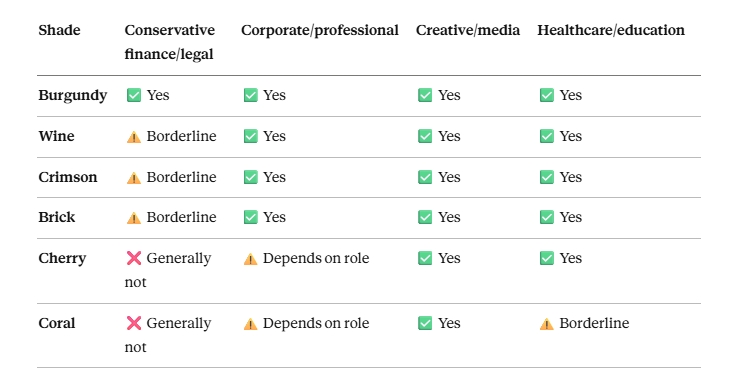
Rules of thumb:
1.If you'd wear a burgundy tie or a wine-colored blouse to work, you can wear a burgundy or wine frame.
2.Match the saturation of your red frame to the saturation of your wardrobe. If you wear mostly neutrals, choose a deep red. If you already wear color, you can go brighter.
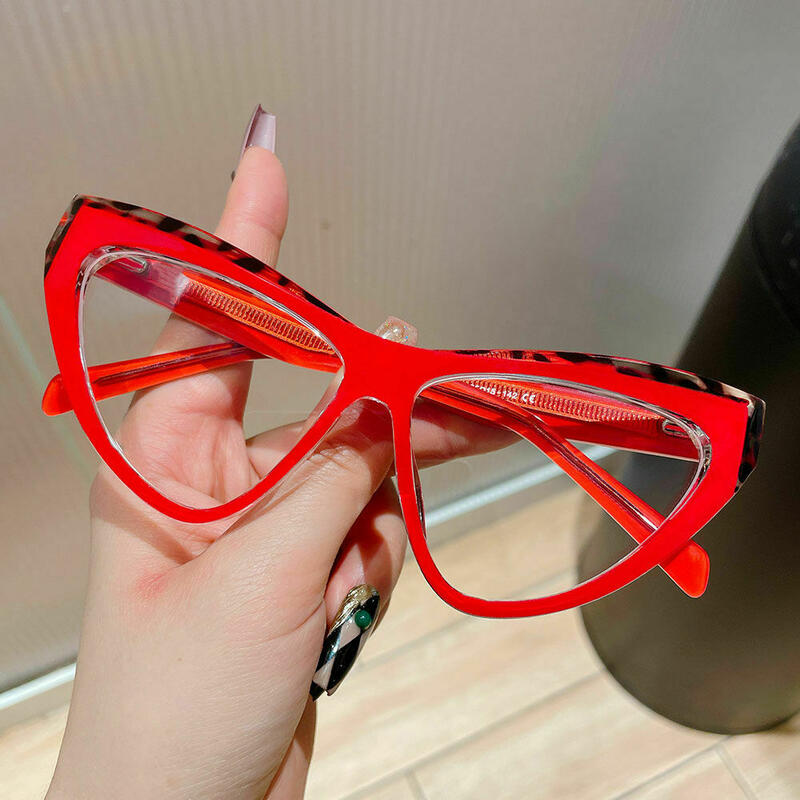
3.The shape of the frame matters as much as the color. A subtle rectangular burgundy frame reads professional; the same color in an oversized cat-eye reads bolder.
4.Red glasses in healthcare and education are universally accepted — they're often actively appreciated by patients and students, who read them as approachable rather than intimidating.
The "red glasses are unprofessional" assumption is honestly a generation old. In 2026 client-facing offices, the people wearing red frames are usually mid-to-senior. Junior staff still tend toward black and tortoise because they're less sure of themselves — not because red is the wrong choice.
4. Frame Shapes That Work Best in Red
Not every shape carries red equally well.
Cat-eye (the strongest match). Red and cat-eye are practically purpose-built for each other. The upswept corners and bold color combine without either feeling like overkill. The Kristin Cat-Eye on the Aoolia site is a popular example. If you want one red frame, start here.
Square. A modern, polished choice. Square frames in burgundy or wine read intelligent and intentional — particularly good for client-facing roles in any industry. Best in medium widths; oversized square + bright red can tip into costume.
Rectangle. The most workplace-safe red shape. Slim rectangular frames in burgundy or wine are functionally a "professional red" — they signal style without commitment.
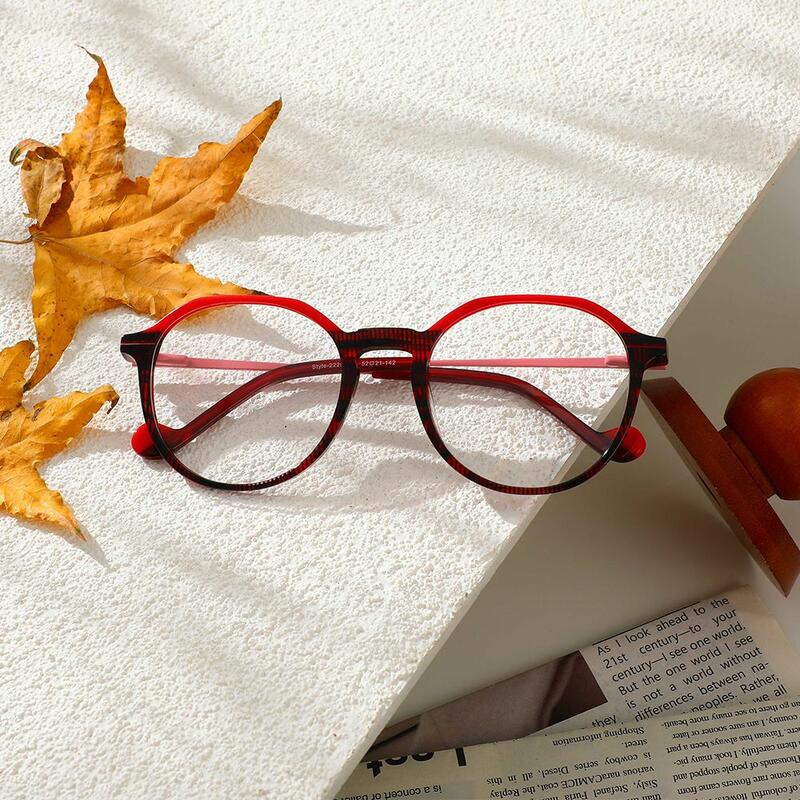
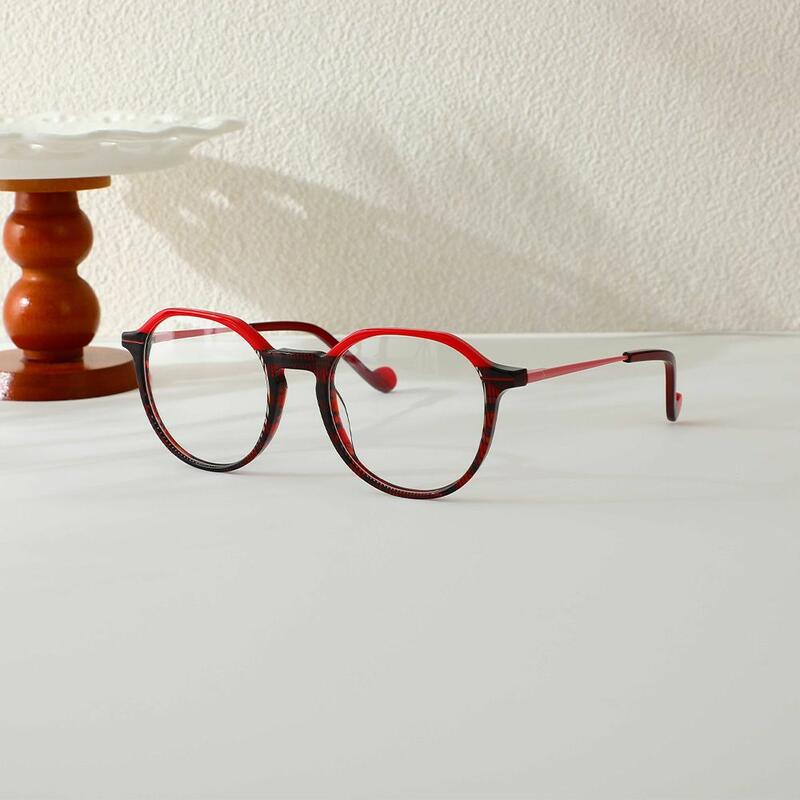
Round. Plays into a creative-professional aesthetic. Round red frames have iconic associations (writers, artists, architects) that can work for or against you depending on your field. Best in deeper reds.
Aviator. Less common in red because the metalwork competes with the color. When it works, it's striking — choose burgundy or brick rather than bright cherry.
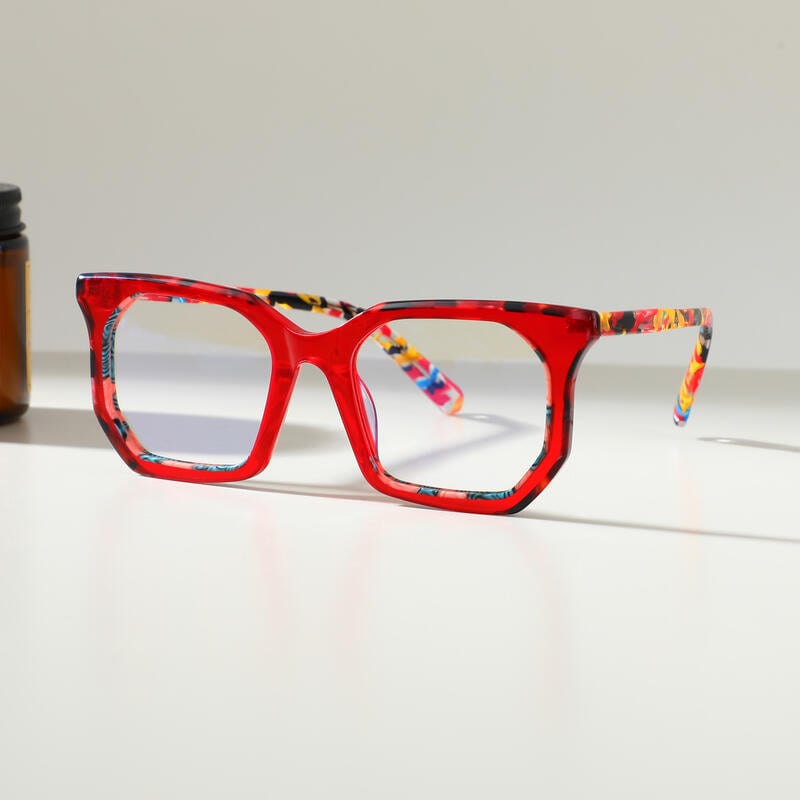
Geometric. Statement-on-statement. Geometric red frames are for confident wearers who want a second pair, not a daily one.
Oversized. High-risk, high-reward. Oversized red frames either look spectacular or like you're attending a costume party — and the difference is mostly about the rest of your outfit and styling.
5. How to Style Red Glasses Without Looking "Costume"
The "costume" trap is the single biggest fear with bold frames, and it's avoidable with a few rules.
What to wear with red glasses
Safe and chic:
Black, white, cream, gray, navy, denim — any neutral creates a clean backdrop that lets the frame be the focal point.
Camel, taupe, soft brown — warm neutrals that complement red without competing.
Forest green, deep olive — green is red's complement; both are elevated when paired carefully.
Riskier but rewarding:
Burgundy clothing with a burgundy frame (head-to-toe deep red) — looks intentional and editorial when done well.
Pink — only works if the pink and the red are clearly different families (dusty pink with cherry red, for example).
Avoid:
Multiple bright colors competing with the frame. Red glasses + bright yellow top + bold print scarf = costume.
Red on red unless the shades are very different (cherry frame + brick top can clash).
Heavy red lipstick with bright red glasses — pick one focal point.
Jewelry pairing
Silver, white gold, platinum: Excellent with cool reds (burgundy, wine, crimson).
Gold, rose gold: Excellent with warm reds (brick, coral, warm cherry).
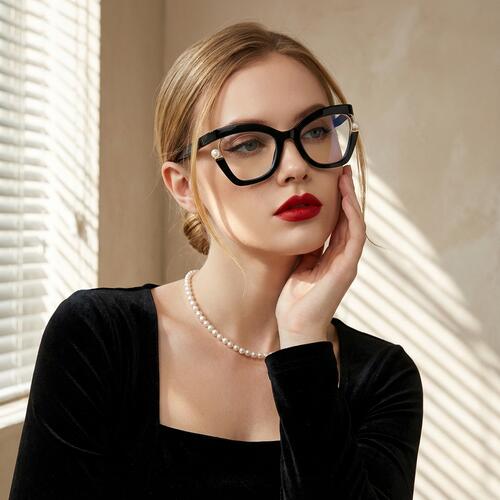
Pearls: Universally flattering with any red.
Statement jewelry: Tone it down. Red frames are already the statement.
Makeup pairing
With cool reds (burgundy, wine): Cool-toned makeup — berry lips, plum or smoky eyes, cool-pink blush.
With warm reds (brick, coral, cherry): Warm-toned makeup — terracotta or peach blush, copper or warm-brown eyeshadow, nude or coral lip.
Universal rule: Choose one focal point. If the glasses are the focal point, keep lips soft (nude, balm, soft pink). If you want a bold lip, soften the frame day to a deeper burgundy.

6. Red Glasses Through History (And Why That Matters)
A quick note on cultural authority, because it's the part most product pages skip:
Red glasses have been worn deliberately by some of the most visually iconic figures of the past 50 years — Iris Apfel (whose oversized frames in red and other bold colors became a defining personal aesthetic and the subject of a Metropolitan Museum exhibition), Sally Jessy Raphael (whose oversized red frames became culturally synonymous with her name), and countless editors, architects, and creative directors who chose red as a "tell" — a signal that the wearer was a person who made deliberate aesthetic choices.
This matters for one practical reason: when you wear red glasses, you're not making a fashion gamble. You're joining a well-established visual tradition. People who notice red glasses don't think "that's weird" — they think "that's intentional." Worn well, red frames signal taste, not trend-chasing.
7. Materials, Color Durability, and Care
Red is one of the more pigment-dependent frame colors, which means material quality matters more here than in neutrals.
Cellulose acetate (the premium method). Red is dyed into the acetate during manufacturing, often in layers for depth. The color is throughout the material, not painted on. Scratches don't expose a different color underneath. This is the version that ages best.
TR90 with pigmented dye. A flexible thermoplastic with red pigment mixed into the polymer. Lighter than acetate, more durable, and the color is uniform throughout. Excellent for daily wear.
Surface-coated metal or plastic. Used in lower-end frames. The red is painted onto the surface. Avoid if you can — surface coatings chip at the hinges and contact points within a year, exposing the base material.
Care notes specific to red frames:
Avoid alcohol-based cleaners and hand sanitizer. Over time, alcohol can dull deep red pigments faster than neutrals.
Don't store in direct sunlight. UV fades bright reds (especially cherry and coral) noticeably within 12-18 months of constant sun exposure. Use the included case.
Clean daily with lukewarm water and one drop of plain dish soap, rubbed with fingertips and dried with a microfiber cloth.
Never use acetone-based makeup removers near red acetate. They can literally pull pigment from the surface.
Optician's note: When customers report a red frame "faded to pink" or "turned orange," they almost always have a surface-coated frame, not a dyed-through one. The Aoolia red collection uses dyed-through acetate and TR90 — meaning the color won't fade unevenly.
8. Prescription, Blue Light, and Lens Options
Red frames pair with every standard lens type. A few things worth knowing:
Single vision. Works in any red frame. For prescriptions stronger than -3.00, request high-index 1.67 or 1.74 lenses to keep the lens edge slim — thick lens edges show more against bold-colored frames.
Progressive (multifocal). Works in deeper-lens shapes — square, rectangle, oversized. Avoid very small geometric or cat-eye frames; progressive corridors need vertical room.
Bifocal. Same rule — choose deeper lenses.
Blue light filter. The faint amber tint of blue-light lenses is virtually invisible behind red frames because both colors are in the warm spectrum. Red is actually one of the best frame colors for cosmetically hiding blue-light tinting.
Photochromic / Transitions. Compatible. Note that the tinted lens will read slightly different against a red frame than a clear one — preview with the virtual try-on tool before committing.
Every prescription order at Aoolia is reviewed by an in-house optician before lenses are cut, so frame-shape and prescription mismatches are caught before they ship.
9. What Red Glasses Should Cost in 2026
The Aoolia red collection sits in the $6.95-$30+ range for most styles. The same in-house optician review happens regardless of frame price.
Pricing advice specific to red: Of all frame colors, red is the one where I most strongly recommend trying a sub-$25 pair first. Red is a love-it-or-leave-it color — about 1 in 5 people who order their first red frame end up not wearing it as often as they expected. Better to discover that at $20 than at $200. If you love it after two weeks, the upgrade to a $50 designer-style frame is then a confident purchase.
Why Buy from Aoolia
In-house optician review on every prescription before lenses are cut. Catches mismatches between frame and Rx strength.
Free virtual try-on on every product page — essential for bold colors where seeing the frame on your actual face matters more than on a model.
14-day free trial on prescription orders.
Honest pricing — no surprise lens fees at checkout.
Multiple red shades and shapes in stock — cat-eye, square, round, rectangle, oversized.
Frequently Asked Questions
Are red glasses too much for everyday wear?
Not in 2026 — and not in any decade since the 1980s. The shade matters more than the color. A burgundy or wine red frame reads as a sophisticated neutral on most wearers and is workplace-appropriate in almost every industry except very conservative finance and legal. Bright cherry red is more of a statement and is best suited to creative industries, healthcare, education, or as a confident second pair.
What shade of red glasses suits my skin tone?
Cool undertones (you suit silver jewelry) → burgundy, wine, or crimson. Warm undertones (you suit gold jewelry) → brick, coral, or warm cherry. Neutral undertones → any red. Deep skin tones look exceptional in saturated reds (crimson, cherry, true red) because the contrast is dramatic.
Are red glasses unprofessional?
Burgundy and wine red glasses are universally workplace-appropriate. Brighter shades (cherry, coral) are fine in creative industries, healthcare, education, and most modern corporate environments — but may be too bold for traditional finance, law, or formal banking. The shape and size of the frame also matter: a small burgundy rectangle reads as quiet professionalism; an oversized bright cherry cat-eye reads as confident statement.
Will my red glasses fade?
Quality dyed-through acetate and TR90 frames hold their color for years of normal wear. Fading typically happens only with surface-coated frames (avoid these for red), prolonged direct UV exposure, or alcohol-based cleaning. Store your red frames in the included case and clean with mild dish soap, not alcohol or hand sanitizer, and they'll keep their color.
Can I get red glasses with my prescription?
Yes — every red frame in the Aoolia collection supports single vision, progressive, bifocal, and blue light lens configurations. For prescriptions stronger than -3.00, choose high-index 1.67 or 1.74 lenses so the lens edge sits flush with the bold frame color.
Do red glasses suit men?
Yes — particularly in burgundy, wine, and brick shades, and in square, rectangle, or aviator shapes. Red has been a respected men's frame color for decades among architects, designers, editors, and academics. Burgundy is the most workplace-versatile choice for men in most industries.
Are red glasses good for older women?
Excellent — arguably better than for any other age group. Red frames add vitality to a face, complement gray and silver hair beautifully, and signal taste and intention. Burgundy and wine are particularly elegant choices for women over 50; cherry and crimson read youthful without crossing into "trying too hard."
What face shape suits red glasses?
Red works on every face shape because the color is what catches the eye, not the structure. Use the standard face-shape rules to choose the shape (rectangles soften round faces, round shapes soften square faces, cat-eyes work universally), and then choose the shade of red based on your coloring.
Are red glasses still in style in 2026?
Red has moved past the "trend" category — it's now a permanent option in the eyewear color wheel, similar to how red is a permanent option in lipstick or in a wardrobe (a red blazer, a red bag, a red shoe). It cycles in and out of editorial attention but never fully exits.
How much should I spend on my first red pair?
$15-$25 for a first red pair is the sensible range. Red is a love-it-or-leave-it color, and roughly 1 in 5 buyers find they wear their red frame less than they expected. Start affordable, wear it for two weeks, and upgrade to a $50+ designer-style frame only if you reach for it daily.
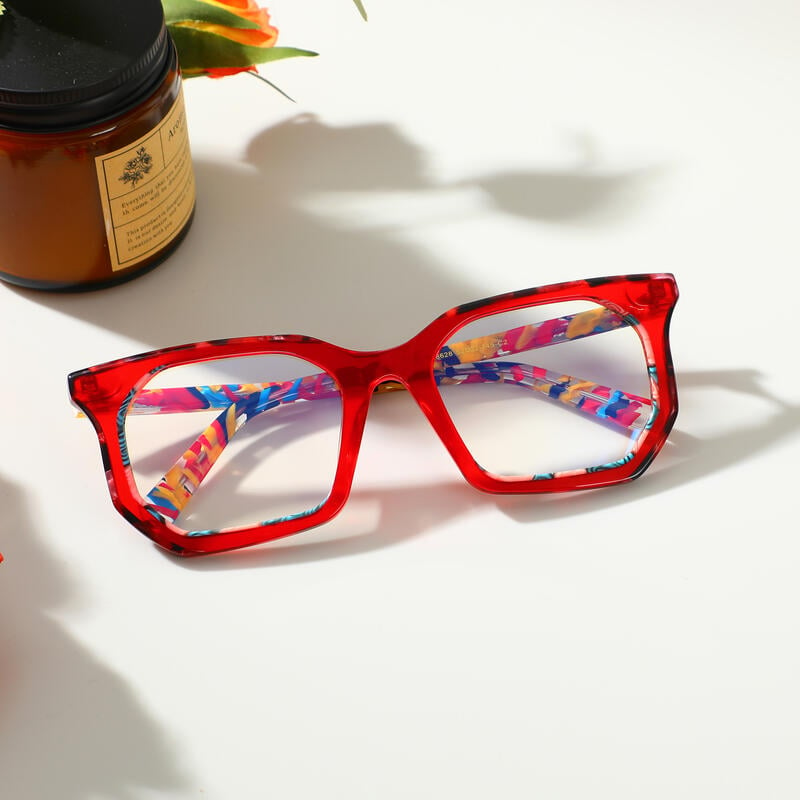
Ready to Try a Pair?
Browse the full red glasses collection on Aoolia — cat-eye, square, round, rectangle, and oversized shapes for both men and women, every prescription reviewed by an in-house optician before it ships, and free virtual try-on on every product page.
If you're new to red frames, the safest first pair is a burgundy cat-eye or wine red rectangle — these two combinations have the highest "kept and worn daily" rate in our customer data.