
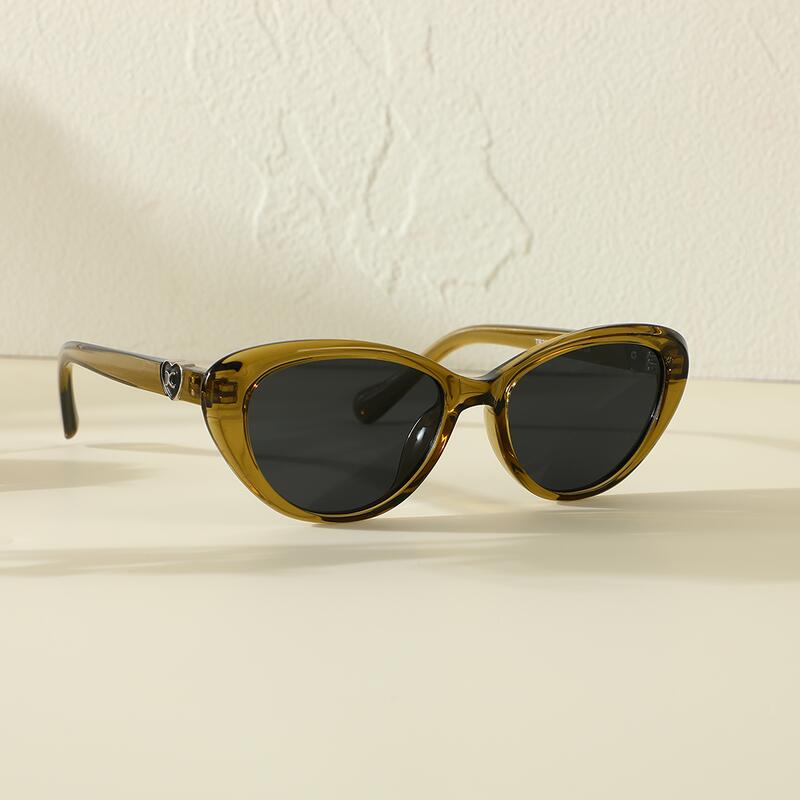
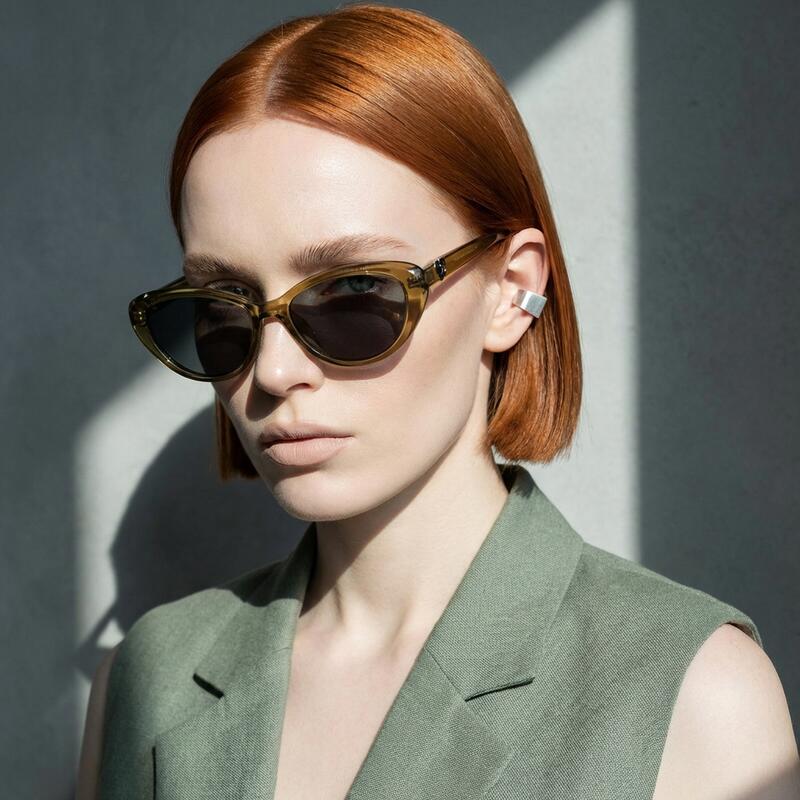
The green lens, properly explained
If you've ever tried on classic aviators and felt the scene get sharper and a little cinematic without looking obviously tinted, you were looking through a green lens — specifically the tint known as G-15. It's worth understanding even if you end up choosing a different color, because it's the reference standard every other tint gets compared to.
The name is literal: the "G" is for green, and the "15" is roughly 15% visible light transmission, meaning the lens lets about 15% of light through and blocks the other 85%. The tint is actually a deep gray-green, and it was developed by Bausch & Lomb in the 1930s for military pilots who needed to cut harsh high-altitude glare without losing the true color of the sky and instruments below them. It went on to become the signature lens of Ray-Ban, which is why people associate green lenses with aviators in the first place. A green aviator like Aoolia's Beacher sits squarely in that lineage.
What a green lens does well comes down to one word: honesty. It tones down brightness and lifts contrast slightly while keeping colors close to true — blues still read blue, reds still read red — so you don't get the flat, everything-is-gray feeling of a neutral gray lens or the warm color shift of a brown one. That balance is why green has been a default for driving and all-day outdoor wear for the better part of a century. If you dislike how some sunglasses make the world look muddy or artificial, a green lens is the usual fix.
It is not magic, and an honest guide should say where it falls short. At around 15% transmission it's built for bright sun, which means it's too dark for overcast days, dusk, or anything indoors — if you move constantly between sun and shade, a lighter lens will serve you better. It's also not a high-contrast sports lens; for that, brown or amber tints pull ahead. And two things people routinely confuse: a green lens is not the same as UV protection, and it's not the same as polarization. The tint controls brightness and color; the UV blocking comes from a separate filter (every Aoolia pair includes UV400 as standard, regardless of lens color), and polarization is a third, separate treatment that cuts glare off water and roads. You can stack all three, but they're doing different jobs.
The short version: choose a green lens if you're a driver, a commuter, or anyone who's outdoors for long stretches in real sun and wants natural color without eye fatigue. Choose something else if your days are mostly overcast, indoor-heavy, or color-critical.
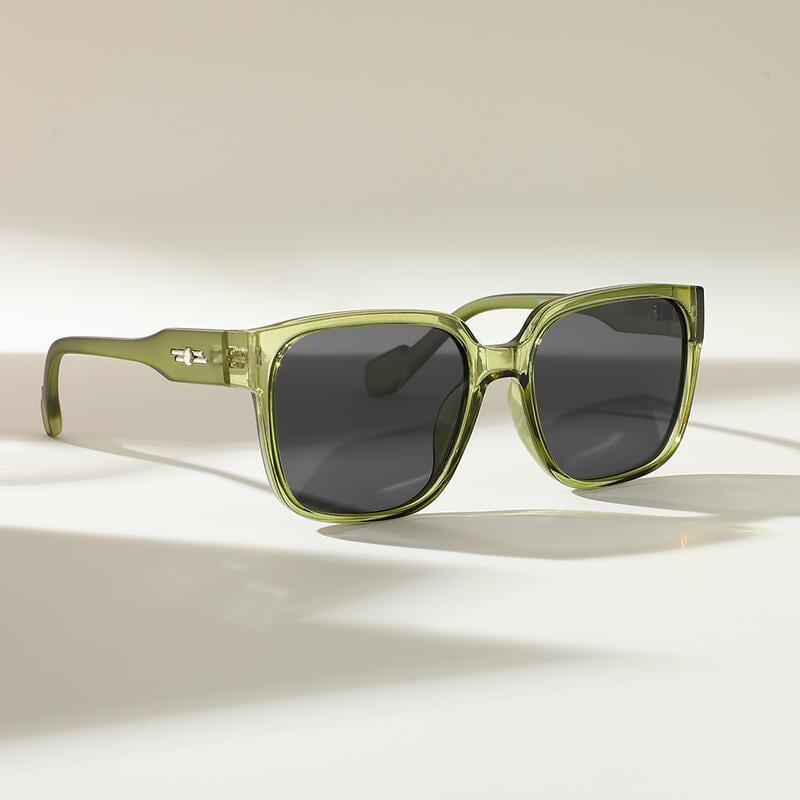
The green frame: which green, really
Now the fashion side. Here's the thing most buying guides bury: "green" as a frame color isn't one decision, it's a spectrum, and where a frame sits on that spectrum matters far more than the exact name on the swatch. Forget memorizing whether yours is "sage" or "moss" or "bottle." What you actually need to know is how the green behaves.
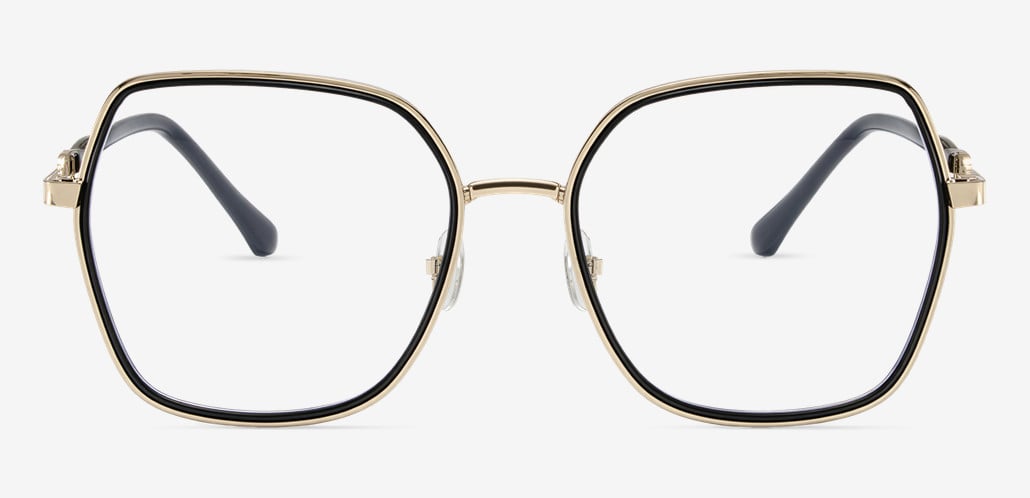
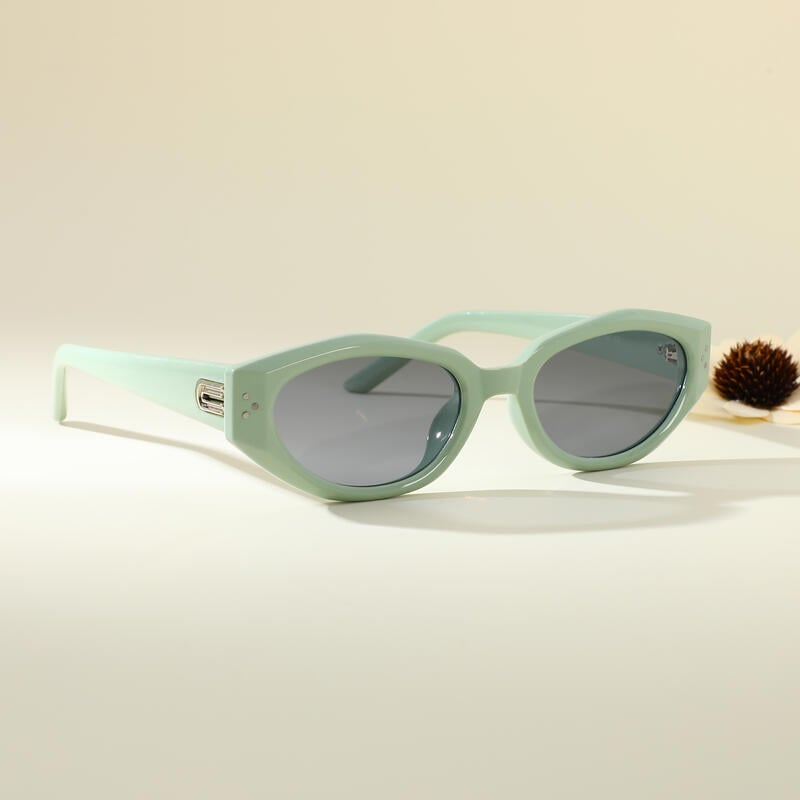
Quiet greens — olive, khaki, forest, bottle, deep pine — behave like neutrals. They carry enough gray or brown that your eye reads them the way it reads tortoise: as a background color that goes with almost anything. If green intimidates you, this is where to start, and it's where most of the wearable, everyday options live. A muted green square like Aoolia's Eden or Harriet is closer to a brown frame in attitude than you'd guess from the label.
Loud greens — emerald, kelly, grass, lime, bright translucent — behave like a statement color, the same way a true red does. They're the single most interesting thing in an outfit, which is exactly the point and exactly the risk. Worn against the right backdrop they look expensive; worn against a busy outfit they fight everything. A bolder emerald piece like Mildred or the geometric Winfred is a build-the-look-around-it frame, not a grab-and-go one.
So the practical rule: if this is your first colored frame, go quiet, and you'll wear it constantly. If you already own neutrals and you're shopping for energy, go loud, and treat it as a feature.

Skin tone: the honest version
Here's the reassuring part, and it happens to be true. Green is a secondary color — it's made of yellow and blue mixed together — which means the green family literally spans warm to cool. There's a warm, golden olive and there's a cool, blue-leaning emerald and a hundred greens in between. That's why "green doesn't suit me" is almost always wrong. People who believe it usually tried one green, in the wrong temperature, and gave up on the entire color.
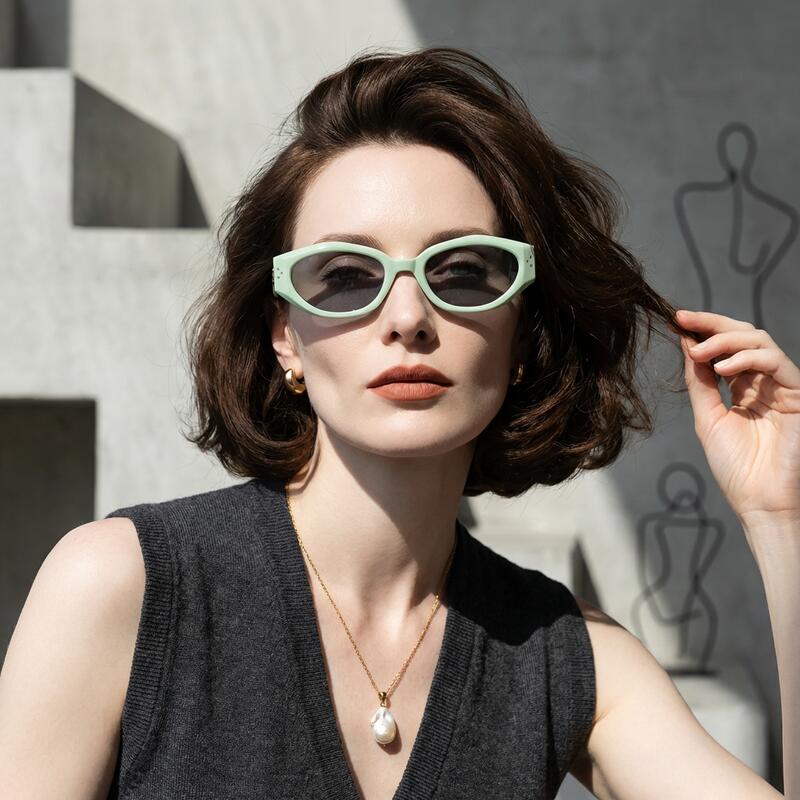
The only lever you really need is temperature, matched loosely to your own coloring. Warmer greens — olive, khaki, moss, anything with yellow in it — tend to flatter warm, golden, olive, and deep complexions. Cooler greens — emerald, pine, bottle, anything that leans blue — tend to flatter cool and fair complexions with pink undertones. You don't need a chart for this; you need to notice whether a frame looks golden or icy and lean toward the one that echoes your own warmth or coolness.
There's one genuine pitfall worth naming. If a frame green sits too close to your own skin's undertone, it can blend in and quietly wash you out, the same way camouflage works — by matching, not contrasting. So when in doubt, pick the green that contrasts with your skin rather than the one that disappears into it. Contrast is what makes a frame look intentional.
And one bonus most guides skip: if your eyes are green or hazel, a green frame visibly amplifies them. The frame acts as an echo, and your eye color reads brighter and more saturated as a result. If that's you, green isn't just safe — it's a small upgrade.
Outfit: how to actually wear green
The styling logic follows the same quiet-versus-loud split, which keeps it simple.
Quiet greens you can stop thinking about. Olive and forest sit happily next to denim, white, cream, camel, gray, and navy — basically your existing wardrobe — and they're understated enough to read as professional, so they work for the office as easily as the weekend. Wear them the way you'd wear a tortoise pair: as a finishing touch you don't have to plan around.
Loud greens need one of two things to look deliberate instead of accidental. Either give them a clean backdrop — emerald pops beautifully against black, white, or plain denim, where nothing competes — or give them a single, intentional echo, like one other green item or an adjacent color such as blue or warm yellow. What you want to avoid is a loud green frame floating in a busy, multicolor outfit, where it reads as one more thing shouting.
The green-on-green question comes up a lot, and the answer is yes, with a caveat: it works when the two greens differ in depth. An olive frame over an emerald knit looks considered because the tones contrast; an emerald frame over an emerald top looks like a near-miss because they're trying to be the same color and not quite managing it. Different shades, good. Same shade, risky.
How to decide, in plain English
Settle the lens-or-frame question first; if you want green for vision, a green (G-15-style) lens gives you true color and bright-sun comfort, and you can stop reading the style sections. If you want green for looks, decide whether you want a quiet green that behaves like a neutral or a loud green that behaves like a statement, lean toward the temperature — warm or cool — that echoes your own coloring, and give a loud frame either a clean backdrop or a single deliberate echo. Do that and green stops being a gamble.
When you're ready, browse the full green sunglasses collection, filter by shape and shade, and use virtual try-on to see a quiet pick and a loud one on your own face before you choose. Thirty seconds there will tell you more than any guide can.
Frequently asked questions
Are "green lenses" and "G-15 lenses" the same thing?
Not exactly. G-15 is one specific green — a deep gray-green that lets about 15% of light through, the classic developed by Bausch & Lomb and made famous by Ray-Ban. "Green lens" is the broader category; greens can run lighter or more vivid than G-15. If you want the time-tested, true-color version, G-15 is the benchmark to compare against.
Do green sunglasses make everything look green?
No, and this surprises people. A quality green lens is built to keep colors close to true — blues stay blue, reds stay red — while gently cutting brightness and glare. The effect is a calmer, sharper view, not a green-tinted one. The faint color cast some people fear mostly comes from cheap, over-saturated tints.
Is green a good color for my first pair of colored sunglasses? Yes, if you choose a quiet green. Olive, forest, and bottle greens behave like neutrals and go with nearly everything, so they carry far less risk than people assume. Save bright emerald and lime for when you want a deliberate statement.
Green, gray, or brown lenses — which should I pick?
Gray gives the most neutral, true-to-life view and is the safe all-rounder. Brown and amber boost contrast and warmth, which helps in hazy or variable light. Green sits between them: true color with a slight contrast lift, comfortable for driving and long days in bright sun. If you can't decide, gray or green are the most versatile starting points.
Are green lenses good for low light or night driving?
No. At roughly 15% light transmission, a green lens is a bright-sun tool — it's too dark for dusk, heavy overcast, tunnels, or night. For low light, switch to a much lighter lens or no sunglasses at all, and never wear dark sunglasses to drive at night.
Do green sunglasses suit green or hazel eyes?
Especially well. A green frame echoes and amplifies green and hazel eyes, making the eye color read brighter and more saturated. If that's you, green is one of the more flattering frame colors you can wear.