
Round sunglasses look simple until you try to buy the right pair. Two frames can both be “round,” yet one makes your face look balanced and intentional while the other feels too small, too costume-like, or oddly disconnected from your features.
The perfect pair is not just about whether round sunglasses are “in style.” They are. The better question is: Which kind of round sunglasses works for your face, your prescription, your daily routine, and the kind of sunlight you actually deal with?
This guide takes a practical approach. Instead of giving you a generic face-shape chart and calling it done, we will look at the details that make round sunglasses wearable: lens size, bridge shape, frame thickness, UV protection, tint color, polarization, prescription compatibility, and the small fit signals most shoppers miss online.
By the end, you should be able to look at a pair of round sunglasses and know whether they are likely to flatter you, protect you, and feel comfortable enough to actually wear.
Start With the Real Job of Your Sunglasses
Before you think about frame color or celebrity inspiration, ask one question:
Where will I wear these most often?
Round sunglasses can be styled in many ways, but the right pair for a beach trip may not be the best pair for driving, prescription wear, or everyday errands.
The best round sunglasses are not the most dramatic pair on the page. They are the pair that solves your real-life problem while still looking like you chose them on purpose.
Why Round Sunglasses Are Harder to Choose Than They Look
Round sunglasses have one strong visual feature: curve.
That curve can soften sharp cheekbones, balance a square jaw, make a simple outfit look more relaxed, or give a vintage edge to modern clothing. But because the shape is so recognizable, the fit has to be right. When round sunglasses are off, they look obviously off.
The most common mistakes are:
choosing lenses that are too small for the face;
choosing perfectly circular frames when a slightly flattened round shape would be more flattering;
buying dark lenses without checking UV protection;
picking a bridge that sits too high or too low;
ignoring prescription lens thickness;
choosing oversized rounds for style but not checking cheek contact.
A good pair of round sunglasses should feel balanced from three angles: front view, side view, and everyday use. They should look good in photos, but they should also stay comfortable when you walk, drive, read your phone outside, or wear them for more than 20 minutes.

Step 1: Get the Size Right Before the Style
Most shoppers start with color. Start with size instead.
Round sunglasses can quickly look too tiny, too theatrical, or too heavy depending on lens diameter and frame width. A few millimeters can change the whole effect.
A Fast Fit Check
When you try on round sunglasses, ask:
Do the lenses cover the eyes fully without leaving too much light from the sides?
Does the frame sit close enough to protect, but not so close that your lashes touch?
Are the outer edges close to the width of your face, not much narrower?
Does the bottom of the frame touch your cheeks when you smile?
Do the temples sit straight, or do they flare outward?
If the frame passes those five checks, you can move on to style.
Step 2: Choose the Right Round Shape for Your Face
Not all round sunglasses are perfectly circular. Some are small and wire-thin. Some are oversized. Some are round with a slightly squared outer edge. Some have a keyhole bridge. Some sit higher on the brow line.
Those small shape differences matter.
If You Have a Square Face
Round sunglasses are one of the easiest choices for a square face. The curved lenses soften a strong jawline and balance a wider forehead or angular cheekbones.
Look for:
medium to large round lenses;
thin metal rims for a softer look;
acetate frames if you want more presence;
a keyhole bridge if you like retro styling.
Avoid very small round frames if your jaw is strong. They can make the lower half of the face look heavier by comparison.
If You Have a Heart-Shaped Face
A heart-shaped face is usually wider at the forehead and narrower at the chin. Round sunglasses can work beautifully because they reduce the visual sharpness of the upper face.
Look for:
lightweight round metal frames;
soft brown, gold, champagne, gray, or translucent colors;
medium lens size;
a bridge that does not sit too high.
Avoid overly heavy top rims. They can add too much weight to the forehead area.
If You Have an Oval Face
Oval faces have the easiest range. You can wear small rounds, classic wire rounds, oversized rounds, or thicker acetate styles.
The main question is not “Can I wear round sunglasses?” It is “What mood do I want?”
Thin gold or silver rounds feel minimal and clean.
Black round sunglasses feel sharper and more graphic.
Tortoise or brown rounds feel warm and everyday.
Oversized rounds feel more fashion-forward.
Translucent frames feel lighter and more modern.
If You Have a Round Face
Round sunglasses can still work on a round face, but you need contrast. A perfectly circular frame can repeat the face shape too closely.
Look for:
slightly oversized round sunglasses;
round frames with a subtle flat top;
a defined bridge;
thinner rims;
darker upper frame details;
round-square hybrids.
Avoid very small circular lenses. They can make the face look fuller instead of balanced.
If You Have a Diamond Face
Diamond faces often have strong cheekbones and a narrower forehead and chin. Round sunglasses can soften the angles without hiding the structure.
Look for:
medium round lenses;
thin metal frames;
adjustable nose pads;
soft colors like gold, brown, gray, or champagne.
Avoid frames that are too wide at the temples if they press into the cheekbone area.

Step 3: Pick the Bridge Shape Carefully
The bridge is the part most people ignore, but it controls how round sunglasses sit on the face.
Keyhole Bridge
A keyhole bridge has a small cutout shape that looks vintage and relaxed. It often works well if your nose bridge is average to higher, and it can add character to acetate round sunglasses.
Best for:
retro styling;
thicker frames;
casual daily sunglasses;
people who want the frame to sit slightly lower.
Saddle Bridge
A saddle bridge rests more fully across the nose. It can feel stable, but it may not suit every nose shape.
Best for:
lightweight frames;
simple everyday wear;
people who do not want adjustable nose pads.
Adjustable Nose Pads
Adjustable nose pads are especially useful for round sunglasses because they let you control height, tilt, and distance from the face.
Best for:
prescription sunglasses;
lower nose bridges;
high cheekbones;
people whose frames slide down easily;
metal round sunglasses.
If you often find that sunglasses touch your cheeks or sit too low, adjustable nose pads should be high on your list.
Step 4: Do Not Confuse Lens Darkness With UV Protection
A dark lens is not automatically a protective lens.
For real eye protection, look for sunglasses labeled UV400 or 100% UVA and UVB protection. UV protection is about blocking ultraviolet light, not simply reducing visible brightness.
This matters because sunglasses are not only a style accessory. They are protective eyewear. The right lenses help reduce exposure to UV rays, while the wrong lenses may only make the world look darker without giving the protection your eyes need.
When choosing round sunglasses, check for:
UV400 or 100% UV protection;
lens quality and clarity;
whether the lens is polarized, if glare is a problem;
whether the frame gives enough coverage around the eyes.
A small round lens can look stylish, but if it leaves a lot of light coming in from the top and sides, it may not be the best choice for long outdoor wear.
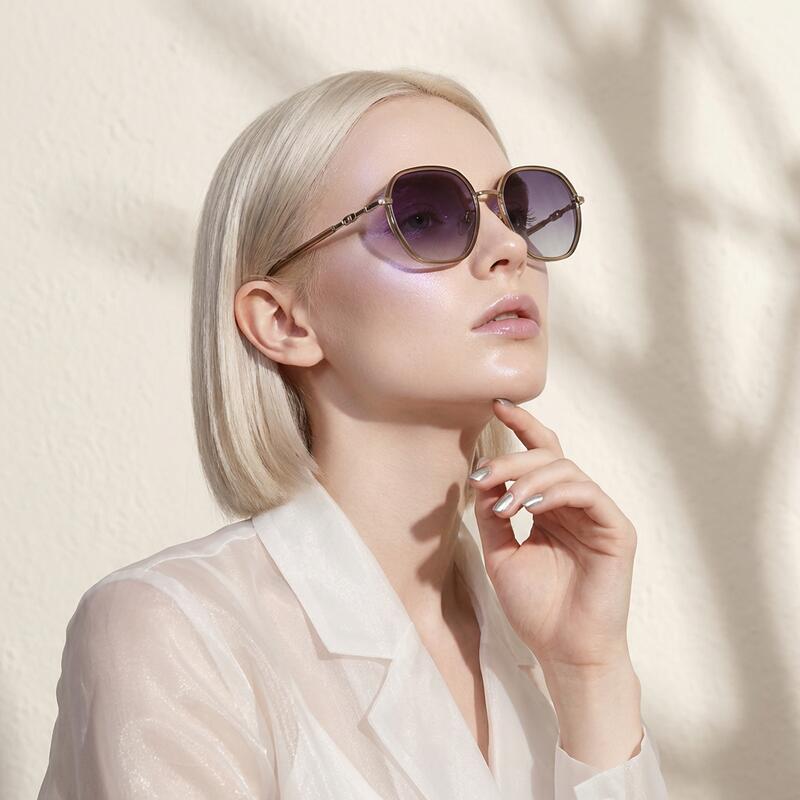
Step 5: Decide Whether You Need Polarized Round Sunglasses
Polarization is not the same as UV protection. UV protection helps block ultraviolet rays. Polarization reduces glare from reflective surfaces.
You may want polarized round sunglasses if you:
drive often;
spend time near water;
walk on bright pavement;
are sensitive to glare;
fish, boat, or travel in sunny places;
want clearer outdoor vision in harsh light.
You may not need polarization if your sunglasses are mostly for fashion, short city walks, or occasional outdoor use. Some people also prefer non-polarized lenses when looking at certain digital screens, because polarization can make screens appear darker or uneven at specific angles.
For most American shoppers, polarized round sunglasses are especially useful for driving, beach days, lake trips, and bright summer weekends.
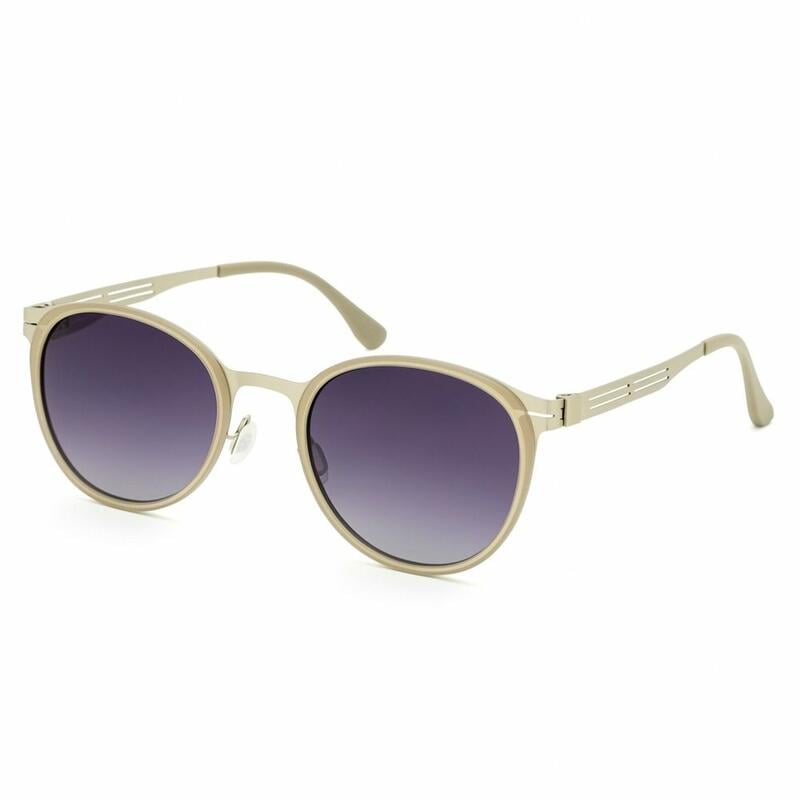
Step 6: Choose Lens Color Based on Use, Not Just Aesthetic
Lens color changes how the world looks through your sunglasses. It can affect contrast, brightness, and comfort.
If you want one pair of round sunglasses for everything, gray or brown lenses are usually the easiest choices. If you want a pair that feels more fashion-driven, gradient, rose, blue, or green lenses can give the frame more personality.
Step 7: Match Frame Material to Your Routine
Round sunglasses come in several material styles. The right one depends on weight, durability, prescription needs, and the look you want.
Metal Round Sunglasses
Metal round sunglasses are lightweight, clean, and classic. They often come with adjustable nose pads, which makes fit easier.
Best for:
minimal style;
smaller or narrower faces;
prescription sunglasses;
all-day comfort;
retro or intellectual styling.
Potential downside: very thin metal frames may feel delicate if you are rough with your sunglasses.
Acetate Round Sunglasses
Acetate frames have more depth, color, and visual weight. They are a good choice if you want round sunglasses that feel like part of your outfit, not just a functional accessory.
Best for:
stronger style impact;
tortoise, black, brown, or translucent colors;
medium to wide faces;
people who want a more substantial frame.
Potential downside: thick acetate can feel heavier, especially with prescription lenses.
Mixed-Material Round Sunglasses
Mixed-material frames combine metal and plastic or acetate details. These are useful when you want something more distinctive without going fully bold.
Best for:
modern styling;
fashion-forward everyday wear;
people who like contrast;
frames with special bridge or brow details.

Step 8: Think About Prescription Before You Fall in Love With a Frame
If you wear prescription glasses, round prescription sunglasses can be a smart everyday upgrade. They remove the need to switch between regular glasses and non-prescription sunglasses outdoors.
But prescription changes the frame decision.
Round frames can work very well with prescription lenses, especially when the frame is not too oversized. Very large lenses may increase thickness, weight, and edge distortion depending on your prescription.
For round prescription sunglasses, pay attention to:
lens width;
lens height;
bridge fit;
frame stability;
whether the frame sits evenly;
whether progressive or bifocal lenses need enough vertical space.
If you wear a stronger prescription, a medium round frame is often more practical than an oversized one. If you wear progressives, make sure the frame has enough lens height for comfortable distance, intermediate, and reading zones.
A good prescription sunglass frame should not slide, tilt, or sit too far from your eyes. Stability is not just about comfort. It also helps the lenses perform correctly.
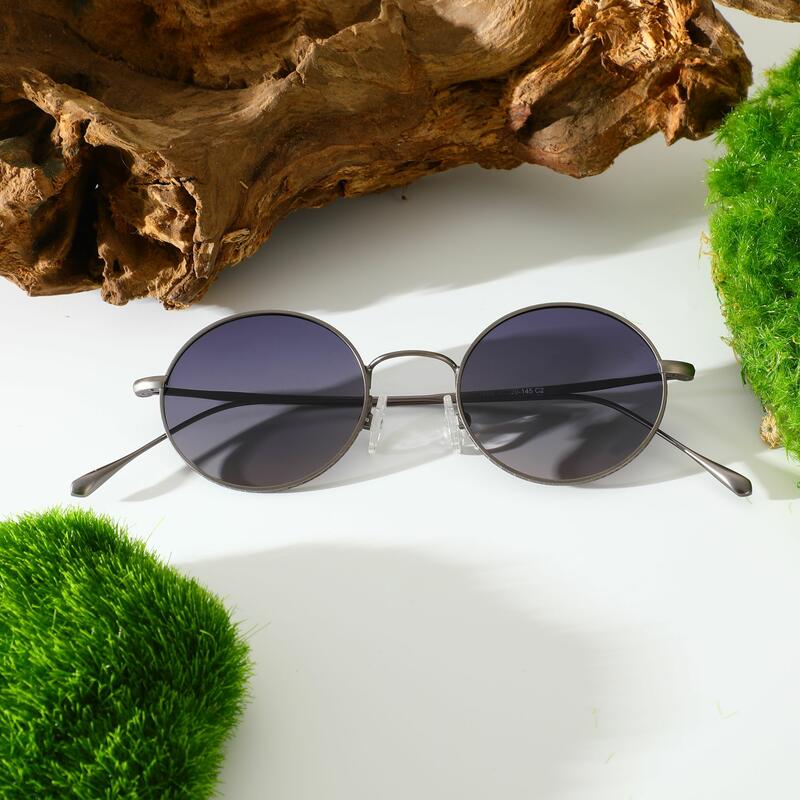
Step 9: Choose the Right Color for Your Wardrobe
The easiest round sunglasses are the ones that match what you already wear.
Black Round Sunglasses
Black round sunglasses feel graphic, clean, and slightly sharper. They work well with denim, white shirts, black outfits, streetwear, and minimal wardrobes.
Best for: modern everyday wear, stronger contrast, simple styling.
Tortoise Round Sunglasses
Tortoise is warm, classic, and less severe than black. It pairs well with beige, brown, cream, olive, denim, gold jewelry, and natural textures.
Best for: daily wear, warm skin tones, vintage-inspired styling.
Gold Round Sunglasses
Gold frames feel light, retro, and polished. They are especially good if you want round sunglasses that do not dominate your face.
Best for: minimal style, warm wardrobes, prescription-friendly metal frames.
Silver or Gray Round Sunglasses
Silver and gray feel cooler and more understated. They work well with black, navy, white, gray, and technical fabrics.
Best for: cool-toned styling, clean modern outfits.
Brown Round Sunglasses
Brown is softer than black and more grounded than gold. It is one of the most wearable choices for daily sunglasses.
Best for: casual American wardrobes, outdoor weekends, warm neutrals.
Pink, Blue, Green, or Translucent Round Sunglasses
Colored round sunglasses are more expressive. They work best when the rest of the outfit is simple, or when the color repeats something you already wear often.
Best for: fashion styling, vacations, summer looks, creative wardrobes.

Step 10: Use Virtual Try-On the Right Way
Virtual try-on is helpful, but only if you know what to look for. Do not just ask, “Do I like this?” Ask more specific questions.
When using virtual try-on, check:
Does the frame width match my face width?
Are my eyes near the center of each lens?
Does the bridge look natural on my nose?
Does the frame sit too high on my eyebrows?
Does the bottom of the frame visually crowd my cheeks?
Does the color work with my hair, skin tone, and usual clothing?
Do the lenses look too small for outdoor coverage?
Take screenshots of two or three options and compare them side by side. The winner is usually not the most exciting pair at first glance. It is the one that still looks good after you look at it three times.
The Round Sunglasses Fit Test
Before buying, use this quick checklist.
The Frame Should
sit evenly on your face;
cover your eyes fully;
feel secure without squeezing;
align with your brow and cheekbones;
match your face width;
give enough side coverage for your use;
work with your prescription, if needed.
The Lenses Should
offer UV400 or 100% UV protection;
be dark enough for your light conditions;
be polarized if glare is a major issue;
match your activity needs;
provide clear, comfortable vision.
The Style Should
match at least three outfits you actually wear;
feel natural with your hair and skin tone;
suit your daily setting;
still look good when you are not “dressed up.”
That last point matters. The perfect round sunglasses should not require a perfect outfit.

Round Sunglasses for Women: What Usually Works Best
Round sunglasses for women can go in many directions: soft, retro, oversized, minimal, artistic, or glamorous.
For everyday wear, the most versatile options are:
medium round acetate frames;
thin gold or black metal rounds;
tortoise round sunglasses;
brown or gray gradient lenses;
slightly oversized frames with soft edges.
If you want a more elegant look, try gold metal or translucent brown frames. If you want something bolder, choose black acetate, oversized round lenses, or colored frames.
A useful styling tip: if the frame is bold, keep the lens color more classic. If the lens color is bold, keep the frame shape cleaner.
Round Sunglasses for Men: What Usually Works Best
Round sunglasses for men often work best when they avoid looking too small or too delicate. The goal is balance.
Good options include:
medium round metal sunglasses;
black or gunmetal round frames;
tortoise acetate rounds;
round-square hybrid frames;
polarized gray or brown lenses.
For a classic look, choose black, brown, gray, gold, or silver. For a more creative look, try green lenses, translucent frames, or a keyhole bridge.
Men with strong jawlines often look especially good in round sunglasses because the curve softens the face without making it look less structured.
Small Round vs. Oversized Round Sunglasses
This is one of the biggest style decisions.
Small Round Sunglasses
Small round sunglasses feel vintage, intellectual, and minimal. They work best when the frame still covers the eyes properly and does not sit too narrow.
Best for:
narrow faces;
light prescriptions;
fashion-focused styling;
thin metal frames;
people who like a subtle retro look.
Not ideal for:
maximum sun coverage;
very wide faces;
strong prescriptions that need larger optical zones;
people who dislike a vintage look.
Oversized Round Sunglasses
Oversized round sunglasses feel more glamorous and provide more coverage. They can be excellent for sun protection, but the fit has to be right.
Best for:
beach or travel;
fashion styling;
wider faces;
stronger outfit impact;
more eye-area coverage.
Not ideal for:
very small faces;
frames that touch the cheeks;
heavy prescription lenses;
people who need a lightweight everyday pair.
A medium-to-slightly-oversized round frame is often the best compromise.
When Round Sunglasses Are Not the Best Choice
Round sunglasses are versatile, but they are not perfect for every need.
You may want another shape if:
you want maximum side protection for sports;
you have a very round face and want stronger contrast;
you need wraparound coverage;
you want the most professional or conservative look;
you have a high prescription and the round frame is too large;
the frame slides down easily and has no adjustable nose pads.
In those cases, consider square sunglasses, rectangle sunglasses, aviator sunglasses, or sportier wrap styles. The best frame is the one that solves your actual use case.
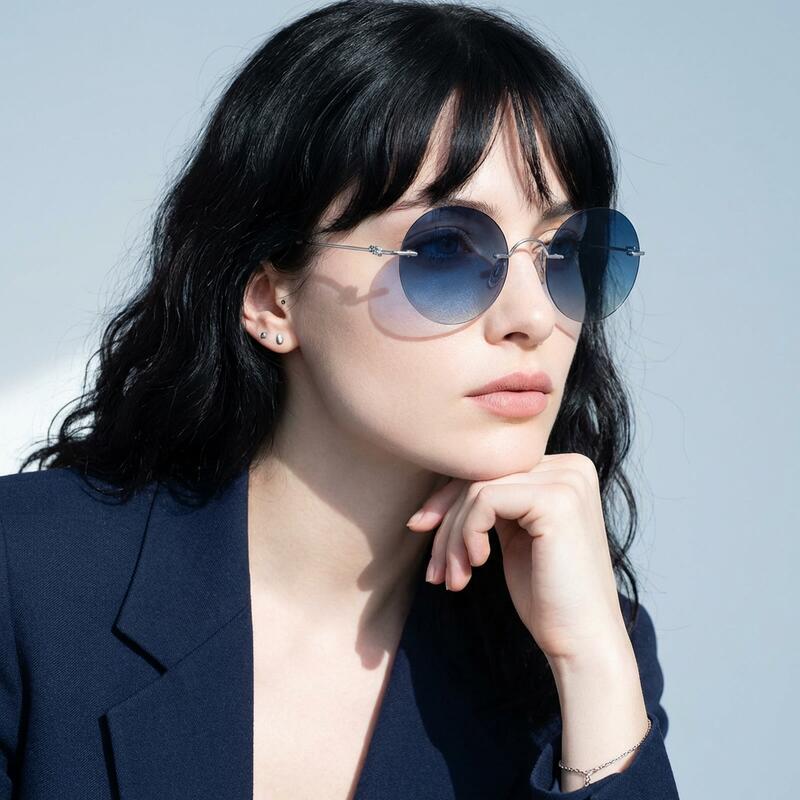
What to Look for on a Product Page
When comparing round sunglasses online, do not rely only on the first photo. Check the details.
Look for:
frame measurements;
lens width and bridge width;
material;
polarized or non-polarized lens options;
UV protection information;
prescription availability;
nose pad type;
frame width;
try-on tools;
return policy;
customer photos or reviews, if available.
If a product page does not tell you how the frame fits, what the lenses do, or whether the sunglasses are prescription-ready, you are missing important buying information.
Aoolia Round Sunglasses: How to Shop the Category
Aoolia’s round sunglasses collection is designed for people who want the shape, but still need practical choices: different colors, sizes, materials, rim styles, polarized options, and prescription-ready frames.
A good way to shop the collection is:
Start with frame width: narrow, medium, wide, or custom.
Filter by color: black, gold, gray, brown, tortoise, green, blue, pink, or other shades.
Decide whether you need polarized lenses.
Use Virtual Try-On to compare two or three shapes.
Check whether the frame supports your prescription needs.
Choose the pair that fits your daily use, not just the pair that looks best in a product image.
If you are choosing your first pair, start with a medium round frame in black, tortoise, brown, gray, or gold. These colors are easier to wear and less likely to feel too trend-driven after one season.
Common Buying Mistakes
Mistake 1: Buying the Smallest Pair Because It Looks “Classic”
Small round sunglasses can be stylish, but too-small lenses may reduce coverage and make the face look wider. Classic does not always mean tiny.
Mistake 2: Choosing the Darkest Lens Automatically
A darker tint does not equal better UV protection. Always check for UV400 or 100% UV protection.
Mistake 3: Ignoring Bridge Fit
If the bridge is wrong, the whole frame feels wrong. Sliding, cheek contact, and uneven sitting often come from poor bridge fit.
Mistake 4: Forgetting About Prescription Lens Weight
If you need prescription sunglasses, oversized round frames may not always be the best option. Medium frames are often more comfortable.
Mistake 5: Buying for One Outfit
A great pair of round sunglasses should work with your normal clothes. If they only look good with one vacation outfit, they may not become your everyday pair.
The Best Way to Choose: Use the 3-Pair Rule
If you are shopping online, compare three types before deciding:
A safe pair: medium round frame in black, brown, tortoise, gray, or gold.
A style pair: oversized, colored, translucent, or more retro.
A practical pair: polarized, prescription-ready, or adjustable nose pads.
This helps you avoid choosing only by emotion or only by function. The best pair often sits between the three: stylish enough to feel special, practical enough to wear often.
Final Checklist: Your Perfect Round Sunglasses Should Do These 7 Things
Before you buy, make sure your sunglasses:
Fit your face width.
Cover your eyes properly.
Offer UV400 or 100% UV protection.
Match your main use: driving, beach, daily wear, travel, or prescription.
Sit comfortably on your nose without sliding.
Work with your personal style and wardrobe.
Feel good enough to wear for more than one season.
Round sunglasses are popular because they can be soft, smart, retro, modern, minimal, or bold. But the perfect pair is not the one that looks roundest. It is the one that looks natural on you, protects your eyes, and fits into your real life.
When the size, bridge, lens, and style all work together, round sunglasses stop feeling like a trend. They become the pair you reach for without thinking.
FAQ: How to Choose Round Sunglasses
Are round sunglasses still in style?
Yes. Round sunglasses remain popular because they work across several style directions: vintage, minimal, artistic, beachy, and fashion-forward. The most modern versions are not always perfectly circular. Many have a slightly softened round shape, subtle angles, or updated materials.
What face shape looks best with round sunglasses?
Square, heart, oval, and diamond face shapes usually suit round sunglasses well. Round faces can also wear them, but a slightly oversized or subtly angular round frame often looks more balanced than a tiny circular frame.
Are round sunglasses good for driving?
They can be, especially if they have UV protection, a comfortable fit, and polarized lenses. For driving, gray, brown, or green lenses are usually practical because they reduce brightness without making colors feel too unnatural.
Can I get round sunglasses with prescription lenses?
Yes, many round sunglasses can be made with prescription lenses. For stronger prescriptions or progressive lenses, medium-size frames are usually easier to wear than very large round lenses.
Should I choose polarized round sunglasses?
Choose polarized round sunglasses if glare bothers you, especially while driving, walking near water, or spending time on bright pavement. If you mainly want a fashion pair for short outdoor use, non-polarized lenses may be enough as long as they still provide UV protection.
Are small round sunglasses protective enough?
They can be, but coverage matters. Small lenses may leave more sunlight entering from the sides, top, or bottom. For long outdoor wear, medium or slightly oversized round sunglasses usually provide better practical coverage.
What color round sunglasses are easiest to wear?
Black, tortoise, brown, gray, and gold are the easiest colors for daily wear. They pair well with most wardrobes and are less trend-sensitive than bright or unusual colors.
What is the difference between round and oval sunglasses?
Round sunglasses have a more circular lens shape, while oval sunglasses are wider horizontally and softer vertically. Oval sunglasses can be easier for round faces, while round sunglasses give a more recognizable retro or artistic look.
Are round sunglasses good for women and men?
Yes. Round sunglasses are not gender-specific. The best choice depends on size, material, color, and lens shape. Women may prefer softer colors or oversized shapes, while men often choose medium metal rounds, tortoise frames, or round-square hybrids, but either can work for any wearer.
How do I know if round sunglasses are too big?
They may be too big if they touch your cheeks when you smile, slide down often, extend far beyond your face width, feel heavy, or cover your eyebrows completely in a way that looks unbalanced. Oversized can look intentional, but it should still feel stable.