
The One Thing Nobody Tells You About Brown Frames
Most people reach for brown glasses for the same reason: they want something softer than black, but safer than a color. It feels like the no-risk choice. The grown-up version of black. The frame you can't get wrong.
We're going to be honest with you, because we fit these frames for a living: brown is the least foolproof color we sell.
Black gets away with everything. It has no undertone — it's a flat absence of color — so it can't clash with your skin. It might look a little severe, a little hard at the edges, but it will never fight your face. Brown is the opposite. Every single brown leans somewhere. It's either pulling warm (toward gold and red) or cool (toward grey and ash), and the moment that lean disagrees with your skin, the frame stops looking expensive and starts looking slightly off in a way most people can feel but can't name. They'll say "I don't know, it just doesn't suit me" and reach for black again.
That "off" feeling almost always traces back to one mismatch: the undertone of the frame versus the undertone of your skin. Get those two talking to each other and a $12 brown frame can look like it cost ten times that. Get them fighting and the most expensive frame in the catalog looks borrowed.
So this guide isn't a list of pretty browns. It's how to read your own coloring first, then pick the brown that was built for it.
Why "Brown" Is Really Three Colors
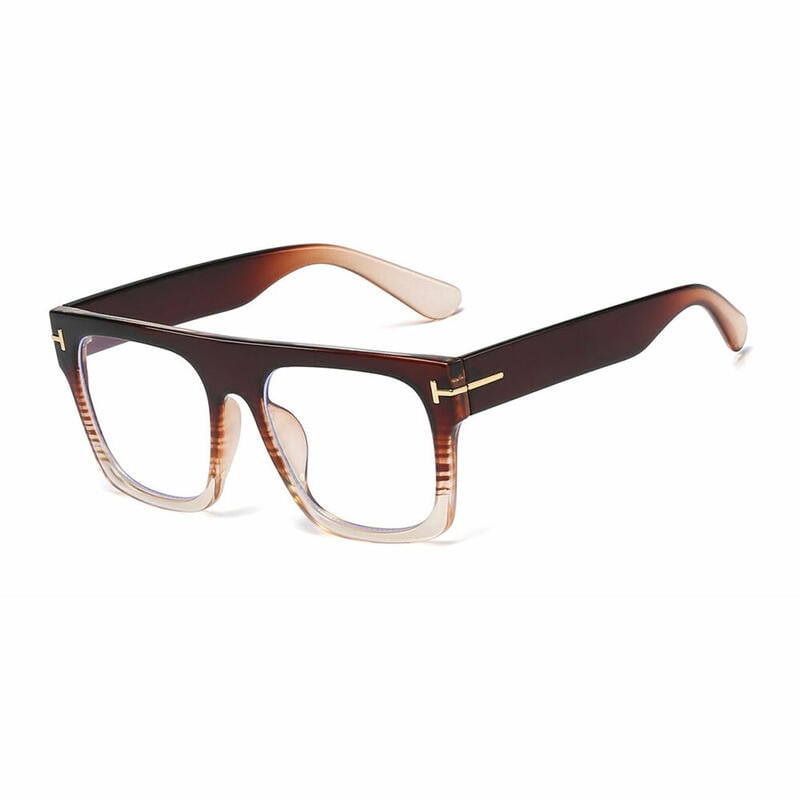
Walk through our brown collection — there are over 230 frames in it — and you'll notice the swatches don't agree with each other. Some glow like honey or a wet chestnut. Some sit cool and dusty, closer to a taupe or a faded coffee with milk. A few are so deep they read almost black until the light hits them.
That's because brown is the most undertone-loaded "neutral" there is. It splits into three families, and naming them is the whole game:
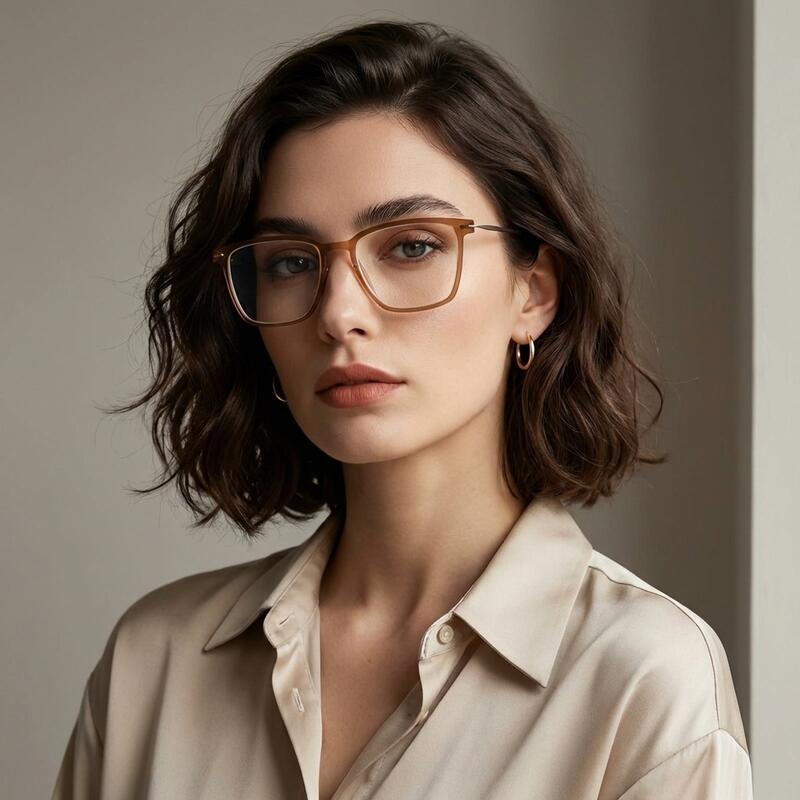
Warm browns — honey, caramel, amber, cognac, golden tortoise, tobacco. There's gold or red living underneath. These look lit-from-within.
Cool browns — taupe, greige, ash-brown, cool-toned tortoise, smoky espresso. There's grey living underneath. These read quieter and more modern.
True / neutral browns — milk chocolate, walnut, mid-brown without an obvious gold or grey pull. The diplomats of the category.
Here's the part the trend articles skip: it isn't about whether a brown is light or dark. A pale frame can be cool (think dusty greige) and a deep frame can be warm (think rich cognac). Lightness and warmth are two separate dials. People conflate them constantly, pick a "light brown" expecting it to be soft and friendly, and end up with something ashy that drains them. Read the warmth first, the depth second.
Step One: Read Your Own Undertone (Two Minutes, No App)
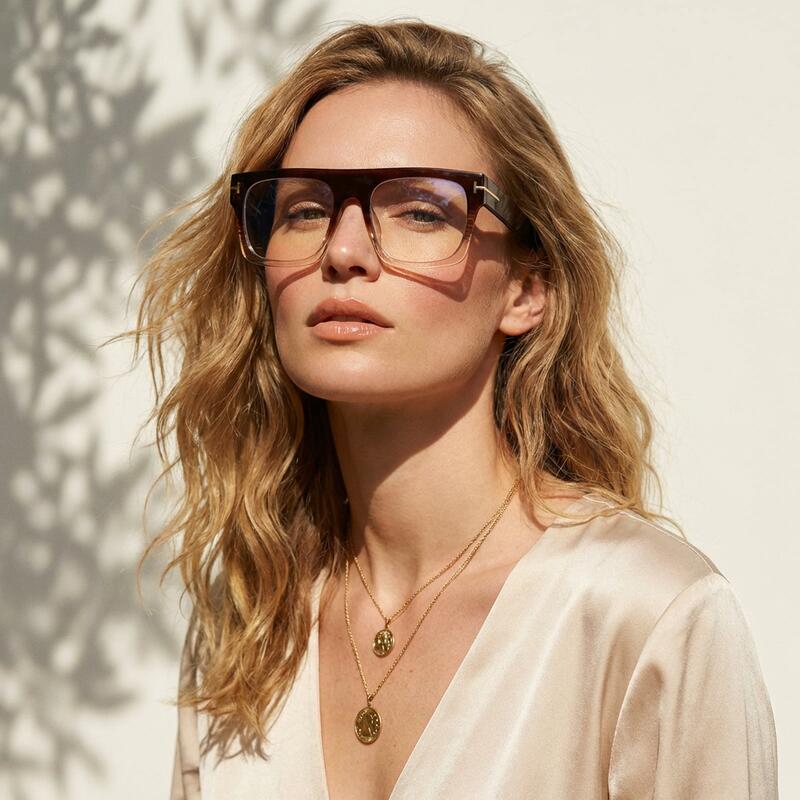
Your skin tone is how light or deep your skin is, and it shifts with the seasons. Your undertone is the hue sitting underneath, and it doesn't move — not with a tan, not with a winter. That fixed undertone is what your frames have to agree with, so that's what we're hunting for. Stand near a window in daylight (overhead store lighting lies — it flatters everything warm and ruins this test) and run two or three of these:
The wrist test. Look at the veins on the inside of your wrist. Greenish veins lean warm. Blue or purple veins lean cool. A confusing mix of both usually means neutral.
The jewelry test. Picture your face in plain gold versus plain silver. If gold makes you glow and silver looks flat, you're warm. If silver brightens you and gold looks brassy against your skin, you're cool. If you genuinely can't pick a winner, that's neutral talking.
The white-paper test. Hold a sheet of bright white paper up under your chin. If your skin looks yellow or golden beside it, warm. If it looks pink or rosy, cool. If it goes a touch grey or barely shifts, neutral.
One caveat from experience: if you have olive skin — the green-gold cast common in Mediterranean, Latin, South Asian, and many tan complexions — these tests will pull you in two directions at once, because olive is its own thing. Treat yourself as neutral-warm and lean on the depth rules further down rather than the warm/cool ones.
No single test is gospel. Run two, get a tiebreaker from a third, and you'll have your answer.
Step Two: Match the Family to the Face
Now the actual matching. The simplest, most reliable rule is harmony — pair the frame's undertone with your skin's undertone, and the frame settles into your face instead of sitting on top of it.
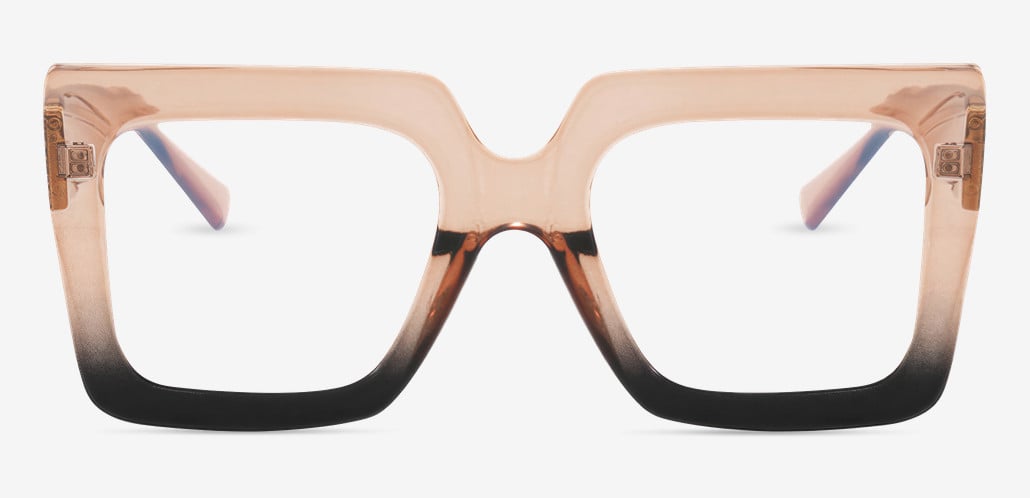
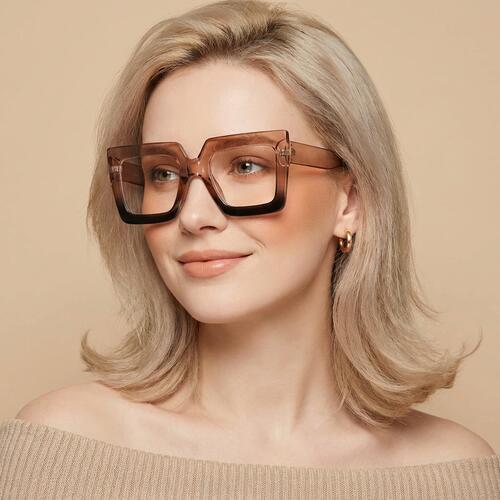
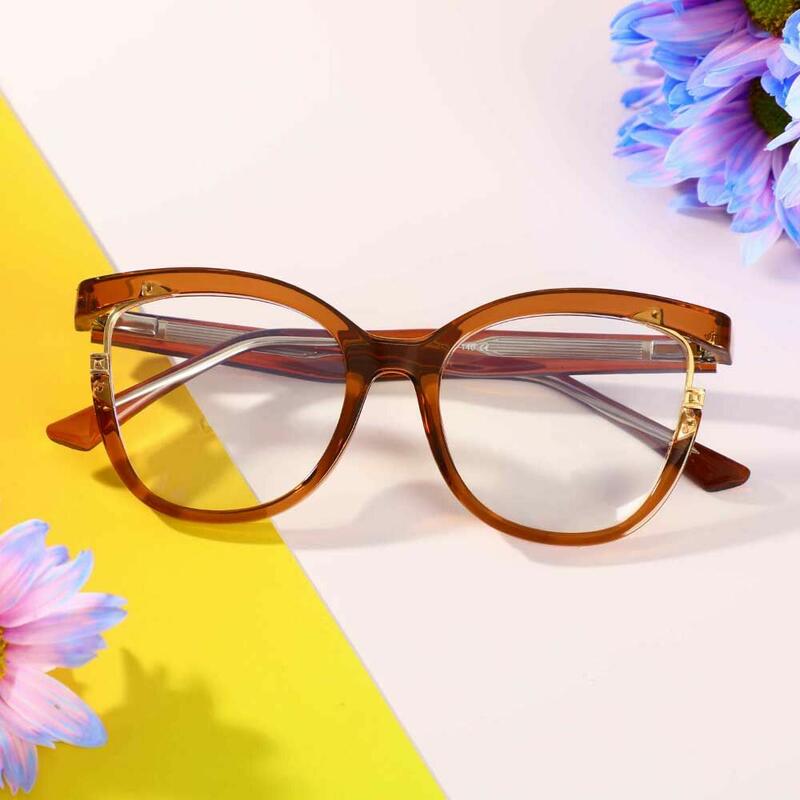
If your skin is warm, warm browns are your home base. Honey, caramel, amber, cognac, and golden tortoise echo the gold already in your skin and make you look healthy and rested rather than washed out. A warm square like Vibrant or Flossie (both under $10) is the easy first move; a golden-toned cat-eye such as April does the same favor with more shape. Avoid the dusty, ashy browns — on warm skin they go muddy.
If your skin is cool, point yourself at the cool browns: taupe, greige, ash-brown, and the deep smoky espressos that sit a half-step from black. These keep the frame from clashing with the pink in your complexion. A clean cool-toned square like Joanne or a near-espresso such as Annie reads sharp and intentional. The browns to skip are the orange-leaning caramels and cognacs — they tend to look brassy against cool skin, the same way warm gold jewelry does.
If your skin is neutral, congratulations, you drew the long straw — almost the entire collection is fair game. Your decision moves off undertone and onto depth and shape, so let your hair and your wardrobe make the call. A true mid-brown like Claire or a walnut oval like Ward will behave on you.

Step Three: The Lever Everyone Forgets — Contrast
Matching undertones gets you a frame that belongs on your face. But there's a trap hiding inside that advice, and it's the single most common mistake we see, especially on fair-warm and deep-skinned wearers alike: they match so well that the frame disappears.
A pale, warm-skinned person in a light honey frame can end up with glasses that melt into their face and do nothing — no definition around the eyes, no statement, just a faint suggestion of eyewear. A deep-skinned person in a medium-brown can have the same problem in reverse: the frame and the skin sit at the same depth, so the glasses go invisible.
The fix is value contrast — how light or dark the frame is relative to your skin and hair, separate from its undertone. You want the undertone to harmonize and the depth to contrast, at least a little:
Fair skin: push toward the deeper end of your undertone family — a rich cognac if you're warm, a smoky espresso if you're cool. A dark walnut round like Audition frames the eyes far better on fair skin than a washed-out tan.
Medium and olive skin: you have the widest runway. Both lighter caramels and deeper chocolates read clearly. This is where a tortoise pattern shines — the built-in light-and-dark variation gives you contrast automatically.
Deep skin: the richest browns — chocolate, mahogany, espresso — hold their own and look luxurious, while warm caramels and amber tortoises light up beautifully against deeper complexions. Skip the muted, dusty mid-browns that sit too close to your own depth and vanish.
If you take one thing from this guide, take this: harmony in undertone, contrast in depth. That's the formula a stylist is using when they hand you the pair that finally "just works."
A Quick Word on Tortoise, Hair, and Eyes
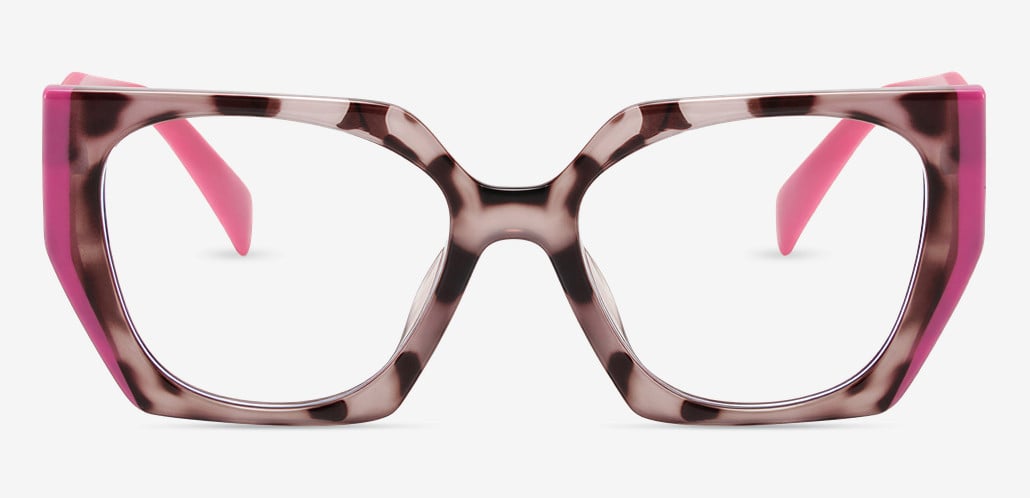
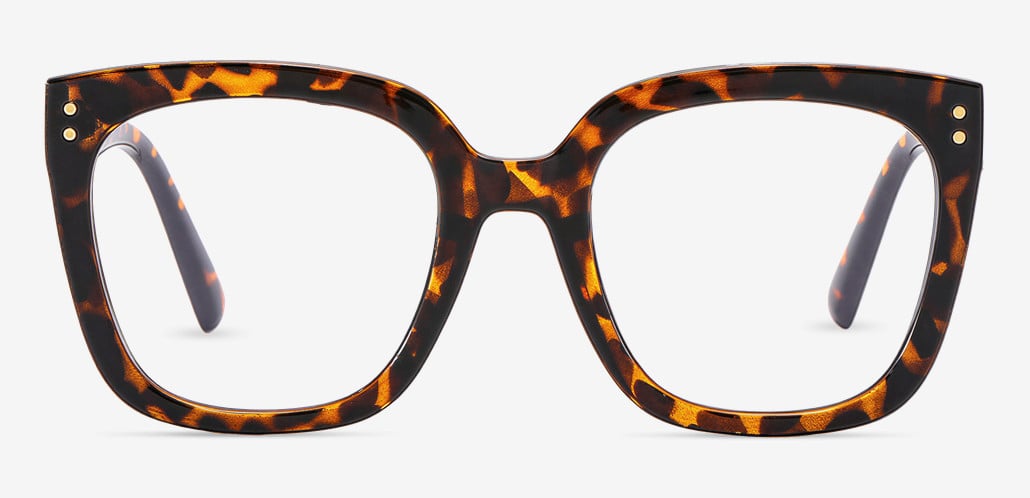
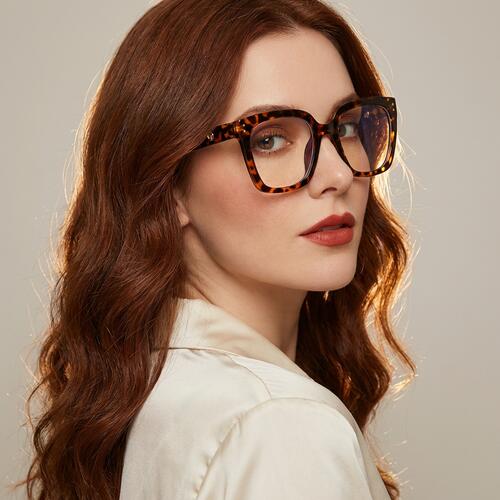
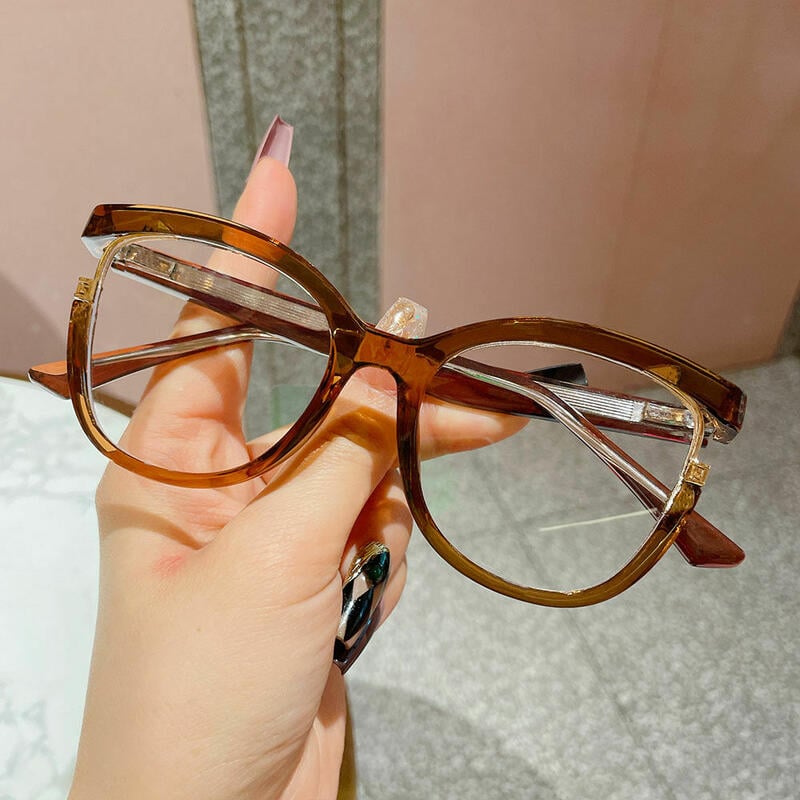
Tortoise is brown with the undertone decision pre-made for you. Classic amber-and-black tortoise is warm; the newer grey-and-cream tortoises are cool. Because it's multi-toned, it's the most forgiving brown there is and the one we steer indecisive customers toward first. A leopard-pattern cat-eye like Patrick gives you brown's warmth with a little more personality than a solid frame.
On hair and eyes: brown is the one frame color that has to share the stage with your features, since plenty of people have brown hair and brown eyes. If your hair is also brown, lean on that depth-contrast rule even harder — go a shade or two lighter or darker than your hair so the frame doesn't blur into it. And if you have brown eyes, a warm brown frame will make them look richer; a cool espresso will make them look deeper and more defined. Neither is wrong — it depends on whether you want warmth or drama.
When Brown Is the Wrong Answer (Yes, Really)
We'd rather you buy the right frame than the brown one. So: if you're very cool-toned and very fair, a true warm brown may always read slightly muddy on you no matter the shade — a cool espresso or honestly just black might serve you better. And if your whole goal is zero thought, goes with everything, never a second guess, black still wins that contest; brown asks for a little more attention in return for looking softer and more human. Brown is the better-looking choice for most people. It is not the lazier one.
Why Brown Is Having a Moment Anyway
If brown frames suddenly feel everywhere, that's not in your head. Pantone named a brown — Mocha Mousse — its Color of the Year for 2025, describing it as a rich, inviting brown that radiates warmth and comfort, and the institute pointedly framed it as a shade that awakens the inherent radiance of individual skin tones across a wide range of undertones. That's the entire thesis of this guide stated by the people who name the colors: brown only works when it's read against your undertone. The warm-neutral wave that started in interiors and on the Spring/Summer runways has rolled straight into eyewear, which is why the catalog now leans this way.
Try It On Before You Trust It
Every test in this guide gets you 90% of the way. The last 10% is your actual face in actual light, and that's the part a photo of a frame on a white background can't give you. Use the free virtual try-on on any frame here — toggle a warm caramel against a cool espresso on your own face and the right one usually announces itself in about four seconds. Every brown frame is prescription-ready (single vision, progressive, bifocal, or reading, with optional blue-light or light-responsive lenses), each order is checked by a licensed optician in our own lab before it ships, and shipping is free over $79.
Frequently Asked Questions
What shade of brown glasses suits my skin tone?
Match the frame's undertone to your skin's undertone. Warm skin (gold/peach undertones, gold jewelry flatters) suits honey, caramel, amber, and golden tortoise. Cool skin (pink/blue undertones, silver jewelry flatters) suits taupe, greige, ash-brown, and smoky espresso. Neutral skin suits almost any brown, so choose by depth and shape instead.
What's the difference between warm and cool brown glasses?
Warm browns have gold or red underneath (caramel, cognac, amber) and look lit-from-within. Cool browns have grey underneath (taupe, greige, ash-brown) and read quieter and more modern. Lightness is separate from warmth — a pale frame can be cool and a dark frame can be warm.
Are brown glasses better than black?
For most people brown looks softer and more approachable, because black creates a hard, high-contrast edge that can feel severe. The trade-off is that black is undertone-neutral and never clashes, while brown has to be matched to your skin. Brown is the better-looking pick; black is the lower-effort one.
Which brown frames work for fair skin?
Fair skin usually disappears behind pale browns, so go a little deeper within your undertone — a rich cognac if you're warm, a smoky espresso if you're cool. The goal is enough contrast against your skin that the frame defines your eyes instead of melting into your face.
What brown glasses look best on dark skin?
Deep, rich browns — chocolate, mahogany, and espresso — look luxurious and hold their own, while warm caramels and amber tortoises light up beautifully against deeper complexions. Avoid muted mid-browns that sit at the same depth as your skin and tend to vanish.
Do brown glasses suit cool undertones?
Yes — just choose cool-leaning browns. Taupe, greige, ash-brown, and deep espresso keep the frame from clashing with the pink in cool skin. Steer clear of orange-heavy caramels and cognacs, which can look brassy the way warm gold jewelry does on cool skin.
Is tortoise a brown?
Tortoise is multi-toned brown — usually amber and black for the classic warm version, or grey and cream for the newer cool version. Because it blends light and dark, it's the most forgiving and beginner-friendly brown, and a good default if you're unsure of your undertone.