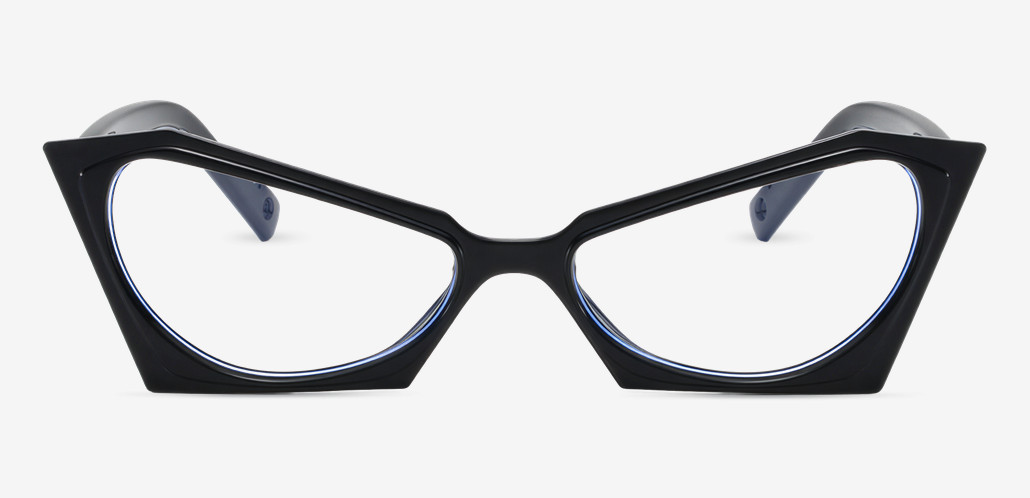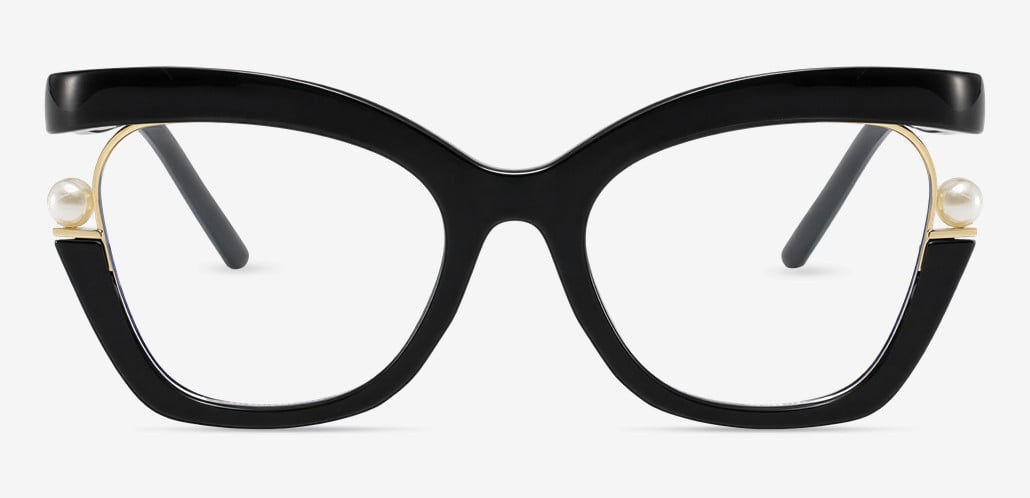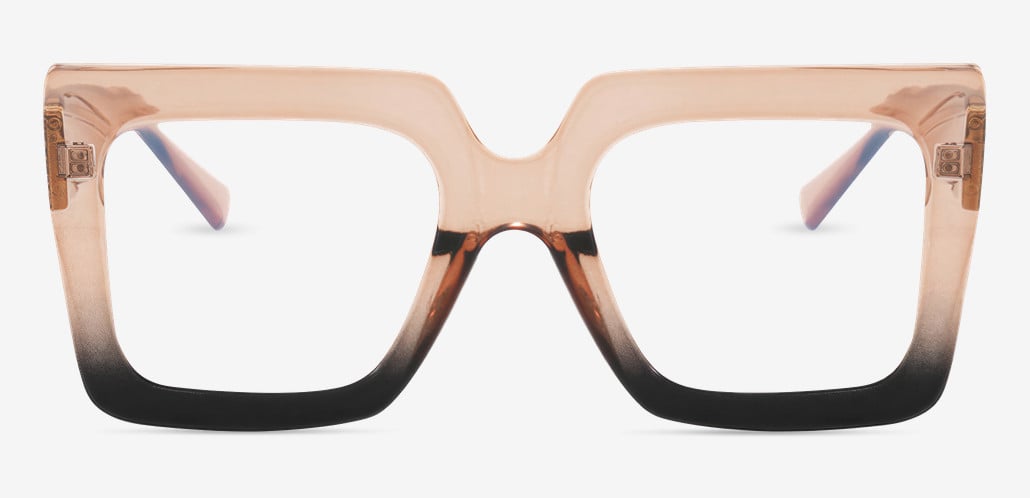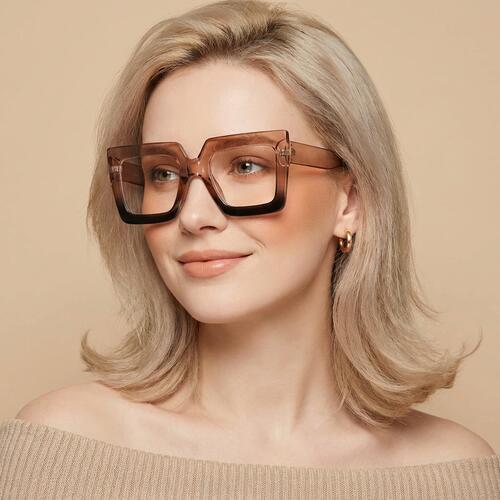

The first sign is almost always the menu.
You're at dinner, the lighting is dim and flattering, and you notice you're holding the page just a little farther out than you used to. Then a little farther. Then your arm runs out of room and you tilt your head back like you're appraising a painting. Somebody across the table grins, because they've been there too.
That's presbyopia. It isn't a disease and it isn't your fault — it's the eye's natural lens slowly losing its flexibility, which catches up with almost everyone sometime in their forties. And it's usually the exact moment people pull out their phone, squint, and type bifocals vs progressives into the search bar.
So let's actually settle it. Not with a spec sheet, but the way a good optician would talk you through it across the counter — including the parts the marketing pages tend to skip.
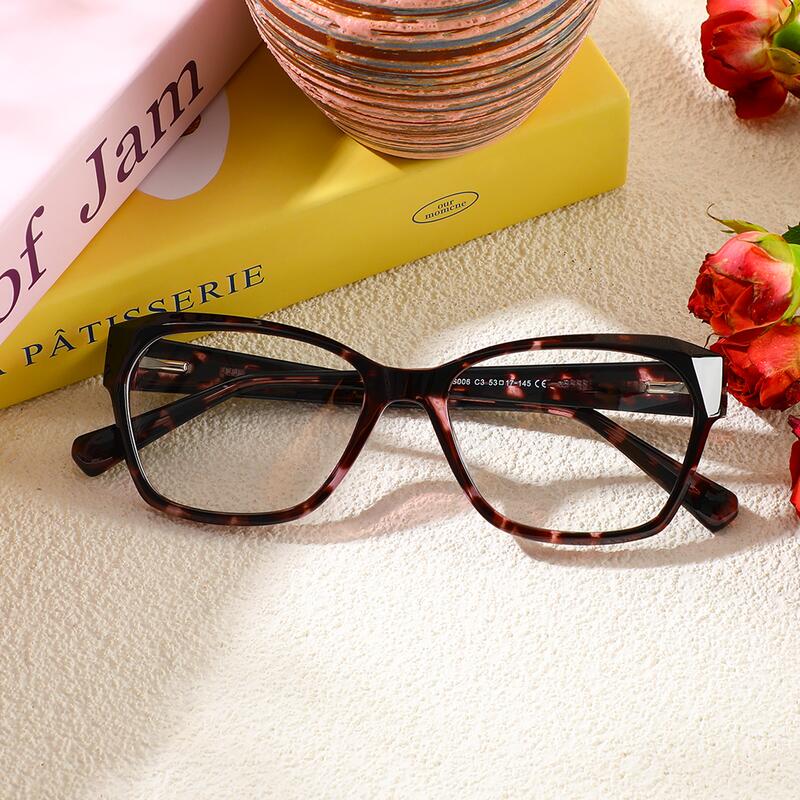
They solve the same problem in two very different ways
Both lenses exist to fix one thing: your eyes can no longer stretch to cover near and far on their own anymore, so the lens has to do the stretching for them.
A bifocal does it with two distinct zones. The large upper part of the lens is set for distance, the smaller lower part is set for reading, and there's a visible line where one stops and the other begins. Benjamin Franklin came up with the idea in the 1780s by literally sawing two lenses in half and stacking them — more than two centuries later, the basic concept still works exactly the same way.
A progressive does it with no line at all. Instead of a hard cut, the power changes gradually as you move your eye down the lens, blending from distance at the top, through an intermediate zone in the middle, into reading at the bottom. That's why opticians sometimes call them "no-line bifocals," though the engineering inside is a whole different animal.
That's the textbook part. Here's the part that matters more.

What each one actually feels like on your face
This is where most comparisons go quiet, and it's the only thing you'll really care about a week after you buy.
With bifocals, the headline is that reading zone. It's wide, it's stable, and it doesn't make you hunt for the sweet spot — if you spend hours with a book, a ledger, or a sewing project, that big, generous near area is genuinely lovely. The catch is something opticians call image jump: as your eye crosses the line, objects seem to hop slightly because the power changes all at once instead of easing in. For most people the brain quietly edits it out within a few days. The other catch is purely social — the line is visible to other people, and to you every time you catch your reflection.
Progressives trade that line away. No segment, no jump, and from across the room nobody can tell you're wearing a multifocal at all. What you get instead is the swim — a soft blur along the outer edges of the lens, where the optics aren't ground for your eye. Turn your head quickly in a brand-new pair and the room can seem to sway for a moment. You also give up width: the clear reading area is noticeably narrower than a bifocal's, so you learn to point your nose at whatever you're reading rather than just dropping your eyes. Adjustment usually takes a few days, sometimes a couple of weeks, and a small number of people never fully make peace with it.
Neither of these is a dealbreaker. But knowing they exist before you buy is the difference between "these are broken" and "oh, right, this is the thing the article warned me about — give it a week."
The intermediate zone is the quiet tiebreaker
Here's the factor that decides more of these cases than price or looks, and it's the one people overlook.
Bifocals jump straight from far to near. There's nothing in between — and "in between," roughly twenty to thirty inches from your face, happens to be exactly where your computer monitor, your car dashboard, and the price tags on a grocery shelf all live. A classic bifocal wearer at a desk ends up doing a slow, chin-lifting dance to find a focus that doesn't quite exist.
Progressives have that middle zone built in. If your day involves screens — and in 2026, whose doesn't — that intermediate band quietly earns its keep every single hour.
Who genuinely does better with bifocals
It's fashionable to steer everyone toward progressives, so it's worth saying plainly that bifocals still win outright for a real set of people.
If you do long stretches of sustained close work and want the biggest, most forgiving reading window money can buy, the bifocal's wide segment beats a progressive's narrow corridor. If you tried progressives once and your eyes simply never settled, going back to a line is not a step down — it's the right tool for your visual system. If budget is the deciding factor, bifocals are reliably the more affordable build. And in some cases an eye doctor will prescribe bifocals for a child or teen to help with an eye-teaming or focusing issue — that's a specific medical call, and it's one to make with your optometrist, not a blog.

Who genuinely does better with progressives
If you want that intermediate range, progressives are the only one of the two that offers it — full stop. If the visible line bothers you, or you'd just rather no one clock your age from your glasses, the seamless look is a real, legitimate reason to choose them. And if your day is a constant shuffle between your phone, your laptop, the road, and the person in front of you, the smooth handoff between distances is worth the narrower sweet spot.
The money question, answered straight
Bifocals are simpler to manufacture, so they're consistently cheaper than progressives — that's true at the corner optical shop and it's true online. Progressives carry a premium because the lens design is far more complex, and the fancier "premium" progressives that widen the reading corridor cost more again.
The honest footnote is that shopping online compresses that whole gap dramatically. The markup you'd pay at a traditional storefront — for the building, the chair, the staff — mostly disappears, which is the entire reason buying glasses online took off in the first place. The lens-to-lens price difference stays, but the starting point is a lot lower for both.
A word on switching — or not
If you've worn one type happily for years, your visual system is trained on it. Don't switch on a whim because a friend raves about theirs; their eyes aren't your eyes.
But there's one piece of timing worth knowing. The easiest moment to learn progressives is early in presbyopia, while your reading power (the ADD value on your prescription) is still low. The brain adapts to a gentle corridor far more readily than to the steep one you'll need in your sixties. People who put it off and try progressives for the first time at sixty-five often struggle — not because the lenses are bad, but because they waited.
So which should you actually buy?
Strip away everything above and it comes down to your life, not the lens.
If you're a heavy reader on a budget who barely touches a screen, or you're someone who tried no-line lenses and they never agreed with you, get bifocals and don't look back. If your days are stitched together out of monitors, dashboards, and faces — and you'd like to keep the line off your face while you're at it — progressives will reward you, as long as you give them a fair two weeks to settle in.
And here's the truth a spec sheet can't tell you: in a screen-soaked world, most people now land on progressives. But "most people" isn't you. The lens you'll actually reach for every morning beats the technically-perfect one that ends up living in a drawer.
At Aoolia we make both, and because we sell online we keep the prices honest on each — so the choice can come down to your eyes and your habits instead of your wallet. If you've decided the wide reading zone and the friendlier price are what you're after, you can browse our bifocal glasses here. Leaning toward the seamless look and that all-important middle distance? Take a look at our progressive lenses instead. Either way, you can upload your prescription once and we'll keep it on file — and if it's your first time ordering glasses online, that part is a lot less nerve-wracking than the menu was.
Clear vision at every distance is the whole point. Pick the pair that fits the way you actually live, and the next dinner menu won't stand a chance.
This article is for general information and isn't a substitute for an eye exam. Your optometrist's prescription — and that ADD value on it — is the final word on which lens is right for you.