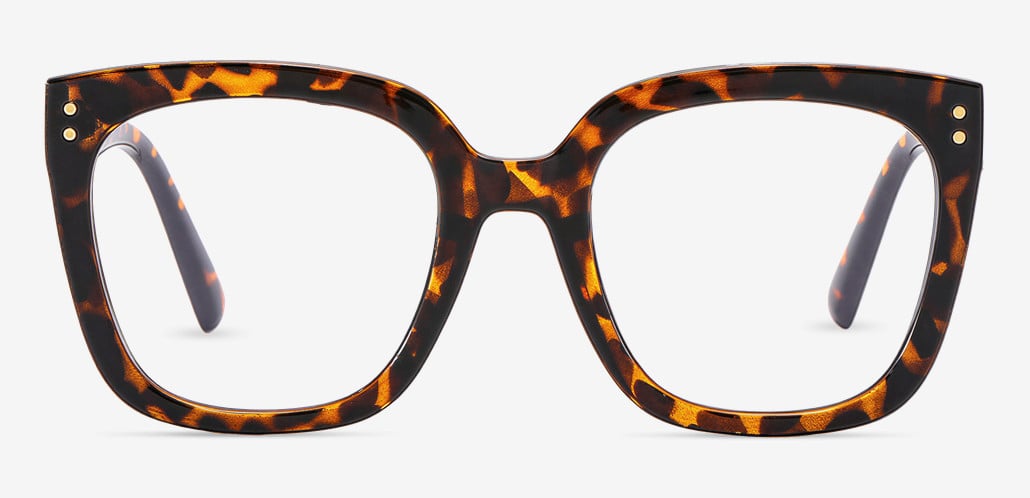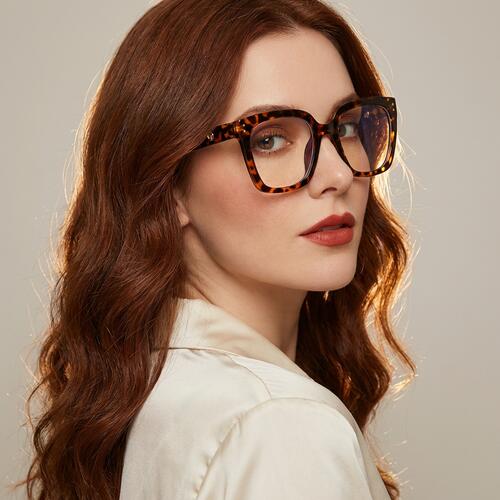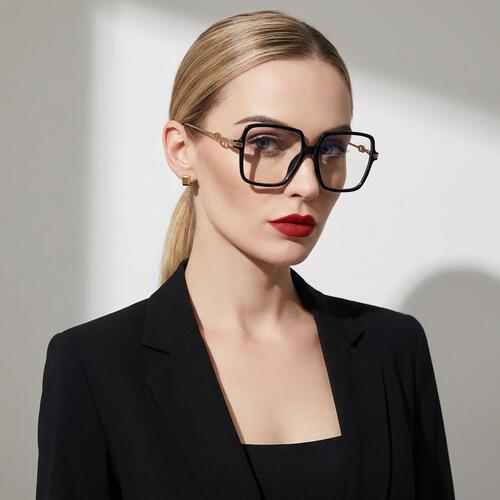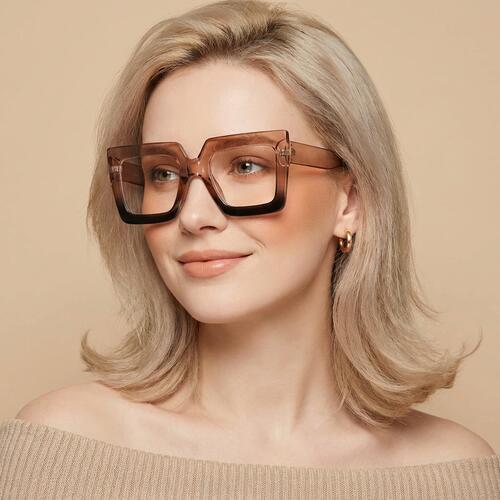

The Strangest Thing About Aviator Glasses
Almost everything written about aviators online is about sunglasses. Tom Cruise in Top Gun. General MacArthur on the beach in 1944. The mirrored lens. The Pacific Coast Highway shot. Aviators are so synonymous with sunglasses that the word "aviator" basically functions as a sunglasses category in most people's heads.
Which makes it odd that the fastest-growing use of the shape, right now, is prescription eyeglasses.
Walk through an American optometry office and you'll notice it — more aviator-shaped clear-lens frames on faces under 40 than at any point in the last twenty years. The Vision Council's 2026 trend report names aviators as one of the top three shape categories crossing over from sun to optical. The shift is sharp enough that several large eyewear retailers have spun off "aviator eyeglasses" into its own filter, separate from the long-established aviator sunglass aisle. Aoolia is one of them.
The reason is partly fashion. But mostly it's geometry. The same things that make an aviator frame work for a 1930s pilot — wide lens area, lightweight wire frame, adjustable nose pads, a shape that follows the natural line of the brow — also happen to be exactly what makes a frame work for daily prescription wear in 2026. The aviator was, accidentally, one of the most over-engineered everyday frame designs ever produced.
This is a guide to what that means in practice: where the shape came from, what technically makes a frame "aviator," why it works so well as eyeglasses specifically, and which of the four modern aviator sub-shapes is most likely to suit your face. We'll spend some time on the lens-fitting details that opticians actually care about, the three fit problems that account for almost every aviator return, and a section on aviators for women that goes beyond "Gloria Steinem wore them."
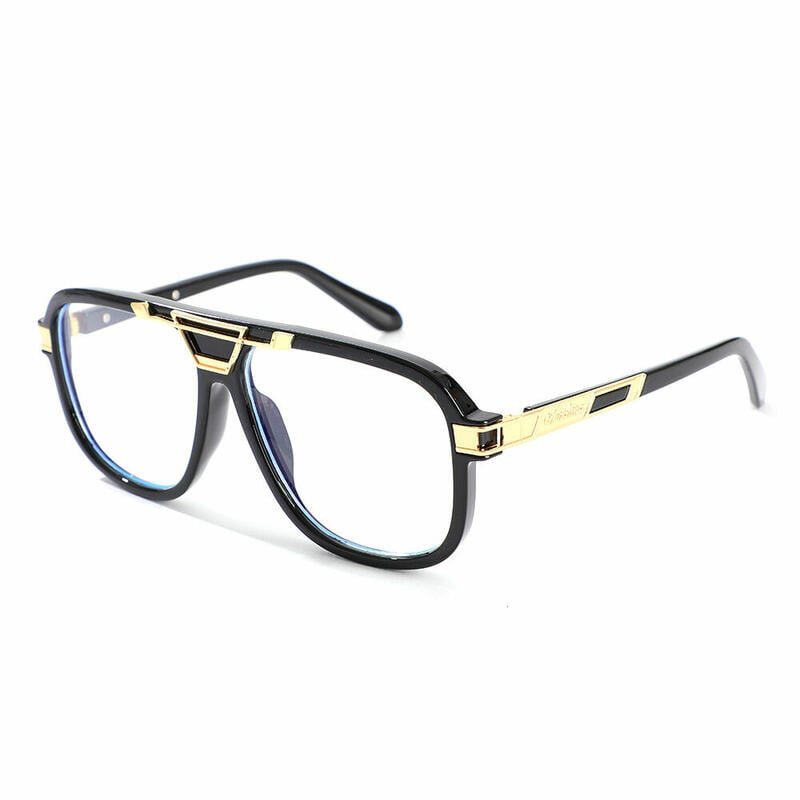
Where the Shape Actually Came From (And Why It Wasn't About Fashion)
The story almost everyone repeats — that Bausch & Lomb invented aviators in 1936 — is technically wrong. The real story starts sixteen years earlier, on a freezing test flight, with a pilot named Shorty Schroeder.
In 1920, Schroeder took a biplane above 33,000 feet on a U.S. Army Signal Corps test flight. His fur-lined goggles fogged at altitude. He had to pull them off to see. By the time he landed the plane, his eyes had effectively frozen — vision blurred, corneas damaged. His fellow test pilot, Lieutenant John Macready, was the one who extracted him from the cockpit. Macready spent the next nine years trying to engineer a replacement for the fogging goggles.
In 1929, Macready partnered with Bausch & Lomb, a Rochester optical company. American Optical was working on the same problem on a parallel track — they delivered the D-1, the first frame most historians actually credit as an "aviator-shaped" sunglass, to the U.S. Army Air Corps in August 1935. Bausch & Lomb's prototype, originally called "Anti-Glare," followed in 1936. It went on sale to the public in 1937, got a metal frame in 1938, and was patented as the "Ray-Ban Aviator" in 1939.
The teardrop shape wasn't an aesthetic decision. It was engineered specifically because piston-powered aircraft of the era required pilots to constantly glance downward at instrument panels. A wider lower lens area meant a pilot could shift their gaze without shifting their head — which mattered when "shifting your head" could cost you situational awareness over enemy airspace. The double bridge was structural, not decorative: thin metal frames needed reinforcement at the nose to survive cockpit vibration. The adjustable nose pads were for fit under flight helmets and oxygen masks. Every element of the original aviator was solving a specific problem that had nothing to do with looking cool.
That's why the design has aged so well. Most fashion shapes age out in a decade because they were fashion from the start. The aviator was infrastructure — and infrastructure tends to last.

What Technically Makes a Frame "Aviator"
This matters because the word "aviator" gets used to describe a lot of frames that aren't really aviators. In retail listings, the term has drifted to mean roughly "any teardrop-shaped frame with a metal rim." A genuine aviator silhouette has four specific construction elements:
1. A teardrop lens shape. Not perfectly round. Not perfectly oval. The original is slightly wider at the top and narrows toward the bottom outer corner, following the curve of the orbital bone. Modern aviator variations sometimes invert this proportion or square it off (more on the sub-shapes below), but the underlying teardrop DNA remains.
2. A double or single brow bar. The horizontal piece across the bridge. The original Bausch & Lomb design used a double bar for structural reinforcement; many modern aviator eyeglasses use a single bar to keep the look lighter and more office-appropriate. Some triple-bar variants exist for the maximum-vintage look.
3. Adjustable silicone nose pads. This is the detail most knock-offs skip. A genuine aviator uses metal arms with adjustable silicone pads — not a fixed acetate bridge. The adjustability isn't cosmetic; it's the entire reason aviators fit accurately enough to work as prescription frames.
4. A thin metal wire rim. Lightweight construction was a flight requirement. The original used Monel (a copper-nickel alloy). Modern aviator eyeglasses are more often titanium or stainless steel, which solves the corrosion and skin sensitivity problems Monel had.
If a frame is missing any two of these four elements, it's probably an "aviator-inspired" frame rather than an aviator. That distinction matters in fit and in long-term comfort — the four elements work together. Remove the adjustable nose pads, for instance, and you lose the precision fit that lets a wire frame sit accurately on a wide range of face shapes.
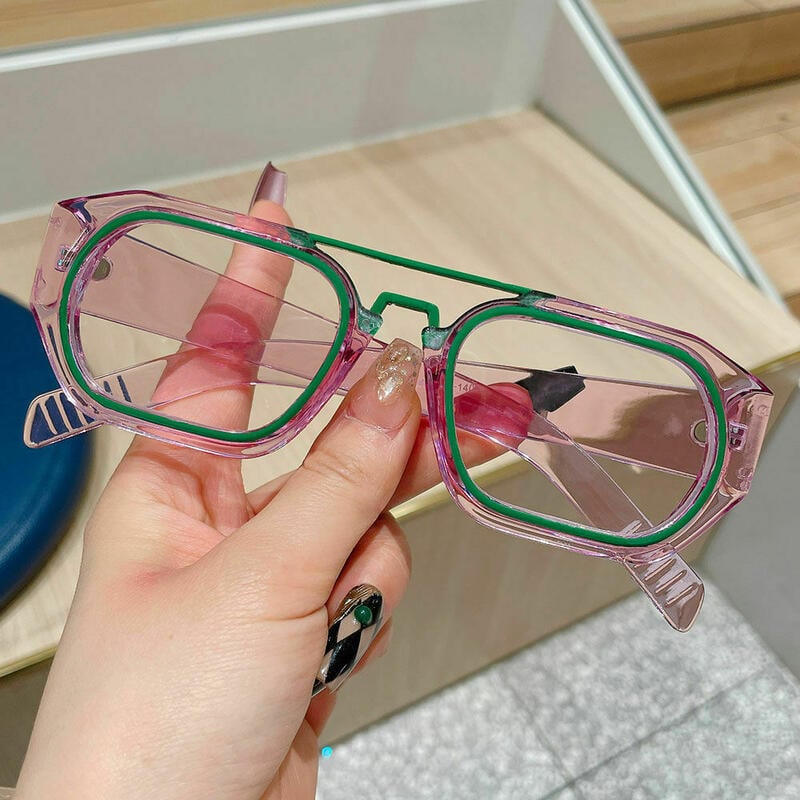
Why the Shape Works So Well as Prescription Eyeglasses
Eyeglasses have a different set of requirements than sunglasses. A pair of glasses you wear ten hours a day, every day, for two years has to do things sunglasses don't: hold prescription lenses without sliding, sit comfortably for sustained desk work, accommodate progressive lens corridors, look appropriate in conference rooms and family dinners. Aviators do all of these surprisingly well.
Lens real estate for progressives. Progressive lenses need vertical lens height to accommodate three viewing zones (distance, intermediate, reading). Frames with shallow lenses compress the corridor and force you to tilt your head more. The aviator teardrop shape has more lens height than most rectangle, browline, or cat-eye frames at the same width. For wearers over 40 — when progressives become relevant — this is a real functional advantage.
Adjustable nose pads = better prescription accuracy. Prescription lenses have an optical center that should sit directly in front of your pupil. Acetate frames with fixed bridges sit where they sit; you can't move them. Wire frames with adjustable nose pads let an optician (or you) fine-tune the vertical and horizontal position by 2–3 millimeters in any direction. For prescriptions above ±2.00, that adjustment is the difference between visual clarity and a low-grade headache.
Thin rim hides prescription edge thickness. Strong prescriptions create thick lens edges (minus lenses thicker at the outer edge; plus lenses thicker at the center). Acetate frames are wider than the lens edge, so they hide thickness. Aviator wire rims are narrower than most lens edges — which sounds bad, but visually it works the opposite way most people expect: the lens edge becomes part of the frame's visual line. A thick acetate frame with a thick lens edge tucked behind it looks chunky. A thin wire aviator with a visible lens edge looks technical, intentional. This is part of why high-prescription wearers often find aviators more flattering than acetate alternatives.
Gender, age, and profession-neutral. Almost no other shape works across this much demographic territory. Aviators look right on a 60-year-old surgeon and a 28-year-old graphic designer; on a man at a board meeting and a woman at a creative agency; on weddings and weekends. This isn't marketing — it's a consequence of the engineering. The shape doesn't reference any particular gender or era because it wasn't designed to reference anything. It was designed to be invisible while doing a job.
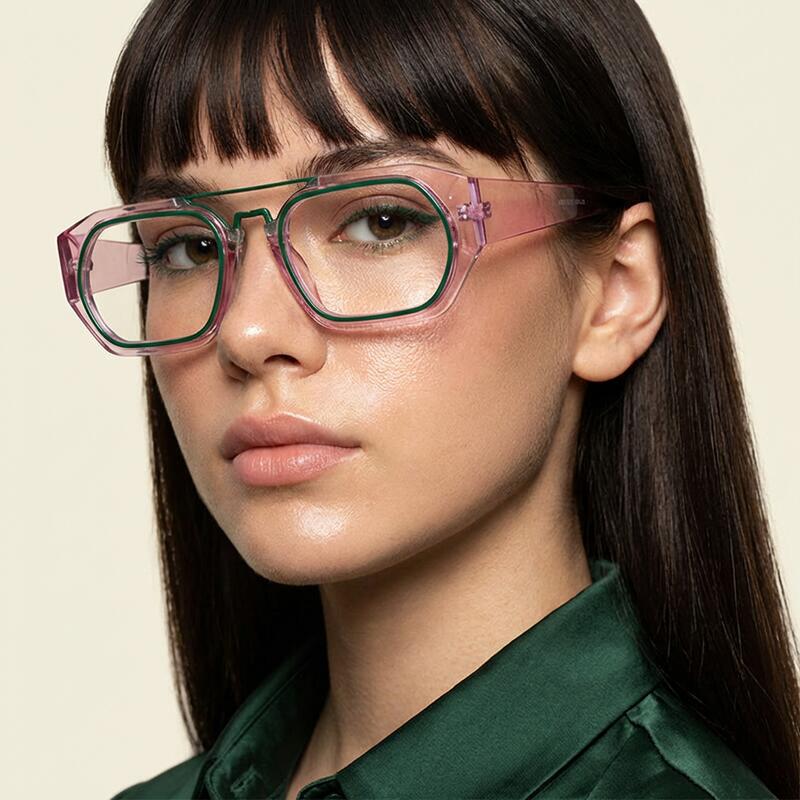
The Modern Aviator Lexicon: 4 Sub-Shapes You Should Know
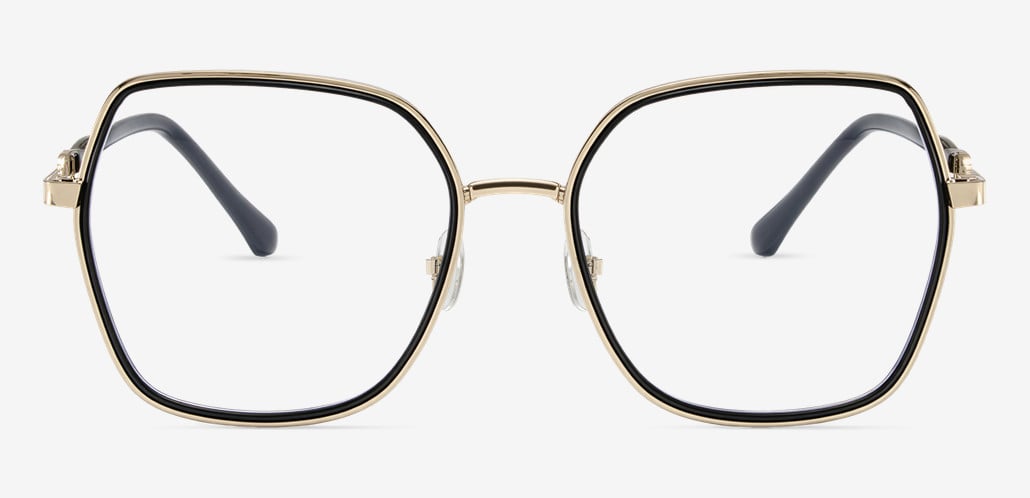
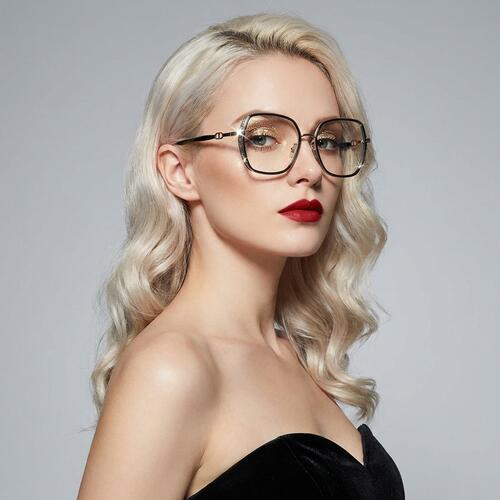
When you look at the Aoolia aviator glasses collection, or any contemporary aviator category, you're not actually looking at one frame shape. You're looking at four. Most retailers don't bother to label them, which is partly why so many shoppers end up trying the wrong sub-shape and concluding "aviators don't work on me."
The Classic Teardrop
The 1936 silhouette, more or less unchanged. Wider at the top, narrowing toward the outer-lower corner, double or single brow bar, deep lens. This is the version that looks most overtly "aviator" — your eye reads it as the pilot frame immediately.
Works for: Heart, oval, and longer face shapes. Strong jawlines. People who want the silhouette to be recognizable.
Watch out for: Round faces (the deep lens height can pull the face down further). Smaller features (the lens area can swallow them).
The Navigator
A more compact aviator. Smaller overall, slightly squarer at the bottom, less dramatic teardrop. The shape American Optical introduced in the late 1950s as a smaller-faced alternative to the Bausch & Lomb original.
Works for: Smaller faces. Conservative offices. First-time aviator buyers who want the DNA without the drama.
Sits well in: Brushed titanium, gunmetal, soft gold tones.
The Square Aviator
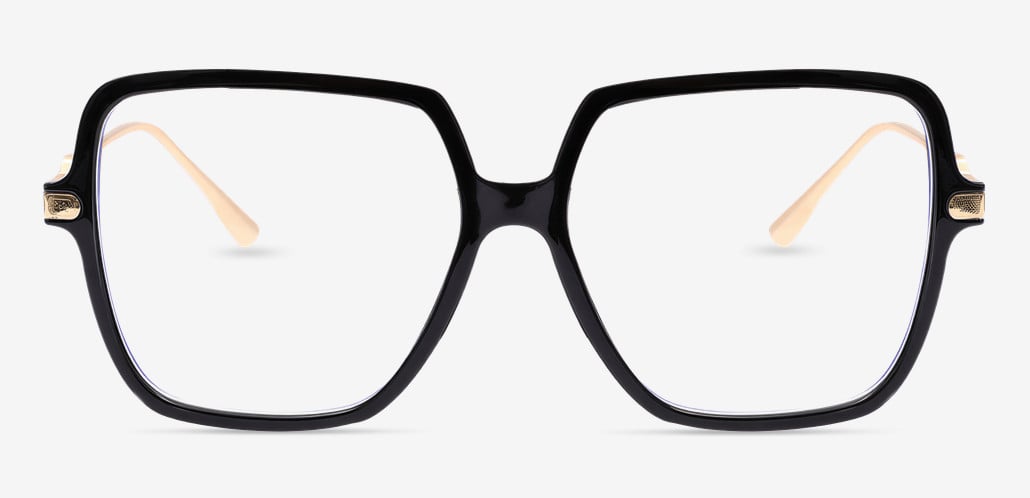
A clear top line and a more rectangular lower edge, with just enough curvature to read "aviator" rather than "rectangle." This is the sub-shape having the biggest moment in 2026 — it's the aviator equivalent of how square cat-eyes overtook classic cat-eyes a few years ago.
Works for: Round, oval, and most face shapes. Modern professional settings. Anyone who likes aviators but feels the classic teardrop reads too "pilot."
Pairs especially well with: Photochromic (Transitions) lenses, because the squared geometry holds light-darkening lenses without distortion at the edges.
The Round Aviator
A softer, more circular take on the teardrop. The shape lands somewhere between aviator and the round John Lennon-style frame. Often comes in lighter gold or rose gold, sometimes with a single thin bar instead of a double bridge.
Works for: Square and angular faces (the curve softens them). Creative-industry settings. People who tried classic aviators and felt they were too sharp.
Watch out for: Round faces (the doubling-up of round shapes flattens features). High prescriptions (the rounder edge shows lens thickness more than the teardrop or square versions do).
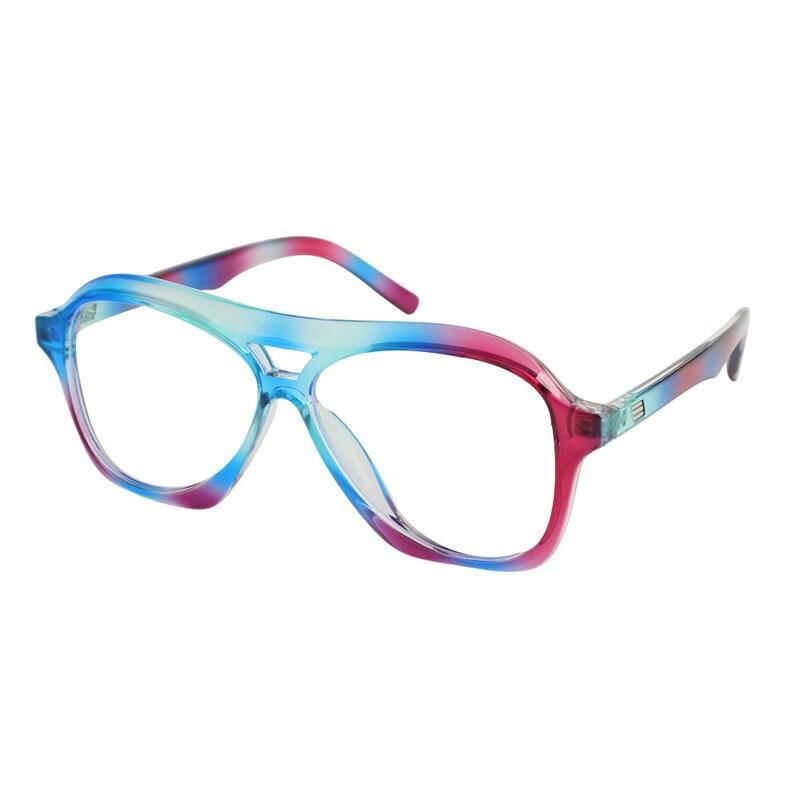
Face Shape: The Truth Is About Sub-Shape, Not Category
Most face-shape advice you'll read says some version of: "Aviators work best on heart and oval faces." Like most one-line face-shape advice, this is true and unhelpful at the same time. It treats all aviators as one shape, when in practice they're four.
Here's what actually happens at fittings:
Heart face: Classic teardrop is the strongest match. The wider top of the frame mirrors the wider top of the face, and the narrowing lower corner echoes the chin.
Oval face: All four sub-shapes work. Use this as a freedom to pick by style preference, not constraint.
Round face: Square aviator is the strongest match. Classic teardrop is the weakest. The angle of the square version adds definition that round faces lack; the soft teardrop reinforces what's already there.
Square face: Round aviator or navigator. Both add curvature that softens a strong jawline. Avoid square aviator (doubles up on angularity).
Diamond face: Classic teardrop or square aviator. Both balance the wider cheekbones by drawing the eye upward.
Long face: Navigator (smaller proportions don't elongate the face further). Classic teardrop can extend a long face visually.

The honest version of face-shape advice is: try at least two sub-shapes before deciding aviators don't suit you. Many people who think they "can't wear aviators" have only tried the classic teardrop.
Aviators on Women: Past the Gloria Steinem Reference
The aviator-as-women's-frame has a longer history than most style guides acknowledge. Gloria Steinem wore them through the 1970s. Diane Keaton wore them in Annie Hall. Charlie's Angels made them mainstream. Olivia Newton-John wore them in Grease. The shape was never strictly menswear — it just got coded as masculine because the 1944 MacArthur photo cemented the cultural image as military.
The 2020s revival of women's aviator eyeglasses is meaningfully different from the 1970s version. The proportions are smaller, the metals are lighter, and the color palette has expanded well beyond gunmetal and silver. The contemporary women's aviator looks more like:
Rose gold or soft champagne metal rather than gunmetal or chrome
Smaller frame width (52–54mm vs. the 58–62mm of the original men's design)
Single brow bar rather than double, for a lighter visual weight
Slim wire rather than thick wire (the difference between a 1.0mm wire and a 1.5mm wire is striking in person)
Square or round sub-shape more often than classic teardrop
If you're a woman who has always written off aviators because the men's version felt too heavy on your face, the contemporary women's aviator is a different frame. It's worth a second look.

Material Reality: Why Titanium Has Quietly Become the Default
The original aviator was Monel — a copper-nickel alloy that was lightweight, durable, and cheap to manufacture. It had two problems: it tarnished, and it triggered skin reactions in roughly 10% of wearers (nickel is the single most common metal allergen).
Modern prescription aviators are increasingly titanium, for three reasons. Titanium is roughly 30% lighter than Monel for the same structural strength, which matters in a frame you'll wear for ten hours at a stretch. Titanium is hypoallergenic — no nickel content, no skin reactions. And titanium holds its shape after adjustments far better than Monel does, which means the nose pad adjustments you'll need every few months actually stick instead of slowly relaxing.
Stainless steel is the budget-friendly alternative. Lighter than Monel but heavier than titanium, hypoallergenic enough for most wearers (some stainless alloys contain trace nickel; ours don't), and the most common material at the under-$50 price point. For a first aviator, stainless steel is fine. For a primary daily pair you'll wear for years, titanium pays for itself.
Avoid plated metal aviators below the $25 price tier. The plating wears off at contact points (nose pads, ear tips), and once it does, the base metal underneath is usually a less-controlled alloy with higher nickel content. The visible cosmetic wear is the warning sign; the invisible skin reaction is the actual problem.
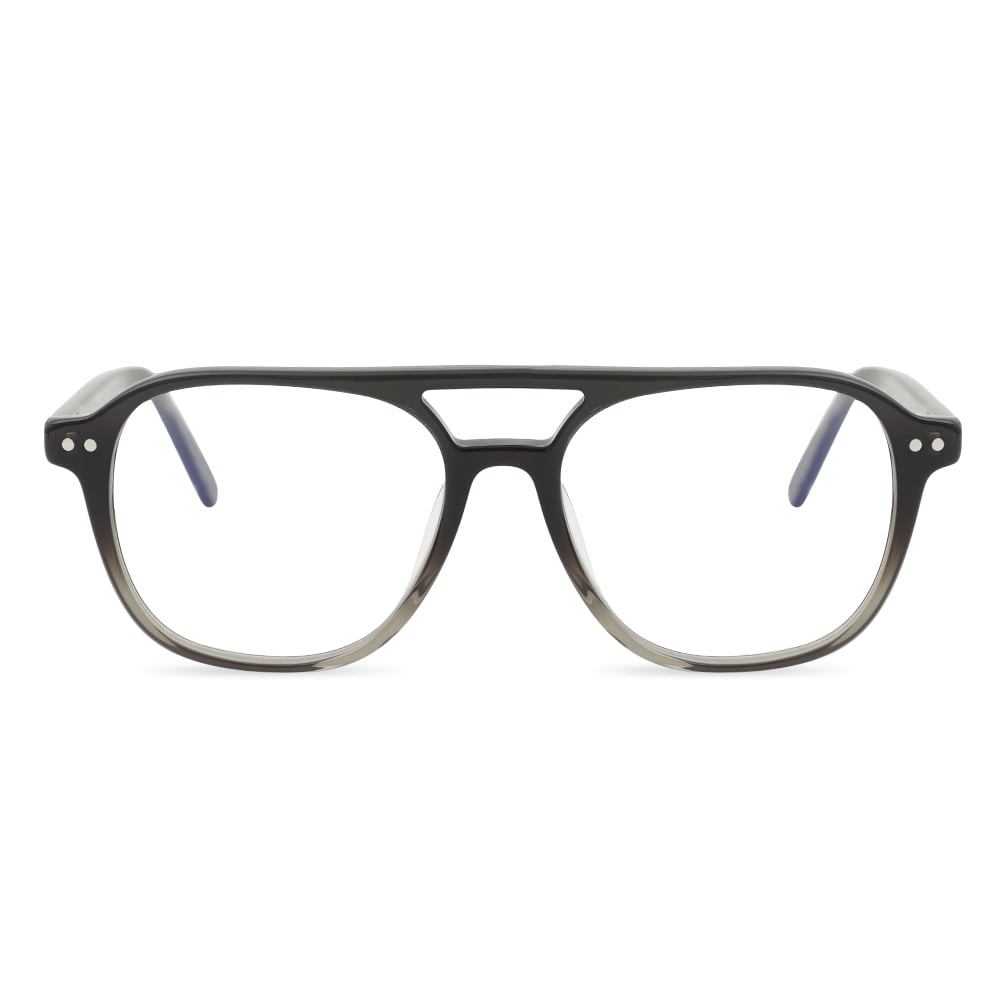
The Three Fit Issues That Account for Most Aviator Returns
After looking at return reasons across our optical team over the last year, three issues come up over and over with aviator buyers. None of them are deal-breakers; all of them are fixable.
1. The frame slides down the nose. The single most common aviator complaint. The cause is almost always nose pad alignment, not frame weight. Wire-frame nose pads need to sit flush against the sides of the bridge — not just touching, but flush. If only the bottom corner of the nose pad is in contact, the frame will rotate forward and slide. Any optician can re-bend the nose pad arms in about a minute. We do this free for any Aoolia customer; most local opticians will do it as a courtesy.
2. The frame pinches the bridge. Common in customers with low or wide nose bridges (more frequent in customers of East Asian, South Asian, or African descent). Standard aviator nose pad spacing was designed for the European bridge shape that dominated 1930s American aviation. Modern aviator eyeglasses increasingly come with "low bridge fit" or "Asian fit" variations — wider pad spacing, deeper pad pocketing. If a standard aviator pinches, ask about a low-bridge fit option before assuming the shape doesn't work for you.
3. The temple tips dig in behind the ears. The wire-frame temple tips of older aviators were straight; modern ones are curved (called "paddle" temples). If the curve doesn't match your ear contour, the tip presses into a small area instead of distributing pressure. This is also a 60-second fix at any optical shop — the temple tip is gently bent to follow your specific ear curve.
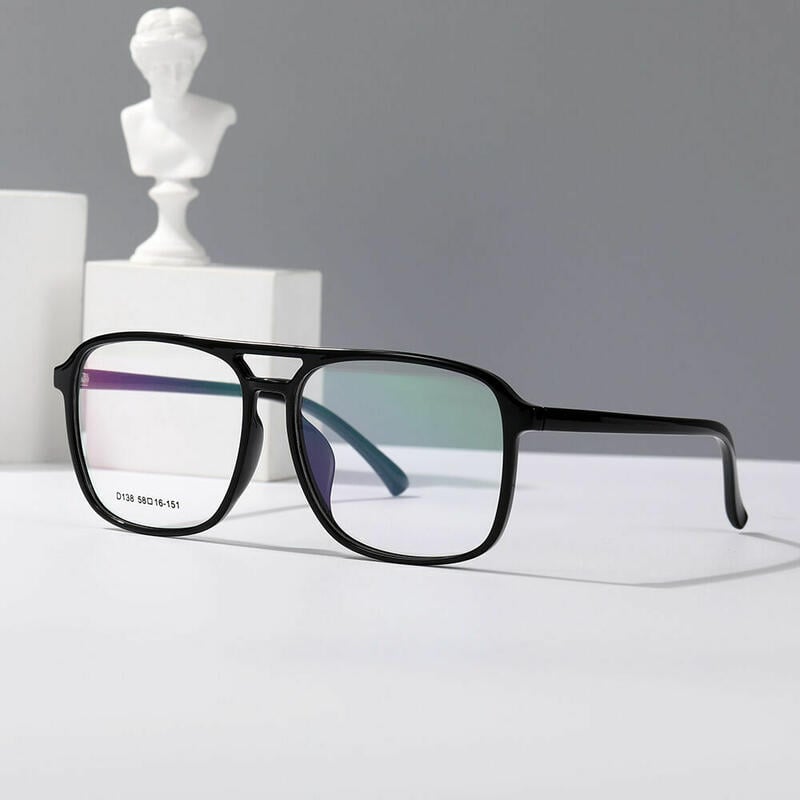
Lens Pairing: What Actually Works in an Aviator
A few specifics that come up in optical consultations:
Progressives: The aviator's deep lens height is one of its strongest advantages for progressive wearers. Look for at least 30mm of vertical lens height at the center for a comfortable progressive corridor. Most square and classic teardrop aviators clear this easily; some compact navigator versions cut it close.
High prescription (above ±4.00): High-index lenses (1.67 or 1.74) are worth the upgrade in an aviator. The thin wire rim doesn't hide edge thickness, and a strong prescription in a standard 1.50 lens can look chunky in a teardrop frame. The cost difference (typically $30–$50) is one of the higher-value upgrades you can make.
Photochromic (Transitions): Aviator + photochromic is one of the better combinations in eyewear. The shape's sun-coded DNA means the frame looks intentional whether the lenses are clear or darkened. Photochromic in a cat-eye or rectangle frame can look slightly mismatched when the lenses darken; in an aviator, it reads as the frame doing what it's meant to do.
Anti-reflective coating: Particularly important on aviators because the wider lens surface area picks up more reflections than a smaller rectangle does. The cheapest AR coatings (those bundled "free" with low-end frames) tend to peel after 6–12 months; mid-tier AR coatings (added $15–$25 typically) hold for 2–3 years and dramatically reduce the glare that makes photographs of glasses-wearers look strange.
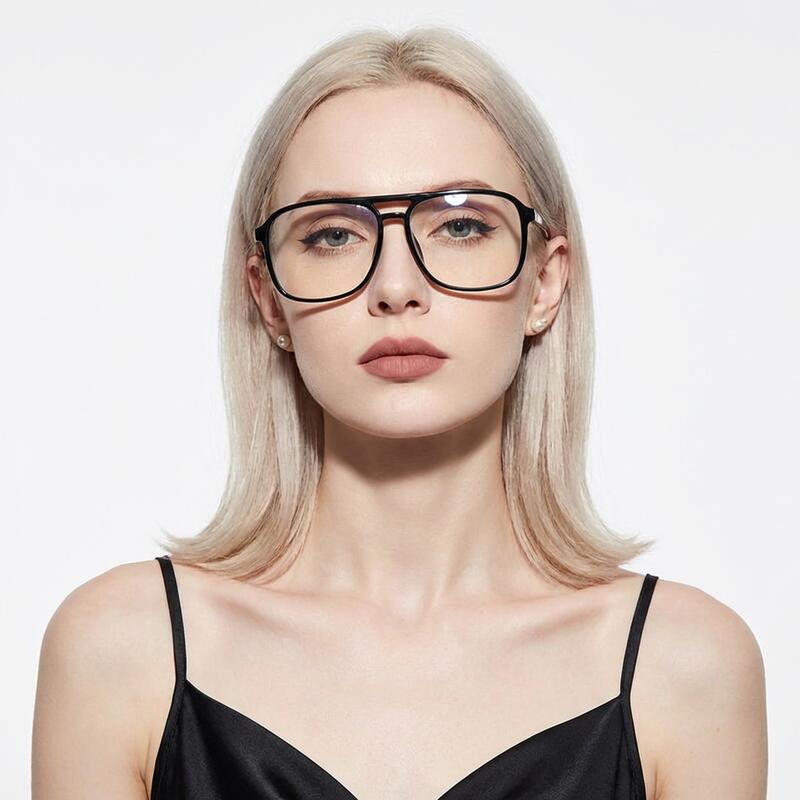
Caring for a Wire Aviator (Different from Acetate Care)
Wire-frame care is a different exercise than acetate-frame care, and most people who switch from acetate to aviator get this slightly wrong in the first few weeks.
Don't squeeze the bridge. The brow bar across the top of an aviator is the structural backbone. Pressing inward on the lenses to clean them — natural muscle memory from acetate frames — slowly bends the bridge out of shape. Hold the temples instead.
Avoid one-handed removal. Pulling glasses off by one temple twists the hinge. With acetate, the frame is rigid enough to forgive this. With thin titanium or stainless wire, the hinge eventually goes loose. Two hands, every time.
Get the nose pads adjusted every 4–6 months. Silicone nose pads soften with skin oils. The pad arms relax with daily handling. A 30-second adjustment restores the original fit; skipping it for two years means the frame slowly stops sitting where it was designed to sit.
Don't store them on the curved teardrop. When you set aviators down, set them on the temples or face-down on the lenses. Resting them on the lower lens curve over time deforms the rim where it's already thinnest.
Tighten the screws annually. Wire-frame hinges use very small screws. They loosen. A microfiber cloth, a jeweler's screwdriver from any hardware store, and an annual ten-second tightening will add years to the frame's life.
Quick Answers (Different From the Page FAQ)
Are aviator eyeglasses good for round faces?
Yes — but specifically the square aviator sub-shape. The angular lower edge adds definition that round faces benefit from. Avoid the classic teardrop on a round face; it softens features that are already soft.
What's the difference between an aviator and a navigator?
The navigator is a smaller, slightly squarer aviator variant introduced by American Optical in the late 1950s. Same wire-frame, adjustable-pad construction; smaller overall proportions and a flatter lower edge. Better for smaller faces and more conservative office settings.
Do aviator eyeglasses work for women?
Yes, with a meaningful caveat: the contemporary women's aviator is a different frame than the classic men's version. Smaller proportions, lighter wire, single brow bar, and warmer metal tones (rose gold, champagne, soft gunmetal) make the shape work without reading as borrowed menswear.
Can I get progressive lenses in aviators?
Yes, and aviators are actually one of the better shapes for progressive lenses because the deep lens height accommodates the corridor between distance and reading zones. Check that your chosen frame has at least 30mm of lens height at the center for a comfortable progressive fit.
Why do my aviator glasses slip down my nose?
Almost always a nose pad adjustment issue, not a weight issue. The silicone pads need to sit flush against the bridge — not just touching at one corner. Any optician can re-bend the pad arms in under a minute. If you bought from Aoolia, open a support ticket and we'll send you a free pad adjustment guide.
Are aviators still considered fashionable in 2026?
Yes. The Vision Council's 2026 trend tracking lists aviators among the top three shape categories crossing over from sunglasses to optical. Multiple fashion editorial roundups (Vogue, FashionUnited) have flagged the square aviator specifically as one of the dominant prescription frame shapes of the year.
Try a Pair Before You Decide the Shape Isn't for You
Every aviator in the Aoolia aviator glasses collection has a virtual try-on built into its product page. If you've never seriously considered aviators for prescription wear, start with a square aviator in soft gold or navigator in titanium — these are the two sub-shapes most likely to work on a face that hasn't worn aviators before. The classic teardrop is the most recognizable, but it's not the most beginner-friendly.
Every prescription on every aviator order is reviewed by an in-house licensed optician before lenses are cut. Wire frames with strong prescriptions are exactly the combination where lens decentration matters most — and where most online retailers cut corners. If your prescription is above ±4.00, our optical team will reach out before shipping if the chosen frame won't accommodate the lens cleanly, rather than letting you find out at home.
If you're not sure where to start, open a support ticket with your face shape, prescription strength, and intended use case (office, daily, occasional). A real optician will reply with two or three specific frames worth trying.