
The Word "Custom" Is Doing a Lot of Quiet Work
Here's something most people never stop to think about: if you wear prescription glasses, you have never once worn a mass-produced pair. There is no warehouse shelf with your exact glasses sitting on it. Your lenses were cut, ground, and centered for your eyes and nobody else's. By any honest definition, every pair of prescription glasses is custom.
So when a page says "custom glasses," the interesting question isn't whether they're custom. It's which part of the customization you're actually paying attention to — and whether it's the part that matters.
Most shoppers spend ninety percent of their decision on the frame. Shape, color, whether it makes their face look longer or softer, whether it photographs well. That's the fun part, and there's nothing wrong with enjoying it. But here's the thing we see from the lab side, day after day: the frame is the layer of customization that has the least to do with whether your glasses work. The decisions that determine whether you'll see sharply, comfortably, and without a low-grade headache by 4 p.m. are almost all invisible. They happen in a few dropdown menus most people click through in about eight seconds.
This guide is about those eight seconds.
It is deliberately not a click-by-click walkthrough of how to place an order — if that's what you came for, our step-by-step customization guide covers the buttons. This is the layer underneath: what each of those choices actually does to the glasses on your face, which ones change your vision and which are pure cosmetics, and who absolutely cannot afford to get them wrong.

Two Layers of "Custom," and Only One of Them Is About Looks
It helps to split customization into two stacks.
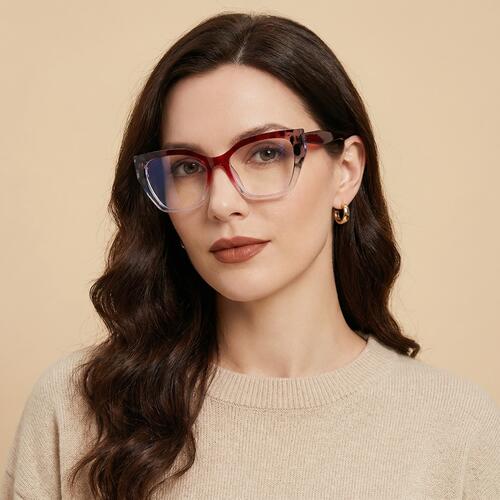
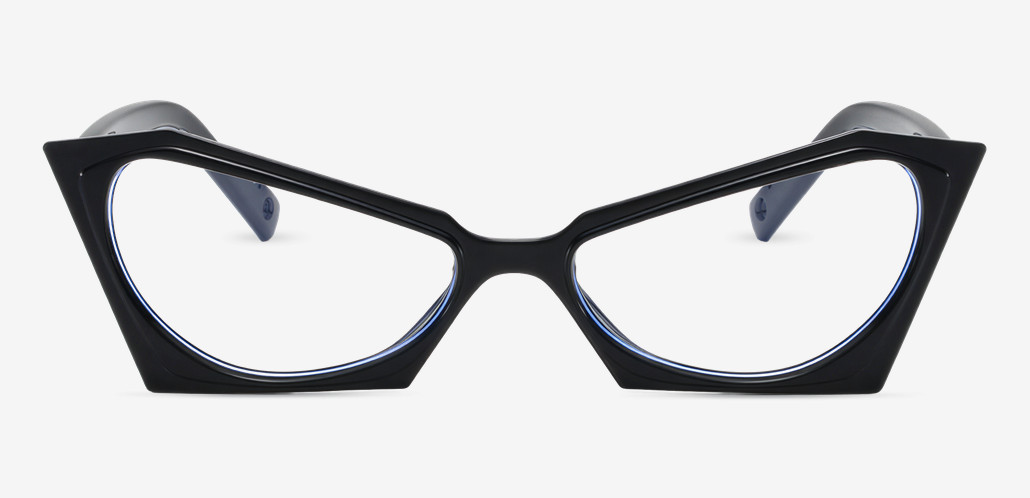
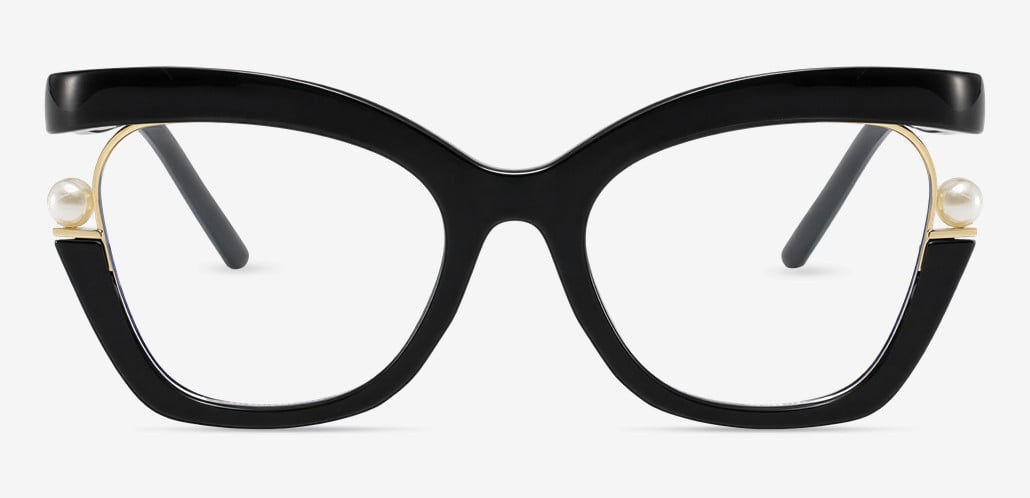
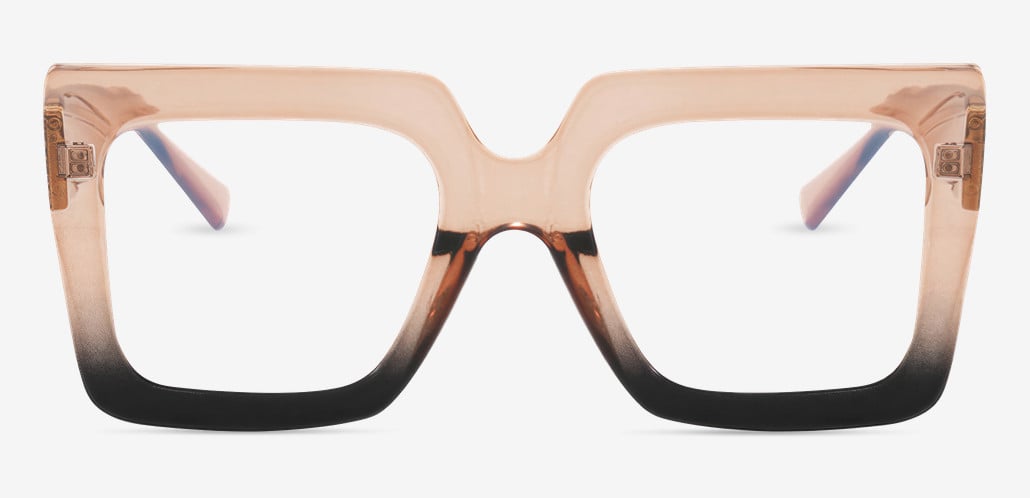
The visible stack is everything you can see in a mirror: frame shape, color, material, size, whether it's full-rim or rimless. This stack is real, and it matters for how you feel wearing the glasses — but it's a matter of taste and fit, not vision. Pick what you like. (If you want help here, our guides on choosing frames for your face shape and reading frame measurements do the job.)
The invisible stack is the optical build: lens index, lens type, your measurements, and coatings. You will never see these by looking at the finished glasses. You'll only feel them — in how clear the edges of your vision are, how heavy the glasses sit, whether reading gives you a faint ache behind the eyes.
Almost everything that goes wrong with a pair of glasses lives in the invisible stack. So that's where the rest of this guide stays.
1. Lens Index: The Choice People Underspend On (and Sometimes Overspend On)
Lens index is a number — 1.50, 1.61, 1.67, 1.74 — that describes how efficiently the lens material bends light. The higher the number, the more bending you get from less material, which means a thinner, lighter lens for the same prescription.
This is the single most consequential invisible choice, and it's the one people most often get wrong in both directions. They under-buy and end up with thick, heavy lenses that bulge past the frame edge. Or they get talked into 1.74 for a mild prescription that never needed it.
There's no mystery to matching it. The consensus across optical labs lines up cleanly with prescription strength:
A few honest caveats most product pages skip. Higher index costs more and can introduce faint color fringing at the edges of your vision, which a small number of detail-focused people (artists, anyone doing fine close work) actually notice. Big frames make a thick lens far more obvious than small frames do, so a large square frame with a -5.00 prescription needs more index than a small round one with the same numbers. And if your prescription is mild, the most flattering thing you can do is not buy up — you'll just be carrying extra cost for a difference you can't see.
If thinness is your priority, this is the line that deserves your money far more than any coating upsell.

2. Your Measurements: The Part That Can Undo a Perfect Prescription
This is the one almost nobody respects until it goes wrong.
Your prescription tells the lab how to bend light. Your pupillary distance — the gap between the centers of your pupils, in millimeters — tells the lab where to put that bending. Each lens has one precise spot, the optical center, where it works exactly as written. PD is the instruction for lining that spot up with your pupil.
Get it wrong and you've built a flawless prescription aimed slightly off your eye. The result isn't dramatic — that's what makes it sneaky. It's a faint pulling sensation, eyes that tire faster than they should, headaches you blame on screens or sleep. The Cleveland Clinic puts it bluntly: a miss of just a millimeter or two can turn corrective eyewear into something unhelpful, even disruptive.
A few facts worth knowing before you type a number into a box:
The average adult PD lands somewhere around 62–64 mm, but "average" is meaningless for you personally. Real adult PDs run roughly 54 to 74 mm, and every value in that range is normal.
Most people aren't symmetrical. Cleveland Clinic notes that roughly four out of five people have eyes that don't sit evenly around the bridge of the nose. For everyday single-vision glasses that small imbalance usually doesn't matter. For progressives and strong prescriptions it does, which is why those orders often need a monocular PD — each eye measured separately.
Reading glasses use a slightly smaller number. Your eyes turn inward when they focus up close, so near PD typically runs about 3–4 mm less than your distance PD.
The practical takeaway: a few-dollar frame with an accurate PD will outperform an expensive frame with a guessed one, every single time. If your PD isn't printed on your prescription, measure it carefully (twice), or have it taken professionally — especially before ordering progressives.

3. Lens Type: Match It to How You Actually Use Your Eyes
This choice is less about your prescription and more about your day.
Single vision corrects one distance — either far or near. If you only need help seeing the road, or only need help reading, this is it, and it's the simplest lens to get right.
Progressives (the no-line kind) stack distance, intermediate, and reading zones into one lens with no visible line. They're what most people over 40 eventually want because they handle the whole day — driving, a laptop, a menu — without swapping glasses. The trade-off: the reading and intermediate zones live in specific bands of the lens, so they're far more sensitive to fitting precision. Labs hold progressives to much tighter measurement tolerances than single-vision lenses for exactly this reason. A progressive built on a sloppy PD is the classic source of "I can never find the right spot to read through."
Bifocals do near and far with a visible line and no in-between zone. Fewer people choose them now, but they're cheaper and some long-time wearers simply prefer them.
Computer / blue-light single vision is worth a mention because it's quietly one of the most useful builds for desk workers — a single-vision lens optimized for screen distance rather than the road.
The mistake here isn't usually picking the "wrong" type. It's picking progressives and then under-investing in the measurement step that progressives demand. If you're going progressive, this is the order where measurement accuracy stops being optional.
4. Coatings: One Is Almost Always Worth It, the Rest Are Situational
Coatings are where the upsell pressure is highest, so here's a plain ranking.
Anti-reflective (AR) coating is the one that's worth it for nearly everyone. It cuts the reflections that bounce off the lens surface, which sharpens vision in low light, kills the white glare in photos and on video calls, and matters more the higher your index goes. If you buy one add-on, buy this.
Scratch-resistant and UV coatings are usually baked in on modern lenses or cost very little. Fine to include.
Blue-light filtering is the one to be honest about: it's heavily marketed and the evidence that it prevents eye strain or protects your retina is thin. What it can genuinely help with is comfort for some people on screens all day, and a subset of users feel it helps them wind down at night. Treat it as a comfort preference, not a medical necessity, and don't let it be the reason you skip AR.
Photochromic (lenses that darken in sun) is a real convenience if you move between indoors and outdoors constantly and don't want a second pair. It's a lifestyle call, not a vision one.
5. Fit Hardware: The Customization Where the Frame Meets Your Face
This is the bridge between the two stacks — technically part of the frame, but it behaves like the invisible layer because it's about your anatomy, not your taste.
Adjustable nose pads let metal frames sit right on a low or high nose bridge, which is the difference between glasses that hold their place and glasses that slide down all day. Spring hinges flex outward, which forgives a frame that's a touch narrow for your head and survives being shoved in a bag. Temple length and bridge width have to actually match your face — a beautiful frame in the wrong size is just a uncomfortable frame.
None of this shows up in a product photo. All of it shows up around hour six of wearing the glasses. When a frame lists adjustable nose pads or spring hinges, that's a customization feature, not decoration — it's the frame meeting you halfway.
Who Genuinely Needs to Sweat the Details
For a lot of people — a mild prescription, single vision, an average PD — the invisible stack is forgiving. You can move quickly and be fine.
For others, getting the build right isn't a nicety, it's the whole ballgame. You're in this group if any of these is true:
Your prescription is strong (roughly past ±4.00). Index choice and accurate centering both start to matter a lot.
Your two eyes are very different from each other. Centering errors that a balanced prescription would shrug off become noticeable.
You're getting progressives. The tighter tolerances mean measurement is everything.
You have prism in your prescription, or a known binocular-vision issue. This is precision work.
Your PD sits near the edges of the range, very narrow or very wide. Generic defaults are most likely to miss you.
Frames never fit you — your face is wider, narrower, or your bridge sits differently than the "standard" most stock glasses assume.
If you're in that group, the customization layer isn't where you save time. It's where you spend it.
The Online Reality Check
Ordering custom glasses online is genuinely a good deal now — often a fraction of what the same build costs in a chain store. But the thing a store gives you that a website historically didn't is a human who measures you and catches mistakes before they're cut into glass.
That's the gap worth closing. Three things de-risk an online order more than anything else:
Use a current prescription from a licensed eye exam — ideally within the last year or two, since prescriptions drift.
Get your PD right, and use a monocular PD for progressives. This is the most common DIY error and the most preventable.
Buy from a seller that checks the order before it ships. This is the safety net that replaces the in-store optician. Every prescription order at Aoolia is reviewed by a qualified optician in our in-house lab before it leaves, which exists specifically to catch the centering and build errors that a website form can't catch on its own.
None of that makes the frame less fun to choose. It just means the fun part isn't carrying the whole order.
When Off-the-Shelf Is Honestly Fine
Worth saying plainly, because not every problem needs the deluxe build: if you want simple readers off a rack for occasional close work and you have no astigmatism, drugstore readers are fine — they're symmetric, low-power, and forgiving. The invisible stack only becomes critical once there's a real prescription, a strong correction, or a progressive in play. Knowing which situation you're in is most of the wisdom here.
Frequently Asked Questions
What does "custom glasses" actually mean?
In practice, every pair of prescription glasses is custom-made — your lenses are cut and centered for your eyes specifically. The meaningful customization is the build: lens index, lens type, your measurements (PD), and coatings, plus the frame's fit hardware. The frame's shape and color are the most visible customization but the least important to how well you'll see.
Are custom glasses more expensive than "regular" glasses?
There's no separate "regular" category for prescription eyewear — it's all made to order. Cost is driven by the invisible choices: a higher lens index, progressive lenses, and add-on coatings each raise the price. A mild single-vision pair with standard lenses can be inexpensive; a strong progressive build with high index and AR coating costs more because it's more lens to engineer.
Can you really customize prescription glasses online?
Yes. You choose the frame, enter your prescription details (sphere, cylinder, axis) and your PD, then select lens type and any coatings. The main risk versus an in-store visit is an inaccurate PD or an out-of-date prescription, so the safest online orders use a current prescription and a verified measurement — and ideally a retailer that has an optician check the order before shipping.
Do I need a high lens index for a strong prescription?
Usually, yes — past roughly ±4.00, a 1.67 lens keeps things reasonable, and above ±6.00, 1.74 makes the biggest visible difference. For mild prescriptions, standard 1.50 lenses are genuinely the smart choice; buying up gains you nothing you can see.
What's the most common mistake when ordering custom glasses?
An inaccurate pupillary distance. A perfectly correct prescription centered even a couple of millimeters off your pupil can cause eye strain and headaches. It's the single most preventable error, and it matters most for progressives and strong prescriptions.