
Where the aviator actually came from — and why it still matters
Most write-ups stop at "designed in 1936 for pilots." True, but useless if you're trying to buy a good pair. The more helpful version is this: nearly every feature people now treat as style started as an engineering fix for a problem at altitude.
The work began around 1929, when a U.S. Army Air Corps officer asked Bausch & Lomb for eyewear that could cut the harsh blue-and-white glare pilots faced in the open sky without the fogging that plagued goggles. The first prototype, nicknamed "Anti-Glare," appeared in 1936 with plastic frames and green lenses. By 1938 the frame was reworked in metal and sold to the public as the Ray-Ban Aviator. In parallel, the military issued its own versions — the D-1, standardized in 1935, and later the AN6531 "comfort cable" frame, with temple arms that hooked behind the ears so the glasses stayed put under a flight cap. The shape cemented itself in the public imagination in October 1944, when photographers caught General Douglas MacArthur wearing a pair as he came ashore in the Philippines.
Here's the part that's actually useful when you shop:
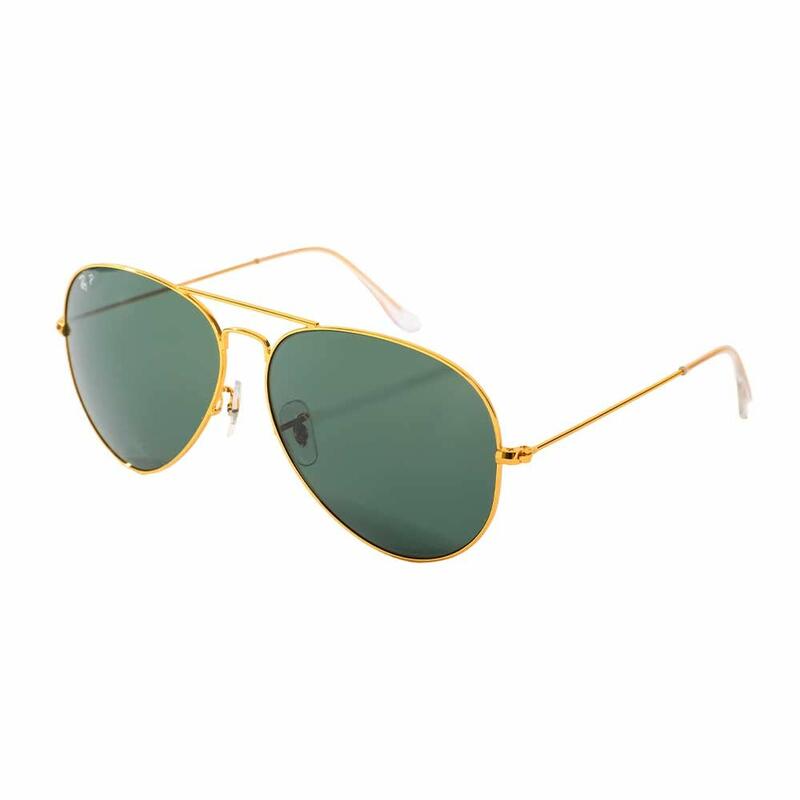
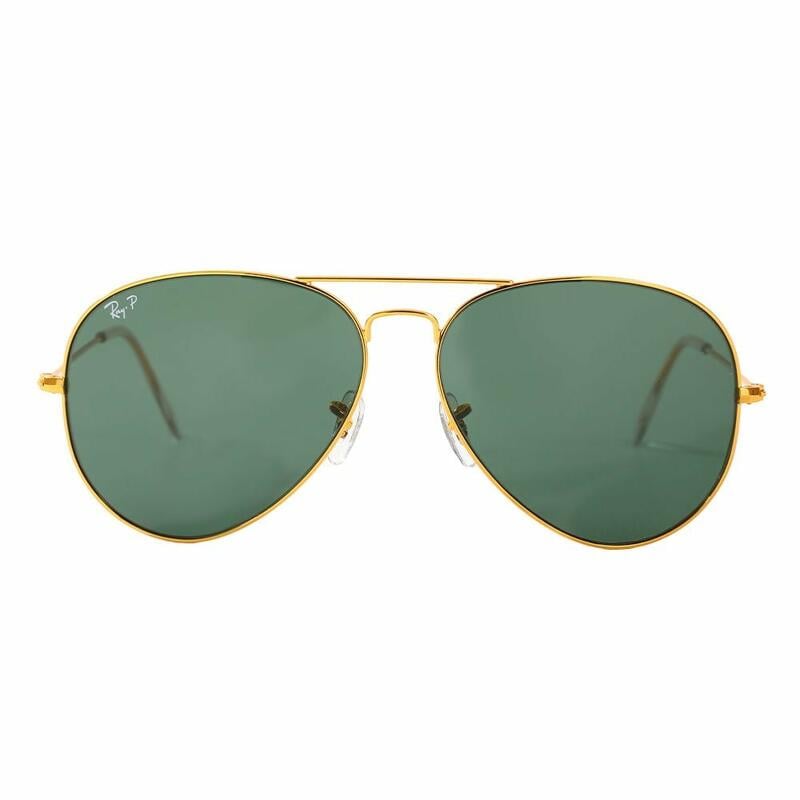
The teardrop lens isn't decorative. It was shaped to cover a pilot's full downward field of view — so they could glance at the instrument panel without sunlight sneaking in below the frame. That's why the lens "drops" so far down the cheek, and why an oversized pair will swallow a smaller face. The drop is the single thing most people misjudge.
The thin metal frame and slim temples were about weight and fit under headgear. It's also why a classic aviator feels almost weightless compared to a chunky acetate frame — and why adjustable nose pads matter so much, since there's no thick frame front to hold it in place.
The double bridge (the second bar across the top) started as structural reinforcement for those thin frames. Today it reads as the "real" pilot look, but it's a style choice, not a requirement.

So the history isn't trivia. The teardrop drop, the wire frame, the bridge bar — those are the exact decisions you'll make at checkout. Knowing why they exist tells you which ones you can ignore and which one (the fit) you can't.
The aviator family: the styles you'll actually run into
"Aviator" is a category, not a single frame. These are the variations worth knowing before you shop, because the search results lump them all together.
Classic teardrop metal. The original: thin metal frame, rounded teardrop lenses, often a double bridge. This is the safe, recognizable choice and the one that suits the widest range of faces. If you want one pair that just works, start here.
Navigator. Frequently confused with the aviator, and worth pulling apart. A navigator keeps the thin metal frame and brow bar but squares off the bottom of the lens instead of letting it taper to a teardrop. The flatter bottom edge reads a little more modern and tends to flatter rounder faces, since the angles add structure. If a classic aviator has ever felt too "soft" on you, try a navigator.
Single vs. double brow bar. A double bar gives the structured, unmistakably-pilot look with a touch more coverage up top. A single bar — or none — reads cleaner and lighter, and photographs younger. Pure preference; neither is more "correct."
Slim wireframe. The pared-back version: minimal metal, smaller lenses, often in gold or silver. It's the quiet, accessory-not-statement end of the range and pairs easily with everyday clothes. Aoolia's Taylor in silver sits here, and at $24.95 it's an easy place to start if you're testing whether the shape works for you.
Oversized. Bigger lenses, more face coverage, more of a fashion read. These look great on larger faces and in photos — but this is exactly where the "too big" trap lives. If the lens covers your cheekbone or the frame sits wider than your face, size down.
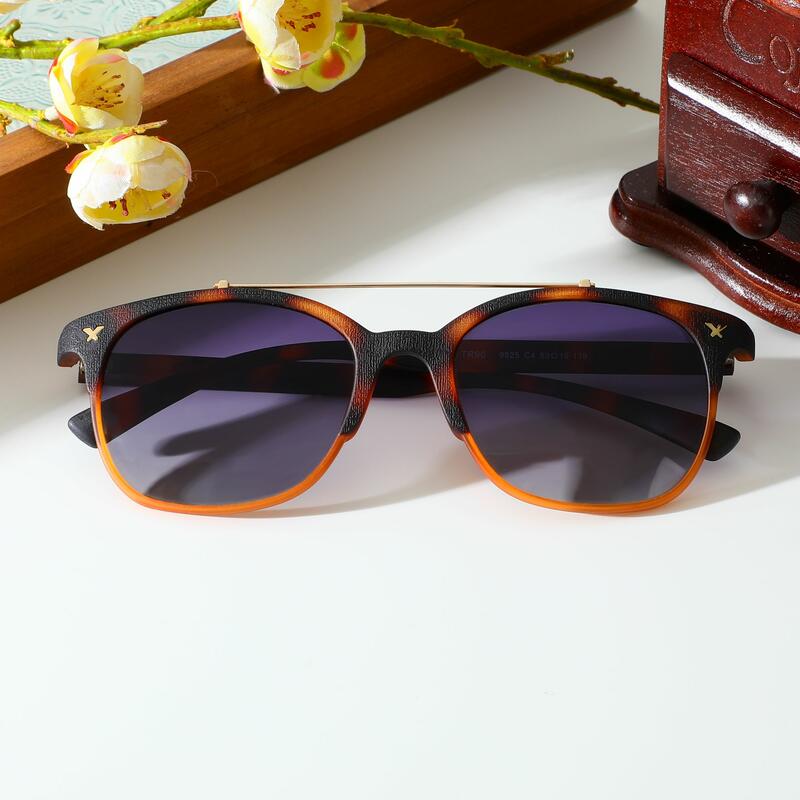
Combination and tinted-frame aviators. Plenty of modern pairs add an acetate brow detail, gunmetal or brown finishes, or colored lenses to soften the hardware look. Aoolia's Atwood in tortoise is a good example of the warmer, less austere take.
On finish: gold and warm metals tend to flatter warmer and olive skin; silver and gunmetal read cooler and more neutral; black metal goes with nearly anything and skews the most modern. Gold, silver, and black are the most-shopped for a reason — they're the easiest to wear daily. If you want gold with some presence, the Gusta in gold is the fuller-bodied option.
Lenses: the part most people get wrong
The frame gets all the attention, but the lens decides how the glasses actually perform.
UV400 is non-negotiable, and it's separate from how dark the lens is. A very dark lens with poor UV protection is worse than a lighter one with full UV blocking, because dark tints make your pupils open wider and let more UV in. Every Aoolia pair is built with 100% UV400 protection regardless of price or tint, so this isn't a feature you have to hunt for — but it's worth understanding so you're not fooled by a cheap dark lens elsewhere.
Polarization is a separate treatment, and it's a preference — not an upgrade you always want. Polarized lenses cut horizontal glare bouncing off roads, water, and car hoods, which makes them excellent for driving and anything near water. The honest caveat most listings skip: polarized lenses can make it hard to read digital screens, including the LCD panels in cars and aircraft cockpits. Aviation guidance has long flagged this, which is why many actual pilots skip polarized lenses in the cockpit — a small irony given the name. For everyday wear and driving, polarized is the better call. If you stare at a lot of screens or instrument displays, standard UV400 may serve you better.
Mirror, gradient, and tint are mostly aesthetic, with one practical note: gradient lenses (darker on top, lighter at the bottom) are handy if you want sun protection up high but still want to glance down at a phone or menu.
How to choose the right pair for your face
Fit, not shape, is what makes or breaks an aviator — but a few face-shape rules genuinely help as a starting point.
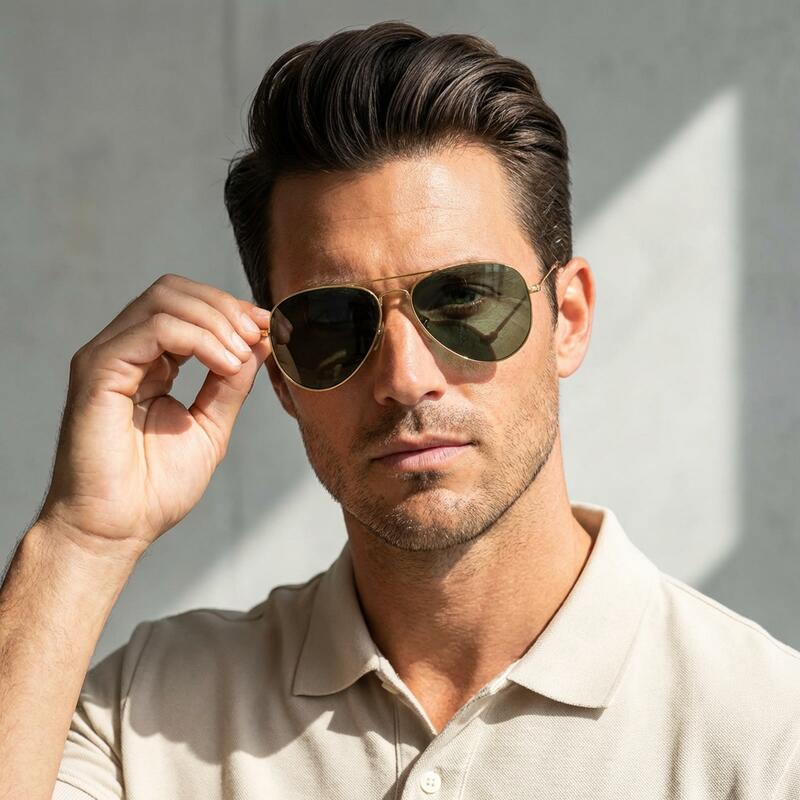
Aviators are one of the most forgiving shapes. The angular brow bar adds structure, so they flatter oval, heart, and square faces especially well. Round faces also do well, particularly with a squared navigator, since the angles add definition. The shape suits men and women equally; aviators have always been unisex.
Then check three things, in this order:
1.Width. The frame should end at, or just slightly past, the outer edge of your face. Wider than that and it overwhelms; narrower and it pinches. Aoolia tags every pair Narrow, Medium, or Wide so you can match before buying.
2.Drop. Remember the teardrop was built to fall far down the cheek. On a smaller face, that same drop becomes too much. The lens should stop around your cheekbone — if it's sitting on it, the pair is too big.
3.Bridge. Aviators rest on a metal bridge and nose pads, not on a frame front. Pairs with adjustable nose pads (it's a filter you can apply) let you raise or lower how they sit, which fixes the most common complaint — frames that slide down.
The hard part of buying aviators online has always been judging that drop and width without trying them on. That's the gap virtual try-on closes: you can see the actual proportions on your own face in a few seconds before committing, instead of guessing from a model photo. And because every Aoolia frame is optician-verified before it's listed, the measurements you're matching against are real, not marketing rounding.
Prescription, polarized, and buying without the guesswork
A common assumption is that aviators and prescriptions don't mix, or that prescription sunglasses mean a separate, expensive special order. Neither is true here. Nearly every aviator in the Aoolia collection can be made to your prescription — single-vision, bifocal, or progressive — by uploading your Rx at checkout, with prescription pairs typically shipping in 7 to 10 business days. That's worth knowing if you've been wearing contacts under non-prescription sunglasses just to get the look.
The same goes for budget: the aviator earned its reputation as a premium, even aspirational, frame, but the shape itself doesn't have to cost a fortune. Aoolia's range runs from around $24.95 to roughly $110, with free shipping over $79 and a 30-day return window — enough room to choose by what fits rather than by price tier.

A few honest starting points
If you want one classic pair that suits most faces, a gunmetal or silver teardrop like the Verna is the low-risk pick. Testing the shape for the first time and not ready to spend much? The Taylor in silver does the job at $24.95. Want the gold-aviator presence without the designer price, the Gusta in gold. And if you mostly drive or spend time near water, add polarized lenses to whichever frame you choose.
The aviator has lasted close to a century not because of any one ad campaign, but because the shape does something real: full coverage, light weight, and a line that suits almost everyone — as long as you get the size right. Sort that out, and it's hard to buy a bad one.
Browse the full range of aviator sunglasses for men and women, or see the women's aviator collection.