
First, get the words straight
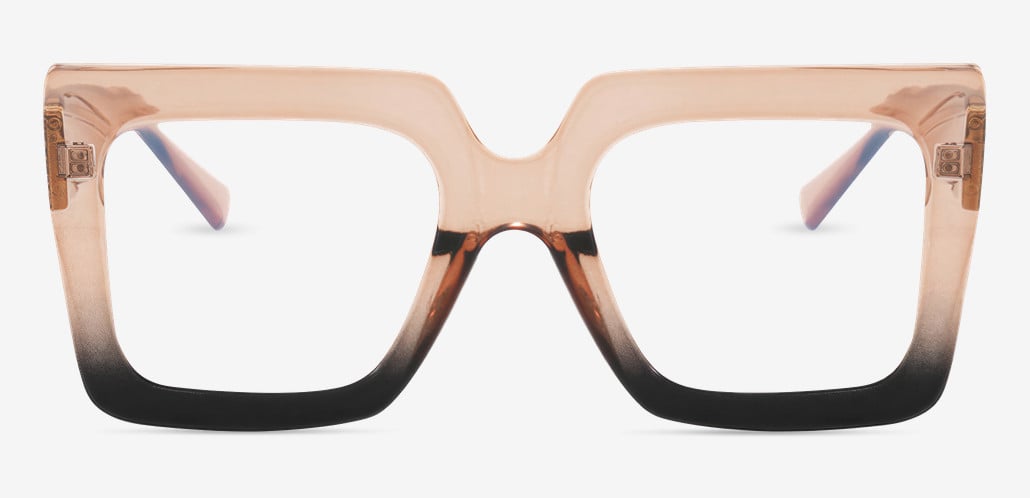
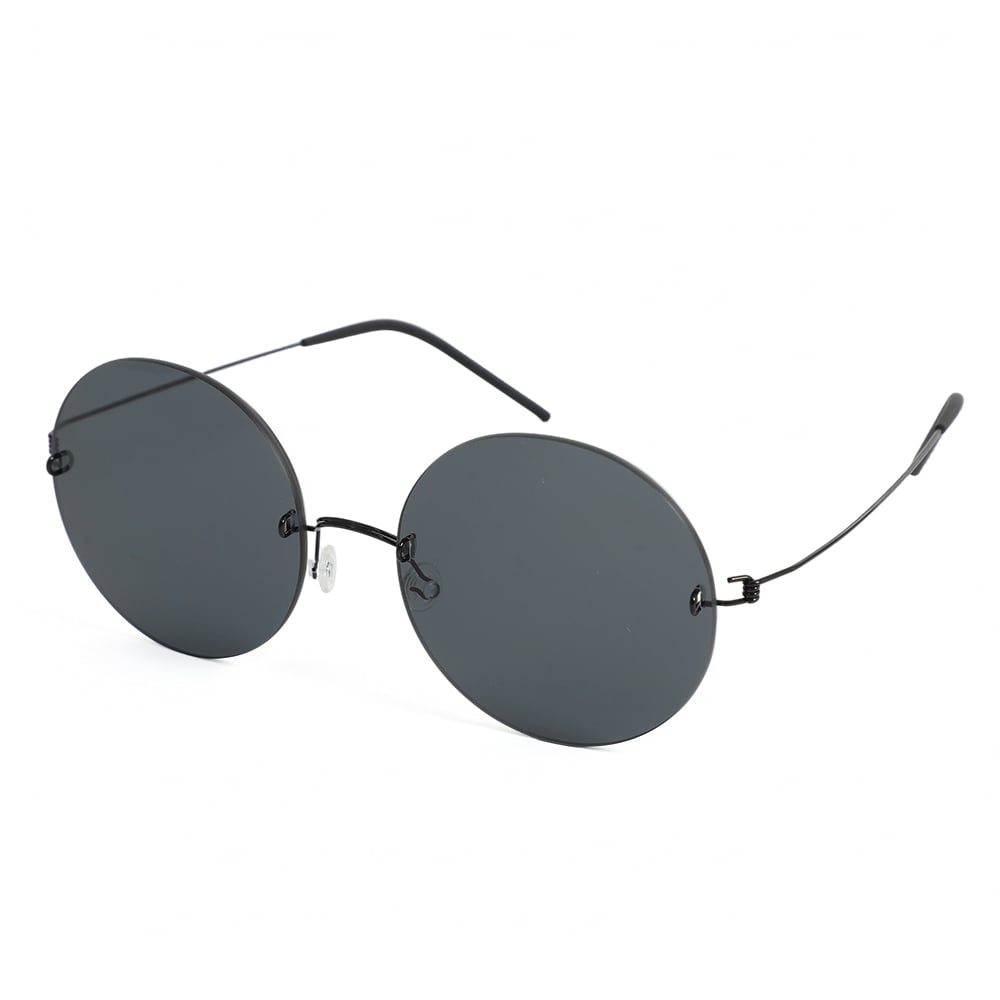
"Rimless" and "frameless" mean the same thing in US listings — no rim around the lens at all, with the bridge and temples mounted straight onto the lens. That's different from semi-rimless (also sold as "half-rim"), which keeps a partial rim across the top and runs a thin nylon cord along the bottom to hold the lens. And both are different from a standard full-rim pair, where the frame wraps the lens all the way around.
It's worth checking the filter labels when you shop, because the look and the buying considerations are genuinely different. A page that mixes all three under "rimless" is telling you something about how carefully it was built. True rimless is the lightest and the most exposed of the three — which is the whole reason the four jobs below shift the way they do.

Job 1 — Carrying the style now belongs to the lens shape
On a full-rim sunglass, the front of the frame is the design. The color, the thickness, the material of that plastic or metal rim is what people see first. Strip the rim off and there's nothing there to carry a look — so the outline of the lens becomes the silhouette, and the only "color" the pair has is the tint inside it plus the finish of the metal hardware.
That changes your shopping order. Pick the lens outline first. Rimless comes in every shape a full-rim does — aviator and round read easy and a little retro, rectangle and square read sharper and more modern, cat-eye and geometric add a lift at the outer corner — and on a frameless pair that outline is doing all the styling work, so it's the decision that matters most. Then judge the metal: gunmetal and brushed silver read quiet and current, gold and warmer tones read a touch dressier. That's it. There's no rim color to coordinate, which is exactly why a lot of people find rimless easier to wear with everything they own.

Job 2 — Hiding the lens edge is a job nobody does anymore
This is the part almost no buying guide mentions, and it's the one that separates a good rimless sunglass from a cheap one.
On a full-rim pair, the rim covers the cut edge of the lens completely. You never see it. On a rimless pair in daylight, that edge is fully exposed — and a tinted sun lens makes it more visible than a clear one, because the color shows you exactly how the edge was finished. A well-made pair has a smooth, polished edge and a tint that stays even all the way out to the rim line. A poorly made pair shows a rough or frosted edge, or a tint that fades or pools near the perimeter where the polishing was rushed.
So when you're looking at product photos or holding a pair in your hand, look at the edge, not just the front. It's the single fastest read on whether the lens was finished properly, and it's information a full-rim pair would have hidden from you.
Job 3 — Keeping them on your face now rides entirely on the nose pads
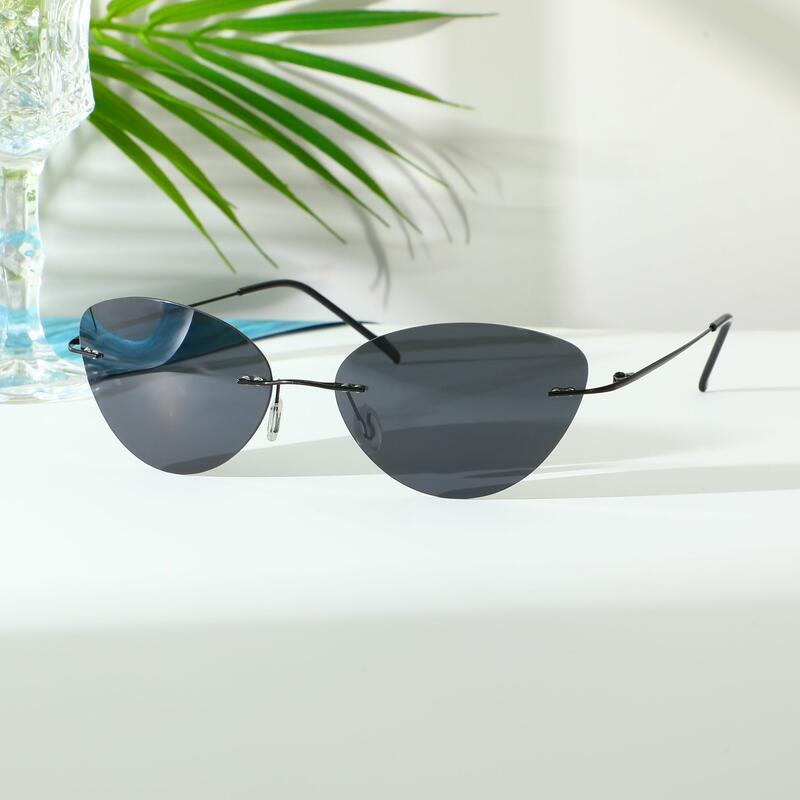
A full-rim frame grips you in several places: the bridge, the rims resting against your cheeks slightly, the arms hooking your ears. A rimless pair has none of that mass. The entire job of staying put comes down to two small nose pads and the tips of the temples.
That matters more on sunglasses than on indoor eyeglasses, because you wear sunglasses exactly where things slip — driving with the windows down, walking in summer heat, sweating on a hike, pushing them up on your head and pulling them back down. This is why adjustable nose pads aren't a feature on a rimless sunglass; they're the fit system. Pads that you (or an optician) can bend in or out let you dial the grip and the height so the pair sits where you want it and stays there. A rimless pair with fixed, non-adjustable pads is gambling that the factory's guess matches your nose. Most won't, exactly.
Every rimless style we carry uses adjustable nose pads for this reason, and it's worth confirming the same on any rimless pair you're considering elsewhere.

Job 4 — Protecting the lens is now the lens material's job — and it's a real choice if you go prescription
Here's where rimless stops being a style question and becomes an engineering one. To mount a lens with no rim, the bridge and arms are attached through small holes drilled into the lens, or by tension at notched points. That concentrates stress at those exact spots instead of spreading it around a rim.
Not every lens material can take that. Standard CR-39 plastic — the cheapest, most common prescription material — is too brittle for a drill-mount and is prone to cracking at the hole. The optical industry's position on this is close to unanimous: rimless and drill-mount frames should be fitted only with polycarbonate or Trivex, both of which are flexible and impact-resistant enough to handle the concentrated stress. (Every spectacle lens sold in the US already has to meet a federal impact-resistance standard under FDA regulation 21 CFR 801.410, but the specific stress of a drill hole is a tougher test than that baseline, which is why material choice is non-negotiable here.)
For a non-prescription fashion sunglass, you don't have to think about this — the maker has already used an appropriate lens material, and a quality pair is built to hold its mounts. The moment it becomes your decision is when you turn a rimless frame into prescription sunglasses. If a lab offers you the cheapest CR-39 lens for a rimless mount, that's the wrong answer; ask for polycarbonate or Trivex. If you want the deeper version of how frameless mounts hold up and where they actually fail over years of wear, we wrote a separate optician-reviewed breakdown on rimless durability — this guide is about what to decide before you buy, that one is about what happens after.

Two lens specs you check no matter what the frame is
Because it's a sunglass and not just a light frame, two things sit on the lens regardless of how it's mounted, and both are easy to confirm:
UV protection. Look for UV400 (or "100% UVA/UVB"). This is the actual eye-safety part of a sunglass, and it has nothing to do with how dark the lens looks — a pale tint with UV400 protects more than a near-black tint without it. Treat it as the floor every pair has to clear, not an upgrade.
Polarization, if glare is your problem. Polarized lenses cut the horizontal glare that bounces off wet roads, water, and snow. They're a genuine improvement for drivers and anyone near water, and a per-lens upgrade rather than a frame feature — which means it's offered on select styles, not all of them. If you mostly walk a city and aren't glare-sensitive, standard UV400 tinting does the protection job at a lower price.
Is rimless the right call for how you actually live?
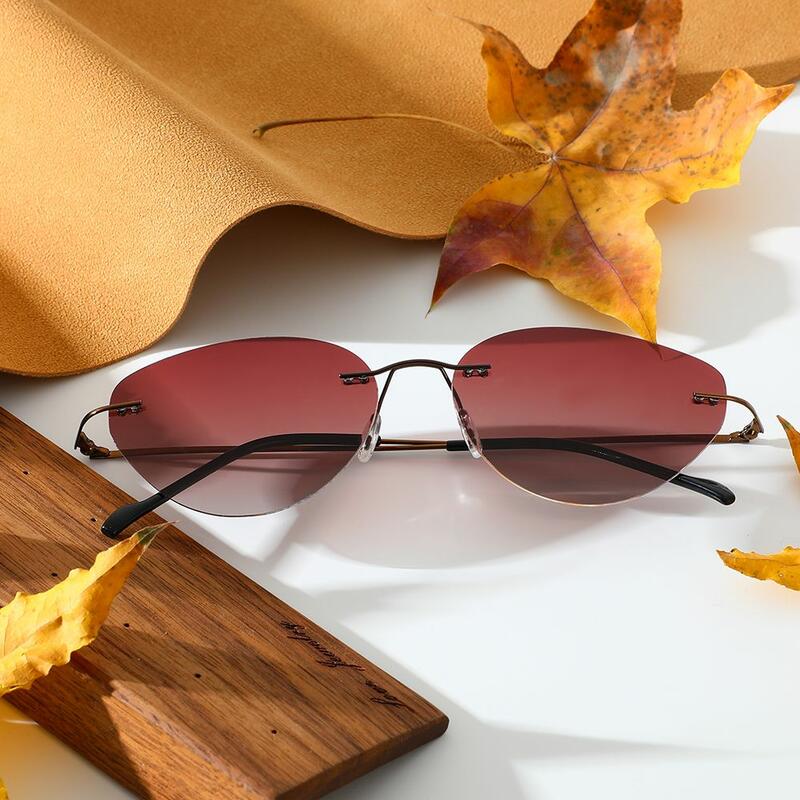
Worth being honest, because the same lightness that makes rimless feel like nothing on your face also makes them less forgiving. If you toss your shades loose in a bag, sit on them, sleep in them on flights, or generally treat sunglasses as disposable, a full-rim pair will absorb that abuse better. Rimless rewards a slightly more deliberate habit — a case, a two-handed on-and-off — and gives you near-weightless comfort and an unobstructed field of view in return. And if you wear a strong prescription, remember that the exposed edge from Job 2 will show lens thickness that a rim would have hidden, so it's worth asking before ordering high powers.
None of that is a reason to avoid rimless. It's just the trade you're making, stated plainly, so the pair you buy matches the life you'll actually wear it in.

What it comes down to before you click buy
A rimless sunglass is simpler in its look and more demanding in its details. Almost everything you need to decide compresses into four reads: the lens outline (your real style choice), the edge finish (your fastest quality check), a fit you can adjust at the nose pads, and — only if you're going prescription — the right lens material. Get those four right and the frameless look does what it's supposed to: it gets out of the way and lets the rest of you show.
If you'd rather see it before committing, virtual try-on shows any rimless pair on your own face, and if you're making them prescription, a qualified optician checks the lenses before they ship. You can start from the full rimless sunglasses collection, or browse all sunglasses if you're still weighing rimless against a full rim.
Frequently asked questions
How do I clean rimless sunglasses without loosening anything?
Rinse them under lukewarm water first to wash off grit, then dry with a microfiber cloth, supporting each lens at the mount with your other hand rather than wiping hard across an unsupported lens. Avoid twisting the lenses while you wipe. Skip paper towels and shirt hems — they're abrasive — and don't use hot water, which can stress the mounts over time.
If a screw loosens or a lens comes off, can it be fixed?
Usually yes, and easily. A loosened mounting screw is the most common rimless issue and is a quick tighten for any optician; many will do it free. Keep the pair in a case when you're not wearing it, since most loosening comes from the pair getting knocked around loose in a bag.
Are rimless sunglasses actually lighter, or does it just look that way?
Genuinely lighter. With no rim material around the lenses, rimless is among the lightest eyewear you can buy, which is most of the appeal — far less pressure on the bridge of your nose and behind your ears over a long day.
Can I get rimless sunglasses dark enough, or in a mirrored or gradient tint?
Tint lives on the lens, not the frame, so a rimless pair can be made just as dark, mirrored, or gradient as a full-rim one. The frame style doesn't limit your tint options — though on a rimless pair the tint reads as the pair's main color, since there's no rim color competing with it.
Why are some rimless sunglasses so much cheaper than others?
The price differences usually hide in the parts you've now learned to look at: the polish and tint quality at the exposed lens edge, whether the nose pads adjust, the quality of the hinge and mounting hardware, and — for prescription pairs — the lens material. A cheap rimless pair often saves money exactly where rimless is most exposed.