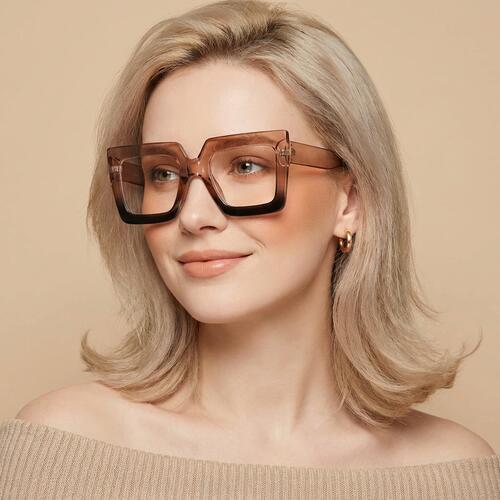

I have handed someone a pair of rainbow glasses, watched their face light up in the mirror, and then watched that light go out about four seconds later when the doubt kicks in: "…but can I actually wear these?"
It happens with almost every colorful frame I've ever put on a customer. And after eleven years of it, I can tell you the people asking that question are almost never the problem. The frame they grabbed is usually wrong for them, or they're picturing it with the loudest outfit they own. The fear is real. The conclusion they jump to — "these aren't for me" — is almost always wrong.
So let's answer the question honestly, because most of the internet won't. Search "rainbow glasses" and you'll get a wall of identical advice telling you to "express your individuality" and "let your true colors shine." That's not help. That's a horoscope. Here's the version with actual substance.
First, let's be clear about which rainbow glasses we mean
There are two completely different products that share this name, and confusing them is how people end up disappointed.
The first kind is diffraction glasses — the prism lenses ravers and festival-goers wear to split stage lights and fireworks into rainbow streaks. Fun toys. Not vision wear. Not what this is about.
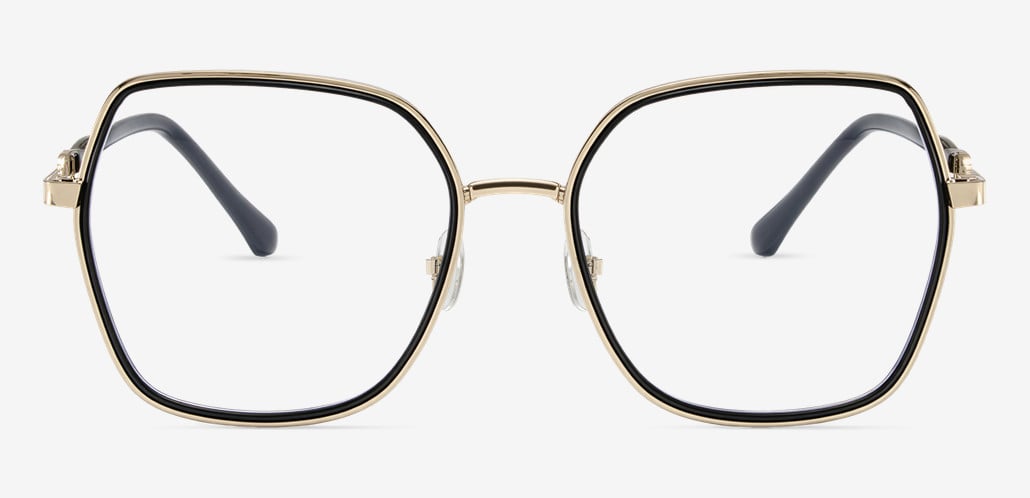
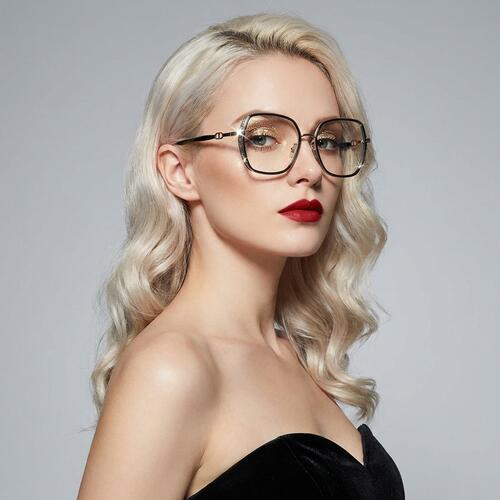
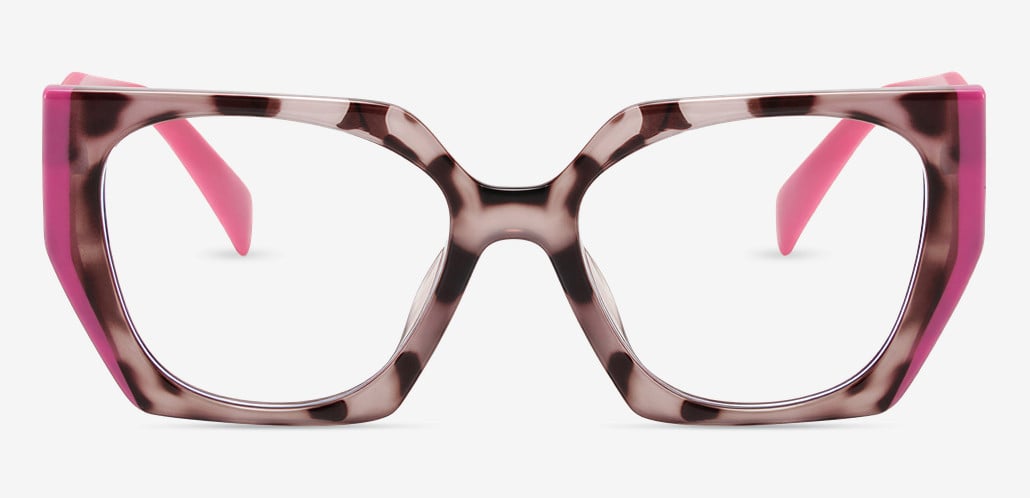
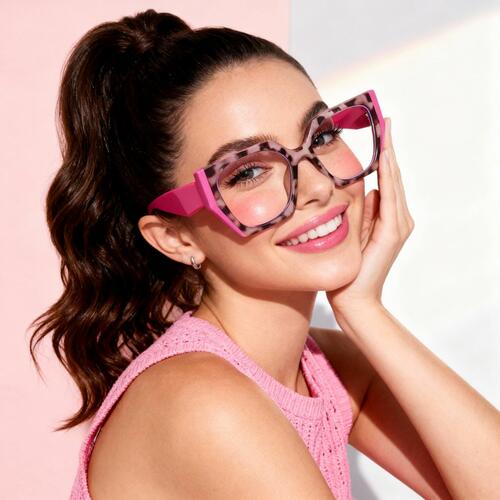
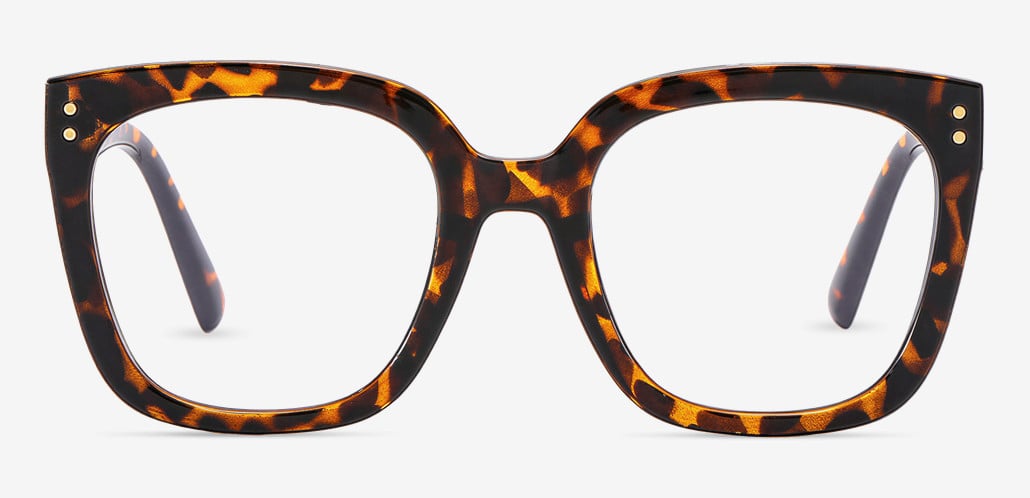
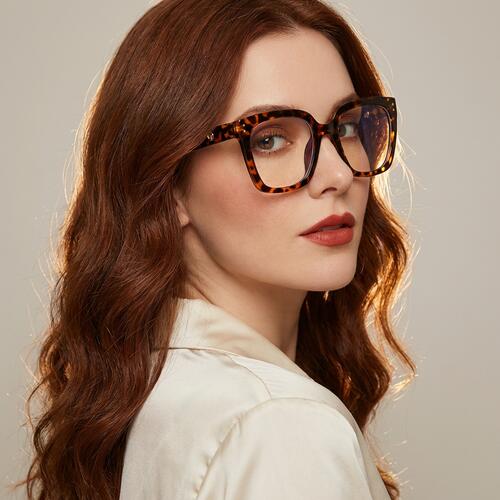
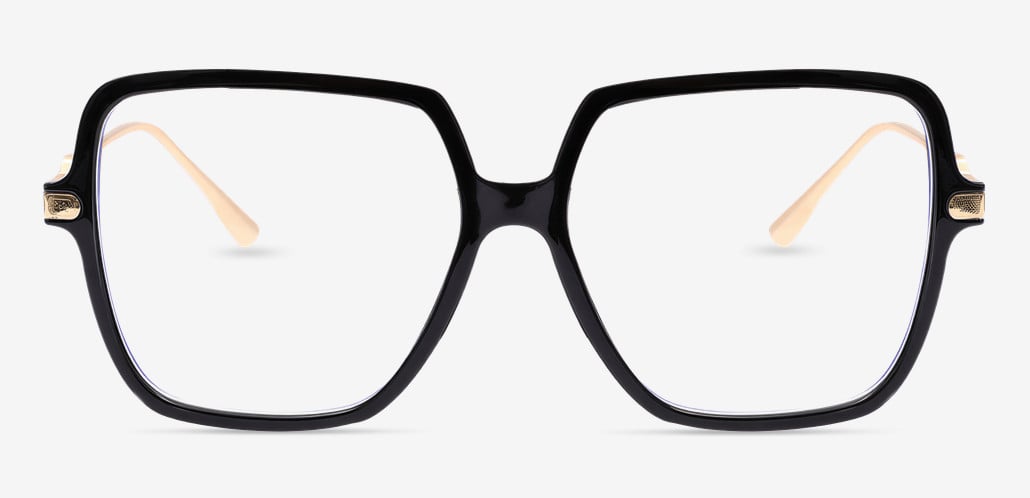
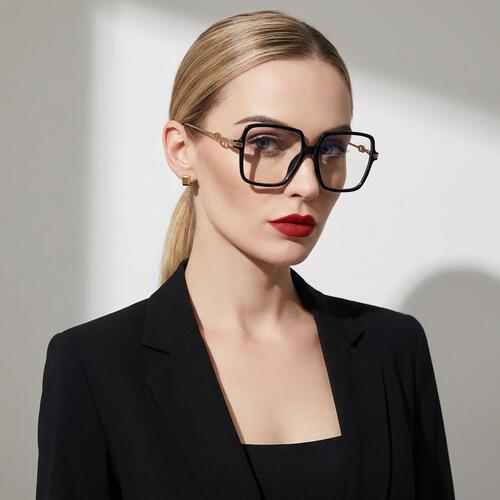
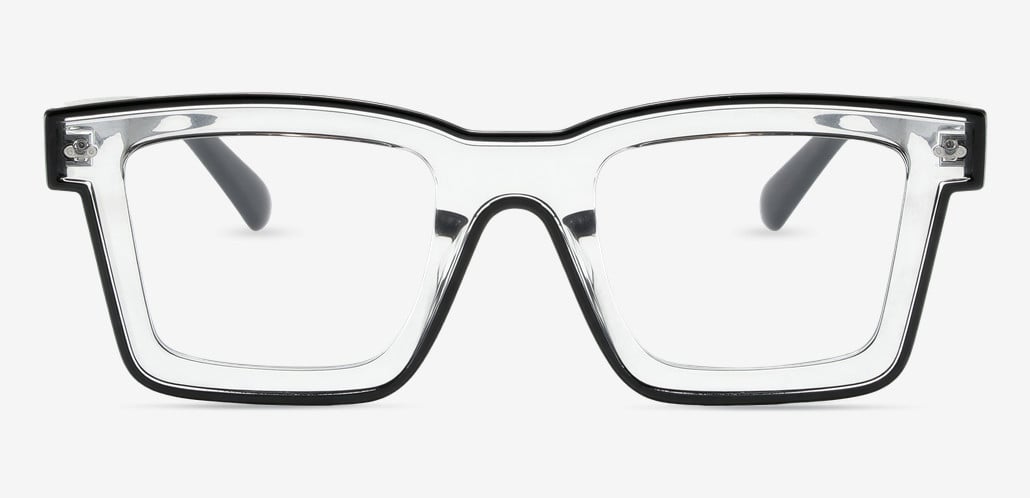
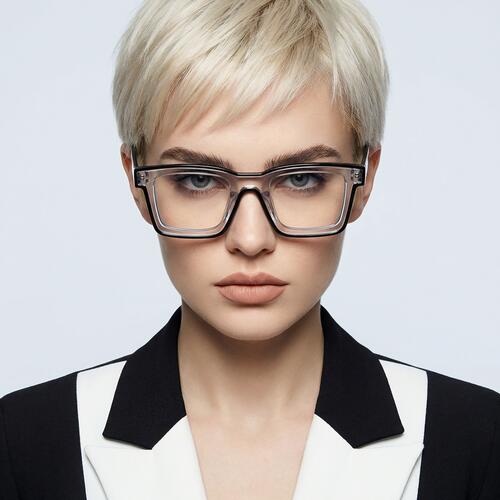
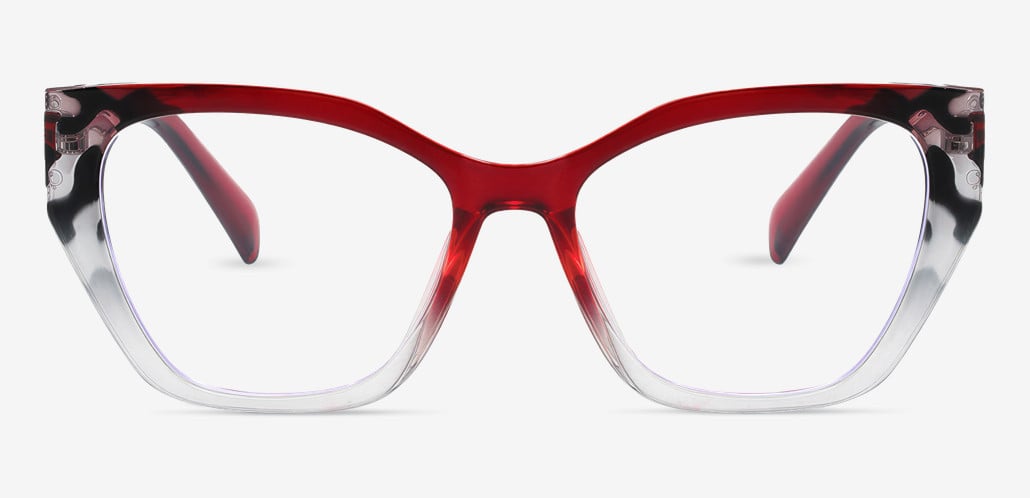
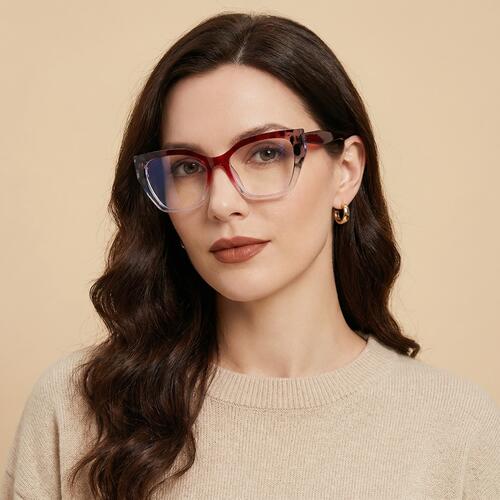
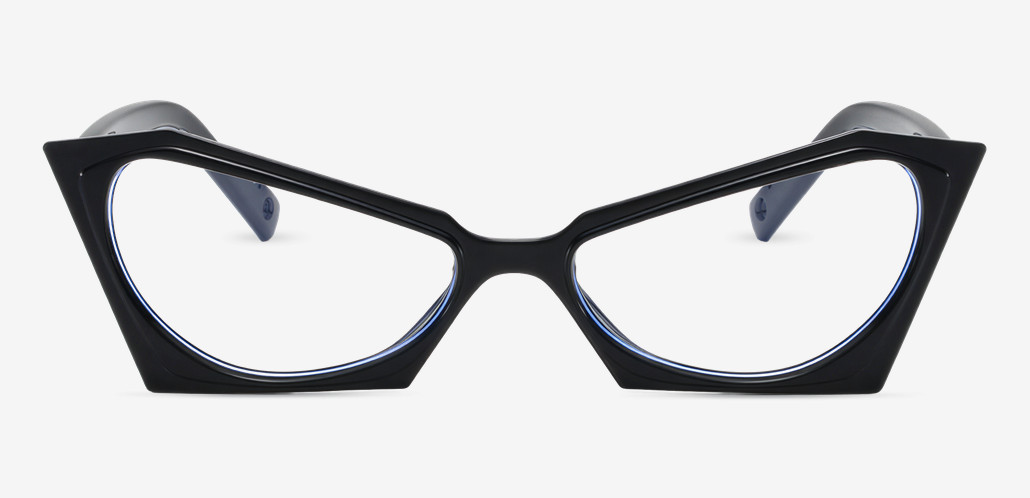
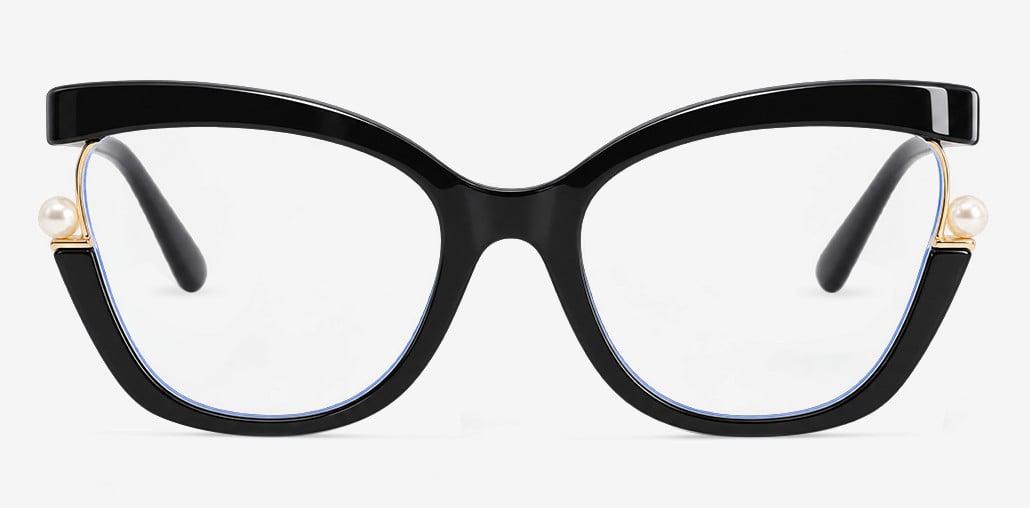
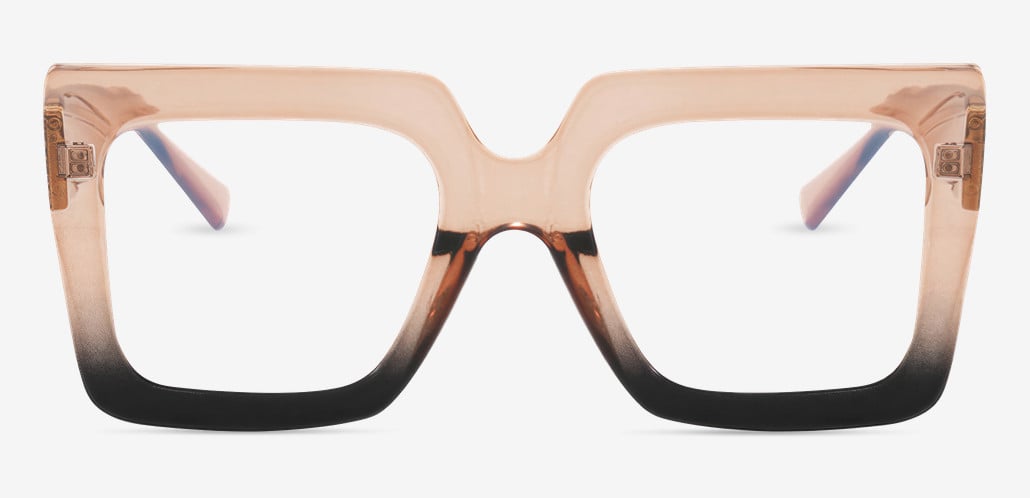
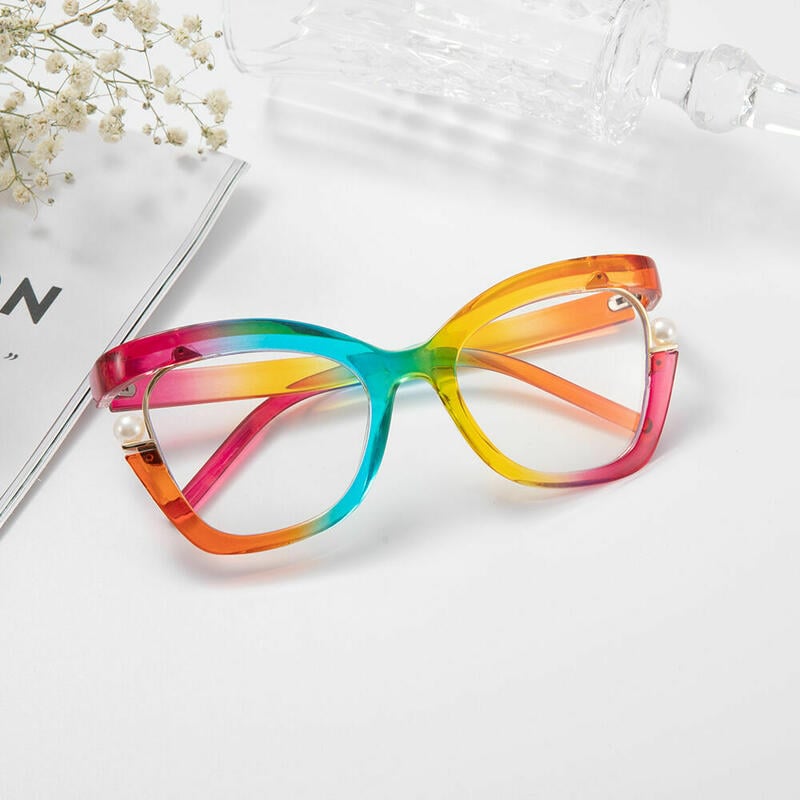
The second kind — and what you're actually shopping for if you found this page — is multicolor frames: real eyeglasses with colorful, layered, or translucent fronts and temples. These take a prescription, work as everyday glasses, and exist on a spectrum from barely-there pastel swirls to full-on technicolor statement pieces. Everything below is about that second kind.
That distinction matters because the answer to "who can pull these off" changes completely once you understand you're not choosing a costume. You're choosing an accessory that happens to sit on the most-looked-at part of your face.

The real reason this question scares people
Here's the thing nobody says out loud: when you ask "who can pull off rainbow glasses," you're not really asking about your face. You're asking, "Will I look like I'm trying too hard?"
That fear is legitimate. We've all seen someone wearing a frame that wears them — where the glasses are clearly the bravest decision in the outfit and everything else is apologizing for them. That's the "costume" effect, and it's the actual thing you're afraid of.
But the costume effect has almost nothing to do with whether you have the "right" face, the right age, or the right personality. It comes down to balance. A loud frame surrounded by loud everything reads as chaos. The same frame surrounded by calm reads as intentional — like you know exactly what you're doing. That's the whole game. It's not a beauty contest. It's a styling decision, and styling decisions are learnable.
The one rule that does most of the work
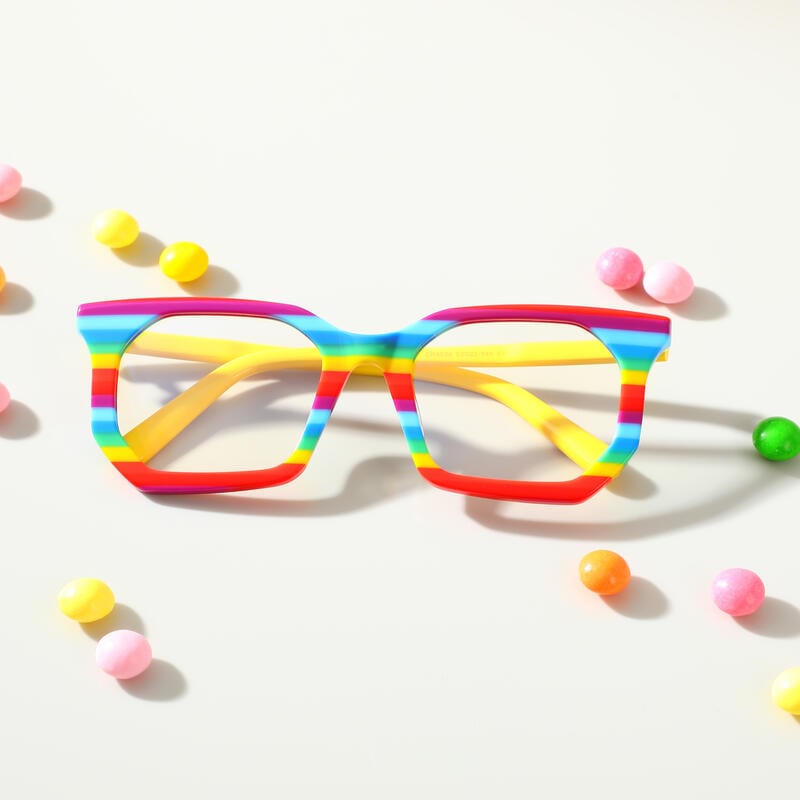
If you remember nothing else, remember this: every outfit gets one loud thing, and you're spending it on your glasses.
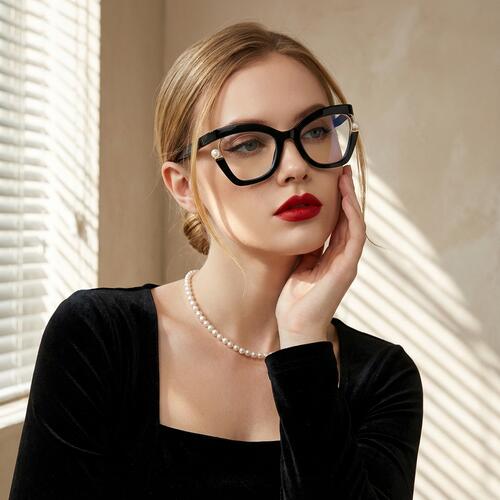
Think of it like a budget. You've got a fixed amount of "look at me" to spend across your whole look — frames, lipstick, a statement coat, a print, jewelry. Rainbow glasses are expensive. They cost almost the entire budget. So when you wear them, you go quiet everywhere else: a white tee, dark denim, a grey crewneck, a black blazer, clean skin, simple hair. The frames become the punctuation mark in an otherwise plain sentence, and that's exactly when color reads as confident instead of frantic.
This is also why the people who "can't pull them off" usually just over-styled. They wore the multicolor cat-eyes and the printed blouse and the bold earrings and the red lip, then blamed the glasses. The glasses were fine. The budget was blown.
Once you internalize the loudness budget, the question stops being "can I wear these" and becomes "what do I wear them with" — and that's a question with a clear answer.

The rainbow intensity scale: find your actual entry point
The other reason this question feels impossible is that "rainbow glasses" gets treated as one thing, when it's really a spectrum. Almost nobody needs to jump straight to maximum saturation. There's a tier for every comfort level, and Aoolia's lineup happens to map cleanly onto three of them.
Tier 1 — Dip a toe in. Translucent, soft, multicolor-but-muted frames where the color is more suggestion than statement. From three feet away people register "interesting glasses," not "rainbow." This is where the nervous beginner should start, and it's also the cheapest place to experiment. The Jolie Round at $37.95 layers color into a beige base so it reads gentle. The Hilary Round runs $24.95, and the playful "ice cream" Chava Round is $9.95 on sale — low enough that a misfire costs you a sandwich, not a paycheck.
Tier 2 — A comfortable statement. Clearly colorful, clearly intentional, but still completely wearable to a coffee shop, a Tuesday meeting, or your kid's recital. This is the sweet spot for most people once they've warmed up. The Halona Cat-Eye is $9.95, the Peggy Cat-Eye is $39.95, and most of the designer-style rounds and cat-eyes (Gaskel, Yale, Occam, Olivia, Bryan, Gibbon, Haggai) sit around $66.95–$68.95 with layered acetate that catches light without screaming.
Tier 3 — All in. Full saturation, bold architecture, the frame is the outfit. These are for people who already know they like attention on their face and want the eyewear to do real work. The Maria Aviator at $92.95, the Turner Cat-Eye at $106.95, and the Jeremy Square at $124.95 are the deep end. If Tier 1 made you nervous, don't start here. If Tier 1 bored you, this is home.
You don't have to be a Tier 3 person to wear rainbow glasses. That's the lie the "express yourself!" blogs accidentally tell — that color is only for the boldest among us. It isn't. Most people belong in Tier 1 or 2, and they look fantastic there.
What actually decides whether you can pull them off
Forget the face-shape detector for a second. After fitting thousands of these, three things move the needle far more than the shape of your jaw.
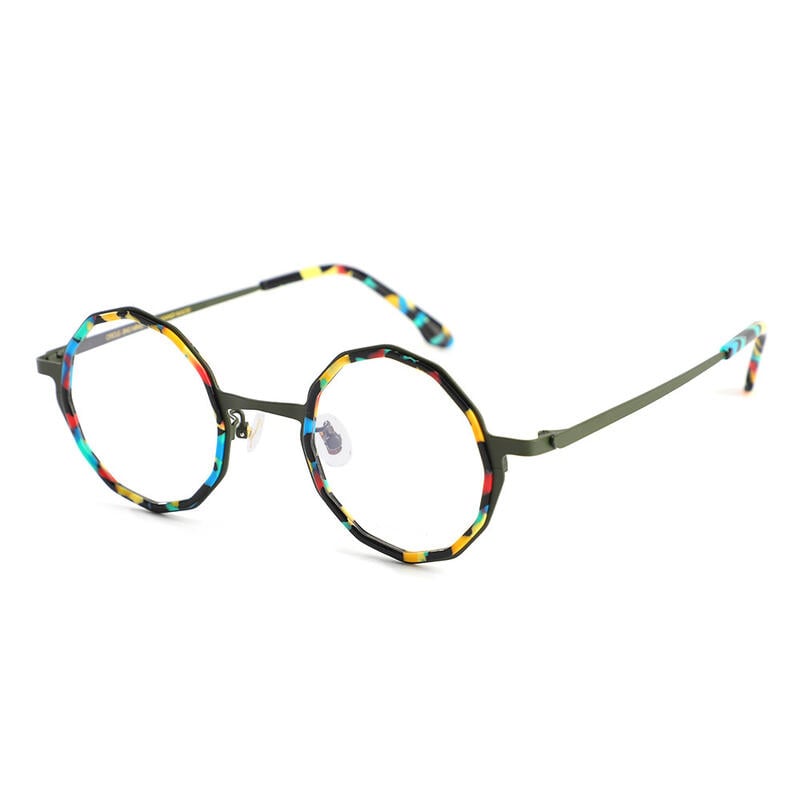
1. The frame's architecture has to carry the color. This is the real difference between "fashion" and "costume," and it's structural, not chromatic. A well-built rainbow frame — layered acetate, a clean silhouette, good proportions — looks designed. The same colors slapped on a flimsy, generic shape look like a party-store prop. This is why I steer people toward the designer-style and acetate frames in the lineup over the bargain-bin look-alikes you'll find elsewhere: the construction is what makes the color read as a choice. When the bones are good, color is just decoration on something already solid.
2. Where you're taking them matters more than what you look like. A frame that's perfect for a Saturday market is a lot in a courtroom. I'm not going to pretend context doesn't exist. Match the intensity to the room: Tier 1 frames pass almost anywhere, including conservative offices, because the color is subtle enough to read as "tasteful," not "off-duty." Save Tier 3 for the settings that can hold it. This isn't about hiding — it's about reading the room, which is something stylish people do instinctively and everyone else can simply decide to do.
3. Saturation should have a relationship with your own coloring — loosely. Here's where I'll part ways with the rigid color-theory crowd. Yes, very cool, high-contrast multicolor can fight with a very soft, warm complexion, and vice versa. But "rainbow" by definition contains every temperature at once, which is exactly why it flatters such a wide range of people — there's always a hue in there that agrees with you. So treat coloring as a tiebreaker, not a gatekeeper. If two frames both fit and you can't decide, lean toward the one whose dominant tone you already wear in your clothes. Don't let it talk you out of the category entirely.
Notice what's not on that list: your age, your "personality type," or whether you're an extrovert. None of that determines the outcome. Styling does.

Who should genuinely think twice
I'd be a bad stylist if I told you everyone should buy these. A few honest exceptions:
If your work or daily life runs on a strict, formal dress code with zero flex, a Tier 3 frame will fight you every morning — go Tier 1 or keep these as your weekend pair. If you already love loud prints, big jewelry, and bold lips and refuse to give any of that up, you'll be permanently over budget; rainbow glasses ask for a quieter canvas, and that's a real trade. And if you're someone who agonizes over every compliment and stray glance, understand going in that these frames will get noticed — that's the point, and you should want it before you buy.
None of those are about your face. They're about fit with your life. That's the honest version of "who can pull them off."
How to buy a pair you'll actually wear
The gap between "I love these online" and "I love these on my face" is where most colorful-frame regret lives. A few ways to close it:
Try them on before you commit. Aoolia's virtual try-on lets you see a frame on your own face from your phone, which solves about 80% of the "will this look like a costume on me" anxiety before any money changes hands. Use it on three frames across two tiers and you'll feel the difference between "fun online" and "right for me."
Yes, you can put your prescription in them. These aren't novelty props — they're real eyeglasses. Aoolia's frames are prescription-compatible and optician-verified, so your daily glasses can be the colorful ones. That changes the math entirely: you're not buying a costume you'll wear twice, you're buying the thing already sitting on your face all day.
Start cheap on purpose. With Tier 1 frames landing between $9.95 and $40, you can afford to be wrong once. Buy the inexpensive subtle pair first, wear it for two weeks, and notice how you actually feel walking around in color. Most people graduate a tier within a month. Almost nobody returns to plain black.
Use the 30-second mirror test. Put the frames on with the plainest top you own and don't immediately decide. Look, then look away, then look back like you're a stranger seeing yourself. The first reaction is usually fear. The second is usually "oh — that's actually me." Trust the second one.
A few questions I still get every week
Can I get rainbow glasses with my prescription? Yes. Multicolor frames take single-vision, progressive, and reading prescriptions the same as any other eyeglasses. The color is in the frame, not the lens, so your vision correction is completely unaffected.
Can men pull off rainbow glasses? Absolutely, and the men who do tend to look effortlessly current. The move for men is usually a structured shape — square or geometric — in a muted or translucent multicolor, paired with otherwise plain clothing. It reads as design-literate, not flashy. Browse the men's eyeglasses range for shapes that anchor color well.
Are rainbow glasses too much for the office? Tier 1 frames — soft, translucent, low-contrast — pass in most professional settings and often read as simply "stylish." For stricter environments, keep the saturated pairs for evenings and weekends. The category is flexible enough to give you both.
Am I too old for these? No, and I'll be blunt: the "too old for color" idea is something people invent to talk themselves out of fun. Colorful frames often look more striking on mature faces, not less, because the contrast brings energy to the complexion. Pick a tier that matches your wardrobe, not your birthday.
Will the colors chip or fade? On a quality acetate or layered frame, the color is part of the material itself rather than a coating on top, so it doesn't peel or wear off with normal use. This is another reason frame construction matters — the well-made pairs hold their color for years.
How do I know they'll suit me before I pay? Run the virtual try-on, and check the return terms before ordering so you can buy with a safety net. Between seeing them on your own face and being able to send back a miss, the actual risk of trying color is far lower than the fear suggests.
So, who can actually pull them off?
Almost anyone willing to keep the rest of the look quiet and pick a tier that fits their life. That's the whole secret. Not a face shape, not a personality, not an age — a balance and a choice.
If you've read this far, you're not really wondering whether rainbow glasses are possible on you. You already suspect they are. So start in Tier 1, browse the full rainbow collection, try a pair on from your couch, and let your second reaction in the mirror — the honest one — make the call.