
The question behind the question
Almost everyone who hesitates over rimless glasses is really asking the same thing: if there's no frame holding the lenses, won't they just fall apart?
It's a fair worry, and the honest answer doesn't fit on a star rating. Rimless glasses aren't fragile the way a cheap pair of full-frame glasses is fragile, and they aren't bulletproof either. They're durable in a different way — and once you understand that difference, every question about whether they'll survive your daily life basically answers itself.
So instead of giving you a verdict up front, this piece does what an optician does when a pair lands on the bench: looks at how rimless glasses are actually built, where they really break, and what separates a pair that lasts five years from one that's back for repair by month three.
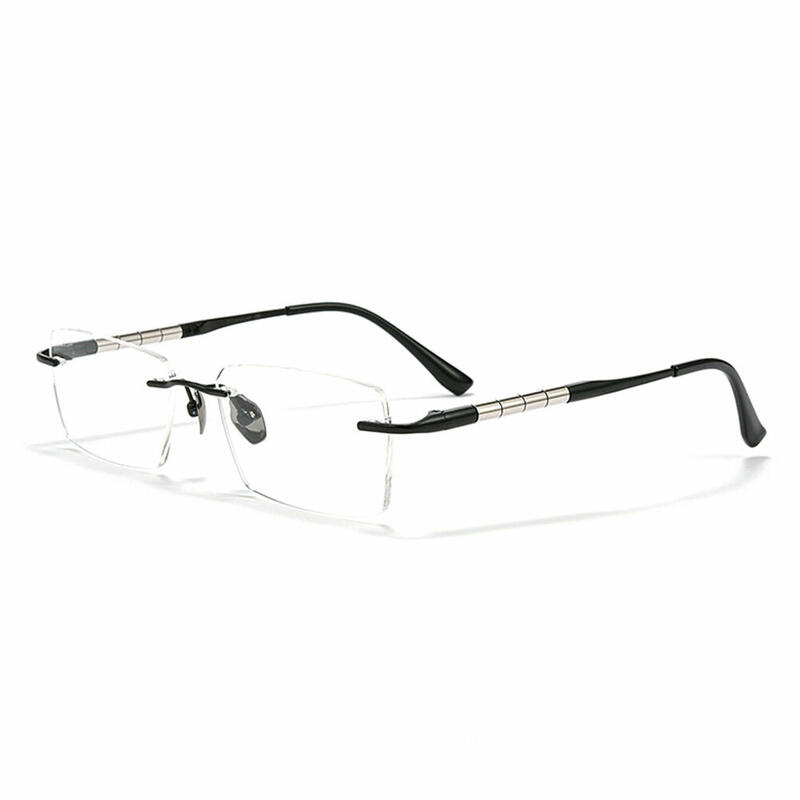
One quick note before we start, because it trips people up constantly: rimless is not the same as semi-rimless. Rimless (also called frameless) has no rim at all — the temples and bridge attach straight to the lenses. Semi-rimless, or half-rim, has a partial frame across the top and a thin cord underneath. They look similar in thumbnails and fail in completely different ways. This article is strictly about true rimless. If half-rim is what you're after, that's a separate conversation.
The one idea that explains everything: the lens is the frame
Here's the mental model worth keeping for the rest of this article.
On a full-frame pair, the frame is the skeleton. It holds the lenses, takes the knocks, and absorbs the stress of being put on, taken off, dropped, and shoved in a bag. The lens just sits there and does its job — seeing.
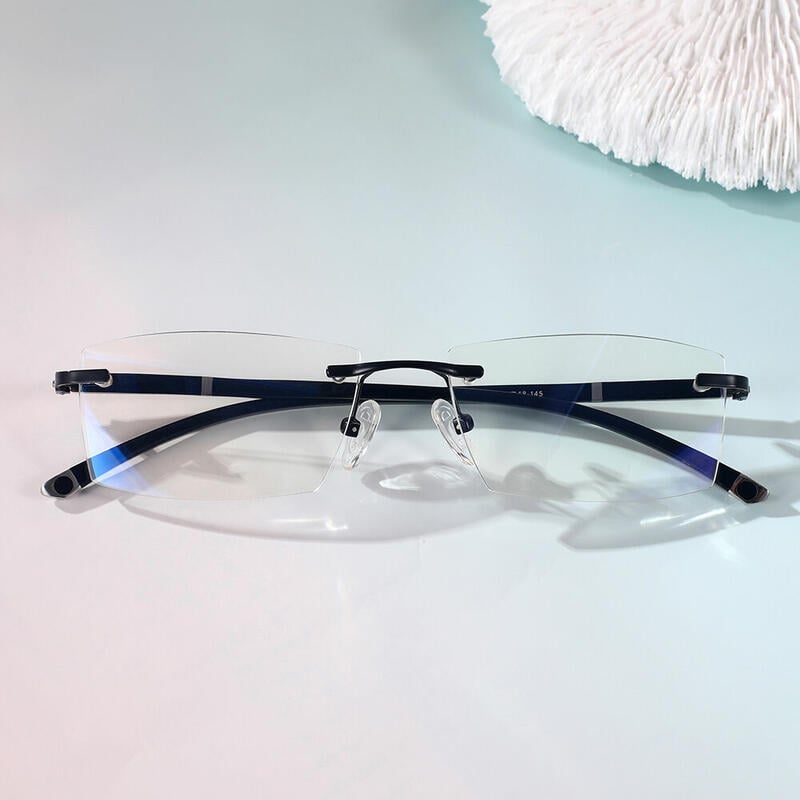
On a rimless pair, there is no skeleton. The temples bolt or clip directly into the lens, and the bridge spans the gap between the two lenses the same way. That means the lens is pulling double duty: it's the optic you look through and the structural part that holds the whole assembly together. The lens is the chassis.
That single fact reorganizes the entire durability conversation. It's why "is the material strong?" is the wrong question for rimless, and "is the structure sound?" is the right one. The toughest titanium temple in the world doesn't help you if the spot where it meets the lens is the weak point — and on rimless, that junction is exactly where the action is.

Where rimless glasses actually fail (the bench view)
When a pair of rimless glasses comes back to an optical bench, it's almost never the part people worry about. Here's the real order of failure, most common first.
1. The stress crack at the mount. This is the signature rimless failure — opticians sometimes call it a "star crack," a tiny radiating fracture that starts right at a screw or mounting hole and creeps outward. It's not random. Every time you put the glasses on with one hand, set them down lens-first, or let them rattle loose in a pocket, force concentrates at those few small contact points. Over months, a lens that wasn't made from the right material will give up exactly there.
2. Loosening at the mounts. Long before anything cracks, the more common nuisance is a temple that starts to wobble. Screws back out a hair, the seal at the mount relaxes, and suddenly one arm sits at a slightly different angle than the other. It's not catastrophic, but ignored, a loose mount puts uneven load on the lens — which is how a wobble eventually becomes a crack.
3. Edge chips. Because there's no rim wrapping the lens, the lens edge is exposed. Drop a full-frame pair and the frame takes the hit; drop a rimless pair lens-down on a hard floor and the edge meets the tile directly. A chip on the edge of a rimless lens is both cosmetic and structural, because a chip near a mount point is a crack waiting to happen.
4. Almost never the frame metal itself. Notice what's not on this list: the temples and bridge snapping. Quality rimless hardware is typically titanium — one of the most fatigue-resistant materials in eyewear, light, springy, and corrosion-proof. On the Aoolia rimless range, for example, the large majority of styles are built on titanium, which is the durable part of the equation. The frame metal is rarely the thing that fails. The lens-to-mount junction is.
Read that list again and the pattern is obvious: rimless durability lives almost entirely at the connection between lens and hardware. Get that junction right and these glasses are genuinely tough. Get it wrong and no amount of careful handling saves them.
The one decision that makes or breaks a rimless pair: the lens material
If you take away nothing else, take this. On a rimless frame, the lens material isn't a preference — it's structural.
On a full-frame pair, you can get away with basic plastic lenses because the frame protects them. On a rimless pair, the lens absorbs impact and stress directly, and standard plastic (the material called CR-39) simply isn't built for that. Drill a hole in it for a mount and it's prone to chipping or cracking at the exact stress point you're relying on. Glass is worse — it has no business in a rimless frame at all.
Two lens materials are the professional standard for rimless, because both are tough enough to be drilled and stressed without giving up:
Polycarbonate — the impact-resistant workhorse, the same family of material used in safety eyewear. It's affordable, light, and far more shatter-resistant than ordinary plastic. Its one weakness in rimless is that it can develop slow stress fractures around drill points over years of hard use.
Trivex — developed out of military lens technology, it's the rimless specialist's pick. It has the highest tensile strength of the everyday options, meaning it resists cracking around mounts better than anything else, and it's the lightest material on the menu. It costs more. For a rimless pair you plan to wear daily for years, many opticians consider it worth the upgrade.
There's a prescription wrinkle here too. The stronger your prescription, the thicker your lens edge, and a thicker edge acts like a longer lever — it amplifies the force on the mounts every time the glasses flex. So the stronger your script, the more the lens material matters, not less. This is also why the standard advice for higher prescriptions is to pair a strong lens with high-index thinning so the edge stays manageable. (We go deep on that build in our guide to custom lens choices.)
For context on the safety baseline: every prescription lens sold in the United States already has to meet a federal impact-resistance standard (FDA regulation 21 CFR 801.410). Polycarbonate and Trivex clear that bar by a wide margin — which is most of the reason they're the only two materials a careful optician will put in a drill-mount frame.
Drilled vs. no-drill: the construction detail nobody mentions
There are two ways to attach hardware to a rimless lens, and they don't age the same.
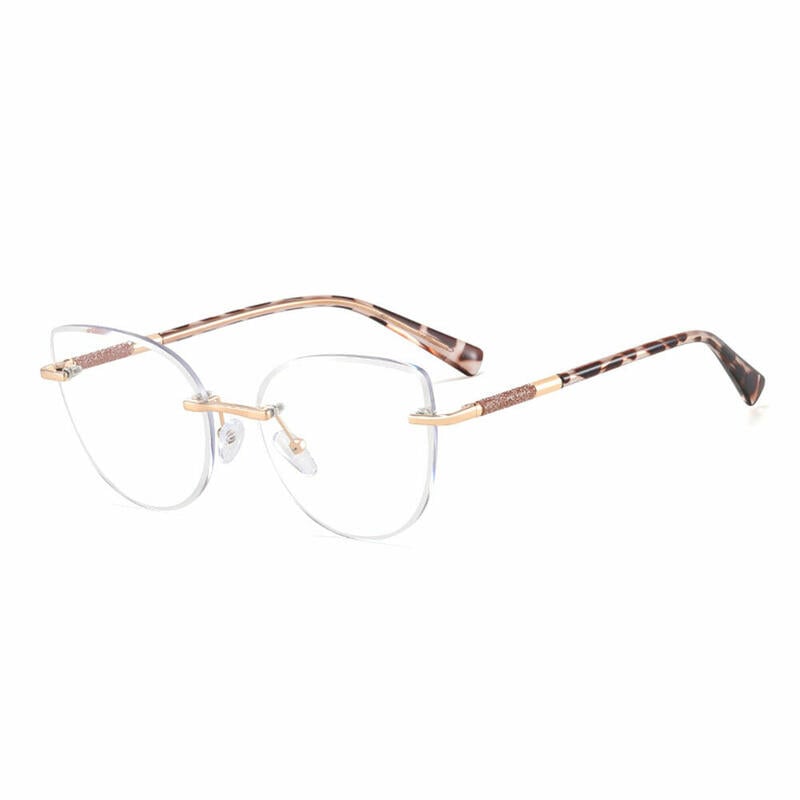
Drill-mount (three-piece). Small holes are drilled through the lens and the temples and bridge are screwed or pinned through them. This is the classic rimless construction and the source of the "star crack" failure — every hole is a stress point, and stress points are where cracks start.
Compression / no-drill mounts. Instead of a hole, the lens is notched or gripped and held under tension. Mechanically, a tension mount tends to spread and absorb impact across a wider area rather than funneling it into one drilled point. Opticians generally see fewer stress-crack returns from this style, which is why it's become the go-to for anyone who wants rimless looks with a bit more peace of mind.
You don't need to memorize the engineering. The practical takeaway is just: when you're choosing or ordering rimless, it's a fair question to ask how the hardware mounts, and to favor a build that doesn't concentrate all its stress in two drilled holes.
So — durable enough for whom?
This is the part the spec sheets skip. "Durable" only means something relative to how you live. Here's the honest matchup.
Rimless is genuinely durable enough for you if you:
Spend your day at a desk, in meetings, or in front of a screen, and want glasses that feel like they're barely there
Handle your things with reasonable care — case in the bag, not loose in the pocket with your keys
Want a clean, professional, almost-invisible look (rimless is unbeatable here)
Have a low-to-moderate prescription, or are willing to pair a stronger one with the right lens material
half-rim-glasses
Think twice — or build them carefully — if you:
Play contact sports or do anything where glasses get hit (you want a wrap or sport frame, not rimless)
Are a habitual "toss them on the nightstand face-down, no case" person (this is the single biggest killer of rimless)
Need eyewear for a job with flying debris or impact risk (that's a job for rated safety glasses, a different category entirely)
Are buying for a young kid who's rough on everything (full-frame or flexible frames forgive far more)
Have a very strong prescription and want to cut corners on the lens — don't; that's the one combination that reliably ends in cracks
Notice that almost none of this is about the glasses being "weak." It's about match. Rimless rewards a certain kind of wearer enormously and punishes a certain kind of handling. The frames aren't fragile; they're specialized.

How to actually make a rimless pair last
Generic "use a case" advice applies to every pair of glasses ever made. Here's the care that's specific to rimless — the handful of habits that, on the bench, clearly separate the pairs that survive from the ones that don't.
Two hands on, two hands off. Pulling glasses off with one hand twists the frame asymmetrically, and on rimless that torque lands straight on the mounts. Use both hands at the temples. It feels fussy for a week, then it's automatic.
Wrap to clean — never pinch. The instinct is to hold the bridge and rub one lens. That puts a surprising amount of leverage on the mount points. Instead, wrap the cloth around the lens and support that same lens while you wipe it.
Leave the screws alone. A wobbly temple tempts everyone to grab a tiny screwdriver. Resist it. Overtightening a rimless screw can crack the lens instantly — those mounts are torqued to a spec. Let an optician handle it; it takes them two minutes.
Run the wobble test now and then. Hold the bridge and gently nudge a temple tip. If it travels more than a small fraction of an inch, the mount has loosened and it's worth a quick visit before it becomes a crack.
Get them looked at once a year. A free re-tighten and alignment check is the cheapest insurance there is for rimless. Most of the cracked pairs we see started as a loose mount that nobody caught.
And one reassuring point on repairs: a loose or worn mount on a rimless pair is usually fixable. A fully cracked lens is not — you're replacing the lens. That's the whole reason the prevention habits above are worth it: the failures that matter most on rimless are the ones you can avoid entirely.
The verdict
Are rimless glasses durable enough for everyday wear? For most people, yes — with one condition. The frame is rarely the fragile part; quality rimless rides on titanium hardware that outlasts the wearer's prescription. What decides everything is the part you can't see in the photos: the lens material and how the hardware mounts to it. Build those right — polycarbonate or Trivex, a clean mount, the right lens for your script — and handle the glasses like the precise little machines they are, and a rimless pair will quietly do its job for years.
If what you want is eyewear that all but disappears on your face and reads as effortless and professional, rimless isn't a risky choice. It's just a specific one. Match it to your life and your prescription, and "durable enough" stops being a question.
You can see Aoolia's current rimless range — built mostly on titanium, with adjustable nose pads for fit and a clean, minimalist look — on the rimless glasses page.
Frequently Asked Questions
Do rimless glasses break easily?
Not when they're built correctly. The frame hardware — usually titanium — is among the most durable in eyewear. The vulnerable spot is where the hardware mounts to the lens, and that's controlled almost entirely by lens material (polycarbonate or Trivex, never standard plastic) and handling. Built and treated right, rimless holds up well to everyday wear.
How long do rimless glasses last?
There's no fixed lifespan, but a well-built rimless pair with the right lens material and an annual tighten-up commonly lasts as long as any other frame style — typically until your prescription changes. The pairs that fail early almost always trace back to a wrong lens material or a loose mount that went unnoticed.
Are rimless glasses good for everyday wear?
For desk work, office settings, and general daily life, they're excellent — light, understated, and professional. They're a poor match for contact sports, high-impact jobs, or very rough handling, where a full or sport frame protects the lens better.
What's more durable, rimless or semi-rimless?
Both put stress on the lens rather than a full frame, but they fail differently — rimless at its mount points, semi-rimless at the nylon cord that can stretch or pop out. Neither is dramatically tougher than the other; correct lens material matters more than the style choice for both.
Can rimless glasses be repaired?
Loose mounts, worn nose pads, and bent temples are usually straightforward fixes for an optician. A cracked lens generally can't be repaired and means a lens replacement — which is exactly why prevention (right material, careful handling, yearly checks) is the smart play with rimless.
Are rimless glasses bad for strong prescriptions?
Not bad, but more demanding. A stronger prescription means a thicker lens edge, which puts more leverage on the mounts. With a strong script, the right lens material (polycarbonate or Trivex) and high-index thinning aren't optional — they're what make a rimless pair both look right and hold up.