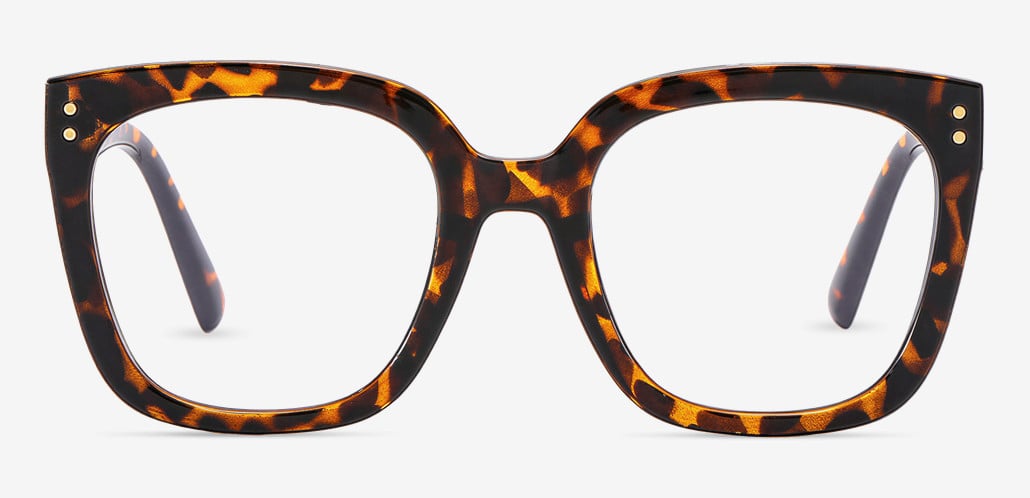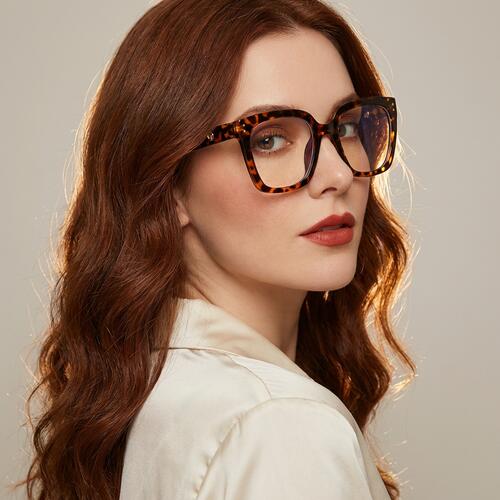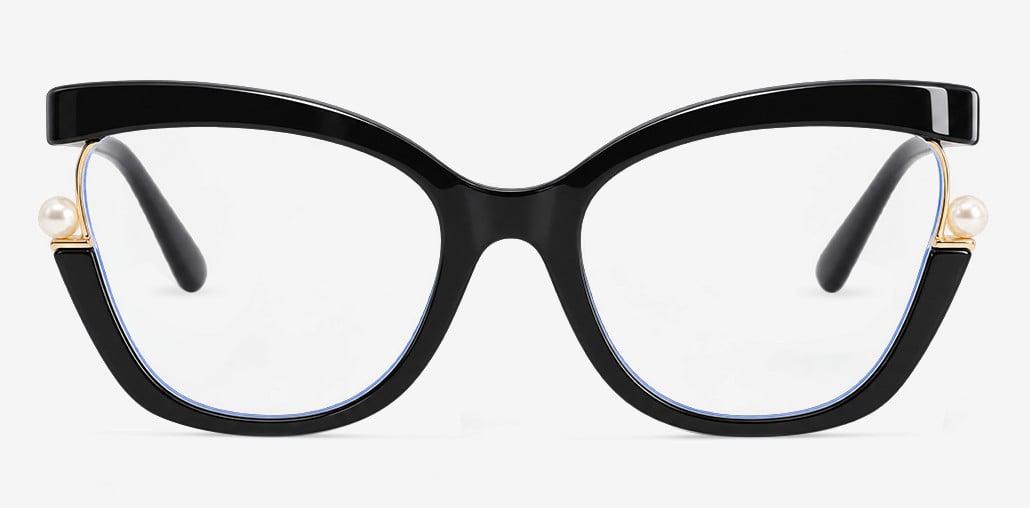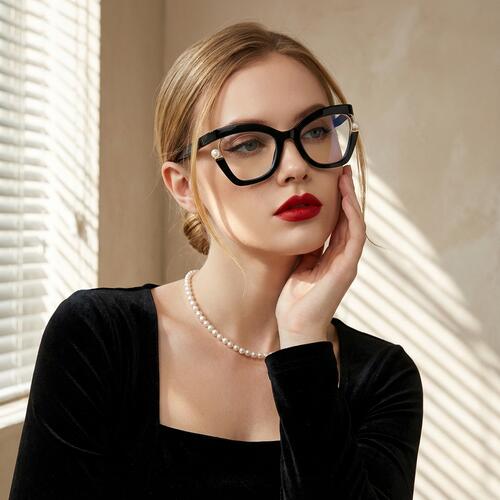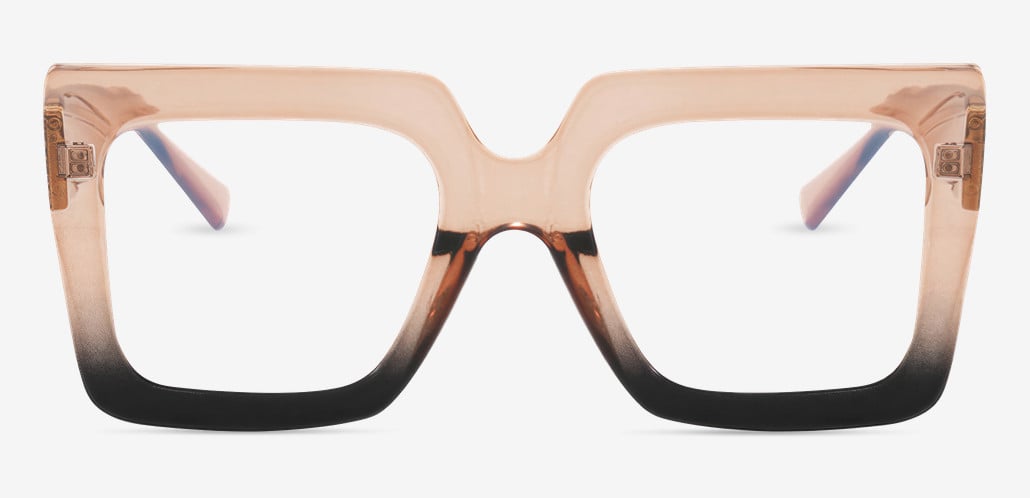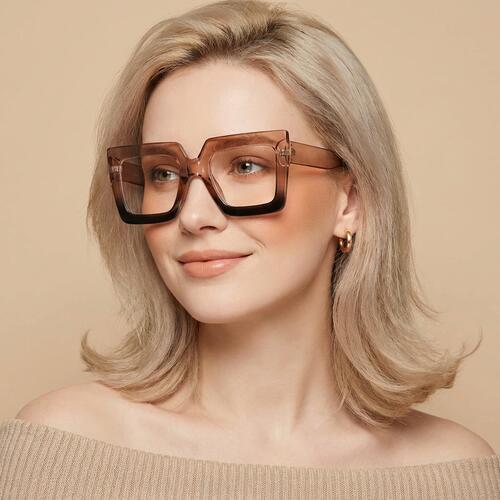

Someone slid a pair of bright tangerine frames across the counter to me last month and asked the question I get about orange more than any other color: "Be honest — can I pull these off?"
It's a fair question. It's also not the one I'm actually answering in my head. By the time a customer asks it, I've already run through a short mental checklist that has very little to do with whether they can wear orange and almost everything to do with whether this particular orange, in this amount, is going to end up on their face on a regular Tuesday — or in a drawer by August.
Orange is the frame color people fall hardest for in the mirror and wear the least often at home. So when I recommend it, I'm not just matching a color to a face. I'm trying to keep you from being the person who loved it for ten minutes. Here's what's running through an optician's head before we say "yes, get it."
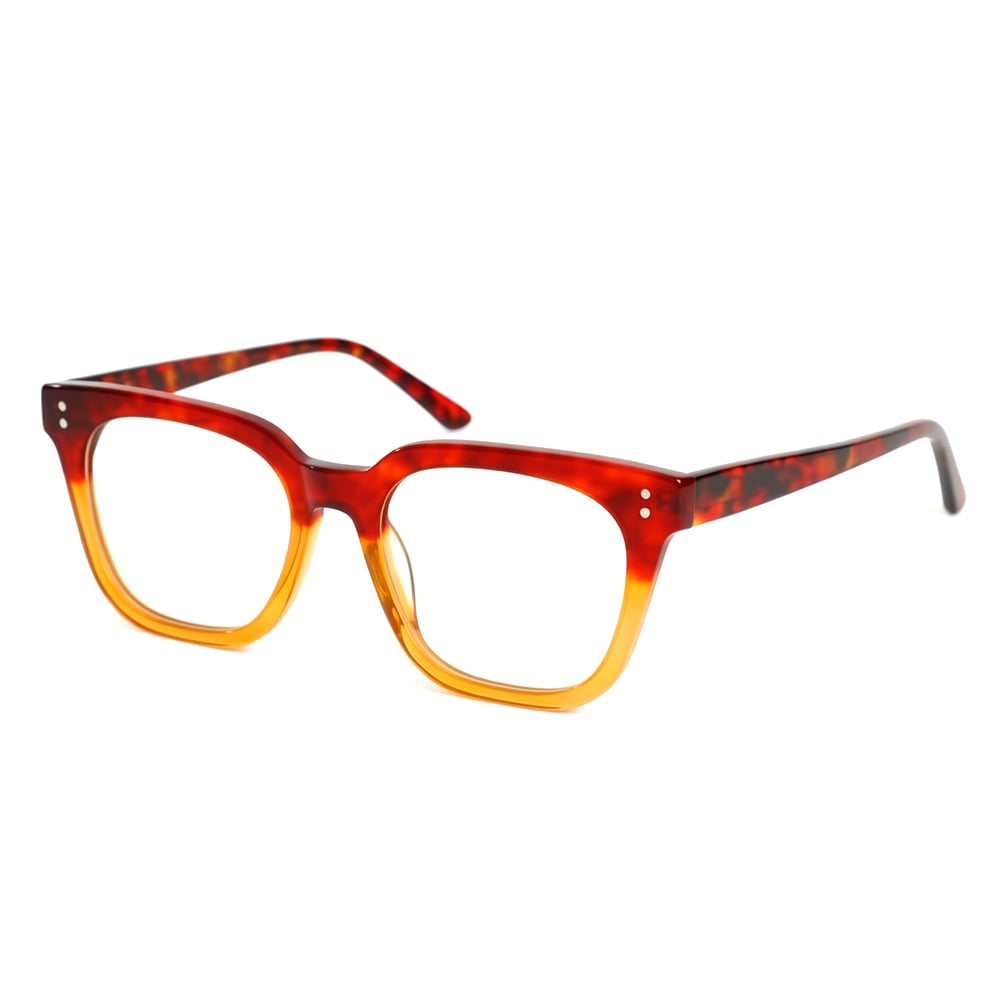
First question: do you mean orange frames, or orange lenses?
This trips up more searches than you'd think. "Orange glasses" can mean two completely different things, and the first thing I do is figure out which one you're after.
One is what you'd expect — an orange frame, the kind we carry across more than 80 styles on the orange glasses page. The other is an amber or orange lens tint, which is a different animal entirely: those tints cut blue wavelengths and bump up contrast, which is why you see them on driving glasses and some blue-light filters. They're a function, not a fashion choice.
If you came in wanting the warm amber tint to take the edge off screens at night, an orange acetate frame won't do that — and a pair of orange frames with clear prescription lenses won't tint anything. I'd rather sort that out in the first thirty seconds than have you disappointed later. Most people, it turns out, want the frame. So that's where the rest of this goes.
 How much orange are you actually signing up for?
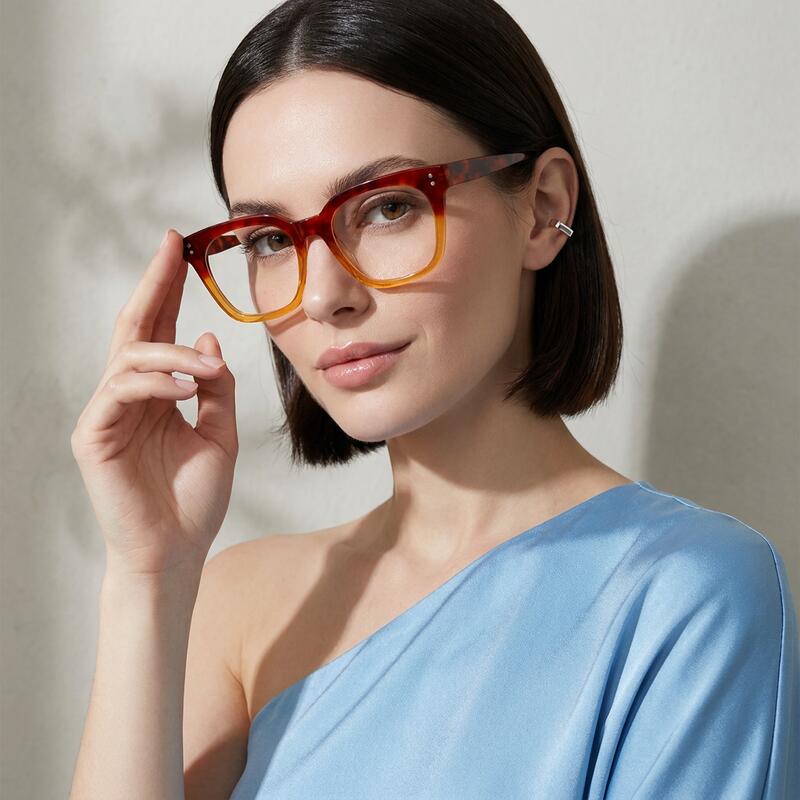
This is the variable customers underestimate, and it's the one I weigh hardest. "Orange glasses" covers a thin wire temple with a whisper of orange and a chunky full acetate front that's orange edge to edge. Those are not the same purchase. They're not even close.
A small dose — an orange browline, orange tips on the temples, a translucent orange you can half see through — behaves like a great pair of red socks. It's a quiet bit of color that you notice on second glance, and it's almost impossible to get sick of. A full-saturation, opaque orange front is a different commitment. It's the first thing anyone sees, it's in every photo, and it sets the tone of an outfit instead of accenting it.
Neither is wrong. But when someone tells me they want "a pop of color" and then picks the loudest, most opaque frame on the wall, I'll gently point them at the translucent version of the same shape. Nine times out of ten, the lighter dose is the one they're still reaching for a year later. If you're testing the water, a sheer style like the Wallis rectangle asks a lot less of you than a solid block of color does.
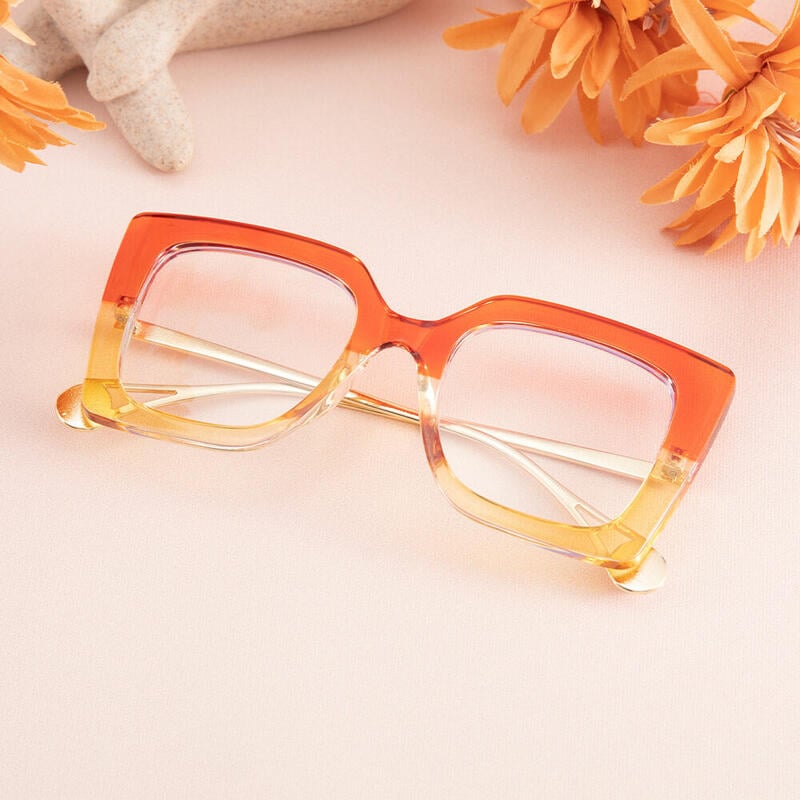
What's the orange sitting against — including your camera?
A frame doesn't live on a white display wall. It lives against your skin, your hair, your collar, and — this is the part I've started raising with nearly everyone — your webcam.
Half of us spend our days on video now, and orange is a color that the camera loves in a way it doesn't love most frames. Warm light, compressed video, a slightly washed background: orange holds its punch on screen better than navy or tortoise, which tend to flatten out. That's a genuine point in its favor if you're on calls all day and want one memorable thing in frame. It's a point against it if your job is one where you'd rather the eyewear stay invisible. I'll ask what your week actually looks like before I weigh in, because the honest answer to "is this too much" depends entirely on where your face is going to be seen.
The under-discussed detail here is gloss. A high-gloss orange throws a hot highlight under office lighting and on camera, which reads younger and louder. A matte or satin orange absorbs that light and reads more deliberate, more grown-up. Same color, different finish, completely different impression. If you're nervous orange will look costumey, matte is usually the fix — not a different shade.

Is the orange honest? (This is a quality question, not a color question.)
Orange is one of the harder colors to manufacture well, and it's where corners get cut most visibly. So I look at how the color was made before I look at whether it suits you.
A frame where the orange runs all the way through the material — dyed-through acetate — has depth to it. Move it under the light and the color shifts subtly, the way a real piece of amber does. A frame that's been sprayed or coated orange over a different base has a flat, painted look, and worse, it tells on itself at the hinges and edges where the coating thins and the base color peeks through. That's the difference between an orange that reads "designed" and one that reads "prop."
It also predicts how the frame ages. A dyed-through acetate keeps its color through years of cleaning and sunlight. A cheap coating goes patchy. This is why, when I'm pulling orange options, I lean on the acetate and TR90 styles in our range rather than the thinnest painted plastics — the color survives ownership. You don't need to spend a fortune to get this right; you just need to know it's the thing to check. Hold the frame to the light at the temples and look for honest, consistent color.
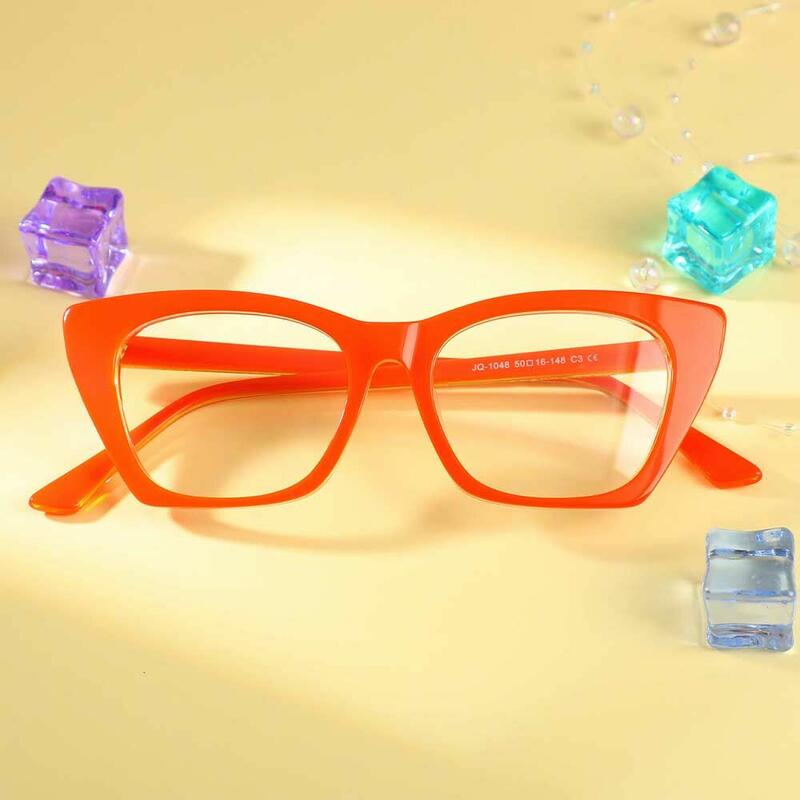
The shade of orange does more work than your skin tone
Here's where I'll quietly disagree with the usual advice. Most guides tell you to match orange to your skin's undertone — warm skin gets bright orange, cool skin gets muted. There's some truth to it, but it's overstated. Orange has a much wider range than people give it credit for, and the shade you choose moves the result far more than minor differences in your complexion do.
Think of it less as warm-versus-cool and more as four distinct families. Honey and amber lean soft and almost neutral, and they're the closest orange gets to "goes with everything." Terracotta and rust have brown folded in, which is why they read as calm and earthy and slide easily into a professional setting. True tangerine is the playful one, the dopamine pick. Coral pulls toward pink and flatters the widest range of faces, which is why it's my default recommendation when someone's unsure. Pick the family that matches the mood you want, and the complexion question mostly takes care of itself.
So when a customer with cooler skin worries orange isn't "for them," I don't send them away from the color. I steer them from tangerine toward rust or amber. The orange is still orange. It's just speaking more quietly.
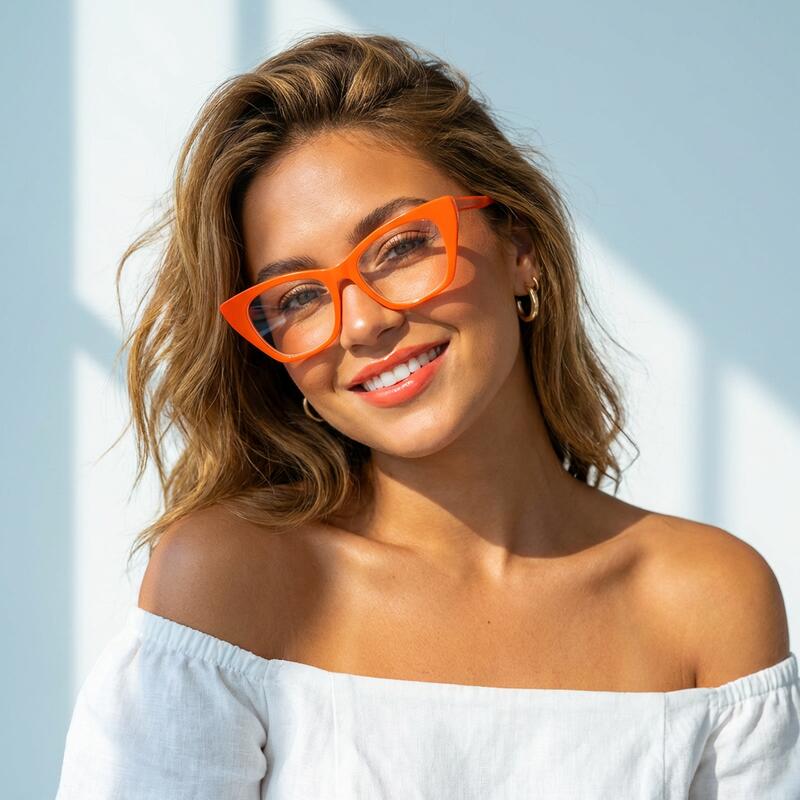
The last thing I check: will you actually wear it?
This is the consideration I keep to myself but weigh the most. Orange has the widest gap I see between how much someone loves a frame in the store and how often they put it on at home. The enthusiasm is real. The follow-through is the gamble.
So my real job isn't to sell you the boldest orange you'll try on. It's to land on the orange you'll still want on a gray Wednesday with no plans. For most people that means treating a bold orange as a second pair — a rotation frame that lives next to the everyday neutral, not the one that has to do all the work. The good news is that this is exactly the color to experiment with, because you don't have to bet much to find out. Orange frames here start at $8.95 and climb into designer territory well past $100, which means you can test whether you're an everyday-orange person on a frame like the Emma cat-eye before you commit to a designer round. And before any of it ships, put the frame on your face with the virtual try-on — a still photo of you in the orange tells you more in five seconds than any color theory I can give you.
That's the whole checklist. Which orange you mean, how much of it, what it's sitting against, whether it's made honestly, which shade-family fits the mood, and whether it'll survive contact with your actual life. Match those, and the question you walked in with — can I pull this off — stops being the right question. The answer was always going to be yes. The only thing worth getting right is which orange.