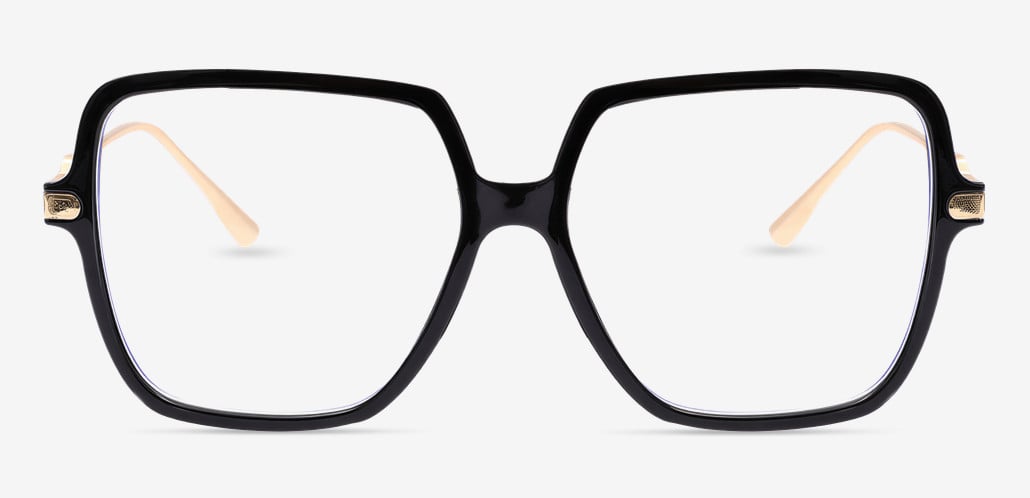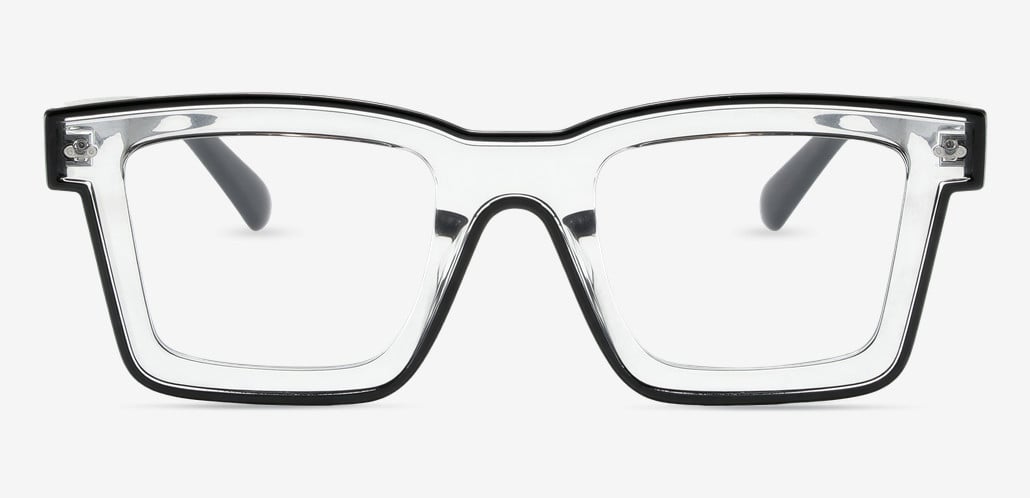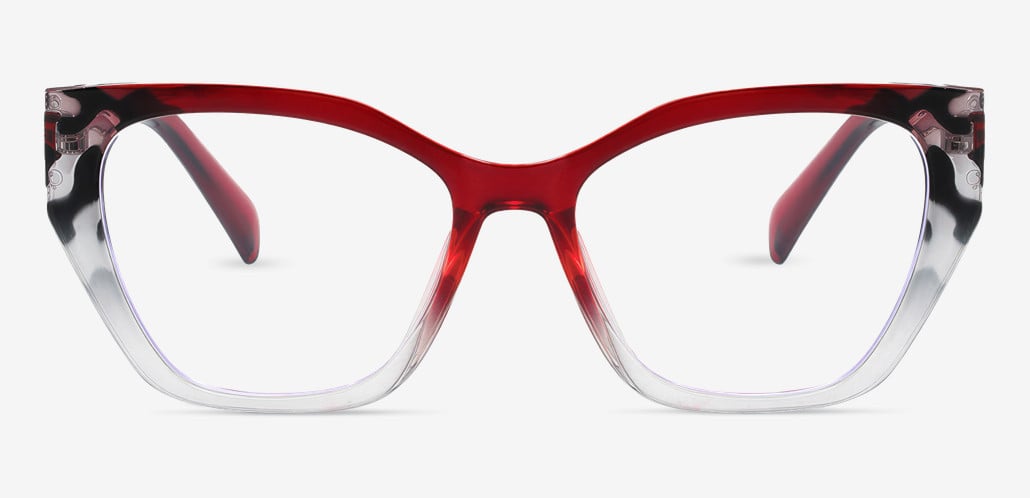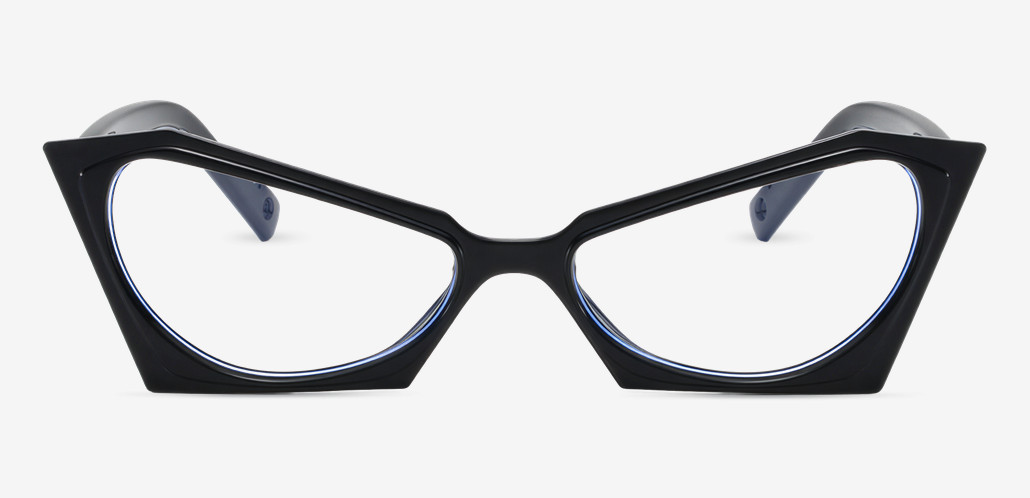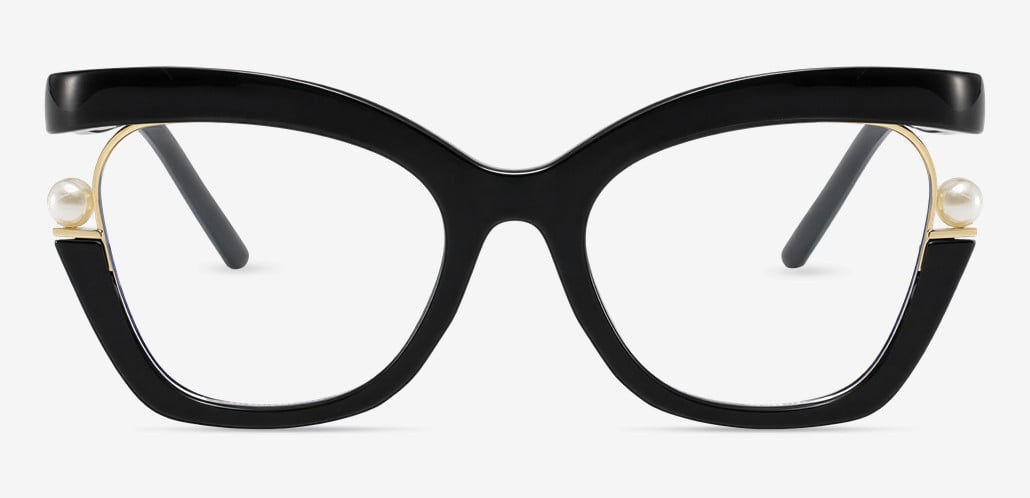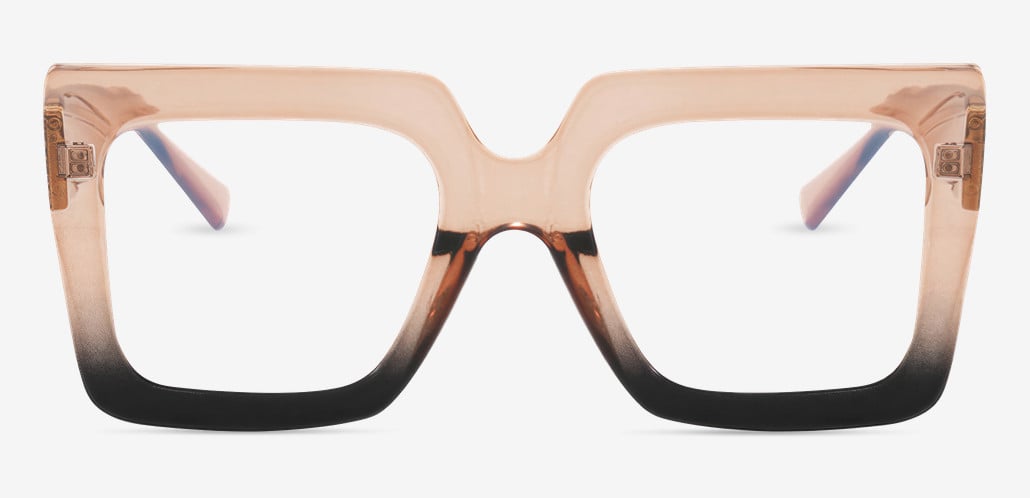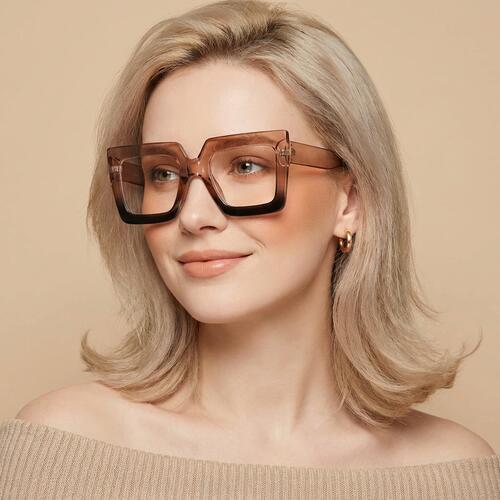

I've spent years on both sides of the geometric-frame problem. For a long stretch I fit these frames across a dispensing counter, watching people pick up a sharp hexagon, hold it to their face, and either light up or quietly put it back. Then I spent several years on the other side entirely: shooting and spec'ing frames for online catalogs, deciding which angle the photo got taken from and which numbers made it onto the product page.
That second job taught me something the first one couldn't. The gap between how a geometric frame looks in a catalog photo and how it looks on your actual face is wider than for any other shape on the market — and almost nobody buying online knows where that gap hides. Round, oval, classic rectangle: those shapes are forgiving when a photo flattens them. A six- or eight-cornered frame is not. The angles are the entire point of the design, and angles are exactly what a flat, straight-on product shot misrepresents.
So this isn't a "geometric glasses flatter every face shape" article. (You can find fifty of those, and they're mostly true and mostly useless.) This is the checklist I'd run through if I were buying a geometric frame online and couldn't put it on first.
First, ignore the word "geometric"
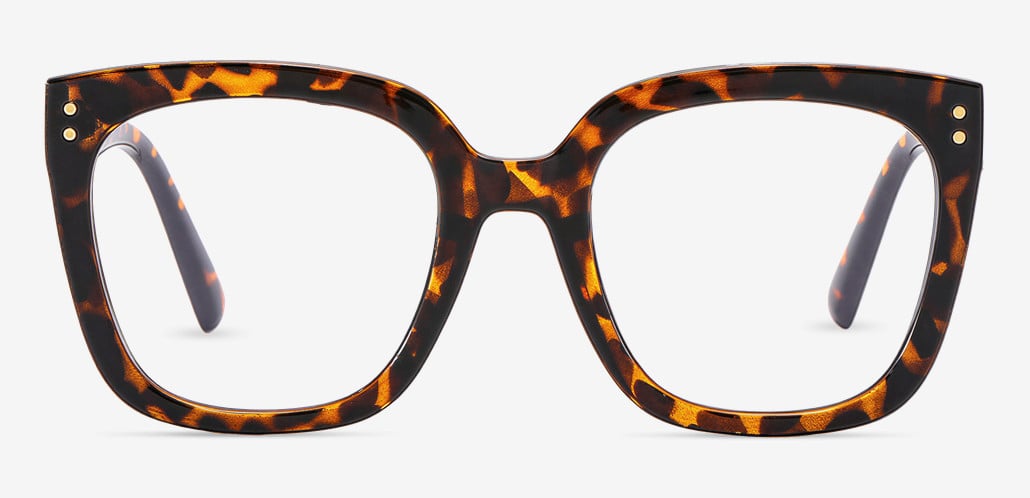
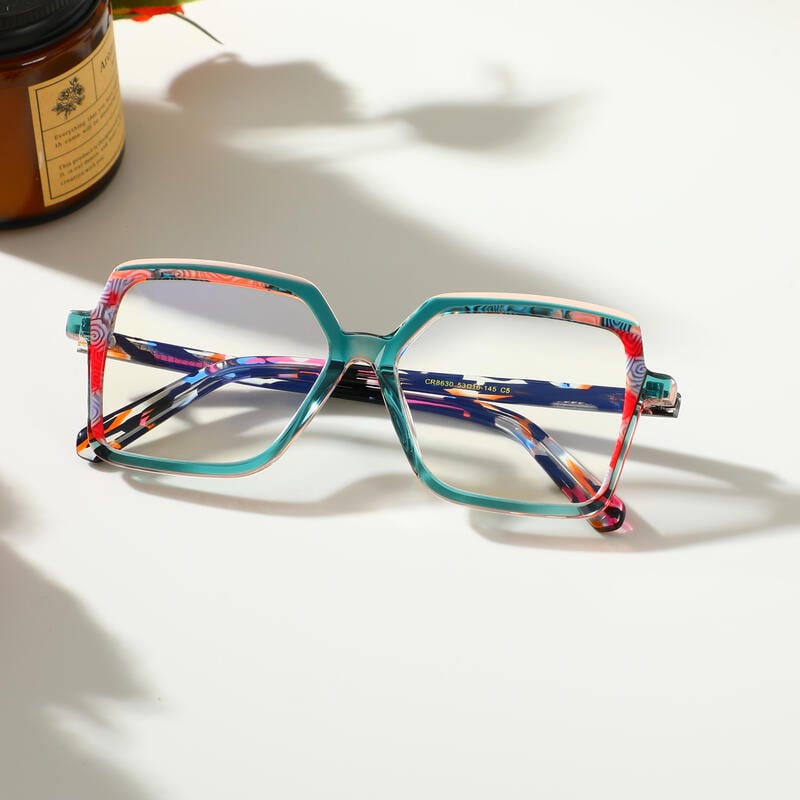
Here's the inconvenient truth about this category, and I'll say it about our own site too: "geometric" is a label, not a shape. Browse almost any retailer and you'll find squares, rounds, rectangles, even cat-eyes filed under "geometric." Our own grid does it — a few frames carrying the "geometric" tag are really a soft square (Lizzie), a round (Hoove), or a rectangle (Ceolin). That's not a scandal, it's just how shape taxonomies get loose over time. But it matters to you as a buyer, because it means you cannot shop the category name. You have to shop the silhouette.
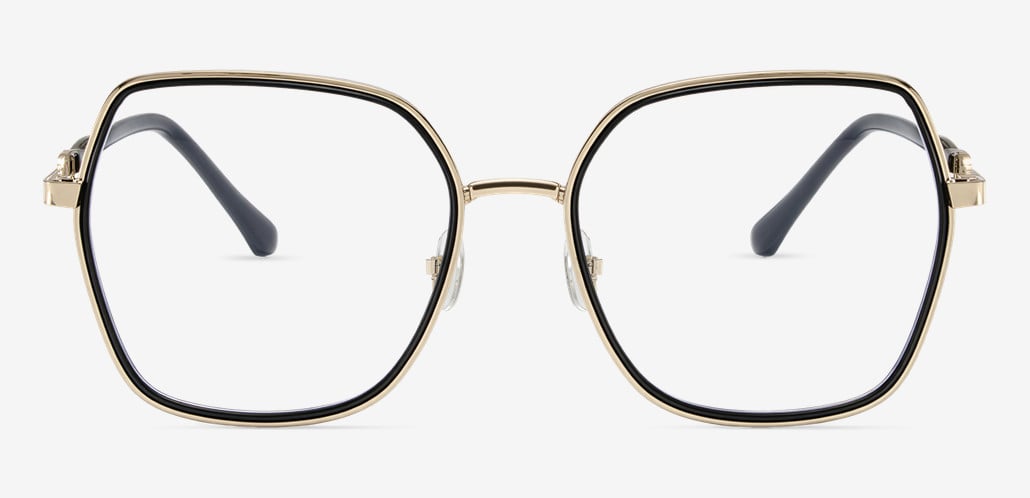
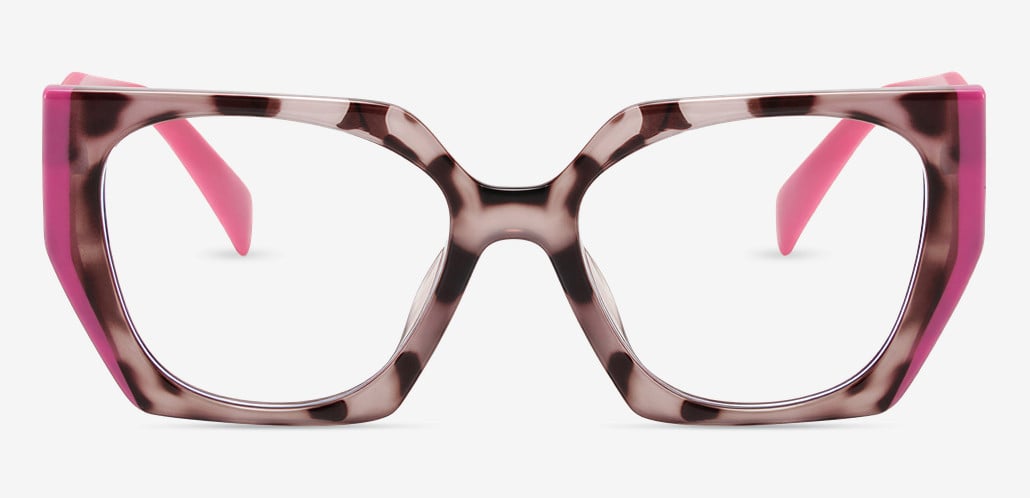
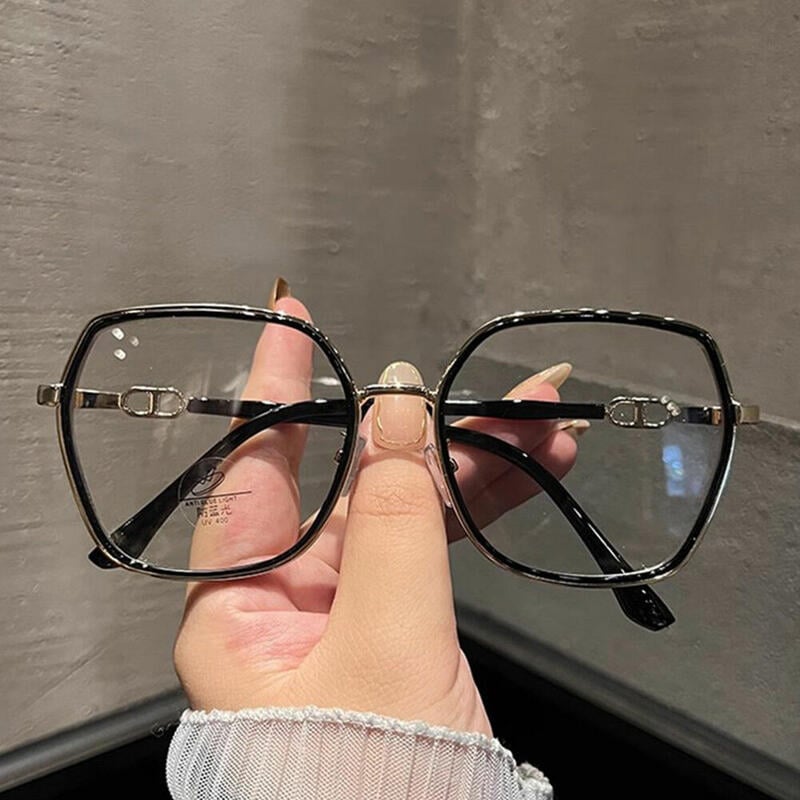
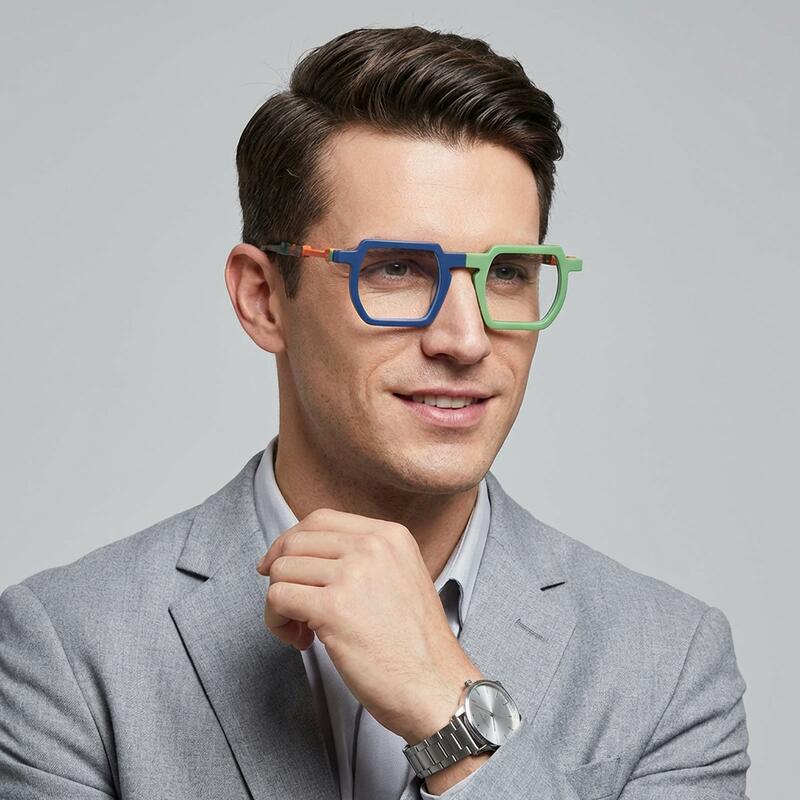
A true geometric frame is one whose character comes from straight edges meeting at deliberate angles — hexagons, octagons, faceted polygons, frames with cut or clipped corners. The defining feature is the vertex: the point where two straight lines meet. That's what makes the frame read as "designed" rather than "default." When you're scrolling a category page, train your eye past the tag and onto the corners. Count them. A four-cornered frame with cut edges is a gentle, everyday version of geometric. A six-cornered hexagon is a clear statement. An eight-cornered octagon or an irregular faceted shape is a commitment. The corner count is the single best quick predictor of how bold a frame will read, how much it'll widen your face visually, and — as you'll see below — how it'll behave with your prescription.
Why the photo is lying to you (gently)
When I was merchandising frames, the standard hero shot was straight-on, evenly lit, against white. It's clean and it sells. It also erases three things that decide whether a geometric frame works on you.
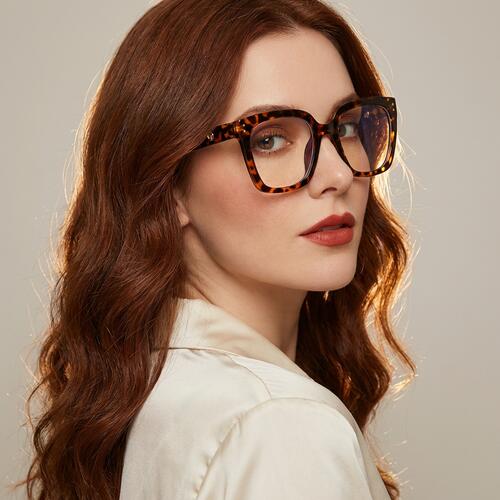
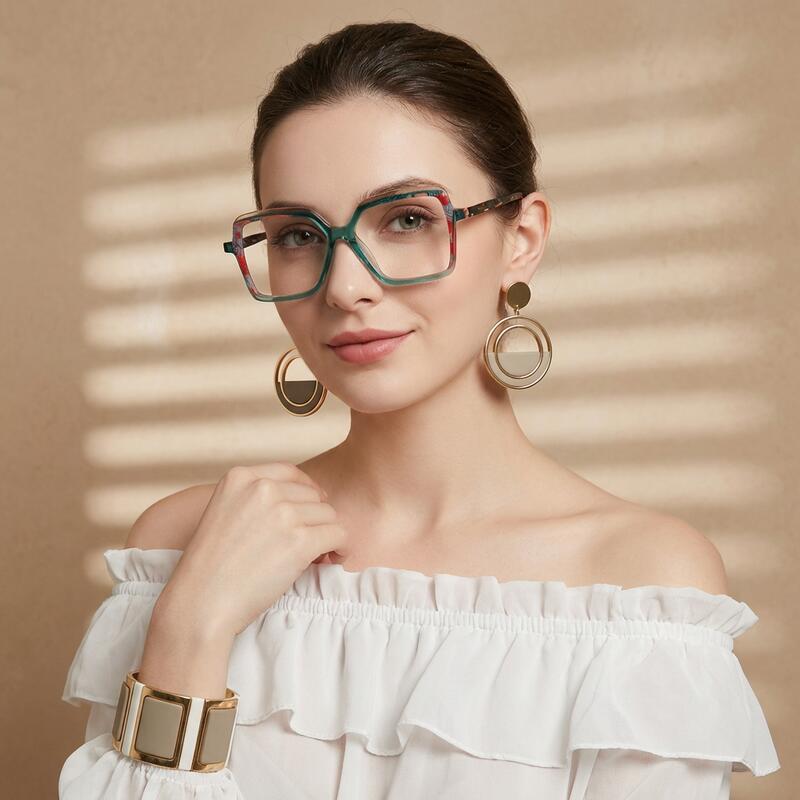
The first is angle severity. Flat, head-on lighting kills the shadow that tells your eye how sharp a corner actually is. A hexagon that looks crisply faceted in person can read as a soft rounded shape in the hero image, and vice versa. The fix: never judge a geometric frame from the white-background shot alone. Look for the on-model or three-quarter image, where side lighting brings the edges back. If the only photo is straight-on, treat the sharpness as unknown, not as gentle.
The second is how far the corners actually reach. On angular frames, your eye reads the outermost points as the edge of the frame — which means the frame's visual footprint on your face is wider than a curved frame of the same lens width. A round and a hexagon can share an identical "lens width" number and sit completely differently, because the hexagon's corners push out past where a curve would stop. A photo, especially one cropped tight, hides this. So a geometric frame that "looks my size" online can land wider than expected.
The third is bevel and facet depth — whether the front of the frame is flat or sculpted. This is almost impossible to see in a 2D image and it changes how much the frame catches light and draws attention. You usually only learn it from a rotating view or a try-on tool where you turn your head.
If a virtual try-on is available — and on our site every frame has one — use it, but use it correctly. Don't just stare at yourself straight on, recreating the same misleading angle as the hero photo. Turn your head left and right. Watch what the corners do at three-quarter view. That rotation is where you find out whether the angles flatter your bone structure or fight it.
The spec sheet is your real fitting room
When you buy online, the measurements are the fitting. And for geometric frames, the usual advice — "just check the lens width" — isn't enough, because of that corner-reach problem.
The number I'd weight most heavily is total frame width (temple hinge to temple hinge), not lens width alone. That's the measurement that tells you whether the outermost points will sit inside your face or spill past your temples. If a frame doesn't list total width, the lens-width-plus-bridge-plus-roughly-double-the-rim figure gets you close, but on angular frames add a little mental margin for the corners.
The second number that quietly matters is lens height. Geometric shapes — especially clipped hexagons and shallow polygons — sometimes run short top-to-bottom. That's fine for a single-vision Rx and a problem for anyone in progressives (more on that below). It also affects how much of your eye area the frame occupies, which is half of what makes a statement shape feel "big."
The trick I always give people who can't try frames on: measure a pair you already own and like. Grab a ruler, measure the lens width and the total width of your current favorite, and shop to those numbers. Your face hasn't changed; a frame that fits well is a portable spec sheet you already own.
One genuine advantage of buying geometric online today is built-in fit insurance. A lot of frames now ship with adjustable nose pads (on our geometric grid, well over half do) and many have spring hinges that flex to accommodate a slightly-too-narrow fit. If you're nervous about width — a reasonable nerve with angular frames — prioritizing a frame with adjustable pads gives you room to dial in the resting position after it arrives.

The part no one mentions: your prescription and the corners
This is where my optician half overrules my merchandiser half, because it's the thing product pages almost never tell you.
If you're nearsighted (a minus prescription), your lenses get thicker toward their edges, and the thickness is greatest at the points farthest from the lens's optical center — which sits roughly over your pupil. On a round lens, that extra thickness spreads evenly around the rim and disappears into the frame. On a sharp geometric lens, the far corners can sit a long way from that optical center, so the thickness pools into the points. A strong prescription in an aggressive hexagon or octagon can end up with visibly chunky corners, and at the very tip you can occasionally get a little edge distortion. It's not dangerous — it's cosmetic — but it can undercut the clean look you bought the shape for.
Three things keep this in check, and they're all decisions you make at checkout:
Choose high-index lenses if your Rx is moderate to strong. Higher index material is thinner for the same prescription, which keeps those corners tidy. This is the single most worthwhile lens upgrade for an angular frame.
Let your prescription steer your corner count. If your script is strong, a four-cornered cut-edge shape or a smaller frame will look far cleaner than a wide eight-cornered one. Save the dramatic octagon for a light prescription or a non-prescription/blue-light pair.
Mind lens height if you wear progressives. Progressive lenses need vertical room for the corridor between your distance and reading zones. A short, shallow geometric lens can squeeze that corridor and make the reading area feel cramped. If you're in progressives, favor a geometric frame with a taller lens and confirm the lens height before ordering.
None of this is a reason to avoid geometric frames. It's a reason to match the severity of the shape to the strength of your prescription — a pairing the catalog will never make for you.
Metal or acetate changes the frame you actually receive
Two frames can be the "same" hexagon and arrive looking different, because the material decides how sharp the angles can physically be.
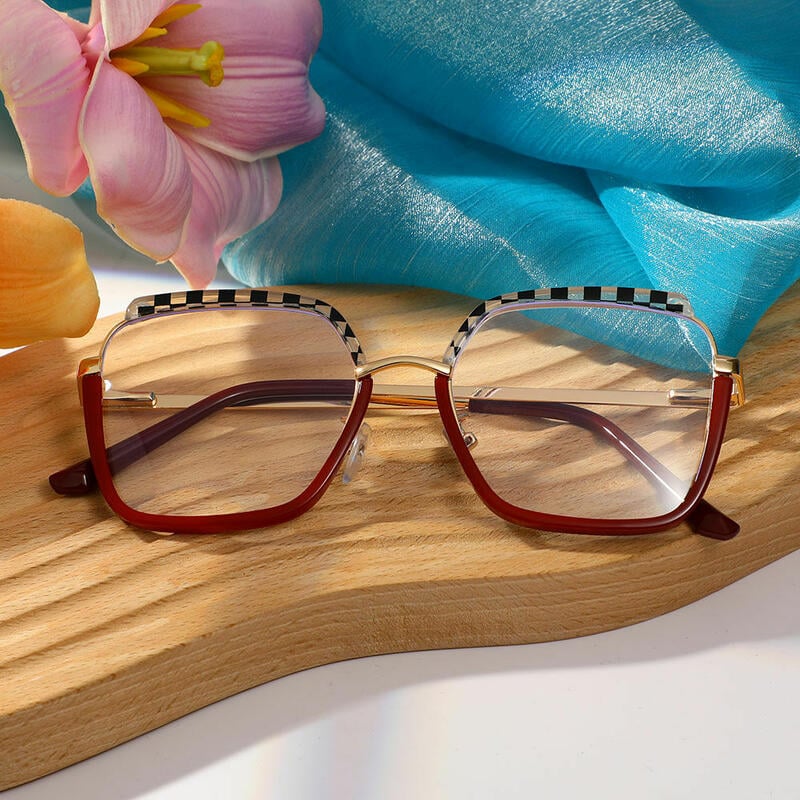
Metal and titanium hold a crisp, tight vertex. Wire and thin-metal geometric frames give you the sharpest, most architectural version of the shape — the corners come to a near-true point. If you want the angles to read as angles, metal delivers. On our grid, the gunmetal and gold metal frames (think Puzzle in gunmetal, or the gold Monroe, Rudolpie, and Baldwin) are where you'll see the crispest geometry.
Acetate is different. Because it's milled and polished, and because a truly sharp acetate point is fragile and uncomfortable, acetate corners carry a small rounding radius. So an acetate hexagon — say a tortoise frame like Bloomfield, or a warm brown like Aria — gives you the idea of the geometric shape with the edges softened. That's not a downgrade; for a lot of people the softened version is more wearable day to day and easier to pair with a face that already has soft features. But know which one you're buying. If you order acetate expecting knife-edge angles, the frame will feel "off" even though nothing's wrong with it.
Weight is the other material call. Titanium is the lightest option and the one I'd point anyone toward for a larger geometric frame they plan to wear all day, since bold shapes use more material and can get front-heavy. If a frame's listed material is titanium or a titanium mix, that's a quiet point in its favor for comfort.
Buy it the way you'd buy a risk — because the shape is the variable
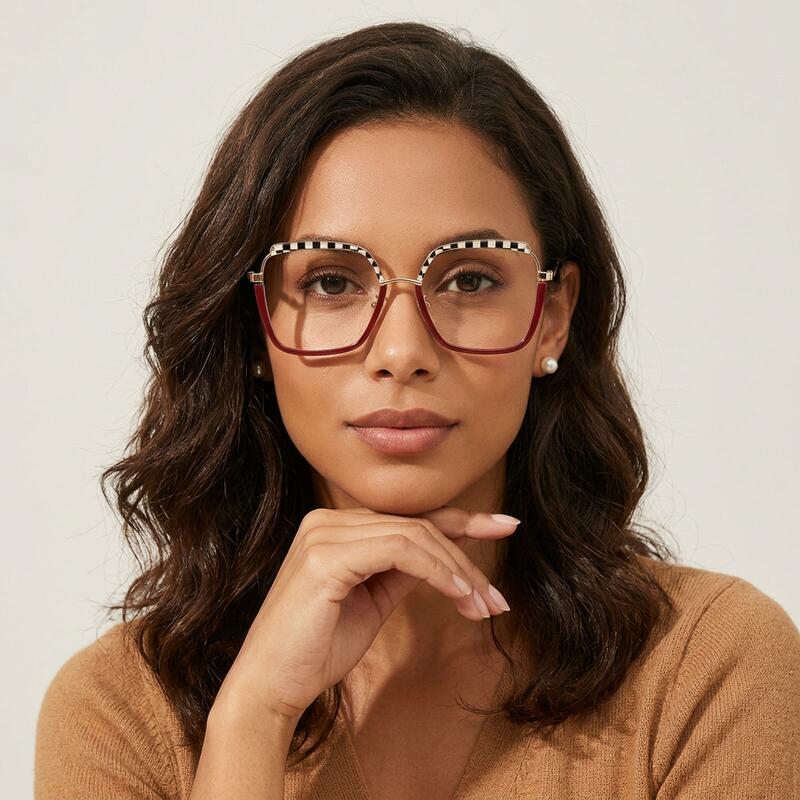
The honest thing about a geometric frame is that the shape is the gamble, not the brand or the price. So I shop them in a way I wouldn't bother with for a safe rectangle.
If you've never worn an angular frame and you're not sure the look is "you," start cheap on purpose. There are true geometric frames on our site in the under-$20 range — Irving and Oliver, for instance — that are perfectly good ways to live with the silhouette for a couple of weeks before you decide. If the shape earns a permanent spot in your rotation, then step up to a designer-tier pair (the Kelsen, MacArthu, or Matre end, roughly around the $100 mark) where the construction, hinges, and finish justify the price. Buying the expensive pair first, before you know the shape suits you, is how a beautiful frame ends up in a drawer.
Before you check out, three trust checks that matter more for a statement shape than a safe one:
Read the return window and conditions. You're more likely to need it with a bold shape, so know it cold before you order, not after.
Confirm how prescription and PD are handled. A frame is only as good as the lenses in it; make sure you can enter your prescription and pupillary distance, and that there's a real person to ask if something looks wrong.
Use the try-on as a rotation test, not a mirror. As above — the value is in turning your head, not posing straight on.
If I had to compress all of this into one rule, it's this: match the boldness of the shape to two things the photo won't — your prescription strength and your real face width — and treat the first pair as a test, not a verdict. Do that, and geometric frames stop being a gamble and start being the most interesting, most "chosen" pair of glasses you own.
Frequently Asked Questions
What measurements should I check before buying geometric glasses online?
Total frame width matters most, because the corners of an angular frame push your visual footprint wider than the lens-width number alone suggests. After that, check lens height — geometric shapes can run short, which matters for fit and for progressive lenses. The easiest method is to measure a pair you already own and like, then shop to those numbers.
Do geometric frames work with a strong prescription?
Yes, with two adjustments. Order high-index lenses to keep edge thickness down, and lean toward a smaller frame or one with fewer corners. On strong nearsighted prescriptions, the lens gets thickest at the points farthest from your pupil, so a wide, many-cornered shape can show chunky corners. A cleaner, smaller geometric shape avoids that.
Can I get progressive lenses in geometric frames?
Usually, but lens height is the deciding factor. Progressives need enough vertical room for the corridor between distance and reading zones. Short, shallow geometric shapes can cramp that corridor, so choose a frame with a taller lens and confirm the lens-height measurement before ordering.
How accurate is virtual try-on for angular frames?
It's useful if you use it right. Don't just look straight ahead, which recreates the same flattering-but-misleading angle as the catalog photo. Turn your head left and right and watch what the corners do at a three-quarter view. That rotation tells you whether the angles suit your bone structure.
Are metal or acetate geometric frames better?
Neither is better — they give you different versions of the shape. Metal and titanium hold sharp, crisp corners, so they read as more architectural. Acetate corners are slightly rounded by manufacturing, giving a softer, more everyday take on the same silhouette. Decide which look you want before you order so the frame matches your expectation.
What if the shape doesn't suit me once it arrives?
This is why I recommend starting with an inexpensive pair to test a bold shape before committing, and reading the return policy before you buy rather than after. A statement shape carries more "will I actually wear this" risk than a safe one, so build that into how you shop it.
About the author
Nadia Brandt is an ABO-Certified Optician who spent several years as an optical e-commerce merchandiser — shooting, spec'ing, and writing product pages for online eyewear — before returning to hands-on dispensing. That dual background is why this guide focuses on the gap between how a frame photographs and how it fits.
This article was reviewed against Aoolia's current geometric frame specifications. Aoolia is an independent direct-to-consumer eyewear company; every prescription order is reviewed by a licensed optician before lenses are cut.