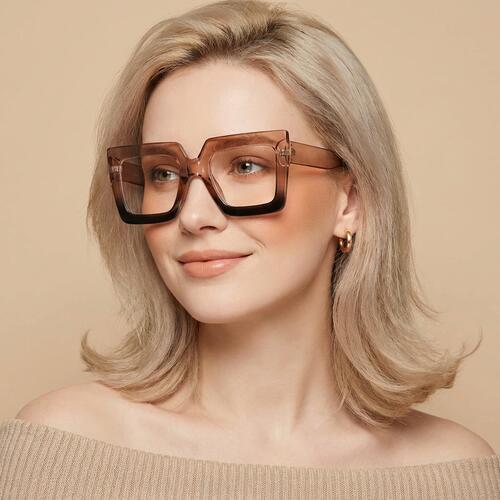

Find Your Face Shape in 60 Seconds
Skip the celebrity-comparison method. It doesn't work, because you don't look at Zendaya's face the way you look at your own.
Do this instead. Pull your hair completely off your face and take a front-facing photo at eye level — no tilt, no smile, phone at arm's length or propped on a shelf. Then check three things on the photo:
1. Which is your widest point? Forehead, cheekbones, or jaw? Trace each with your finger if it helps.
2. Is your face noticeably longer than it is wide? Roughly compare the distance from hairline to chin against ear to ear across the cheekbones. If the length looks about one and a half times the width or more, you're in "long" territory.
3. Is your jawline angular or curved? Look at the corners below your ears. A visible corner means angular; a smooth arc means curved.
Now map your answers: widest at the cheekbones with a curved jaw and balanced length is round (or oval, if the face is clearly longer than wide). Forehead, cheekbones, and jaw all similar in width with an angular jaw is square. Widest at the forehead, tapering to a narrower chin, is heart. Widest at the cheekbones with both a narrow forehead and narrow jaw is diamond. Noticeably long with fairly straight sides is oblong.
If you landed cleanly on one — good, skip ahead to your section. If you're stuck between two, that's normal, and the tiebreaker section near the end will sort you out.

The One Rule That Actually Matters
Every face-shape chart you've ever seen boils down to a single principle: frames flatter you when they contrast with your face's dominant line. Curved faces gain definition from angular frames. Angular faces soften under curved frames. Long faces look more balanced under tall lenses; short faces under shallow ones. That's the entire system. Everything else is detail.
Brown adds a useful twist to this rule. Black frames draw a hard, high-contrast line across your face, which makes the contrast principle unforgiving — a black square frame on a soft round face can look severe. Brown draws the same line in a softer hand. Espresso behaves almost like black but with less harshness; honey and amber barely outline the face at all. In practice, this means brown lets you push further against your face shape than black does. A round face that can't quite carry black rectangles often looks great in dark brown ones. Keep that in mind as you read your section — brown widens your options rather than narrowing them.

Round Faces: Add Corners
A round face has soft width — full cheeks, a curved jaw, length and width roughly equal. The goal is structure, and brown is arguably the best color to add it with, because you get the sharp geometry without black's severity.
Reach for square or rectangular frames in espresso or dark brown. The straight top line and defined corners do the visual work of lengthening and narrowing the face. Rectangles — wider than they are tall — are the stronger pick of the two, since the shallow lens also counteracts roundness. A slightly oversized fit helps too; frames that extend just past your cheekbones make the mid-face read narrower.
Skip small round lenses and anything with a strong circular silhouette — they echo the face's curve and exaggerate it. If you love the retro-round look anyway, choose a browline style: the heavier brow bar adds the missing angularity while keeping the round lens below it.
Square Faces: Soften the Corners
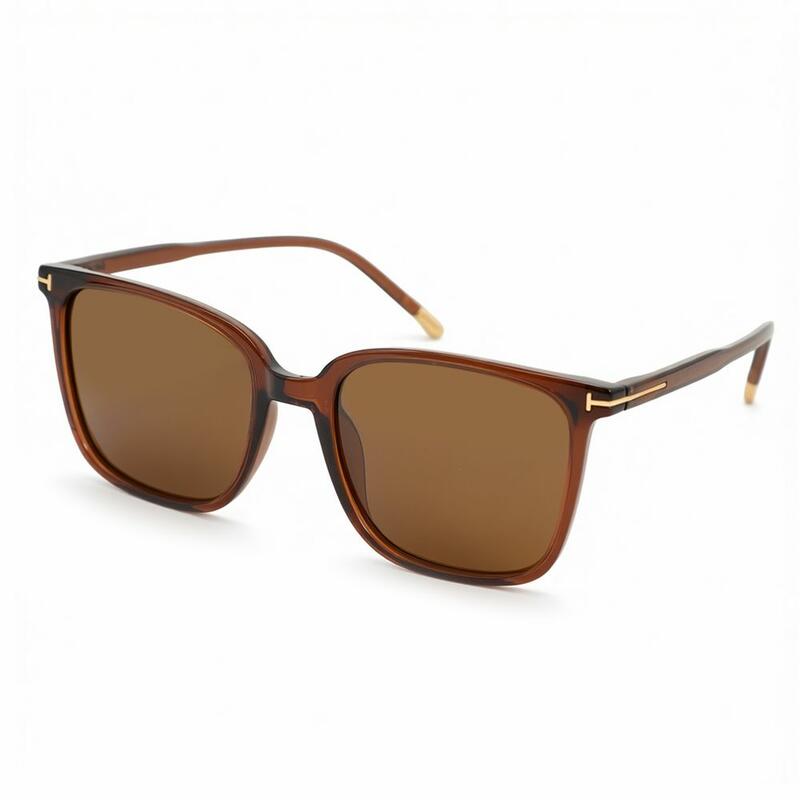
Square faces come with a gift — a strong jawline — and the job of your sunglasses is to complement it, not compete with it. Hard rectangular frames on a square face stack angles on angles, and the effect can read rigid.
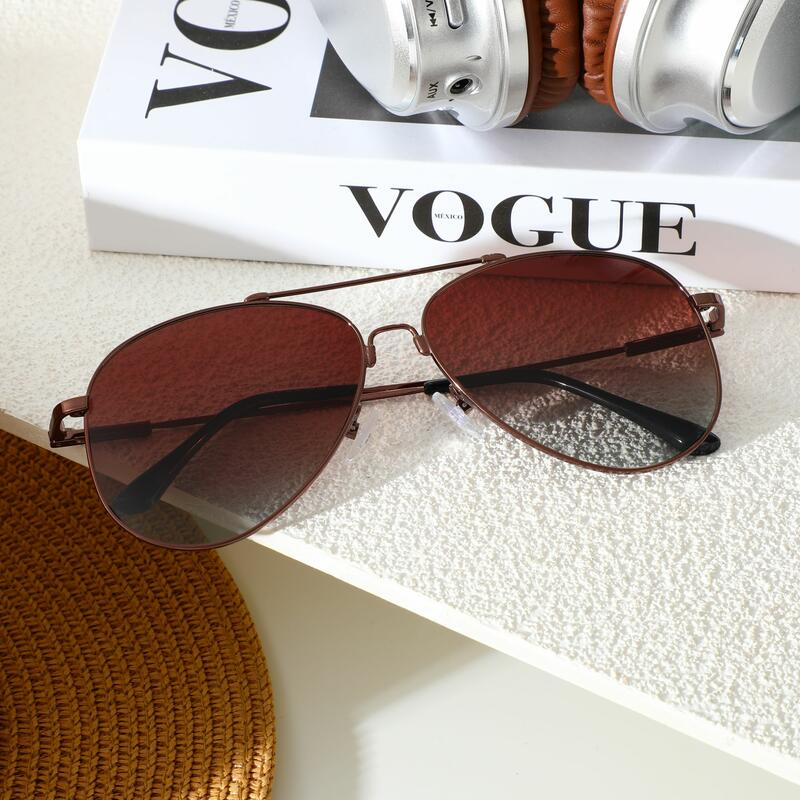
The classic answer is round or oval lenses, and in brown specifically, honey and amber tones do double duty: the curved lens softens the jaw while the lighter, warmer color diffuses the overall contrast of the face. Brown aviators are the other reliable pick — the teardrop lens is essentially a softened triangle, which relaxes an angular face while the wide top bar keeps things from looking dainty. Cat-eye shapes work as well for anyone who wants lift at the outer corners.
The main thing to skip is a small, boxy frame that sits inside the width of your jaw. It makes the jaw look wider by comparison — the opposite of what most square-faced shoppers want.
Oval Faces: Don't Waste the Advantage
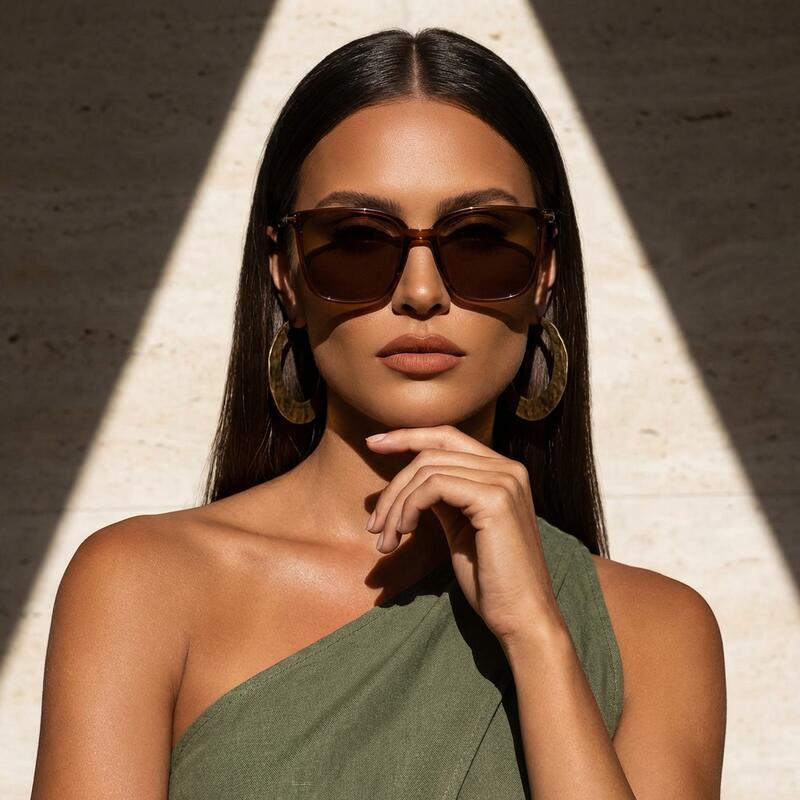
If your face is longer than wide with a gently curved jaw and cheekbones as the widest point, nearly every frame shape technically "works" on you. Which creates its own problem: with no shape ruled out, people default to the safest option and end up under-dressed in bland frames.
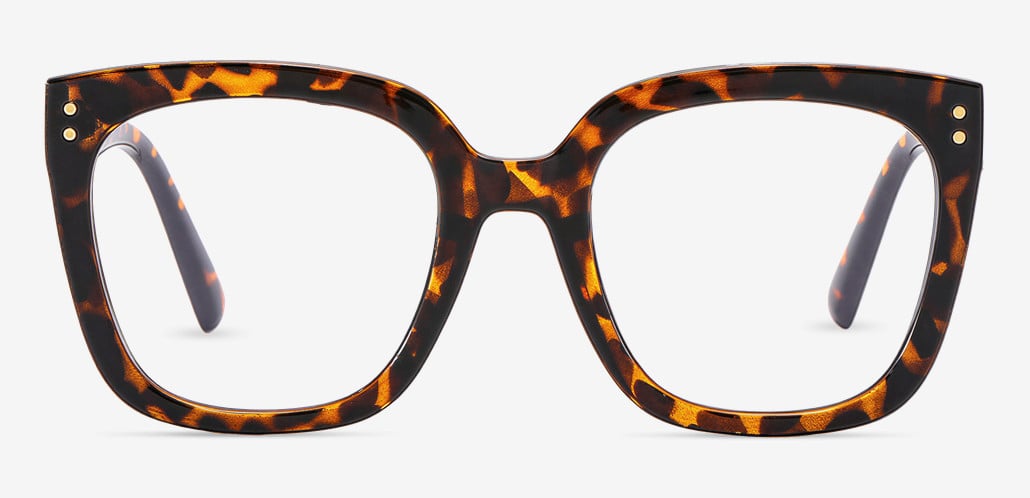
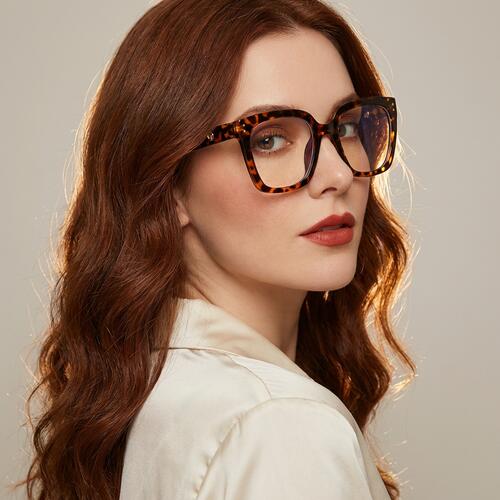
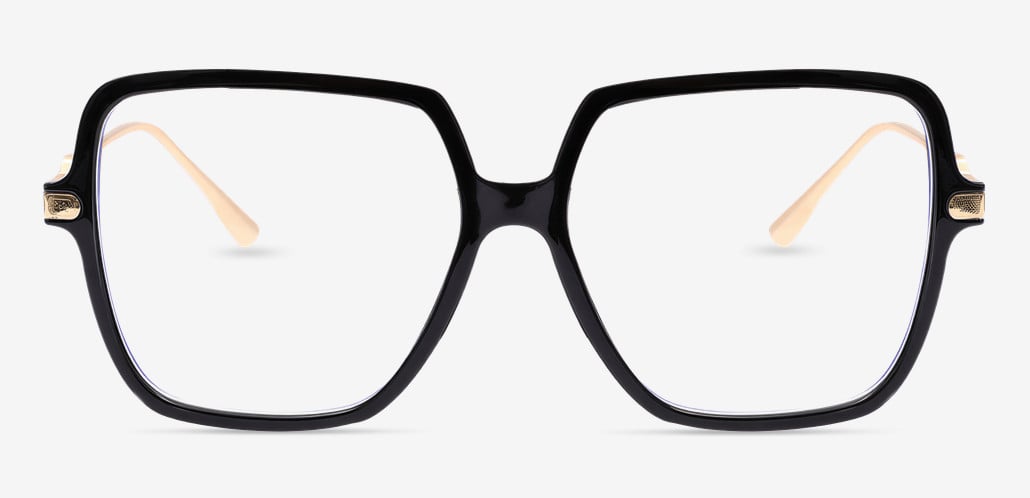
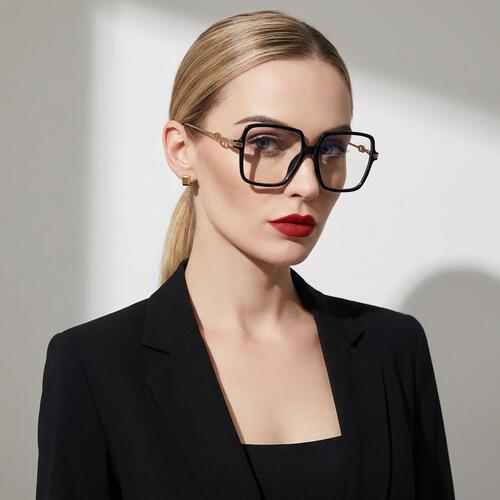
Use the freedom deliberately. An oval face is the one shape that can carry statement geometry — oversized squares, bold geometric frames, deep cat-eyes — without throwing anything off balance. In brown, this is where gradient lenses and two-tone frames earn their place: shapes and finishes that would overwhelm a shorter or more angular face just look intentional on yours.
One genuine caution: frames wider than your face at its widest point will drag the eye outward and disrupt the proportions you already have. Fit width matters more for you than lens shape does — more on the numbers in the fit section below.
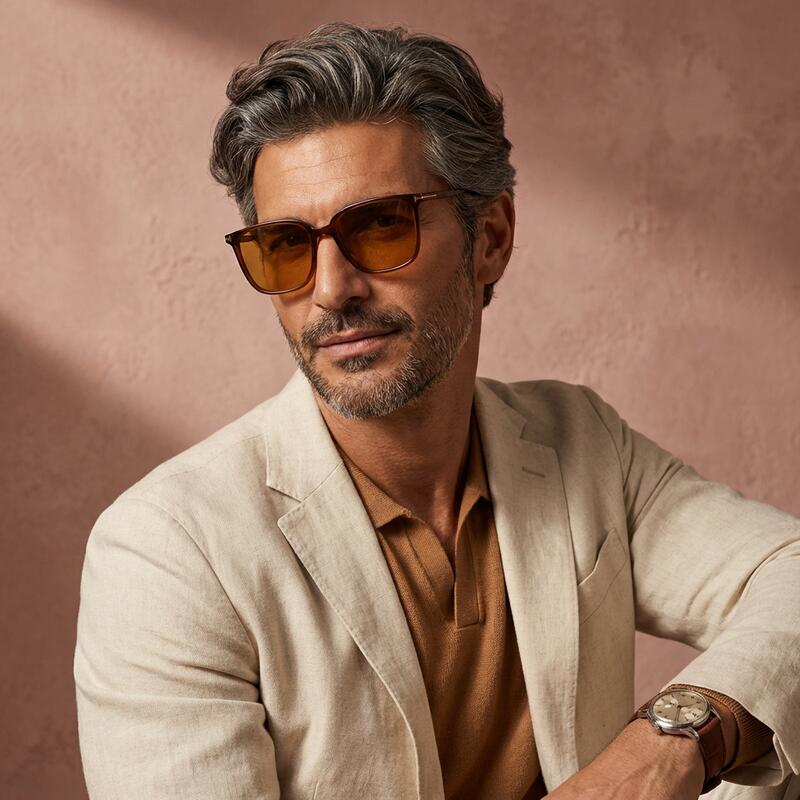
Heart Faces: Weight at the Bottom
A heart-shaped face is widest at the forehead and tapers toward the chin, so the balancing act is to pull visual weight downward and avoid adding any more up top.
Bottom-heavy or rimless-top frames do this directly. Brown aviators are again a strong pick — the teardrop lens carries its width low, right where a heart face wants it — as are round and oval frames in mid-brown tones that sit lower on the nose. Lighter browns work in your favor here: a honey or caramel frame adds less mass to the upper face than espresso does.
Be careful with heavy browline styles and thick, dark top bars. They pile weight onto the forehead, which is already your widest zone. And very wide cat-eyes, with their upswept outer corners, can exaggerate the taper toward the chin rather than balance it.
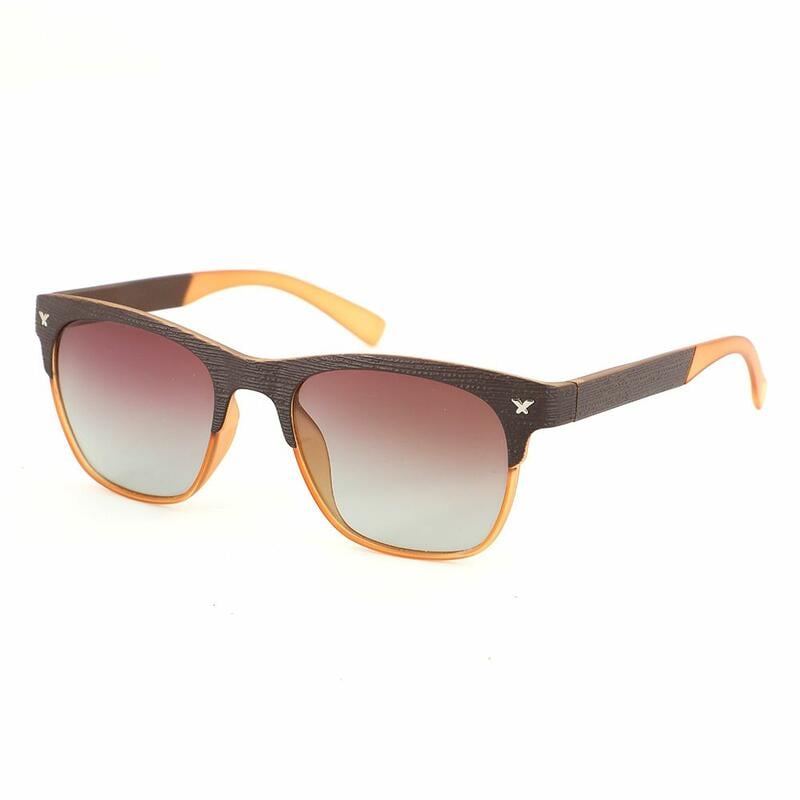
Long (Oblong) Faces: Break Up the Vertical
If your face is clearly longer than it is wide, with fairly straight sides, the objective is to interrupt the vertical line — and lens depth matters more than lens shape.
Choose tall lenses: oversized squares, deep rounds, big aviators. A lens height of roughly 45 millimeters or more covers more vertical real estate and visually shortens the face. Dark brown and tortoise-adjacent finishes help too, since a more visible frame does more interrupting than a barely-there one. If you find a style you like with a contrasting brow bar or a gradient brown lens, even better — a horizontal color break across the middle of the face is exactly what an oblong face benefits from.
The skip list is short but firm: shallow, narrow rectangles. On a long face they sit like a thin dash in the middle of a tall canvas and make everything above and below them look longer.

Diamond Faces: Show the Cheekbones, Softly
Diamond faces — narrow forehead, prominent cheekbones, narrow chin — are the rarest of the standard shapes and the easiest to over-correct. You don't need to hide the cheekbones; you need frames that don't fight them.
Oval lenses and gentle cat-eyes in medium brown are the sweet spot. The oval's soft curve echoes the cheekbone line without hard corners cutting across it, and a subtle cat-eye lift draws attention up toward the eyes and brow, quietly widening the forehead zone. Rimless and semi-rimless brown styles also suit this shape well, since a lighter frame presence keeps the face's natural architecture in view.
Skip narrow frames that pinch inward at the temples — they emphasize how much wider the cheekbones are — and very boxy shapes whose corners land awkwardly against the cheekbone's curve.

Between Two Shapes? Use These Tiebreakers
Most real faces are hybrids — round-square, oval-heart, long-diamond. If the test left you between two shapes, decide with these three checks instead of agonizing over the label:
Follow your brow line. The top edge of a flattering frame roughly traces or sits just below your eyebrows. Hold candidate frames up and check this first; it eliminates bad picks faster than any shape rule.
Match frame width to cheekbone width. The frame's outer edges should end where your face does, give or take a few millimeters. Too narrow pinches; too wide swallows.
Let the jaw cast the deciding vote. When torn between two shape categories, defer to your jawline. An angular jaw pulls you toward the curved-frame recommendations; a soft jaw pulls you toward the angular ones. The jaw is the feature sunglasses interact with most from every angle except straight-on.
And if you're still torn between two specific pairs, a virtual try-on settles it in under a minute with your actual face rather than a diagram of one.
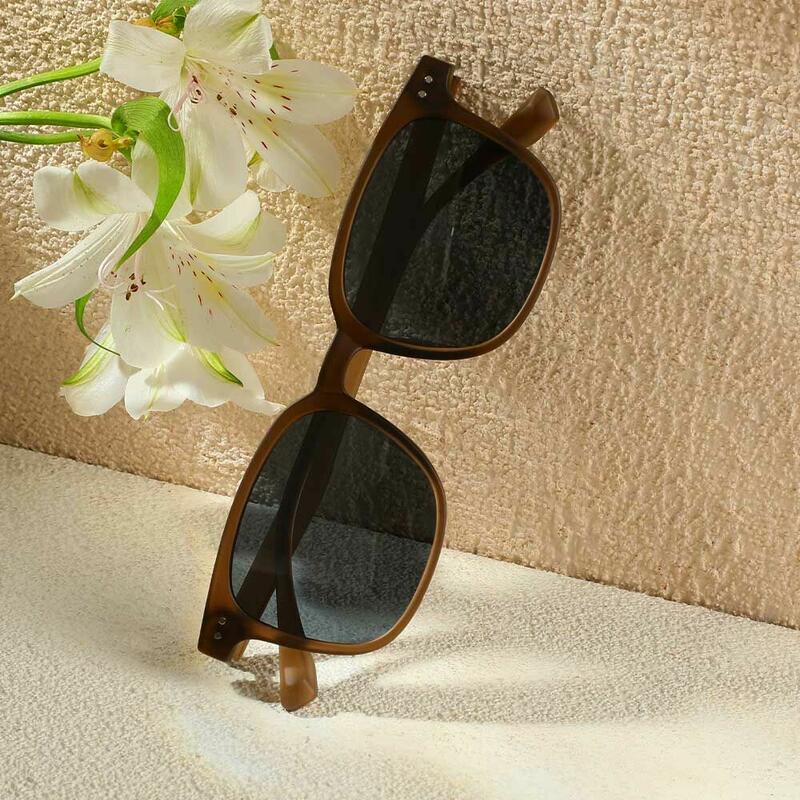
One Last Adjustment: Match the Brown to Your Coloring
Face shape picks the frame's silhouette; your coloring picks the shade of brown. Warm undertones (skin that flatters gold jewelry) can wear the entire brown spectrum, from pale honey to near-black espresso. Cooler undertones (silver-jewelry skin) generally look better in darker, redder browns — chocolate, mahogany — than in yellow-leaning honey tones. Hair matters less than people think, with one exception: if your hair is a warm brown, an identically-toned frame can blur into it, so shift a shade or two darker or lighter than your hair for definition. And if a solid brown feels flat against your coloring, tortoise sunglasses offer the same warmth with built-in pattern and contrast.
Fit Beats Shape — Check the Numbers
A perfectly shape-matched frame that fits badly will still look wrong, so before checkout, glance at the three numbers printed inside every temple arm — for example, 52-18-145. That's lens width, bridge width, and temple length in millimeters. If you own a pair that fits well, copy its numbers; they transfer across brands. As rough guidance: lens widths of 50–54mm suit most medium faces, narrow faces do better under 50mm, and wider faces from 55mm up. The bridge number matters most for comfort — too wide and the frame slides, too narrow and it pinches.
Two things worth knowing beyond fit. First, lens color has nothing to do with sun protection — UV blocking comes from a lens treatment, not the tint, and every pair of brown sunglasses at Aoolia carries full UV400 protection regardless of how light or dark the brown is. Second, nearly all of them are Rx-ready, and each prescription pair is checked by Aoolia's opticians against your prescription before it ships — so the frame that suits your face shape can also be the pair you actually see through.
Find your shape's section above, note the shade of brown that suits your coloring, check the fit numbers, and you've replaced guesswork with a decision that takes about five minutes. That's the whole method.