
1. The frame: how much yellow, and where it sits
Yellow's reputation as a "hard" color to pull off is mostly a quantity problem, not a shade problem. A thin yellow temple on an otherwise neutral frame is a wink. A thick, glossy, all-yellow acetate front is a statement you're making to the whole room. Both can look excellent. They are not the same decision — and the classic mistake is buying the second when you actually wanted the first.
So before you get anywhere near "which yellow," settle how much yellow, and where it lives:
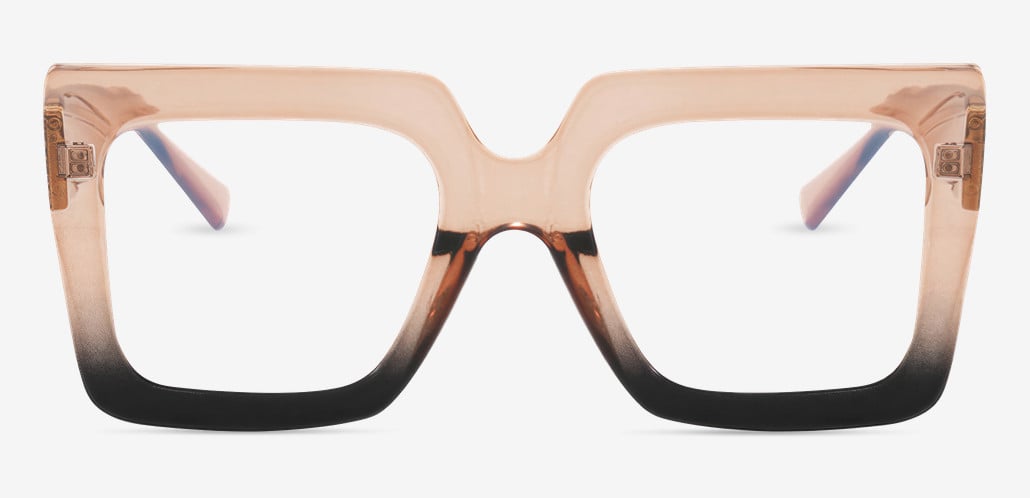
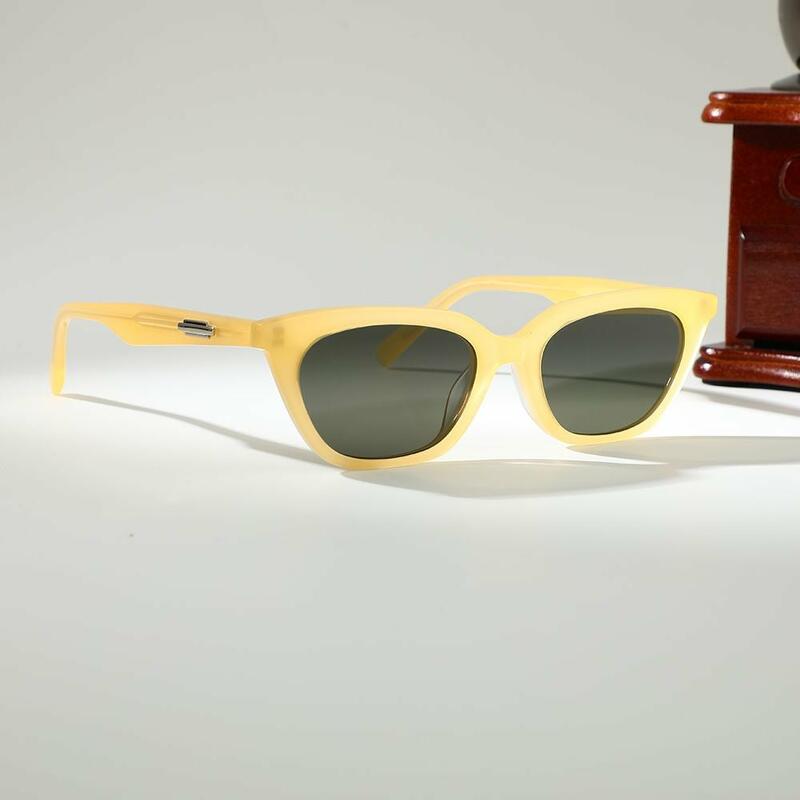
Full front, full color. A fully yellow acetate or TR90 front is maximum impact — the pair people remember you in. If you want yellow to be the thing, this is it. Aoolia's Florence square and Gabriel rectangle sit here.
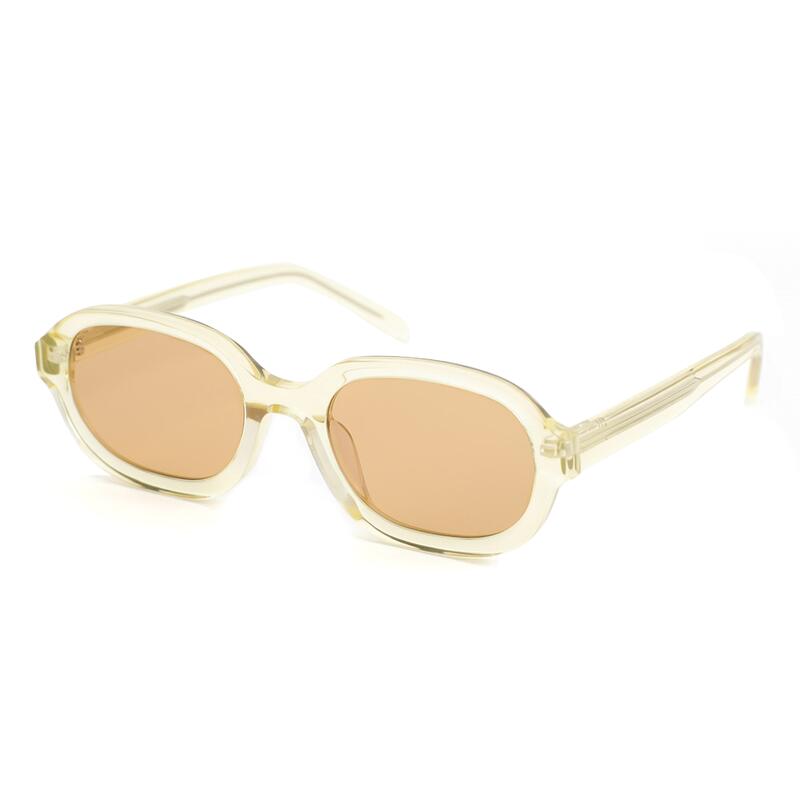
Softer and rounder. The same color reads gentler in a curved shape than a sharp one — the Smith oval carries yellow with less edge than a square does. Shape changes the volume as much as the color does.
Finish matters more than people expect, too. A high-gloss yellow reads playful and a notch louder; a flatter, more muted yellow reads more grown-up and slips under a work wardrobe more easily. Material plays into this — acetate gives yellow a bit of depth and slight translucency, while TR90 reads lighter and more uniform. Neither is "better"; they're different moods.
One thing to stop worrying about: matching yellow to your skin's undertone. Yellow plays off your outfit far more than your complexion — it lives next to your collar and your hair, not your jawline. Judge it against the colors you actually wear most weeks, not a color-season chart.

2. The lens: the part people get wrong
This is where "yellow sunglasses" causes the most trouble, so it's worth being precise. The color of the frame and the color of the lens are two completely separate choices. "Yellow" can mean either — and they do opposite jobs.
When the lens itself is yellow. Pale yellow and amber lenses do one genuinely useful thing: they raise contrast by filtering some blue light. That can help in flat, hazy, foggy, or snowy conditions where it's hard to pick detail out of a washed-out background — which is why you see them on clay shooters, cyclists, and skiers. What they do not do is protect your eyes in real sunshine. A pale yellow lens lets through far too much light to count as sun protection; it's a low-light tool, not a sunglass.
The night-driving myth — the one correction worth printing in bold. The most common reason people search for yellow lenses is the belief that they help you drive at night. They don't. Any tint, yellow included, reduces the total light reaching your eyes, which is the last thing you want in the dark. A Harvard study run on a night-driving simulator found that yellow "night-driving" glasses didn't improve drivers' ability to spot pedestrians — and may make things slightly worse, because the warmer view tricks you into feeling like you're seeing better when you aren't. Major eye-care groups recommend against tinted lenses for night driving for the same reason. If headlight glare at night genuinely bothers you, the right move is an eye exam, not a yellow lens — persistent night glare can be an early sign of something like cataracts.
When the frame is yellow (what you're looking at here). The lenses in Aoolia's yellow-framed sunglasses aren't yellow at all — they're a standard dark, fully UV400 tint. You get the color on your face and real protection in front of your eyes. It sounds obvious written down, but it's the single thing buyers get backwards: a yellow frame does not mean a weak or novelty lens.
Once you know you want a yellow frame with a proper dark lens, the lens choices that actually matter are simple:
UV400 is the floor, and it's not negotiable. UV protection comes from the lens treatment, not from how dark or what color the lens is. Every Aoolia pair has it, so a dark lens behind a yellow frame blocks UV exactly like one behind a black frame.
Polarized or not. Polarization cancels glare bouncing off roads, water, and snow. If you drive a lot or spend time on the water, it's worth it; otherwise it's a preference. Yellow is a small collection, so polarized stock is limited — if it's a must-have, browse the full polarized range and filter from there.
Tint depth. Darker isn't "more protective," it's just more comfortable in bright glare. Pick for the light you're actually in.

3. The fit: why a loud color is less forgiving
Fit is where bold frames quietly fail, and yellow is the least forgiving color of all. A black frame that runs slightly wide is just slightly-wide black — nobody clocks it. A yellow frame that runs wide reads as borrowed, because the color marches the eye straight to the part that doesn't fit: the front corners floating out past your temples.
So fit by the numbers, not by eye:
The measurement that matters most is total frame width — temple hinge to temple hinge — checked against your own face width. The fastest shortcut: find a pair you already own and like, and read the three numbers printed inside one temple arm (something like 52-18-140 = lens width / bridge width / temple length, in millimeters). Match those and you're 90% of the way there.
Several of Aoolia's yellow frames run slightly wide. If you have a narrower face, filter to Medium or check the millimeter width on each product page before ordering, rather than assuming a listed pair will fit.
Bridge and temple length are comfort, not looks. A bridge that's too wide lets the frame slide down your nose; temples that are too short pinch behind your ears by mid-afternoon. Neither shows in a product photo, but both decide whether you actually keep wearing the pair.
This is the entire reason virtual Try-On exists. Yellow is a commitment color — seeing the real pair on your real face, at its real width, is the cheapest possible insurance against the "looked great in the thumbnail" return.
Still deciding? The 10-second version
You want a color you wear in the sun → a yellow frame with a dark UV400 lens. That's this collection.
You want contrast for fog, the range, or the slopes → you want a yellow/amber lens, which is a different product — and not sun protection.
You want to drive more safely at night → neither; get your eyes checked and use a clean lens with an anti-reflective coating.
A yellow frame is one of the easier ways to make a plain outfit look deliberate. Just buy it for what it is — a color, with a real sunglass lens behind it — get the width right, and skip the lens myth on your way out.

FAQ
Do yellow lenses help you see better at night?
No. Any tint reduces the light reaching your eyes, and a simulator study from Harvard found yellow "night-driving" lenses didn't improve drivers' ability to detect pedestrians. They can even backfire by making you feel like you're seeing more than you are. For night driving, eye-care groups recommend a clear lens with anti-reflective coating — and an eye exam if glare is a new problem.
Are yellow sunglasses good for driving?
For daytime glare and hazy conditions, a yellow-framed sunglass with a proper dark, polarized UV400 lens is great for driving. Yellow-tinted lenses are a different story: fine for low-contrast daylight, not appropriate after dark.
Why do shooters and skiers wear yellow lenses?
Because yellow and amber tints raise contrast in flat or low light, making targets and terrain easier to pick out against a washed-out background. That's a niche performance use, not general sun protection.
Do yellow-framed sunglasses have dark enough lenses for bright sun?
Yes. The frame color and the lens are separate — Aoolia's yellow frames ship with standard dark, UV400 lenses, so they protect in full sun exactly like any other sunglass.
Are yellow sunglasses hard to pull off?
Less than you'd think. Wearability is mostly about how much yellow and what shape — a rounded or muted frame is easy, a thick glossy front is bolder. Keep the rest of the outfit simple and let the frame be the color.
Are yellow sunglasses in style in 2026?
Yes — yellow showed up across the spring/summer 2026 runways (Miu Miu among them) and is on most editors' trending-color lists, in both bright and softer, muted tones.