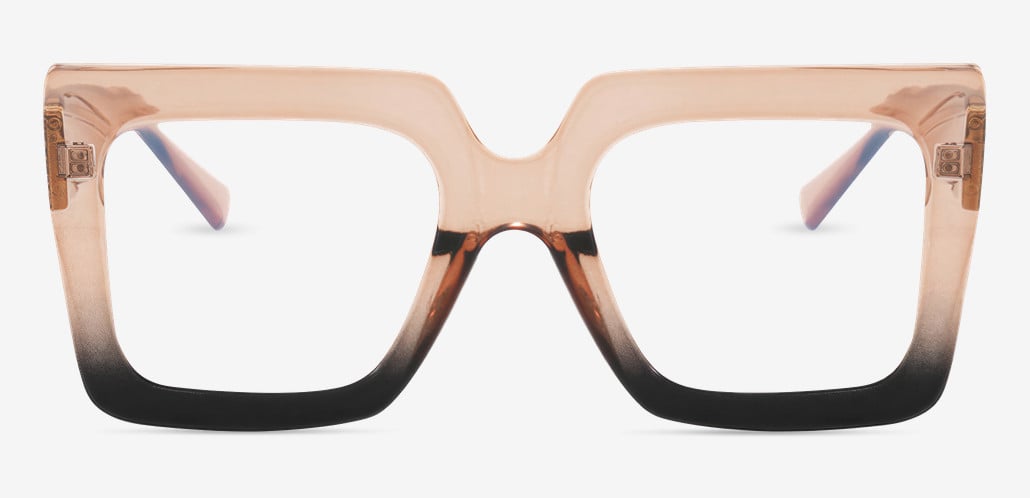

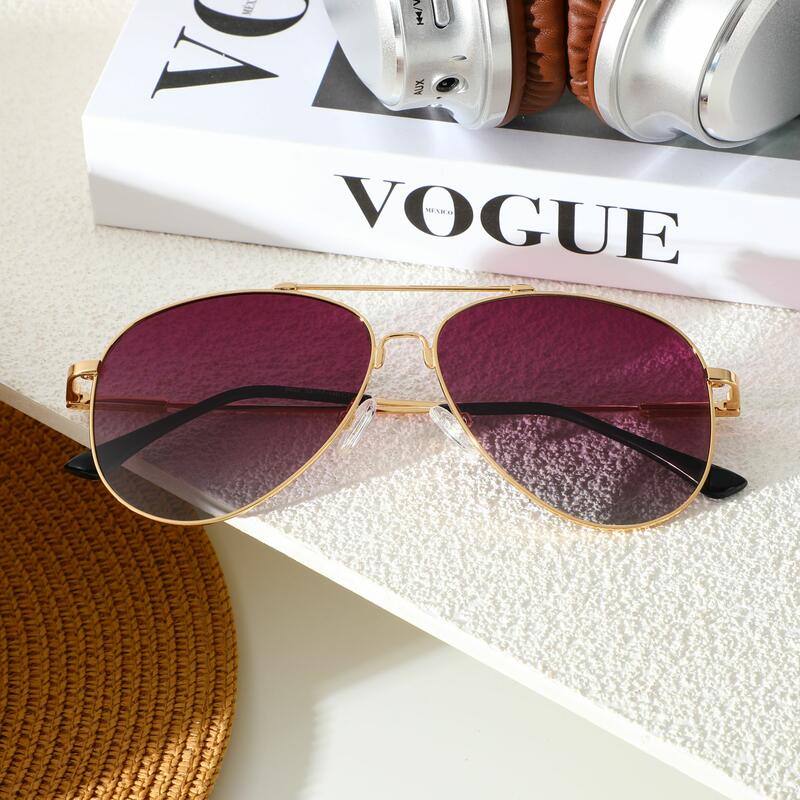

The Dosage Question: How Much Gold Do You Want on Your Face?
Most people who say "I can't pull off gold" are picturing the maximum dose — a full polished-gold frame against bare skin. But gold comes in doses, and picking the right one solves the too-flashy worry far better than abandoning the color does.
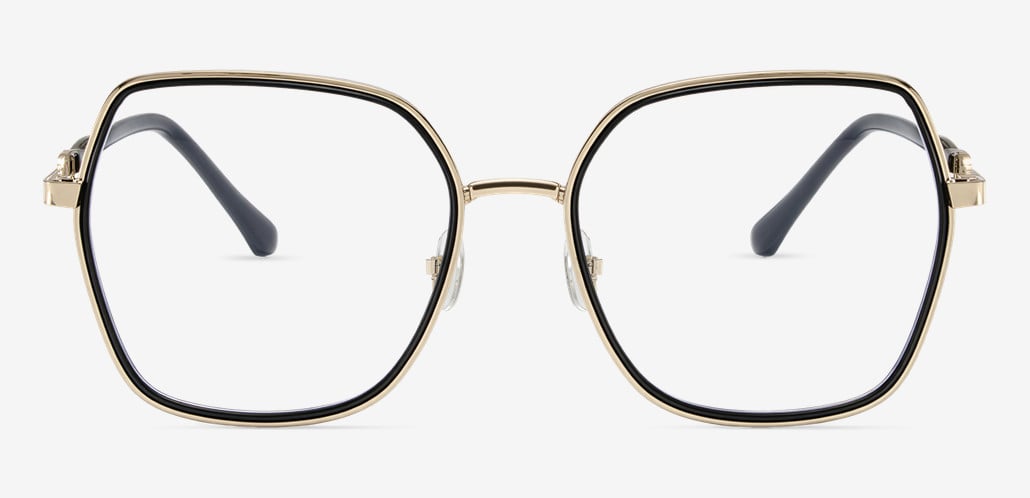
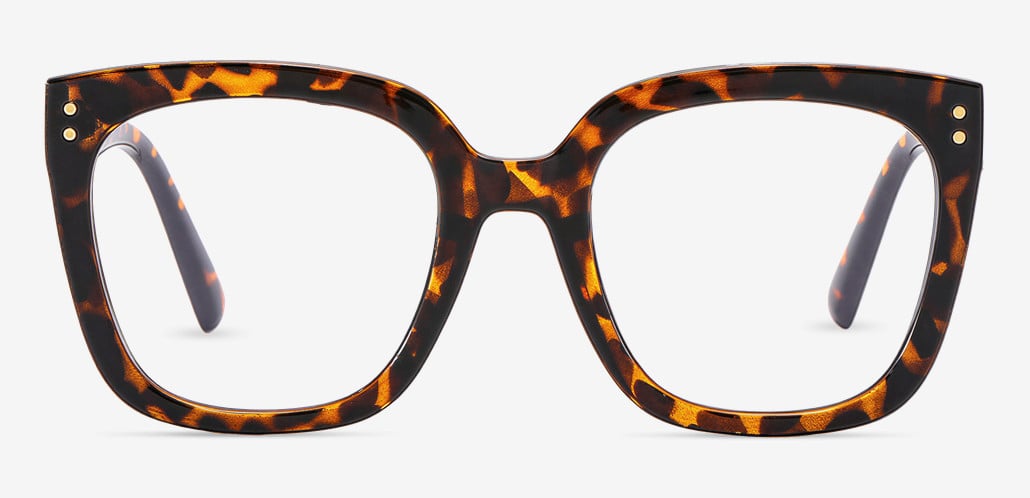
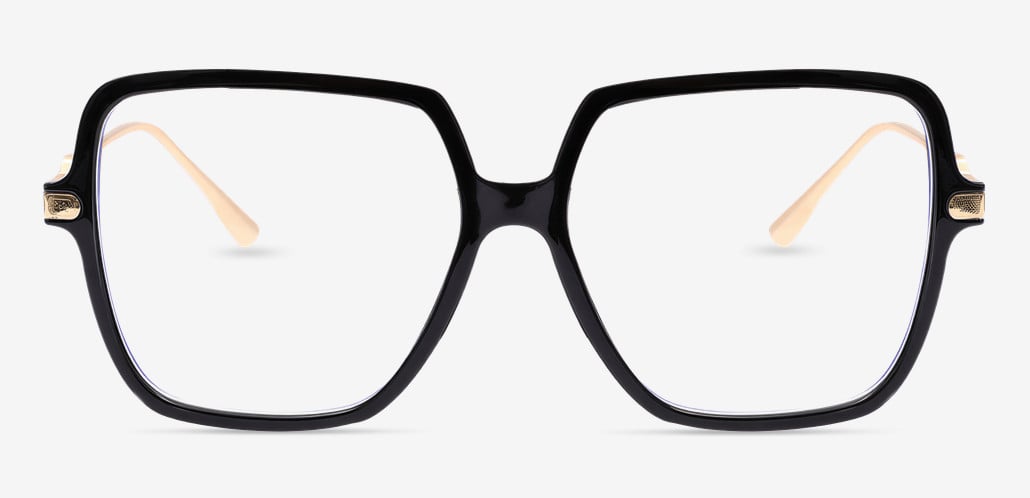
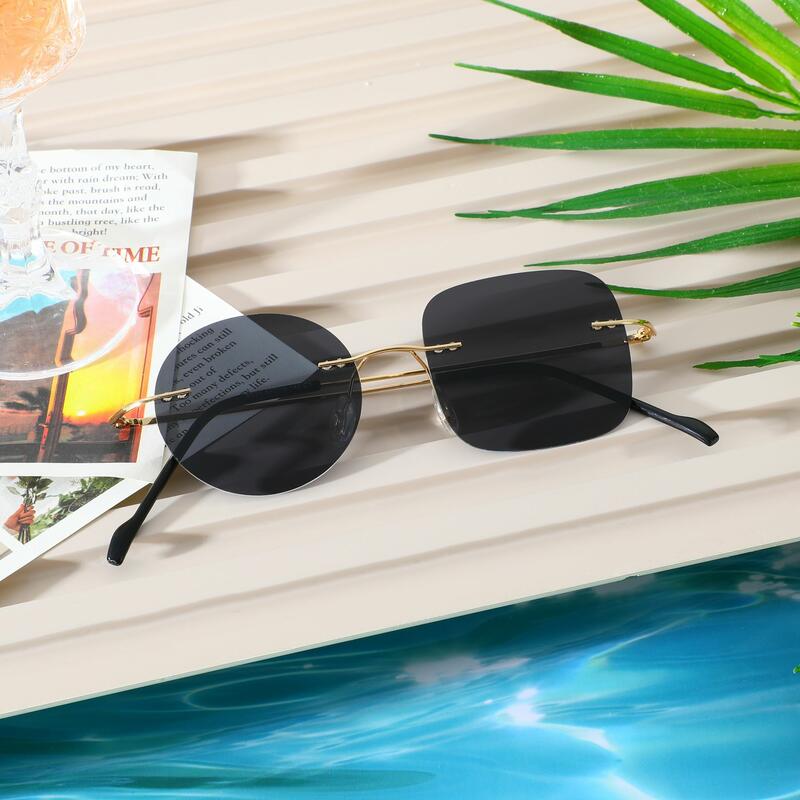
Full gold — every visible part of the frame in one warm metal — follows jewelry logic: it works the way a gold watch works, as a single deliberate object. Black-and-gold is one of the most-searched combinations in the category for a reason: the black does the structural work while the gold does the trim, which reads dressier than either color alone and hides wear better than full polish. Gold rimless is the minimum dose — the lenses appear to float, leaving only a thin gold line at the bridge and temples. It's the version that passes unnoticed in a conference room. And gold hardware on acetate — gold hinges, pins, or temple details on a tortoise or black plastic frame — gives you the glint without committing your whole face to metal.
A rule that has saved a lot of returns: start one dose lower than your instinct. It's easier to want more gold next time than to own a drawer pair.

Yellow, Rose, or Champagne — and Why the Finish Matters as Much
Yellow gold is the reference shade — warm, slightly vintage, the tone the aviator tradition was built on. It rewards warm skin undertones; the quick jewelry-box test lives on our gold sunglasses collection page. Rose gold runs pinker and cooler, and it's the bridge shade: people who've been told gold "isn't their color" almost always mean yellow gold, and rose sidesteps the problem entirely. Champagne is the neutral of the golds — pale, grayish-warm, closer to a warmed silver — the pick when you want metal that doesn't declare a temperature.
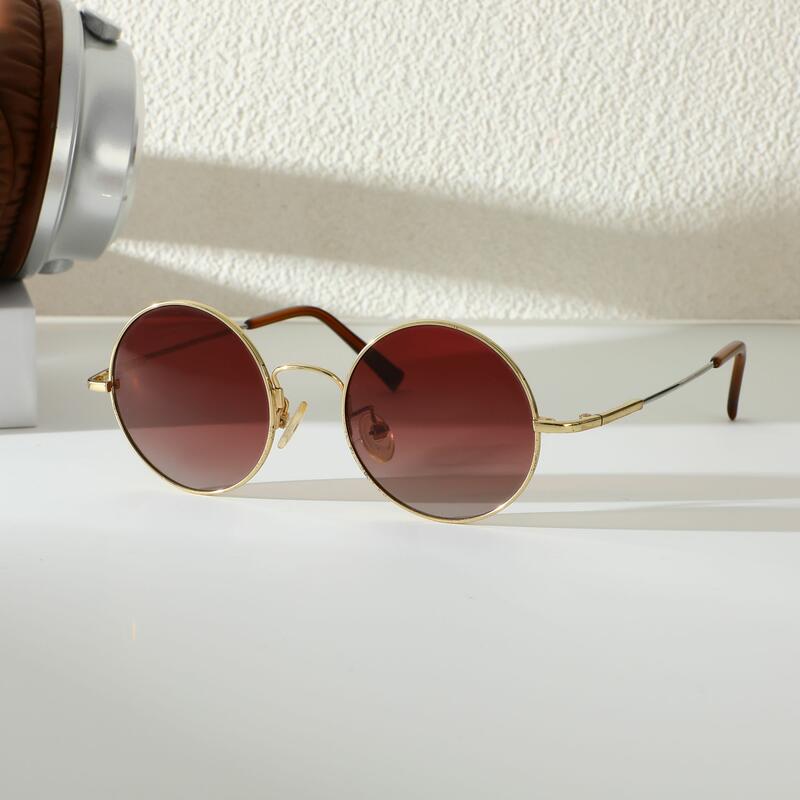
Then the finish, which changes a frame's personality more than the shade does. High polish catches light and dresses up, but shows micro-scratches and fingerprints sooner. Brushed or matte gold is the daily-wear answer — quieter at a desk, more forgiving after a beach weekend. Antique or burnished gold is deliberately shadowed for a vintage read and pairs naturally with round wire silhouettes.
Why Gold Frames Signal What They Signal
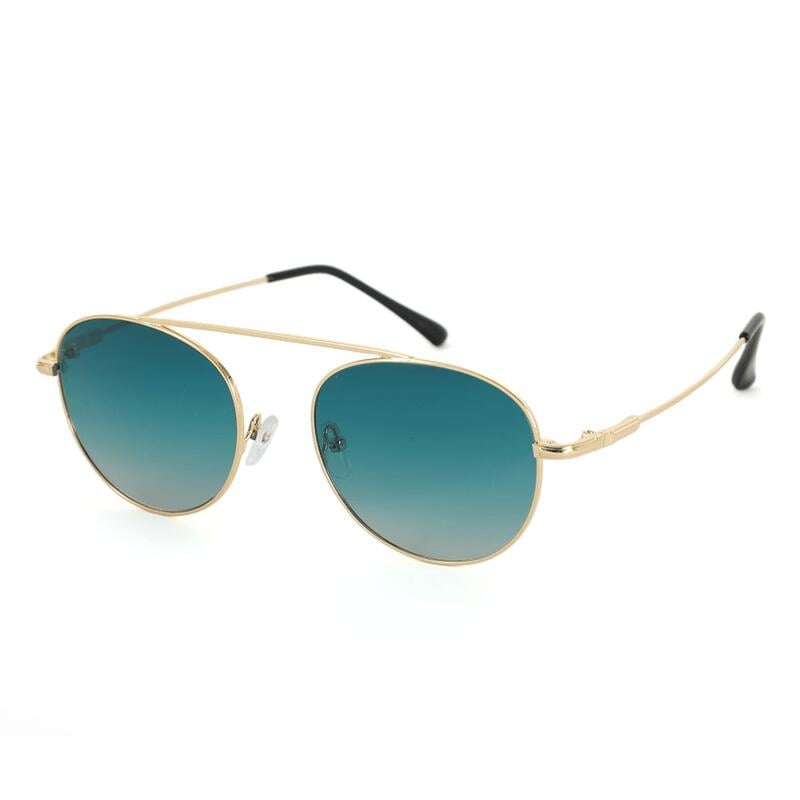
A two-minute history, because it's secretly a buying tool. Gold wire sunglasses entered the American wardrobe on military pilots in the late 1930s — thin gold frames with green glass, engineered first and iconic later. The 1970s put wire rims on musicians and made thin gold read intellectual, a little counter-cultural. The mid-1980s flipped the volume: hip-hop turned bold gold-trimmed frames into open status hardware — an entirely different sentence spoken in the same metal. And the 2020s quiet-luxury wave brought back the whisper version: skinny wire, smaller lenses, champagne tones.
The practical takeaway is that gauge and size are the dial. The same gold reads studious as a millimeter of skinny wire and reads deliberate flex as a thick double-bridge with mirror lenses. Neither is wrong. You should just know which sentence you're putting on.

Where the Money Actually Goes: $30 vs. $150 vs. $500
Here's the part most guides won't say plainly: eye protection is not what the extra money buys. Every pair of sunglasses legally sold in the U.S. must pass the FDA's impact-resistance requirement (21 CFR 801.410), and full UV protection — the UV400 label, blocking wavelengths up to 400 nanometers — costs manufacturers pennies. The American Academy of Ophthalmology has made this point for years: an inexpensive pair with a genuine UV400 rating protects your eyes exactly as well as a luxury one.
What changes as the price climbs is the metal, not the medicine.
Under about $60, you're getting gold-tone coating or thin electroplate over steel or a standard alloy. Three things worth checking at this tier: an explicit UV400 claim, adjustable nose pads (bendable pads are the difference between a fit and a headache on a metal frame), and hinges held by screws rather than rivets. What not to expect: plating that survives years of sunscreen at the friction points.
$80–$300 buys better bones — stainless or titanium bases, PVD finishes, spring hinges, brand design language.
Past $400, you're into heavy gold plate on titanium, hand polishing, and heritage names. Beautiful, durable — and you're paying for metallurgy and provenance, not more protection.
Aoolia sells in the first tier and is candid about what that means. The plating on a $30 frame is not heirloom plating. So the budget goes to the parts that decide whether you actually wear the pair: a licensed optician inspects every order before it ships, nearly every metal frame carries adjustable nose pads, and almost all of them take real prescription lenses. Fit and optics don't have to share the finish's limitations.
Green Marks, Itchy Skin, and Other Metal Realities
Two skin questions come up constantly with gold frames, and they have different answers.
The green mark — a faint green shadow on the nose or temples after a sweaty day — isn't proof your frames are "fake." It's copper. Most affordable frame alloys contain it, sweat is mildly acidic, and the reaction leaves harmless copper salts on the skin. It washes off, shows up more in humid weather, and a quick evening wipe-down of the frame mostly prevents it.
Itching or a rash is different. That's usually nickel in the base alloy — the most common contact allergen in the United States — and it has nothing to do with the gold layer, which is chemically inert. If your ears react to cheap jewelry, look for frames built on titanium or surgical stainless bases. And keep the geometry in mind: on most gold sunglasses the metal barely touches you anyway. Skin contact happens at silicone nose pads and acetate temple tips, which is why frames trouble far fewer people than earrings do.
The Lens, the Prescription, and One Last Check
Lens-color pairing for gold frames — why green and brown are the classic partners, when to go gradient or mirror — lives on our gold sunglasses collection page, so it won't be repeated here. Two closing notes instead: nearly every gold frame at Aoolia can be made with prescription lenses, single-vision through progressive, and the free virtual try-on will settle the yellow-versus-rose question on your actual face faster than any paragraph can.
The five decisions, once more, in order: decode what the listing means by "gold," pick your dose, pick your shade and finish, decide which signal you're sending, and put your money into fit and optics rather than plating thickness you don't need. Get those five right, and the pair you choose in 2026 is still the pair you reach for in 2029.
FAQ
What's the difference between gold-plated and gold-tone sunglasses?
Gold-plated means a thin layer of real gold bonded to a base metal; gold-tone means a gold-colored coating with no gold content. On listings under about $40, "gold plated" usually functions as a synonym for gold-tone — a published karat or micron figure is the tell that real plating is involved.
Are cheap gold sunglasses bad for your eyes?
Not because they're cheap. U.S. regulations require impact-resistant lenses on all sunglasses sold here, and a genuine UV400 rating blocks the same ultraviolet light at $25 as at $500. Higher prices buy better metal and finishing, not better protection. The one non-negotiable: the UV claim has to actually be stated on the listing.
Why do gold sunglasses turn my skin green?
Copper in the frame alloy reacting with sweat. The green residue is a harmless copper salt — not an infection, not an allergy. It washes off, and wiping the frame down after hot days largely prevents it.
Are gold sunglasses too flashy for everyday wear?
Only at maximum dose. A brushed champagne rimless or a black-and-gold combination reads office-neutral; save the polished full-gold mirror pair for days you want it noticed. Choosing the dose — not avoiding the color — is the fix.