
What "Polarized" Actually Means
Sunlight normally scatters in every direction. The trouble starts when it hits something flat and reflective — a wet road, a lake, a car hood, a field of snow. Instead of scattering, the light bounces back in a single concentrated horizontal band. That band is glare: the harsh, eye-watering brightness that makes you squint and, on the road, can briefly blind you at exactly the wrong moment.
A polarized lens is built to cancel that one band of light. Optical labs make the filter by stretching a sheet of polyvinyl alcohol until its molecules line up in parallel chains, then treating it with iodine so it absorbs light traveling in one direction. The result behaves like a set of microscopic venetian blinds: vertical light passes through, horizontal glare gets stopped at the door. A regular tinted lens can't do this no matter how dark it is. Tint dims everything uniformly; polarization removes glare selectively. That difference is the entire point.
Two things this is not:
It is not UV protection. Polarization handles visible glare; UV protection blocks invisible UVA and UVB radiation that damages your eyes over years. A lens can have one without the other. The American Academy of Ophthalmology is blunt about this — a "blocks UV" label does not mean a lens is polarized, and vice versa. You want UV on every pair; polarization is a separate choice.
It is not about darkness. A very dark lens with a thin, cheap film blocks less glare than a lighter lens with a dense, well-made one. Lens color and polarization quality are unrelated, which is exactly why people get fooled by a pair that merely looks serious.

The Benefits: What Polarized Lenses Genuinely Do Well
When glare is part of your environment, polarization is close to magic, and not in a marketing way — the change is instant and obvious the first time you look at water through a good pair.
It kills reflected glare. This is the headline benefit and the only one that's truly exclusive to polarized lenses. Off a smooth surface, glare doesn't just annoy you; it hides things. Anglers see into the water instead of at a mirror of sky. Boaters cut the eye strain of a long day on a bright lake. Drivers lose the white sheet of reflection off a wet highway or a sun-struck dashboard.
It sharpens contrast and depth. With the glare layer stripped out, edges look crisper and colors read more accurately. Several optometry sources note that this can reduce how hard your eyes work, which is why people often report feeling less wiped out after hours in the sun with polarized lenses than without.
It makes some everyday moments safer, not just prettier. Picture morning sun reflecting off wet pavement while you drive. Without polarization, a pedestrian stepping off the curb can be swallowed by glare. With it, the scene stays legible. That's a small thing until it isn't.
Where polarized clearly pulls its weight: daytime driving into low sun, anything on or near water, bright snow, and any situation where you're light-sensitive or prone to glare headaches.
The Drawbacks: When Polarized Works Against You
Here's the part most product pages quietly skip. Polarization isn't "always better" — it interacts with the world in ways that occasionally backfire.
Screens. Because polarized lenses filter light by orientation, they clash with the polarized light that LCD screens emit. Look at a car dashboard, a phone, an ATM, or a gas pump display through polarized lenses and you may find it dimmed, color-shifted, or blacked out at certain angles. For most people this is a minor nuisance. For pilots and boat captains reading instrument panels, the AAO specifically flags it as a real problem.
Night and low light. Polarization removes light by design, so it's the wrong tool after dark. "Polarized night-driving glasses" exist; eye doctors generally advise caution, because cutting light when there's already little of it can do more harm than good.
A few specific sports. Some golfers feel polarized lenses make greens harder to read — the research isn't settled, and plenty of golfers disagree, but it's a known complaint. Downhill skiers and riders sometimes skip polarized too, because the glint off an icy patch is information you might want to keep.
So the honest gate is simple: if your days are mostly screens, city sidewalks, and indoor-outdoor hopping, polarized may not be worth the upgrade, and a quality non-polarized UV400 pair will protect your eyes for less. If glare is a regular feature of your life, polarized pays for itself fast.

Why Two "Polarized" Sunglasses Can Be Worlds Apart
This is the section that separates a smart purchase from a disappointing one, and almost nobody explains it at the point of sale.
All polarized lenses use a film, but how that film is built into the lens is where quality lives. At the cheap end, the polarizing layer is a thin laminate applied to one side of the lens — sometimes unevenly, because it's mass-produced. That thin layer can be scratched or rubbed off, and uneven molecular alignment means it blocks glare in some spots and not others. The tell-tale sign is blotching: rotate a bad pair and you'll see uneven dark patches instead of a clean, uniform shift.
A well-made polarized lens sandwiches the film between two layers of lens material, aligned to the position you actually wear it. Encased that way, the film can't scratch off, and the glare reduction is even across the whole lens. The manufacturing method matters too. Heat-formed acrylic lenses are the cheapest and tend to distort toward the edges. Injection-molded polycarbonate — the workhorse of sport eyewear — is impact-resistant and great for activity, though the process can slightly reduce polarizing efficiency. Laminated CR-39 wafers and glass sit at the top for optical clarity. None of this is visible from across a store, which is why "it looks polarized" is not the same as "it is, and it's made well."
You can confirm polarization at home in about ten seconds with a quick rotation check against a screen or window — we walk through the exact method on the polarized sunglasses collection page. The point worth keeping here is the why: the test works because real polarization has a consistent orientation. A tint pretending to be polarized has nothing to rotate.
How to Choose the Right Pair: A Working Framework
Skip the face-shape charts for a minute — for polarized specifically, the decision is about function, and it goes in this order.
1. Decide if you even need it. Run yourself through the drawbacks above. Mostly outdoors, on the road, or near water? Yes. Mostly screens and shade? A standard UV400 pair is the honest pick.
2. Match the lens color to your light, not the frame. This is where a lot of people choose blind. The lens tint changes how you see, and the differences are real:
Gray is the neutral all-rounder. It dims brightness while keeping colors true to life — the safe default for driving and bright-sun everyday wear.
Brown / amber boosts contrast and depth perception and filters more blue light. Favored for golf, fishing, hiking, and variable light, with a warmer view.
Green (the classic G-15, originally developed for military pilots) splits the difference: fairly natural color with a little extra contrast, comfortable across changing conditions.
Copper is prized by drivers and cyclists for making road texture and subtle changes in the surface pop.

3. Check how the polarization is built, not just that it exists. Ask whether the film is laminated between lens layers or coated on the surface. Laminated lasts; surface coatings on bargain pairs don't.
4. Confirm UV400 separately. Polarized and UV are two jobs. Make sure the pair does both — a quality seller states 100% UV protection outright.
5. Pick a material that fits the use. Polycarbonate for sport and anything that might take a hit; acetate or metal for everyday and dressier wear.
6. Add your prescription if you need one. Polarization works in single-vision, bifocal, and progressive prescriptions, so you don't have to choose between seeing clearly and seeing comfortably.
7. Try before you commit. Lens darkness and frame proportions look different on your own face than in a product photo. A virtual try-on closes most of that gap before anything ships.
Make Them Last: Caring for Polarized Lenses
Polarized lenses deserve a little more care than basic tints, because the thing that makes them work — that laminated film and its coatings — is also the thing you can ruin.
Don't dry-wipe them with a shirt hem, a paper towel, or a napkin; grit drags across the surface and leaves fine scratches that you'll see against bright sky. Rinse with water, a drop of mild soap if they're greasy, and dry with a microfiber cloth. And keep them out of a baking-hot car. Sustained heat on the dashboard can, over time, cause the laminated film to separate at the edges — the cloudy creeping haze you sometimes see on old laminated lenses. A case in the glovebox solves it.

A Few Myths Worth Dropping
Darker means more protection. No. Darkness is tint; protection is UV rating and polarization quality. They're independent.
Polarized = best for everything. No. It's the best tool for glare and the wrong tool for screens, night, and a couple of sports.
Expensive automatically means better polarization. Often, but not always. A carefully laminated mid-priced lens can outperform a poorly assembled premium one. What matters is how the film is made and bonded — which is exactly why buying from someone who actually checks the lenses is worth more than buying by price tag alone.
The Honest Bottom Line
Polarized sunglasses are a genuine upgrade for anyone whose day includes glare — driving, water, snow, bright open light. They're an optional extra, not a requirement, for screen-and-city life, and they're only as good as the film inside them. Choose based on where you'll wear them, confirm the build and the UV, and you'll get the version of polarized that feels like magic instead of the version that feels like marketing.
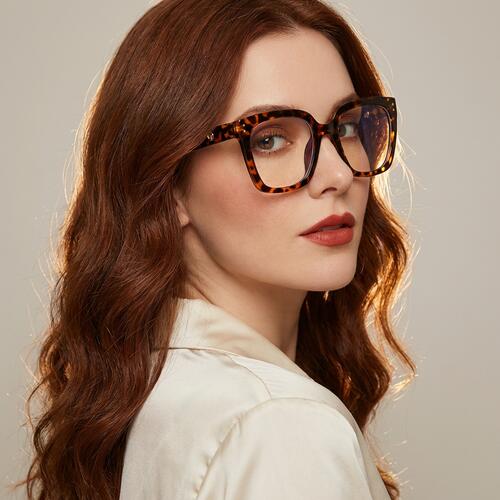
Every pair in Aoolia's polarized sunglasses collection is optician-verified, genuinely polarized rather than tinted to look the part, and blocks 100% of UV — available with your prescription, from $21, with virtual try-on so you can see them on your own face first.