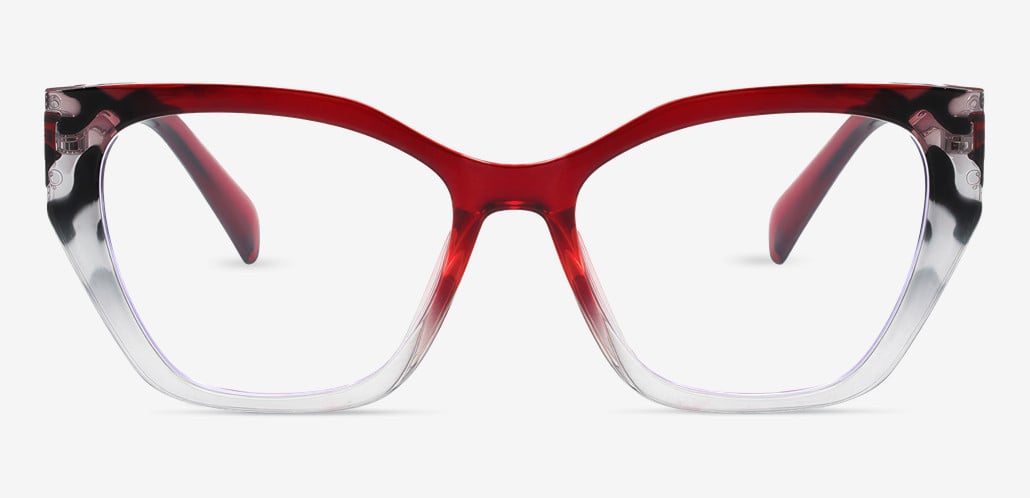

US buying guide
How to Order Prescription Glasses Online: The Paperwork, the Holds, and Ordering for Someone Else
The steps are easy. The trouble lives at the edges: the paper you upload, the numbers you type, and whose eyes the glasses are actually for.
If you've looked up how to order prescription glasses online, you've seen the same five steps everywhere: get your prescription, find your PD, pick a frame, pick lenses, check out. They're correct. They're just not where orders go wrong.
Orders go wrong one step earlier, when the document in your drawer turns out not to be a prescription at all. And one step later, when an order you've already paid for sits on hold because the photo was blurry or the PD didn't add up. On top of that, a lot of people typing this search aren't buying for themselves. They're ordering for a mom who doesn't like shopping on a screen, a teenager who lost another pair, or a partner who keeps saying they'll get to it.
This guide covers those three gaps. Keep your prescription next to you while you read, because you'll use it. When you want to start looking at frames, you can order prescription glasses online from Aoolia's eyeglasses collection, then come back to the checklist at the end before you pay.
Short answer
To order prescription glasses online in the US, you need three things: a signed eyeglass prescription that hasn't expired, your pupillary distance (PD), and a frame size you know works. A contact lens prescription, an autorefractor printout, or a school or DMV vision screening won't do. Most delays after checkout come from three fixable problems: an upload nobody can read, numbers typed differently from the paper, and a PD in the wrong format.
1. Is the paper in your hand actually an orderable prescription?
Look at the document before you look at frames. An online store needs an eyeglass prescription: the lens powers your eye doctor settled on after an exam, written for lenses that sit in a frame a little in front of your eyes. Plenty of documents look like one and aren't.
The Document Sort
Seven things people try to order from, and what each one is good for.
| What you have | Can you order from it? | Why | What to do |
|---|---|---|---|
| Signed eyeglass prescription from an optometrist or ophthalmologist, still in date | Yes | This is the document the order is built from. | Check the expiration date and that both eyes are filled in. |
| Patient-portal download, email, or text from the eye doctor's office | Yes | Since September 2024, the FTC's Eyeglass Rule lets offices deliver the prescription digitally if you agree to it. | Upload the original PDF, not a screenshot of it. The text stays sharp. |
| Small printed slip from the machine you looked into at the start of the exam (autorefractor) | No | It's the machine's starting estimate, which the doctor then refines by hand. It has no reading add, and it can land up to half a diopter (two prescription steps) away from the final numbers. | Ask the front desk for your final eyeglass prescription. |
| Contact lens prescription | No | It's written for a lens that rests on the eye, so it lists a brand, base curve, and diameter. The powers can differ from your glasses numbers, especially in stronger prescriptions. | Ask for the eyeglass prescription too. You're entitled to a copy after a glasses refraction. |
| Expired eyeglass prescription | Usually no | Expiration is set by state law and your prescriber, commonly one or two years in the US. Many stores won't fill an expired one, and your eyes may have changed. | Book an exam, or call the office and ask what they need to issue a current one. |
| School, DMV, or workplace vision screening result | No | It records how well you see (something like 20/40). It doesn't give the lens powers that would change that. | Use it as your reason to book an exam. |
| Numbers a shop read off your current glasses (a lensometer reading) | Reference only | It describes your old lenses, not your eyes today. | Use it only for a backup copy of a pair you know still works, and only if the store accepts it. |
Your eye doctor has to give it to you
Under the FTC's Eyeglass Rule (16 CFR Part 456), an optometrist or ophthalmologist must give you a free copy of your eyeglass prescription right after a refractive exam, whether or not you ask. They can't make you buy glasses from them first. Since the 2024 update, offices also have to collect your signed confirmation that you got it. When you sign, take a second to check that the copy is complete and readable.
One thing the rule doesn't require is your PD, and many offices leave it off. Ask for it before you leave the office.
2. The Hold List: eight reasons a paid order stops moving
Paying isn't the finish line. At many online stores, someone checks a prescription order before any lens is made. They compare the numbers you typed with the prescription you uploaded, and with what the lens you picked can be made in. If something doesn't line up, the order is paused and you get an email, often a day or two later. That's how a one-week order turns into a two-week order.
Here's what causes those pauses, and how to clear each one before you click Pay.
1
The upload no one can read
Caused byGlare across handwriting, a cropped corner that held the date or signature, or a phone photo of a computer screen covered in wavy lines.
Clear it before you payLay the paper flat near a window, with no flash and all four corners in the shot. Make sure the patient name, the date, and the prescriber's name or office are visible. If you have a PDF, upload the PDF.
2
The date
Caused byA prescription that has expired, or one with the date cut off or smudged.
Clear it before you payFind the date before you start shopping. If it's close to expiring, contact the office now, not after the order is held.
3
Right and left trade places
Caused byOD is the right eye, OS is the left, and OU means both. Some offices write R and L instead, some list the left eye first, and order forms don't always use the same row order as your paper.
Clear it before you payMatch each eye by its label, not by which row it's in. The read-back below catches this.
4
Cylinder sign or axis drift
Caused by−0.75 typed as +0.75, an axis of 180 typed as 18 or 80, an axis with no cylinder, or a cylinder with no axis.
Clear it before you payCylinder and axis always go together. If one is blank on your paper, the other is too. Words in the boxes mean zero: "PL" or "plano" is a 0.00 sphere, and "DS" or "SPH" in the cylinder box means no cylinder, so the axis stays empty.
5
A reading add with nowhere to go
Caused byAn ADD (such as +2.00) on the prescription but a distance-only lens in the cart with no note. Or the reverse: someone wants reading-only glasses, adds the ADD into the sphere themselves, and then the form adds it again.
Clear it before you payDecide what the pair is for before you type anything: far, near, or both. For a reading-only pair, the near power is your sphere plus the add, so a −0.50 sphere with a +2.00 add becomes +1.50. Cylinder and axis stay the same. Then check whether the form wants your full prescription plus a "reading" choice, or the combined number. Never give it both.
6
A PD that doesn't add up
Caused byOne eye's PD (31.5) typed into a single-PD field, centimeters (6.3) instead of millimeters, or a near PD used for a distance pair.
Clear it before you payTwo numbers like 31.5/32 are one per eye, so your single PD is their sum (63.5). Two numbers like 63/60 are distance and near PD: use the larger one for everyday and distance pairs and the smaller one for reading-only pairs. Most adult PDs fall between about 54 and 74 mm.
7
Prism that got skipped
Caused byA prism column on the prescription (a number with BI, BO, BU, or BD, or a Δ symbol) that never made it into the order. Not every lens a store sells can include prism.
Clear it before you payIf your paper shows prism, confirm the store makes prism lenses before you choose a frame, and enter it exactly as written.
8
Whose prescription is this?
Caused byAn account in one person's name with a prescription in another person's name. That's normal when you're buying for family, but it looks like a mix-up unless you say so.
Clear it before you payPut the wearer's name in the patient-name field or the order notes. Section 3 covers the rest.
The 60-second read-back
Pharmacists read prescriptions back for a reason: your eye slides right over a mistake you just made. Do this on the review screen, after the numbers are in and before you pay. Here's what a typical prescription looks like, so you know what you're reading against:
Sample eyeglass prescriptionNot a real patient
| SPH | CYL | AXIS | ADD | PRISM | |
|---|---|---|---|---|---|
| OD (right) | −2.25 | −0.75 | 180 | +1.75 | — |
| OS (left) | −2.00 | DS | — | +1.75 | — |
PD 63/60. "DS" in the left cylinder box means no cylinder, so the left axis is blank. 63/60 is distance PD over near PD.
- Start from the screen, not the paper.Read what you typed out loud, then find it on the paper. Going from screen to paper catches typos. Going from paper to screen tends to confirm what you meant to type.
- Use the same order every time.Right eye: sphere, cylinder, axis, add, prism. Then the left eye. Then PD.
- Say the signs out loud.A missing minus sign is the easiest mistake to miss, so say it every time:
"Right: minus two twenty-five, minus zero seventy-five, axis one-eighty, add plus one seventy-five."
- Check the blanks.Every box that's empty on the paper should be empty or 0.00 on the screen.
- Finish with the name and date.Check both on the image you uploaded, not just on the form.
3. Ordering for someone else
Order forms assume the person paying is the person wearing the glasses. When that's not the case, the gaps are predictable, and they depend on who you're buying for.
The Proxy Order
What to get from the wearer before you open the order form.
| Who's wearing them | What usually goes wrong | Get this from them first |
|---|---|---|
| A parent in their 60s or 70s | Their prescription has a reading add, but the buyer orders distance-only lenses from the top row of numbers. Or the buyer picks a frame they like instead of the kind the parent actually wears every day. | A clear photo of the prescription, a photo of the inside of their current temple arm (the size numbers are printed there), and one question: "What do you take your glasses off to do?" |
| A teenager | The prescription on file is from two summers ago, and young people's prescriptions can change from year to year. The frame the parent likes is the one that stays in the backpack. | The date of their last exam, and their pick. Agree on a price range, then let them choose from virtual try-on screenshots. |
| A spouse or partner | The buyer uses their own PD, or guesses. Two adults' PDs can easily be 5 to 10 mm apart. | Their PD from the eye doctor's office, or measured at home with a ruler and a mirror. |
| Someone who lives far away | The pair arrives, pinches behind the ears, and nobody nearby knows it can be adjusted. | Their shipping address, and a heads-up that a local optical shop can usually adjust a frame in a few minutes. Call first, because some shops charge for frames bought elsewhere. |
Skip the surprise
Prescription glasses make a poor surprise gift. You'd need the wearer's prescription anyway, and frames are personal. A 20-minute video call with try-on open on both screens beats guessing. When you're on that call, you can order prescription glasses online together from the same eyeglasses page. Just make sure the try-on uses their photo, not yours.
Paying for someone else. FSA and HSA funds can pay for prescription eyeglasses for you, your spouse, and your dependents. IRS Publication 502 lists eyeglasses as an eligible medical expense. If the wearer isn't your spouse or dependent, check with your plan before using the account, and keep the itemized receipt either way.

4. What virtual try-on can and can't tell you
Try-on is good at the thing people worry about most, which is how a frame looks on a face. It can't tell you the things that decide whether a pair actually gets worn. Use it for the first job and the product page for the rest.
Try-on shows well
- Overall size against the face
- Where the top of the frame sits compared with the eyebrows
- Color against skin and hair
- How wide the frame looks next to the cheekbones
Try-on can't show
- How the weight feels on the nose after an hour
- Whether nose pads or a molded bridge suit the wearer
- Pressure from the temple arms behind the ears
- How thick the lens edges will look with a strong prescription
Check here instead
- The frame measurements and weight on the product page
- The material: metal, acetate, or lightweight plastic
- Close-up photos of the bridge and nose pads
- The frame you wear now, used as your comparison
5. Four policy questions to answer before you pay
Prescription lenses are made for one person, so the return rules for them are often different from the rules for frames or sunglasses. Find these four answers on the store's policy pages, not in a promo banner.
- If the lenses don't match the prescription I entered, will you remake them, and who pays for shipping?
- If my eye doctor changes my prescription after I order, is there a remake option, and for how long?
- Can I return a prescription pair because I don't like how it looks, or can I only exchange it?
- What does the warranty cover on lens coatings, such as peeling or scratching, and for how long?
If those answers are hard to find, ask customer service before you order and keep their reply.
Questions people ask before ordering
Can I order prescription glasses online with an expired prescription?
Usually not. Most online stores ask for a prescription that's still in date. Expiration is set by state law and your prescriber, commonly one to two years in the US, and an old prescription may no longer match your eyes. Book an exam first. Under the FTC Eyeglass Rule, the office has to give you a copy right after it.
Can I use my contact lens prescription to order glasses?
No. A contact lens prescription is written for a lens that rests on the eye, and its powers can differ from your glasses prescription, especially in stronger prescriptions. Ask the office for your eyeglass prescription. If you had a glasses refraction, you're entitled to a copy.
My prescription doesn't list a PD. Can I still order?
Yes. Federal rules don't require the PD to be on the prescription, so it's often missing. Call the office, since some have it on file from your exam. Or measure it with a ruler and a mirror. If a store offers an online PD tool, compare its result with your ruler measurement before trusting either one.
How long does it take to get prescription glasses ordered online?
It depends mostly on the lens. Simple single-vision orders often arrive in one to two weeks. Multifocal, high-power, tinted, and prism lenses take longer. The biggest delay you can avoid is a hold after checkout, so go through the Hold List before you pay.
Can I use FSA, HSA, or vision insurance to order glasses online?
FSA and HSA funds can cover prescription eyeglasses under IRS Publication 502. Vision insurance varies. Some plans pay certain online retailers directly, and others reimburse you for an out-of-network purchase when you send an itemized receipt. Check your plan's out-of-network claim form before you order so you know what the receipt needs to show.
Is ordering prescription glasses online a good fit for everyone?
It works well for most adults who have a current prescription and know what frame size suits them. Consider an in-person fitting if you're getting multifocal lenses for the first time, have a strong or prism prescription, or are buying a child's first glasses. Those orders benefit most from hands-on measuring. Either way, ordering online replaces the shop, not the eye exam.
My new glasses feel strange. Did the order go wrong?
A changed prescription or a new frame shape can take a few days to get used to. First, compare the lens values on your order confirmation with your prescription. If they match and things haven't settled after about a week, or one eye is clearly blurrier than the other, contact the store and your eye doctor.
Before you click Pay
The seven-line checklist
- The document is a signed eyeglass prescription, still in date.
- The upload is flat and glare-free, and shows the name, date, and prescriber.
- Right and left are matched by label, not by row.
- The signs, axis, and blank boxes pass the read-back.
- You've decided what the pair is for: far, near, or both.
- Your PD is in millimeters, in the format the form asks for.
- The wearer's name is on the order if it isn't you.
Once the checklist is done, pick your frame and order prescription glasses online from Aoolia's eyeglasses range. Save your order confirmation with your prescription, so next time you can just re-read your numbers instead of typing them in again.
How this guide was put together. Written by the Aoolia Editorial Team for shoppers in the US. Rules and figures come from the FTC Ophthalmic Practice Rules (the Eyeglass Rule, 16 CFR Part 456, as amended in 2024), IRS Publication 502, and published clinical reviews of how accurate autorefraction is. The order-checking steps described are typical of online optical retail and vary by store. This article is general information. It isn't a substitute for an eye exam or your eye doctor's advice.