
Tortoise Shell Glasses: Why No Two Pairs Look the Same (and How to Pick Yours)
Tortoise is the one classic frame color you can partly see through. That's why it looks one way in the product photo, another in your bathroom mirror, and another again at a candlelit table. Here's how to read it before you order.
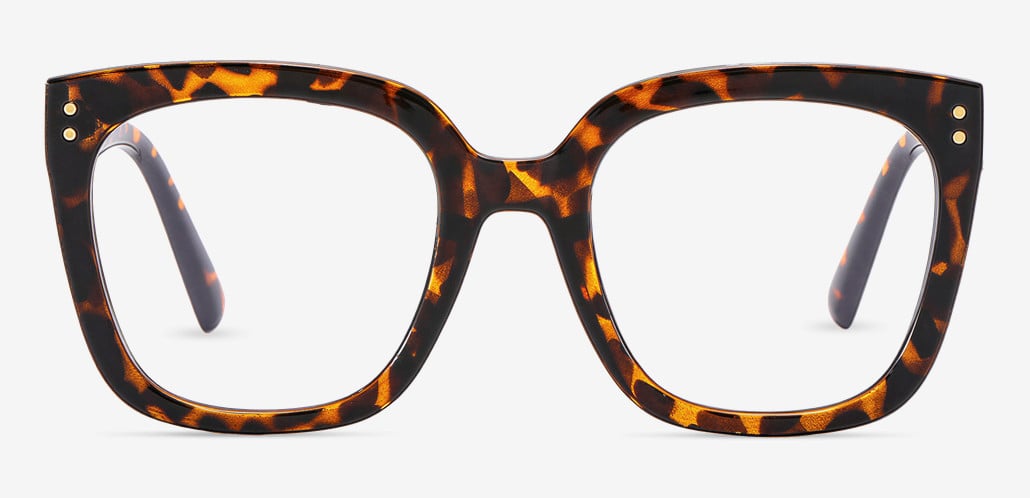
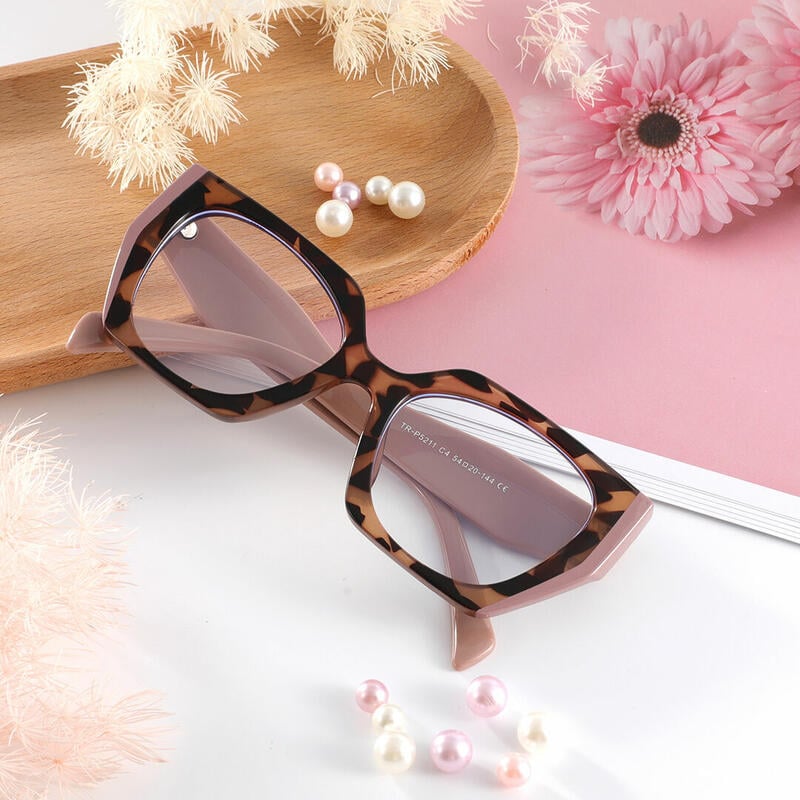
Tortoise shell glasses are frames in a mottled pattern of amber, honey and dark brown, named after the shell of the hawksbill sea turtle. New pairs are made of plastic, most often cellulose acetate, never real shell. The light parts of the pattern are translucent, so the same frame looks darker where it's thick, lighter where it's thin, and warmer under home lighting than in a studio photo.
The most useful way to choose isn't the color name on the listing. It's how much of the frame is see-through amber versus solid dark spots. If you're ready to compare frames, open Aoolia's tortoise shell glasses in another tab and run each pair through the checks below.
What you'll take away
- Read the window share: how much of the frame is see-through amber. It predicts how much the color will move.
- Thick acetate looks darker than thin acetate, even when it's cut from the same sheet. A slim frame needs a darker colorway to look like a chunky one.
- Warm home bulbs make amber glow orange; cool office light and daylight pull it toward brown.
- Spot placement is different on every acetate frame. Bubbles, milky streaks and the wrong color family are defects. A new spot layout isn't.
What tortoise shell glasses are made of today
The name is a leftover. For centuries the pattern came from the shell plates (scutes) of the hawksbill sea turtle, a keratin material that was carved and heat-shaped into combs, jewelry and spectacle frames. That trade is now banned internationally, and we'll cover what that means for vintage buyers further down.
Modern tortoise frames are usually cut from cellulose acetate, a plastic made from plant cellulose. To get the tortoise look, manufacturers blend pigmented pieces of acetate in amber, honey, brown and near-black, fuse them into a block, and slice that block into sheets. Frame fronts are then milled out of the sheets.
Two things fall out of that process, and they explain almost every "why does mine look like this?" question:
- The amber and honey pieces stay partly transparent. Light passes through them and picks up color on the way.
- Every front is cut from a different patch of the pattern, so the dark spots land in different places on each pair.
Lower-cost injection-molded frames take a different route: the tortoise look is often a printed or film finish on the surface. Those patterns repeat identically from pair to pair, which matters later when you're deciding whether a frame matches its photo.
The number the color name won't tell you
Listings use names like "havana," "honey," "demi" or "classic tortoise," but those words aren't standardized from one brand to the next. A more reliable way to sort tortoise shell glasses is to think of every frame as two materials: windows (the see-through amber and honey) and ink (the solid dark spots). The window share is roughly how much of the front is window.
Mostly ink
Reads close to black from across a room, with warm flecks up close. Barely changes between rooms. Hides the edge of the lens best.
Pick it if you want a defined line like black, only softer, or you wear stronger lenses.
Balanced
The look most people picture. Clear contrast between spots and amber; noticeably warmer in warm light. Spot placement shows most here.
Pick it if you want the familiar tortoise effect and don't mind some pair-to-pair variation.
Mostly window
Reads honey or caramel; at a distance it can look like clear amber. Moves the most with light and shows the lens edge and the metal core inside the arms.
Pick it if you want a soft frame that doesn't outline your eyes much, ideally with thinner lenses.
How to read window share from a product photo
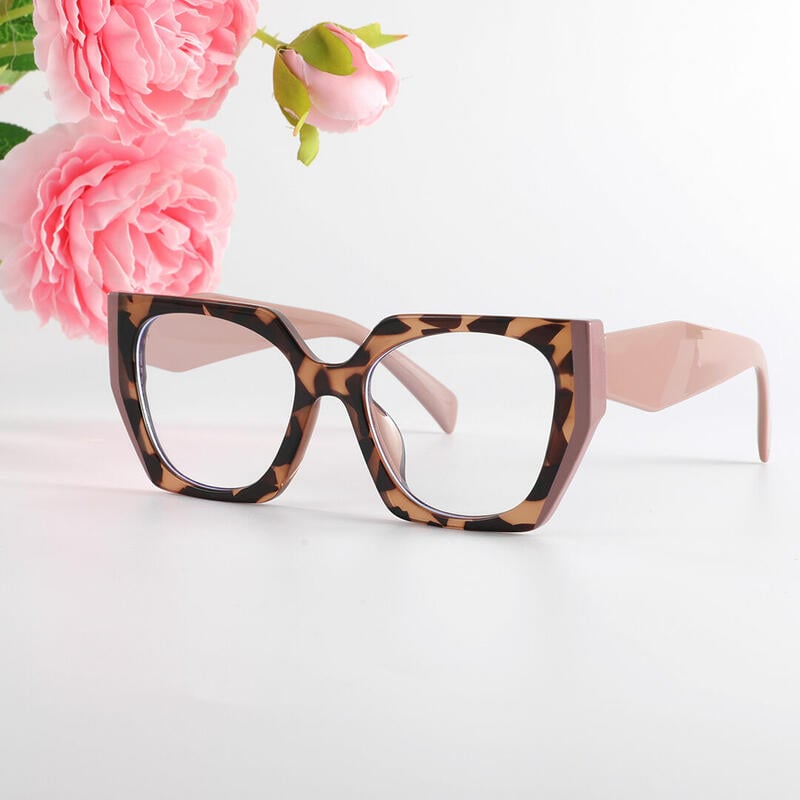
- Find the temple core. Zoom into the side view. If you can see the metal wire running inside the arm, that arm is mostly window.
- Use the white background. See-through amber looks lighter and a little yellow where the white shows through it. Ink stays solid.
- Look along the lens groove. A faint pale line just inside the rim means the lens edge is visible through the acetate.
- Compare corner and lower rim. A big jump in darkness between the thick top corner and the thin lower rim means high window share.
That last check leads straight into the next one, because thickness changes the color more than most people expect.

Same sheet, different darkness
Light passing through a translucent material loses a share of its strength for every millimeter it travels. In optics this is the Beer–Lambert law, and the important word is share: the losses multiply rather than add. Here's what that looks like for a hypothetical amber that lets 70% of light through each millimeter:
So a chunky front reads deeper and more saturated than a thin rim in the identical colorway, and the arms, which are thinner, read lighter than the front. On a single pair of tortoise shell glasses you'll usually see this order:
| Part of the frame | Relative thickness | How the tortoise reads |
|---|---|---|
| Top corners and bridge | Thickest | Darkest; amber turns deep reddish-brown |
| Rim around the lens | Medium | Closest to the listing's main photo |
| Temple arms | Thinner | Lighter and warmer; metal core may show |
| Temple tips | Thinnest, tapered | Lightest; can look almost honey even on darker frames |
Why your new pair looks orange at home
Amber acetate lets through mostly the long, warm end of the spectrum (red, orange, yellow) and soaks up much of the blue. Household bulbs are labeled by color temperature: warm white sits around 2700–3000K, cool white around 3500–4100K, and daylight bulbs at 5000K and above. Warm white is rich in exactly the wavelengths amber passes, so the windows glow. Cooler light carries more blue, which amber absorbs, so the same windows go browner and the dark spots look more contrasty.
Product photos are usually shot under bright, neutral studio light, which is why they often match an office better than a living room.
| Where you are | Typical light | Mostly ink | Balanced | Mostly window |
|---|---|---|---|---|
| Outdoors, daytime | Daylight | Near-black, crisp | Browner, high contrast | Clean caramel |
| Office or classroom | Cool white, ~3500–4100K | Dark brown-black | Close to the listing photo | Honey |
| Living room, bedroom | Warm white, ~2700–3000K | Warmer, still dark | Amber starts to glow orange | Bright orange-honey |
| Restaurant, candlelight | Very warm, below 2700K | Flecks light up | Red-amber glow | Can look almost orange |
The practical move: judge a frame against the light you spend the most waking hours in. If that's a warmly lit home, expect your pair to look more orange than the photo. If you specifically love the brown you see online, choose one tier inkier than the photo suggests.
Every pair is cut from a different patch: what to keep, what to send back
Because acetate fronts are milled from a patterned sheet, your frame won't have the exact spots you saw online, and the left side won't mirror the right. That's the material working as intended. The trick is telling normal variation apart from an actual problem.
| What you notice | Normal or not | What it means |
|---|---|---|
| Spot layout differs from the photo | Normal | Your front came from a different part of the sheet |
| Left and right rims don't match | Normal | Patterned acetate isn't symmetrical |
| Arms a shade lighter than the front | Normal | The Thickness Shift at work |
| Warmer at home than in the photo | Normal | The Light Shift at work |
| Visible air bubbles or pinholes | Contact support | A material flaw, not part of the pattern |
| Milky or cloudy streaks in the amber | Contact support | Haze shouldn't be inside clear amber areas |
| A different color family than listed | Contact support | E.g. a green or pink base where brown tortoise was shown |
| Pattern rubbing off at pads or arm tips | Contact support | A surface finish wearing through early |
| Rough or sharp edges | Contact support | Incomplete polishing |
Tortoise vs. black vs. clear: the everyday comparison
If you're choosing a single everyday pair, this is usually the real decision. Style aside, here's how the three behave once you're actually wearing them.
| In daily wear | Tortoise (balanced) | Black | Clear or crystal |
|---|---|---|---|
| How strongly it outlines your eyes | Medium; the line is broken up | Strong, continuous line | Light |
| Fingerprints, dust, fine scuffs | Well hidden by the pattern | Show on glossy finishes | Smudges and lens edges show |
| Thicker lens edges | Hidden by ink, visible through window | Best hidden | Most visible |
| Changes with lighting | The most of the three | Barely | Takes on its surroundings |
| Two pairs of the same model | Each one slightly different | Identical | Identical |
Put simply: tortoise sits between black and clear on almost every row. That middle position is the real reason it gets called "easy to wear." It frames the eyes without drawing a hard line, and it forgives the fingerprints that glossy black shows off.
Is it real tortoiseshell? What US buyers should know
New frames: no. The hawksbill sea turtle has been on Appendix I of CITES, the treaty that governs international wildlife trade, since 1977, which bans commercial cross-border trade in its shell. The IUCN lists the species as Critically Endangered, and in the US it's protected as endangered under the Endangered Species Act. Every new tortoise frame from mainstream retailers, Aoolia included, is a plastic or metal finish.
Vintage and estate frames: be careful. Older frames, especially pre-1970s, can be genuine shell. US rules make an exception for antiques only under narrow conditions: the item must be at least 100 years old, not repaired with any endangered-species material since December 28, 1973, and imported through a designated port with the proper wildlife declaration. States can add their own restrictions on top.
In practice, if a seller describes a pair as "genuine tortoiseshell" and can't document its age and import history, pass. And skip the "hot pin test" you'll see recommended on collector forums; heat damages both real shell and acetate, and it won't resolve the legal question anyway. (General information, not legal advice.)
Comparing frames right now? Browse Aoolia's tortoise shell glasses with the side-view photos open, and sort each pair into mostly ink, balanced or mostly window before you look at anything else.
A five-minute check before you order
- Start with your main light. Decide where you'll wear these most (office, home, outdoors) and use the Light Shift table to pick a window-share tier.
- Adjust for frame thickness. Chunky front? Move one tier toward window. Slim or thin-rimmed? Move one tier toward ink.
- Zoom into the side and the rim. Look for the visible temple core and the pale line along the lens groove. Both confirm high window share.
- Use virtual try-on for size and shape. It's good at showing width, height and how the frame sits against your brows. It can't show how the amber will glow in your room, so let the tables above handle color.
- Give it a day where you'll actually wear it. When the pair arrives, look at it in your main light before deciding, then check anything odd against the keep-or-return table.
Tortoise shell glasses FAQ
Is it "tortoise shell," "tortoiseshell" or just "tortoise"?
All three describe the same pattern. Dictionaries generally spell it as one word, tortoiseshell, while retailers and shoppers in the US use the two-word version and plain "tortoise" just as often.
Do tortoise shell glasses go with everything?
Nearly. Tortoise is a warm, multi-tone neutral, so it shares a color with most browns, tans, creams and olives, and sits comfortably next to navy and denim. If your wardrobe is mostly cool grays and you want frames that fade into it, a mostly-ink tortoise will sit more quietly than a honey one.
Which tortoise is best if my lenses are on the thicker side?
Mostly ink. The dark areas hide the lens edge, while see-through amber lets you see it. A smaller lens width also helps, since edge thickness grows toward the outer part of the lens on stronger minus powers.
Why do my tortoise glasses look more orange than they did online?
Usually it's warm home lighting meeting see-through amber. Check the pair near a window in daytime; if it looks like the photo there, nothing is wrong with the frame.
Why are the arms lighter than the front?
They're thinner, so light passes through less material. A slightly lighter arm is normal on acetate tortoise shell glasses and isn't a mismatch, unless the listing showed arms in a completely different colorway.
Are tortoise frames still in style?
Tortoise has been a core frame color since plastic frames went mainstream in the early 20th century, and it rarely leaves retailers' main ranges. What changes from season to season is the shape and the tier: honey and blonde tortoises come and go, while darker, more classic tortoises stay put.
The bottom line
Tortoise is less a single color than a material that reacts: to its own thickness, to the light in the room, and to where on the sheet your frame was cut. Once you sort frames by window share instead of by name, the surprises mostly disappear.
Pick your tier, adjust for thickness, and judge it in the light you live in. When you're ready, start with the tortoise shell glasses collection at Aoolia and use virtual try-on to settle size and shape.
About this guide
Written by the Aoolia Editorial Team and last reviewed October 16, 2026. The transmission figures in the Thickness Shift section illustrate how translucent materials behave; they are not measurements of any specific frame. Frame-by-frame details such as material and size should be checked on each product page.
Sources consulted:
- CITES Appendix I listing of the hawksbill sea turtle (Eretmochelys imbricata), 1977
- IUCN Red List assessment of the hawksbill sea turtle (Critically Endangered)
- U.S. Fish & Wildlife Service, Endangered Species Permits FAQ (antique articles)
- 19 CFR § 10.53(e), antique articles containing endangered or threatened species
- Beer–Lambert law of light attenuation in absorbing materials
- Lighting-industry color temperature conventions for warm white, cool white and daylight bulbs