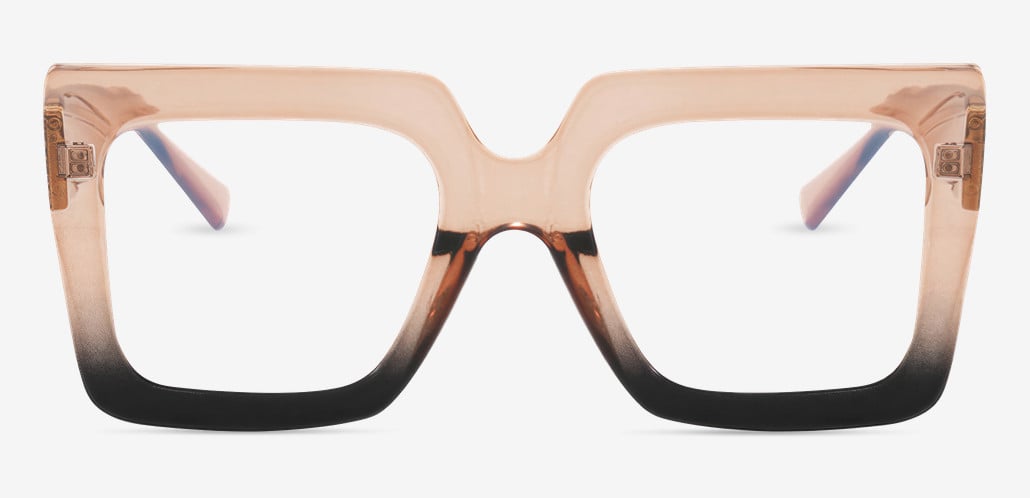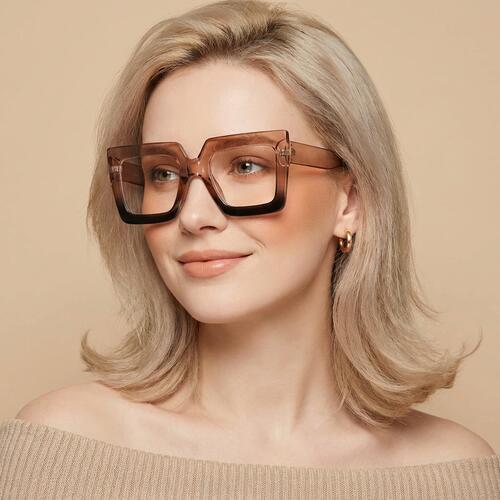

Vintage Cat Eye Glasses: Where the Color Sits Changes the Whole Look
Two pairs of vintage cat eye glasses can share the same outline and still look like they belong to two different people. One reads like a sharp ink stroke across the face. The other barely shows below the brow. Usually the difference isn't the shape. It's where the color sits on the frame front.
Most guides to vintage cat eye glasses spend their time on film stars and face shapes. This one covers what you actually pick on a product page: color placement, the type of tortoise, the finish, and what happens to that finish once the frame lives on your bathroom counter.
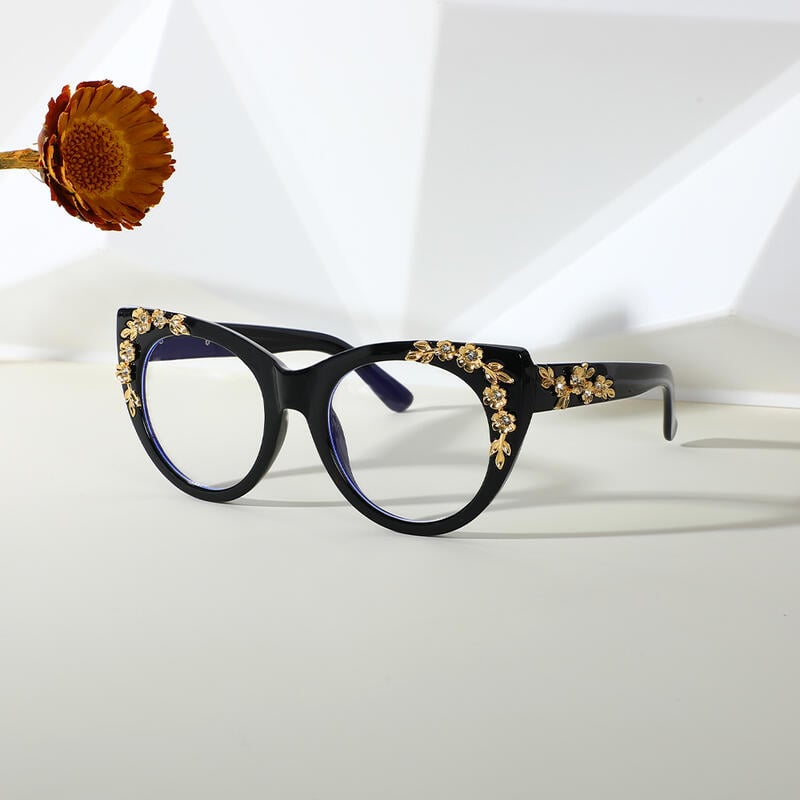
Why the color matters more than the shape
A cat eye frame already puts its drama in the top line. The brow bar is heavier, the outer corners lift, and the lower rim is usually thinner. Color either exaggerates that imbalance or quiets it.
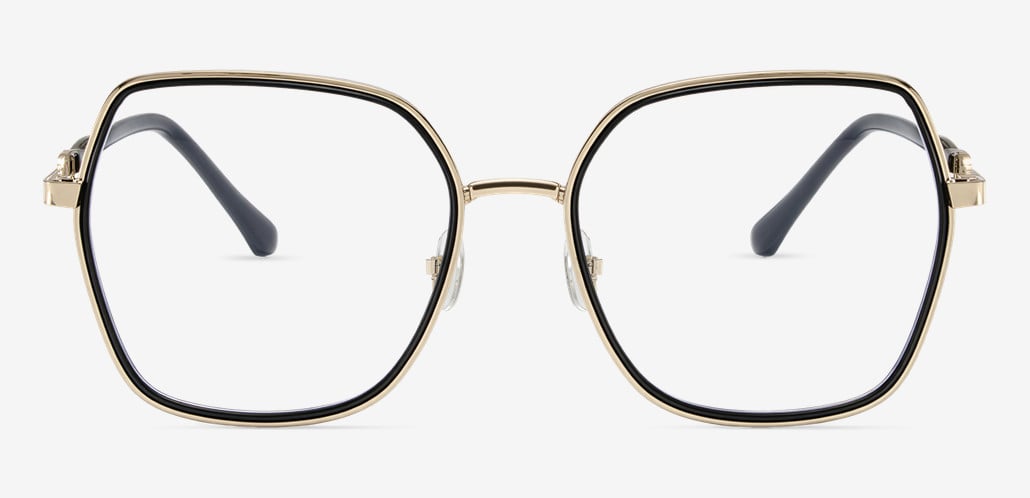
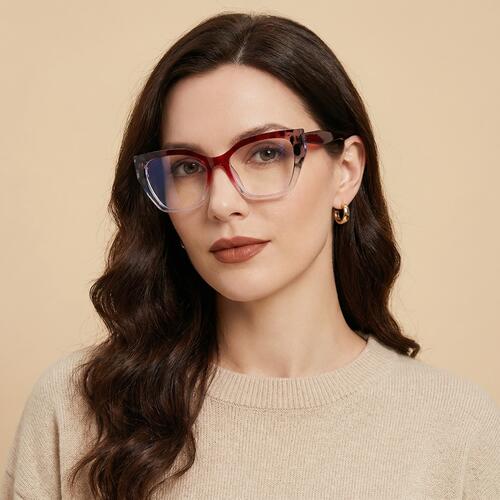
If the dark color runs all the way around, you see the complete outline, including the lower rim resting on your cheek. If the dark color stays on top, the lower rim fades back and what's left is mostly the lift. That's why so many surviving 1950s frames are two-tone, pearlized, or striped with laminated color rather than one flat shade. Makers of the era were controlling where your eye landed.
So before you choose black, tortoise or red, decide how much of the outline you want people to see.

The Color Placement Map
Here are the five ways color is placed on a vintage-style cat eye front, and how to tell them apart from product photos alone.
| Placement | What it is | What it does on your face | How to spot it online |
|---|---|---|---|
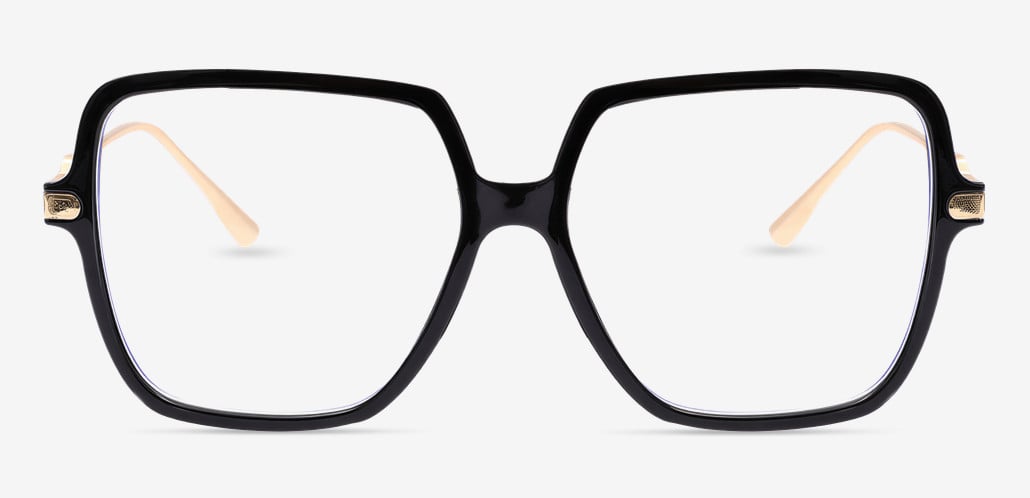
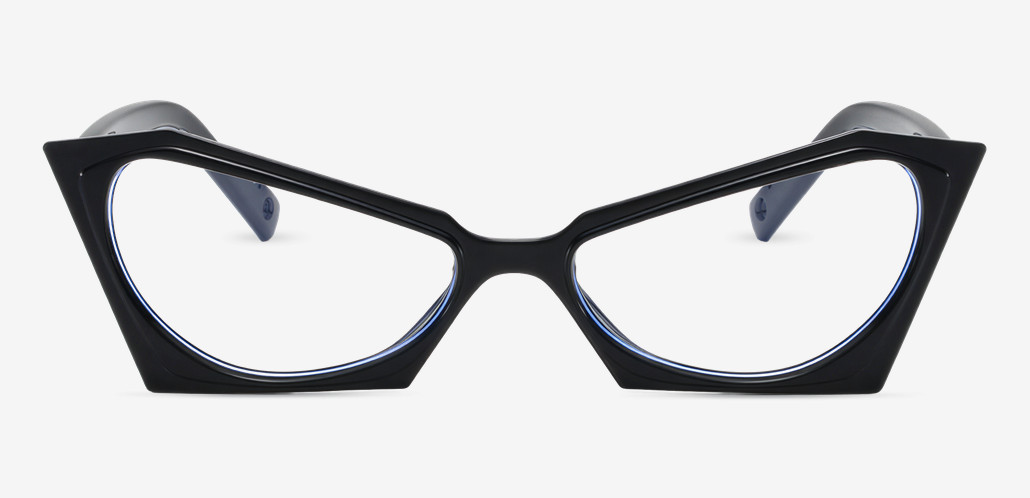
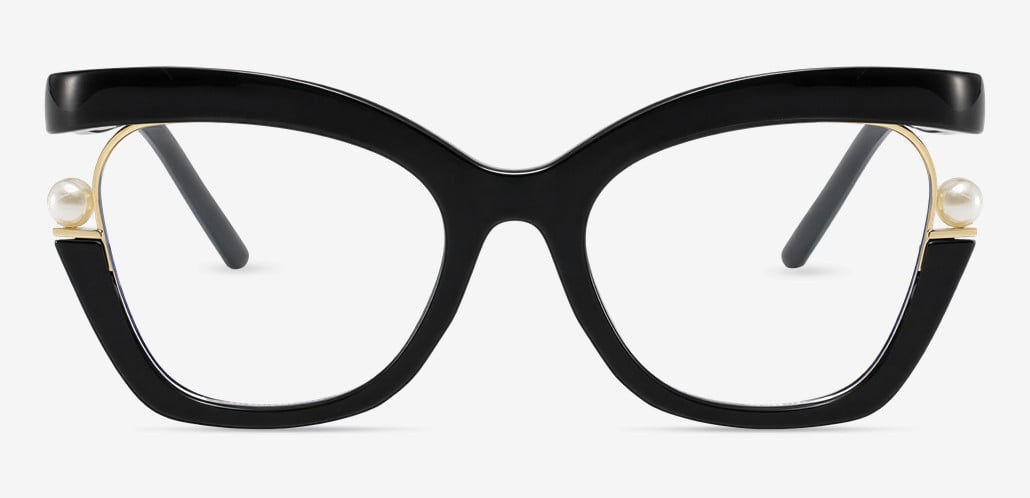
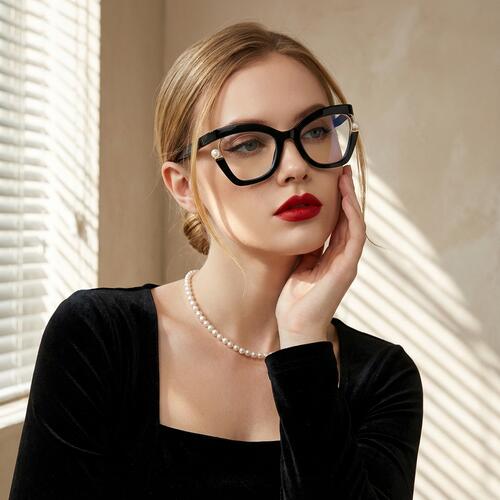
| Solid | One color edge to edge: black, red, deep green | Draws the full outline. The strongest vintage read. | The color name is one word, and the lower rim in the front photo is as dark as the top |
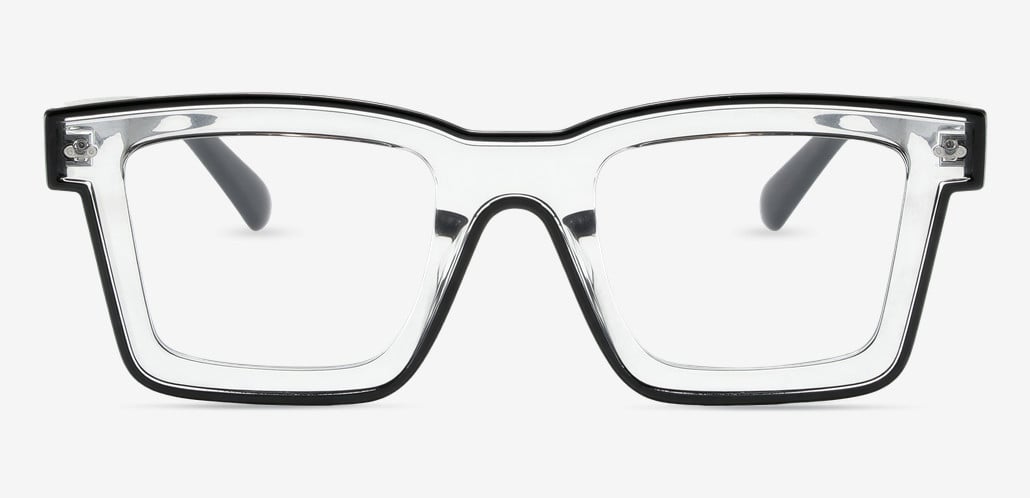
| Top-heavy two-tone | Dark or colored top over a clear or pale lower half | Keeps the lift and drops the bottom line. The easiest way to wear the 1950s look daily. | Names like "black/clear" or "two-tone," with a visible color line across the front |
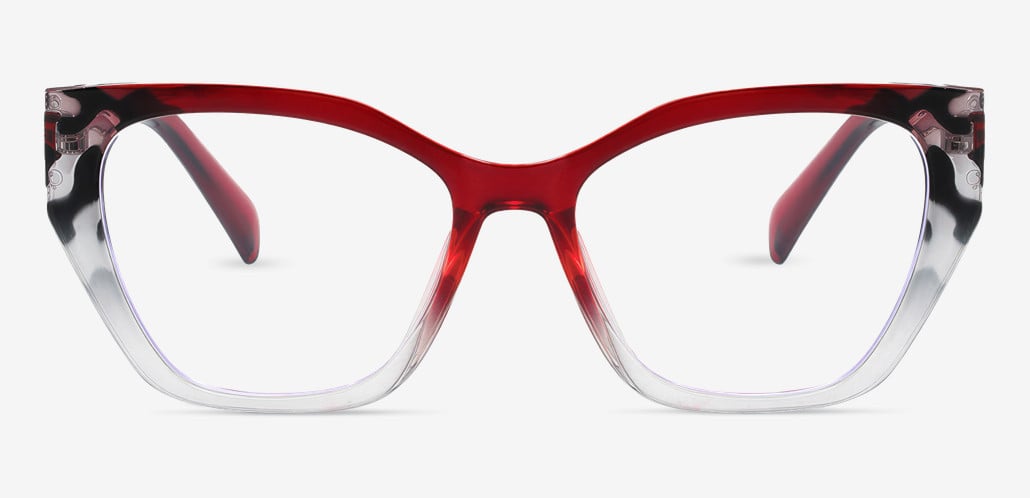
| Fade | Color that softens gradually from top to bottom | Like two-tone, but with no seam, so it reads more current | "Gradient," "fade" or "ombre" in the name. The side photo often shows it best. |
| Laminate | Layers of different colors pressed together | Plain from across the room, with a second color that shows up close or when you turn your head | Check the top or three-quarter photo for a stripe of color along the edge or inner rim |
| Crystal | Clear or tinted-clear all over | The lightest version: the shape shows without the weight | "Clear," "crystal" or "transparent." Hinges and lens edges are visible through it. |
How to use it
- New to cat eyes, want to wear them to work tomorrowStart with two-tone or fade.
- Already comfortable in bold framesSolid is the honest 1950s version.
- Want something people notice only when they're closeChoose laminate.
- Love the shape but worry it's too muchCrystal lets the lift carry the look by itself.
Tortoise, decoded
On a product page, "tortoise" can mean at least four quite different patterns. All of them imitate real tortoiseshell, which frames were once made from. Today the look comes from cellulose acetate colored to resemble it.
| Tortoise type | What you'll see | How it reads in a cat eye |
|---|---|---|
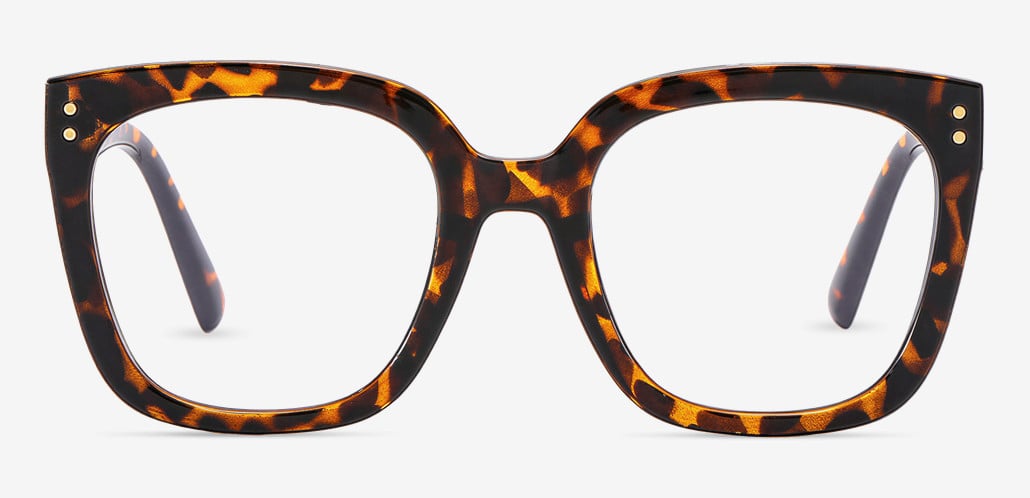
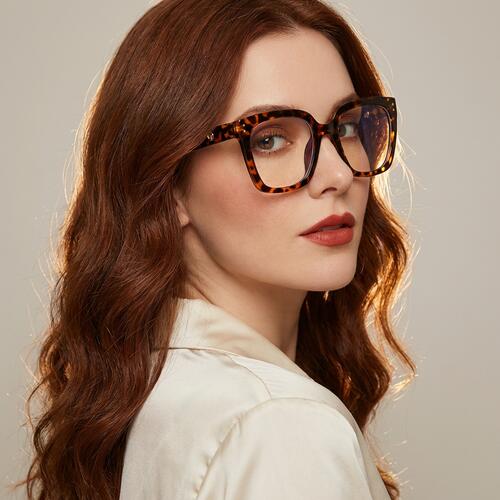
| Dark tortoise (often called havana) | Mostly deep brown with small amber flecks | Nearly as strong as black from a distance, softer up close |
| Amber or honey | An even mix of brown and gold | The warmest option; the pattern is clearly visible |
| Blonde | Mostly light amber with sparse brown | Softens the lower rim; close to crystal in visual weight |
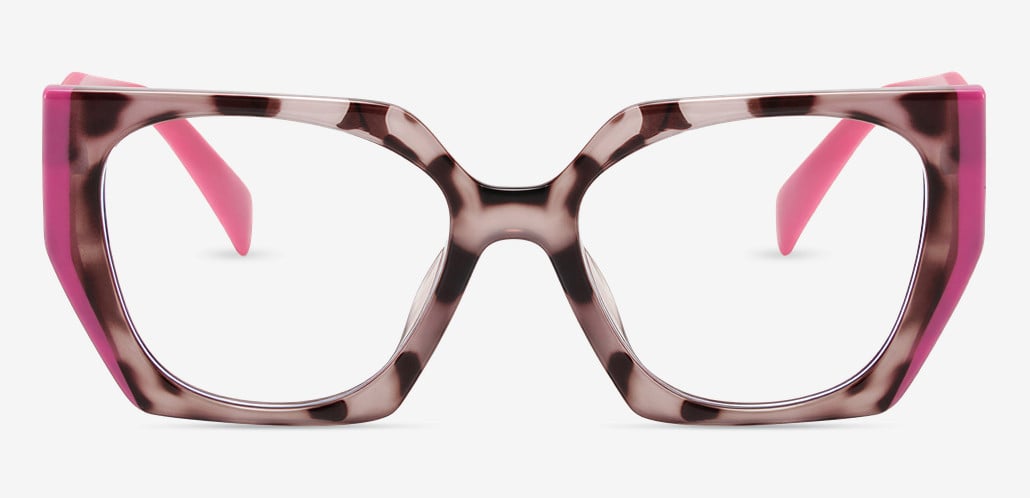
| Spotted | Distinct dark spots on a lighter base | Reads more like a print than tortoise; the most playful of the four |
Two things are worth knowing before you order.
Your pair won't exactly match the photo
Patterned acetate is made by layering colors into a block, then cutting the block into sheets. Frame fronts are cut from those sheets, so the spots and streaks land a little differently on every front. Judge a tortoise frame by its overall balance of dark to light, not by where individual spots sit.
On a cat eye, the tips matter most
A cluster of dark color at the outer corners exaggerates the lift. A lighter corner softens it. If the product page shows more than one angle, look at the corners first.
At Aoolia, Taylor Tortoise, Olivia Tortoise and Lorelei Tortoise sit toward the classic brown range, while Wanda Tortoise leans toward a spotted pattern.
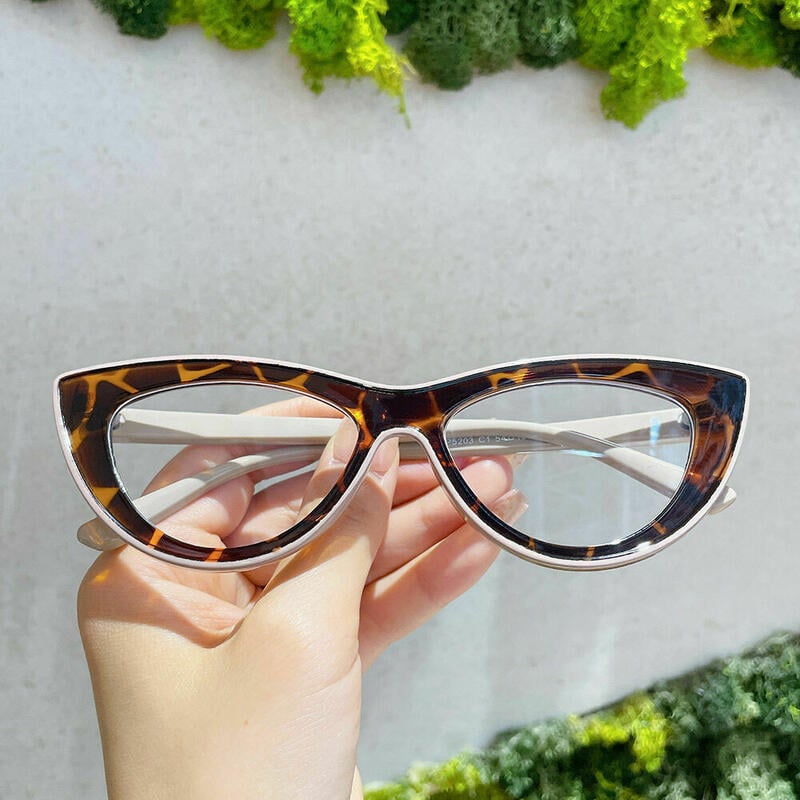
Finish: gloss, matte, and which one reads vintage
Acetate frames get their deep shine from long polishing, traditionally by tumbling in barrels with wood chips and polishing compound. That wet-looking gloss is what most people picture when they think of 1950s frames. The same shape in a matte finish looks noticeably more current, which is fine if that's what you want.
Material changes the finish too. Acetate carries color in its depth, so tortoise and laminate look layered. TR90 is lighter and flexes more, but its color usually sits closer to the surface and its shine is thinner. If a deep, layered color is the reason you want vintage cat eye glasses, filter for acetate.

The Vanity Shelf Check: what damages vintage-style frames
A 1950s-inspired routine of set hair, red nails and a spritz of perfume happens to include several things acetate handles poorly. Most frame damage doesn't come from a fall. It comes from what's sitting next to the frame on the counter.
| On the shelf | What it can do | What to do instead |
|---|---|---|
| Acetone nail polish remover | Acetone softens and dissolves acetate. One drip or a damp fingertip can leave a dull, cloudy or tacky spot that won't polish out at home. | Take your glasses off before removing polish and wash your hands before putting them back on. "Acetone-free" removers still contain solvents, so keep those off the frame too. |
| DEET insect repellent | DEET acts as a plasticizer and can damage eyeglass frames and lenses. | Apply repellent with your glasses off, then wash your hands. If you want a repellent that's gentler on plastics, look at picaridin-based products. |
| Hairspray, setting spray, perfume | Can leave a sticky film. Alcohol-heavy sprays can dull an acetate finish over time. | Spray first, let it settle, then put your glasses on. Wash off any film with mild soap and water. |
| Heat: curling irons, hair dryers, a car dashboard | Acetate softens with heat, which is exactly how frames get adjusted. Uncontrolled heat can shift the fit. | Never leave frames on a dashboard in summer, and don't point a hair dryer at them. |
| Household glass cleaner | Can harm lens coatings. | Use a lens cleaner, or lukewarm water with a drop of plain dish soap. |
A cleaning routine that's safe for acetate: Rinse under lukewarm (not hot) water. Rub one drop of plain dish soap, without lotion or added moisturizer, over the frame and lenses with your fingertips. Rinse again, then dry with a clean microfiber or cotton cloth.
Buying vintage cat eye glasses online: reading the product page
Color is the attribute most likely to disappoint when you buy frames online. A few habits prevent that.
- Read the color name literally. "Black" and "black/clear" are completely different frames on your face, even when the thumbnails look alike.
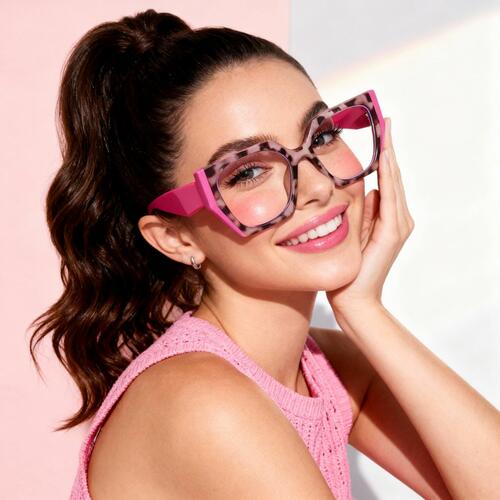
- Look at three photos, not one. The front shows the color placement, the side or three-quarter view shows fades and laminate edges, and an on-model photo shows how dark the lower rim looks against a face.
- Turn off warm screen modes before judging color. Night Shift, True Tone and similar settings warm the display, which pushes tortoise toward orange and makes red look brighter than it is.
- Use Virtual Try-On in daylight. Face a window instead of a lamp, and look at the lower rim. If it's more visible against your cheek than you'd like, go lighter in placement (two-tone, fade or crystal) rather than switching shapes.
- Then check the size. Compare the frame width and lens width with a pair that already fits you. Measurements are on every product page.
Frequently asked questions
What color vintage cat eye glasses are easiest to wear every day?
A top-heavy two-tone, a fade, or a dark tortoise. Each keeps the lifted top line and makes the lower rim less prominent.
Are tortoise glasses made from real tortoiseshell?
Not today. Real tortoiseshell came mainly from the hawksbill sea turtle, and international commercial trade in it has been banned under CITES since 1977. Modern tortoise frames are cellulose acetate colored to look like shell.
Do clear cat eye glasses still look vintage?
Yes. Translucent frames were made in the 1950s too. Clear reads lighter and more modern than a solid color, which makes it a good compromise if a full black cat eye feels like too much.
Why doesn't my tortoise frame look exactly like the product photo?
Every front is cut from a sheet of patterned acetate, so the pattern falls differently on each one. The overall balance of dark and light should match; the exact spots won't.
How do I get hairspray off acetate glasses?
Lukewarm water and a drop of plain dish soap, rubbed gently with your fingertips, then dried with a soft cloth. Skip alcohol wipes and never use nail polish remover.
When you're ready, browse Aoolia's vintage cat eye glasses by color, or narrow to acetate frames if a deep, layered color is what you're after. Every style labeled Try On can be checked on your face first.
Sources
- National Pesticide Information Center, DEET Technical Fact Sheet.
- University of Florida IFAS Extension, DEET publication.
- Wikipedia, DEET (damage to materials) and Cat eye glasses.
- CITES Appendix I listing for Eretmochelys imbricata (hawksbill turtle).
- Published acetate production descriptions from Mazzucchelli 1849 and eyewear frame makers.
- Dealer listings of authenticated 1950s frames on 1stDibs.