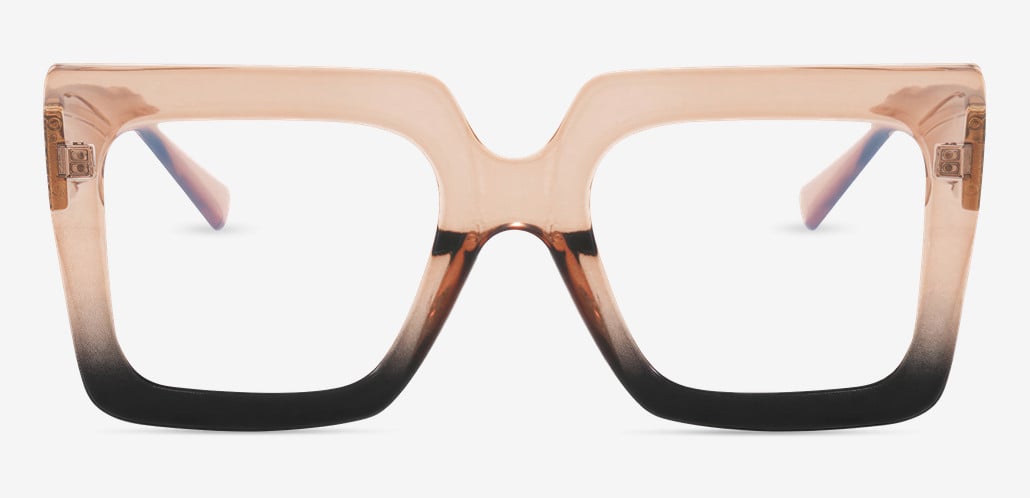

Frame Guide
Unique Glasses Frames: What the Corners Tell You Before You Buy
The shape is what you notice. The corners are what you live with. Here's how unusual frames are built, and what each build means for comfort, wear and repairs.
Most advice about unique glasses frames stops at the look: pick a bold shape, wear it with confidence, done. The look is the easy part. Whether you still reach for that pair a year from now depends on something product pages rarely spell out, which is how the unusual parts of the frame were actually made.
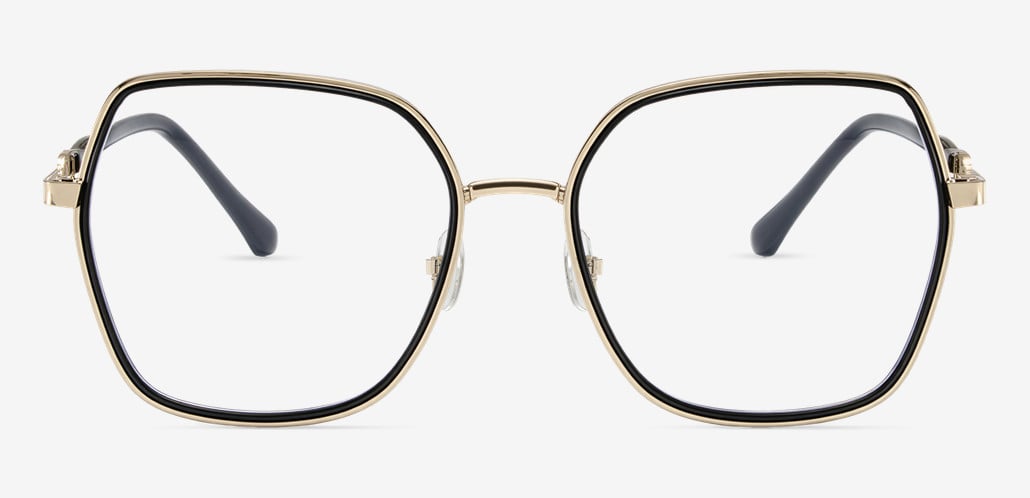
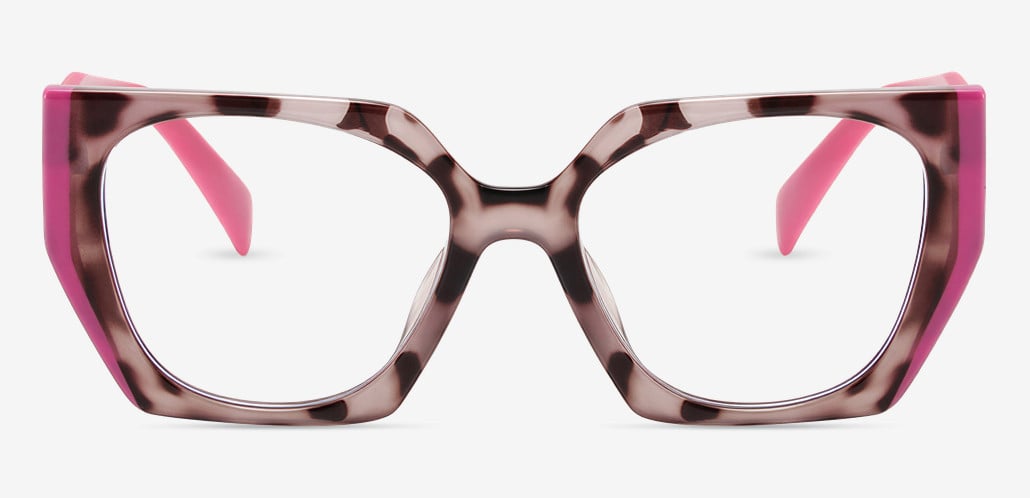
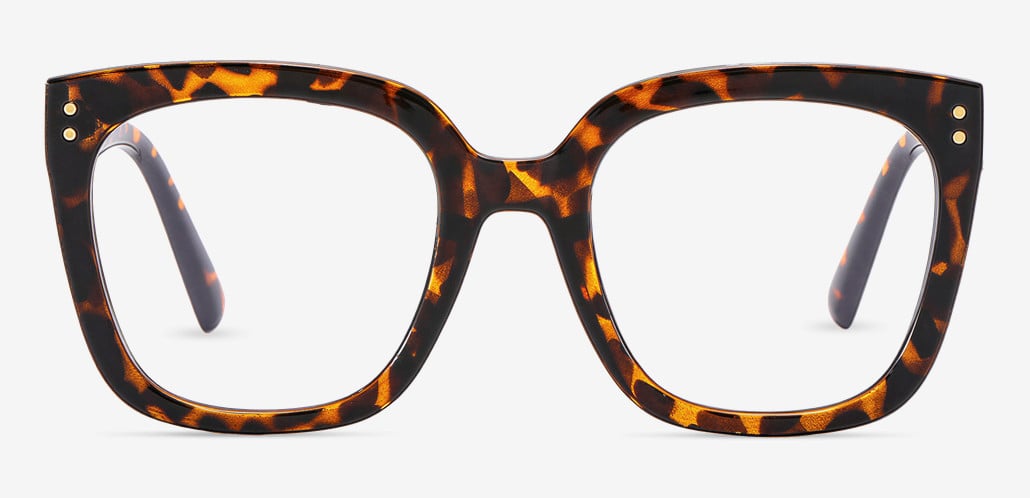
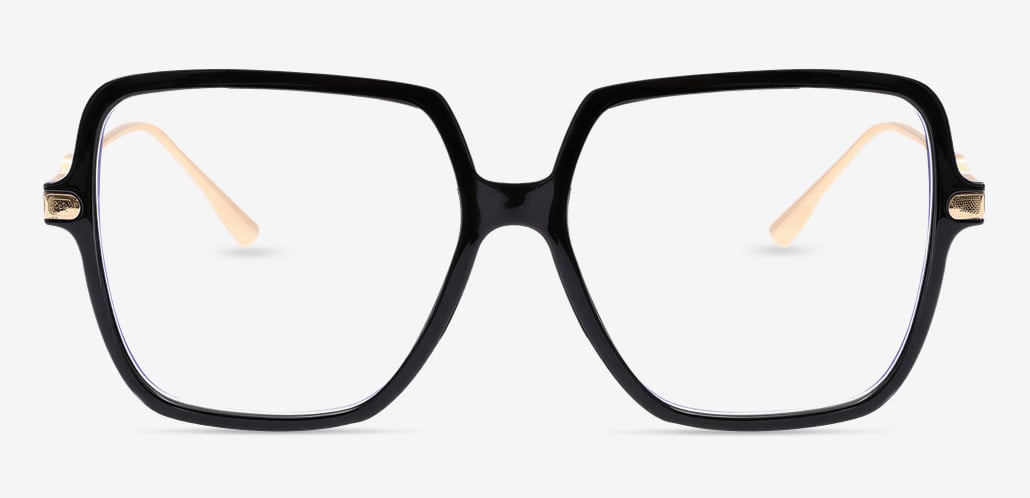
A frame turns unique at its edges. A hexagon has six corners where a round frame has none, and a faceted brow has ridges where a plain one is smooth. Corners are also where materials behave differently: metal bends there, acetate can chip there, and a molded plastic corner is never quite sharp. Once you know how the corners were made, you know most of what you're signing up for. If you'd like to compare real shapes as you read, keep our collection of unique glasses frames open in another tab.
In short
- Unique glasses frames get their character from corners and edges, so how those corners are built (bent, joined, milled or molded) decides how the frame feels, ages and gets repaired.
- Keep the unusual design away from the parts that touch you. The outline can be daring; the bridge, temples and lower edge should be ordinary.
- Angular frames need slightly different care: clean the corners, and store them in a case deep enough for the shape.
Why Unique Glasses Frames Come Down to Corners
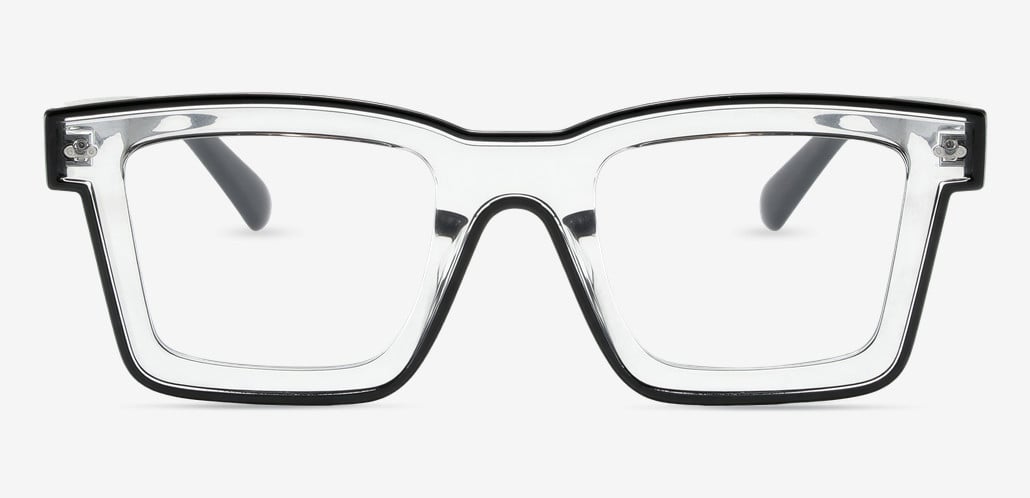
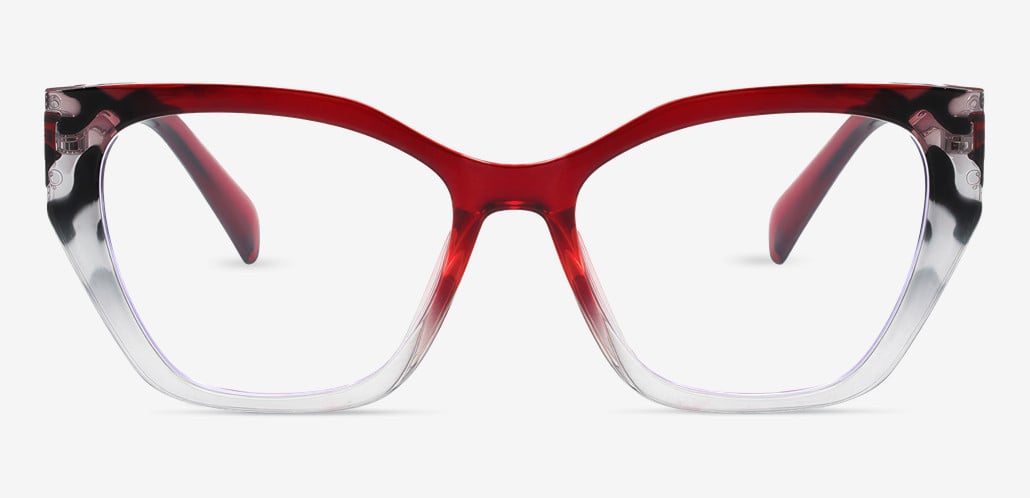
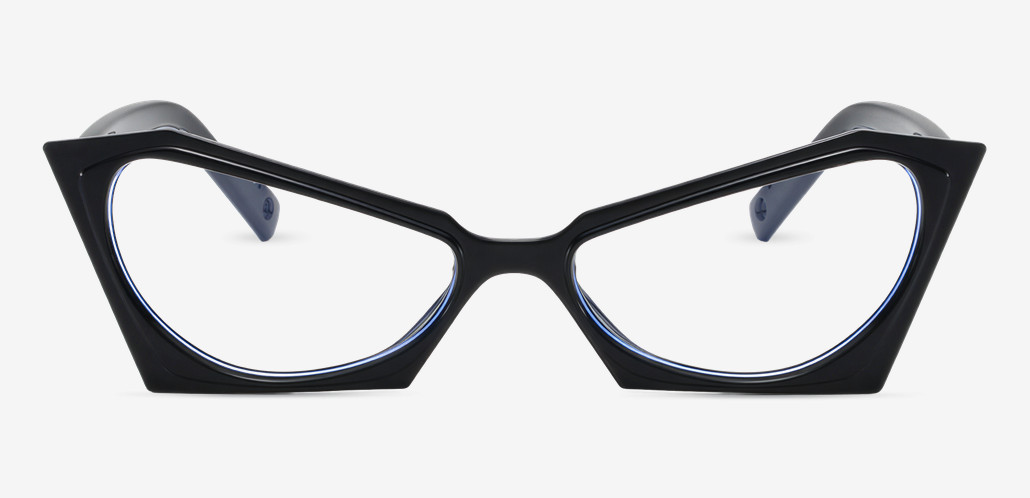
Strip away color and most unique glasses frames are unique for one reason: they turn sharply where everyday frames curve. A hexagon changes direction six times. A frame with a flat top and a pointed outer edge changes direction sharply on both sides of the face.
Those turns matter for more than looks. When something flexes, stress tends to gather at sharp corners, which is why airplane windows have rounded ones. Glasses flex too: every time you take them off with one hand, push them up your nose or fold them into a pocket. Each frame material handles that stress at the corner in its own way, so two frames with the same outline can age very differently.
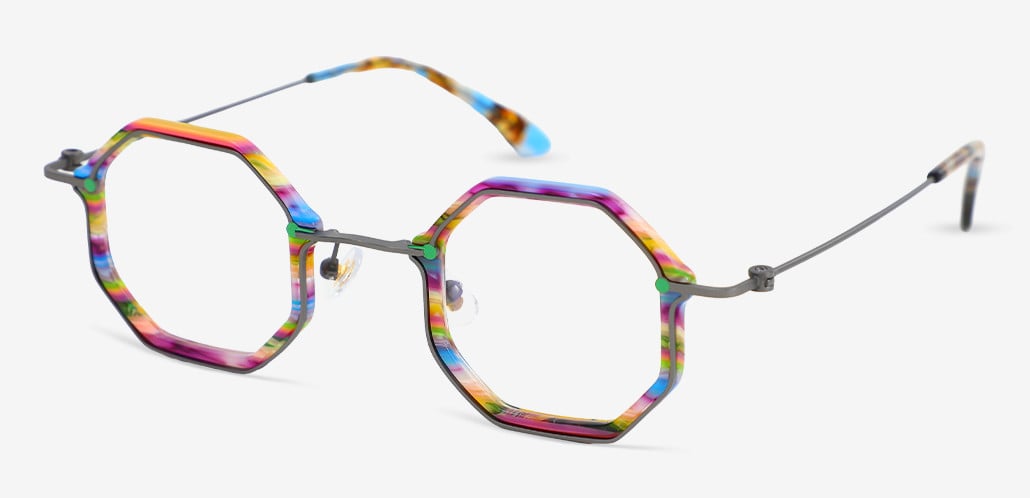
One quiet upside: the lens lock
A round lens in a round rim can slowly turn if the rim loosens over time. For many lenses that's harmless. Lenses that correct astigmatism, though, are made to sit at one specific angle, so a turned lens no longer matches what it was made for. An angular lens can't turn, because its corners hold it in place. If your lenses correct astigmatism, that's a small, practical point in favor of a geometric frame.
The Corner Build: Four Ways an Unusual Shape Gets Made
Look closely at any unique frame and each corner will have been made in one of four ways. Many frames combine two, such as metal rims under an acetate brow, so judge each corner rather than the frame as a whole.
Bent
Metal wire rims shaped around the lens
Spot itA thin rim of even thickness all the way around. Up close, the tip of each corner is very slightly rounded rather than knife-sharp. A small screw block on the outer side closes the rim around the lens.
Good atLight weight and clean polygon lines. Metal fronts usually come with adjustable nose pads on small arms.
Watch forA hard knock can flatten or shift a bend, and a corner pushed out of shape lets the lens loosen. If a lens rattles, the closing screw is the usual suspect.
Down the roadA shop can usually reshape a slightly bent rim and tighten the closing screw. A cracked bend is a bigger job.
Joined
Corners formed where two parts meet
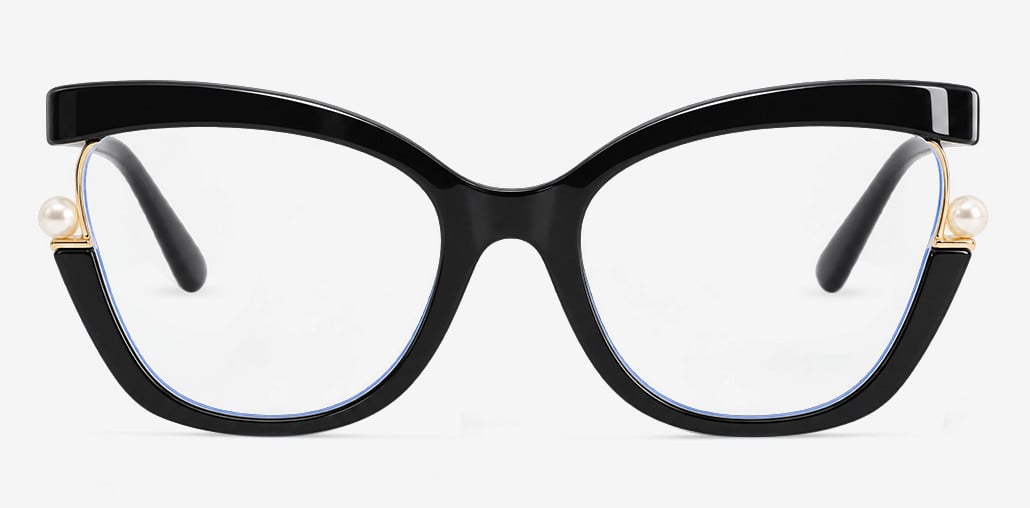
Spot itA visible junction, such as a fine line, a small step or a change in finish where a bridge meets the rims, a metal bar sits over the top, or an acetate brow is pinned onto metal rims.
Good atCombining materials: a bold brow over slim lower rims, or shapes too complex to make from a single piece.
Watch forThe joint is the weak point. On arrival, check that every joint looks clean and matches left to right, with no gaps, rough spots or discoloration.
Down the roadLoose screws on an attached brow are a quick tighten. A broken soldered joint needs a repair service that solders, and not every shop does.
Milled
Cut from solid acetate
Spot itNoticeable depth in the side view, plus facets and bevels that catch the light at different angles across the front.
Good atThe crispest angles and the deepest sculpting, with a solid feel in the hand. A shop can fine-tune the fit with gentle heat.
Watch forSharp outer corners are the first thing to chip if the frame lands on tile or concrete. Thick fronts are heavier, too, and without nose pads that weight rests on the bridge.
Down the roadA small chip can often be polished smooth, though the corner ends up a little softer than before.
Molded
Injection-molded plastic or TR90
Spot itVery even, smooth surfaces and corners that are slightly softened. Sometimes a faint hairline runs along the outer edge where the two halves of the mold met.
Good atLow weight and flexibility. TR90 in particular bends and springs back, which helps if your glasses get sat on or tossed in a bag.
Watch forAngles read softer than milled or bent versions. These frames don't take adjustment well, so the fit out of the box matters more.
Down the roadThere's little to adjust or polish. A break usually means a replacement.
The short version
- Crispest angles: milled, then bent.
- Lightest: bent and molded.
- Toughest in a bag: molded.
- Most adjustable: bent, then milled (with heat, at a shop).
- Most to inspect: joined.
When you browse Aoolia's unique glasses frames, the product name tells you the shape and the photos tell you the build. Use the front view to judge rim thickness and spot joints, then the side view to see how deep the front is.
The Contact Rule: Daring Outline, Ordinary Contact Points
One rule keeps a unique frame comfortable from morning to night: let the design be as unusual as you like where nothing touches you, and keep it conventional where the frame rests on your face. The outline, the front surface and the brow are free space. The bridge, the temples and the lower edge of the lens are not.

The outline is free space. The contact points are not.
Unique details tend to drift into contact zones in three places:
-
The bridge. A sculpted fixed bridge, with geometric cutouts or an unusual saddle shape, has to match your nose exactly because there's nothing to adjust. Adjustable nose pads let the frame sit at the height and angle your nose needs. On Aoolia, the Feature filter includes Adjustable nose pads, the quickest way to shortlist unique fronts that still have an ordinary, adjustable contact point.
-
The temples. Wide, sculpted or flared temples are a popular spot for a unique detail, and they press along the side of your head for as long as the glasses are on. Slim temples with simple tips are the low-risk choice. Whatever the style, compare the temple length on the product page with the number printed inside a temple you already wear.
-
The lower corners. Angular frames often have a lower outer corner that sits closer to the cheek than a curved frame would. In Try On, give a full smile and watch that corner. If it rides up onto your cheek, the frame will lift every time you laugh.
Then count how many unusual features land in these zones. Zero is ideal. One is fine if it fits. With two or more, all-day comfort comes down to luck.
Match the Build to How You Treat Your Glasses
The best build depends less on taste than on habits. Find the line that sounds most like you.
They live in a jacket pocket or a tote
Lean toward: molded
TR90 shrugs off pressure that can push a bent metal corner out of shape. Pair it with a hard case anyway.
You want the angle to be the first thing people see
Lean toward: milled
Carved acetate gives the sharpest facets. If you prefer thin lines, a bent metal polygon is the lighter way to get a crisp shape.
You wear them from morning to night
Lean toward: bent or molded
Both keep weight down. If you love a milled front, choose one with adjustable nose pads so the weight isn't sitting on a fixed bridge all day.
You'd rather never think about maintenance
Lean toward: milled or molded
No closing screws on the rims and few joints. Joined frames suit people who don't mind a quick screw check now and then.
You want bold and light at the same time
Lean toward: joined
A strong brow over slim lower rims gives you the angular look without a full thick front. Inspect every joint when the frame arrives.
Caring for Angular Frames
Corners collect what curves let slide off: skin oil, makeup, sunscreen and dust settle where the lens meets the rim, and they settle deepest in the tightest angles. Angular frames also fit some cases badly. Two habits handle both problems.
The Corner Clean
- Rinse the frame and lenses under lukewarm running water to lift grit before anything touches the lenses.
- Rub a single drop of plain dish soap over the lenses and frame with your fingertips.
- For the corners, run a soft, clean toothbrush lightly along the rim edge where it meets the lens, on the frame only and never across the lens surface.
- Rinse again, shake off the water, and dry with a clean microfiber cloth.
- Do a corner clean about once a week; on other days, rinse and wipe as usual.
Skip paper towels, the hem of your shirt and household glass cleaner. Keep nail polish remover well away from acetate, because acetone damages the surface.
The Case Fit
Many standard cases are shaped around ovals and rectangles. A wide geometric front can close inside one only by pressing its corners against the walls, and that pressure goes straight into the frame and the lens edges. To test a case, fold the glasses and set them in with the lenses facing up. The corners shouldn't press against the sides, and the lid should close without pushing on the frame. If the glasses only fit at an angle, the case is too small. A soft pouch keeps dust off but does nothing against pressure, so save it for a pair that lives on your nightstand.
The Every-Few-Months Look
Hold the frame under a bright light and go corner by corner. Check the closing screws on metal rims, the joints on mixed frames, the outer corners of acetate fronts for small chips, and the nose pads for looseness. Catching a loose screw early is the difference between a quick tighten and a lost lens.
Before You Order Unique Glasses Frames: A Five-Minute Checklist
- Name the corner build from the photos: bent, joined, milled, molded, or a mix.
- If the frame is joined, find every joint and check that they match left to right.
- Count the unusual features in contact zones (bridge, temples, lower corners) and aim for zero or one.
- Compare frame width, lens width, bridge width and temple length with a pair that already fits you.
- Run Try On twice, once straight ahead and once with a full smile, and screenshot both.
- Decide where the glasses will live when they're off your face, and make sure you have a case that fits the shape.
Unique Glasses Frames: Your Questions Answered
Are unique glasses frames less durable than regular frames?
Not by default. Durability depends on how the corners are built and how you treat your glasses. Angular shapes put more stress on their corners than round ones do, so match the build to your habits: molded for rough handling, milled or bent for crisp shapes you'll treat with care.
Which material holds a sharp geometric shape best?
Milled acetate gives the crispest, deepest angles, and bent metal gives the cleanest thin lines. Molded plastic and TR90 come out of the mold with slightly softened corners, so they read gentler.
Can unique glasses frames be adjusted?
Metal frames are the easiest: nose pad arms and slightly bent rims can usually be adjusted. Acetate can be fine-tuned with gentle heat by a shop. TR90 and other molded plastics take very little adjustment, so the fit when they arrive matters most.
Do geometric frames work if my lenses correct astigmatism?
Yes, and they have a small advantage. A round lens can slowly turn in a loosened rim, while an angular lens is held in position by its corners, so it stays at the angle it was made for.
Can a broken unique frame be repaired?
It depends on the build. Bent metal rims and loose screws are usually simple fixes, small acetate chips can sometimes be polished, and broken soldered joints need a shop that does soldering. Molded frames are usually replaced rather than repaired.
How do I clean the corners without scratching my lenses?
Rinse first, wash with a drop of plain dish soap, and use a soft toothbrush only along the rim edge where it meets the lens, never across the lens surface. Dry with a clean microfiber cloth.
Read Every Frame Twice
The first read is for the shape: does it look like you? The second is for the corners: how they were made, whether anything unusual touches your face, and where the glasses will live when you take them off. A pair that passes both reads is one you'll keep wearing. When you're ready to start, browse Aoolia's unique glasses frames with this guide in mind, and use Try On before you choose your lenses.
How this guide was written
This guide is based on how glasses frames are constructed and on the product details, filters and Try On features shown on Aoolia's site. It contains no sponsored mentions. It offers general information about frames, not eye care advice; questions about your eyes or your lenses belong with your eye doctor.