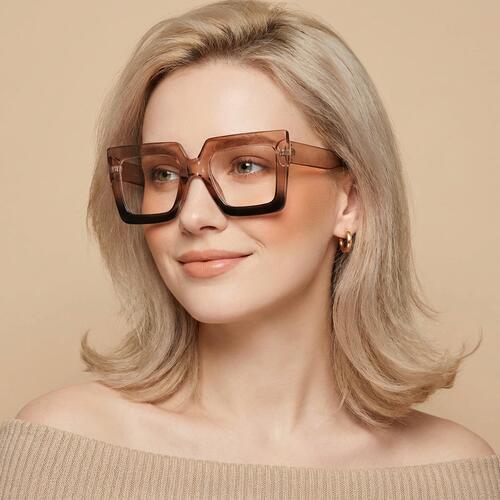

Fit Guide · Big Round Glasses
Big Round Glasses Under VR Headsets, Ski Goggles, and Safety Glasses: Will They Fit?
A circle is as tall as it is wide. That one fact decides whether your frames slip under a headset or get pinched by it.
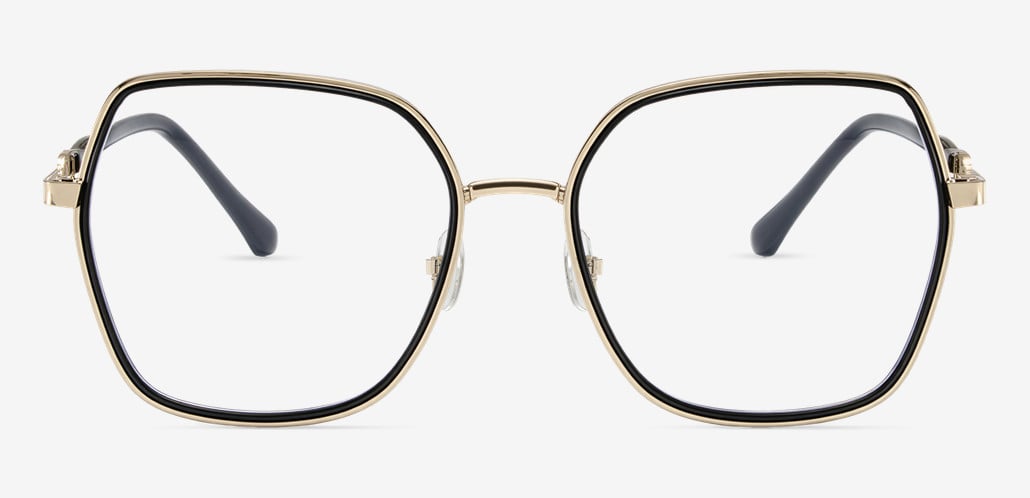
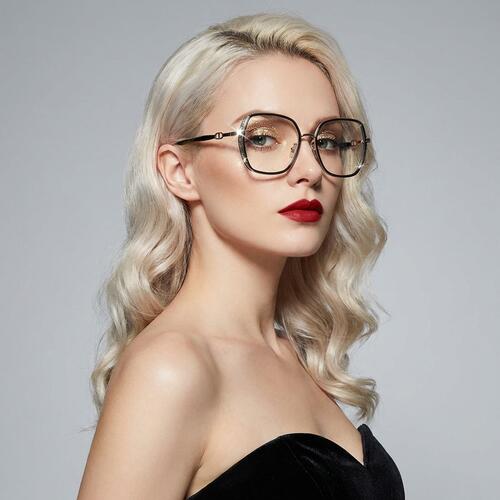
Most fit advice for big round glasses stops at your face: how wide, how high, how they sit on your nose. This guide picks up where that advice ends, at the moment you pull a VR headset over your frames, strap on ski goggles, or put on safety glasses to sand a cabinet door. If you're still choosing a pair, our Big Round Glasses collection shows lens width on the product pages. That's the one number you'll need below.
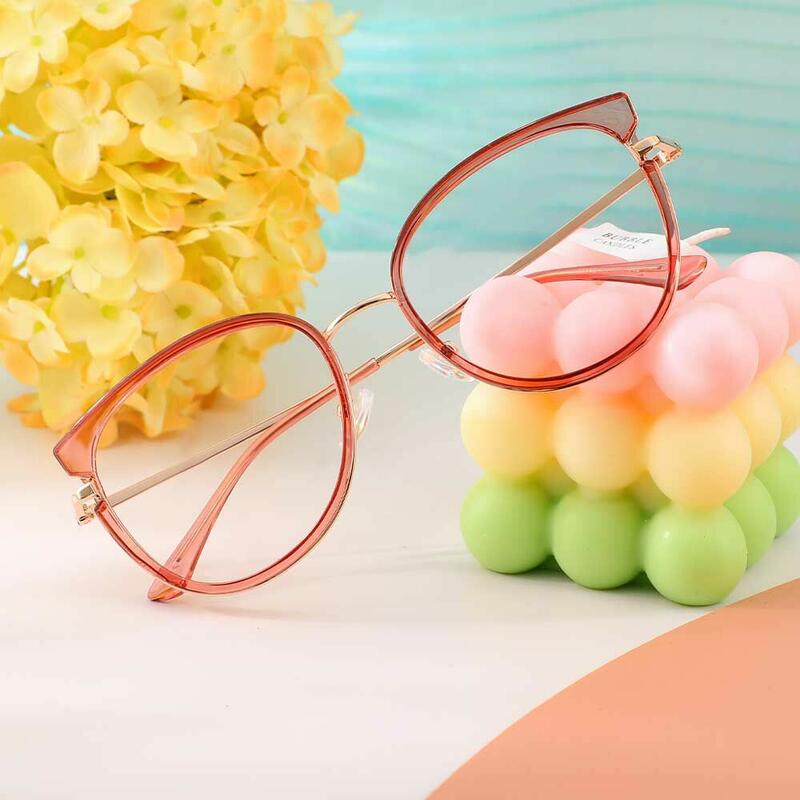
The short version
- On a true circle, lens height equals lens width. That makes big round glasses the tallest frames for their width.
- Frame height is roughly lens width plus the rim above and the rim below.
- Meta lists 142 mm wide and 50 mm tall as the limit for glasses with its Quest glasses spacer. Big round glasses usually pass on width and fail on height.
- "OTG" on goggles or safety glasses promises extra room. It isn't a size, so try them on with your frames.
- Binoculars and camera viewfinders are the one place a big circle helps: the eyecup lands on lens, not rim.
Why Big Round Glasses Hit Gear Limits First
Headsets, goggles, and over-glasses safety eyewear are sized around typical frames, and typical frames aren't circles. A rectangular lens 52 mm wide is much shorter than it is wide. A round lens 52 mm wide is also 52 mm tall. Add the rim above it and the rim below it, and the front of the frame gets taller still.
So when people say big round glasses "don't fit" something, width is rarely the issue. Height is where a big circle spends its extra size.
The height rule for big round glasses
Frame height ≈ lens width + top rim + bottom rim
This holds for a true circle. A softened, panto-style circle with a flatter top line runs a little shorter, so measure it directly.
The 50 mm Line: Big Round Glasses and VR Headsets
VR is where the height rule bites hardest, because one of the most widely used headsets publishes an exact limit. Meta's help page for Quest says your frames should be 142 mm or less wide and 50 mm or less tall before you install the included glasses spacer. Most adult frames have room to spare on width. Height is a different story for a circle.
How four big round fronts compare with the 50 mm line
Worked examples using the height rule. Rim thickness varies from frame to frame, so measure your own pair.
Dashed line = 50 mm frame heightBar length = total frame height
Notice what moves a pair over the line. Going from a thin metal rim to a chunky acetate rim adds about as much height as a few extra millimeters of circle. Two pairs with the same lens width can land on opposite sides of 50 mm.
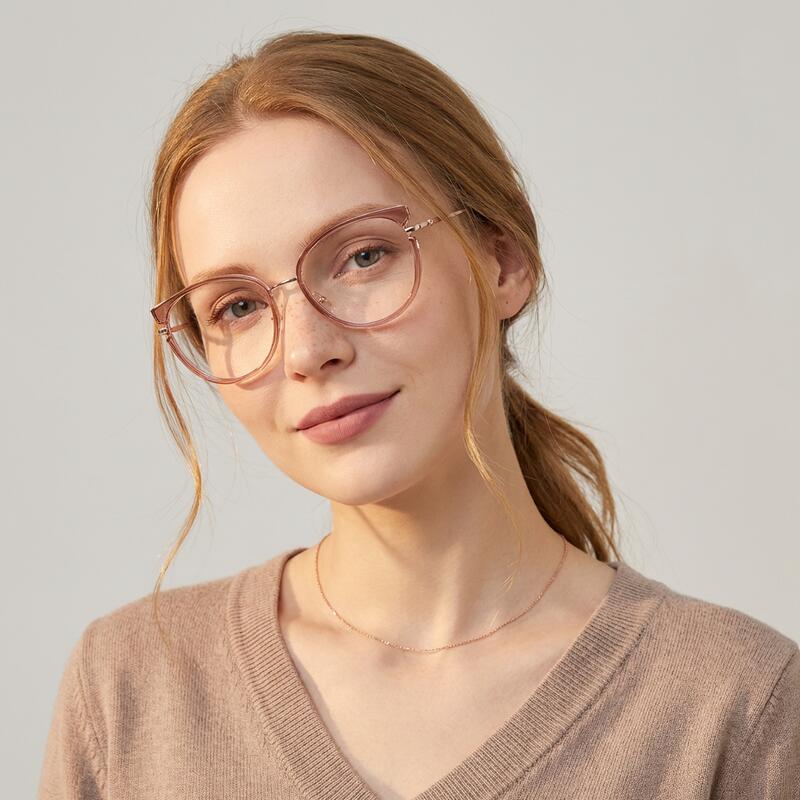
What happens when a frame is too tall for the headset
The face cushion presses on the top or bottom rim, so the glasses tilt or ride down your nose. The tilt also changes how you look through your lenses, and it can push them toward the headset's lenses. Many players add thin lens-protector rings for that reason, so lens never rubs lens.
Deeper spacers don't fix a tall frame
Third-party "XL" spacers add depth between your face and the headset. That helps frames that stick out, but it doesn't change the headset's opening, so a frame that's too tall is still too tall.
Apple Vision Pro is a different case
Apple's headset doesn't support wearing glasses at all. Glasses wearers use magnetic ZEISS Optical Inserts instead, and not every set of lens numbers is supported. For Vision Pro, frame size doesn't matter. Your numbers do.
Any other headset
Look for the maker's published glasses dimensions. If only a width is listed, measure your height anyway. A big circle is the frame most likely to hit the limit nobody wrote down.
Measure Your Big Round Glasses in Two Minutes
You need a ruler with millimeters and a mirror. That's it.
- Lay the frame face down. Fold the temples and set the front flat on a table.
- Measure frame height. On a round frame the tallest point runs straight through the middle of the lens. Measure outer rim edge to outer rim edge.
- Measure frame width. Measure across the front at its widest point, including the hinges.
- Check how far the lenses sit from your eyes. Stand side-on to a mirror. Some frames sit close to your lashes; others sit noticeably farther out. Make a note, because it matters for binoculars below.
Shopping online and don't own the pair yet? Take the lens width from the product page, measure the rim on a pair you already own in the same material, and add that rim twice.
The Over / Against Sort: Two Ways Gear Meets Your Glasses
Every piece of gear meets big round glasses in one of two ways, and each way checks a different measurement.
The gear encloses your glasses. Frame height, width, and depth decide the fit.
VR headsets
- What it checks
- The opening's height and width, plus depth to the headset lenses.
- Where big round catches
- The top or bottom rim against the face cushion.
- The move
- Compare your frame height with the maker's limit. For Quest, that's 50 mm.
OTG ski & snowboard goggles
- What it checks
- Interior height and depth, plus the side channels your temples pass through.
- Where big round catches
- The top rim meets the goggle foam and pushes the frame down your nose. Thick acetate temples bind in the channels.
- The move
- Try the goggles on wearing the exact pair. When they're seated, your glasses should sit where they normally do, with no pressure on the rim.
Over-glasses safety glasses
- What it checks
- Whether the protective lens covers your glasses top to bottom.
- Where big round catches
- On a tall circle, the bottom rim can end up below the protective lens when you look down at your work.
- The move
- Look up, then down at your hands. Your own lenses should stay behind the protective lens the whole time.
Fit-over sunglasses
- What it checks
- The fit-over's inside width and height.
- Where big round catches
- Height again. Many fit-overs are shaped around shorter frames.
- The move
- When sizes are listed, choose one taller than your frame height, not just wider than your frame width.
On the job, safety glasses aren't only a fit question. OSHA's eye and face protection rule (29 CFR 1910.133(a)(3)) gives workers who wear glasses with lens power on hazardous tasks two routes. One is protection made with their lens power. The other is protection worn over their glasses that doesn't push either pair out of position. A tall circle that gets shoved down by safety glasses doesn't meet the second route, so check the fit before the job starts.
The gear presses on your lenses or rim. Distance and contact points decide the fit.
Binoculars & spotting scopes
- What it checks
- Eye relief: how far back your eye can sit and still see the whole view. Optics guides commonly point glasses wearers to at least 15 mm.
- Where big round catches
- Frames that sit far from your face use up eye relief.
- The move
- Fold or twist the eyecups down. Use your mirror note: the farther your lenses sit out, the more eye relief you need.
Camera viewfinders
- What it checks
- Whether you can see the frame edges and settings in the viewfinder with glasses on.
- Where big round catches
- Rarely the rim. More often it's lenses that sit far from your eye.
- The move
- Press the eyecup to the middle of your lens. The camera's built-in diopter dial handles only a small range, so it's usually not a substitute for your glasses.
Dust masks & respirators
- What it checks
- The seal across the bridge of your nose.
- Where big round catches
- A tall circle's bottom rim can land on the mask's top edge and lift it.
- The move
- Put the mask on first, do your seal check, then rest your glasses on top. If the rim lifts the mask, the seal is broken.
Microscopes & eyepieces
- What it checks
- Eye relief, the same as binoculars.
- Where big round catches
- Lab and hobby eyepieces often have short eye relief.
- The move
- Look for "high-eyepoint" eyepieces if you keep your glasses on.
Where big round glasses come out ahead. Binocular and camera eyecups are round, and so are your lenses. On a small or narrow lens, the eyecup can bump the rim before it reaches the lens. On a big circle there's more lens around your line of sight, so the eyecup has a broad, flat surface to rest on. Birders and photographers who love the look don't have to give it up.
Choosing Your Next Big Round Pair Around Your Gear
If gear is part of your normal week, choose your next pair with it in mind, not after the fact. Four quick profiles:
Weekly VR player
Aim for a frame height of 50 mm or less. In practice, that's a circle in the mid-40s with a thin metal rim.
Ski or snowboard weekender
Look for slimmer temples and a flatter front. Bring the frames when you shop for goggles, or buy goggles you can return after a try-on.
Garage and workshop
Check frame height against your safety glasses before you buy either one. A tall acetate circle and a short safety lens don't mix.
Birder or photographer
Go as big as you like. Put your attention on eye relief when you buy the optics.
When you browse Big Round Glasses, open the product page and run the height rule before you add lenses: lens width plus both rims. Virtual Try-On shows you the look. Your ruler shows you whether that look fits under a headset.
If Your Favorite Pair Doesn't Fit the Gear
Don't give up the frame you love. Keep it for everyday wear and handle the gear another way:
- Use inserts. Many VR headsets and some ski goggles accept clip-in lens inserts made to your numbers. Then your glasses don't go inside at all.
- Wear contacts for that one activity, if you already wear them.
- Keep a lower-profile gear pair under 50 mm tall for the headset or goggles. Your big round glasses stay the pair people see.
- Use a deeper spacer only when the problem is depth. It won't help a frame that's too tall.
Big Round Glasses & Gear: Quick Answers
Can you wear big round glasses with a Meta Quest?
Often, but check height first. Meta says frames should be 142 mm or less wide and 50 mm or less tall to use the Quest glasses spacer. Big round glasses usually pass on width. Their height is roughly lens width plus the top and bottom rims, so many larger acetate circles go over 50 mm.
How do I know how tall my glasses are?
Lay the frame face down and measure from the outer edge of the top rim to the outer edge of the bottom rim at the tallest point. On round glasses, that's straight through the middle of the lens. When shopping, add the lens width from the product page to twice the rim thickness.
Do OTG ski goggles fit oversized round glasses?
Sometimes. "OTG" means the goggle has extra interior room, not a guaranteed size. Big round glasses most often catch on the top rim, which pushes the frame down, and on thick temples in the side channels. Try the goggles on with the exact pair you'll wear.
Can I wear safety glasses over big round glasses?
Yes, if the safety glasses cover your lenses top to bottom and don't push your glasses out of position. On the job, that's how OSHA's eye-protection rule describes the over-glasses route. If your frame is too tall for the safety glasses, safety eyewear made with your lens power is the other route.
Are big round glasses good for using binoculars?
They're one of the better shapes for it. The eyecup has more lens to rest on and is less likely to hit the rim. What matters most is eye relief: optics guides commonly suggest at least 15 mm for glasses wearers, and more if your lenses sit far from your eyes.
Can I wear my glasses inside Apple Vision Pro?
No. Vision Pro doesn't support glasses. Glasses wearers use ZEISS Optical Inserts that attach magnetically inside the headset, and not every set of lens numbers is supported. Frame size isn't a factor there.
Love the look. Check the height.
Pick your circle, run the height rule, and preview it with Virtual Try-On before you choose lenses.
Shop Big Round GlassesHow this guide was put together
Headset limits come from Meta's published Quest guidance on wearing glasses and Apple's guidance on optical inserts for Vision Pro. The safety-eyewear section paraphrases the text of OSHA 29 CFR 1910.133(a)(3). Eye-relief figures reflect common guidance from optics makers and retailers. Frame heights in the 50 mm comparison are worked examples using the height rule, not specifications of any Aoolia product. Gear specs change, so check the current numbers from your headset or goggle maker before buying.