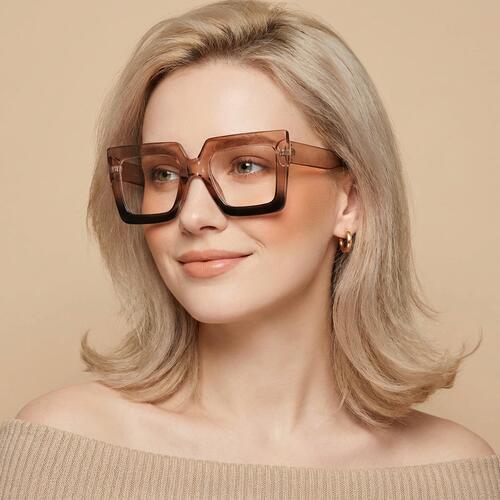

90s Glasses · Buying Guide
90s Glasses: Why Your Memory Gets the Size Wrong, and How to Fix It
Most people shopping for 90s glasses are working from a picture in their head. Since the decade ended, that picture has been shrunk, stretched and restyled. Here is how to correct it before it picks your frame.
- 90s glasses were small frames with short lenses: slim ovals, thin wire rims, rimless and half-rim styles, and narrow rectangles.
- Three things bend how people remember them: you were smaller then (Growth Drift), 4:3 TV gets stretched on widescreen sets (Screen Drift), and today's "90s" photos show 2020s frames (Revival Drift).
- Stretching a 4:3 picture to 16:9 widens everything by a third. A 48 mm lens reads like 64 mm, and a normal oval starts to look like a slit.
- The fix: start from your least distorted reference, correct it in the right direction, then compare lens height before anything else.
Ask someone to describe 90s glasses and you'll hear the same words: tiny, slim, little ovals. Ask them to point at a frame that matches the picture in their head, and something odd happens. People who grew up in the decade often choose frames that look pinched on them. People who discovered the look online often choose frames that are noticeably bigger than anything sold in 1995.
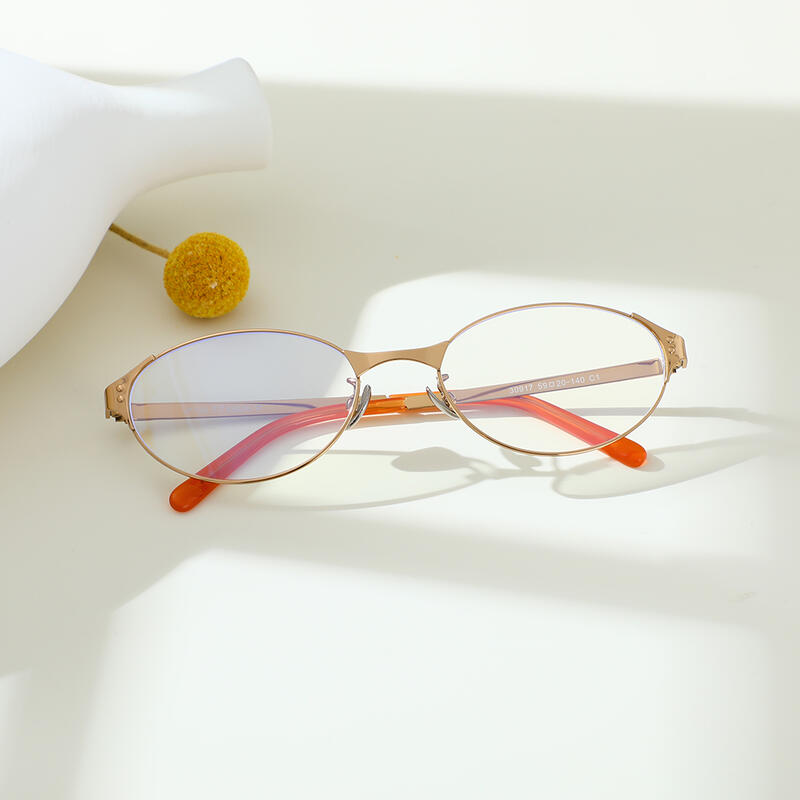
That isn't bad taste. It is a memory problem with three specific causes, and each one pushes in a predictable direction. Once you know which one shaped your idea of the decade, choosing from a collection of 90s Glasses gets much easier.
This guide skips the celebrity roundups and outfit formulas. It does one job: help you turn the 90s picture you already have into the frame you actually want.
What 90s glasses actually looked like
Before correcting a memory, you need something to correct it against. These four points come from period sources, not from today's moodboards.
Austrian maker Silhouette released Minimal Art, a rimless titanium frame without hinges. Rimless stopped looking clinical and started looking deliberate.
"Ovals are very popular right now," a Lawrence, Kansas, eyewear shop told the University Daily Kansan that April. The same story said small wire frames were in, and the smaller the better.
Looking back in 2006, the trade magazine Eyecare Business summed up the decade's optical frames as small, thin and plastic, helped along by a new acetate formula from Italian supplier Mazzucchelli.
Silhouette's Titan Minimal Art arrived with no screws and no hinges, at about 1.8 grams. It closed the decade on the lightest note possible.
Put together, the vocabulary of 90s glasses is short: slim ovals, thin metal ovals and rounds, rimless and half-rim frames, and narrow rectangles toward the end of the decade. What ties them together is a short lens. The frames sat low on the face and let the eyebrows show, which is the opposite of the tall, brow-covering frames of the 1980s.
Three drifts that bend your picture of 90s glasses
Each drift moves your memory one way. Most people carry one of them, and some carry two.
The Growth Drift
Your memory runs too smallThe 90s glasses you remember most clearly were on a smaller face, usually your own. Children's frames are typically sold in noticeably smaller lens widths than adult frames, and faces keep widening through the teen years. So your sense of "tiny" was calibrated on a body you no longer have.
That is why a frame that matches the remembered size can look pinched on an adult face instead of looking 90s. The proportion you remember was right. The absolute size was a kid's size.
The Screen Drift
Your memory runs too wide and too slimAmerican TV in the 90s was made for a 4:3 picture, and full-power stations didn't finish switching to digital broadcasting until June 12, 2009. Watch a 4:3 show on a 16:9 screen with the picture set to fill the frame, and everything gets wider by a third, because 16/9 divided by 4/3 is 1.33. Height doesn't change.
| Real lens width | What it looks like stretched | Width-to-height, 30 mm lens |
|---|---|---|
| 44 mm | about 59 mm | 1.5 becomes 2.0 |
| 46 mm | about 61 mm | 1.5 becomes 2.0 |
| 48 mm | about 64 mm | 1.6 becomes 2.1 |
| 50 mm | about 67 mm | 1.7 becomes 2.2 |
The last column is the surprise. A stretched oval looks a third flatter than the real one, so if you remember 90s ovals as razor-thin slits, part of that memory was made by a TV setting.

Some HD remasters of 4:3 shows went the other way and cropped the top and bottom of the picture to fill a widescreen set. Cropping doesn't distort the frame, but it zooms in. Glasses look bigger relative to the screen, and you lose the hairline and shoulders that showed how big the face really was.
The Revival Drift
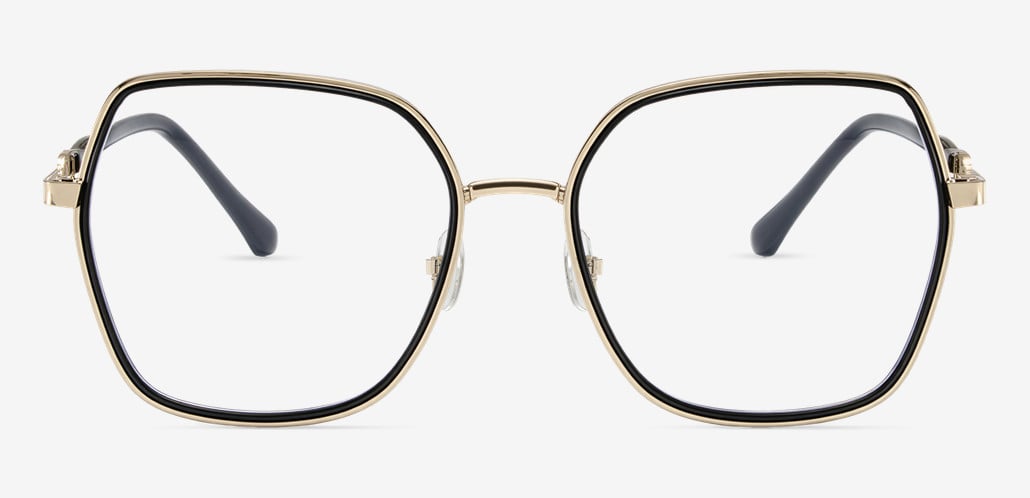
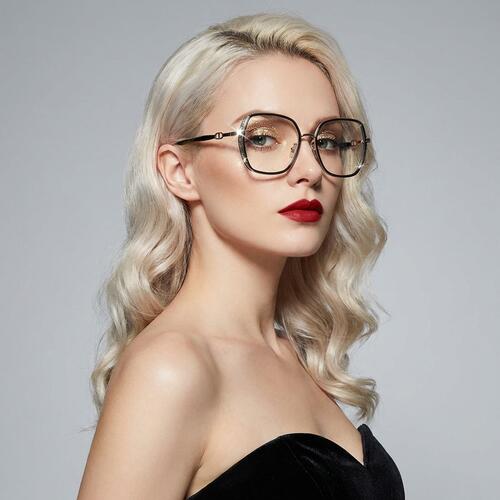
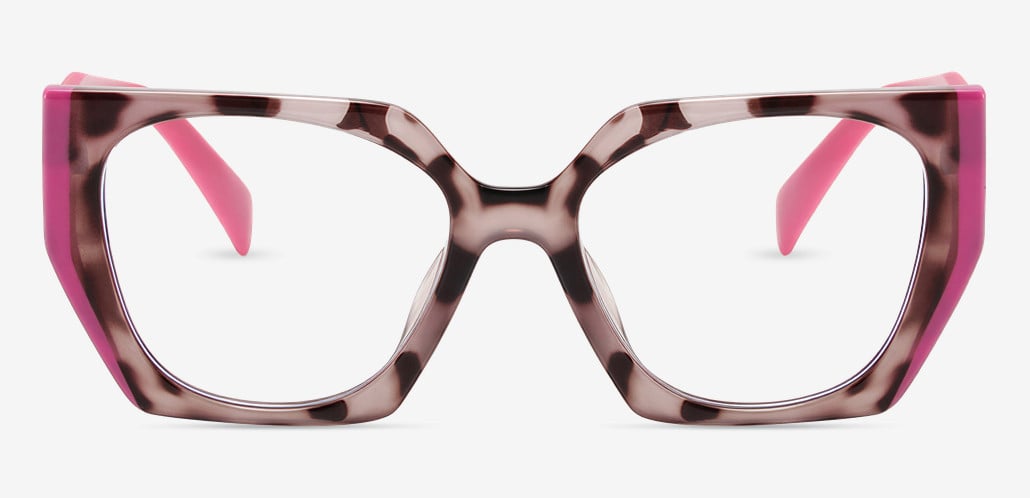
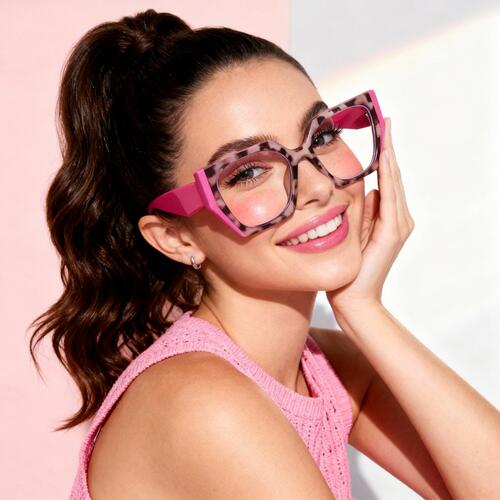
Your memory runs too bigThose images show frames made now and styled to suggest then. They borrow the shape of 90s glasses but are sized for today's buyers and today's faces, after a long stretch in which big lenses were the norm. The result is a "90s" look that can be a size or more larger than the originals it points back to.
None of that makes the photo useless. It is often the best guide you have to color, rim style and how the frame sits with hair and clothes. It's just a weak guide to size.
Turn your 90s picture into a frame you can order
Find your reference in the left column. The right column tells you which way to adjust before you start filtering.
| Where your picture comes from | Drift | Your memory is probably | Adjust by |
|---|---|---|---|
| Your own childhood glasses or a school photo | Growth | Right shape, too small | Keep the shape, choose an adult size with a short lens |
| A rerun or clip that fills your widescreen TV | Screen: stretch | Too wide, too slim | Picture it a quarter narrower and noticeably rounder |
| An HD remaster with heads cut close at the top | Screen: crop | Right shape, size unclear | Trust the shape; judge size by where the frame meets the brows |
| A recent "90s outfit" post or moodboard | Revival | Right color and style, too big | Keep the color and rim, go shorter in lens height |
| An original 1990s print photo, magazine or family album | Least drift | Close to accurate | Use it as your main reference |
Drifts can stack, and sometimes they cancel. A stretched rerun of a show you watched at age nine carries Screen Drift, which makes the frames look wider, and Growth Drift, which makes them feel smaller. Those two pull against each other, which is why some childhood TV memories land surprisingly close to the real thing.
- Pick one referenceThe single picture you would show a friend if they asked what you mean by 90s glasses. Write down where it came from.
- Name its driftFind it in the table above. If two drifts apply, note whether they push the same way or opposite ways.
- Say the correction in words firstSomething like "rounder than I picture," "adult size, short lens," or "same rim, shorter lens than the photo." Words keep you from anchoring on a number too early.
- Turn the words into filtersShape first (oval, round, rectangle), then rim (thin metal, acetate, rimless or half-rim), then lens height, the measurement that most separates a 90s frame from a modern one.
- Judge the try-on in a photo, not a mirrorYour memory of the decade was built from photos and screens, so compare like with like. Take a still from a virtual try-on and set it next to your reference.
Once you have your corrected description, filter our 90s Glasses by shape and rim, open two or three that match, and compare their lens heights side by side before you look at anything else.
The one measurement that decides the decade
Width decides whether a frame fits. Height decides which decade it looks like.
Most listings, and the inside of most temple arms, give three numbers, written like 50□18-140: lens width, bridge width and temple length, in millimeters. Those numbers tell you about fit. For 90s glasses, find a fourth number on the product page, lens height, because two frames with the same 50 mm width can read 1995 or 2015 depending on how tall the lens is.

Two practical notes on lenses. If your prescription is for nearsightedness and fairly strong, smaller lenses usually mean thinner edges, so the 90s proportion tends to work in your favor. If you wear multifocal lenses, check the minimum lens height for your lens option before choosing the shortest frames, because those lenses need vertical room.
90s glasses: common questions
Are 90s glasses back in style?
Yes. Slim ovals, thin wire frames and rimless shapes are sold today as everyday frames, not party props. The look that dates fastest is a frame that copies a 90s photo at the wrong size, which is what the steps above help you avoid.
What glasses were popular in the 90s?
Small frames with short lenses: slim ovals, thin metal ovals and rounds, rimless and half-rim frames, and, later in the decade, narrow rectangles. Period sources describe optical frames getting smaller, thinner and lighter than in the 1980s.
What is the difference between 90s and Y2K glasses?
90s glasses are small and quiet, with thin rims, ovals and short lenses. Y2K glasses, from roughly 1999 to the mid-2000s, are shinier and more playful, with tinted lenses, shields and wraparound shapes. Narrow rectangles sit on the border between the two.
Do 90s glasses work on a round or wide face?
Usually, yes. The bigger risk is size, not shape. If the frame width is close to what you already wear and the lens is short, a 90s oval or rectangle will sit comfortably. If it's much narrower, the temple arms flare out and the frame looks pinched.
Were 90s glasses really that small?
They were short more than they were tiny. Adults in the 90s wore adult-sized lens widths, but the lenses were much shorter than in the 1980s. Much of the "tiny" impression comes from childhood memories and stretched reruns.
Are 90s glasses only for people who remember the 90s?
No. If you weren't there, your main trap is the Revival Drift. Use recent photos for color and style, and use lens height to get back to the original proportion.
Keep the memory, correct the size
The picture of the 90s you carry is worth keeping. It tells you which shape, rim and mood you want. Just don't let it set the size. Find out where it came from, adjust in the right direction, and judge the result the same way you first saw the decade, in a photo.
When you're ready, start with a short lens and the shape your reference points to, and browse our 90s Glasses with your corrected picture in hand.
How this guide was put together
Written by the Aoolia editorial team from newspaper archives, eyewear trade-press retrospectives and published U.S. broadcast standards. The stretch figures are plain geometry. Frame-size statements describe typical market ranges, not measurements of any single brand.
- University Daily Kansan, spring fashion coverage, April 6, 1994
- Eyecare Business, "As Time Goes By," March 2006
- 20/20 Magazine, coverage of Silhouette Minimal Art (1992) and Titan Minimal Art (1999)
- U.S. full-power television digital transition, completed June 12, 2009
— END OF TAPE —