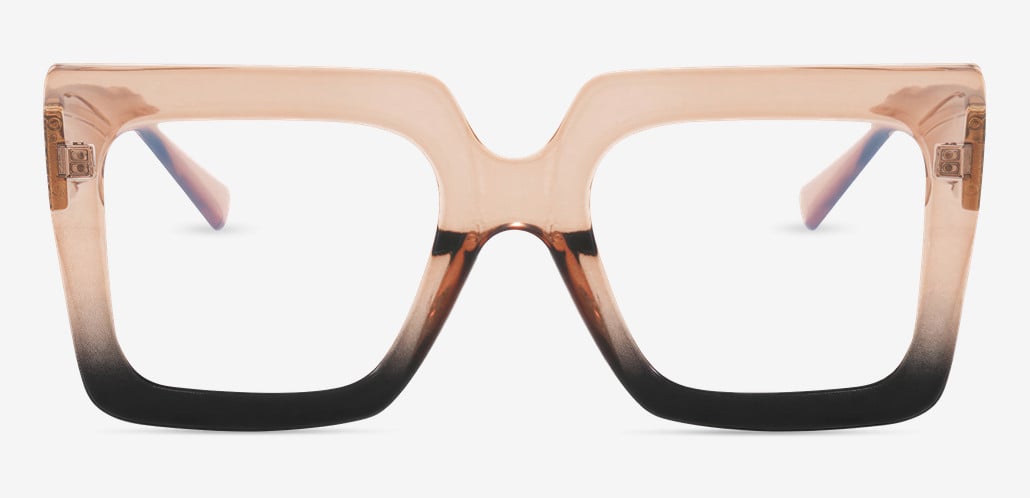

Frame Guide · Amber
Amber Glasses Up Close: What a See-Through Frame Shows You (and What's Normal)
An amber frame is the only kind you can look into. Here's how to read one on your screen before you order, in your hand when it arrives, and in the mirror a month later.
Most frames are a surface. Black, navy, solid brown: you see the outside and that's the whole story. Amber Glasses work differently. The material is translucent, so light travels into it, bounces around, and comes back out carrying a view of everything inside. The metal wire in the arms. The hinges. The edge of your lenses. Even the dust that settles where lens meets rim.
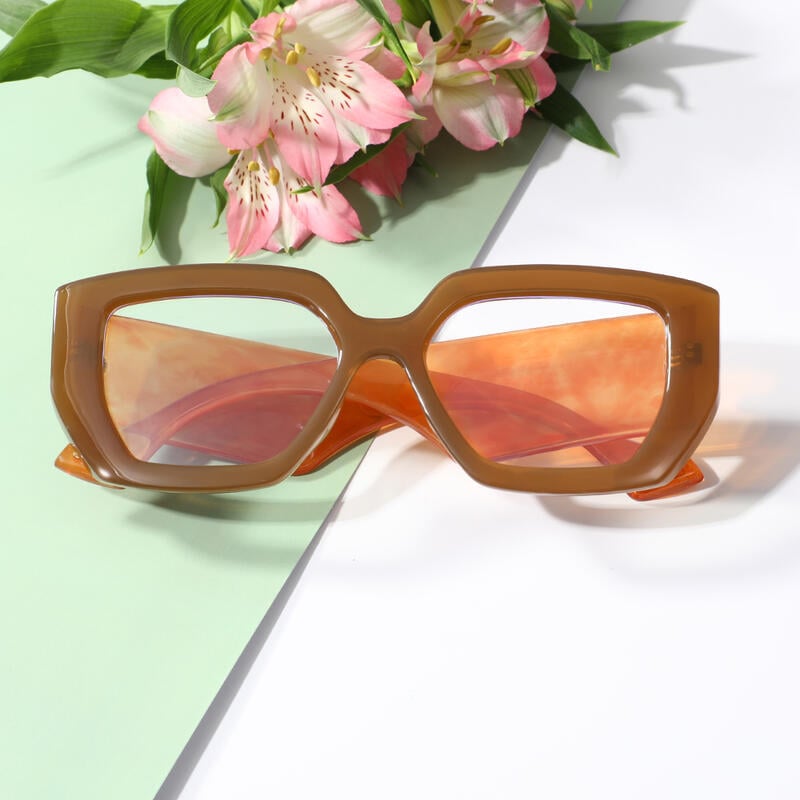
That's a big part of the appeal. Amber glows instead of sitting flat on your face. But it also means an amber frame shows you things an opaque one keeps hidden, and that catches people off guard. Is that wire supposed to be there? Why is there a pale line around my lenses? Why did they look more orange on my phone?
This guide answers those questions in the order you'll actually run into them.
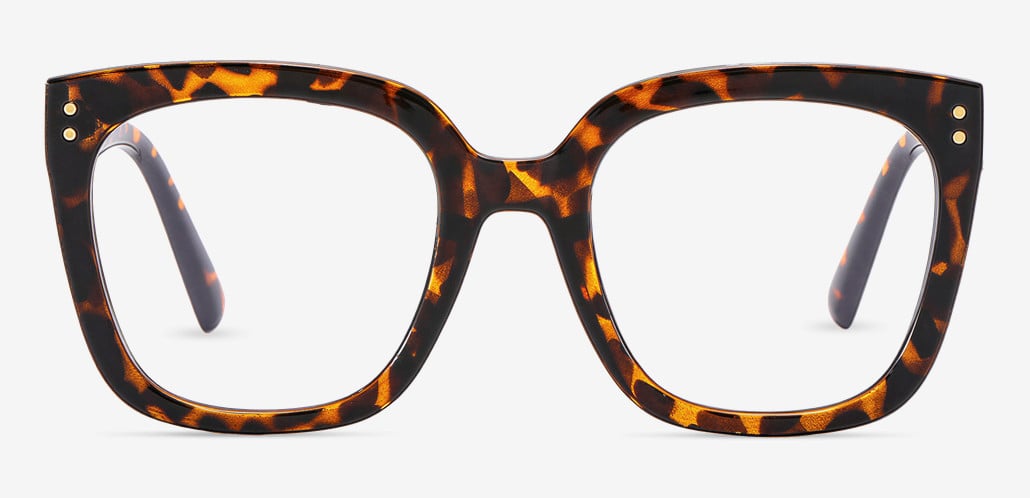
Quick note on the name. "Amber glasses" can also mean glasses with amber-tinted lenses. That's a lens color, chosen separately. This guide is about amber frames: the see-through, honey-to-cognac kind.
The short version
- Before you buy: switch off warm screen modes like Night Shift, True Tone, Night Light or Eye Comfort. They can make amber look deeper and more orange than it is.
- When your pair arrives: a visible metal wire in the arms, a faint ripple around the hinges and a pale line at the lens edge are all normal in a see-through frame.
- Worth a message to support: cracks or milky white marks near a hinge, a lens that turns in the rim, or a wire you can feel through the surface.
- A month in: the gray ring around your lenses is usually grime in the lens groove. Lukewarm water, a drop of dish soap and a soft toothbrush clear it.
Why amber shows you more than other frame colors
A solid black frame is packed with pigment, so light is absorbed or bounced back within a fraction of a millimeter of the surface. Nothing underneath gets a chance to show. Amber acetate carries far less pigment and no opaque filler, so light can travel several millimeters into the frame before it comes back to your eye.
Anything inside that's a different color or reflects light differently becomes visible along the way. In a typical amber pair, that's five things:
Amber isn't more fragile than other frame colors. It's more honest.
None of this makes amber a riskier buy. It just changes what you should look at, and when.

Before you order: the Paper Test
The first thing that can change how amber looks has nothing to do with the frame. It's your screen.
Phones, tablets and laptops have warm display modes that shift white toward yellow, usually in the evening or based on the light in the room. On a gray or black frame you'd barely notice. Amber already sits in the warm part of the color range, so the same shift pushes a pale Honey shade toward orange and makes a mid amber read closer to cognac. People then open the box in daylight and feel the frame came out lighter than the photo. Usually, the screen moved, not the frame.
- Use daylight and the device you'll decide on. Open the product page near a window, not under a warm lamp at night.
- Hold a sheet of plain printer paper next to the screen. Compare it with the white background of the product photo.
- Read the white. If the screen white looks cream, peach or yellow next to the paper, a warm mode is probably on, or brightness is turned way down.
- Switch it off for a minute and look again. Judge the frame color now, then turn your setting back on if you like it.
- Compare two shades side by side. A shade on its own is hard to judge. Next to a lighter or deeper option on the same screen, the difference you'll actually see in person becomes clear.
You can run the Paper Test right on the Amber Glasses page before you add anything to your cart. It takes under a minute.
| Device | Warm setting to check | Where it usually lives |
|---|---|---|
| iPhone, iPad | Night Shift, True Tone | Settings › Display & Brightness |
| Mac | Night Shift, True Tone | System Settings › Displays |
| Google Pixel | Night Light | Settings › Display |
| Samsung Galaxy | Eye comfort shield | Settings › Display |
| Windows PC | Night light | Settings › System › Display |
Menu names shift a little between software versions; searching the setting name in your device's settings works on all of them.
The same idea applies to virtual try-on. Your camera adjusts its own color balance, and a warm lamp behind you will tint the whole picture, frame included. Sit facing a window and the preview gets much closer to what you'll see in a mirror.
One more thing works the other way. Some office monitors run cool and slightly blue. On those, a deep cognac frame can look like plain brown. If a shade looks flat at work and lively on your phone, trust the device that passes the Paper Test.
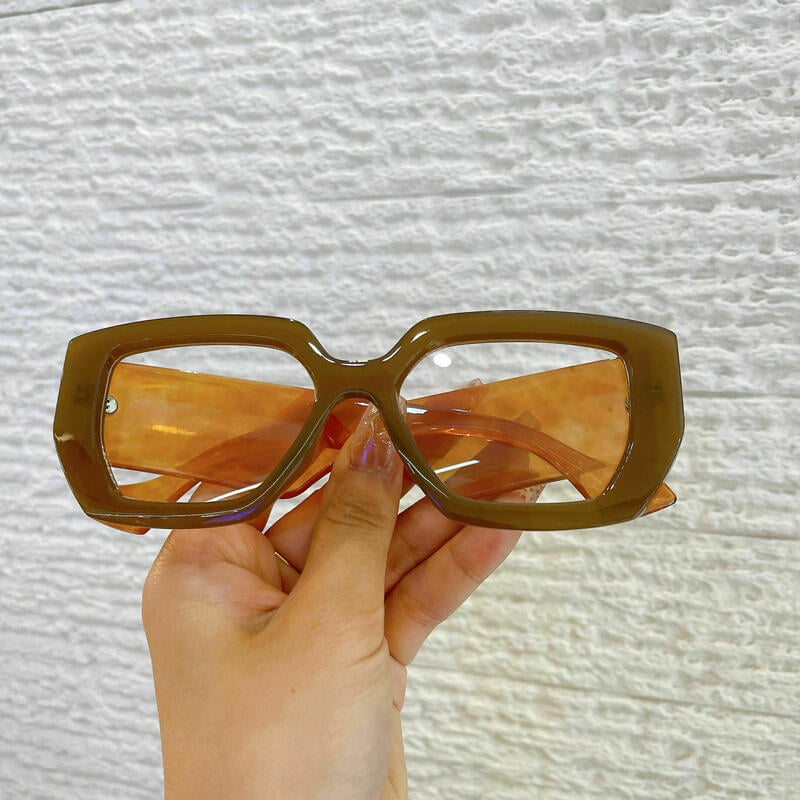
Day one: the See-Through Audit
When your pair arrives, give it five minutes in front of a window. Hold it at arm's length with daylight behind it, then tilt it slowly. You're checking six spots. For each one, here's what's simply the nature of a see-through frame, and what's worth a message to support.
The core wire
Where to look: inside each arm, from the hinge toward the ear.
A thin metal rod running down the middle of each arm, plain or with a decorative pattern, and matching on both sides. Molded arms, including many TR90 styles, often have no wire at all. That's normal too.
A sharp kink in the wire, a ridge you can feel where the wire sits too close to the surface, or metal showing near the tip.
The hinge corners
Where to look: the front corners where the arms attach.
A small metal hinge with pins or screws, plus a faint ripple or glassy halo in the material right around it. That's left over from setting the hinge in place, and you only see it because the frame is clear.
Hairline cracks spreading out from the hinge, milky white streaks in the material, or an arm that wobbles side to side when it's open.
The lens edge
Where to look: the band just inside the rim, all the way around each lens.
A frosted or pale outline where the lens edge sits in the rim. Lens edges hidden inside a full rim are usually left unpolished, and amber lets you see that. Thicker lenses make a wider band.
A chip in that band, a visible gap between lens and rim, or a lens you can turn with a fingertip.
Inside the material
Where to look: across the front, with the light behind it.
Acetate: an even, glassy color, sometimes with a speck smaller than a pinhead. Molded frames: soft swirl lines near the ends of the arms or under the bridge, left by how the material flowed into the mold.
Bubbles or cracks at the bridge or hinges, the parts that carry the load, or a cloudy patch inside the material.
The surface shine
Where to look: the front face, tilted under a light.
An even gloss on a glossy style, or an even soft finish on a matte one.
A dull, hazy patch on a glossy frame that doesn't wipe away, or a surface that feels tacky.
Left vs. right
Where to look: both arms side by side, held up to the window.
A very slight difference in depth of color. Each part is cut or molded separately, and amber makes small differences easier to spot than black does.
One arm that's clearly a different shade from the other or from the front.
If you do contact support, photograph the spot with the window behind the frame. A backlit photo shows a crack, bubble or gap far more clearly than a shot of the glasses lying on a table.
A month in: the groove line
Around week three or four, a lot of people with see-through frames notice a gray outline around each lens. The frame hasn't changed color. It's dirt.
Each lens sits in a narrow groove cut into the rim. Skin oil, makeup, sunscreen and fine dust creep into the tiny space where the lens edge meets that groove. In a black frame you'd never see it. In amber, it shows up as a thin dark ring that makes the whole pair look tired.
- Rinse under lukewarm water. Not hot. This lifts loose grit before you touch the lenses.
- Add one drop of plain dish soap. Skip formulas with lotion. Rub it over the lenses and the rim with your fingertips.
- Brush the line where lens meets rim. Use a soft toothbrush you keep just for this, front and back, plus the hinge corners and the nose area.
- Rinse, shake off, then dry. Pat with a clean microfiber or soft cotton cloth.
Helps
- A quick brush-out every week or two
- Putting on sunscreen, hairspray and perfume before your glasses
- Storing the pair in its case instead of loose in a bag
Avoid
- Nail polish remover or acetone, which attack acetate
- Household glass cleaner and paper towels
- Hot water, or leaving the pair in a hot car
Strong lenses in a see-through frame
If you're nearsighted with a higher minus number, your lenses are thicker at the edge. That's simply how those lenses bend light. In an opaque frame, the rim hides most of that thickness. In amber, you can see it: the pale band at the lens edge gets wider, and from the side, the edge can show as a set of faint stacked rings.
You can still wear amber. A few choices keep the edge low-key:
| Choice | Why it helps | What you give up |
|---|---|---|
| A deeper shade, like cognac | Less light passes through, so the edge is harder to see | Less of the bright, glowing look |
| A two-tone frame with a solid top | The upper rim hides the top of the edge band | A more defined, less airy look |
| A narrower lens width | Less distance from center to edge, so a thinner edge | A smaller frame overall |
| Rounder shapes over wide rectangles | Minus lenses are thickest at the far outer corners, which round shapes trim away | Shape options |
| A thinner lens option at checkout | Higher-index lenses reduce edge thickness | A higher lens price |
If you're farsighted, it's the other way around. Plus lenses are thickest in the middle and thin at the edge, so the band you see through amber stays slim. Amber is an easy pick.
When amber is the wrong pick
Amber suits a lot of people, but not every situation. Three honest cases where another frame will make you happier:
- You want your glasses to disappear. Amber is warm and noticeable. A clear frame or a thin metal frame blends in better.
- You know you won't clean the rims. The groove line will show. A solid dark color hides it.
- You have a strong minus number and want the slimmest look on a tight budget. A solid-color frame hides the lens edge without paying for thinner lenses.
Amber glasses FAQ
Is it normal to see metal inside amber glasses?
Yes. Most acetate frames have a metal core wire inside each arm and metal hinges at the corners. In black frames they're hidden; in amber you can see them. Only a wire you can feel through the surface or one with a sharp kink is a problem.
Why is there a white line around the lenses in my amber frame?
It's usually the lens edge. Edges that sit inside a full rim are commonly left unpolished, so they look frosted, and a see-through rim lets you see them. A chip in that line or a lens that turns in the rim is worth reporting.
Why did my amber glasses look more orange online than in person?
Most often, a warm screen mode such as Night Shift, True Tone, Night Light or Eye Comfort was on. These shift white toward yellow, which pushes amber toward orange. Check the color with the mode off, in daylight, next to a sheet of white paper.
How do I get rid of the dark ring around my lenses?
Rinse the glasses in lukewarm water, add a drop of plain dish soap, and brush the line where lens meets rim with a soft toothbrush. Rinse and pat dry. Skip acetone and household glass cleaners.
Do amber frames turn yellow over time?
Any light-colored acetate can warm slightly after years of sun and heat, and fully clear frames show it most. Amber already sits in that warm range, so a small shift is hard to notice. Keeping the pair out of hot cars and in its case helps.
Are amber glasses a good idea with a strong prescription?
Yes, with a few choices. For higher minus numbers, a deeper shade, a two-tone frame, a narrower lens or a thinner lens option keeps the visible edge small. Plus lenses are thin at the edge, so amber works easily.
Ready to look closer?
Run the Paper Test before you order, give your pair the five-minute See-Through Audit when it arrives, and brush out the groove line now and then. That's all an amber frame asks of you.
Browse every shade, from pale honey to deep cognac, in our Amber Glasses collection.
About this guide. Written by the Aoolia Editorial Team and last reviewed on October 21, 2026. It explains how translucent frame materials and common display settings generally behave, so you know what to expect from a see-through frame.
It isn't a substitute for an eye exam or advice from an eye care professional, and it makes no health claims about tinted lenses.