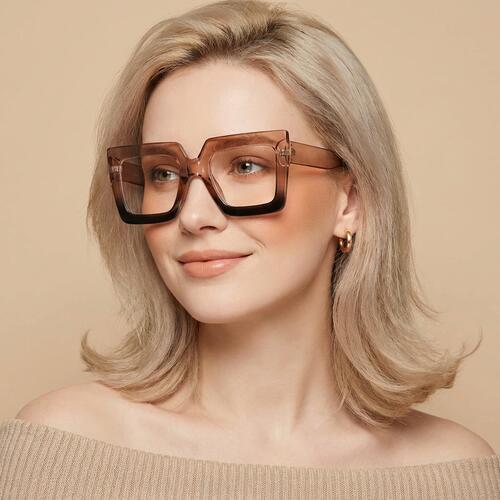

Prescription Sunglasses for Women: How to Pick a Frame That's Kind to Your Numbers
You find the pair. Big, thin gold wire, a soft rose tint, exactly the one from the photo you saved. You add your prescription, and one of two things happens. Either checkout tells you the lens isn't available for that frame, or the pair arrives and the edges of the lenses are poking out past the rims like the frame is a size too small for them.
Neither is bad luck. Some frames are simply more forgiving of a prescription than others. Most guides to prescription sunglasses for women skip that question and jump straight to face shape and lens color. This one starts with it, because it's the part that decides whether the pair you love can actually become the pair you wear.
First, check how strong your numbers are
Pull out your most recent prescription and find the SPH (sphere) number for each eye. Two things matter.
The sign. A minus number (−) means the lens is thinner in the middle and thicker at the edges. A plus number (+) means the opposite: thicker in the middle, thinner at the edges.
The size. The further the number is from zero, the more the frame matters.
Almost any frame works and looks the way it does in the photos.
Frame choice starts to show.
The frame is doing real work to hide or show the lens.
These are rules of thumb, not cut-offs. Lens material, the lab, and the frame itself all shift them. They're still a reliable way to know how much attention the rest of this article deserves for you.
Why sunglasses change the rules
Clear glasses show everything a strong lens does. Minus lenses make your eyes look smaller and put a visible "step" in your face outline at the sides. Plus lenses magnify your eyes. Thick minus edges also show stacked rings when light catches them.
A dark sun lens hides most of that. People can't see your eyes clearly enough to notice whether they're magnified or minified, and the rings in a thick edge largely disappear into the tint. That's the forgiving part, and it's why many women with strong prescriptions find that sunglasses flatter them more than their everyday pair.
The less forgiving part is shape. Sunglasses are where you find the design choices that prescriptions struggle with: deep wraparound curves, oversized lenses, thin wire, rimless edges, pale fashion tints. That's what the scale below measures.

The Forgiveness Scale
Score any frame on four features. Each one is Forgiving (0), Neutral (1), or Demanding (2). The colors in the table follow the same logic as the lenses: the darker the cell, the more it hides.
| Feature | Forgiving (0) | Neutral (1) | Demanding (2) |
|---|---|---|---|
| Rim | Full rim, thick acetate or TR90 front | Full rim, thin metal wire | Half-rim or rimless |
| Width vs. your face | Close to your face width | Slightly wider | Much wider, oversized well past your temples |
| Curve | Flat or gently curved front | Noticeable curve | Deep wraparound, sport-style |
| Tint | Dark solid or mirror | Medium solid or gradient | Light fashion tint: rose, yellow, pale blue |
Under ±2.00: ignore the total and pick what you like.
±2.00 to ±4.00: aim for a total of 4 or lower.
Past ±4.00: aim for 2 or lower, and treat Curve as a gate.
Here's what each feature is actually doing.
Rim: where the edge can hide
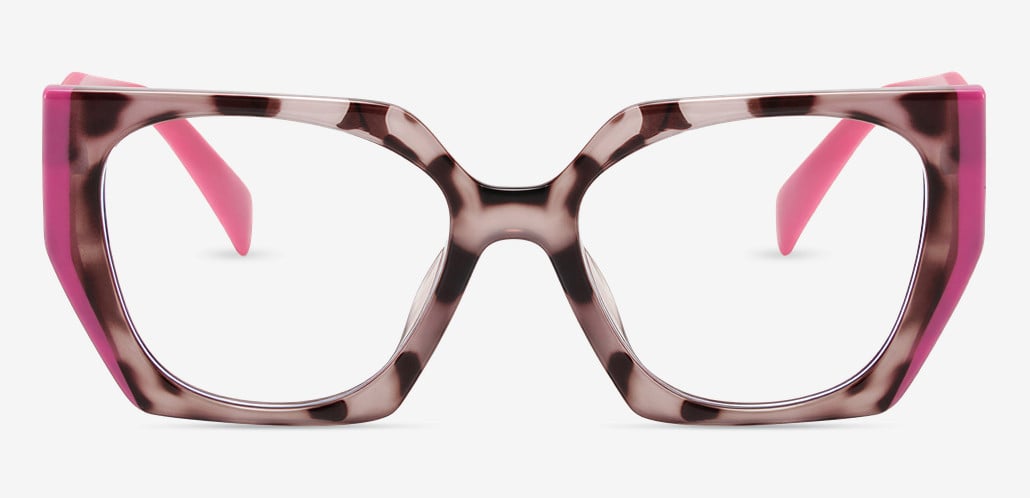
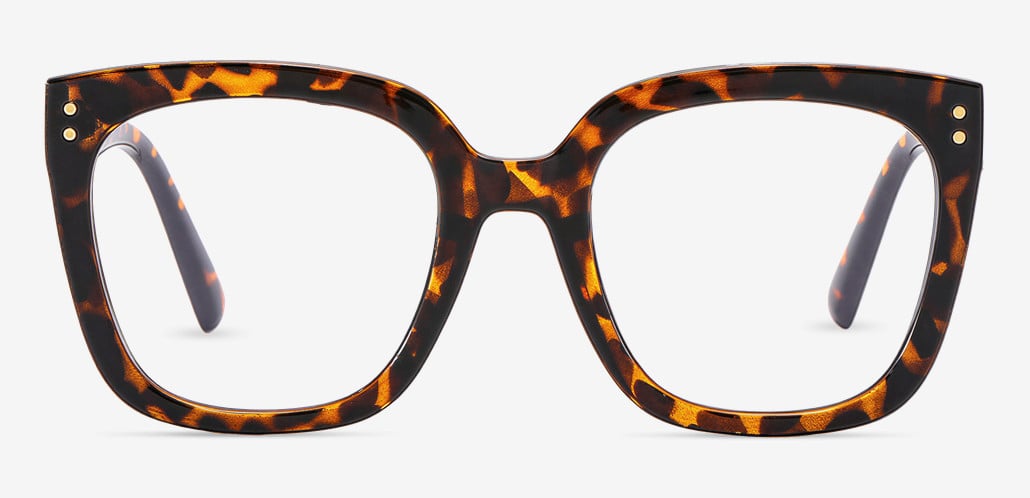
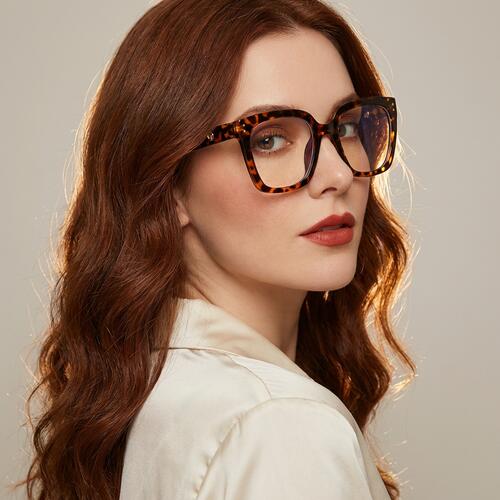
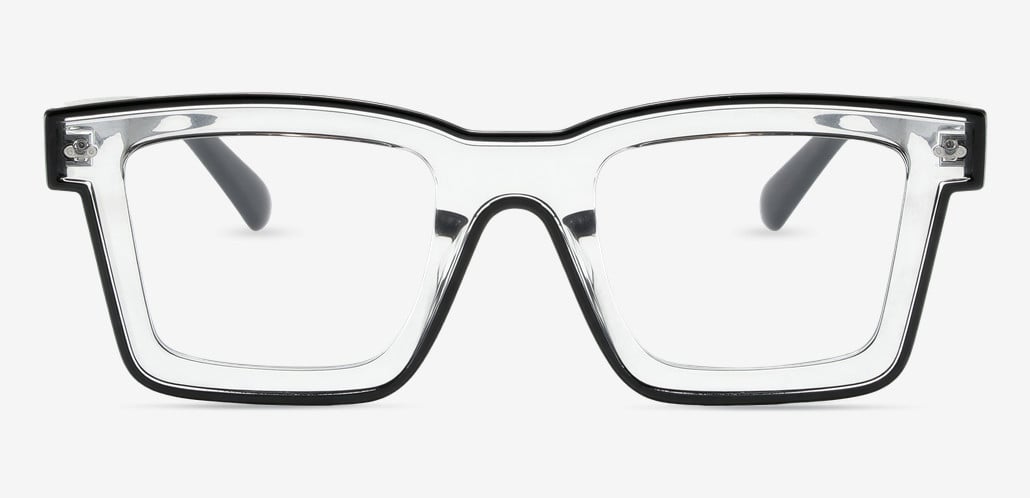
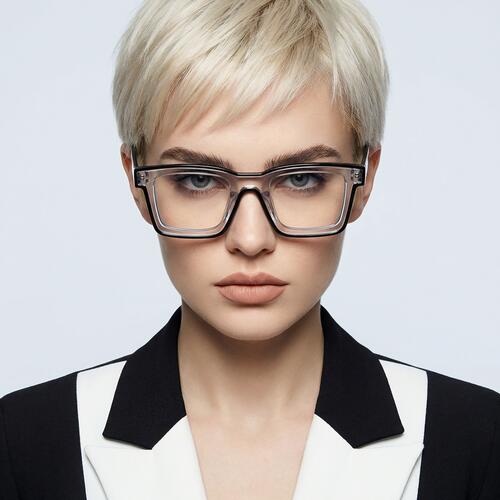
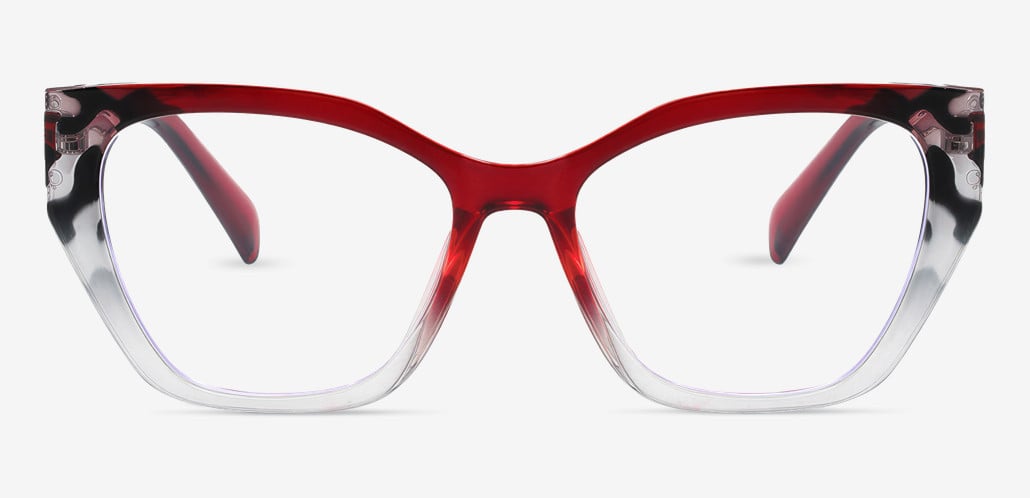
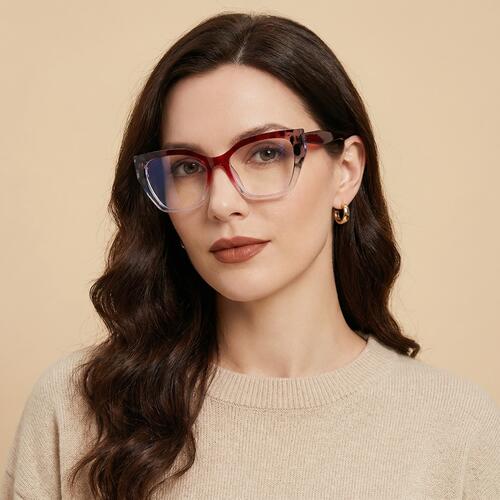
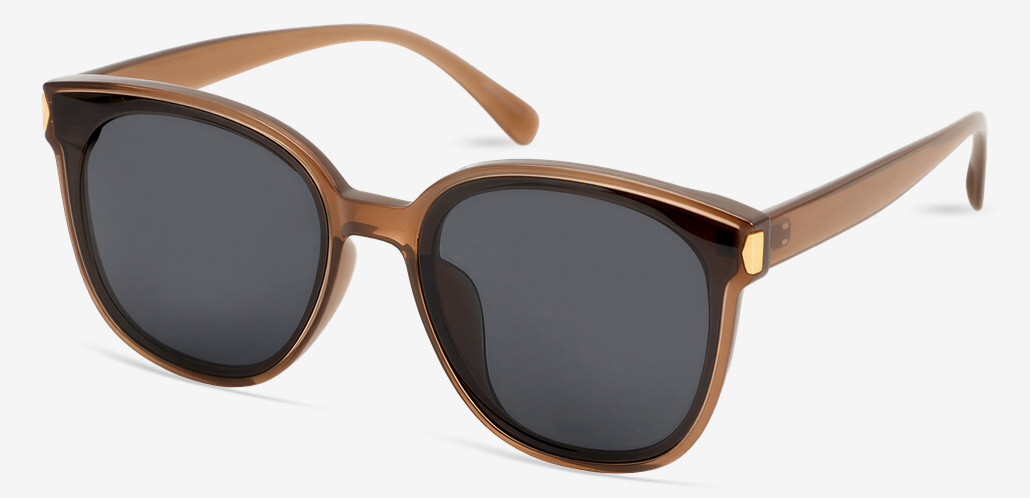
A thick acetate front has a groove cut into its inside, and the lens edge sits in that groove behind a few millimeters of material. A strong minus edge that would look chunky on its own simply vanishes behind it. Tortoise and other patterned acetates hide it even better, because the pattern breaks up the line.
Thin metal wire holds the lens in the same way but has less to hide it behind, so the edge can stand proud of the rim.
Half-rim frames leave the bottom edge exposed. Rimless frames leave all of it exposed. They also need the lens to be thick enough at the mounting points to take the screws, which works against anyone trying to keep a strong lens slim.
Width: where your eyes land in the lens
This is the feature most people never think about. Lenses are made so that the optical center of each lens lines up with your pupil. If a frame is much wider than your face, your eyes sit toward the inner side of each lens, and the outer side has to extend further from that center point.
For a minus prescription, the outer edge is the thick part, so extending it makes it thicker still. That's why an oversized pair can look heavy at the temples even when a smaller version of the same frame looks clean.
A quick check in any virtual try-on: look at where your pupils sit side to side in each lens. Roughly centered is forgiving. Clearly shifted toward your nose is demanding.
Curve: the one that works as a gate
Deeply curved sport and wraparound frames tilt the lens at an angle the prescription wasn't written for. Many labs limit the range of prescriptions they'll make in strongly curved frames, and some decline stronger numbers outright.
For strong prescriptions, a Demanding score on Curve isn't just 2 more points. It's often the reason checkout says "not available." If your numbers are past ±4.00 and you want a wrapped look, choose a frame with a gentle curve and a wide temple instead. It gives a similar profile without the lens tilt.
Tint: how much it hides
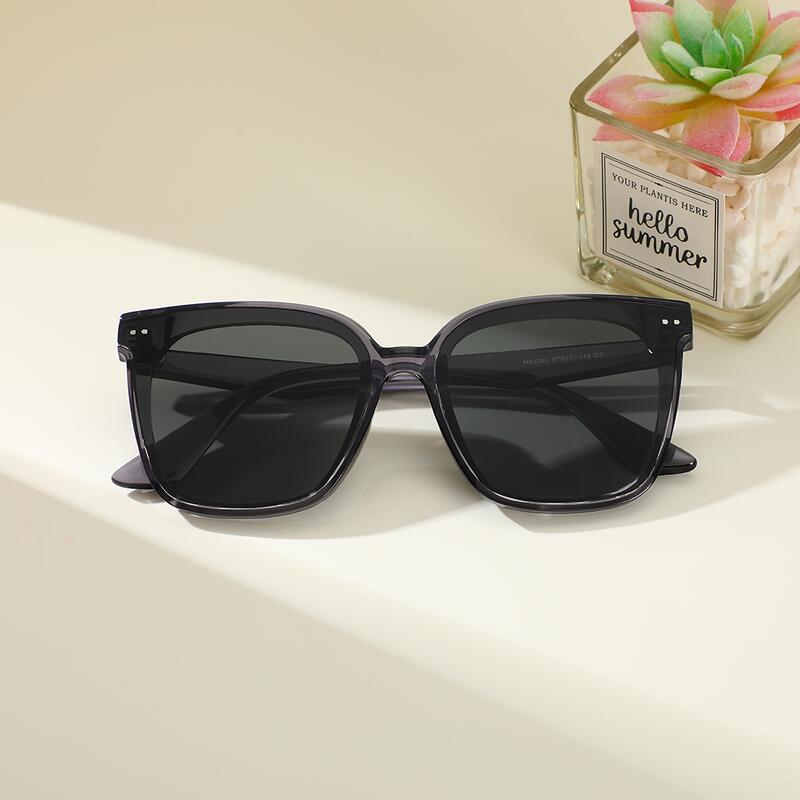
Dark solid tints and mirror coatings hide edge rings and whatever your lenses do to the look of your eyes.
A gradient hides it at the top but lightens toward the bottom, which is where a minus lens's rings are most visible when you look down.
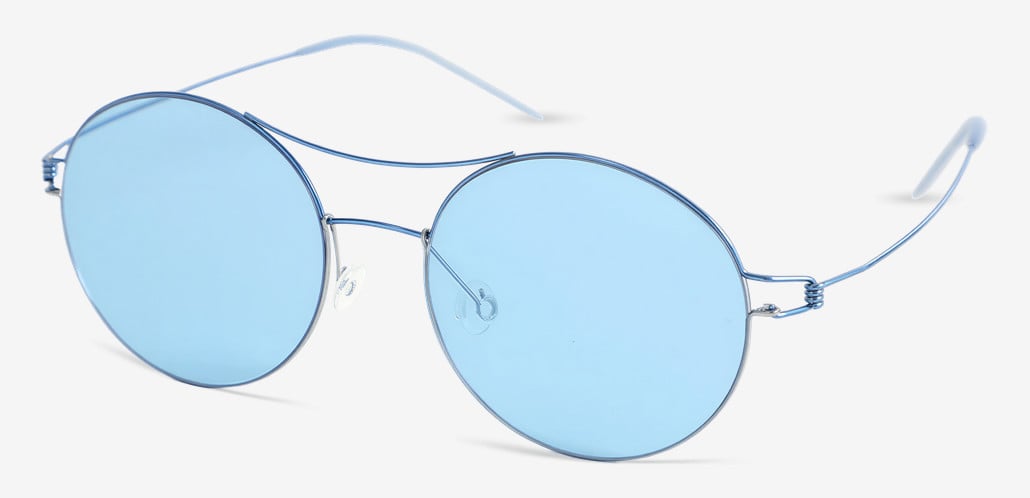
Pale fashion tints behave almost like clear lenses. You get the color, but none of the cover. They're lovely with mild prescriptions and the least forgiving choice with strong ones.
Scoring three frames in two minutes
Frame A
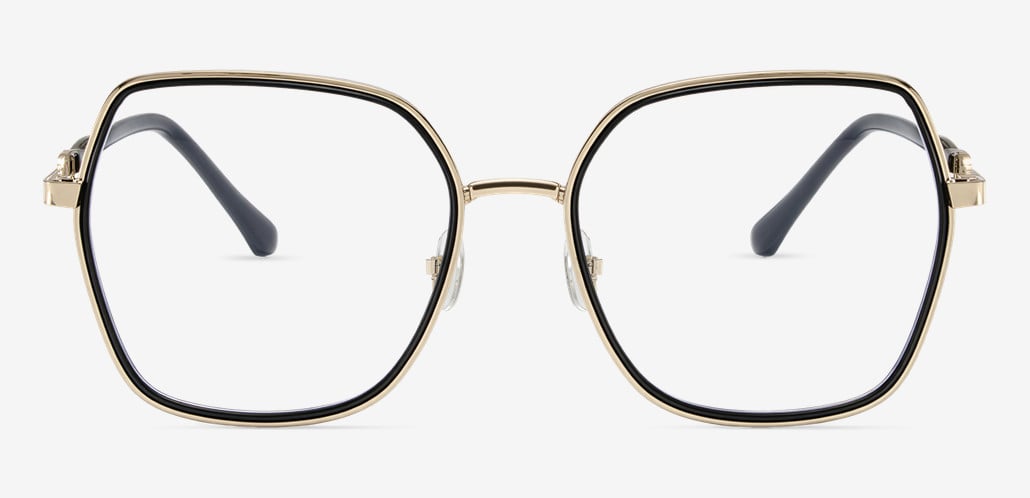
Oversized thin-wire aviator, pale rose tint
Fine at −1.50. At −4.50, expect visible edges at the outer corners and eyes that look off-center in the lens.
Frame B
Tortoise acetate cat-eye, solid gray, close to face width
The most forgiving combination there is. It will look like the product photo at almost any prescription.
Frame C
Sporty TR90 wrap, dark polarized
The total looks acceptable, but the Curve gate applies. At stronger numbers, this is the frame most likely to be unavailable, not just less flattering.
Getting the oversized look with strong numbers
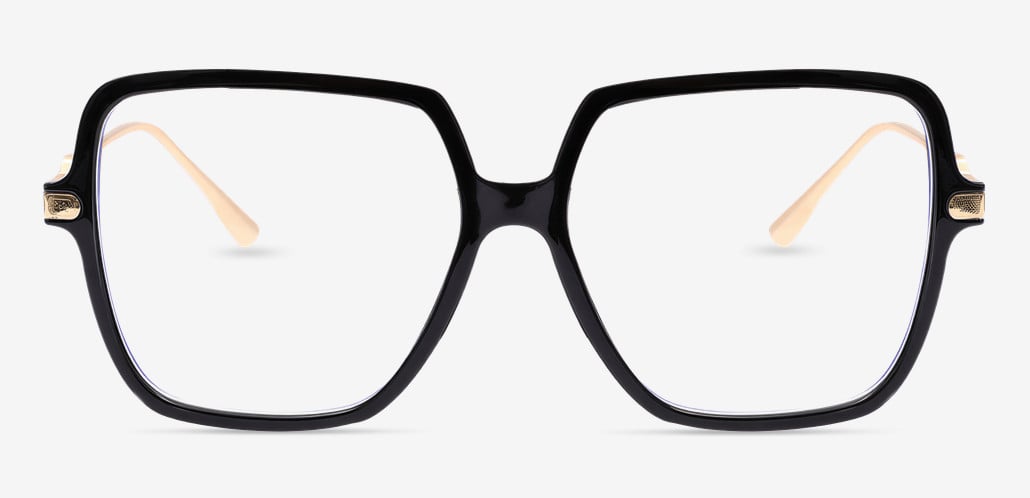
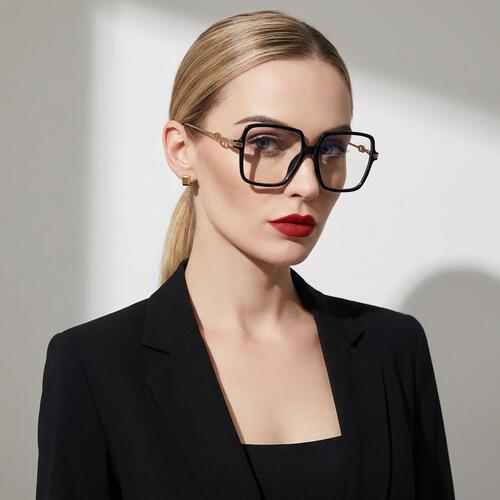
Oversized is the style that most often clashes with a strong prescription, and it's also the one many women want most. You can get most of the look while keeping the lens itself moderate.

- Let the frame front carry the size. A thick, wide acetate front makes a frame read as big even when the lens opening is moderate.
- Use an upswept corner. A cat-eye's lifted outer corner adds visual width above the lens line, not in it. The frame looks wide; the lens isn't.
- Go dark. A dark solid tint or mirror hides whatever edge remains. Save pale tints for mild prescriptions.
- Choose depth over width. A taller lens adds presence without pushing your eyes off-center side to side the way extra width does.
- Ask about higher-index lenses if they're offered. They're thinner for the same prescription. They cost more, and they help most in the frames that score highest on the scale.
Do you need a dedicated pair at all?
Not everyone does. Here's how the main alternatives compare, with the details that usually get left out.
Contacts plus regular sunglasses
If you already wear contacts most days, this is the simplest route, and any non-prescription pair works. The catch is the days you don't wear contacts.
Clip-ons
Cheap and quick, but they add a second layer over your glasses and rarely match the style of the frame underneath. They work better as a backup than as your main sun option.
Light-reactive (photochromic) lenses
One pair for indoors and outdoors. The limitation many buyers only discover later: car windshields block most of the UV that triggers the darkening, so many of these lenses barely tint while you're in the car. If a lot of your sun time is behind the wheel, factor that in. See our photochromic lenses page for how they behave.
Dedicated prescription sunglasses
The most choice in style, tint, and polarization, and a pair that looks like sunglasses rather than glasses doing a second job. This is the right call if you spend real stretches of time outdoors and don't wear contacts.
What to have ready before you order
- Your written prescription. Check the date. Many online stores won't accept one past its expiry, and the SPH numbers above come from it.
- The distance between your pupils. This measurement lines each lens up with your eye, which is what the Width section depends on. It's sometimes printed on the prescription. If not, the office that wrote it can usually give it to you.
- The measurements from a pair you already like. The three numbers printed inside the temple arm (for example, 52-18-140) are lens width, bridge width, and temple length. They're the fastest way to compare a new frame's size with one you know works on your face.
- A decision on tint before frame, if your numbers are strong. Choosing a dark tint first opens up more frames than choosing the frame first and hoping a pale tint will work.
How Aoolia's collection scores
We ran our own catalog through the scale, because it's only useful if it's honest about the frames we sell.
- [228] of [234]frames are full rim
- [4]rimless styles
- 0deep sport wraps
As of [September 2026], most of the full-rim frames in our prescription sunglasses for women collection are acetate, which puts the majority at 0 on Rim. With no deep sport wraps, Curve is rarely a gate. The frames that deserve a second look for strong prescriptions are the rimless styles and the Large and Extra-Large sizes, where Width can climb to Demanding.
Every frame works with Virtual Try-On, which makes the Width check easy: before you order, look at where your pupils land in the lens. Each product page lists the tints and finishes that frame can take, so you can check the Tint score before checkout rather than after.
Shop prescription sunglasses for womenQuestions people ask
Why are my prescription sunglasses lenses sticking out of the frame?
Usually a thin rim combined with a strong minus prescription, often made worse by a frame much wider than your face. A frame with a thicker acetate front, or one closer to your face width, typically fixes it.
Can I get wraparound prescription sunglasses?
With milder prescriptions, often yes. With stronger numbers, many labs limit or decline deeply curved frames. A gently curved front with wide temples gives a similar look with fewer limits.
Are oversized prescription sunglasses a bad idea with a strong prescription?
Not necessarily. Keep the lens moderate and let a thick front and an upswept corner provide the size, then choose a dark tint.
Do polarized lenses work with a prescription?
Yes, on frames that offer them. Polarized lenses can make some phone and car screens look dim or black at certain angles, so they suit water and bright pavement better than screen-heavy days.
Which frame material is lightest?
TR90 is generally lighter than acetate of a similar size. That matters more with strong prescriptions, since thicker lenses add weight. Our lightweight glasses guide explains how to compare frame weights.
The takeaway
The best prescription sunglasses for women aren't a particular brand or shape. They're the pair where the frame and your prescription work together.
If your numbers are mild, ignore everything here and buy what you love. If they're stronger, score the frame before you fall for it: put a dark tint first, keep the width close to your face, and treat a deep wrap as a question to ask rather than a style to assume.