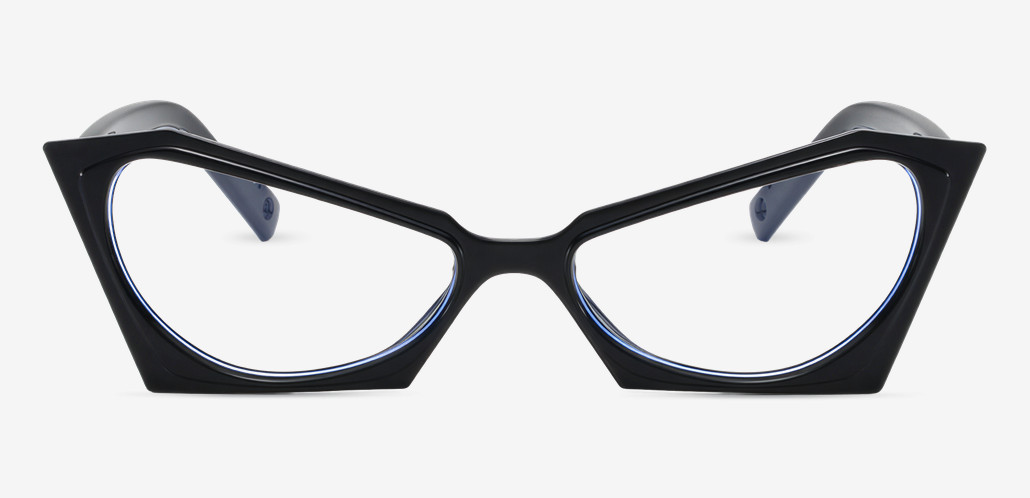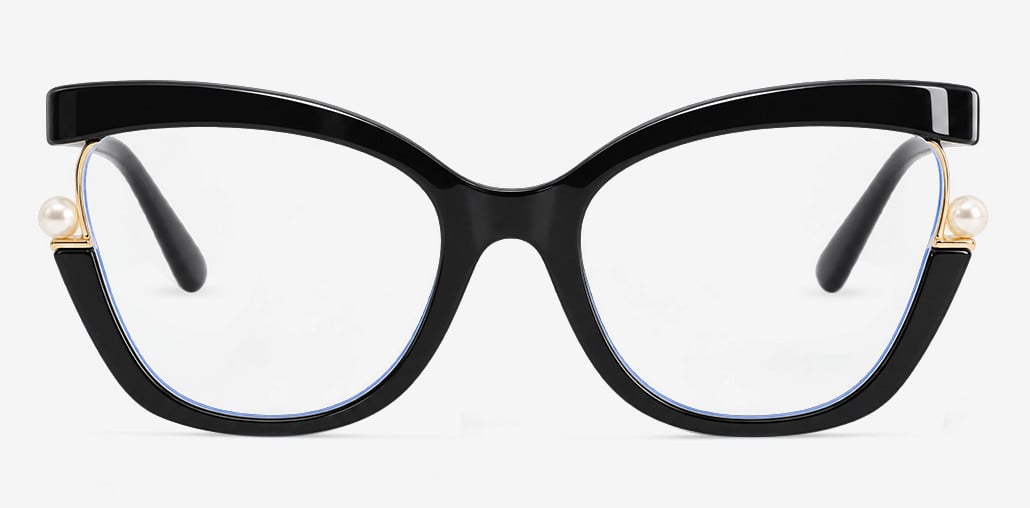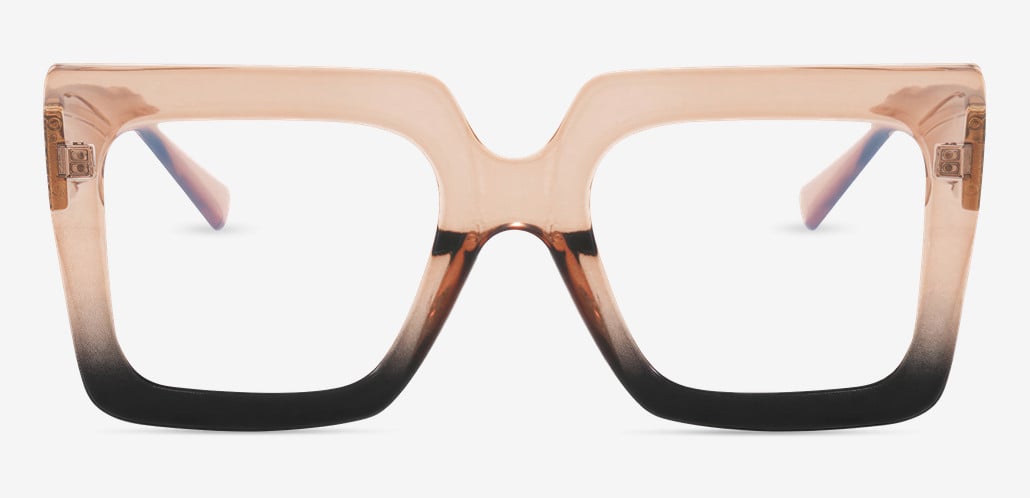

How Discount Prescription Eyeglasses Are Made, and Where Your Numbers Fit
Most low-priced pairs start with a lens that already existed before you clicked “order.” Whether yours can depends on a few numbers on your prescription, and, if you mostly wear contacts, on which prescription you’re actually holding.
Here’s something most people shopping for discount prescription eyeglasses never hear: the lens in a $10 or $20 pair usually wasn’t made for you. It was molded at a factory in a common power, coated, boxed and put on a shelf. When your order came in, a lab picked the lens that matched your numbers, turned it to the right angle and cut it to the shape of your frame.
That isn’t a shortcut or a downgrade. It’s the main reason low prices are possible at all. It only works, though, when your numbers fall inside the range lens makers keep in stock. Step outside that range and the lab has to grind a lens to order, which takes more time and more work.
This guide shows you how to tell which side of that line you’re on, using the numbers already on your prescription. It also covers a mix-up that catches many contact lens wearers buying a cheap backup pair: ordering glasses with the numbers from a contacts box.

The short answer
- Low-cost single vision glasses are usually made from stock lenses: lenses finished on both sides in bulk, in quarter-step powers, that a lab only has to cut to your frame.
- Lenses outside the stock range are surfaced: the lab grinds the back of a thick, half-made blank to your exact numbers. Lined bifocals with astigmatism, all no-line progressives and most orders with prism go this way.
- Your axis number never changes the route. A stock lens can be turned to any axis before it’s cut.
- A contact lens prescription is not a glasses prescription. Strong numbers, small amounts of astigmatism and one-eye-for-reading setups can all make the two differ.
Two ways a lens gets into your frame
Every prescription lens starts as a round, uncut disc a little bigger than your palm. What happens to that disc before it reaches the cutting machine decides how quickly, and how cheaply, your lens can be made.
The stock route
Finished lens, both curves already made
- Molded at a lens factory with both curves complete.
- Coated, packed and stored by power.
- Picked from the shelf when your order arrives.
- Turned to your axis and cut to your frame shape.
The surfaced route
Semi-finished blank, back made to order
- Molded as a thick blank with only the front curve finished.
- Back surface generated to your exact numbers.
- Fined, polished, then coated.
- Cut to your frame shape.
Both routes end at the same cutting machine. The difference is how much of the lens was made before anyone saw your prescription.
Lens makers publish “stock availability” charts that list exactly which powers they keep finished. The ranges change with material and coating. A common window for standard 1.50 plastic runs from +4.00 to −6.00 sphere, with up to −2.00 of cylinder. Polycarbonate and some high-index lines reach further; one 1.67 stock line goes to −10.00, but only with up to −3.00 of cylinder.
Not every basic order fits, either. A UK trade overview of lens manufacturing estimated that about 30% of low-cost single vision jobs still need custom surfacing.

The Route Check: where your numbers land
Get out your glasses prescription (not your contacts box; more on that below) and read each field against this table. A single answer in the right-hand column is enough to move that lens off the shelf.
| Field on your prescription | Usually stock when… | Usually surfaced when… |
|---|---|---|
| SPH (sphere) | Inside the maker’s window, often about +4.00 to −6.00 in standard plastic | Beyond the window for the lens material you pick |
| CYL (cylinder) | Up to about −2.00, or −4.00 in some lines | Larger than that limit, or a large cylinder on top of a strong sphere |
| AXIS | Any number from 1 to 180 | Never, on its own |
| Step size | Quarter steps: .00, .25, .50, .75 | Eighth steps such as +1.37 or −2.62, which aren’t stocked |
| ADD | No ADD: one power for distance or for reading | A lined bifocal with any cylinder; any no-line progressive |
| Prism | None written | Most orders with prism |
| Lens extras | Clear lenses and many common coatings | Polarized lenses, and light-adaptive lenses outside their narrower window |
Ranges come from published lens maker and supplier stock charts. Every lab carries a slightly different set, so treat this as a map, not a promise.
The quiet window-shrinker. One large US stock lens supplier lists its clear 1.50 lens from +4.00 to −6.00, but the light-adaptive version of that same lens only from +4.00 to −4.00. Same material, smaller window. Adding one feature can move a −5.00 prescription from the shelf to the surfacing line.
Why the axis doesn’t matter
A single vision lens with cylinder is the same lens at any angle. The lab simply rotates it to your axis before cutting, so an axis of 10 and an axis of 175 come from the same box on the shelf.
That trick fails for lined bifocals. The reading segment has to sit at the bottom of the lens, so the lens can’t be spun freely. A finished bifocal with astigmatism would need a separate lens for every axis, which nobody stocks. That’s why those lenses are always surfaced.
When your two eyes are far apart
Many lab systems compare the right and left lenses before choosing a route. When the eyes differ a lot, a lab may surface both so the curves match and the pair looks balanced on your face. If one eye is −1.00 and the other −6.50, don’t be surprised if both lenses take the longer route.
Three prescriptions, read the way a lab reads them
These are made-up examples, written the way they’d appear on a prescription. OD is the right eye, OS the left, and DS means sphere only, with no cylinder.
Mild, a little astigmatism
OS−2.00 −0.75 × 010
Sphere and cylinder sit well inside common windows. The axes look very different, 175 and 10, but they cost nothing extra.
Strong, moderate astigmatism
OS−7.00 −2.50 × 085
In standard plastic, both numbers pass the stock limits, so the lenses get surfaced. A high-index line stocked to −10.00 with −3.00 cylinder could take them off the shelf.
Here, the material you choose changes the route, not just the thickness.
Distance plus reading
OS+1.50 DS
ADD+2.00
One lens that covers both distances, lined or no-line, is made to order. Some people choose two single vision pairs instead, one for distance and one for reading, and each of those can come from stock.
If you go that way, ask your eye doctor’s office to write out the reading numbers rather than working them out yourself.
What this means when you shop
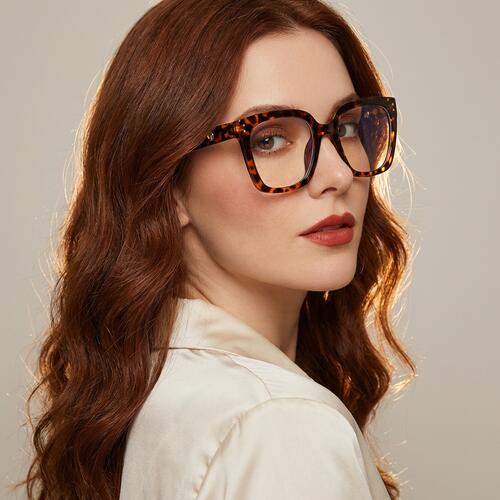
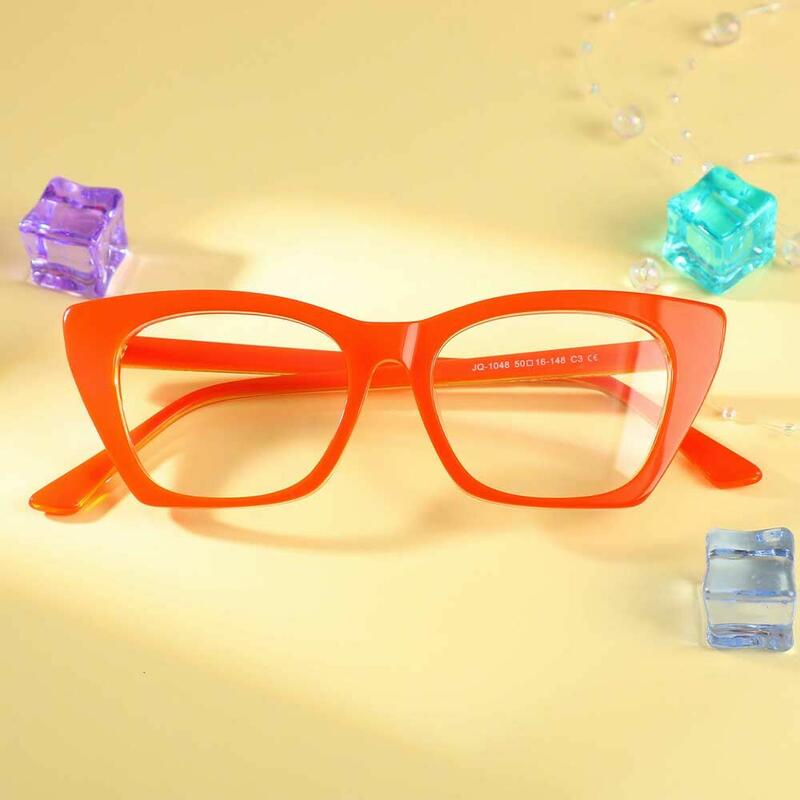
Stock-route numbers are where the lowest prices and the shortest lab times tend to live, because the costly step, making the lens, already happened in bulk. If your Route Check came back all stock, your real decisions are frame style, size and fit. You can browse discount prescription eyeglasses by shape, color and size first, then choose your lenses on the product page.
Surfaced isn’t a warning sign. A surfaced lens is made to your exact numbers, and it’s the normal route for anyone who needs a multifocal, prism or strong correction. What changes is the schedule and sometimes the price of extras, since coatings go onto a lens made for one person. Two habits help:
- Check that the lens option you want is offered for your numbers before you settle on a frame.
- Save the extras that shrink the stock window, like light-adaptive or polarized lenses, for the pair where you’ll actually use them.
Mostly wear contacts? Check which numbers you’re holding
A lot of people buying an inexpensive pair are contact lens wearers who want something for late nights, early mornings and days their eyes need a break. Many reach for the number they know best, the one printed on the contacts box. That number is often not your glasses number.
Glasses prescription
- Fields
- SPH, CYL, AXIS; sometimes ADD and prism
- Brand name
- None
- Written for
- A lens sitting roughly 12 mm in front of your eye
- Expiration
- Set by your state
Contact lens prescription
- Fields
- SPH, often CYL and AXIS, plus BC (base curve) and DIA (diameter)
- Brand name
- Always; contacts are prescribed by brand
- Written for
- A lens resting on your eye
- Expiration
- At least one year under federal rules; longer in some states
The giveaway: if you see BC, DIA or a brand name, you’re holding a contact lens prescription.
Distance from the eye changes the power
A lens works a little differently depending on how far it sits from your eye. Below about ±4.00 the gap is too small to matter. Above that, it reaches a quarter step or more, and it keeps growing.
| Glasses power | Contact lens, about | Gap |
|---|---|---|
| −3.00 | −3.00 | Too small to matter |
| −4.00 | −3.75 | One quarter step |
| −6.00 | −5.50 | Two quarter steps |
| −8.00 | −7.25 | Three quarter steps |
| −10.00 | −9.00 | Four quarter steps |
| +4.00 | +4.25 | One quarter step |
| +6.00 | +6.50 | Two quarter steps |
Calculated with the standard vertex formula at a 12 mm lens-to-eye distance and rounded to the nearest quarter step. Your eye doctor’s numbers are the ones to use.
Read it backward and you can see the trap. Someone who wears −5.50 contacts may need around −5.75 to −6.00 in glasses. Order −5.50 glasses and they’ll come out a bit weaker than intended. Minus contacts run lower than the matching glasses, and plus contacts run higher.

Small astigmatism gets left out or rounded
Glasses correct astigmatism in quarter steps at any axis from 1 to 180. Soft contacts are less flexible. When astigmatism is small, around 0.75 or less, it’s common practice to fit a regular spherical contact and fold the astigmatism into the sphere power. A glasses prescription of −2.00 −0.50 × 180 can turn into a −2.25 contact with no cylinder at all.
Astigmatism contacts (called toric lenses) come in fixed steps instead: typically cylinder of −0.75, −1.25, −1.75 or −2.25, and axes in 10-degree steps. If your glasses need −1.00 at an axis of 175, your contacts may say −1.25 at 180. Close enough on your eye. Not what you want ground into a pair of glasses.
One eye may be set for reading
Many contact wearers over 40 use monovision: one contact set for distance, the other for close-up work. It works because each eye takes over for the job it’s set for. Copy those numbers into a pair of glasses, though, and the reading eye will be blurry at a distance all day.
What to do instead
Ask the office that examined you for your glasses prescription. Under the FTC’s Eyeglass Rule, they have to give you a copy after an exam that includes a vision test, at no extra charge. If your last visit was a contact lens fitting only, ask whether they have current glasses numbers on file. Please don’t convert contact numbers yourself; the math in the table above is for understanding the gap, not for ordering.
Questions people ask before ordering
Are discount prescription eyeglasses made with lower-quality lenses?
Not because of the route. Stock lenses are molded on both sides under factory conditions, and the same US standard for prescription lenses, ANSI Z80.1, applies to stock and surfaced lenses alike. Price differences mostly come from lens material, coatings and the frame, not from whether the lens came off a shelf.
Does astigmatism make glasses more expensive?
Usually not on its own. Stock lenses commonly carry cylinder up to about −2.00, and the axis never matters. Astigmatism moves a lens off the shelf when the cylinder is large, when it sits on a strong sphere, or when it’s combined with a lined bifocal.
Why did one pair arrive sooner than another?
Often it’s the route. A stock lens only needs to be pulled, cut and mounted. A surfaced lens has to be ground, polished and coated first, and each step adds lab time. If two orders had different numbers or different lens options, they may have taken different routes.
Can I order glasses with my contact lens prescription?
It’s best not to. The two can differ in power, in astigmatism and in which eye is set for what. Use a glasses prescription, and ask for a copy if you don’t have one.
Before you order
Read your glasses prescription against the Route Check. If every field lands in the stock column, put your energy into the frame and fit. If something lands in the surfaced column, that’s normal; plan for a little more lab time and check lens options early. If the paper in your hand says BC or DIA, it isn’t the right one yet. With the right numbers in hand, you can compare discount prescription eyeglasses on what you’ll actually notice every day: how they look, how they fit and how they feel by evening.