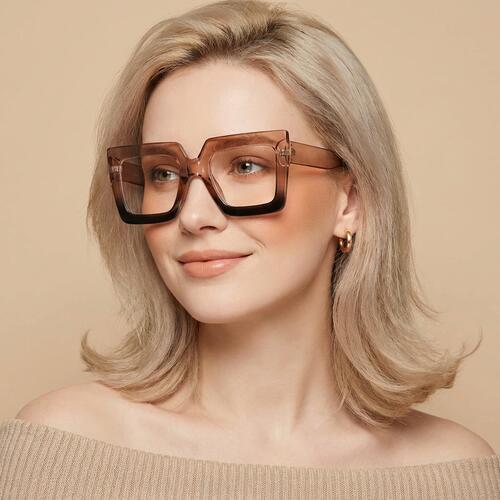

Do Hipster Glasses Make You Look Smarter? What the research actually says
By the Aoolia Editorial Team
Updated September 30, 2026. Every study mentioned is linked under Sources.
In early 2019, MIT Technology Review ran a story about a math paper called "The hipster effect: When anti-conformists all look the same." To illustrate it, the editors used a Getty stock photo of a bearded man in a beanie and flannel. A reader wrote in, furious that his picture had been used without permission. Getty checked the model release. It wasn't him.
It's a good joke. It's also a useful starting point if you're shopping for hipster glasses, because what a frame does to your face depends partly on how other people read it. Some of that has actually been measured. Researchers have tested whether glasses make people look smarter, whether they make a face harder to recognize, and why people trying to stand out end up looking alike.
This guide covers what those studies found, where their findings stop, and how to use them when you choose a pair.
The short answer
Do hipster glasses make you look smarter? A little, on average. In lab studies, the same face is rated as more intelligent with glasses than without them. The type of rim matters for everything else:
- Full-rim frames, the thick-rimmed style most people call hipster glasses, made faces more distinctive but lowered attractiveness ratings.
- Rimless frames raised trust ratings without that attractiveness cost.
- Any glasses make a stranger's face harder to match across two photos when only one of the photos shows them.
None of these effects is big enough to decide who you are. They are big enough to help you decide which frame to wear where.
The research at a glance
Five sources carry this article. Four are studies; the fifth is a federal photo rule that shows the same effect in everyday life.
| Source | What it tested | What it found | What it means for hipster glasses |
|---|---|---|---|
| Leder, Forster & Gerger (2011)Swiss Journal of Psychology | The same faces shown with no glasses, full-rim glasses, and rimless glasses | Glasses raised intelligence ratings. Full-rim frames lowered attractiveness. Rimless frames raised trust without lowering attractiveness, and made faces less distinctive. | Thick rims are a strong identity cue, with an attractiveness trade-off in photo ratings |
| Kramer & Ritchie (2016)Applied Cognitive Psychology | Deciding whether two photos of a stranger show the same person | 80.9% correct with no glasses in either photo, 79.6% with glasses in both, and 74% when only one photo had glasses | Switching between glasses and no glasses makes you harder to recognize |
| Graham & Ritchie (2019)Perception | Trust, competence, and attractiveness ratings, plus photo matching, across no glasses, glasses, and sunglasses | Sunglasses lowered trust. Mismatched eyewear between two photos lowered matching accuracy. | Keep dark tints out of first meetings, and keep your eyewear consistent |
| Touboul, "The hipster effect"Mathematical model | How people who follow the majority and people who oppose it react to trends over time | The people opposing the majority end up making the same choices as each other | Picking a frame to look different rarely works on its own |
| US State Department photo ruleSince Nov. 1, 2016 | Passport and visa photos | Glasses are no longer allowed; glare and shadows were interfering with identity screening | Your official ID shows you without your frame |
What we mean by hipster glasses
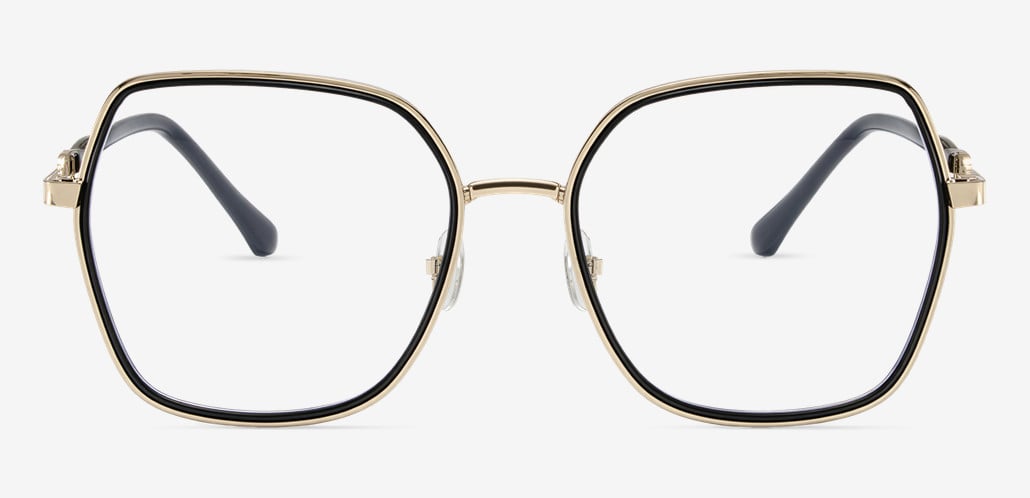
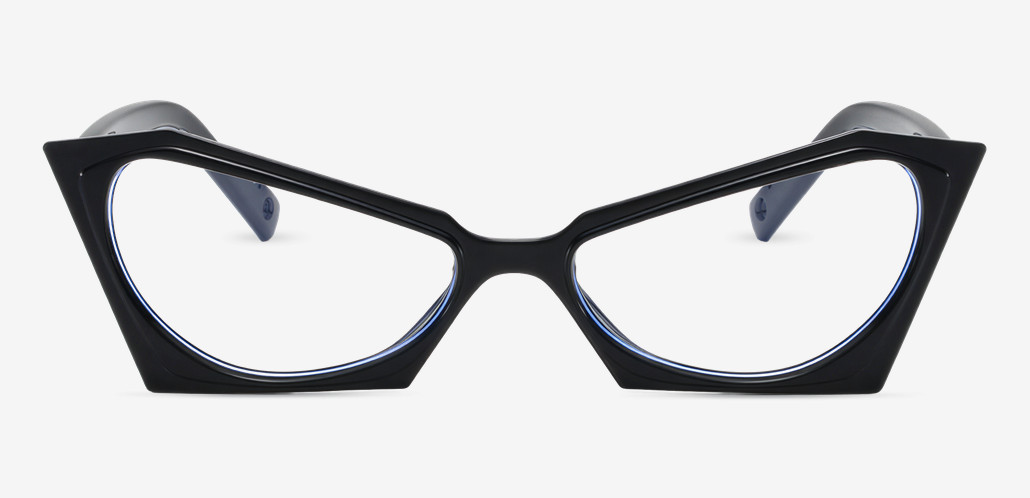
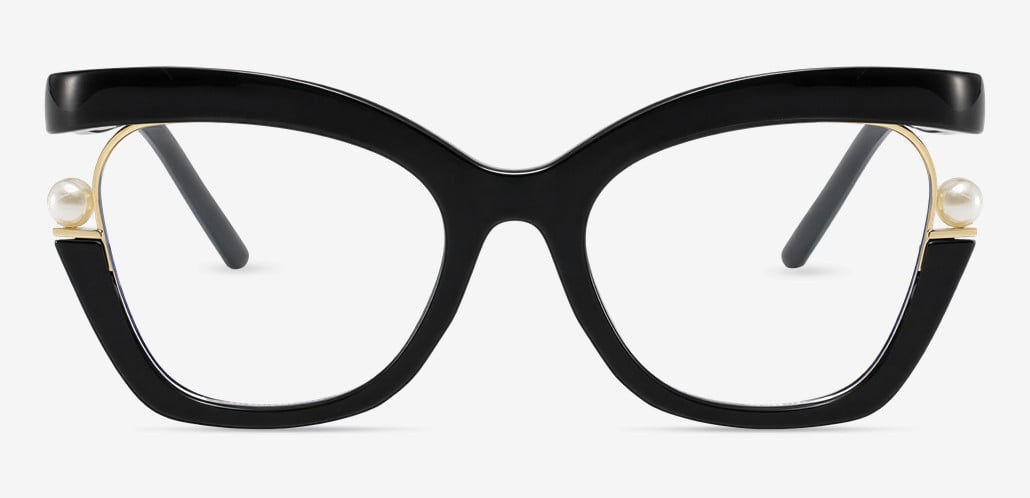
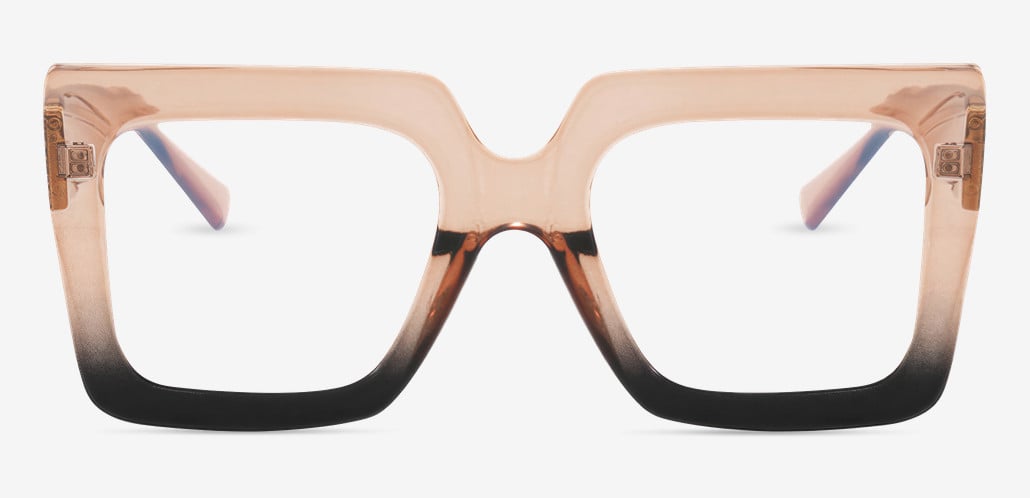
In this guide, hipster glasses means three kinds of frame, all of which the word has pointed to since the late 2000s:
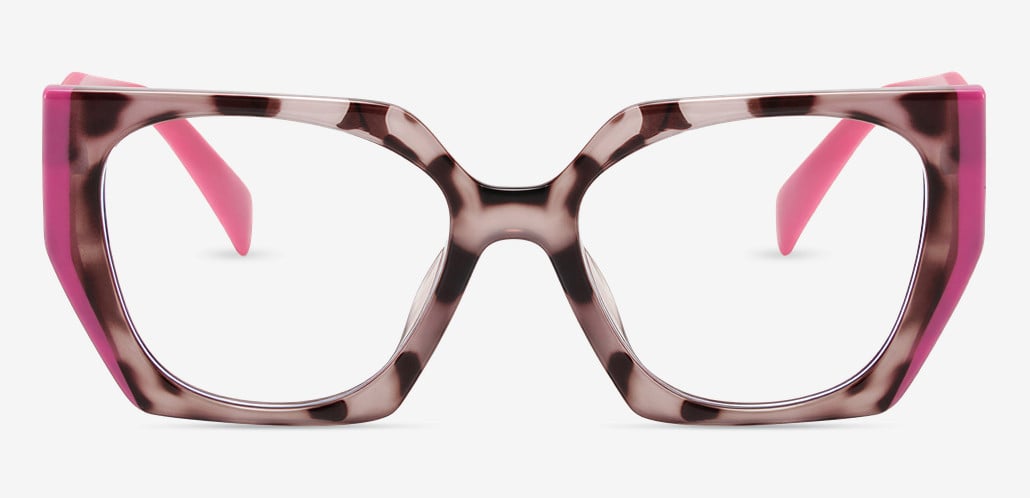
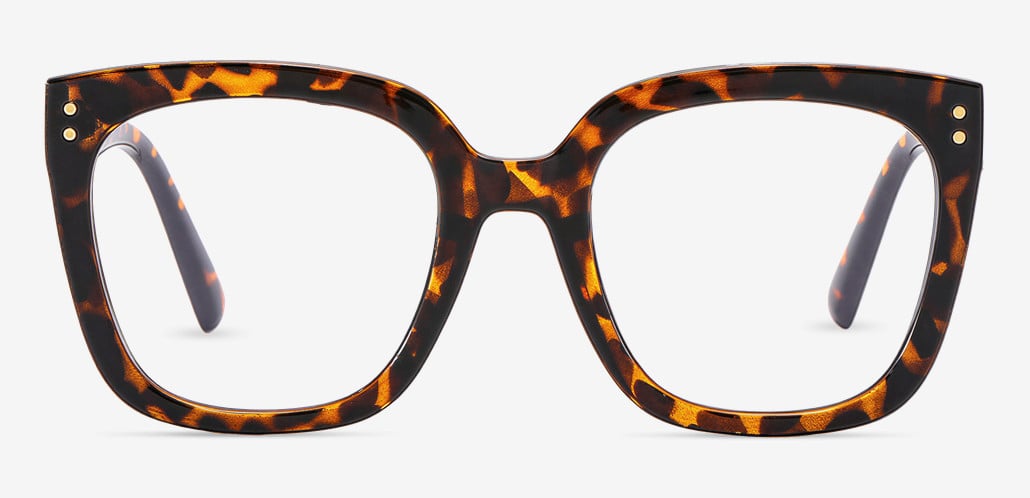
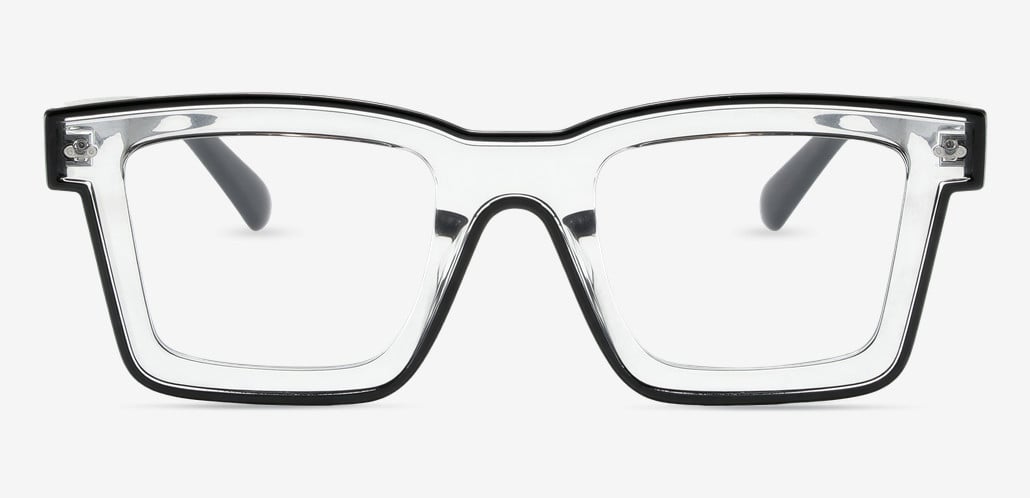
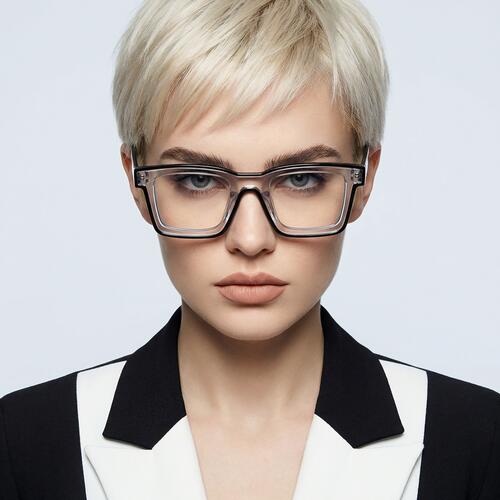
- Heavy Line: thick full-rim acetate in black, tortoise, or clear.
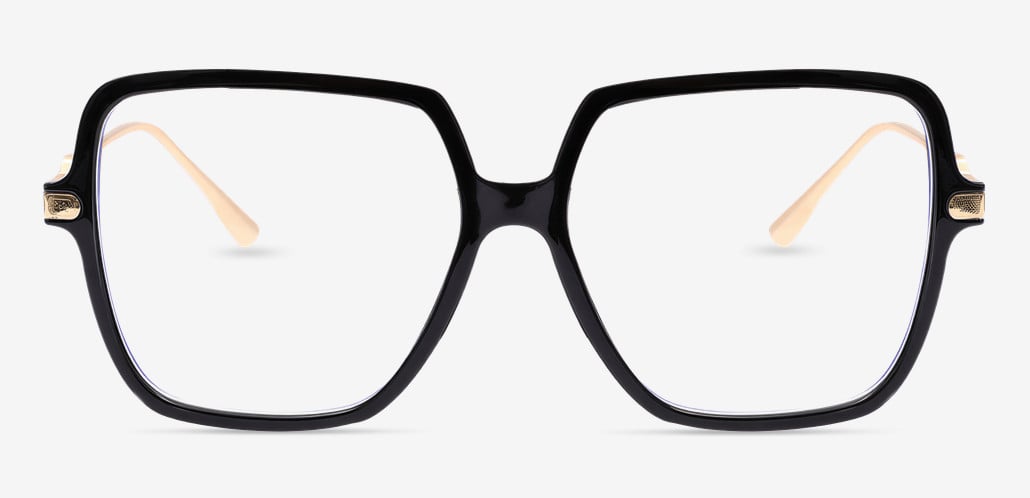
- Crossover: browline frames, with a heavy top bar over a thin lower rim.
- Hairline: the thin wire rounds and ovals that came back with the indie sleaze revival of the 2020s.
Our hipster glasses collection is sorted by those same three names.
One honest limit belongs up front. We didn't find a study that tests thick acetate against thin wire directly. The closest comparison in the research is full-rim versus rimless. So we treat the Heavy Line as the full-rim extreme and the Hairline as the nearest thing to rimless. That is a reasonable stretch, but it hasn't been tested.
Do hipster glasses make you look smarter?
On average, slightly. The idea that people in glasses look intelligent is old enough that psychologists were testing it in the 1940s. In 2011, a team at the University of Vienna revisited it with modern controls. Across four experiments, Helmut Leder, Michael Forster, and Gernot Gerger found that the stereotype held: the same faces were rated as more intelligent with glasses than without.
The rim doesn't have to be thick
The detail that matters for hipster glasses is that both full-rim and rimless frames produced the intelligence bump. You don't need the heaviest acetate on the shelf to look sharp in a meeting. A thin Hairline pair does that part of the job. What the Heavy Line adds is something else, covered in the next section.
A caveat worth knowing
The effect doesn't appear in every study. When Daisy Graham and Kay Ritchie asked people in 2019 to rate faces for trustworthiness, competence, and attractiveness, the finding they reported was about sunglasses, which lowered trust. Their published summary doesn't report a comparable boost for clear glasses.
The fair reading is that the smart-glasses effect is real on average and small in size. Glasses nudge a first impression. They aren't a costume for competence.
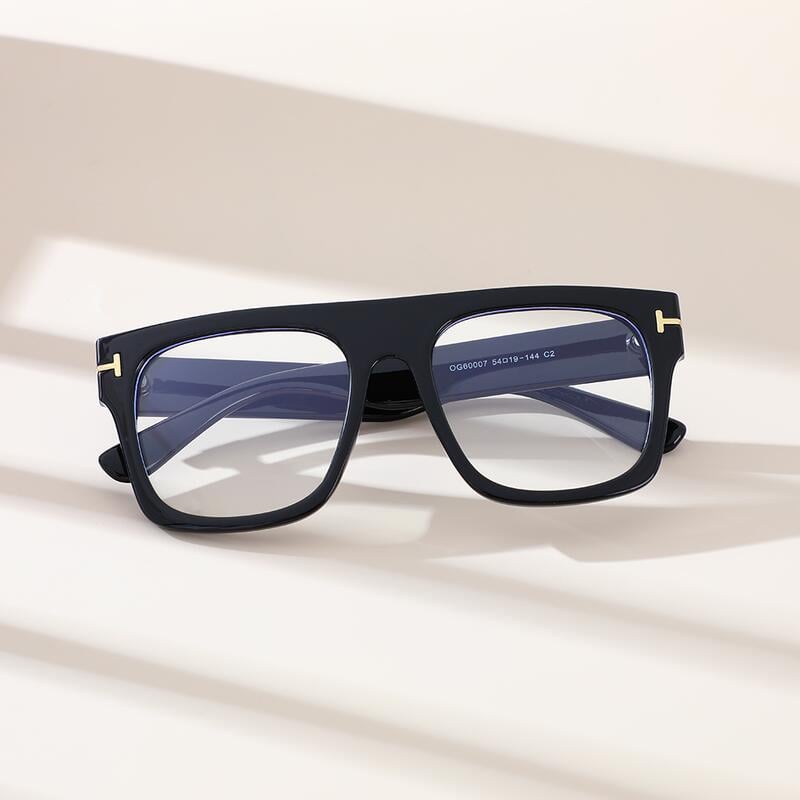
The Clark Kent effect: glasses change who people think you are
Superman's entire disguise is a pair of glasses. In 2016, psychologists Robin Kramer and Kay Ritchie tested whether that could fool strangers. Participants saw two photos side by side and decided whether they showed the same person.
In the mixed pairs, people also leaned toward answering "different person". A follow-up in 2019 added sunglasses and found the same pattern: whenever the eyewear didn't match between two photos, accuracy dropped. The figures above come from the authors' own summary.
Who this applies to
These studies used strangers' faces. The University of York's summary makes the point with Lois Lane: she knows Clark well enough that glasses wouldn't fool her. Your friends and family recognize you in or out of your frames. The effect matters with people who have seen you once or twice, such as a new team, a client, or a date you met on an app.
Why rim thickness matters here
The Vienna study found that rimless glasses made faces less distinctive. By the same logic, a full rim makes a face more distinctive, so a Heavy Line frame becomes a bigger part of the face people store in memory.
That cuts both ways. People are more likely to remember you with the frame on. Take it off, and you've changed more of the face they learned.
This last step is our inference from the two studies, not something either one tested directly.
Do thick glasses make you less attractive?
In one lab setting, yes, on average. In the Vienna experiments, faces in full-rim glasses were rated less attractive than the same faces with no glasses. Rimless frames didn't carry that cost. This is the strongest piece of evidence against thick hipster glasses, so it's worth being clear about what was actually measured.
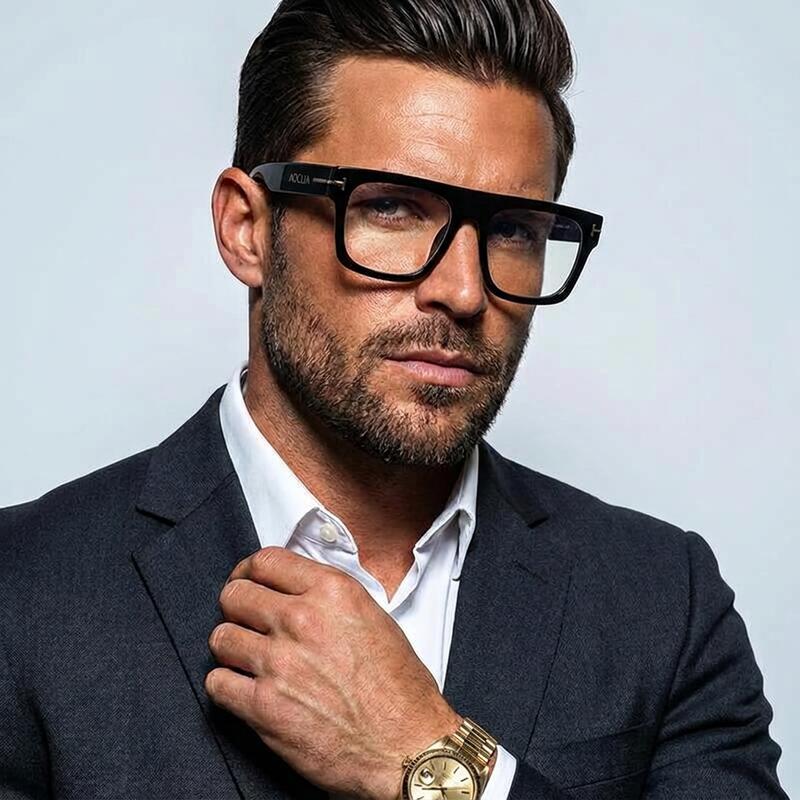
What the study couldn't capture
- Participants rated photos of unfamiliar faces, not people talking, moving, or laughing.
- The researchers chose the frames. No participant was wearing a pair they picked for their own face.
- Fit, color, and how the frame suits the rest of someone's style weren't variables in the study.
A well-fitted Heavy Line frame on someone who chose it may land very differently. That hasn't been tested either way.
Where your eyes come in
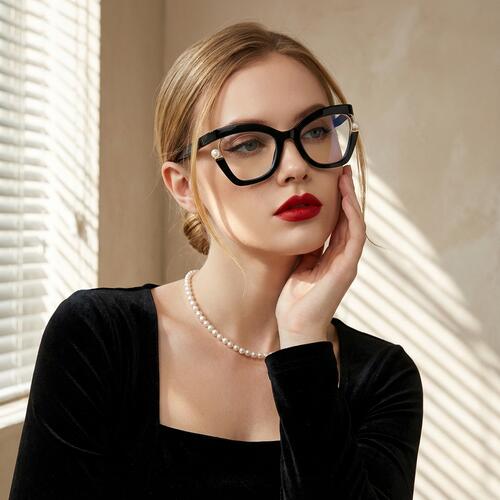
The same study noticed something that works in your favor. Glasses drew observers' gaze toward the eye region. A thick rim is a frame in the literal sense: it points attention at your eyes. If your eyes are the feature you like best, that works for you.
Tinted lenses are a different story
The clearer finding is about tint. Graham and Ritchie found that sunglasses lowered trust ratings. If you like hipster sunglasses or dark-tinted lenses, keep them out of the settings where trust is the point: a first coffee, an interview, or the main photo on a profile.
Why everyone's hipster glasses end up looking the same
Back to the paper from the introduction. Jonathan Touboul, a mathematician at Brandeis University when the paper made headlines, modeled a population made of two groups. Conformists follow the majority, and anti-conformists do the opposite. The key ingredient is delay: each person sees what everyone else is doing only after some lag.
What the model shows
When a trend takes a while to spot, the anti-conformists tend to notice it at roughly the same moment. They then reject it together, and in doing so they fall into step with one another. Their opposition to the mainstream becomes a shared trend of its own.
That is a neat description of the thick black frame. Many people chose it around the same time to stand apart from the same mainstream, and it became a uniform. The same thing is now happening with thin wire.

What it means when you buy
Picking a stranger frame from the same feeds everyone else scrolls won't reliably make you different. The timing problem in the model applies to you too.
What does differ between people is the reason they wear a pair:
- how it fits,
- which of the effects above they want, and
- whether they wear it consistently enough for it to become part of their face.
That last point leads to the most practical idea in this guide.
The Same-Face Rule
The Same-Face RuleThe photos people will match you against should show the face you'll actually turn up with.
It comes straight from the Clark Kent findings. Strangers are worse at matching two images of you when your eyewear differs between them, and they lean toward deciding you're someone else. So the question to ask isn't only "do these glasses suit me?" It's also "where will someone compare my face to a picture, and what am I wearing in that picture?"
Where it applies
| Where you'll be matched | Who is matching | What to do |
|---|---|---|
| Dating app | Someone meeting you in person for the first time | If you'll arrive in glasses, include at least one recent photo in that exact pair |
| Work profile, company directory, conference badge | Colleagues and clients who have met you once | Use a photo in your everyday frame, and update it when you change frames |
| First weeks at a new job or school | New people still learning your face | Pick one pair and wear it daily; switching frames or going without resets part of what they've learned |
| Passport or visa check | An officer comparing you with a glasses-free photo | Expect to take your frames off if asked; that's the mismatch the rule avoids |
| Friends and family | People who know you well | Nothing; familiar faces aren't thrown by glasses |
The passport row
The passport row is the rule running in reverse. Since November 1, 2016, the US State Department hasn't accepted glasses in passport or visa photos, except with documented medical need. The reason given was that glare and shadows interfered with biometric screening. Your most official photo is the one version of your face without your frame.
How frame weight changes the stakes
The heavier the frame, the more the rule matters. A Heavy Line pair changes more of your face than a Hairline pair, so the gap between the two versions of you is wider. Keep this in mind if you plan to rotate between a thick pair and contacts.
How to choose hipster glasses with the research in mind
Start with what you want people to take away, then work back to a frame.
| What you want | What the studies suggest | Where to look |
|---|---|---|
| To come across as sharp | Glasses in general raised intelligence ratings, and rim thickness didn't decide it | Any of the three lines; you don't need the heaviest frame for this |
| To be remembered after one meeting | Full rims made faces more distinctive | Heavy Line or Crossover, worn consistently |
| To keep attractiveness ratings neutral in photos | Full rims lowered attractiveness in lab ratings; rimless frames didn't | Hairline is the closest option, though thin wire wasn't tested directly |
| To look trustworthy | Rimless frames raised trust; sunglasses lowered it | Hairline, with clear lenses indoors |
| To look like nobody else | The hipster-effect model says a frame alone rarely does this | Choose for fit and consistency instead |
Two checks before you order
- Line up your Try On with your profile photo. Use Virtual Try-On on a frame with the Try On label in our hipster glasses collection and take a screenshot. Put it next to the photo people currently know you by. If you'd look like a different person to someone who has only seen that photo, either plan to update the photo or pick a frame closer to what you wear now.
- Decide which pair is your public face. If you own more than one pair, choose the one you'll wear for first meetings and use it in your photos. Save the others for people who already know you.
If you're wearing hipster glasses purely for the look, every frame can be ordered with plain no-power lenses on the product page. The studies measured how observers read a face in a photo, where lens power isn't visible, so the effects above are about the frame itself.
FAQ
Do hipster glasses make you look smarter?
Slightly, on average. A 2011 University of Vienna study found faces were rated more intelligent with glasses than without, whether the frames were full-rim or rimless. Other studies haven't always found the effect, so treat it as a small nudge.
Do thick glasses make you look less attractive?
In one lab study, full-rim glasses lowered attractiveness ratings of unfamiliar faces in photos, while rimless glasses didn't. The study didn't test frames people chose for themselves, or how they come across in person.
Why don't people recognize me without my glasses?
This is the Clark Kent effect. Strangers matched two photos correctly about 80% of the time when the eyewear was the same in both, and 74% of the time when only one photo showed glasses. People who know you well aren't affected.
Can I wear glasses in my US passport photo?
No. Since November 1, 2016, the US State Department hasn't accepted glasses in passport or visa photos, except with documented medical need.
Why do all hipsters look the same?
A mathematical model by Jonathan Touboul suggests that people who oppose the mainstream notice trends with similar delays. They then react at the same time, which makes them resemble each other.
Are hipster glasses still in style?
Yes. Thick acetate frames never really left, and thin wire frames have returned through the indie sleaze revival. Browse all three looks in our hipster glasses collection.
Sources and how this article was written
This guide was written by the Aoolia Editorial Team. We worked from the published abstracts, university press releases, and news coverage linked below.
Limits to keep in mind
- The face studies used photos of strangers, rated by participants at universities in Austria and the UK.
- No study we found compares thick acetate with thin wire directly.
- Where we connect two findings, the text says so and labels it as our inference.
Sources
- Leder, H., Forster, M., & Gerger, G. (2011). The glasses stereotype revisited. Swiss Journal of Psychology, 70(4), 211–222. Abstract
- Kramer, R. S. S., & Ritchie, K. L. (2016). Disguising Superman: How glasses affect unfamiliar face matching. Applied Cognitive Psychology, 30, 841–845. Abstract; authors' summary with figures; University of York release
- Graham, D. L., & Ritchie, K. L. (2019). Making a spectacle of yourself: The effect of glasses and sunglasses on face perception. Perception, 48(6), 461–470. Abstract
- Touboul, J. The hipster effect: When anti-conformists all look the same. Coverage: Brandeis Magazine; Live Science
- The stock-photo story: The Washington Post, March 7, 2019
- US passport photo rule: South Dakota Public Broadcasting, Oct. 26, 2016; All About Vision