
Type "best designer glasses for women" into Google and you'll get two kinds of answers: retailers ranking whichever licensed brands they stock, and trend articles that never name an actual frame you can buy. Neither tells you what you came to find out — which specific pair is worth your money this year, and why.
This guide does something different, and it starts with a disclosure: Aoolia designs and makes every frame on this list. We're not a neutral reviewer, so we won't pretend to be one. What we can offer instead is the view from inside the workshop — which of our 【designer eyeglasses for women】 earn a spot on real faces in 2026, what's genuinely new this year versus recycled trend copy, and how to judge any frame's quality before you pay, whether you buy it from us or not.
Prices below are current at publication and move with promotions. Every frame accepts prescription lenses, checked by an optician in our lab before shipping.
What "designer" buys you in 2026 — and what it doesn't
The word has quietly split in two. In one sense, "designer glasses" still means a fashion house's initials on the temple, at $300 to $600 a pair. In the other — the sense growing fastest — it means frames that went through an actual design process: original silhouettes, drafted and prototyped and refined, cut from quality materials and finished by hand.
Here's the part the first camp doesn't advertise: the fashion houses don't make their own glasses. Nearly all luxury eyewear is produced under license by a handful of manufacturers, then marked up for the name. The design work, the acetate, the hinges — those exist at every price. The license fee only exists at one.
So when this guide says "best designer glasses," it means best-designed. Judged on silhouette, material, finish, and how they hold up at week forty of daily wear. On those terms, here's the 2026 shortlist.
The shortlist: eight frames for eight real situations
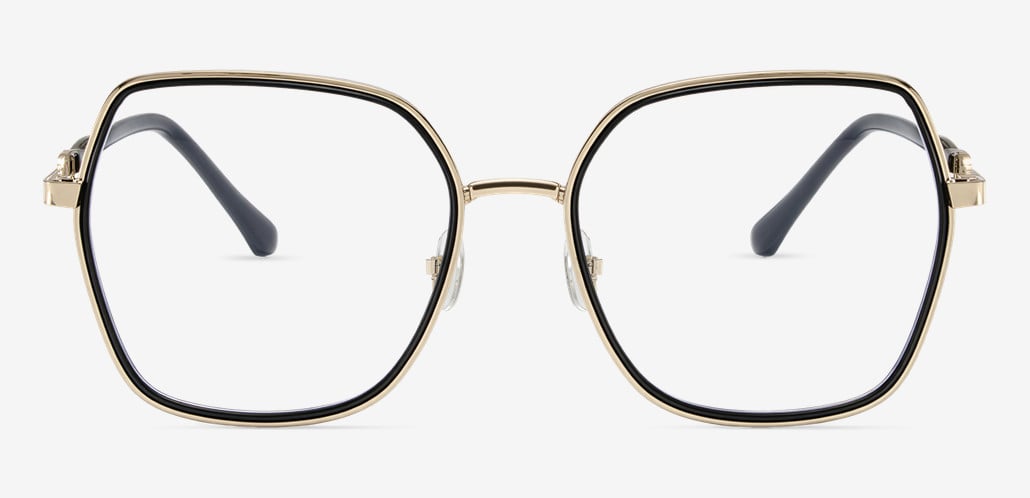
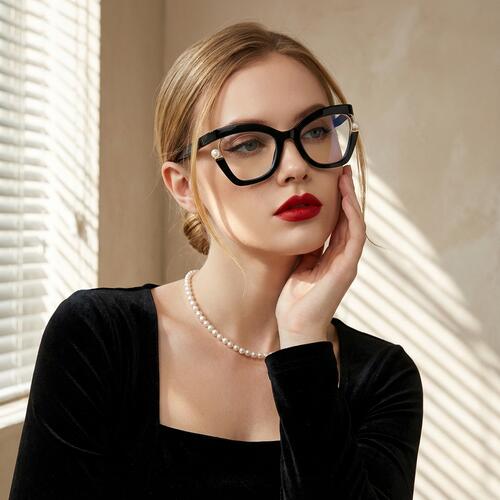
The 9-to-whenever frame — Sophia, black square
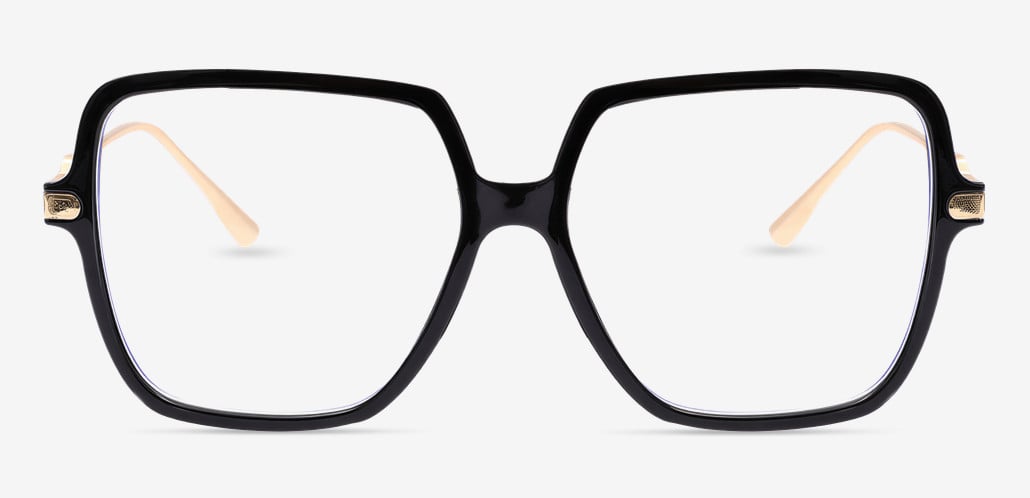
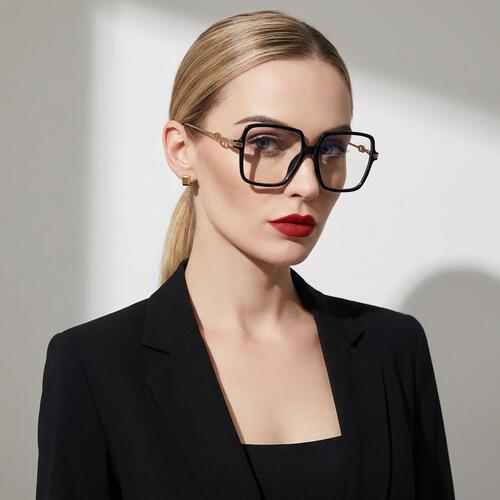
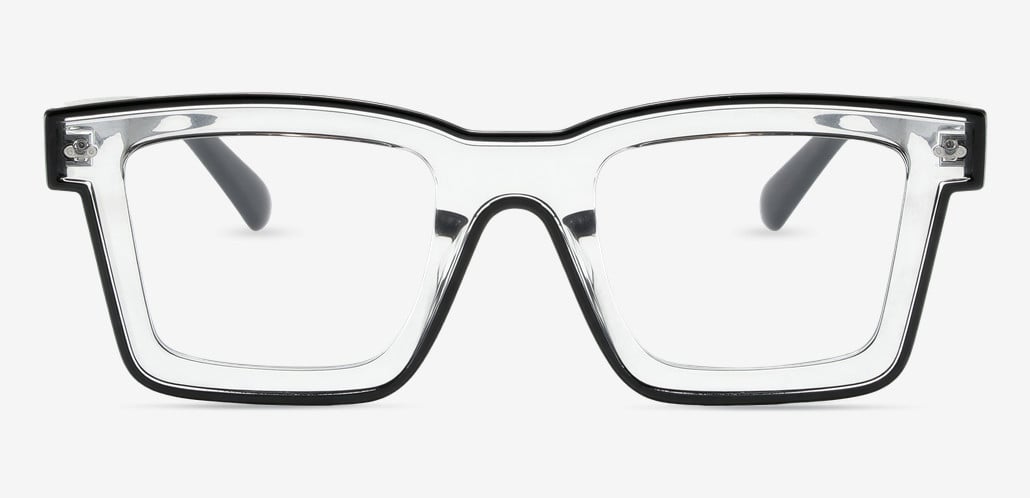
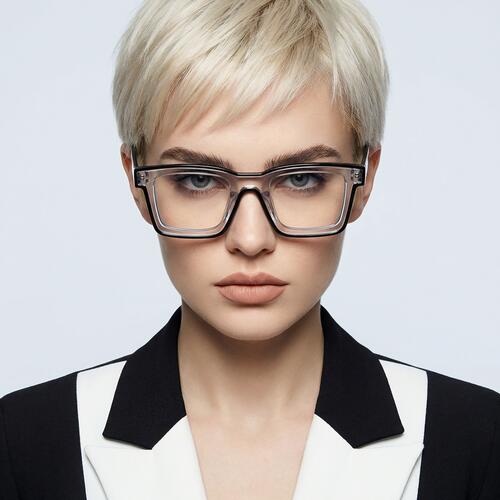
Every eyewear wardrobe needs one pair that never asks a question. Sophia is that pair: a confident black square in polished acetate, structured enough for a client call, quiet enough to disappear when you want your face to do the talking. Bold-but-simple shapes are one of 2026's defining looks, and black acetate is the least perishable way to wear the trend. Currently $27.95. If you only buy one frame this year, this is the slot to fill first.
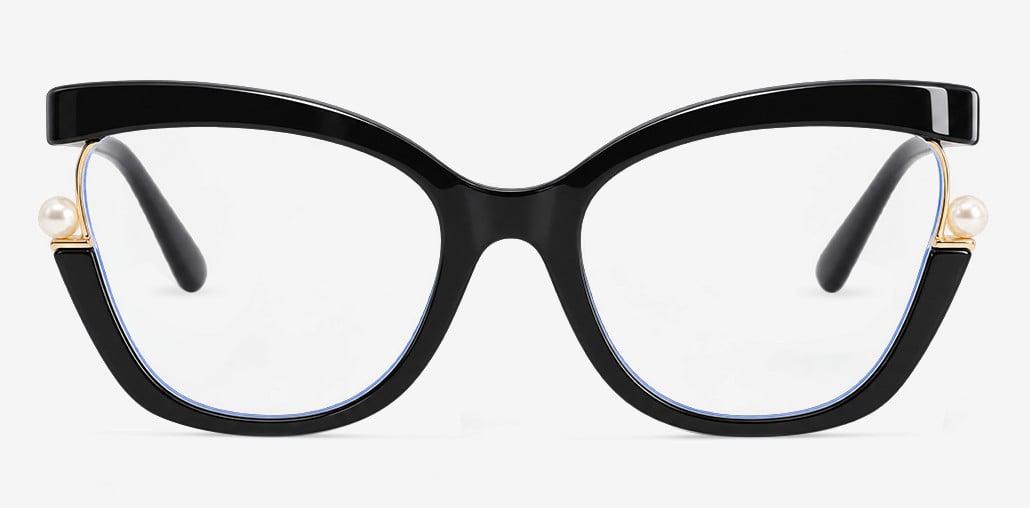
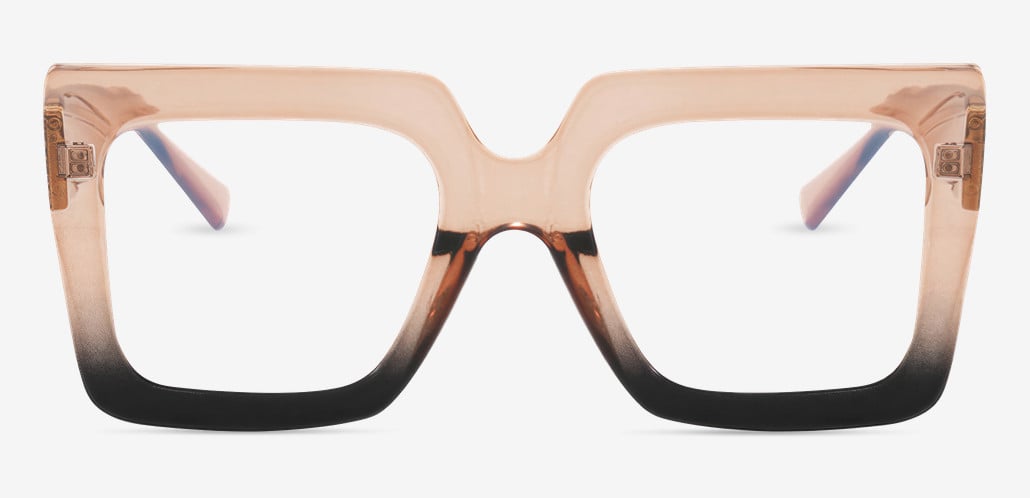
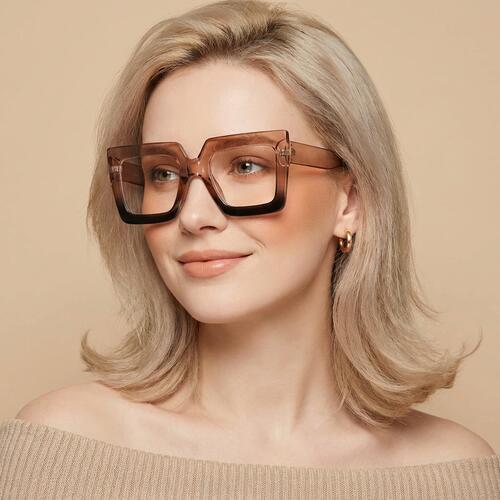
The trend pick that isn't a costume — April, champagne cat-eye
Cat-eyes dominate 2026 trend reports, mostly in their oversized, dramatic form. The catch: dramatic cat-eyes date quickly and fight with half your wardrobe. April takes the smarter route — a soft lift at the outer corner, in a champagne tone that flatters more skin tones than either black or clear. You get the year's silhouette without the year stamped on it. Currently $11.95, which makes it an easy second pair.
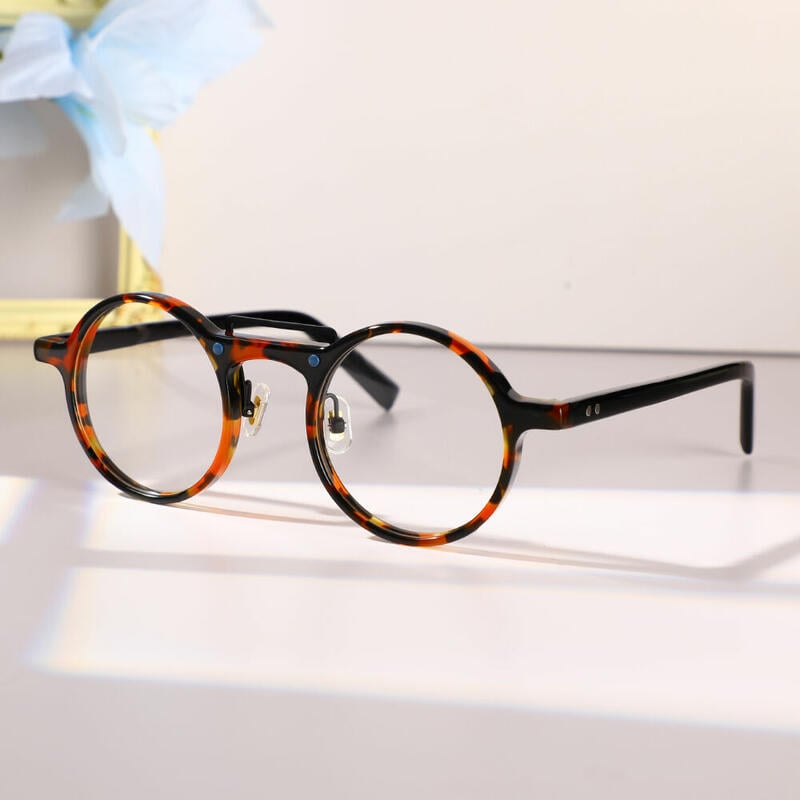
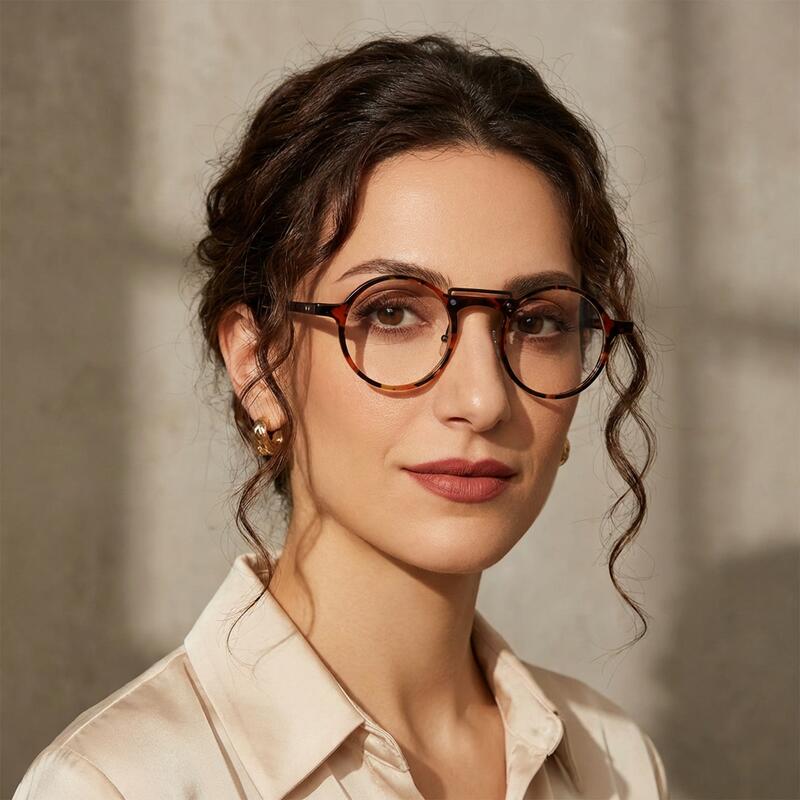
The tortoise worth keeping — Barrie, tortoise round
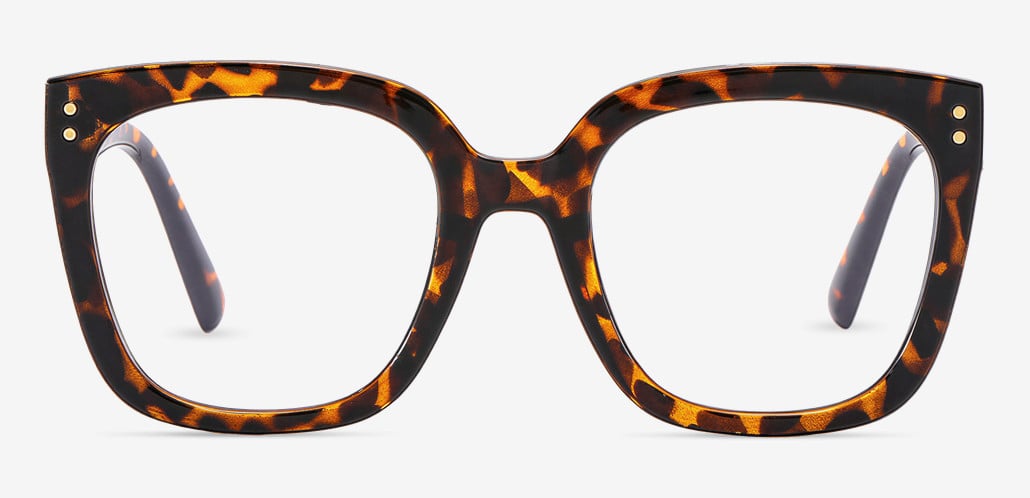
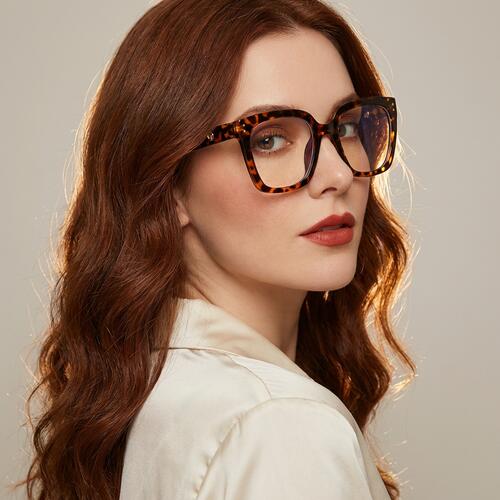
Earth tones are everywhere in 2026 eyewear — terracotta, olive, warm browns — and tortoise is the pattern that outlives them all. What separates good tortoise from cheap tortoise is depth: the mottling should sit inside the acetate, layered into the sheet, not printed on the surface where it wears off at the temples first. Barrie is built the layered way, in a round shape that softens angular features. Currently $59.95 — the most expensive acetate pick here, and the one most likely to still be on your face in 2030.
The screen-day rectangle — Charlotte, blue rectangle
If your glasses live between two monitors and a phone, shape and lens matter more than trend. A rectangle with moderate lens height keeps your sightline stable across screens, and Charlotte's muted blue reads as considered rather than loud on video calls. Add blue-light-filtering lenses at checkout if end-of-day eye fatigue is your complaint — they're an option on every frame here, not an upcharge tier. Currently $23.95.
The statement you'll actually wear — Francesca, orange cat-eye
Color is 2026's loudest trend, and also its most abandoned — bright frames get bought in optimism and retired in embarrassment. The difference is undertone. Francesca's orange is burnt rather than neon, which is why it works on actual days, with actual outfits, past the first week. Wear it as the one saturated thing in an otherwise neutral look and it reads intentional. Currently $36.95.
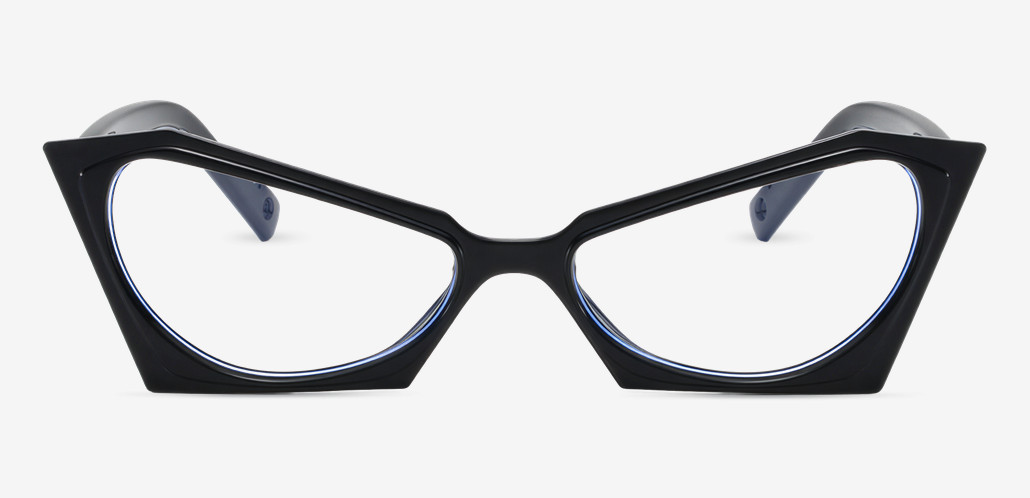
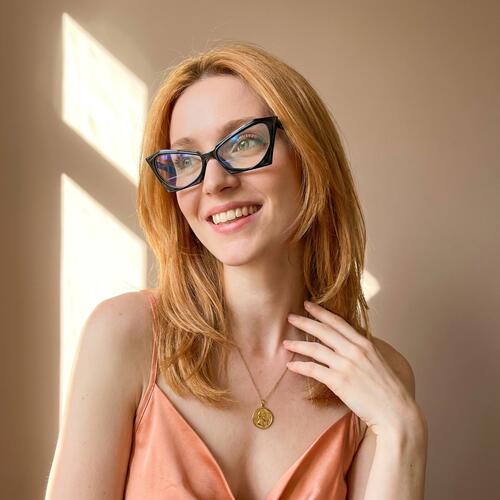
The geometry experiment — Aria, brown geometric
Hexagons and soft-angled silhouettes are 2026's genuinely new shape story — the first real alternative to the square/round binary in years. Geometric frames flatter more faces than they get credit for, because the extra angles distribute visual weight instead of concentrating it. Aria keeps the shape wearable with a warm brown finish. Currently $35.95. If you're bored of your own face in photos, start here.
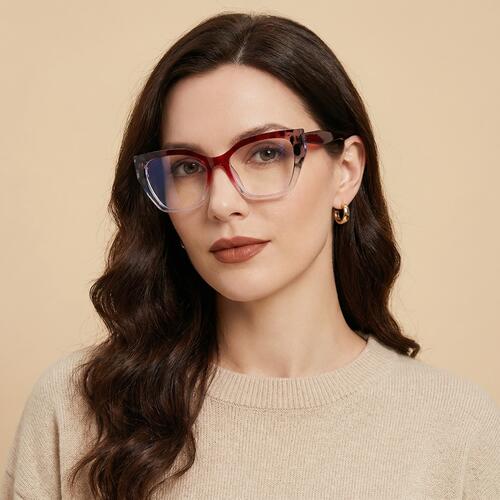
The splurge that isn't one — Adrienne, purple cat-eye
Adrienne is the top of Aoolia's range at $99.95 — deep purple acetate, a sculpted cat-eye front, the kind of frame that would carry a mid-three-figure tag with initials on the temple. It exists for the buyer who wants one unmistakable pair and would rather the money went into material and finishing than licensing. Under $100 is still, by designer-eyewear standards, the shallow end.
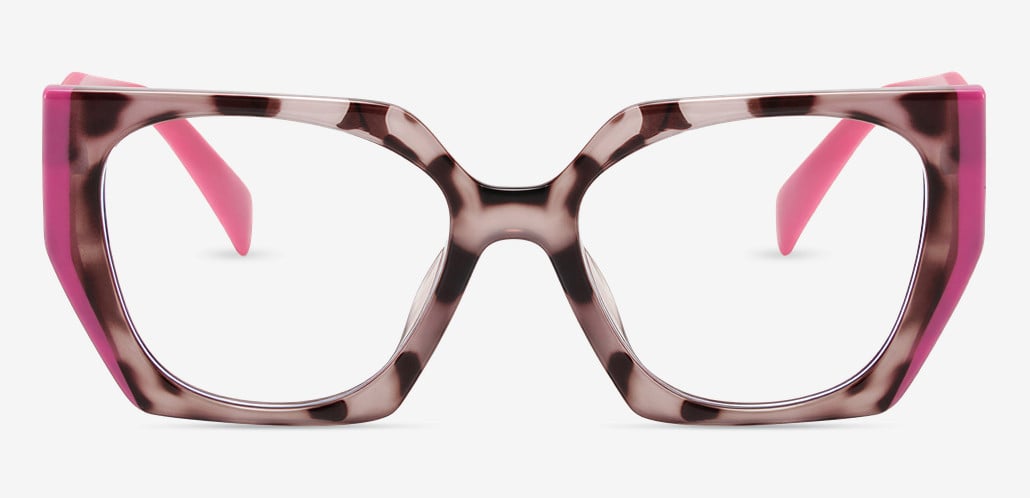
The $10 test drive — Halona, multicolor cat-eye
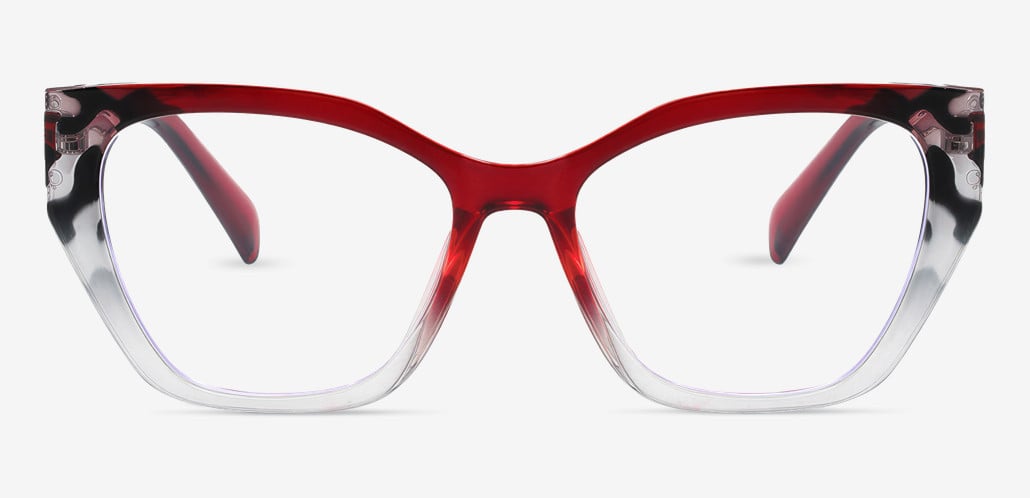
Not sure whether cat-eyes, color, or the whole online-glasses thing is for you? Halona is currently $9.95, which turns the question into a low-stakes experiment. It's also the honest answer to a question trend articles avoid: you don't need to commit $200 to find out what suits your face. Buy the cheap pair, learn what you reach for, then buy the keeper.
How to tell a well-made frame from a well-marketed one
Three checks work on any pair, any brand, any price.
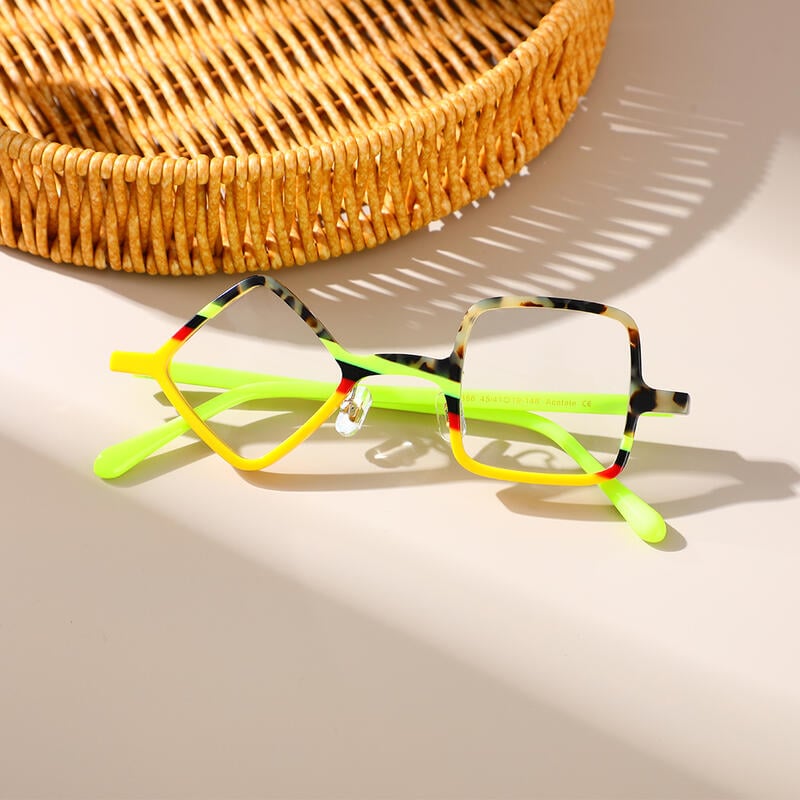
Read the numbers inside the temple. Every frame carries a code like 52□18-140: lens width, bridge width, and temple length in millimeters. Pull the same numbers off a pair that already fits you and you can size any frame online with more precision than a try-on mirror gives you. If a retailer doesn't publish all three, that's your first data point about them.
Work the hinges. Open both temples slowly. Quality hinges move with smooth, even resistance and stop firmly at full extension; cheap ones wobble, click, or splay past ninety degrees. Hinges are where frames die, and where cost-cutting hides first.
Check where the color lives. On 【acetate frames】, look at an edge or the underside of the temple. If the pattern and color continue through the cut, the frame was made from solid sheet material and will age by polishing. If the inside is a different color than the outside, the finish is a coating — and coatings leave.
None of this requires expertise. It requires ninety seconds and the willingness to check.
Buying designer glasses online without the regret
A few practical points that save most of the returns we see.
Use a current prescription. In most US states, eyeglass prescriptions expire after one to two years. An expired Rx isn't just a compliance issue — your eyes drift, and lenses made to old numbers cause the headaches people wrongly blame on "cheap glasses."
Know your PD. Pupillary distance — the millimeters between your pupils — determines where the optical center of each lens sits. It's on some prescriptions and missing from others; if yours lacks it, ask your optometrist's office or measure it with a ruler and a mirror before checkout, not after.
Strong prescription? Size down, index up. Above roughly ±4.00, lens edges thicken fast in large frames. A small-to-medium full-rim frame plus high-index lenses keeps the finished pair thin and light. This is exactly the situation where a $30 frame with the right lens beats a $400 frame with the wrong one.
See it on your face first. Aoolia's 【virtual try-on】 renders any frame on your own photo — a better predictor than product photography, and free. And if you're new to buying glasses online entirely, we've covered the safety and accuracy questions separately in our guide to 【ordering prescription glasses online】.
Insurance: Aoolia isn't in-network with vision plans, but we provide itemized invoices for out-of-network reimbursement, which many plans partially cover. Check your plan's terms before assuming either way.
Three questions worth answering straight
Are expensive designer glasses better for your eyes? No. Vision quality comes from the lenses and the accuracy of your prescription, not the frame's brand. A licensed luxury frame and a studio-made frame can carry identical lenses. Pay for lens quality without hesitation; pay for temple initials only if you enjoy them.
Which 2026 trends are worth buying, and which should you skip? Buy the shapes: soft cat-eyes, geometric silhouettes, and earth tones all have several years of wear left in them. Be slower on the embellished, crystal-studded frames showing up in trend reports — glasses-as-jewelry photographs beautifully and dates precisely.
How many pairs does one woman actually need? Two is the honest floor: an anchor pair that works everywhere, and a second that does something the anchor doesn't — color, shape, or a screen-specific lens. At studio-direct prices the two-pair wardrobe costs less than one licensed frame, which is the quiet math this whole category runs on.
The short version
The best designer glasses for women in 2026 aren't defined by the name on the temple — they're the frames where the design work went into the product instead of the logo. Start with an anchor (Sophia), add the trend without the costume (April), and test anything you're unsure about at the $10 end (Halona) before committing. The rest is fit, a current prescription, and ninety seconds of quality checks.
The 【full women's designer collection】 is here when you're ready to look.