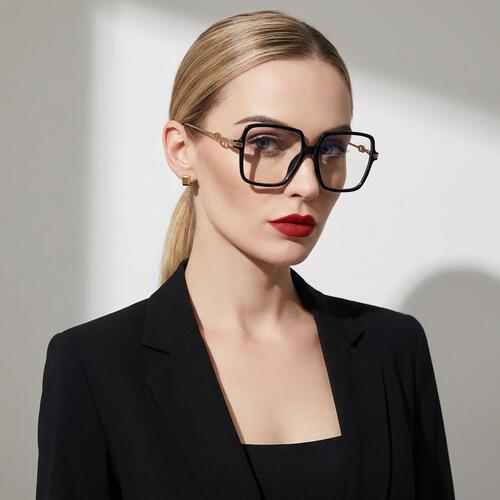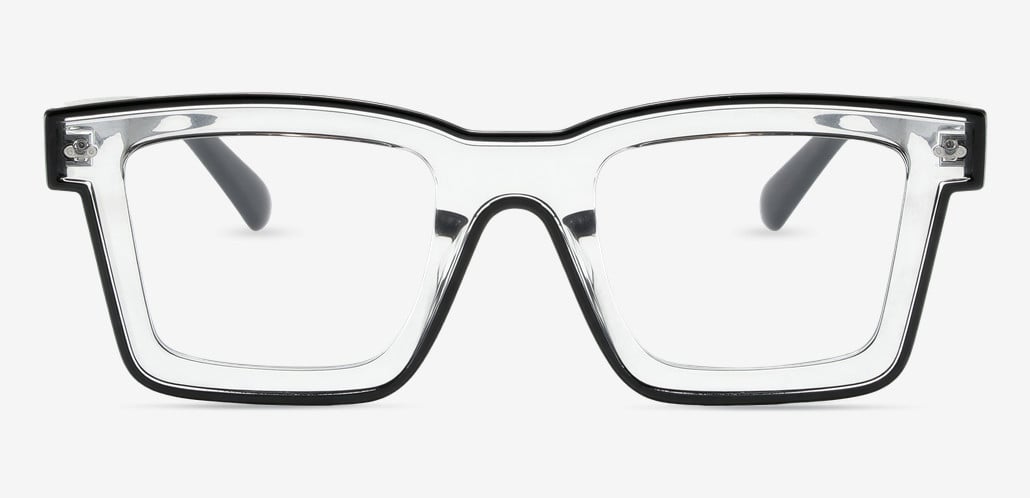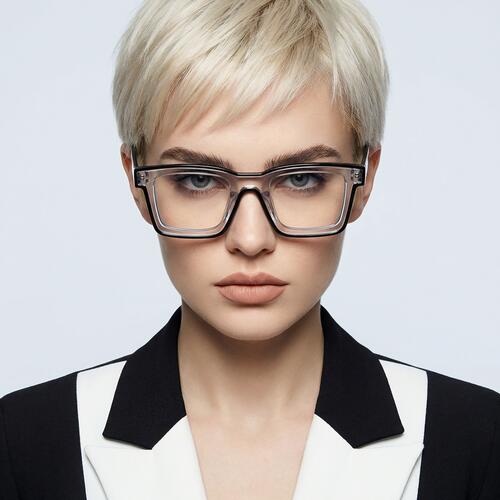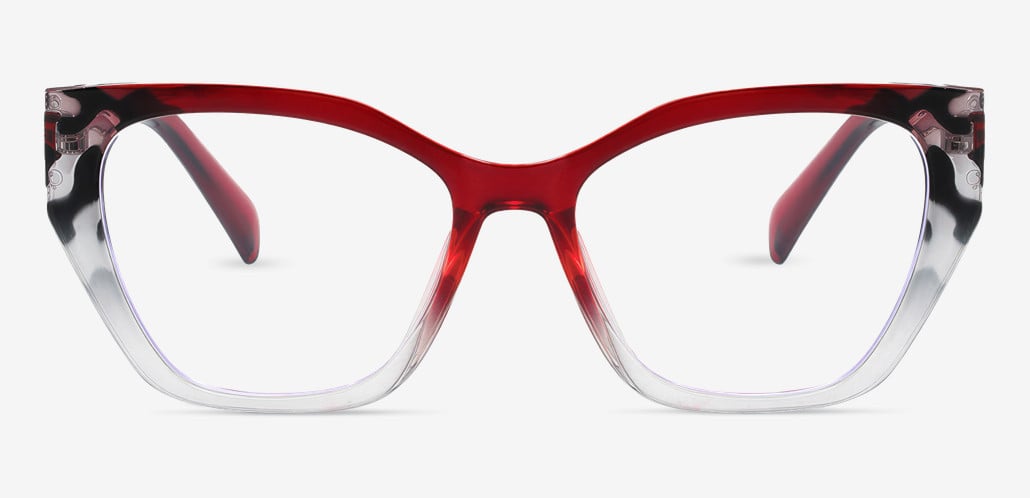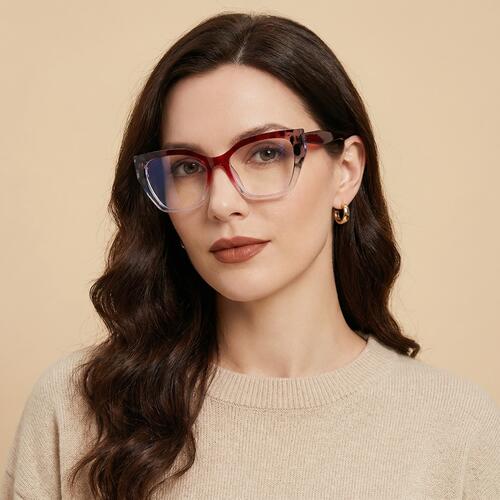

Cat Eye Glasses for Women
Most pages about cat eye glasses for women are written for the moment before you buy: mood boards, style adjectives, a nod to the 1950s. This one is written for the moments around it — the frame that looked sharp in the product photo but sits on your cheeks when you smile, the progressive prescription the retailer never mentioned might not fit the lens shape, the pair that reads "vintage costume" instead of "your glasses." Those are solvable problems. They're just rarely explained.
What makes a frame a cat eye, technically
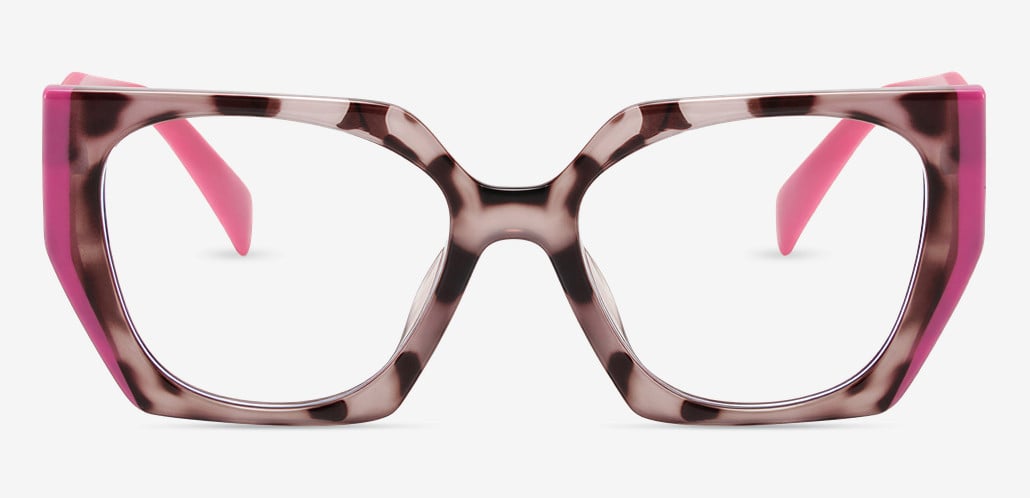
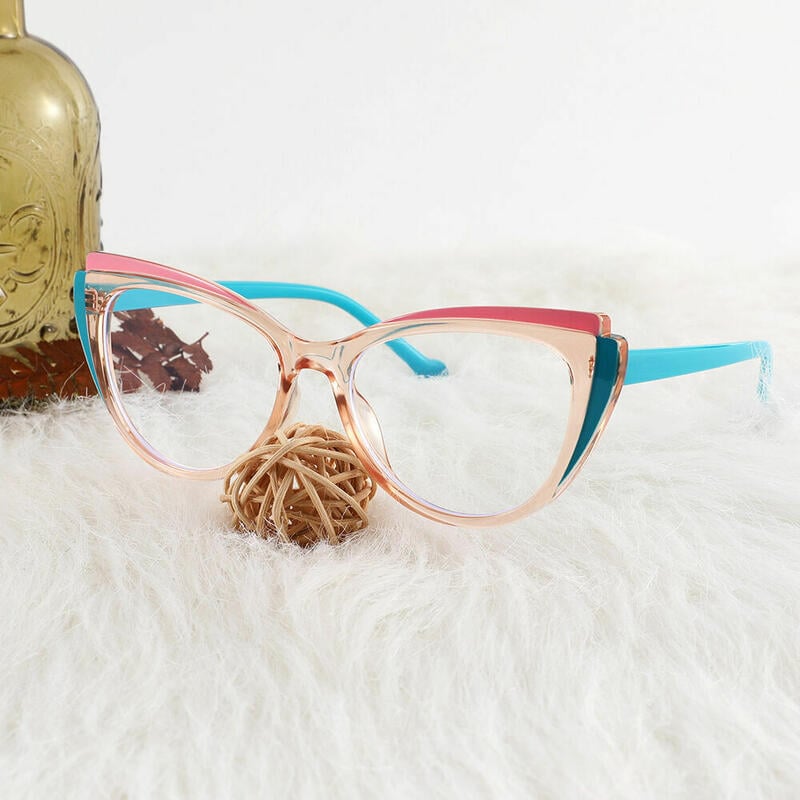
The name gets applied loosely, so it's worth pinning down. A cat eye frame lifts at the outer top corner of the lens — the upsweep starts above the lens's horizontal midline and rises toward the temple, which is what pulls the eye outward and up. That's different from a browline frame, where a heavy upper bar sits flat across the brow, and from a geometric frame, which may have angles everywhere but no directional lift.
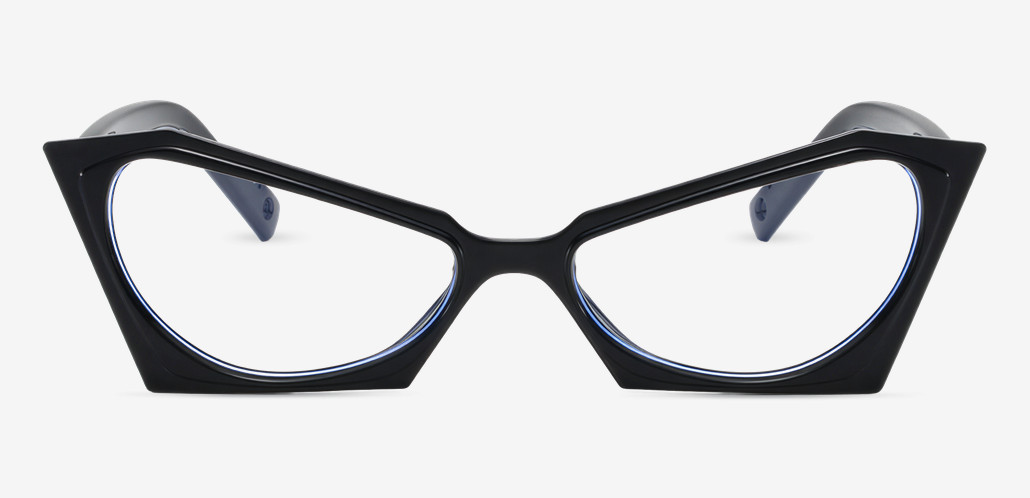
The degree of lift is the whole game. A frame can be technically a cat eye with a rise of just a few millimeters, and those quiet versions now make up a large share of what actually sells: the silhouette reads as structure rather than statement. At the other end are sharply pointed acetate frames where the upsweep is unmissable. Neither is more "correct." But they behave differently on a face, fit differently over a prescription, and solve different wardrobe problems — which is why "do I like cat eye glasses?" is usually the wrong question, and "how much lift do I want?" is the right one.
The fit problems product photos can't show you
Cat eye frames have a few failure modes that flat-lay photography hides completely.
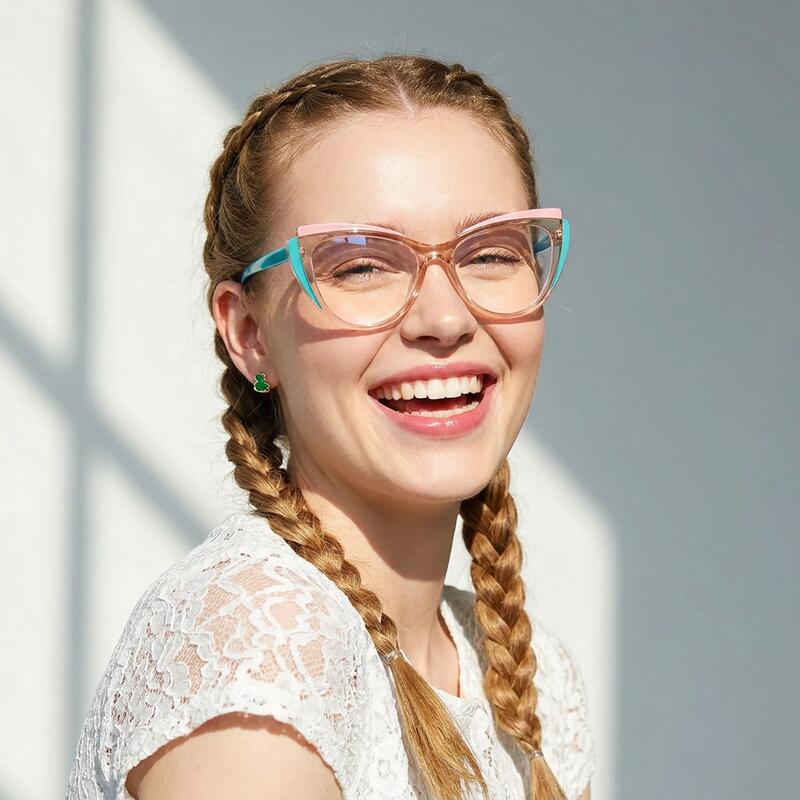
Cheek contact. The classic cat eye is a shallow frame — short from top to bottom — with width concentrated at the upper corners. On higher cheekbones, that geometry can leave the lower rim resting on the cheeks, so the frame lifts every time you smile. Two things fix it: adjustable nose pads, which float the frame slightly off the face, or a frame with a bit more lens height so the lower rim clears the cheek line. If a frame's specs list adjustable nose pads, that's not a throwaway feature for this shape.
Lash clearance. The same shallow, close-fitting geometry puts lenses nearer the eye. If your lashes are long or you wear falsies, lashes brushing the lens is a real daily annoyance. Again, nose pads help by adding a millimeter or two of distance; so does a frame with slightly more curvature at the bridge.
The brow question. An upswept corner interacts with your eyebrows in a way round or rectangular frames don't. The common guidance is that the frame's top line should trace just below or along the brow, with the upswept tips landing near the brow's outer end. When the tips sit well below the outer corner of the eye, the frame tends to drag the face downward — the opposite of what the shape is for. This is proportion, not rule; but it explains why the same frame flatters one face and fights another.
Reading the numbers. Every frame has three measurements stamped inside the temple arm — lens width, bridge width, temple length, in millimeters (something like 52-18-140). If you own a pair that fits well, those numbers are your baseline, and they transfer across brands far more reliably than S/M/L labels do. For cat eye shapes specifically, also check lens height where it's listed: it's the number that predicts both cheek contact and, as below, whether your prescription type will work.
If your prescription is strong — read this section first
This is the part most style-first articles skip, and it's where returns actually come from.
High minus (nearsighted) prescriptions. Lens edge thickness grows with distance from the lens's optical center. A cat eye's flared upper corners are, by design, far from center — which means a strong minus prescription can produce visibly thick edges exactly where the frame draws attention. Three mitigations work together: choose a smaller lens overall, choose a frame whose shape keeps your pupils near the lens center rather than pushed inward, and use a full-rim acetate front, whose thicker rim masks edge thickness in a way thin metal never will. High-index lens materials (1.67 or 1.74) reduce the thickness itself. None of this rules out the shape; it just means the dramatic oversized version costs more, optically, than the moderate one.
Progressive lenses. Progressives need vertical room — a minimum fitting height, commonly somewhere in the high teens of millimeters depending on the lens design — so your eyes can travel from the distance zone down to the reading zone. Shallow cat eye frames can fall under that minimum, which forces a compressed corridor or rules the frame out. If you wear progressives, filter for lens height first and drama second; a retailer that checks orders should flag the conflict, but knowing to look is better than hoping someone catches it. (At Aoolia, this is one of the things the optician review that precedes every shipment exists to catch.)
Reading and blue-light pairs. The reverse case is easy: single-power reading lenses and non-prescription blue-light filters have no corridor to accommodate, which is why the boldest, shallowest cat eye shapes make more sense as a reading pair or screen pair than as an everyday progressive.
The costume worry, taken seriously
The most common hesitation with this shape isn't about fit at all. It's the fear of looking like you're in wardrobe for a period drama — a worry that shows up in searches from women in their twenties and their sixties alike, for opposite reasons.
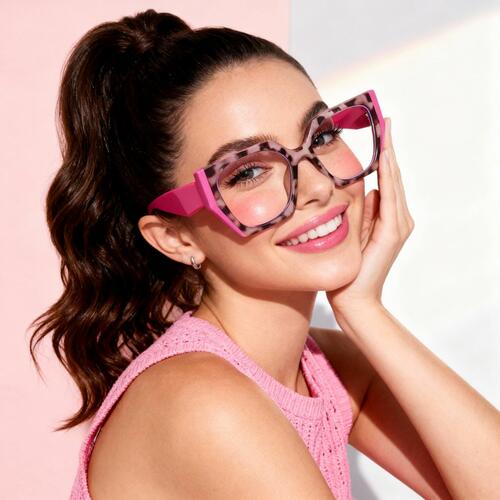
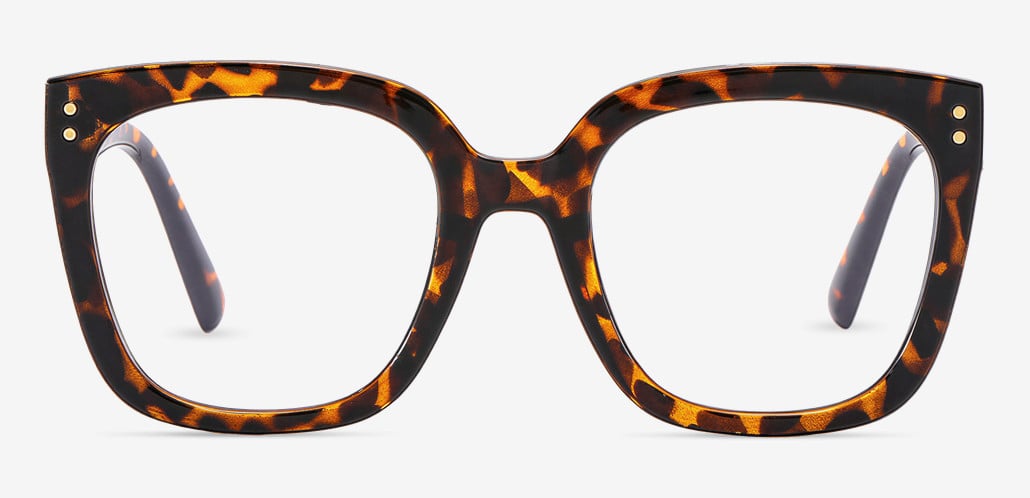
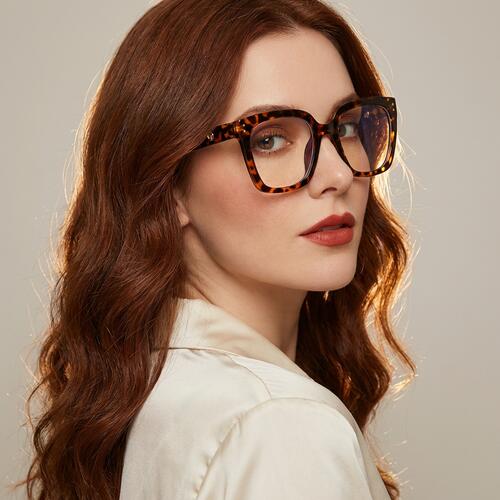
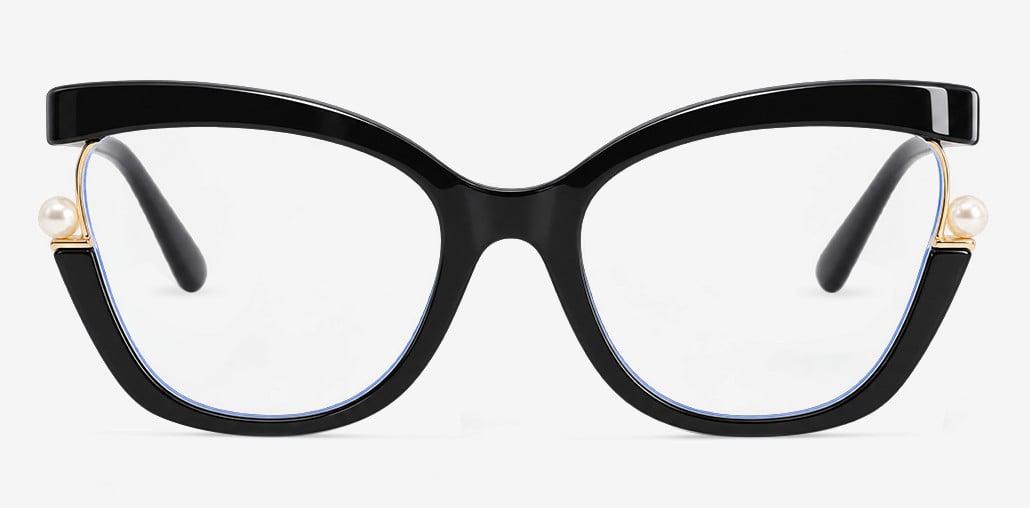
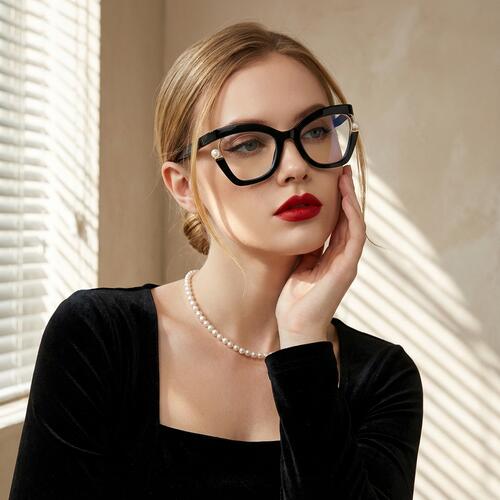
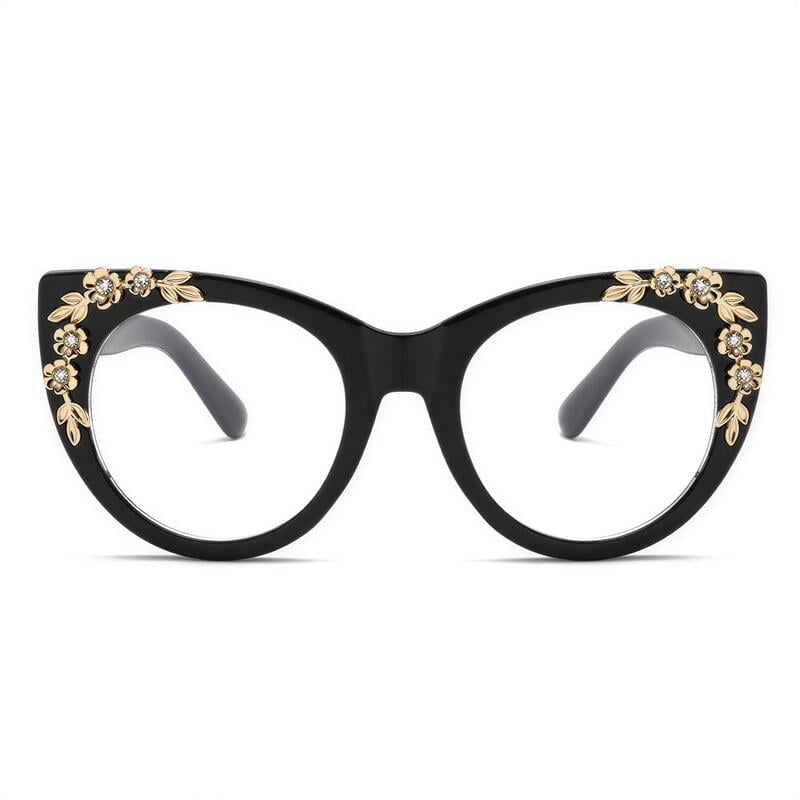
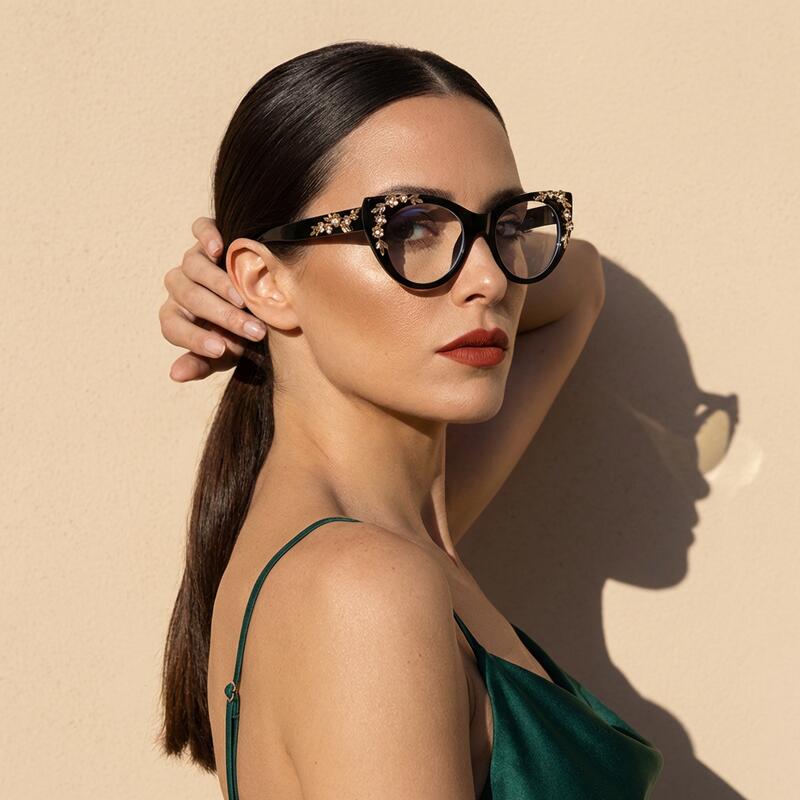
The honest answer is that the retro reading comes from a cluster of cues, not from the upsweep itself: high-gloss jet black, a sharply pointed tip, rhinestone or metal accents at the corners, and a very shallow lens all at once. Remove any two of those and the frame reads contemporary. Tortoise instead of black. A soft rise instead of a point. Matte or translucent acetate. A slightly deeper lens. This is also why the shape has no meaningful age ceiling — the variables that matter are finish and proportion, not the wearer's birth year. A muted tortoise cat eye on a sixty-year-old reads as considered; the same face in glossy black with crystal corners reads as themed. The frame didn't change categories; the cues did.
Wardrobe context does the rest. The shape carries enough visual information that it pairs most easily with clothes that don't compete — which is why it's become a quiet favorite of people who wear the same five colors all year, not just of vintage dressers.

Buying online: the checks that actually matter
Ordering cat eye glasses for women online works well, with a short list of honest caveats.
Your prescription should be current — in the US that generally means issued within the last one to two years, depending on your state and your eye doctor's expiration date. You'll also need your pupillary distance (PD), the millimeter distance between your pupils; it's on some prescriptions and missing from others, and it matters more for strong prescriptions than mild ones. Most adults measure somewhere between 54 and 74mm, and a pharmacy ruler and a mirror will get you close if your prescriber didn't record it.
Virtual try-on deserves a fair description rather than a sales pitch: it is genuinely good at proportion — whether an upsweep lands near your brow's end, whether a frame overwhelms or underwhelms your features — and it cannot tell you about weight, nose-pad comfort, or cheek contact. Use it to eliminate frames confidently and to shortlist, not as a final verdict.
And check what happens between your order and your doorstep. A prescription entered into a web form is just data until someone qualified verifies it against the lenses being cut; every Aoolia order goes through an in-house optician review before it ships, which is the difference between a checkout flow and an optical service. If you're comparing retailers, that step — not the price gap — is the question worth asking.
When you're ready to look at actual frames, the full range of cat eye glasses for women runs from barely-there lifts to full points, all prescription-ready. You now know which numbers to check before the color catches your eye.