
Frames & Style
Cool Glasses You'll Actually Keep Wearing
Most bold frames aren't returned. They're quietly retired around week three, for five reasons that have nothing to do with whether the frame is cool — and all five can be checked before you order.
There's a version of this story most people who wear glasses recognize. You find a pair you genuinely like — a colour you'd never tried, a shape with some attitude, something that looks nothing like the black rectangle you've had for four years. It arrives. You wear it constantly for about eleven days. Then one morning you reach for the old pair instead, and after that you mostly keep reaching for the old pair.
The frame didn't stop being cool. Nothing about it changed. What changed is that it collided with the specific details of your week, and it lost.
That collision is predictable. It happens for a small number of reasons that have almost nothing to do with taste, and every one of them can be checked before you order. This is the part of buying cool glasses that nobody writes about, mostly because of a timing quirk: the problems below don't surface until week three or four, and by then the return window has closed. Nobody files a complaint about a frame they simply stopped wearing. So the feedback never reaches the reviews, and the buying guides go on talking exclusively about face shapes.
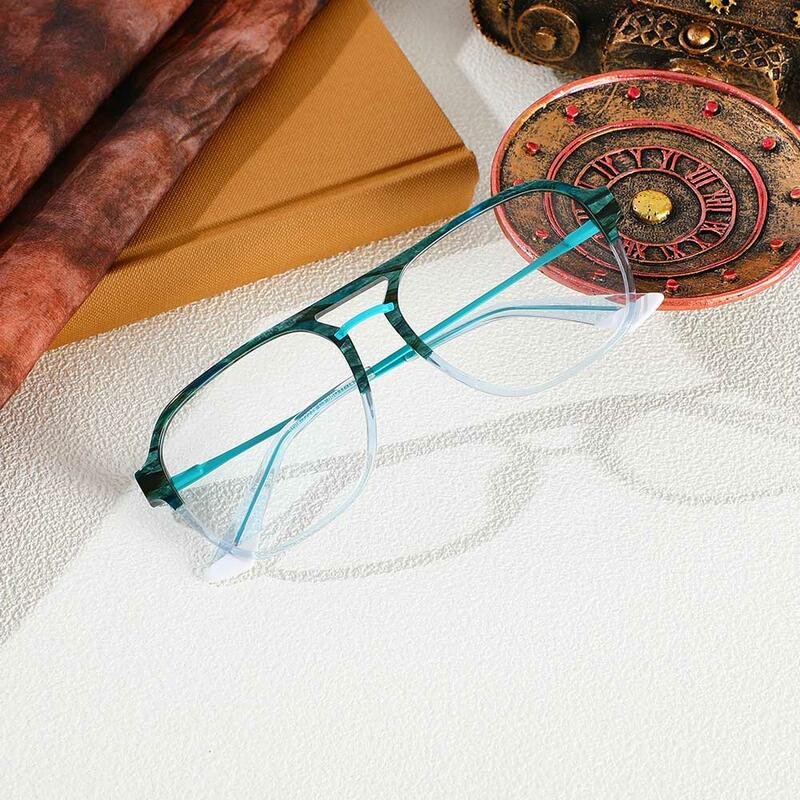
Cool glasses don't get returned. They get retired.
It's worth separating the two, because they have completely different causes and different fixes.
Returned
Week 1
Caused by things you notice immediately: the frame is wider than expected, it slides down your nose, the colour is nothing like the photo, the lenses came out thicker than you'd hoped. Fit and expectation problems, visible on day one. A 30-day window covers them comfortably.
Retired
Weeks 3–8
Nothing is wrong with the frame. It just keeps losing small daily contests against other things in your life. Each individual loss is trivial. The cumulative effect is a drawer — and by now, no return is possible and no review gets written.
The five contests below account for most of it.

The frame has to share your head with something else
This is the single most common reason a statement frame gets shelved, and it never appears on a spec sheet.
Look at what sits on your head for more than about three hours a day. For a lot of people that's over-ear headphones. For others it's a cap, a helmet, a hijab, a hard hat, safety glasses over the top, or a pair of clip-on sunglasses.
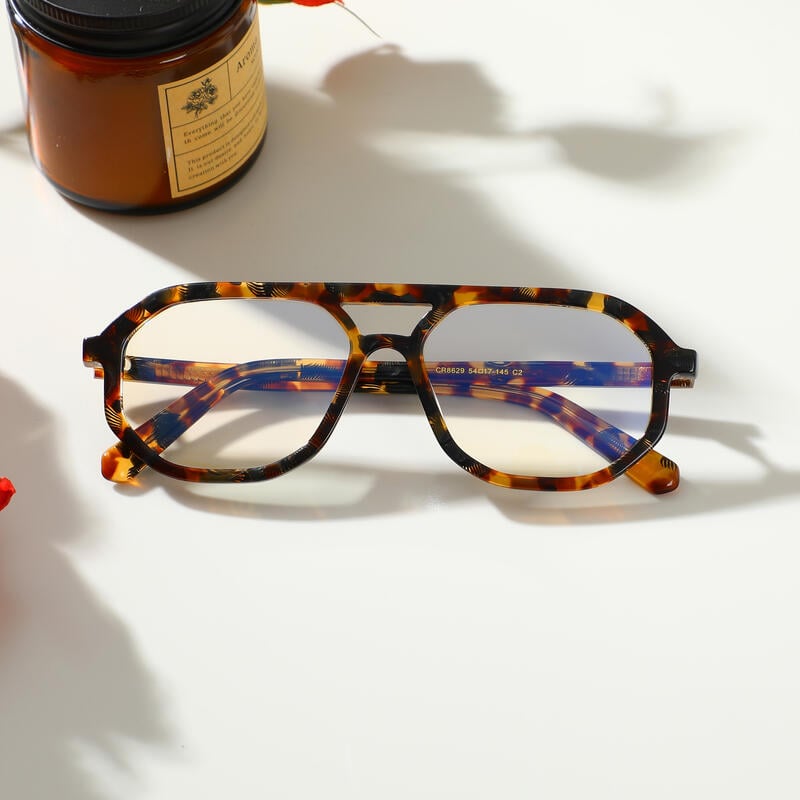
Over-ear headphones are the big one. The clamping pressure on a set of over-ear cans is designed around the assumption that whatever's between the cup and your skull is thin. A wire temple runs somewhere around 1.2–2 mm through the section that passes under the ear cup. A bold acetate temple — the kind that comes with most of the cool glasses people actually want — runs 4–6 mm, and it's usually flat and wide rather than round. That extra material has to go somewhere, and it goes into your temple bone. Twenty minutes is fine. Two hours on a call is not.
You'll notice this on day four, decide it's a break-in issue, and be reaching for the old wire frame by day twelve.
The check
Write down everything that touches your head for three-plus hours daily. Then look at the temple construction on the frame you're considering. If headphones are on that list and the frame has thick flat acetate temples, either pick a frame with a thinner temple through the ear section, or accept that this is a frame for the days you're not on calls. Both are fine answers. Discovering it after the fact is what isn't.
Hats have a related but different problem: a cap brim and a strongly angled top rim compete for the same visual line, and aviators in particular tend to look wrong under a brim because their high outer corner disappears into the shadow.
The colour you tried on isn't the colour you'll live in
Almost everyone chooses a frame under exactly one lighting condition. You then wear it under three or four.
Colour behaves inconsistently across light sources, and the effect has a name: metamerism. Two colours that look identical under one light can look clearly different under another, because the light sources have different spectral output and your eye is only sampling what's reflected. It's why a jacket that looked charcoal in the store turns out to be navy in the parking lot.
Frames are affected more than clothing, because the frame sits directly next to your skin, and your skin is also shifting colour under those same lights. In practical terms, some colours are stable and some aren't.

Holds its colour anywhere
Shifts between light sources
None of this means you shouldn't buy them. Some of the best cool glasses in circulation are exactly these colours. Champagne in particular can read as elegant metal in daylight and as slightly yellowed plastic under a fluorescent tube — which is worth knowing, not worth avoiding.
The check
Whether you're using a virtual try-on tool or holding a physical frame, look at it three times — once near a window in daylight, once under your main indoor overhead light, and once under a warm lamp in the evening. It takes about eight hours of elapsed time and roughly ninety seconds of actual effort. If the colour reads well in all three, it will read well everywhere you go.
Cool frames show wear in places plain frames don't
This is the reason people find hardest to predict, because it's a materials question rather than a style question.
A black frame ages invisibly. The scratches are black, the worn spots are black, the finish dulls to a slightly different black. A statement frame doesn't get that luxury. Everything that happens to it is legible.
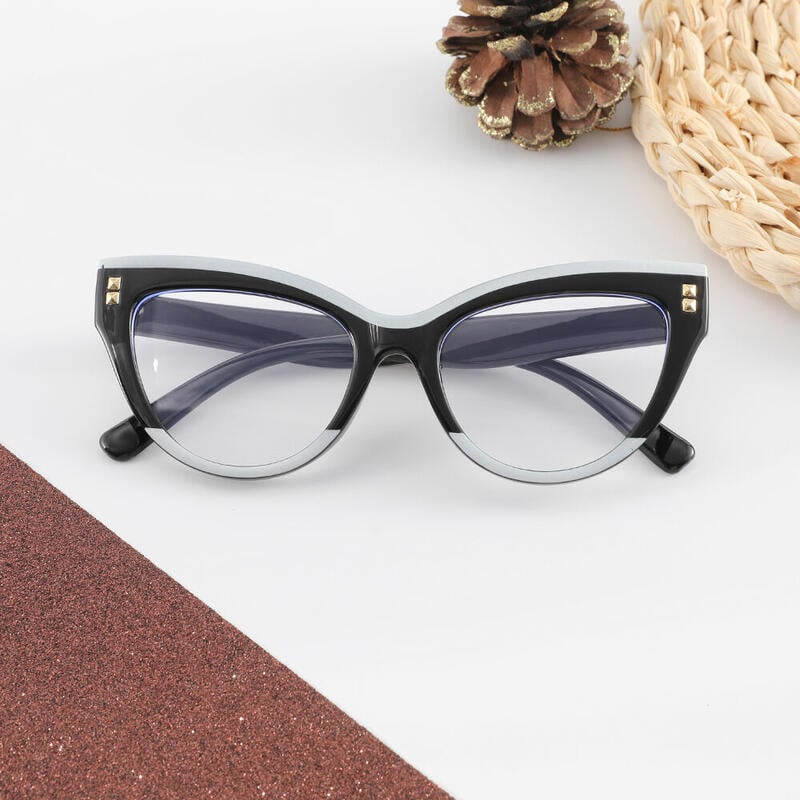
| Frame type | Shows it first at | What actually happens |
|---|---|---|
| Clear / transparent acetate | Nose pads, temple tips | Cellulose acetate contains plasticizers that migrate out over time. Combined with skin oils and UV exposure, clear frames develop a yellow cast — unevenly, starting at the two contact points. So you get a clear frame with two yellow patches rather than a uniformly warmer frame. Regular cleaning slows it down substantially. Nothing stops it entirely. |
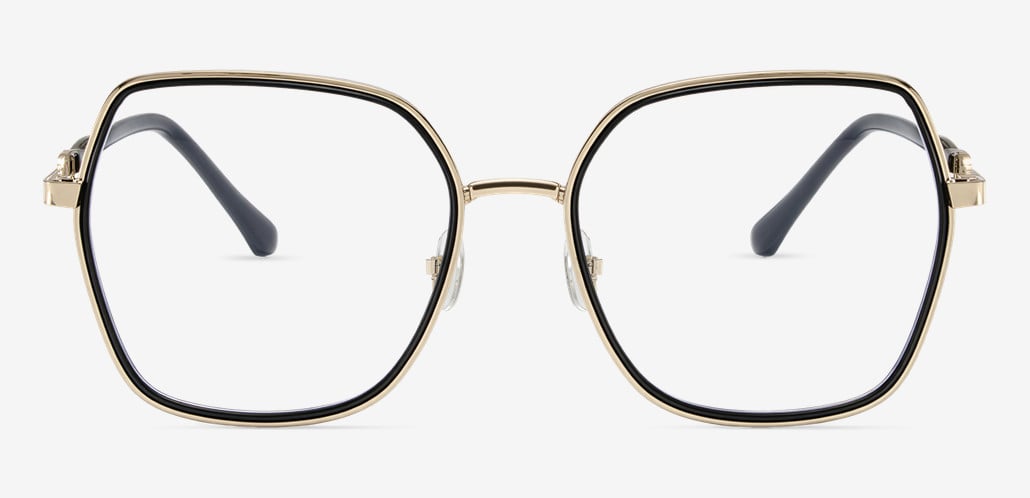
| Bright plated metal | Bridge, pad arms, behind ears | Coloured metal frames are almost always a base metal with a plated finish. Plating wears through where the frame is handled and where it presses. Once it does, you have two visibly different metals on one frame. On gunmetal that reads as nothing. On bright gold or a saturated colour it reads as damage. |
| Matte finishes | Sides that touch the face | Matte acetate holds skin oil in a way glossy acetate doesn't. The contact areas develop a slight sheen while the front stays flat, leaving the frame with two textures. It cleans off, and it comes back within a day. |
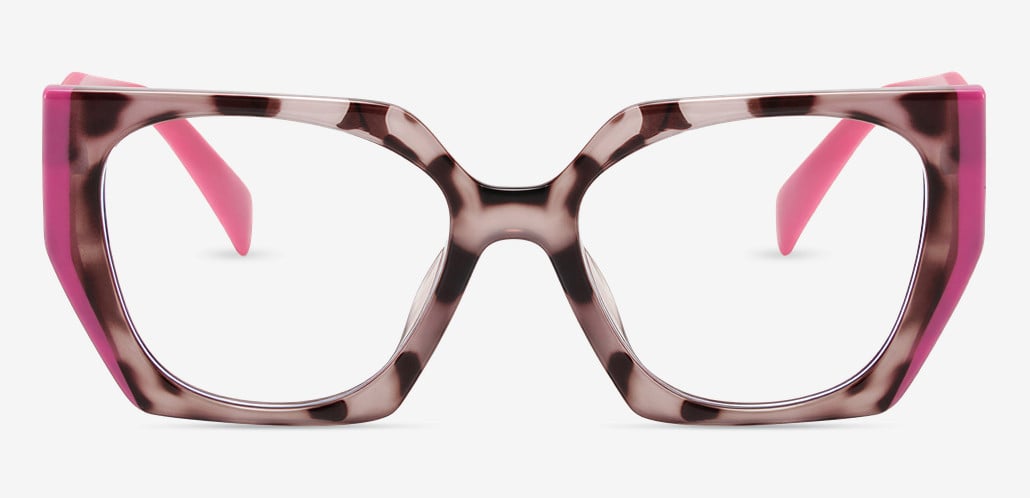
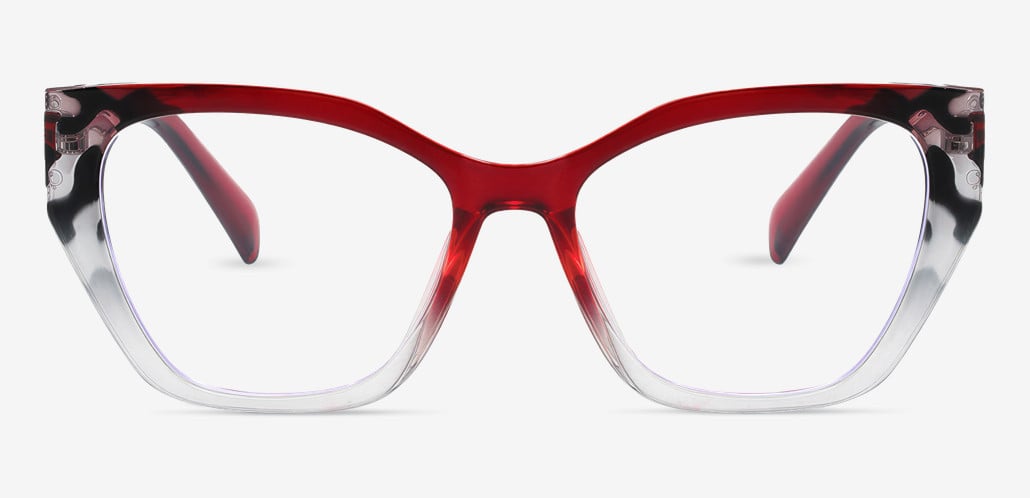
| Laminated / multicoloured acetate | Rim edges | These frames are sheets of coloured acetate bonded in layers, which is what produces the striped edge people like. Every polish takes a fraction of a millimetre off the edge and shifts the layer proportions. Over a couple of years the stripe pattern is measurably different from the one you bought. |
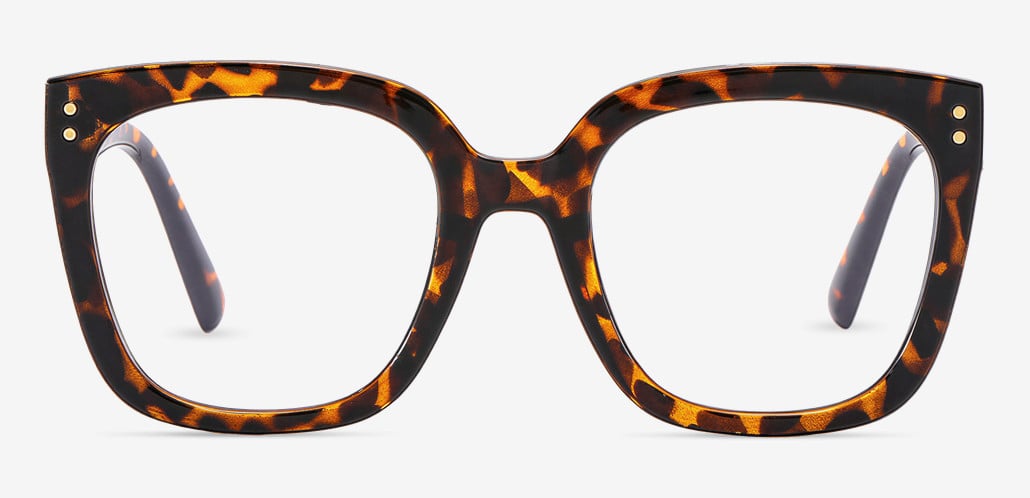
| Heavy acetate generally | Hinges | More mass on the front means more leverage on the hinges. Statement acetate loosens faster than lightweight frames, and a loosened frame sits lower on the nose — which changes how it looks more than most people expect. |
The check
Before you order, work out which row your frame sits in, and decide whether that wear pattern is something you'd find charming or something you'd find annoying. Plenty of people like a clear frame that's gone slightly warm. Plenty of people don't. Neither answer is wrong. Not knowing which one you are is what leads to the drawer.
The frame joins every outfit whether you invited it or not
A neutral frame is invisible to your wardrobe. It has no opinion about what you're wearing, so it goes with everything by not participating.
A strongly coloured frame is a permanent accessory. You can't take it off for one outfit the way you'd swap a scarf. It's there in every photo, every meeting, every errand, and it either agrees with what you have on or it deliberately doesn't.
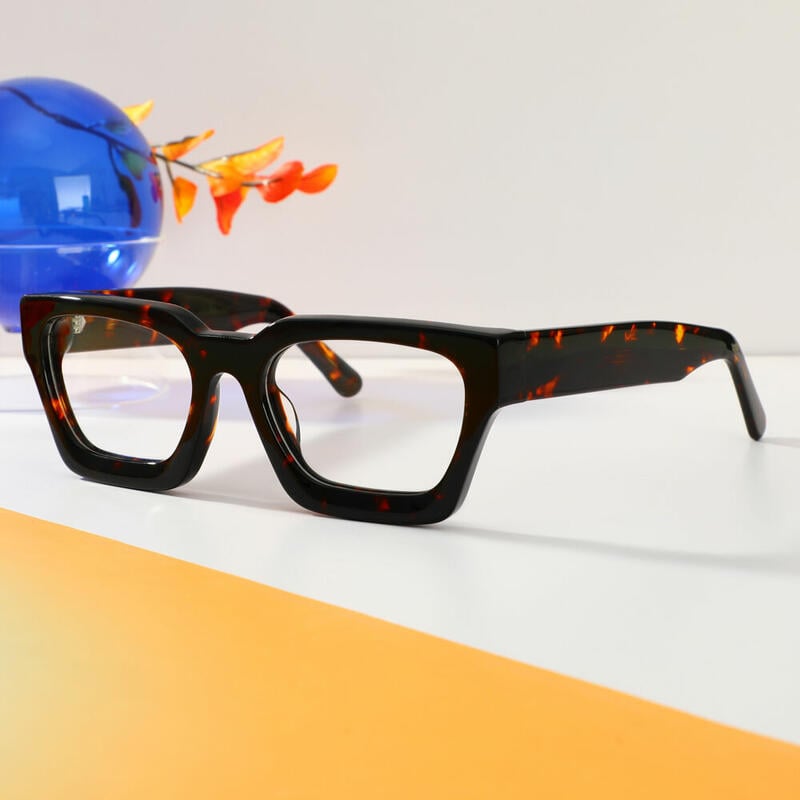
That's fine — deliberate contrast is a real and good look. What catches people out is the arithmetic. Count the colours you actually wear in a normal week. If your wardrobe is mostly black, grey, navy and white, a green or orange frame is a single fixed contrast point and it works consistently. If your wardrobe already runs colourful and patterned, that same frame is competing with something different every day, and some days it will lose.
The check
Open your closet, count how many distinct colour families you wear regularly, and be honest about it. Fewer than four means a bold frame will read as your signature. More than six means a bold frame is going to clash roughly twice a week, and you'd probably be happier putting the standout into shape or surface — a distinctive outline, clear acetate, a mixed-material front — rather than into colour.
You stopped being able to see it
This one is not a defect and there's no fix, but it explains a feeling a lot of people misread.
You adapt to your own face very quickly. A new frame is startling for a few days, ordinary within two weeks, and functionally invisible within a month. Other people still see it. You don't. The specific pleasure you bought the frame for — the small jolt of looking different in the mirror — has a short half-life by design.
People read that as the frame having gone stale and start shopping again. It hasn't gone stale. You've acclimatized, which is exactly what should happen with something you wear twelve hours a day.
The useful response isn't replacement. It's rotation. Two frames that alternate stay visible to their owner far longer than one frame worn continuously, and the effect is not subtle.

The two-frame arithmetic
This is where cool glasses get cheaper than they look.
A single statement frame has to survive all five contests above. It has to work with your headphones, hold its colour under every light in your life, age in a way you like, cooperate with your whole wardrobe, and stay interesting to you indefinitely. That's a lot to ask of one object, and it's why the expensive single-frame purchase so often ends up as the expensive drawer occupant.
Two frames don't have that problem. Each one only has to win the contests it's assigned to. One thin-templed frame for headphone days, one bold acetate for everything else. One stable colour that goes anywhere, one that's a genuine statement. They alternate, so neither goes invisible, and the wear is split across two pairs, so both age slower.
At the price point most cool glasses actually sell for now, two frames costs less than one designer pair did five years ago. The constraint that made single-frame buying the default — that a second pair was a luxury — mostly isn't true anymore.
If you're picking two, the useful split is by what they're standing out with:
Pair one
Stand out through colour or surface
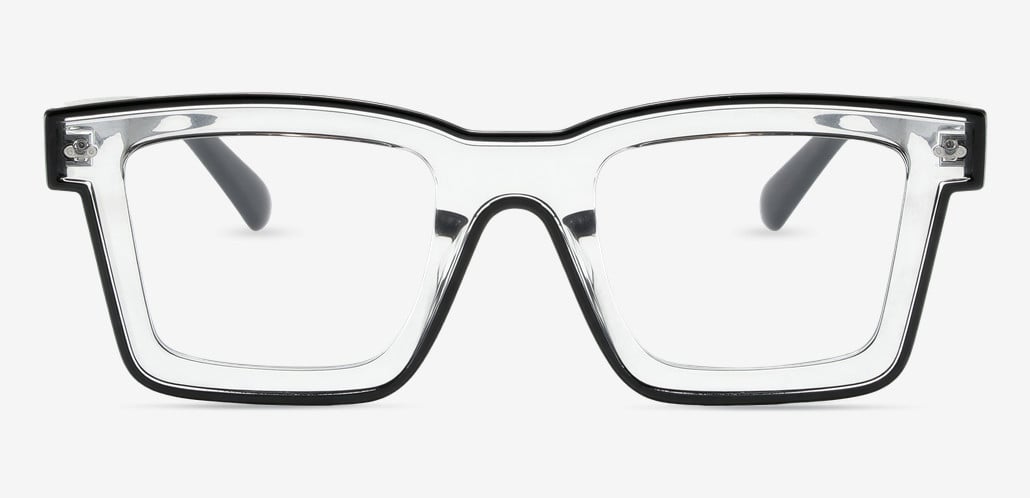
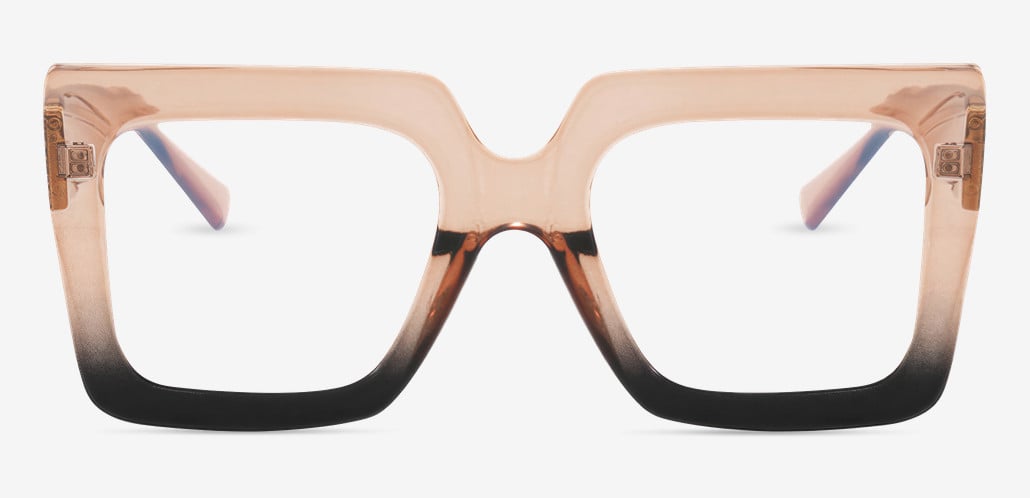
A clear frame, a patterned acetate, a mixed-material front. These choices move slowly in the market and stay wearable for years. This is the pair you'll still like in 2030.
Pair two
Stand out through shape or proportion
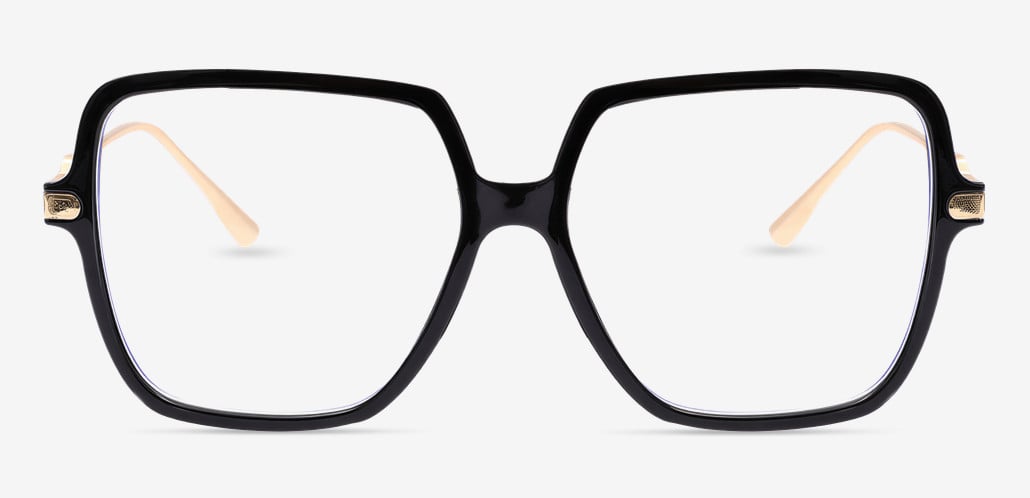
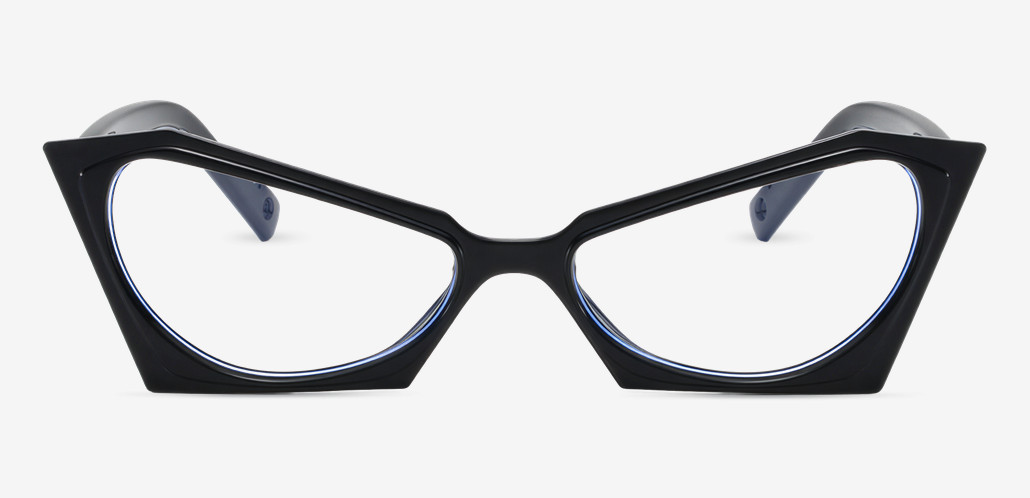
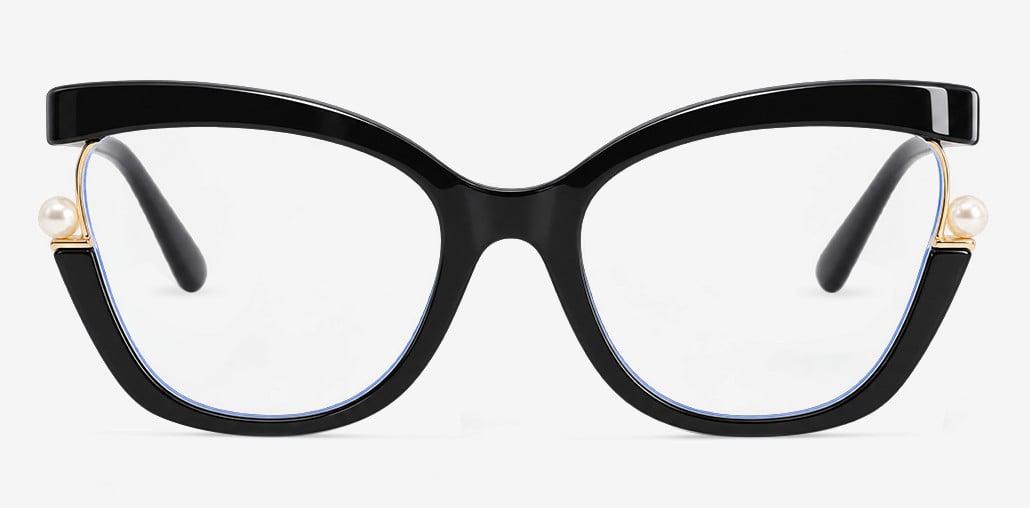
A cat-eye, an aviator, something geometric, something oversized. These look most current right now and are the most likely to date in four years — fine, as long as they aren't your only pair.
The five checks, in order
Before you order a frame you're excited about, run these. It takes one evening.
- The head inventoryList everything that sits on your head for three-plus hours daily. Check the frame's temple thickness against it.
- The three-lights lookDaylight, overhead indoor, warm evening. Same frame, three times.
- The wear-point questionClear acetate, plated colour, matte finish, laminate, or heavy front? Decide now whether you'll like how it ages.
- The wardrobe countHow many colour families do you actually wear? Under four, colour works. Over six, put the standout somewhere else.
- The rotation planIs this your only pair, or one of two? If it's your only pair, downgrade the boldness by one notch. If it's the second, go further than you think.
Common questions
Do cool glasses have to be expensive?
No, and the connection has weakened considerably. Frame construction quality tracks price to a point, but the things that make a frame look interesting — colour, shape, surface treatment, material combinations — are design decisions, not cost decisions. A distinctive acetate at $40 and a distinctive acetate at $300 are usually the same manufacturing process at different scales.
What's the most forgiving cool frame if I only want one pair?
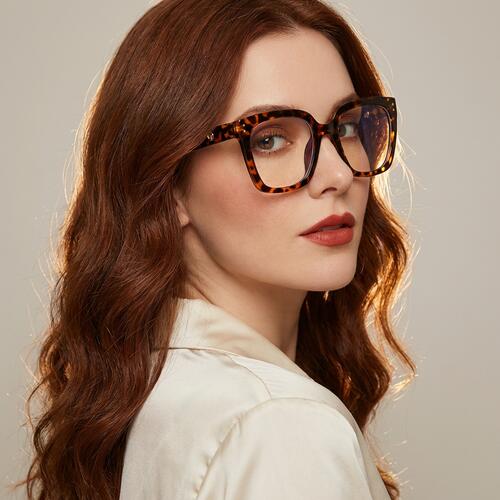
A frame that stands out through shape rather than colour, in a stable dark colour. A tortoise cat-eye or a black aviator changes your face noticeably while staying compatible with every outfit and every light. It's the lowest-risk way to move away from a plain rectangle.
Are clear glasses still worth buying, given the yellowing?
Yes, for most people. Clear frames have been continuously in circulation for decades and show no sign of dating. Just go in knowing they'll warm up over time, clean them properly, and treat them as a frame with a finite good-looking lifespan rather than an heirloom.
How do I keep cool glasses from looking like a costume?
Change one or two things about the frame relative to a standard pair, not four. A green cat-eye changes shape and colour and reads as considered. A green patterned oversized cat-eye changes shape, colour, surface and proportion all at once, and at that point the frame is the outfit.
How long should a frame last?
With daily wear and reasonable care, a well-made acetate or metal frame lasts several years mechanically. The limiting factor is almost never structural failure — it's hinge loosening, finish wear, or you deciding you're done with it. Rotation extends all three.
Can I get these frames with different lens options?
Yes. Each frame page lists the lens choices available for that specific style, and you select them during checkout.
Cool glasses fail for boring reasons. Headphones, light sources, skin oil, wardrobe colour counts, and the fact that you get used to your own face. None of that shows up in a product photo, and none of it is a reason to buy something plain instead. It's a reason to spend one evening checking five things before you order, and then to buy the frame you actually wanted.
Cool glasses, scored before you buy
Every frame in the collection is rated on how far it departs from a standard pair, and tagged for whether that standout ages fast or slow.
Browse Cool Glasses