
Vintage Glasses: Complete Guide to Vintage Eyewear
What the decades actually produced, how to date a pair from the markings inside the temple, and what happens when a sixty-year-old frame meets a modern optical lab.
Most guides to vintage glasses are really guides to vintage looks. They tell you the 1950s were about browlines and the 1970s were about big round metal, show you a few photographs, and stop there.
That leaves out everything that actually decides whether a pair works. A frame made in 1962 was measured by a different standard, built from a material that has been aging for sixty years, designed around a lens that no longer exists, and fitted with hardware that is no longer manufactured. None of that shows up in a photograph. All of it shows up when you try to wear the thing.
This guide covers both halves: what the decades actually produced, and what happens when a frame from one of them meets a modern optical lab. It also covers the point at which buying an original stops making sense and a newly made vintage-style frame is simply the better purchase.
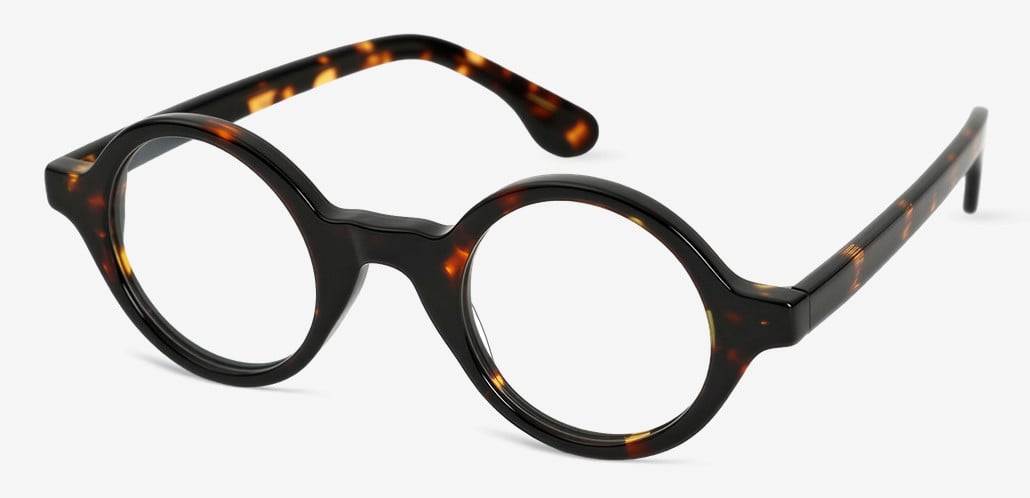
What counts as vintage glasses
The word gets used four different ways, and the differences are not cosmetic. They change the price, the risk, and whether you can get lenses fitted at all.
True vintage
A frame manufactured during the period and, usually, worn. Expect wear at the temple tips and bridge, possible plating loss, and a fit adjusted to somebody else’s head.
Deadstock / NOS
A period frame made and never sold. The ideal on paper. In practice it has still aged, just in a drawer instead of on a face.
Reissue
Current production of an old design by the company that owns it, often with modern hinges and updated lens curves. New frames, priced as new frames.
Vintage-style
New frames borrowing the silhouette and detailing without claiming lineage. The largest category by far, and what most online retailers mean by “vintage.”
The distinction matters most when you are comparing prices. A $40 pair and a $400 pair described with the same word are not competing with each other.
The rough dividing line collectors use is twenty years for vintage and a hundred for antique, which as of now puts anything through the mid-2000s inside the vintage bracket. That feels wrong to a lot of people, and it is worth knowing when a listing calls a pair of 1998 wire frames vintage. Technically it is not lying.

A decade-by-decade field guide
Breadth first, because you need a rough map before the details are useful.
Round wire frames sitting directly on the nose, often in gold-filled metal, sometimes with cable temples that curl behind the ear. Pince-nez survived into the 1920s. Plastic frames from this period are frequently cellulose nitrate, which matters later in this guide.
Heavier plastic fronts arrive. The Ful-Vue construction, where the temples attach at the top corner of the lens rather than the middle, spread through this decade and changed the whole proportion of a frame. Wartime metal restrictions pushed manufacturers toward plastic.
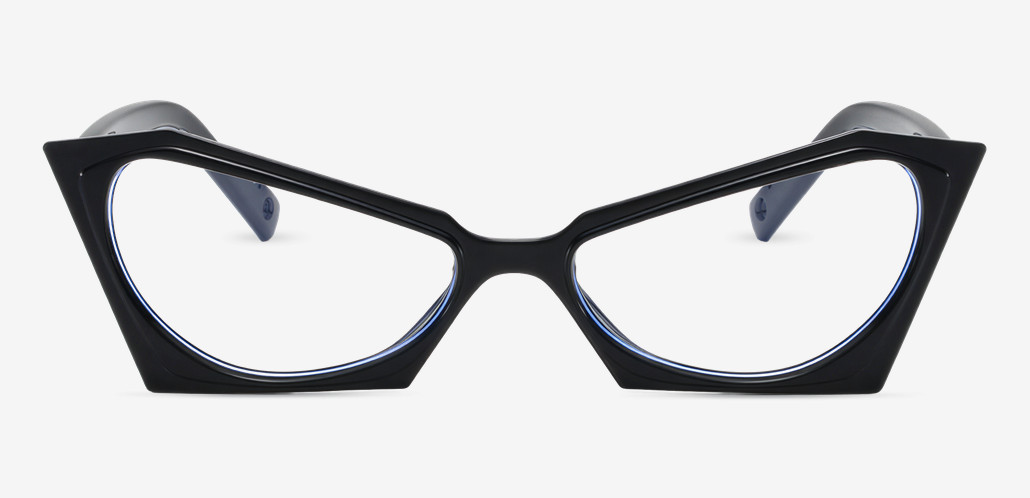
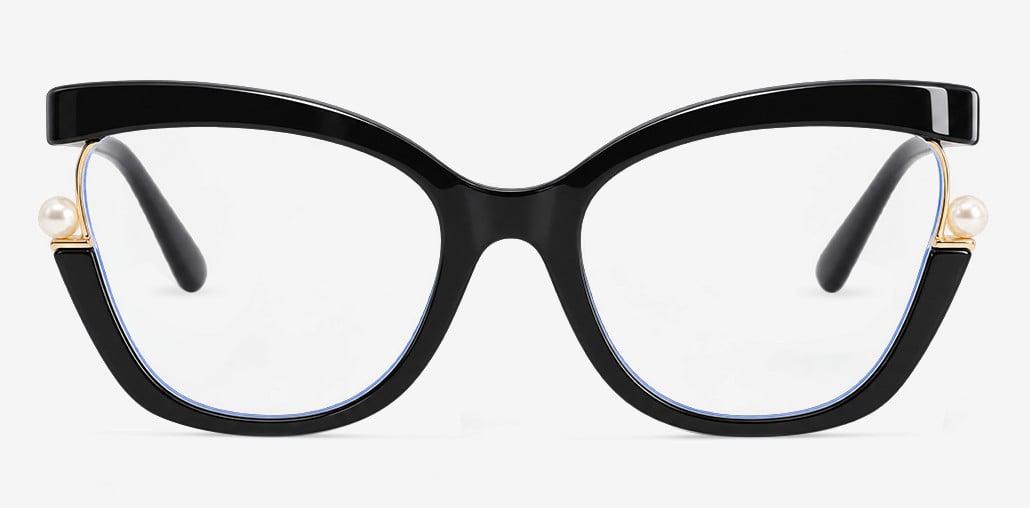
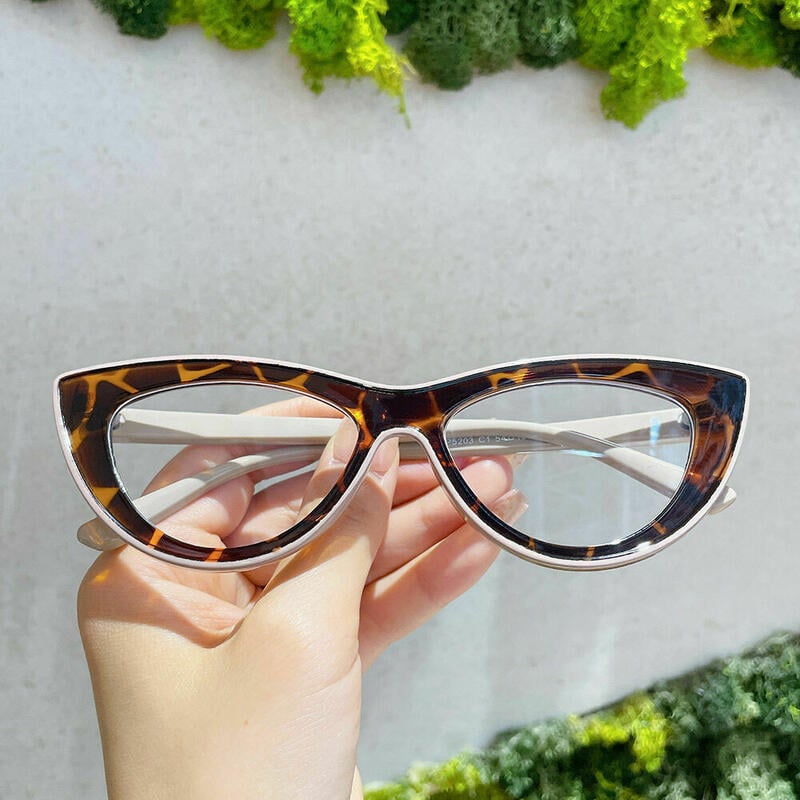
The two defining silhouettes are the browline, with a thick top bar over a thin wire lower rim, and the upswept cat-eye. Rivets and pin hinges are visible on the front of good acetate frames. Lenses are small by modern standards, and the frames are narrow.
Cat-eyes get more extreme, then collapse. Nylon-cord semi-rimless frames appear, where a fine cord in a groove holds the lens instead of a lower rim. Toward the end of the decade the small round wire frame returns as a countercultural signal.
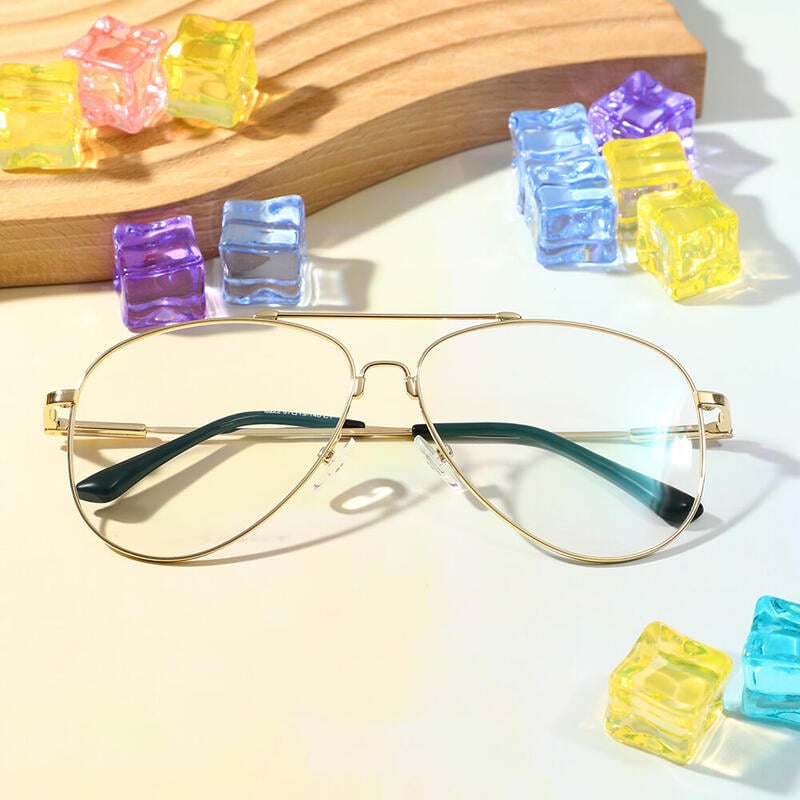
Everything grows. Oversized round and squared-off metal frames, double-bridge optical frames borrowed from aviator sunglasses, gold tones, tinted lenses as a normal choice rather than a novelty. Optyl, an epoxy resin with a slight memory effect, enters production and lets designers mold shapes acetate could not hold.
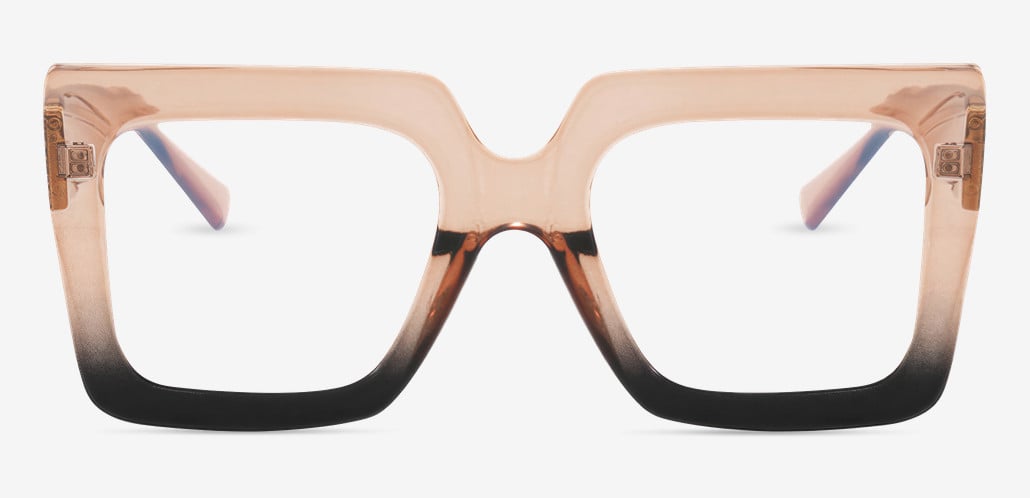
Bigger still, and more decorated. Thick acetate with metal trim, combination frames pairing a plastic brow with a metal lower rim, gradient tints, and logos on the temples for the first time as a mass phenomenon.
A hard reversal. Small ovals, narrow rectangles, thin wire, gunmetal and matte silver, and the beginning of titanium and rimless as mainstream options. If a frame looks almost invisible, this is usually where it comes from.
Silhouettes overlap by five to ten years at every boundary, because ordinary people kept wearing what they already owned. And lens height moves in a long arc across this whole period, shallow in the 1950s, deep in the 1980s, shallow again in the 1990s. That single variable will matter more to your eventual comfort than the shape does.
Reading the markings inside the temple
This is the part almost nobody writes about, and it is the most useful skill in the guide. Open a frame and look at the inside of the temples, the bridge, and sometimes the endpiece. Manufacturers stamped a surprising amount of information there.
- 48◻20 145
Numbers. Modern frames carry three: lens width, bridge width, temple length. The small square between the first two is the boxing symbol. If you see it, the frame was marked under the current system. Older frames often carry only two numbers, or numbers with no symbol between them, or temple lengths in inches — a temple marked 5¾ is 145mm.
- 1/10 12K GF RGP
Gold content. Gold filled: a bonded layer of gold making up that fraction of the frame’s weight, at that karat. RGP is rolled gold plate. These are real content declarations, not decoration, and they tell you the frame was built to last. A gold-filled frame from 1955 often has better plating integrity today than a flash-plated frame from 1995.
- MADE IN OCCUPIED JAPAN
Country of origin. This mark alone narrows a frame to roughly 1947–1952, which is about as precise as dating gets. FRAME FRANCE, MADE IN WEST GERMANY (pre-1990), and a US maker’s name are all useful brackets.
- Maker hallmark
Company marks. American optical manufacturers stamped names or logos on the bridge or temple. A name you can search is worth more than any visual guess, because catalog scans of the period are widely archived by collectors and often give you the exact model and year.
Absence of markings is information too. An unmarked plastic frame that looks pre-war is more likely to be cellulose nitrate, which is the one material in this guide that carries a genuine safety consideration.
The sizing problem nobody warns you about
Here is the mismatch that catches people who did everything else right.
Modern frame measurement uses the boxing system, standardized internationally and reflected in the markings above. It measures the lens across the widest rectangle that would enclose it. Before that convention took hold, many frames — especially British and European ones — were marked using the datum system, which measured lens width along the horizontal midline of the lens instead.

On a lens widest at its middle, both methods give the same number. On a cat-eye, a browline, or any shape widest above or below its midline, they do not. The gap is commonly two to three millimeters, occasionally more. A vintage frame stamped 46 can measure 48 or 49 by the standard your current glasses use.
The consequence is simple and annoying. If you buy vintage by matching the numbers on your current pair to the numbers stamped on the old frame, you can end up consistently ordering frames wider than you wanted, without ever understanding why.
Two ways around it. Ask the seller for the total frame width across the front, hinge to hinge, measured with calipers — that number means the same thing in every era. Or ask for lens width measured across the widest point rather than the midline.
There is a second sizing quirk worth knowing. Frames from the 1950s and 1960s were built for a population that wore glasses lower on the nose and expected the lower rim to sit above the cheek. Bridges from that era often run narrow, and the pads or saddle sit higher than a modern frame’s. If you have a lower nose bridge, a lot of period frames will rest on your cheeks no matter how well the width matches.
What vintage frames are made of, and how each ages
Material is the strongest single predictor of whether a sixty-year-old frame is wearable or a display piece.
Cellulose nitrate
The first mass plastic used for eyewear, largely gone from production by mid-century. It yellows, develops fine surface cracks called crazing, gives off a faint camphor or vinegar smell as it breaks down, and becomes progressively more flammable as it degrades.
Cellulose acetate (zyl)
Still the dominant frame plastic. Over decades it loses plasticizer, shrinks slightly and turns brittle. The shrinkage shows up in the lens groove, which can tighten enough that a new lens will not seat without careful heating — and a brittle front can crack during that heating.
Optyl
An epoxy resin: light, able to hold bold shapes, and it returns to form when heated. Its weakness is that it tolerates repeated adjustment poorly, and worn examples can develop a chalky surface.
Gold filled & rolled gold
Because the gold layer is bonded rather than flash-plated, well-kept examples from the 1940s and 1950s can look better than plated frames three decades younger. Check the bridge center, temple tips and endpieces.
Thinly plated base metal
Common in cheaper 1980s and 1990s frames. Once the plating wears through at the bridge or behind the ear, corrosion spreads under the remaining layer and the frame cannot be refinished economically.
Titanium & monel
Mostly 1990s onward. They do not corrode meaningfully, and replacement hardware for them is still standard.
If you are looking at a plastic frame that appears to predate roughly 1950 and it smells faintly sweet or sharp, treat it as cellulose nitrate. Do not test it with heat or flame, do not store it sealed in a warm place, and think hard before having lenses cut for it.
Can you actually put lenses in them?
This is the question that turns a nice find into a wearable pair, and it is where a lot of vintage purchases quietly fail. An optical lab needs three things to glaze a vintage frame.
-
A shape to trace
Modern edging machines cut to a traced pattern. If the frame still holds its original or demo lenses, the lab traces those and the job is straightforward. If it arrives empty, the lab has to trace the groove itself, which some machines handle poorly on old, irregular or hand-cut rims. Always buy vintage frames with the lenses still in them, even scratched, worthless ones. They are the pattern.
-
A frame that survives the process
Labs decline jobs. The usual reasons are crazed or brittle acetate, a groove that has shrunk, drilled rimless mounts with fatigue cracks around the holes, and fronts bent out of alignment that cannot be brought back without cracking. A lab that says no is doing you a favor.
-
Hardware it can source
Screws, nose pads, pad arms and hinge parts from before the 1970s are frequently non-standard. A missing pad arm on a 1958 metal frame can be a genuine dead end.
Two more things worth knowing. Original glass lenses generally get replaced rather than reused, partly because US rules have required impact-resistant lenses in eyewear since the early 1970s and old glass was not made to that standard. And deeply curved period frames can fight modern lens designs, because the curve the frame expects and the curve the lens wants are not always the same.
Budget for glazing as a real line item. On many vintage purchases it exceeds the price of the frame.

Where vintage glasses actually come from
Specialist dealers
- What you get
- Curated stock, accurate descriptions, often deadstock, measurements provided.
- Watch for
- Highest prices, and the good pieces sell out fast.
Auction & marketplace listings
- What you get
- The widest selection and the real bargains.
- Watch for
- Missing measurements, unstated measuring convention, optimistic condition reports, usually final sale.
Estate sales & thrift
- What you get
- Genuinely cheap, occasionally exceptional.
- Watch for
- No returns, no measurements, no way to verify anything before buying.
Optical shop backstock
- What you get
- Frames that were meant to be sold and never were.
- Watch for
- Rare, and mostly already picked over by dealers.
Reissues from the original maker
- What you get
- Period design with modern hinges and lens compatibility.
- Watch for
- Priced as new frames. The design is period; the object is not.
Vintage-style collections
- What you get
- Published measurements, size choice, straightforward glazing, a return window.
- Watch for
- No lineage and no rarity. You are buying the look, not the object.
If you are buying online and the listing gives you a decade but no millimeters, assume you will be measuring the frame yourself when it arrives, and buy accordingly.
Inspecting a pair before you commit
A short list that catches most of the expensive mistakes. Ask for photographs of each of these if you cannot handle the frame yourself.
- Fold both temples. They should close flat and roughly parallel. Crossed temples mean the front has been bent.
- Look at the front head-on. One rim sitting higher than the other is a sign the frame was sat on.
- Check for crazing. Fine surface cracks in plastic, especially near hinges and bridge, mean the material has aged past reliable.
- Look for white bloom. A chalky haze on acetate is plasticizer migration. Light cases polish out. Deep cases do not.
- Wiggle the hinges. Play means worn barrels — repairable, but it adds cost.
- Check plating at three points. Bridge center, temple tips, endpieces. Wear-through at any of them tends to spread.
- Confirm the lenses are present. Even damaged ones. They are the tracing pattern.
- Ask about smell. A sweet or sharp chemical smell in an old plastic frame is a reason to walk away.
Care, once you own a pair
Old frames tolerate less than new ones. Keep them out of hot cars, which is the single most common way acetate warps. Store them in a hard case lying flat rather than folded into a soft pouch under pressure. Clean with mild soap and water rather than alcohol wipes, which can dull period finishes and attack older plastics. Skip ultrasonic cleaners on gold-filled frames and on anything you suspect is nitrate. And find a shop willing to adjust the frame cold or with very gentle heat, then keep going back to that shop rather than experimenting at home.
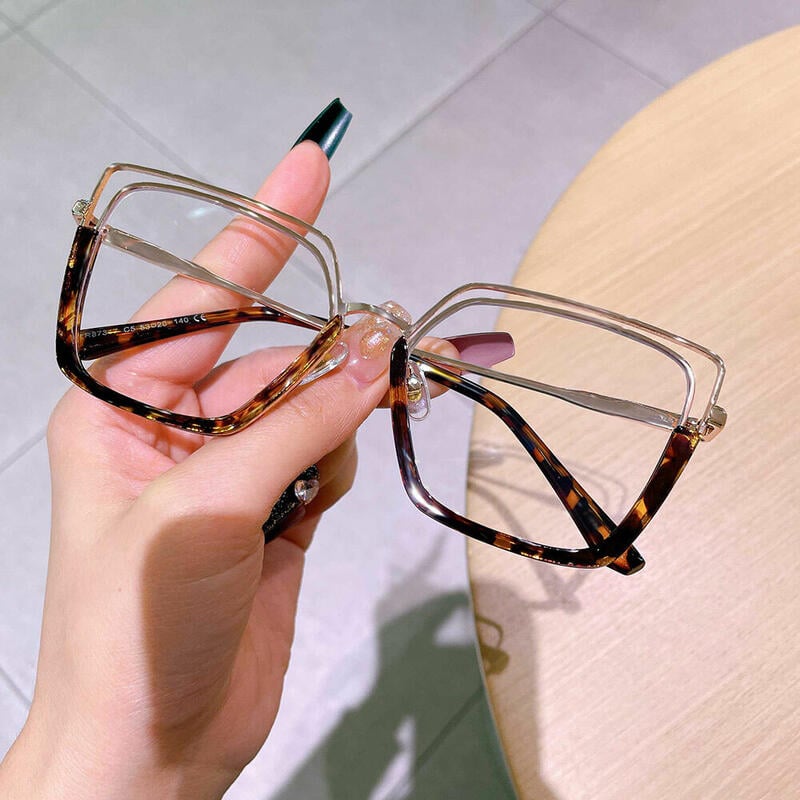
When vintage-style is the better buy
There is an honest answer to this and it depends on what you are actually after.
If you want the object itself, with its history and its markings and the fact that nobody else has one, buy vintage. Accept the search, the sizing uncertainty, the glazing cost, and the possibility that a lab turns you down.
If what you want is the look, on a frame that fits, in a size you can choose, that a lab will glaze without hesitation and that you can return if it is wrong, then a newly made vintage-style frame does that job better and for less money. This is not a compromise position. It is a different purchase with different goals.
Our vintage glasses collection is the second kind, and we say so plainly on the page. Nothing in it is presented as an original period frame. What it offers is the silhouettes and detailing of those decades in new production, with full measurements published for every pair, Virtual Try-On so you can compare shapes on your own face, and lens options at checkout.
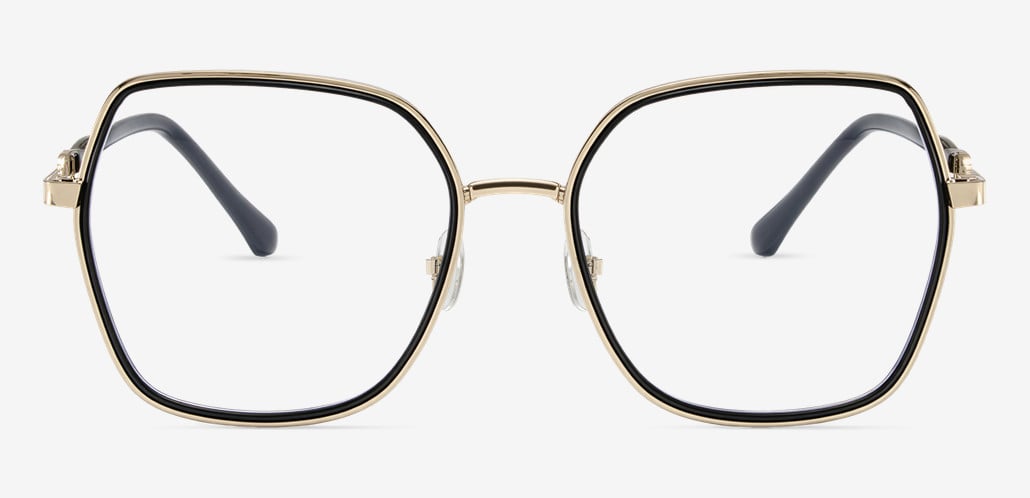
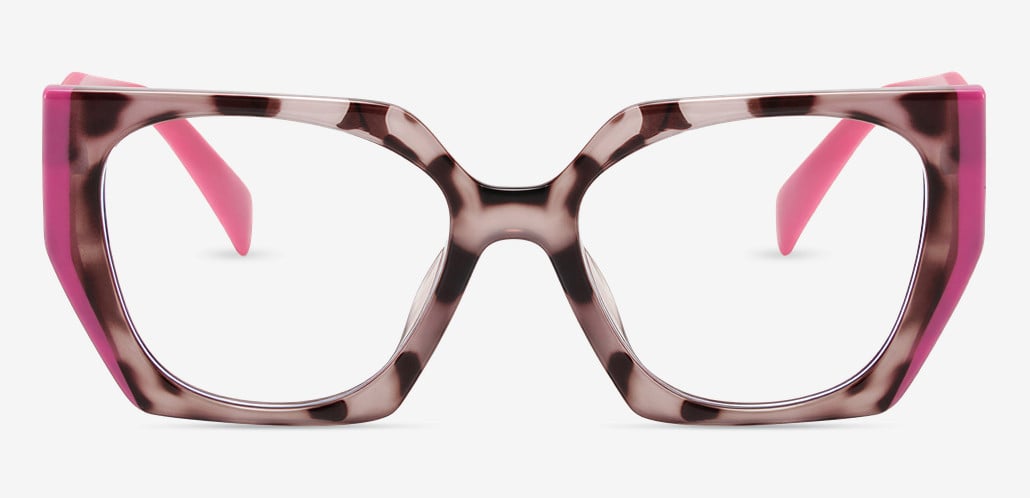
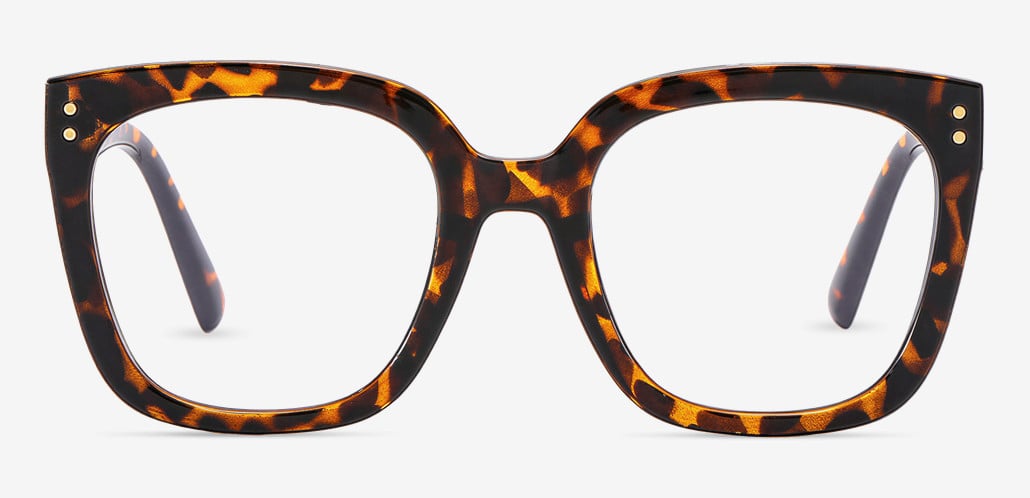
If you are drawn to a particular era, the retro glasses, round and cat-eye collections are the fastest way in.
Frequently asked questions
How old does a pair have to be to count as vintage glasses?
The common convention is twenty years and up, with antique reserved for a hundred years and up. In practice sellers use “vintage” loosely for anything with a period look, which is why the markings inside the temple are worth more than the description in the listing.
How can I date a pair I already own?
Start with the markings: gold content stamps, country of origin, the presence or absence of the boxing symbol between the size numbers, and any manufacturer hallmark. Then check the construction — visible rivets, pin hinges, nylon cord rims and combination brow bars all narrow the range. Silhouette alone is the least reliable clue, because designs get revived.
Are vintage frames stronger than new ones?
Sometimes. Gold-filled metal frames from the mid-century were built to a standard that is genuinely rare now. But no vintage frame has spring hinges, and every plastic one has been aging for decades, so the same frame that survived sixty years in a drawer can be less forgiving of daily handling than a new one.
Why do vintage frames feel small?
Two reasons stack. Lens sizes really were smaller through the 1950s and early 1960s. And older frames may be marked under a measuring convention that reports a smaller number than the one your current glasses use, so a frame that reads as your size can measure differently.
Can any optical lab put lenses in vintage frames?
No, and the ones that decline are usually right to. Bring the frame with its original lenses in place, ask before you buy whether the shop takes vintage work, and expect a shop that does this regularly to charge accordingly.
Is buying deadstock safer than buying worn vintage?
It removes wear, not age. Deadstock acetate has still shrunk and still lost plasticizer. The advantage is cosmetic condition and intact plating, which is real, but it does not make the frame behave like a new one at the lab.