
Style & Workplace
Office Siren Glasses: How Far You Can Take It Before It Breaks the Dress Code
Your handbook almost certainly says nothing about eyewear. So the line is real, unwritten, and set by three things you can actually assess.
Ninety-second check, before you read on
Open your employee handbook, hit Ctrl+F, and search for the word glasses. Then try eyewear.
Almost everyone who does this finds one of two things. Either nothing at all, or a single line about safety eyewear in a lab or a warehouse.
Written dress codes in American offices govern hemlines, sleeves, denim, sneakers, visible tattoos, and occasionally hair color. They very rarely say anything about the frames on your face.
That matters more than it sounds. It means the question people are actually asking when they search for office siren glasses is not a policy question at all. Nobody is going to hand you a rule. The line exists, people notice when you cross it, and it is enforced entirely through the reactions of colleagues who will never articulate it out loud.
So the honest version of this article is not "here is the rule." It is: here is what moves the line, so you can locate yours.
The line moves for three reasons, and only three
Strip away the noise and the read on a pair of office siren glasses is set by the room you wear them into, what else you are wearing at the time, and how long the people around you have known you. Style advice usually collapses all three into a single verdict about the frame itself, which is why the advice is so unsatisfying. The frame is the constant. Everything that determines the outcome is variable.
Work through them in order and you will end up with an answer specific to your situation rather than a generic one.

Who sees you first
Industry labels are a blunt instrument. "Finance" covers both a fixed-income desk where nobody outside the firm ever sees you and a private wealth office where you meet a new client every morning. The useful question is not what sector you are in. It is how often a stranger forms their first impression of you at work.
The more first impressions you generate, the narrower your margin. A first impression is a snapshot. It has no context, no history of you being good at your job, nothing to weigh against a sharp pair of frames. If you meet new clients weekly, your frames are doing a lot of unsupervised talking.
| How often strangers meet you | Practical margin |
|---|---|
| Daily, in a regulated or client-facing role — law, wealth management, healthcare admin, government, real estate closings | Stay conservative. Narrow is fine; extreme is a distraction you then have to work back from. |
| A few times a month, mostly internal with occasional client contact | Comfortable middle. A genuinely narrow frame reads as put-together, not as a statement. |
| Rarely, or in a creative or technical environment where output is the currency — agency, studio, product, editorial, tech | Wide margin. This is where the sharpest end of the look actually belongs. |
One caveat that gets ignored: video calls collapse this table. If you are remote-first and everyone meets you as a rectangle on a screen, you are generating first impressions constantly, even in a "casual" company. More on what the camera does further down, because it does something specific to narrow frames.
The loud-thing budget
Here is where most people who get it wrong actually go wrong, and it is almost never the frame in isolation.
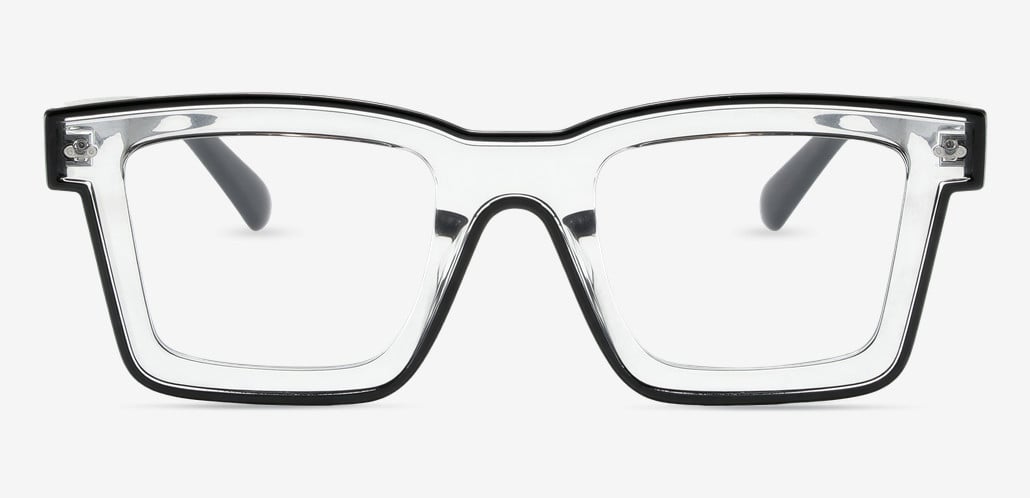
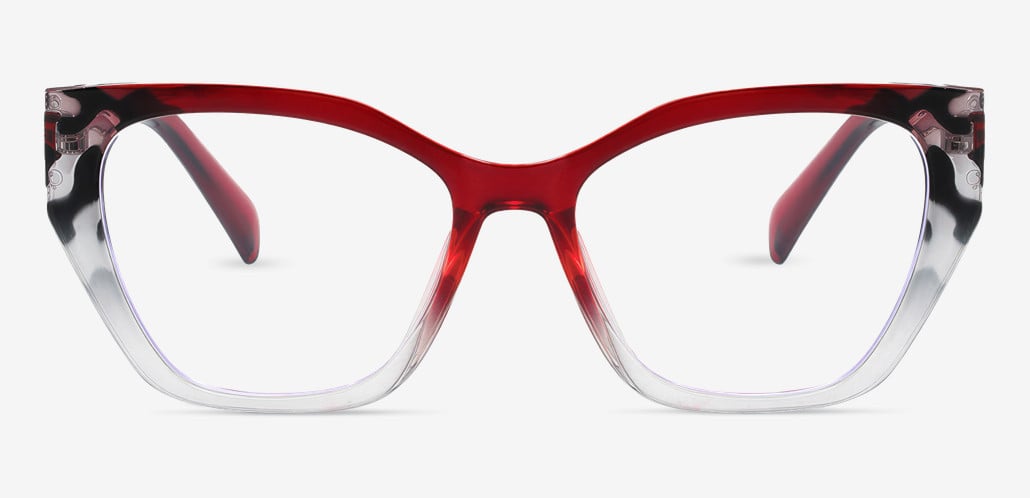
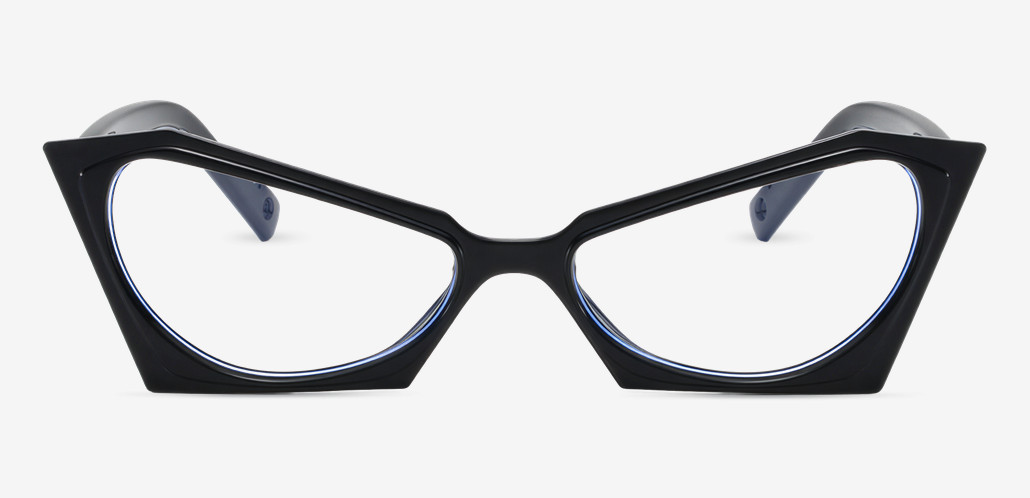
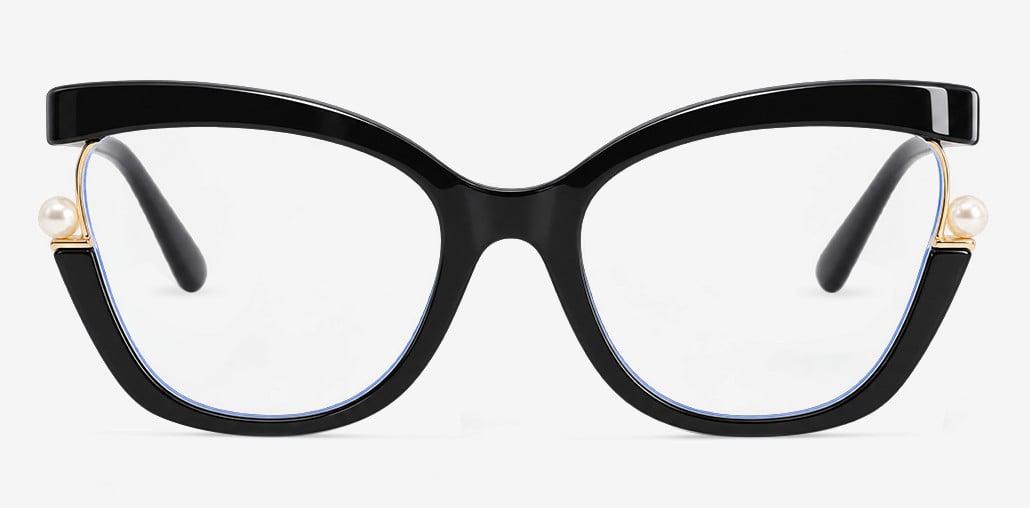
A pair of office siren glasses is a deliberate object. Narrow lenses, straight top lines, and slim rims read as a choice, which is exactly why people want them. The problem is that a deliberate object stops reading as taste and starts reading as costume once you stack it with other deliberate objects.
One loud element reads as intentional. Two reads as a look. Three reads as a theme, and a theme in an office is a costume whether you meant it that way or not.
Things that spend from the budget:
- The frames themselves, once they get properly narrow or steeply angled
- A strong lip color, particularly a red or a deep berry
- A slicked-back or severely pulled-back hairstyle
- A structured, exaggerated shoulder
- Anything worn on the frames, including a chain
- A tinted lens
- High-contrast or high-shine tailoring
Notice how ordinary most of that list is. None of these are outrageous individually. But the reason office siren styling photographs so well and lands so badly in a conference room is that the reference images run every single item at once. On a phone screen that reads as a cohesive aesthetic. Standing next to a coworker in a fleece vest it reads as a performance.
The practical fix is boring and it works. If you are wearing your sharpest frames, drop everything else a notch. Neutral lip, hair down or loosely back, softer shoulder. The frames get to be the whole story, which is presumably what you bought them for.

How long they have known you
The exact same frames land differently in your second week than in your third year, and this is worth taking seriously rather than resenting.
New colleagues have no other data about you. Whatever you wear becomes the definition of who you are, because there is nothing else in the file. Six months later, when people have watched you run a project and handle a bad quarter, an eye-catching pair of glasses gets absorbed into an existing picture of a competent person with a point of view. It is not that the rules relax. It is that you have accumulated context, and context absorbs style risk.
The same logic applies to specific high-stakes moments regardless of tenure. Interviews, first days, the first meeting with a new leadership team, the presentation where a budget gets approved. In each of those rooms you are back to being a stranger, and the snapshot problem returns.
This is a good argument for the two-pair approach rather than the one-perfect-pair approach, and it is more affordable in eyewear than in almost any other category. A conservative full-rim pair and a genuinely narrow pair cover the entire range of situations, and switching between them takes two seconds in an elevator.

What the camera does to narrow frames
This part is rarely discussed anywhere and it catches people out constantly.
A narrow frame is defined by lens height, the vertical distance from the top of the lens to the bottom. On your face, in a room, at conversational distance, a 27mm lens height reads as sleek. On a webcam it reads as narrower still, for three reasons that compound.
Laptop cameras sit below eye level and shoot upward, which foreshortens the vertical axis of everything on your face. Video compression flattens the subtle depth cues that tell a viewer a frame is slim rather than sliver-thin. And most home setups put a bright window or a ring light directly in front of you, which turns lens surfaces into two rectangles of glare that visually shrink whatever is behind them.
The net effect is that your frames present roughly one level sharper on camera than they do in person. If you have been wearing a pair happily in the office and someone comments after a video call, that is what happened.
Three things help. Raise the laptop so the camera sits at or slightly above eye level, which removes the upward angle. Move your light source off to one side rather than dead ahead, which kills most of the reflection. And if a particular pair consistently looks severe on screen, keep it as your in-person pair and use a slightly taller frame for calls. That is not a compromise. It is the same reason people own more than one pair of shoes.
The tint trap
The single fastest way over the line
If there is one move that takes office siren glasses past the point of no return, it is a tinted lens.
The aesthetic strongly encourages a light wash of color, and in photographs it looks fantastic. In an office it triggers a specific, almost involuntary reaction, because a colored lens indoors is culturally coded as sunglasses. Sunglasses indoors reads as hiding, as attitude, or as someone who just came from somewhere else. None of those are the impression you were going for.
There are two situations where a tint genuinely works. In an environment with a wide margin, where a small amount of visual attitude is part of the professional norm. And after hours, which is where a lot of this look was designed to live anyway.
Everywhere else, the clear-lens version of the same frame gets you the whole shape and none of the reaction. If you do not need any correction and you are wearing the frames as an accessory, plain clear lenses are the entire point and cost you nothing in effect.
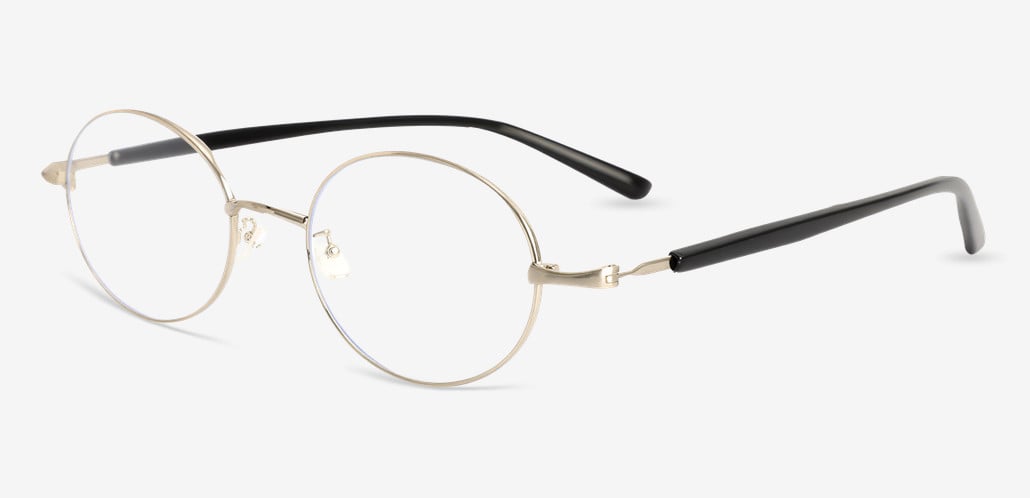
If someone actually says something
It happens, and it is usually much less dramatic than the anticipation of it. Two versions are worth separating.
The offhand comment, some variation of "whoa, new glasses," is not criticism. It is small talk, and it means the frames were noticed, which was the intention. A short, unbothered answer ends it. The trap is over-explaining, because a long defensive answer signals that you also think you did something wrong.
Direct feedback from a manager is different and is worth taking at face value rather than as an insult. Ask what the concern is specifically. Occasionally there is a real constraint you did not know about, such as a client account with its own presentation standards, or a role with safety eyewear requirements. Most of the time the concern is narrower than it sounds and applies to particular meetings rather than to your face permanently. That is what the second pair is for.
What this article cannot tell you
Any piece that hands you a universal verdict on office siren glasses is guessing, and it is worth being direct about that.
Nobody writing about this knows your firm, your manager, your client base, or the unwritten culture of your floor. There are workplaces with genuine hard constraints that override all of the above: roles with mandatory safety eyewear, uniformed positions, patient-facing clinical settings, and courtrooms and similar settings with their own conventions. If you are in one of those, the specific requirement wins and no amount of styling logic changes it.
There is also a limit on the evidence side. Nobody has run a controlled study on how narrow eyewear affects perceived competence in American offices, and any article implying otherwise has invented the certainty. What exists is a set of consistent, observable patterns about first impressions and visual stacking. Those patterns are useful. They are not a guarantee, and you should treat them as a way to make a better guess rather than as a rule.
Locating your own line
Put the three variables together and most people arrive somewhere sensible.
If strangers meet you constantly, you have been somewhere under a year, and you already wear a strong lip, start with a narrow frame that is clearly slim but not extreme, and let the shape do the work. If you are established, internal-facing, and dress plainly otherwise, you have far more room than you think and the sharpest frames in the category will read as authority rather than as costume.
The reason this is worth thinking about at all is that eyewear is the most reversible style decision available to you. A haircut takes months to undo. A tattoo is permanent. A pair of glasses is a thirty-second change, which means the sensible strategy is not to find the one safe pair. It is to own the range and read the room.
Neutral
Sharp
Standard
Angle
Intensity
Levels 1–3 clear almost any written dress code · Level 4 depends on your room · Level 5 was built for the evening
Filter by intensity, not by guesswor
Every frame rated 1 to 5 on the Siren Scale
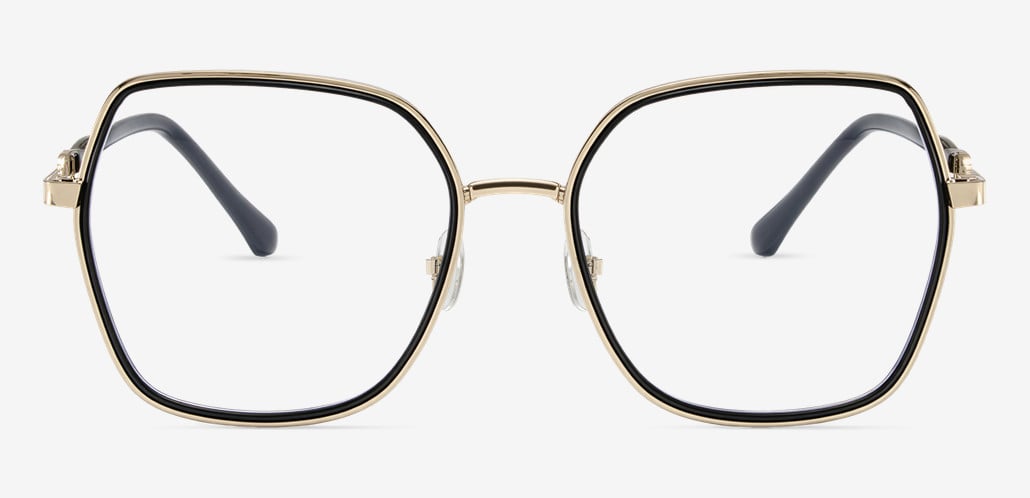
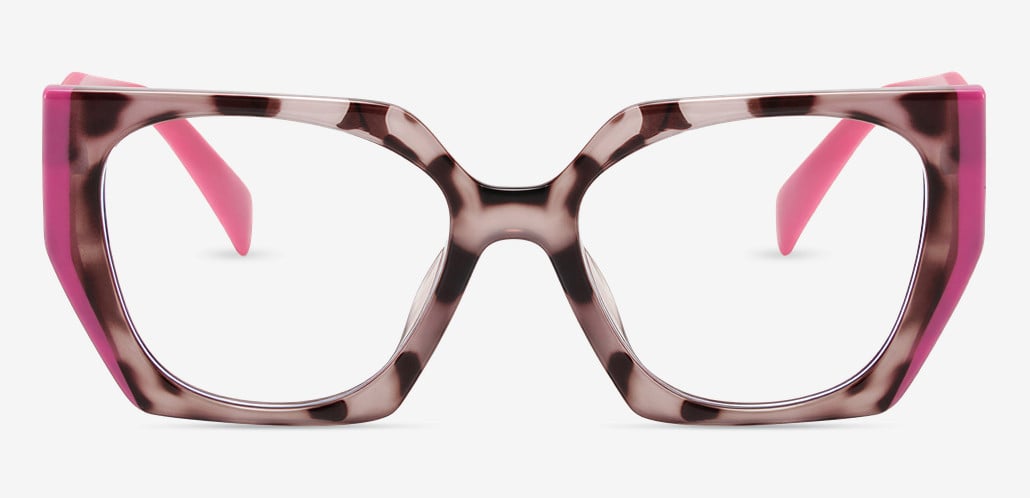
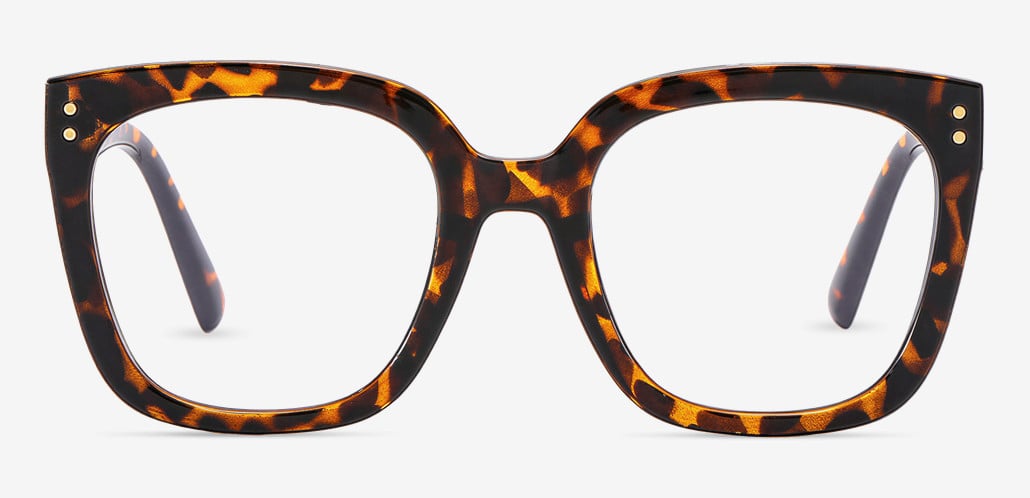
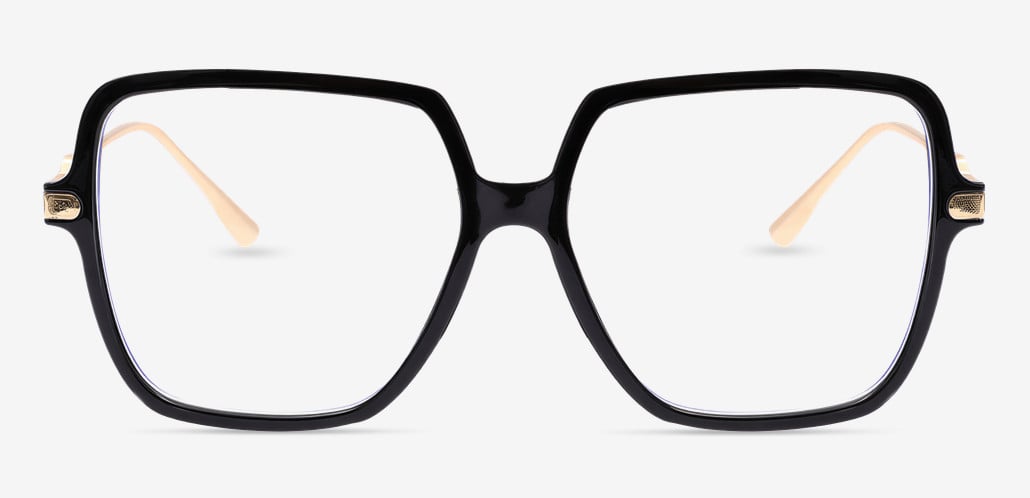
Aoolia rates each frame in the collection on lens height, rim thickness, and corner angle, so you can filter straight to the intensity that fits your week rather than guessing from a product photograph. Virtual Try-On is available on every pair, which matters here more than in any other category: narrowness is the one thing a photo cannot show you honestly.