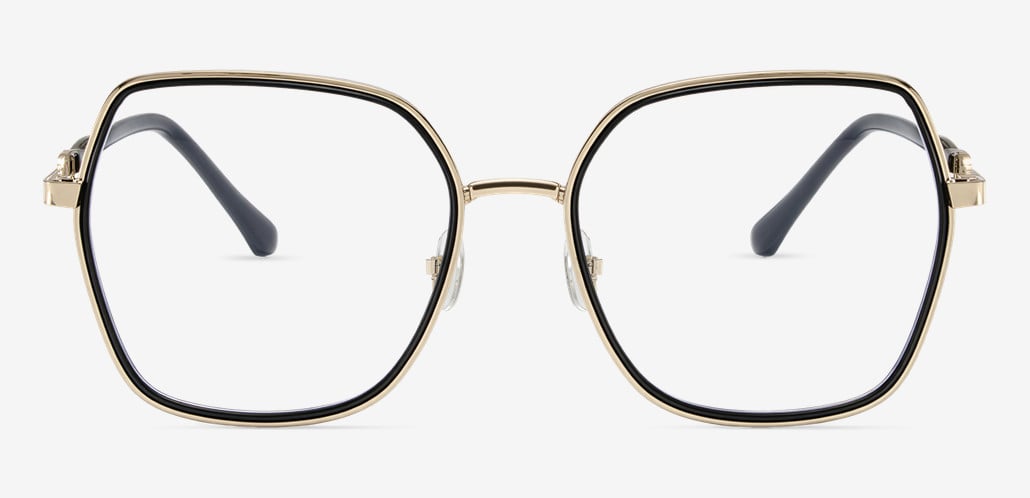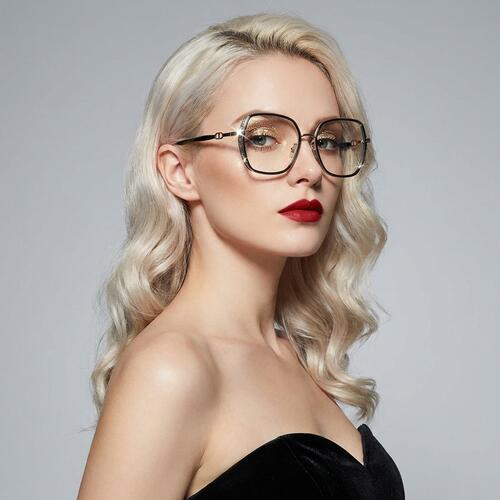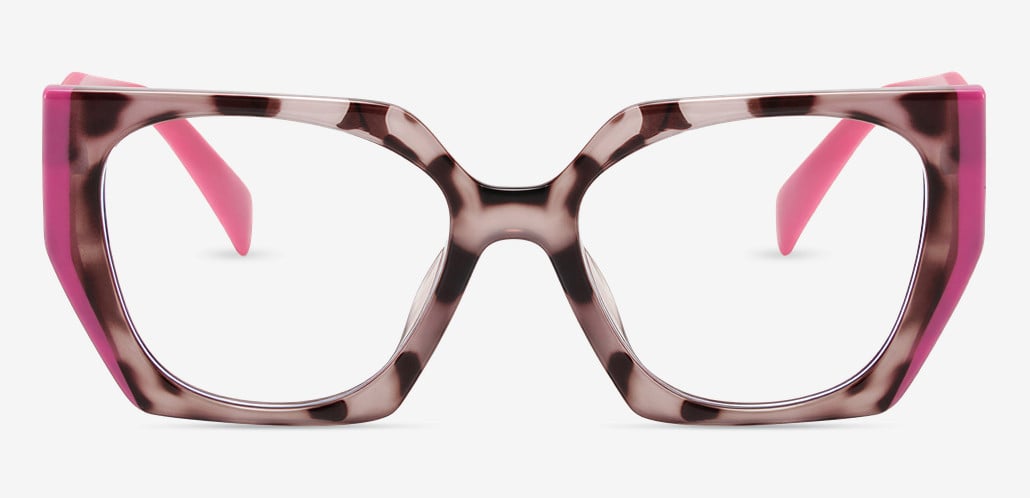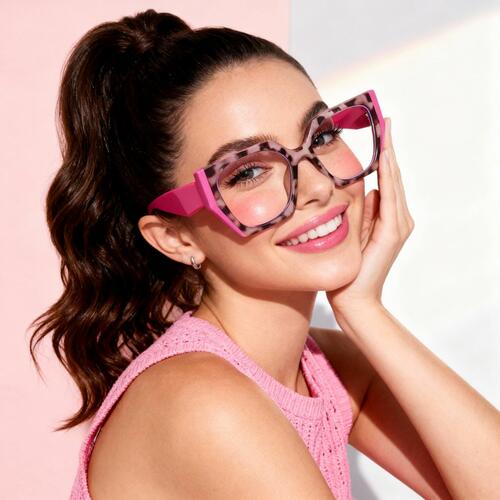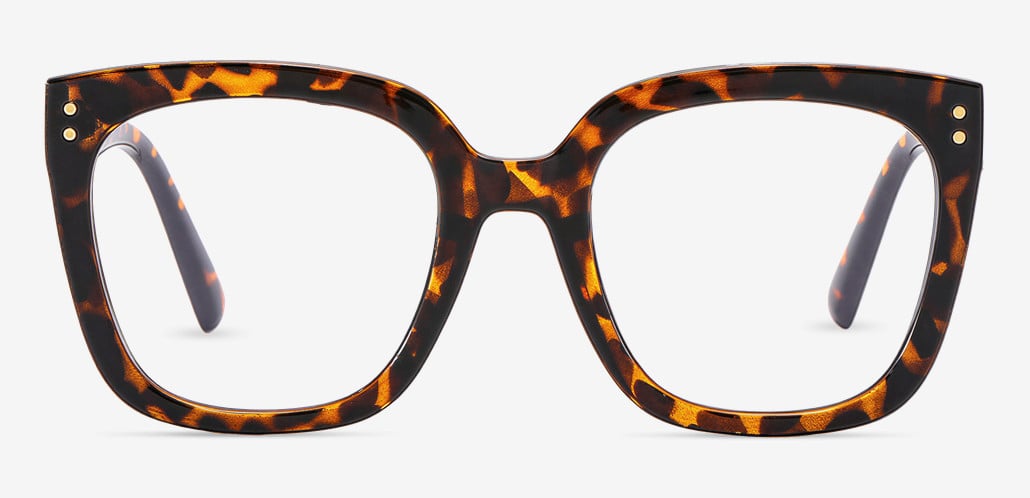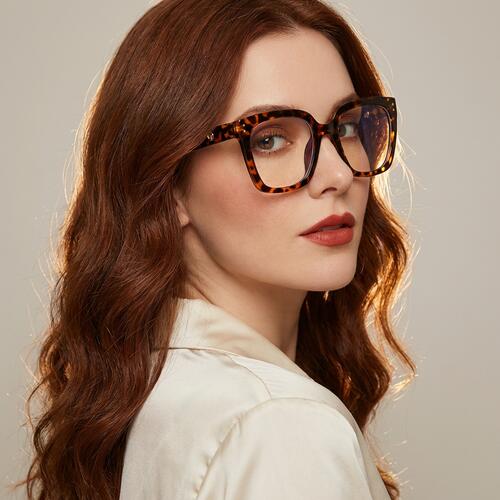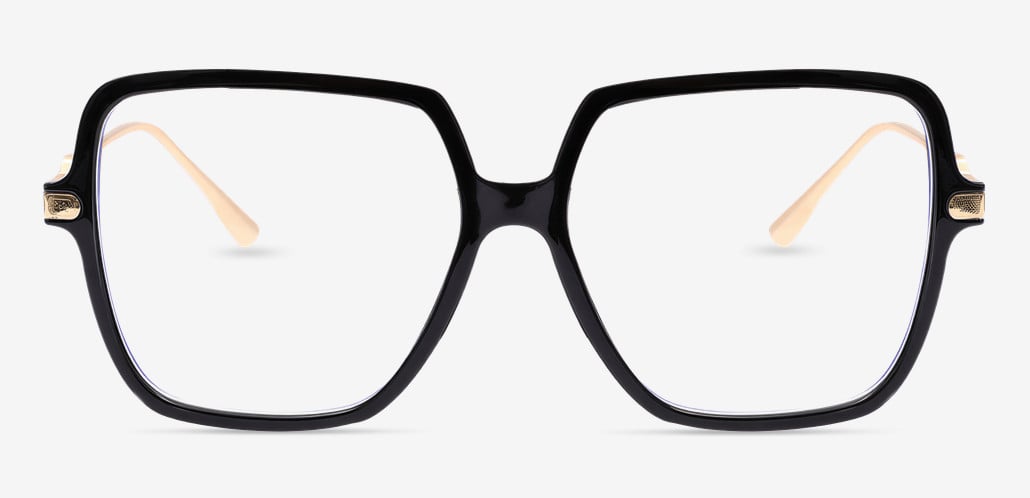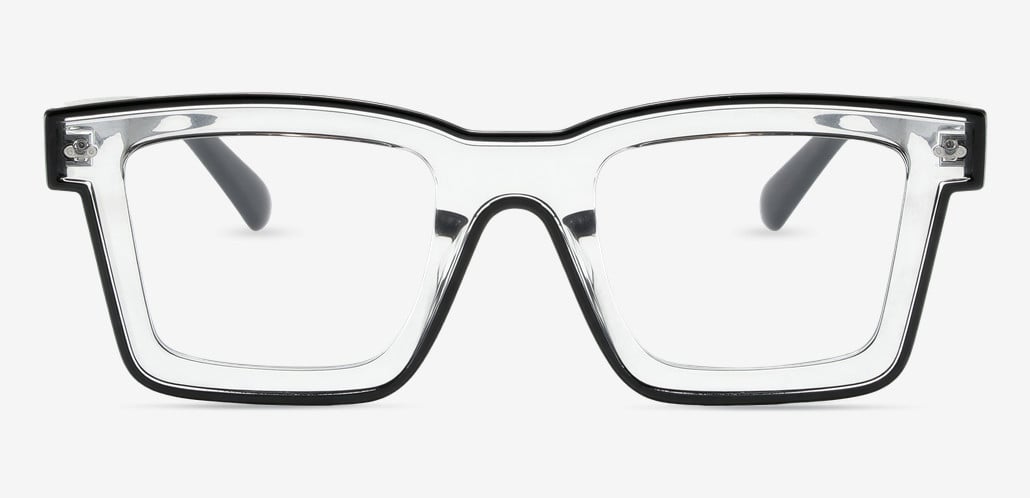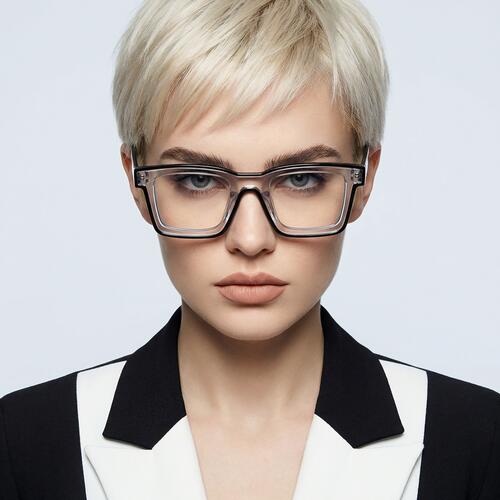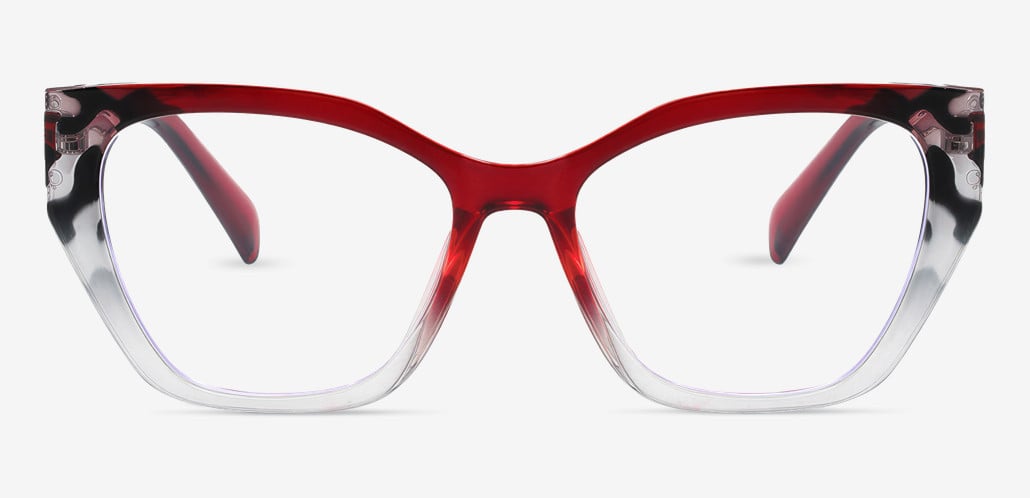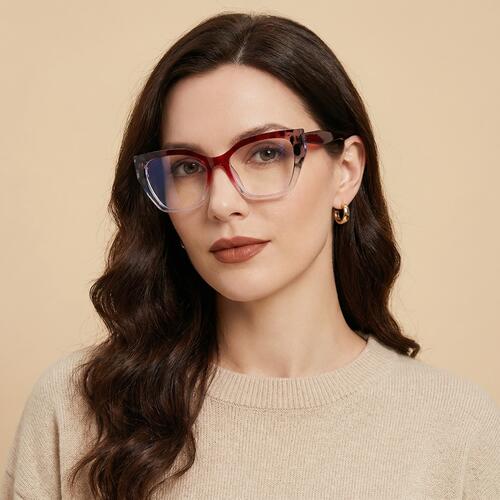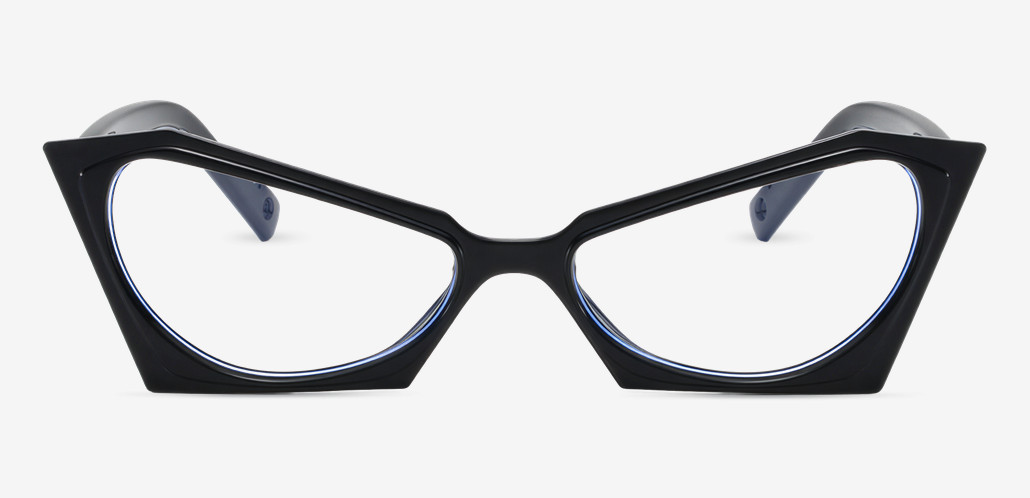

Frame fit guides
Diamond Face Shape Glasses: The Two Strategies Hidden Inside the Standard Advice
Every guide names the same five frame shapes. Read them side by side and they contradict each other — because they answer two opposite questions. Pick one, and the shortlist gets short fast.
Search for diamond face shape glasses and you will get the same list from almost every result on the first page: cat-eye, browline, oval, round, rimless. Sometimes aviator. The wording changes; the list does not.
The problem is that the list does not hold together. A heavy browline frame and a thin rimless frame are close to opposites — one adds a strong horizontal line across the top of your face, the other removes as much visible frame as possible. Both cannot be flattering for the same reason. And in practice, people who buy from the list end up with two or three pairs that look fine in isolation and strangely inconsistent on the same face.
They are not one list. They are two strategies that got merged somewhere along the way, and separating them again is most of the work.
First, confirm it is actually a diamond face
This step gets skipped constantly, and it is the reason a lot of frame advice appears not to work. Diamond is the least common of the standard face shapes, and it sits between two others that get mistaken for it all the time. Before spending money on the wrong strategy, it is worth two minutes and a ruler.
Take a straight-on photo with your hair pulled back and your head level. Measure three widths on the screen. The units are irrelevant — only the comparison matters.

- 1 Forehead, at its widest point just above the brow.
- 2 Cheekbones, across the widest part of your face.
- 3 Jaw, from one jaw angle to the other.
Now read the result:
- DiamondCheekbones are clearly the widest measurement, and the forehead is equal to or narrower than the jaw.
- HeartCheekbones are widest, but the forehead is wider than the jaw. Different strategy — the balancing act is at the chin, not the brow.
- OblongAll three widths are close together and the face is noticeably longer than it is wide. Frame depth matters far more than frame width here.
- OvalCheekbones are marginally widest but the taper is gentle in both directions. Almost everything fits, so ignore shape advice and buy on measurements.
If you landed on heart or oblong, the rest of this article is the wrong strategy for you. That is not a small distinction, and it explains a lot of the “these were supposed to suit me” reviews on frames that are perfectly good frames.
The fork: two goals, two shortlists
A diamond face has two features that stand out: a narrow upper third, and cheekbones that carry the width of the face. You can build a frame choice around correcting the first or around softening the second. Both work. They just produce very different glasses.

Strategy 1
Add width where the face is narrow
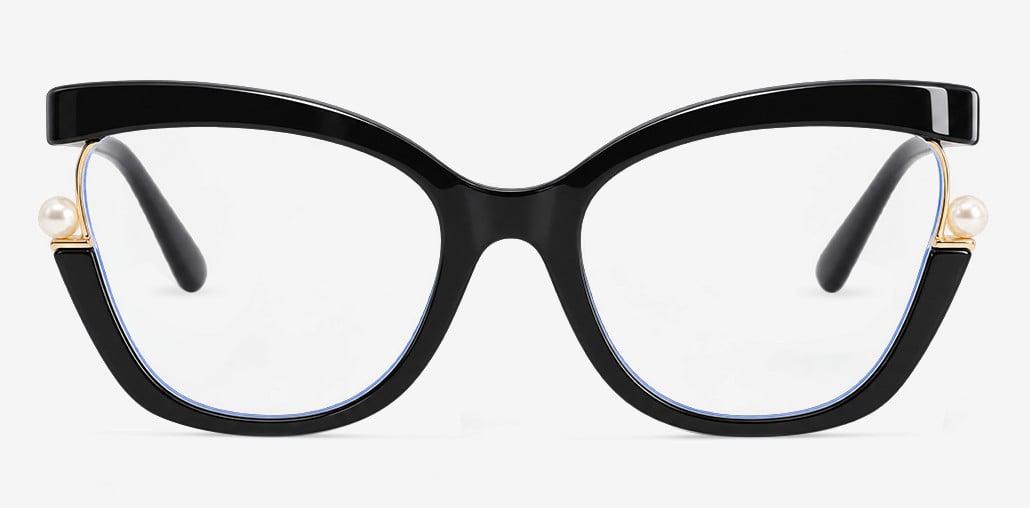
Here the frame's job is to build out the upper third so the cheekbones stop being the only wide element in view. That means visual weight along the top: a strong brow bar, a thick upper rim, upswept outer corners, or a wide top line that reaches past your temples.
The effect is structural rather than subtle. It reads as deliberate styling — the glasses are part of the look, not a neutral accessory. If you like frames that announce themselves, this is your side.
- Browline
- Upswept cat-eye
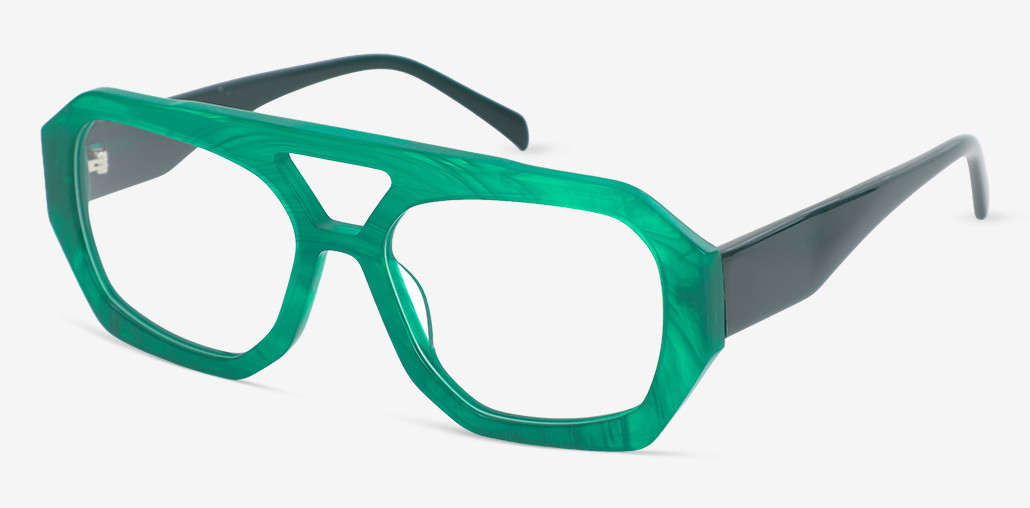
- Aviator with a top bar
- Bold-brow rectangles
Strategy 2
Take the edge off the angles
Here the frame's job is to introduce curves near the sharpest part of the face and add as little visual mass as possible, so the eye stops tracking the cheekbone line. That means round or oval lens shapes, thin rims, or no lower rim at all.
The effect is quieter. The frame recedes and the face reads softer overall. If you want glasses that disappear into your face rather than restyle it, this is your side.
- Oval
- Round
- Rimless
- Thin metal semi-rimless
Why mixing them cancels out
The common failure is a frame that half-commits to each. A thin, softly rounded frame that is also narrow across the top adds no width to the upper third and does not have enough presence to redirect attention either. It does neither job, which is why so many people describe a technically-recommended frame as looking “fine but small” on them.
The same is true in reverse. A heavy browline that is also deep and squared off adds width up top, then plants a thick horizontal line right at cheekbone level, which reinstates exactly the emphasis it was supposed to move. That combination shows up in a lot of first-page recommendation lists, because those lists are sorted by shape name and shape names do not capture where a frame's weight sits.
Shape names describe the outline. What matters is where the frame is heaviest.
Working out which side is yours
There is no correct answer, but three questions usually settle it quickly.
Is your hair usually off your forehead? Pulled-back hair, a short crop, or a high ponytail leaves the narrow upper third fully exposed, and Strategy 1 has more to work with. A fringe or a side-swept front already adds width up there, in which case adding more with a bold brow bar can tip into top-heavy.
How prominent are your cheekbones, honestly? If they are the thing people mention, Strategy 2 is often the more comfortable choice day to day — not because strong cheekbones need fixing, but because a lighter frame stops competing with them. If your cheekbones are moderate and the narrow forehead is the part you notice in photos, Strategy 1 is doing more useful work.
What do you want the glasses to do? Frames are worn every day in every context. Strategy 1 frames are a style decision that you re-make every morning. Strategy 2 frames are closer to invisible. Plenty of people own one of each and choose by occasion, which is a perfectly good outcome — the mistake is buying two frames that are both half of each strategy.
Two numbers that apply on either side
Once you have picked a strategy, the shortlist is still long. Two measurements do most of the remaining filtering, and both are printed on the product page of any frame worth buying.
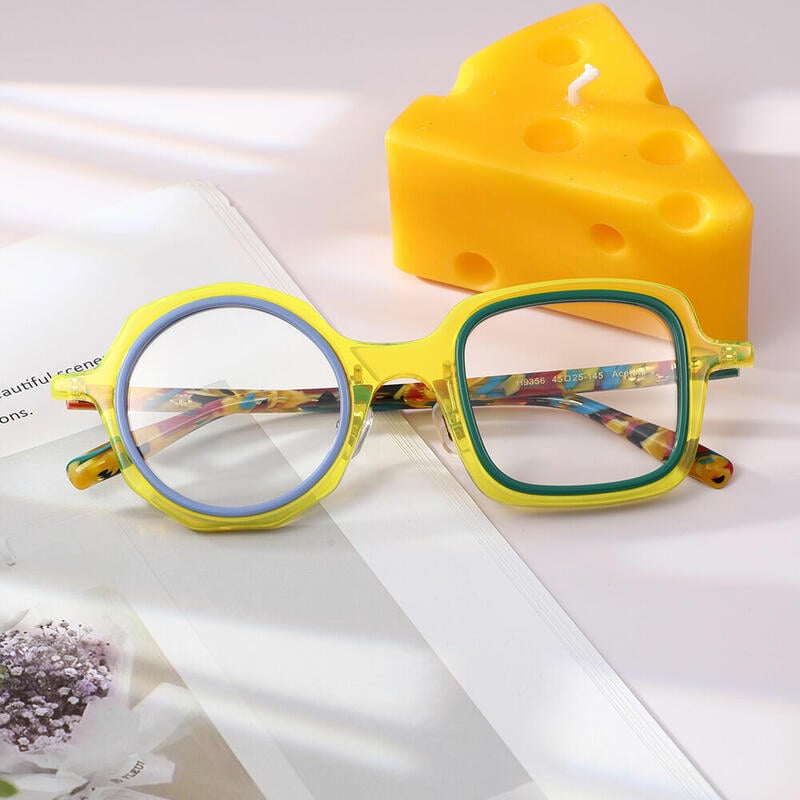
Total frame width, against your temples
This is the single most common miss on a diamond face. Because the forehead is narrow, a frame that stops short of the temples makes the upper face look narrower still, and the cheekbones take over the entire picture. It is also why small, delicate frames — which people with narrow foreheads gravitate toward — frequently disappoint.
Aim for a total frame width that reaches your temples or extends a few millimetres past them. The reliable way to find your number is not to measure your head; it is to measure a pair you already own that sits correctly, and shop within a few millimetres of that figure. Most adult frames land between 128 mm and 145 mm, and the difference between 132 and 140 is very visible on a narrow upper face.
Lens height, against your cheekbones
This one is a comfort issue before it is a style issue. High cheekbones sit close to where a deep frame's lower rim lands. The result is a frame that rests on the cheek, then lifts and slides every time you smile or talk. People usually blame the nose pads. It is almost always lens height.
| Lens height | What usually happens on high cheekbones |
|---|---|
| Under 33 mm | Clears the cheek easily, but can read as a narrow slot and works against Strategy 1's goal of building presence up top. |
| 35–42 mm | The workable range for most people. Enough depth to look proportional, still clear of the cheekbone when you smile. |
| 45 mm and up | Usually makes contact. Fine in a rimless or semi-rimless design, since there is no lower rim to land; awkward in a full-rim frame. |
That last row is the quiet reason rimless keeps appearing on diamond face lists. It is not primarily about softening angles — it is that removing the lower rim buys several millimetres of clearance you cannot get any other way.
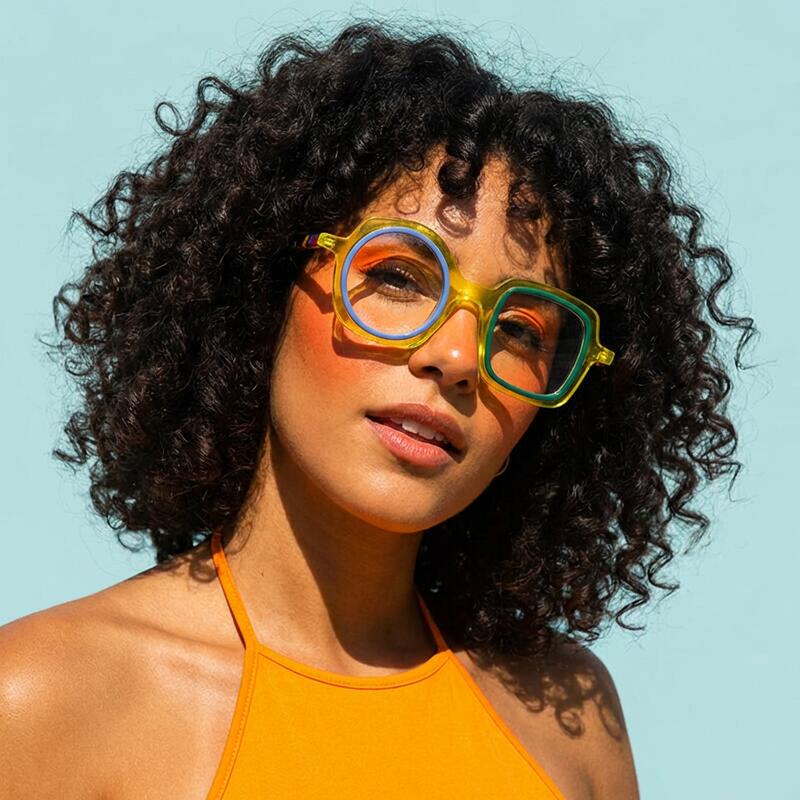
What to skip, and the reason why
“Avoid” lists are usually vague. These three are specific, and each fails for a reason you can check on a spec sheet.
- Narrow rectanglesThey compress the upper face and leave the cheekbones as the only wide element in the frame — the exact opposite of both strategies. Check total frame width before the shape name.
- Small round framesRound is on every recommended list, but a small round frame does the same thing a narrow rectangle does, just with curves. If you want Strategy 2, the roundness needs to come at a normal width, not a reduced one.
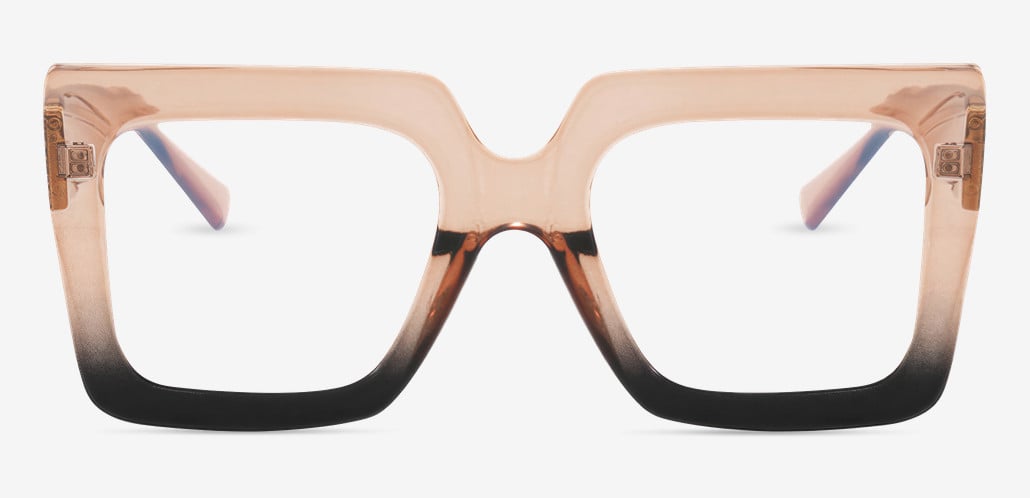
- Deep, flat-bottomed squaresWeight sits low, and the straight lower rim runs parallel to the cheekbone line. These also tend to be the frames that end up resting on the cheek, so they fail on comfort and proportion at once.
What changes if you are shopping men's frames
The proportions work identically — a narrow upper third and wide cheekbones behave the same regardless of who the frame is marketed to. Two practical things differ.
First, sizing. Men's frames run wider on average, which means the total-frame-width problem is less common but the lens-height problem is more common: many men's styles are cut deep. If your current frames slide when you smile, check that number before assuming it is a fit adjustment issue.
Second, the Strategy 1 shortlist looks different. Cat-eye is rarely the route; browline and metal top-bar aviator styles do the same job — a strong horizontal line at brow level, extending to or past the temples — without the upswept corners. Strategy 2 translates directly: round acetate, thin metal ovals, and rimless all behave the same way.
Before you check out
- Confirm the shape with three measurements, not a glance in the mirror.
- Pick one strategy. Write it down if it helps — the shortlist is what stops you drifting back to the merged list.
- Find the total frame width of a pair you already own that sits well, and stay within a few millimetres of it.
- Filter out anything with a lens height at 45 mm or above unless it is rimless or semi-rimless.
- Use virtual try-on to check one thing specifically: where the top rim lands relative to your brow, and where the lower edge falls on your cheek.
- Smile in the try-on. A frame that looks right at rest and wrong mid-smile is a lens height problem, and it will not improve after purchase.
Common questions
Are cat-eye glasses really the best choice for a diamond face?
They are a strong Strategy 1 option, but only the ones that are genuinely upswept and carry their weight along the upper rim. A cat-eye with a thick, deep lower rim adds emphasis right at cheekbone level and works against the goal. The silhouette name alone does not tell you which kind you are looking at — the product photo does.
Can I wear angular frames with an angular face?
Yes, and the blanket “soften the angles” advice oversimplifies. Angular frames belong to Strategy 1: a soft-square or rectangular frame with a strong upper line adds width where the face is narrow and looks intentional rather than accidental. What does not work is angular and narrow, which compresses the upper face instead of widening it.
My glasses slide down whenever I smile. Is that the frame or the fit?
Most often it is lens height. On high cheekbones a deep lower rim rests on the cheek, and the smile pushes the whole frame up and then forward. Adjusting the temples or nose pads rarely fixes it because the contact point is not the nose. A shallower frame, or a rimless design with no lower rim at all, usually solves it outright.
Does the strategy change for sunglasses?
The logic carries over, with one adjustment: sunglasses are typically larger, so the cheekbone clearance issue shows up more often. Oversized styles are frequently recommended for diamond faces and can work well, but check the vertical dimension rather than the overall look — large and shallow behaves very differently from large and deep.
Is it worth owning frames from both strategies?
It is one of the better reasons to own two pairs, and it is a more useful split than buying two frames in different colours. One frame that builds out the upper third and one that stays quiet cover genuinely different situations. The pairing to avoid is two frames that each sit halfway between the two approaches.
Aoolia frames are listed with total frame width, lens width, lens height, and bridge width on every product page, and most support virtual try-on directly from there — which is the fastest way to check where a frame's upper rim and lower edge actually land on your face. Frames start at $9.95, and lens options are chosen for your selected style during checkout.