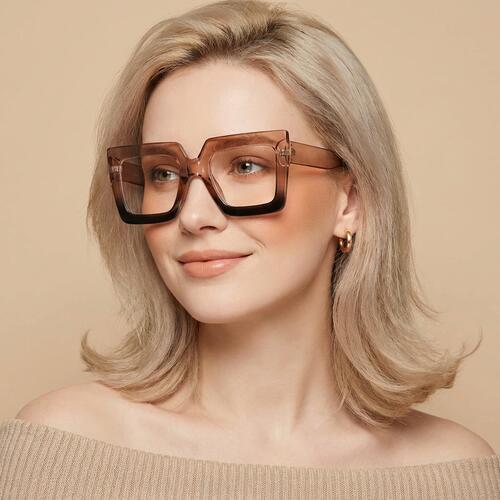

Glasses for a Long Face: Why Lens Height Beats Frame Shape
Two frames can share the same shape, width and color, and only one of them will balance a long face. The number that decides it isn't stamped on your glasses.
The advice for a long face is remarkably consistent across the internet. Go wide. Look for a strong brow line. Avoid small frames. Try browline, square, or cat-eye. Skip anything narrow.
None of it is wrong. The problem is that two people can follow it word for word, buy two frames that both check every box, and end up with completely different results. One person looks balanced. The other looks like their face got longer.
The variable that separates those two outcomes almost never appears in the advice, and there's a practical reason for that: it's the one frame measurement most retailers don't bother to publish.
The shape advice is incomplete, not incorrect
Frame shape describes the outline. It says nothing about how much vertical space that outline occupies.
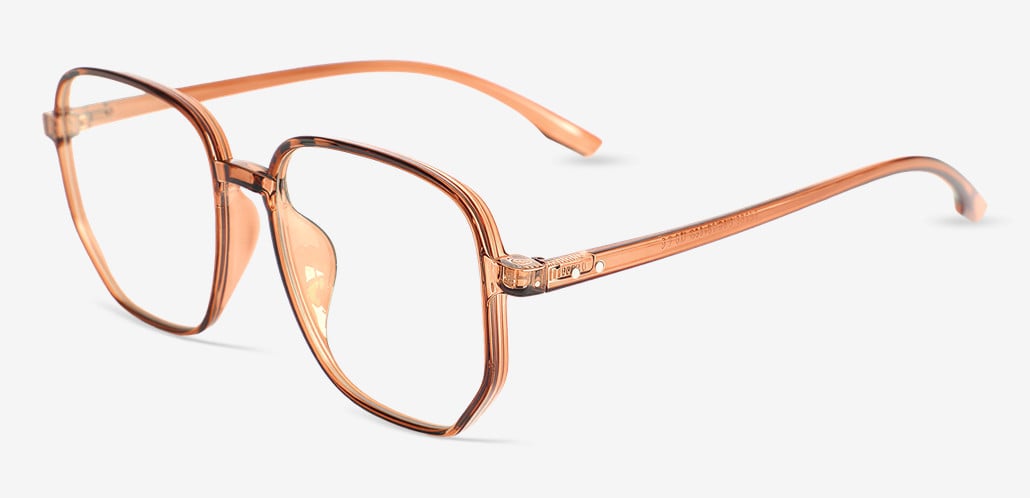
Put two rectangular frames side by side. Both with a thick top rim. Both would be described, accurately, as a good rectangular frame for a long face. One has a lens that stands 39 mm tall. The other stands 32 mm. That's a seven-millimeter difference, roughly the width of a pencil eraser, and it changes the frame from something that fills the middle of the face to something that sits across it like a strip of tape.
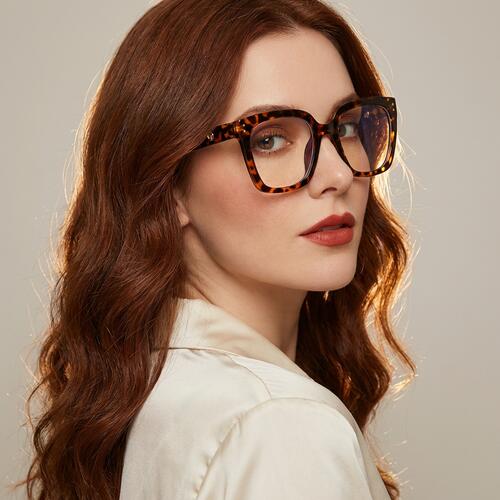
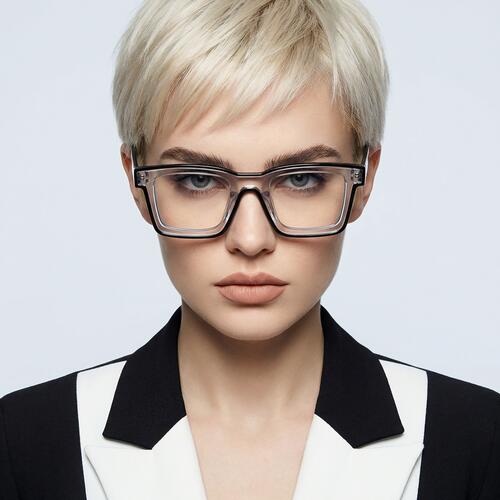
A long face is long mainly through the middle and lower thirds. What balances it is coverage: something occupying vertical real estate between the brow and the cheek, interrupting the run from hairline to chin. A shallow lens doesn't interrupt anything. It draws a thin horizontal line and leaves a wide margin of bare face above and below it, and those margins are exactly what makes the face read as long.
So the working principle for glasses for a long face is not really about shape. It's about depth. Shape decides how the depth looks. Depth decides whether the frame works at all.

The measurement your glasses don't tell you
Pick up a pair you own and look at the inside of one temple arm. You'll find a set of numbers.
52 □ 18 145
Lens width, bridge width, temple arm length. This is the boxing system, the standard way frame dimensions are described.
Notice what isn't there. Lens height. The vertical measurement, the one that matters most for a long face, is not part of the standard stamp. It exists as a specification, it's often called the B measurement in the trade, and manufacturers know it. It just doesn't make it onto the frame, and it frequently doesn't make it onto the product page either.
That gap explains a lot of failed online orders. You do the responsible thing, you compare the stamped numbers against a pair that already fits, you get a close match on lens width and bridge, and the new frame still sits wrong. The numbers you were able to compare didn't include the one that decided the outcome.
One number that does most of the work
Here's the reframe. Instead of asking what shape suits a long face, ask a single arithmetic question about any frame you're considering.
Depth ratio = lens height ÷ lens width
A 52 mm wide lens standing 38 mm tall gives 38 ÷ 52 = 0.73.
A 54 mm wide lens standing 32 mm tall gives 32 ÷ 54 = 0.59.
Both frames might be sold as wide rectangular frames. Only one of them has any vertical presence. Rough bands, and treat these as a starting point rather than a rule handed down from somewhere:
Genuinely deepCloser to square proportions. A strong choice, especially when the length sits in your midface.
DeepReliable territory. Most frames that long faces keep wearing land here.
Standard modern proportionWorkable, but it needs a heavy top rim to carry the horizontal line.
ShallowA wide horizontal slit, whatever the shape is called. Works against a long face.
The ratio is more useful than raw lens height alone because it's self-scaling. A 36 mm lens height is generous on a small 46 mm frame and unremarkable on a 58 mm one. The ratio accounts for that automatically, which matters if your face is long and narrow, a very common combination that gets almost no dedicated advice.
If you want an absolute floor alongside it: aim for 36 mm of lens height or more, and 40 mm and up if the length of your face sits between your brow and your chin rather than in your forehead.

Calibrating the number against your own face
Bands from a table are a starting point. What actually tells you your number is a frame you've already worn.
Take the pair you like best. Take one you never wear because something about it looks off. Measure both.
To measure lens height on a frame you own, hold a millimeter ruler vertically against the front of the lens and measure the inside of the rim at its tallest point, top edge to bottom edge. On a rimless frame, measure the lens itself. Do it with the frame face-down on a flat surface and the temples folded, and don't try to follow the curve. You want the straight vertical distance.
Then run the ratio on both.
Most people who describe their face as long discover that the frames they actually reach for cluster above 0.68, and the one gathering dust is somewhere in the 0.55 to 0.62 range. That's the moment the abstraction turns into a usable filter. From then on you have a personal threshold, derived from evidence you own, rather than a general recommendation written for an average.
If both your comparison pairs are shallow because you've only ever bought shallow frames, the exercise still helps in a different way. It tells you your entire reference set has been sitting in one corner of the range, which is usually why nothing has felt right.
When a retailer doesn't publish lens height
Plenty of listings give you lens width, bridge and temple length and stop there. There's a workaround that's accurate enough for a purchase decision.
Find a straight-on product photo. You already know one real dimension from the specs, and the bridge is the best one to use because it's short, well defined, and less distorted by camera perspective than the full frame width. Measure the bridge in the photo, in pixels or with a ruler held to your screen, then measure the lens height the same way. The ratio between your two on-screen measurements is the same as the ratio between the real ones.
So if the listing says the bridge is 18 mm, and in the photo the lens is 2.1 times as tall as the bridge is wide, the lens is roughly 38 mm tall.
This is an estimate, not a spec sheet. Angled or three-quarter photos will throw it off, and so will heavy lens curvature. But it reliably separates a 31 mm lens from a 39 mm one, which is the distinction that actually matters here. Aoolia lists lens height directly on its product pages, so the workaround is only needed when you're comparing across sites.

Where the ratio stops being the answer
A single metric that explained everything would be a sales pitch, not a tool. The depth ratio has real limits, and knowing them is what keeps you from over-applying it.
- It addresses midface length, not forehead length. Faces get long in different places. If your length comes mostly from a high forehead, a deeper lens does less than you'd hope, because the empty vertical space is above the frame rather than around it. Hair, brow position and how high the frame sits do more work in that case.
- It ignores total width. A deep lens on a frame that's too narrow overall still pulls the eye inward. Depth and width are two separate requirements and you need both. The frame should reach at least as wide as your cheekbones.
- It doesn't predict where the frame sits. Two frames with identical lens height can sit at different heights depending on bridge design and how the bridge or pads meet your nose. A frame that rides low gives up some of its coverage at the top. This is where trying the frame on, virtually or physically, still beats arithmetic.
- It says nothing about lens appearance. Deeper lenses mean more lens material. Depending on what your lenses are doing, a taller frame can change how the edges look, which is worth asking about before you commit to the deepest frame on the page.
- If your lenses handle more than one distance, lens height stops being purely cosmetic, because the vertical space affects how the lens is laid out. That's a conversation to have with whoever is making them, not something to settle from a size chart.
Shape, re-entered through the back door
Fix the depth first, and shape becomes what it should have been all along: a style decision made from a list of frames that already fit.

Browline and heavy top rims
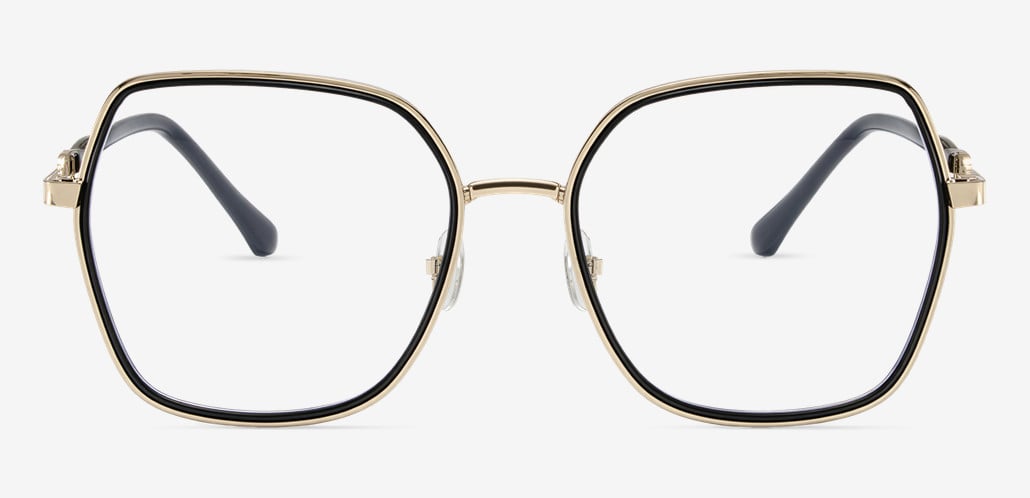
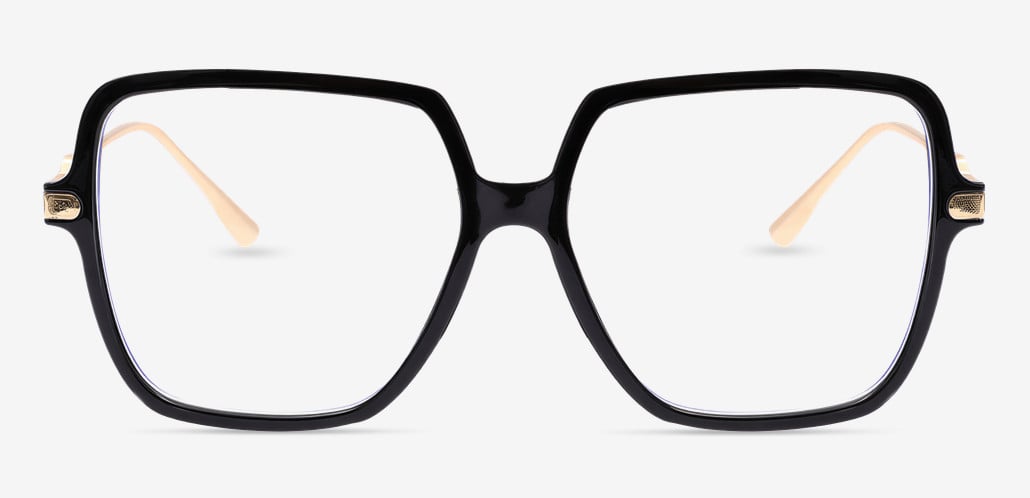
The most dependable category for a long face. They add a hard horizontal line high on the face, where the eye lands first.
Deep rectangles and squares
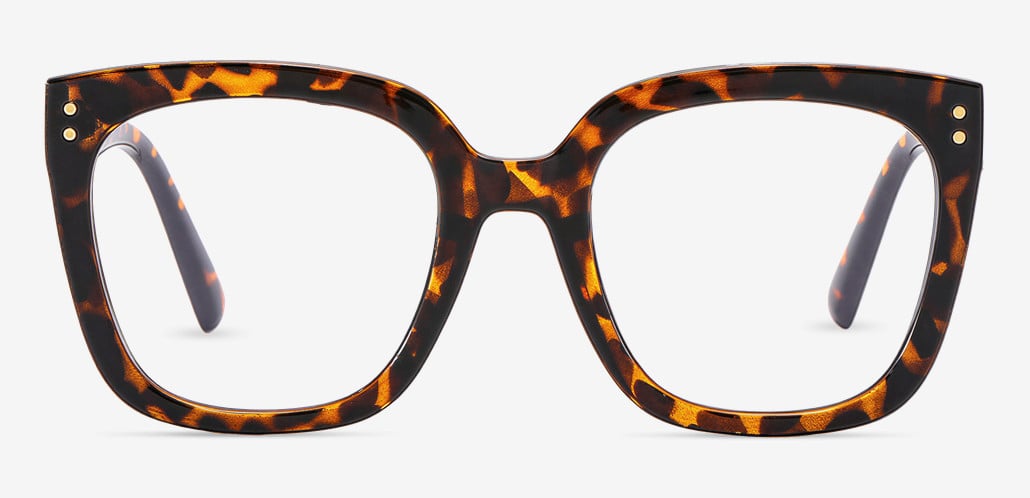
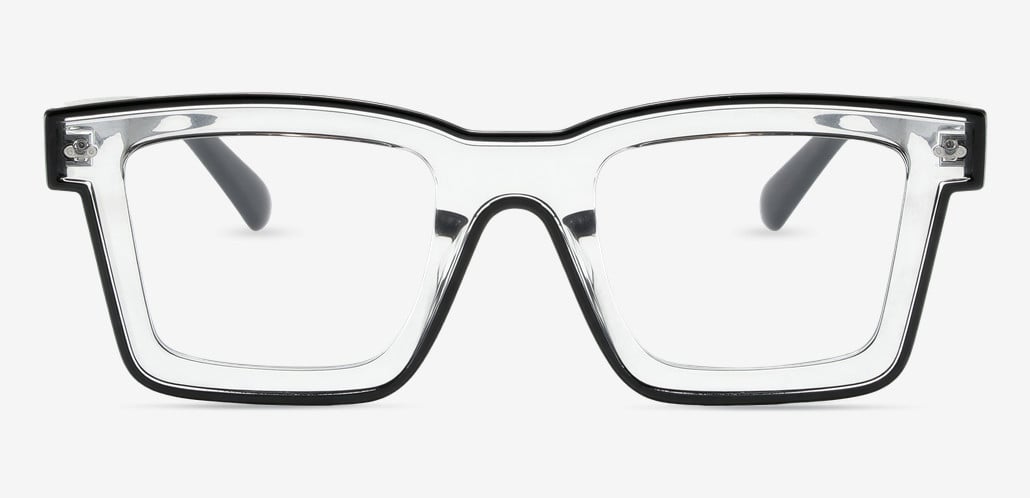
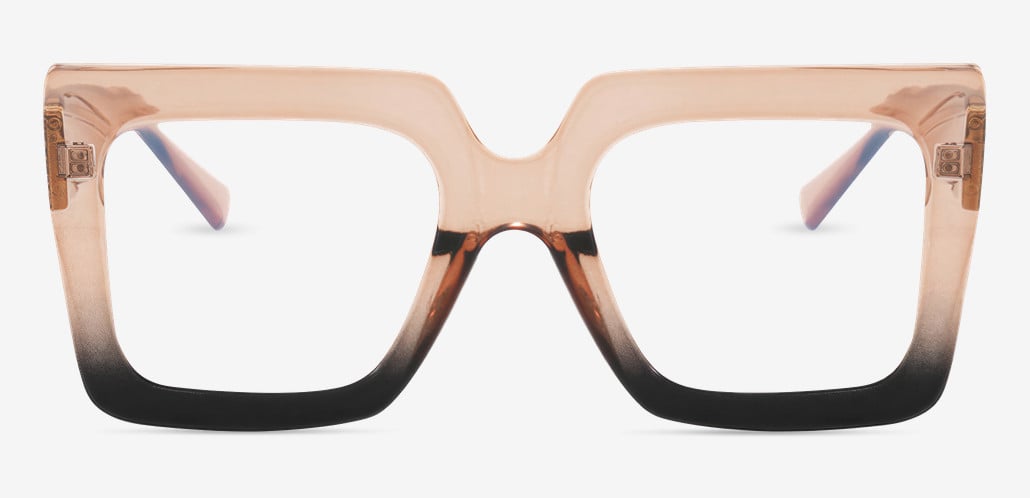
They work well, and they're the easiest thing to find above 0.70.
Cat-eye, above 36 mm only
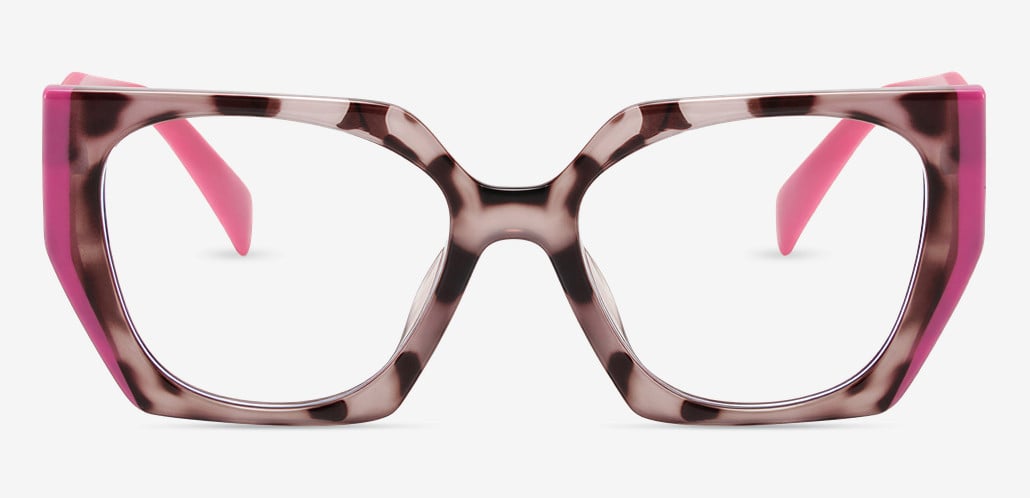
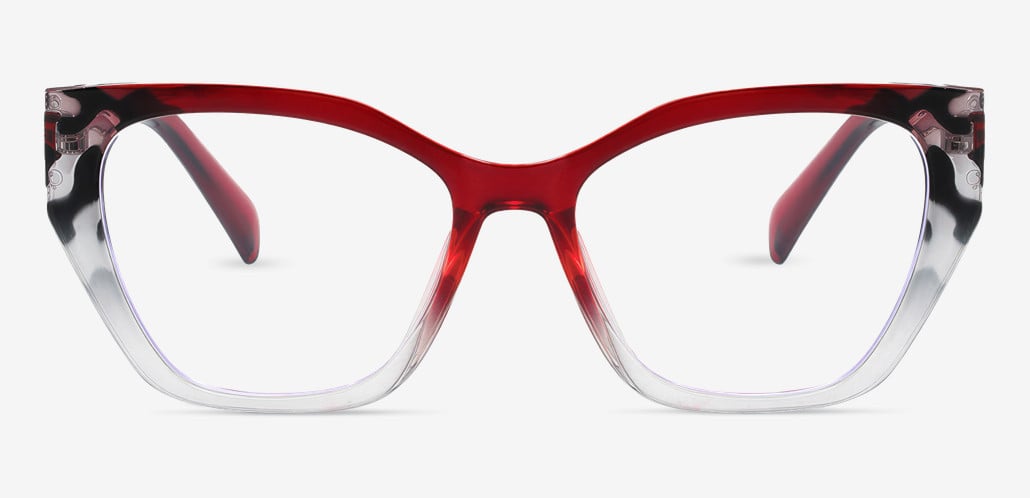
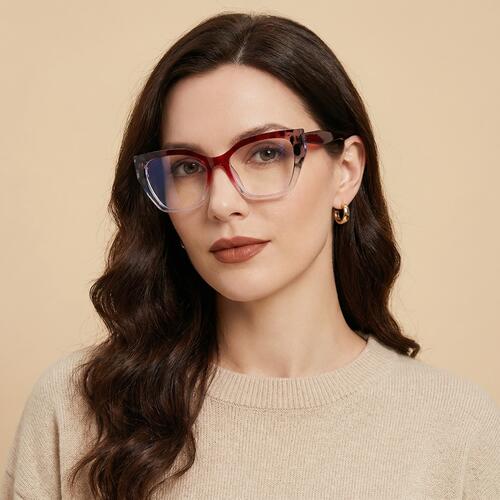
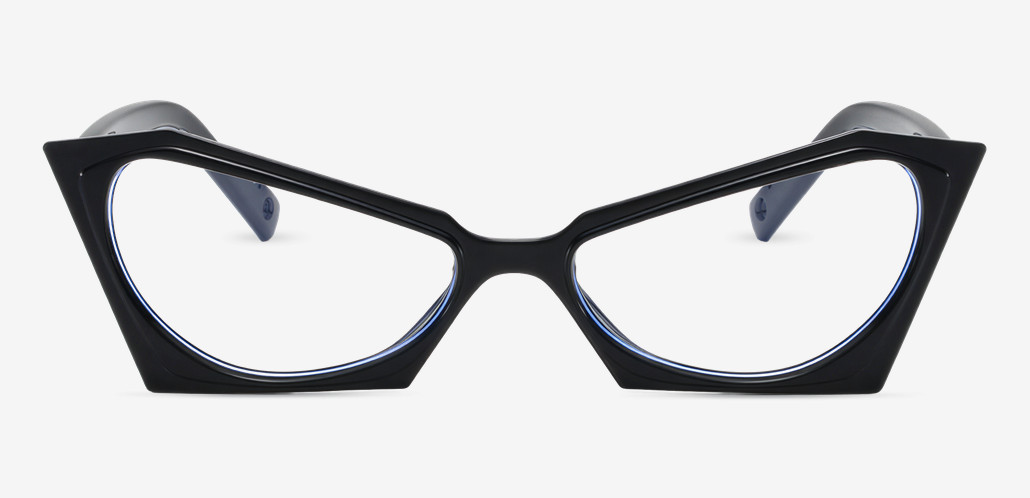
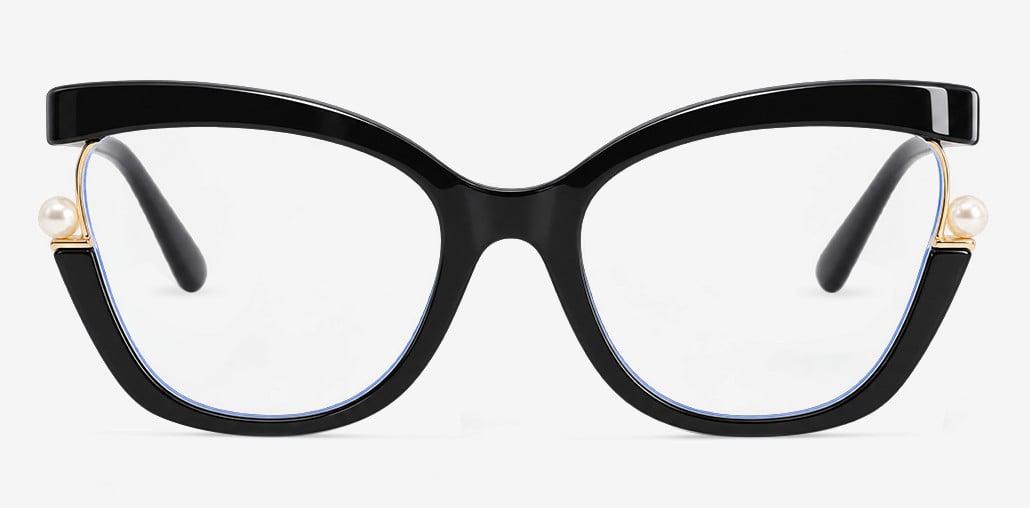
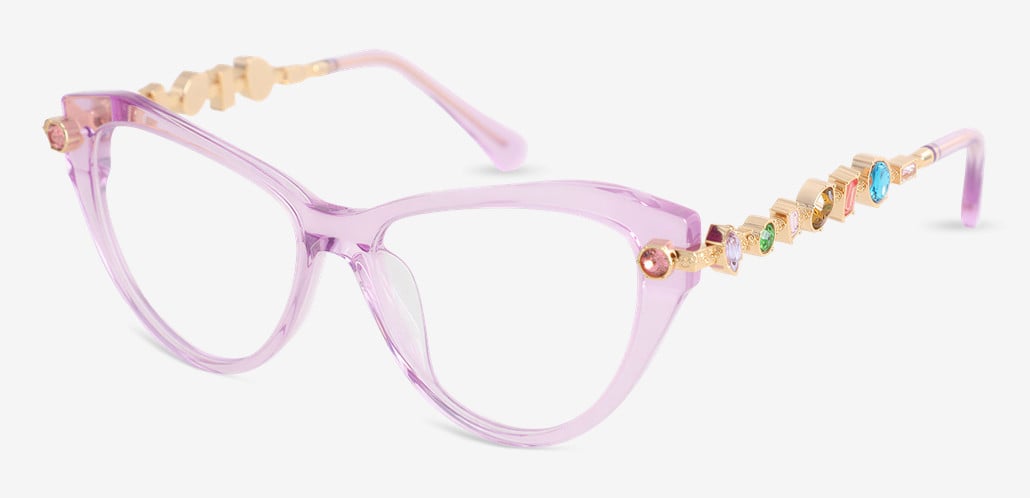
The upswept outer corners genuinely widen the upper face, which is exactly what a long face wants. The catch is that a large share of cat-eye frames are cut shallow, and a shallow cat-eye is one of the worst combinations available, because the upsweep exaggerates the horizontal line it's drawing. This is why cat-eye appears on both the recommended and the avoid lists depending on which guide you read. Both lists describe a real outcome. Neither is checking the height.
Aviators, flat-top yes, teardrop no
A flat-top, double-bridge aviator has a strong horizontal brow bar and works. A deep teardrop taper adds vertical line and works against you. Same shape name, opposite result.
Round, but genuinely large
A big round lens sits close to a 1.0 ratio and adds width. A small round frame does the opposite of everything above.
Thin rimless and shallow half-rim
The hardest sell, not because rimless is wrong for a long face but because most rimless designs are cut shallow and carry no visual weight at the top edge. If you want rimless, find the deepest one you can and accept that you're working against the grain of the category.
The short version
If you're shopping for glasses for a long face and you only remember one thing, make it this: check the height before you fall for the shape.
- Measure the lens height on the pair you already like, and divide it by the lens width. That's your personal target.
- Filter for frames at or above it. Most long faces land somewhere above 0.68.
- Confirm the total width reaches your cheekbones.
- Then pick the shape you actually want, from what's left.
- Try it on, virtually or otherwise, to check where the frame sits rather than just how big it is.
The shape advice everyone repeats isn't there to mislead you. It's just describing the frames that happened to be deep enough, back when someone first wrote it down. Once you can measure the thing it was pointing at, you don't need the proxy anymore.
Browse frames with lens height listed