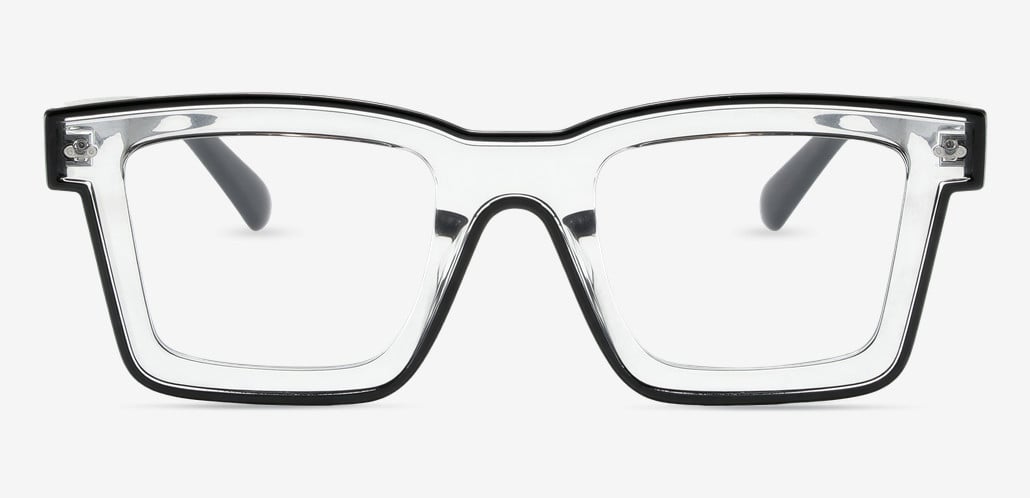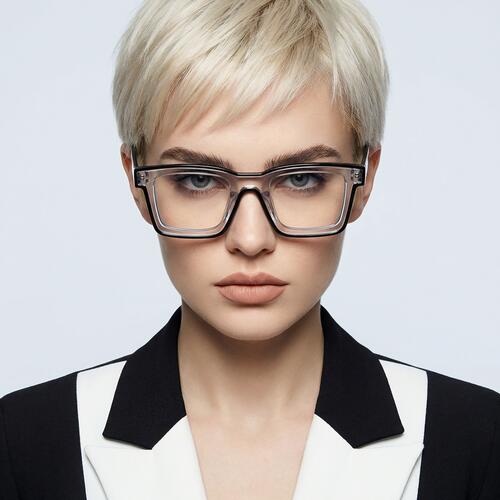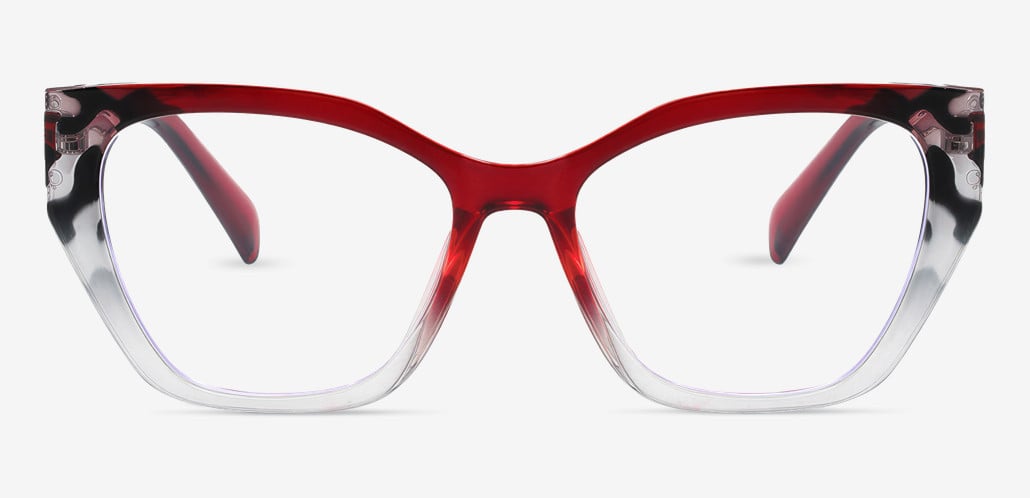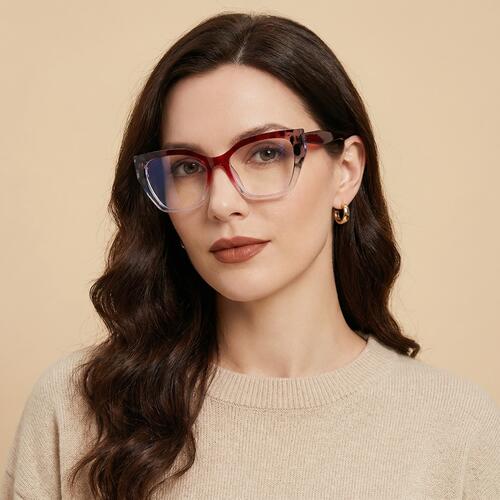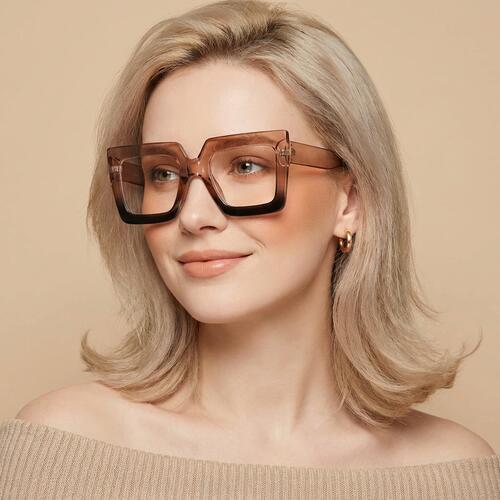

Glasses for Heart Shaped Face: What’s Actually a Face-Shape Problem (and What Isn’t)
Most complaints filed under “heart shaped face” aren’t caused by face shape at all. Here’s how to tell a bridge problem from a proportion problem — and what to change in each case.
You looked up glasses for a heart shaped face. You got a list of shapes. You bought one of the recommended shapes. And something still looks off, or feels off, or both.
That gap between “followed the advice” and “actually works” is the interesting part, and almost nobody writes about it. The reason is that face shape guides are answering one question — which outline flatters which outline — while most real complaints are about something else entirely. A frame that slides down your nose is not failing because of your cheekbones. A frame that pinches behind your ears is not failing because of your chin.
So this article does the sorting. Below are the five things people most often blame on having a heart shaped face, what each one is actually caused by, and what to change. Then, once the impostors are out of the way, the part that genuinely is about face shape.
Step zero: make sure you have the face shape you think you have
This matters more than it sounds, because a large share of the contradictory advice online is contradictory for a boring reason. Different guides are describing different faces under the same label.
A heart shaped face is widest across the forehead and narrows steadily toward the chin. The hairline often comes to a point in the center. The jaw tapers rather than squares off.
Two quick disambiguations:
- If your cheekbones are the widest part, not your forehead, you are probably looking at a diamond face. Diamond faces need width at the brow and the jaw, which is close to the opposite of the advice below — and this is where a lot of “these frames didn’t work for me” stories come from.
- If your forehead and jaw are similar in width and the face is simply long, that’s oblong, and managing length matters more than managing taper.
Thirty seconds in front of a mirror, hair pulled back, is enough. Trace your hairline with a finger, then run the same finger from your earlobe down to your chin. A point at the top and a curve or angle down to a narrow chin means you’re in the right article.
One naming note that trips people up in search results: some retailers file this face shape under “base-up triangle” or “inverted triangle.” Same structure, different vocabulary. If a page uses that term, the advice still applies to you.
The five complaints, sorted
1. “They slide down my nose all day.”
This is the single most common frustration and it has almost nothing to do with the outline of your face. What holds a pair of glasses in place is the bridge sitting on the sides of your nose. The arms behind your ears stop the frame from falling forward; they do not carry the weight.
Heart shaped faces frequently pair a broad upper face with a narrow or low nose bridge. When you shop by forehead width, you naturally gravitate toward larger frames, and larger frames usually come with wider bridges. A bridge that’s 2mm too wide lets the whole frame drop until it lands on your cheeks, at which point every smile pushes it back up your face.
What to change
Look at the middle number printed inside your temple arm — that’s the bridge, in millimeters. If your current pair slides, try 2mm narrower. Frames with adjustable nose pads solve this outright, because you can bend the pads inward until the frame sits where you want it. Acetate frames with a molded bridge give you no such adjustment, so the number has to be right at purchase.
If the bridge of your nose sits at or below the level of your pupils, you have a low bridge fit. That’s a separate and very solvable category, and it explains a lot of “nothing ever fits me” experiences.
2. “There’s a visible gap between the arms and my head.” Or the reverse: “They squeeze.”
Your forehead width and your head width at the temples are two different measurements, and heart shaped faces are exactly the case where they diverge. A broad brow does not guarantee a broad skull at ear level.
When the frame front is wider than your head, the arms bow outward and you get that gap by your temples, plus a frame that swings when you look down. When the front is narrower than your head, the arms press in and you get soreness above your ears after two hours.
What to change
Work from total frame width rather than shape. Estimate it as lens width + bridge + lens width, plus roughly 6–10mm for the rims and hinges. A 52□18 frame lands around 128–130mm across. Most adults sit between 130mm and 145mm.
Then buy inside a band, not at a single number. If your current pair is comfortable at 138mm, anything from 136mm to 141mm will almost certainly be fine — and that band is wide enough to include several different shapes.
3. “I look top-heavy in these.”
Here’s the useful reframe. When people say “avoid heavy square frames on a heart shaped face,” what they’re actually describing is mass sitting high on a face that already carries its width high. But shape name is a crude proxy for the two things doing the real work:
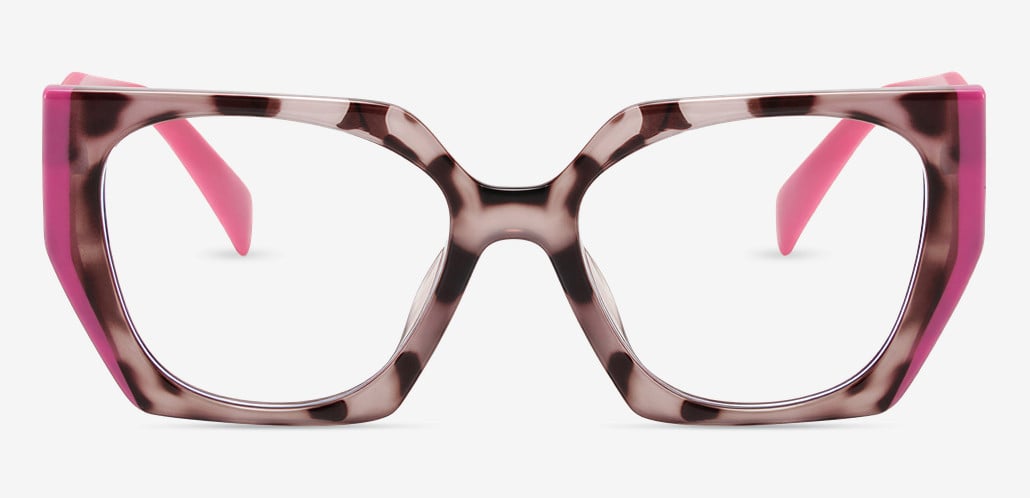
- Lens height. A 42mm-deep lens puts significantly more visual mass on your face than a 34mm one, in the exact same outline.
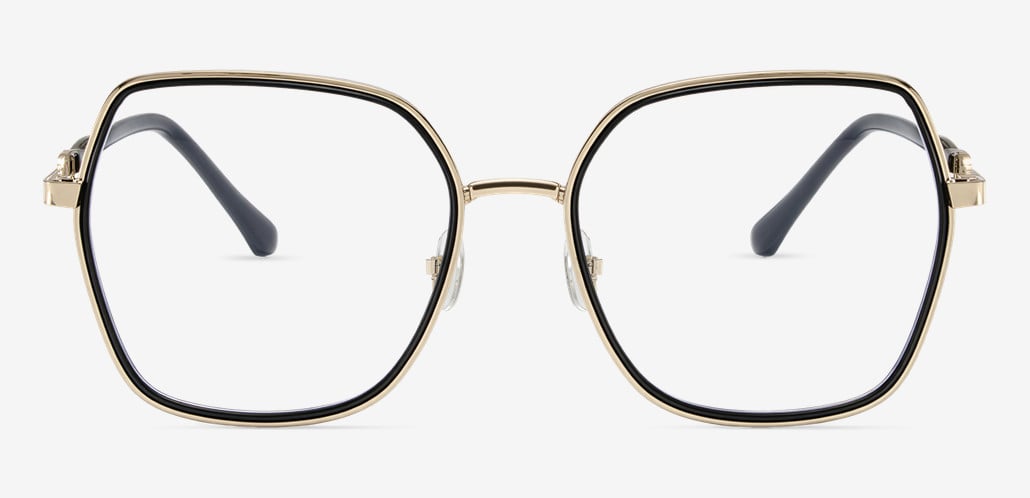
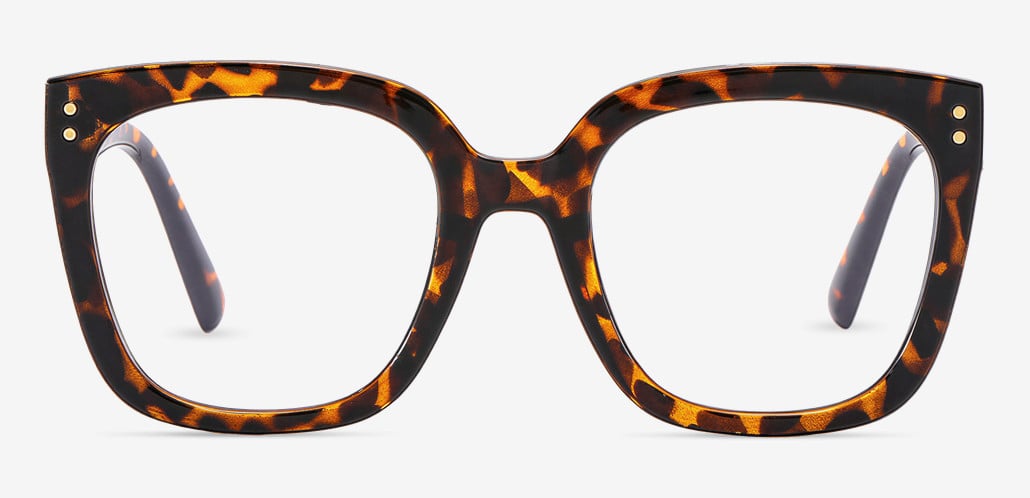
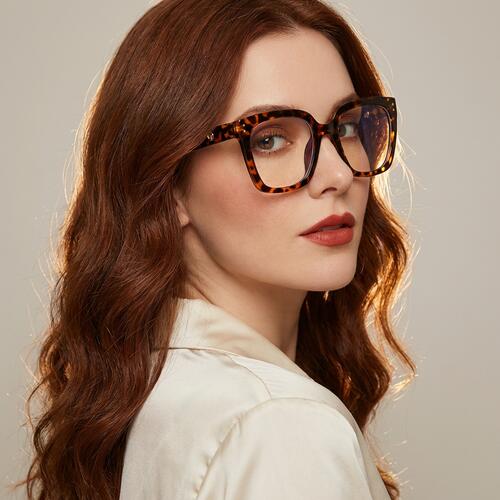
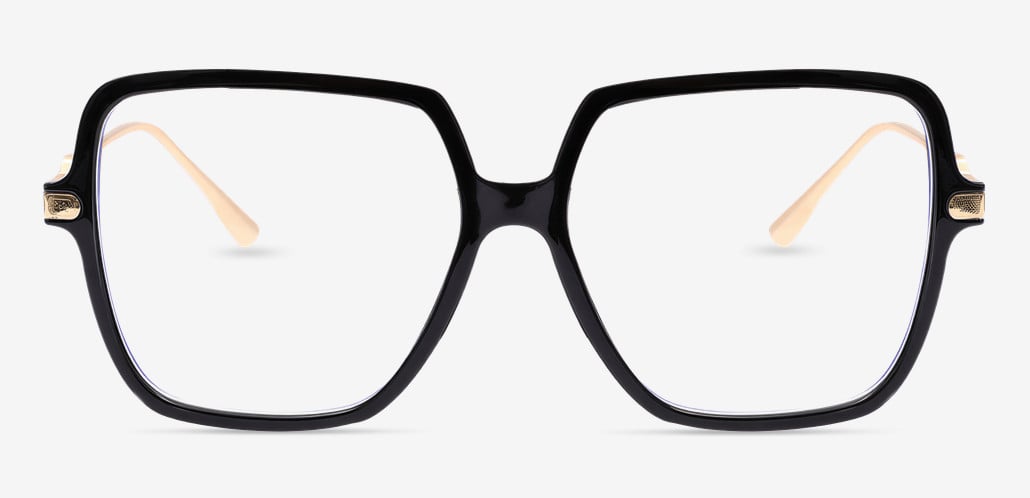
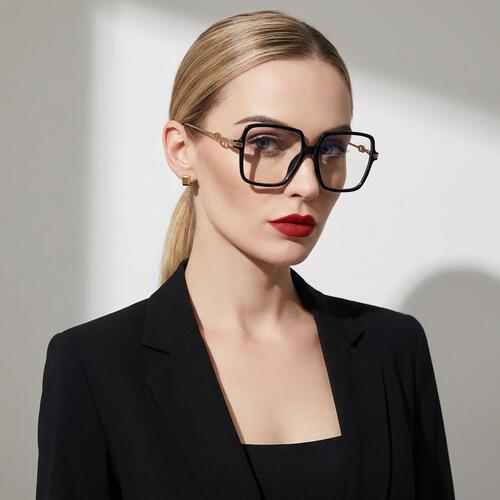
- Rim thickness and color. A 6mm black acetate rim reads as a heavy horizontal bar across the widest part of your face. The same frame in a 2mm gold metal reads as a line.
Which is why a thin, shallow square frame can look perfectly good on a heart shaped face, and a chunky oval can look worse — even though every guide online would have told you the opposite. Judge the frame, not the category label.
4. “They look fine in the mirror and wrong in every photo.”
Two mechanisms are at play, and both hit heart shaped faces harder than average.
Front-facing phone cameras use a short focal length held at close range. Short focal lengths exaggerate whatever is nearest the lens and stretch the outer edges of the frame. On a face that is already widest at the top, a selfie taken from slightly above — the natural angle — widens the forehead further and shrinks the chin. Your glasses didn’t do that. Your phone did.
The second is tilt. Most frames are designed to sit with the bottom rim angled slightly toward your cheeks. If your pair sits perfectly vertical, the lenses catch light flat-on and the frame reads larger and more severe in photos than it does in life.
What to change
Before you judge a pair, have someone photograph you from about six feet away at eye level, or use the rear camera in a mirror. That’s much closer to how people actually see you.
5. “Every guide tells me something different.”
Heart shaped faces divide into two recognizably different structures. Some have a soft, curved jawline and a rounded hairline. Some have a sharp point at the hairline and a jaw that changes direction abruptly at the chin. Advice written for the first group tells you to add width and lift up top; advice written for the second tells you to keep everything light and let the bone structure do the work. Both are correct, for their group.
| Your structure | How to tell | Where to start |
|---|---|---|
| Soft heart | Rounded hairline, and the line from ear to chin curves the whole way | Cat-eye, oval, round — curve against curve |
| Angular heart | Distinct point at the hairline, and the ear-to-chin line has a corner in it | Browline, aviator, defined rectangles — more frame, more structure |
Now, the part that really is about your face shape
With the impostors removed, what’s left is small and worth stating plainly. Face shape doesn’t determine whether glasses fit. It determines where someone’s eye lands first when they look at you.
On a heart shaped face, the natural landing point is the upper third. Frames influence that in three ways:
- They can add a horizontal line low on the face. Anything that draws attention downward from the brow — a defined lower rim, a lens with some depth, an aviator’s taper — pulls the eye toward the narrower half.
- They can soften or sharpen the brow line. A curved top rim blurs the transition from forehead to face. A strong straight top bar emphasizes it. Neither is better; they produce different results.
- They can widen or not widen above eyebrow level. Frames that extend past your hairline visually continue the widest part of your face outward. This is the one rule that holds up across both sub-types.
That’s it. Three levers. Everything else in a shape guide is an application of them.
Shape by shape, with the caveat guides usually leave out
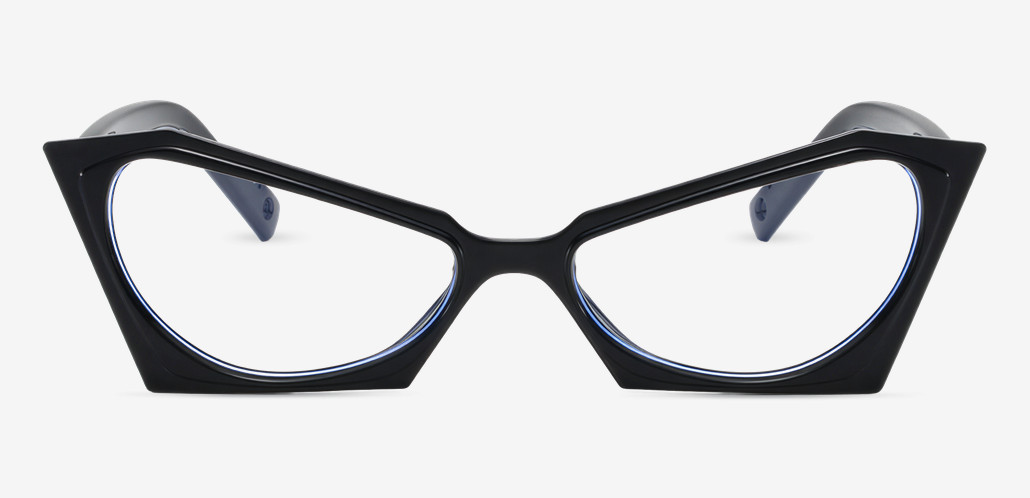
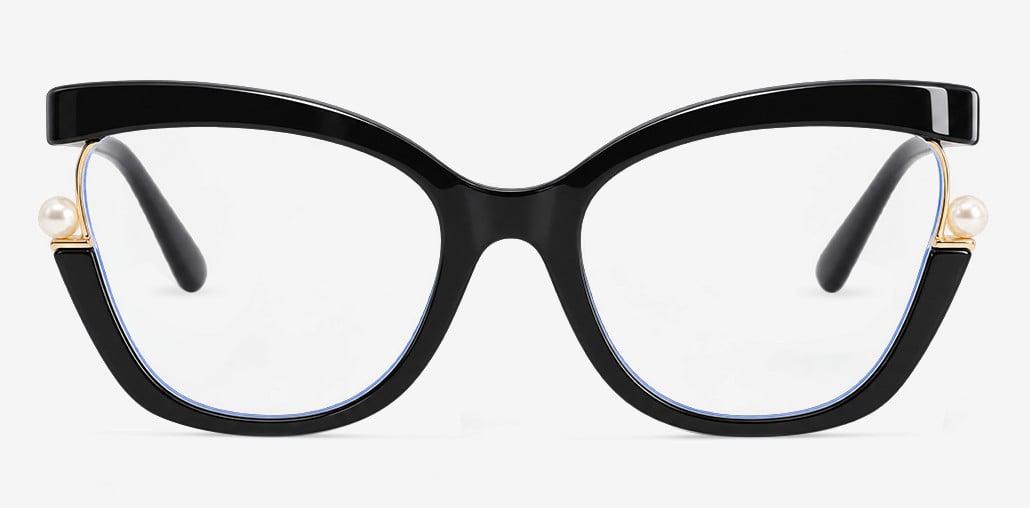
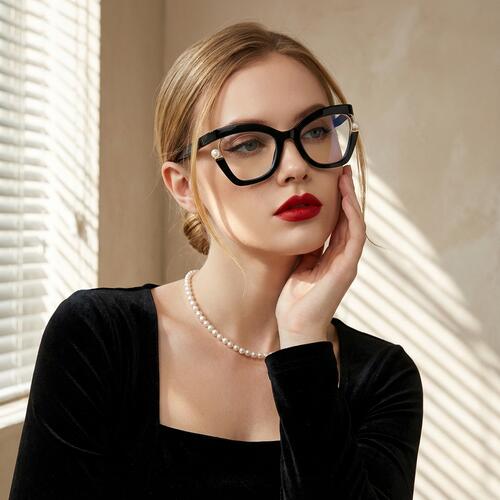
Cat-eye
The lifted outer corners carry attention up and out, away from a narrow chin, and the upswept line echoes the taper instead of fighting it. Best on the soft sub-type.
When it doesn’t: very exaggerated wings on an already broad brow add width where you have the most.
Browline
A defined upper bar with a light or absent lower rim gives an angular face a horizontal to sit against. The most recommended shape here, and the most often overdone.
When it doesn’t: thick dark browlines on a broad forehead stack mass on mass. Look for the slim-bar version.
Aviator
The teardrop is the one classic outline that genuinely puts visual weight low on the face. It works across both sub-types and across men’s and women’s fits, which is rare.
When it doesn’t: very large aviators drop the lens onto the cheek and can look like they’re sliding even when they aren’t.
Oval & round
Curves counter angles, and a moderate lens height keeps the whole thing light without erasing it.
When it doesn’t: deep round lenses sit on the cheekbone and push the widest visual line up into your mid-face.
Rimless & half rim
The lowest-risk option on this list, because a frame with no outline can’t compete with your bone structure.
When it doesn’t: if you want the glasses to read as a deliberate style choice, these disappear.
Rectangle, softened corners
Balances the jaw without the hard edges of a full square. A slim rim keeps it from going top-heavy.
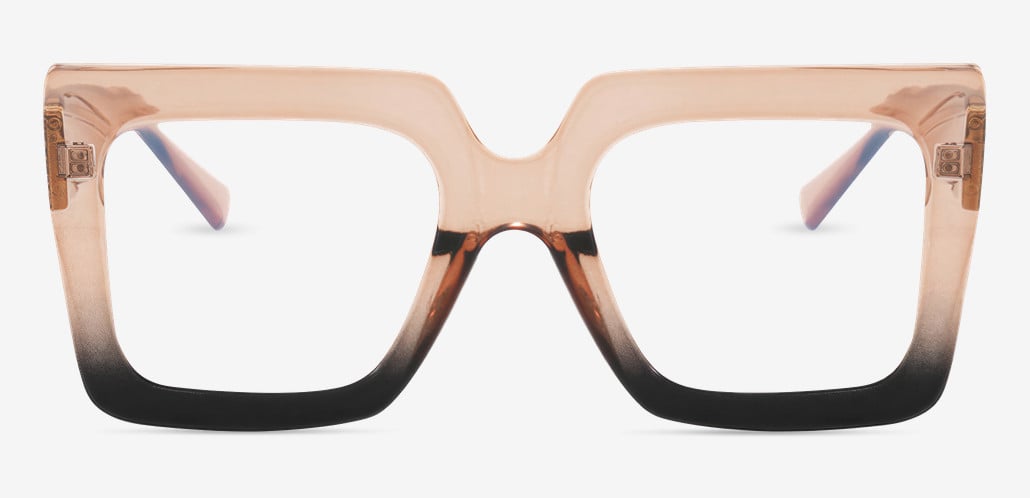
When it doesn’t: thick square acetate with a deep lens is the one combination that reliably works against this face shape.
Glasses for a heart shaped face: the men’s version
Most content on this topic is written for women, and it leaves three things unaddressed.
Facial hair changes the math. A full beard adds width and mass to the narrow end of your face, which is precisely what frame advice is trying to achieve. If you have one, you’ve already solved part of the problem, and you can wear lighter, smaller frames than the guides would suggest. Clean-shaven, the taper is more visible and the case for a defined lower rim gets stronger.
A receding hairline changes perceived forehead width. Many men develop what reads as a heart shaped face in their thirties without having had one at twenty. The structural taper is real — and so is the option of a frame with a strong horizontal top line, which effectively draws a new brow line.
Men’s ranges run wider by default. If your head measures on the narrow side at the temples, the men’s section of most retailers will fight you. Ignore the section label and shop the width band. A frame is a frame.
Ordering online without gambling
Buying glasses for a heart shaped face online is genuinely easier than buying in a store, on one condition: shop numbers, not adjectives.
- Start from a pair you own. The measurements are printed inside the left temple arm. Even a pair you dislike tells you what to change.
- Use Virtual Try-On for outline, not for fit. It’s excellent at answering “does a cat-eye read as too much on me” and useless at answering “will these slide.” Shape from try-on, fit from millimeters.
- Order in a band. If two frames sit within 3mm of each other on total width, both will fit. Choose on looks.
- At Aoolia’s prices, buying two and keeping the winner is a real strategy rather than a luxury. Frames start at $6.95, which changes the calculation considerably compared with a single $200 decision.
- Check the return window before you order, not after the box arrives.
Quick answers
How do I know if I have a heart shaped face?
Your forehead is the widest part and the outline narrows toward the chin, usually with a pointed hairline and a tapering jaw. If your cheekbones are wider than your forehead, that’s a diamond face and different advice applies.
Do cat-eye glasses suit a heart shaped face?
Frequently, especially when the jawline curves rather than angles. The upswept corners draw attention up and away from a narrow chin. If your forehead is the dominant feature, a softened rectangle or a slim browline often reads better.
What frame width should I look for?
Most adults land between 130mm and 145mm total width. Rather than guessing, estimate from a pair you already own: lens width + bridge + lens width, plus about 6–10mm. Then shop within 3mm of that figure.
Which shapes should I avoid with a heart shaped face?
Only two combinations fail consistently: thick square acetate with a deep lens height, and frames noticeably narrower than your head. Everything else is worth trying.
Are glasses for heart shaped faces different for men and women?
The structural logic is identical. What differs is that men’s ranges run wider by default, and facial hair changes how much lower-face balance you need from the frame.
Why do my glasses keep sliding down?
Almost always a bridge that’s too wide, not a frame that’s too heavy. Try a bridge measurement 2mm narrower, or a frame with adjustable nose pads.
The short version
Before you go looking for new glasses for a heart shaped face, work out which category your complaint belongs to. Sliding is a bridge issue. Gapping and pinching are a width issue. Top-heaviness is a lens height and rim thickness issue. Looking strange in photos is usually a camera issue.
Only the last item on the list — where someone’s eye lands when they look at you — is genuinely about the shape of your face. It’s the part shape guides talk about most, and the part that’s easiest to fix, because at that point you’re choosing between good options rather than troubleshooting a bad one.
Browse Aoolia’s frames for heart shaped faces, filtered by total frame width and available with Virtual Try-On.
Shop glasses for heart shaped face