
Cool Sunglasses What still reads from ten feet away
You decide on a pair of sunglasses from about eighteen inches away. That's how far your face sits from a bathroom mirror, and roughly how far your phone sits from your eyes when you're scrolling a product page at midnight.
Almost nobody else will ever see them from there.
The anthropologist Edward T. Hall spent the 1960s mapping the distances people actually hold from each other, and the zone he called social distance runs from about four to twelve feet. That's the sidewalk, the patio table two over, the far side of a parking lot, the group photo, the line for coffee. Sunglasses live almost entirely in that band, because they're an outdoor object and outdoors is where people spread out.
So there's a gap built into the whole process. You're evaluating at eighteen inches for an audience standing at ten feet. Some of what convinced you up close is simply not there by the time anyone sees it.
This piece is about closing that gap, and then about the other half of the problem that almost no buying guide touches: what happens to a pair of cool sunglasses during the many hours a day they're not on your face at all.
The arithmetic of ten feet
There's a real number underneath this. A person with standard visual acuity resolves detail down to roughly one arcminute — one sixtieth of a degree. Run that out and it gives you the size of the smallest thing that can register at a given distance.
But resolving and recognizing are different jobs. Detecting that a line exists is the threshold; understanding what you're looking at usually needs the feature to be several times larger than that. In practice it gives you a working rule: at three feet, sub-millimeter detail still reads — engraving, hinge barrels, the grain in the acetate. At ten feet, anything under about three millimeters stops being identifiable, and under a millimeter it's gone entirely.
Here is what that does to an actual frame.
| Feature | Typical size | 3 ft | 10 ft |
|---|---|---|---|
| Total frame width, the silhouette | 130–150 mm | Reads | Reads |
| Lens outline shape | 40–60 mm | Reads | Reads |
| Lens darkness and mirror finish | whole lens | Reads | Reads |
| Frame-to-lens color contrast | whole front | Reads | Reads |
| Temple thickness in profile | 3–8 mm | Reads | Partly reads |
| Brow bar or top bar | 2–5 mm | Reads | Partly reads |
| Tortoise or layered acetate pattern | 1–4 mm flecks | Reads | Collapses to one average color |
| Wire core pins and rivets | 1.5–2 mm | Reads | Gone |
| Hinge construction | 1–3 mm | Reads | Gone |
| Temple logo | 2–10 mm | Reads | Rarely reads |
| Bridge engraving or filigree | under 1 mm | Barely reads | Gone |
Reads clearly Partly, or averages out Not identifiable
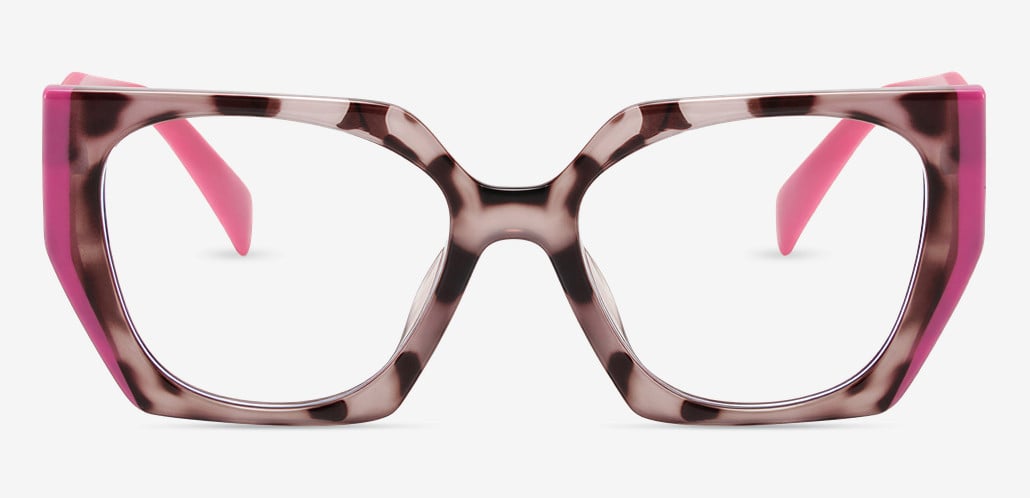
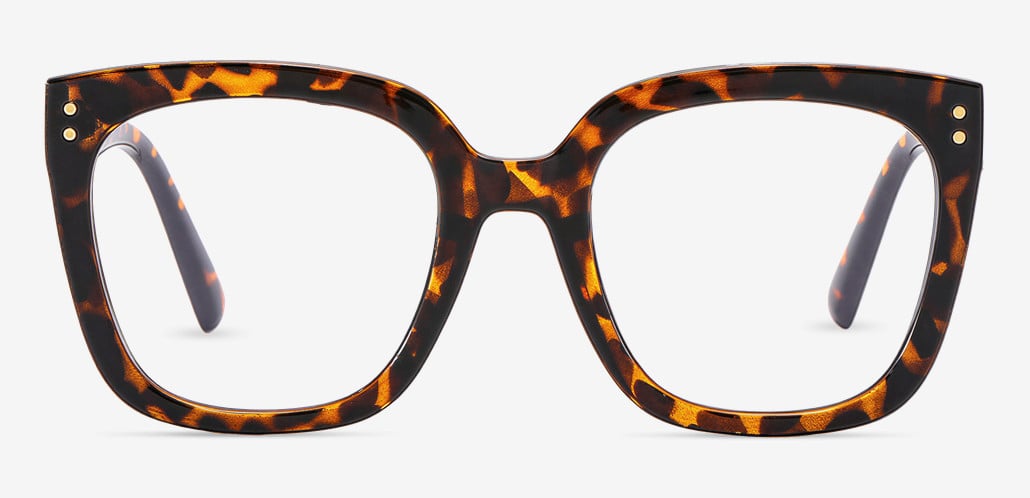
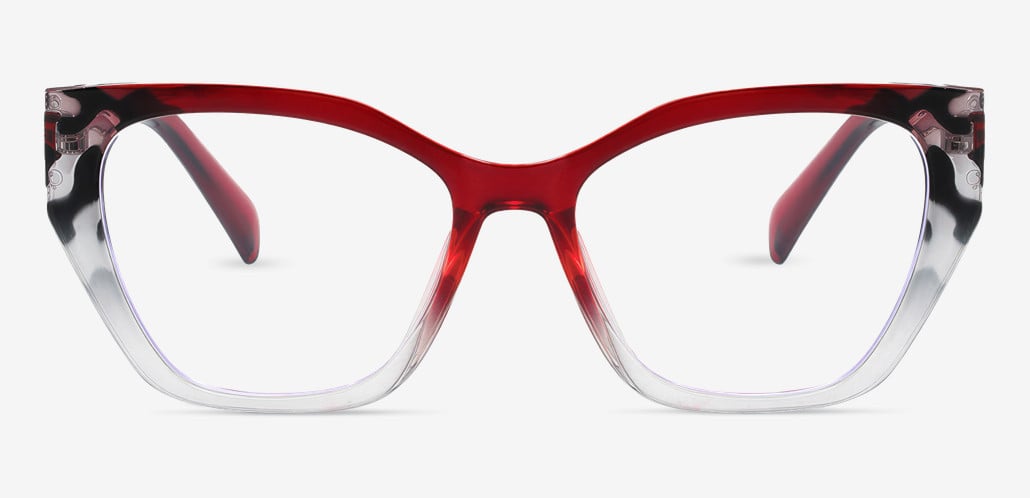
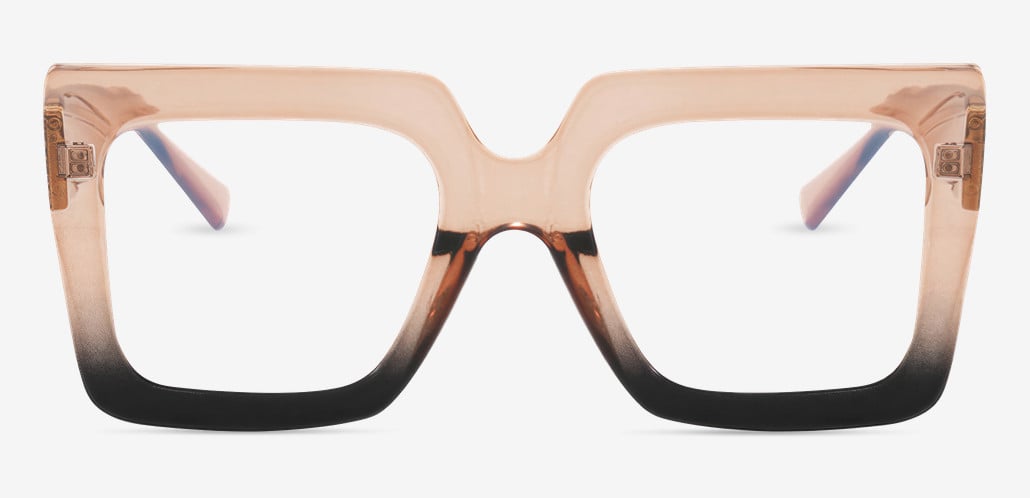
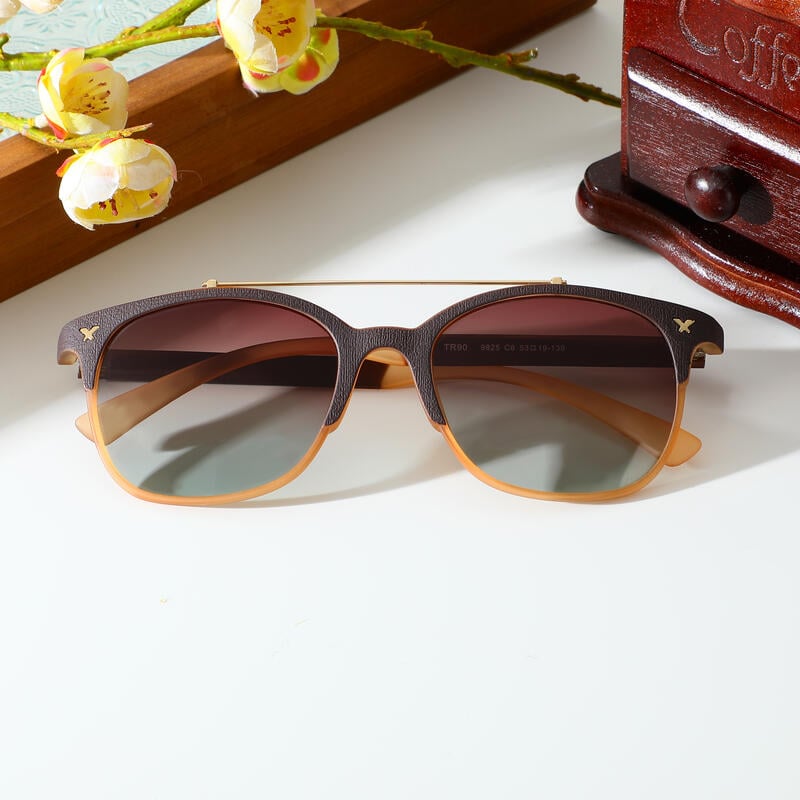
The tortoise line is the one that surprises people. A busy, finely flecked tortoise acetate is beautiful in your hand and, at ten feet, is a mid-brown frame. The pattern doesn't read as pattern — it averages. If you want an acetate that still says something across a patio, you need coarse internal contrast: two or three large zones, not forty small ones. A wide light-to-dark gradient across the front survives. Confetti does not.

Run the test yourself, before you buy
Ninety seconds, no equipment
- Stand at a full-length mirror wearing your current sunglasses, or holding a candidate pair up to your face.
- Back up slowly, starting at four or five feet. At ten feet from the glass your reflection is twenty feet of light-path away — slightly conservative, close enough to be useful.
- Watch for the moment things drop out. Most people find two distinct steps: fine surface detail disappears around five or six feet, then a second, larger loss around nine or ten when the frame stops being a thing and becomes an outline.
Whatever is still doing work at that second step is what you're actually buying. Everything that died before it is something you'll enjoy privately, which is a legitimate reason to buy it, but it should be priced accordingly.
The obvious objection, and where it holds
You are not the only viewer, and you're not standing ten feet away. You see the frame at reading distance every time you pull it off a shelf, clean a lens, or fold it shut. Someone across a small table sees it at three feet. A first date sees it at two.
Both things are true, and the useful version of this isn't that close-up detail is worthless. It's that the two categories of detail serve different people, and most listings blur them into one undifferentiated pile of features.
A workable split: let the silhouette and the lens do the public work, and let the materials do the private work. A frame whose outer shape and lens finish are decisive at ten feet, built in an acetate you enjoy holding, has both covered. A frame whose entire appeal is a fine pattern and a logo has covered only the second, and you'll be the only one who ever knows.
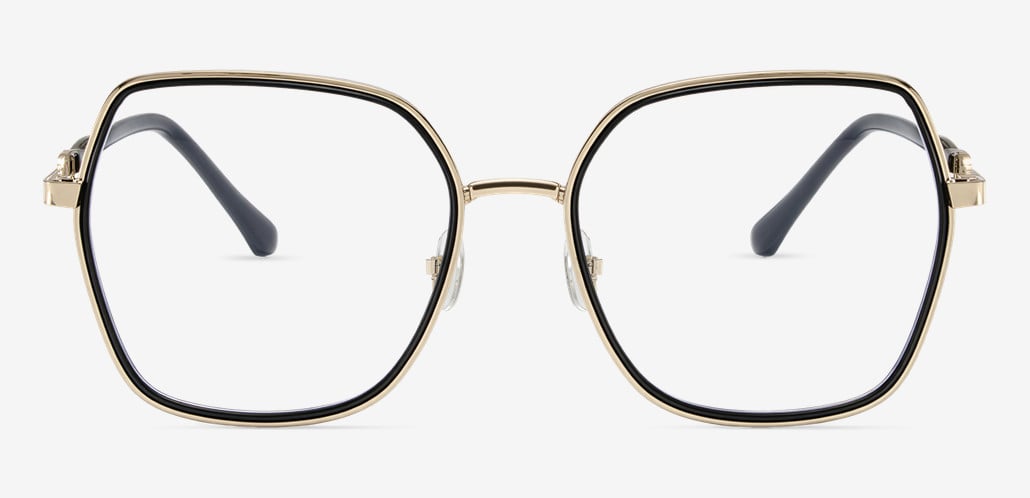
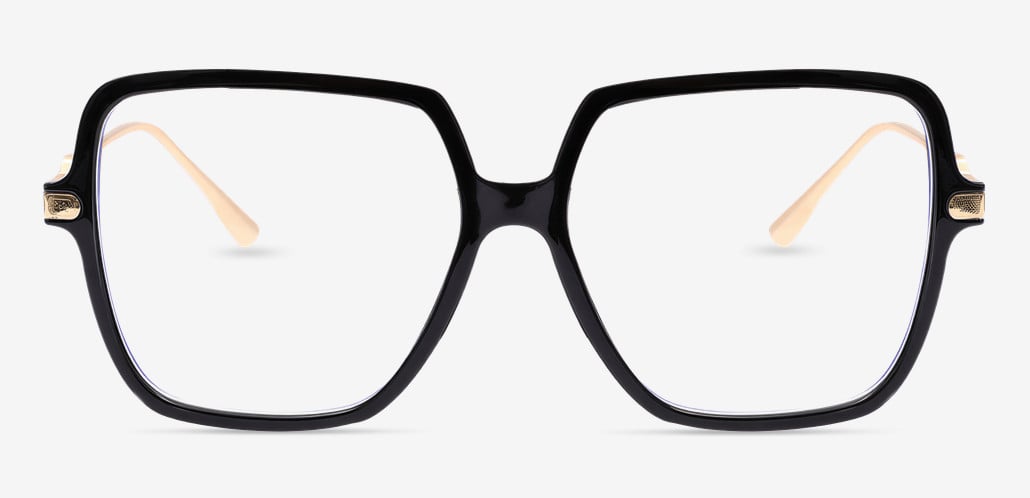
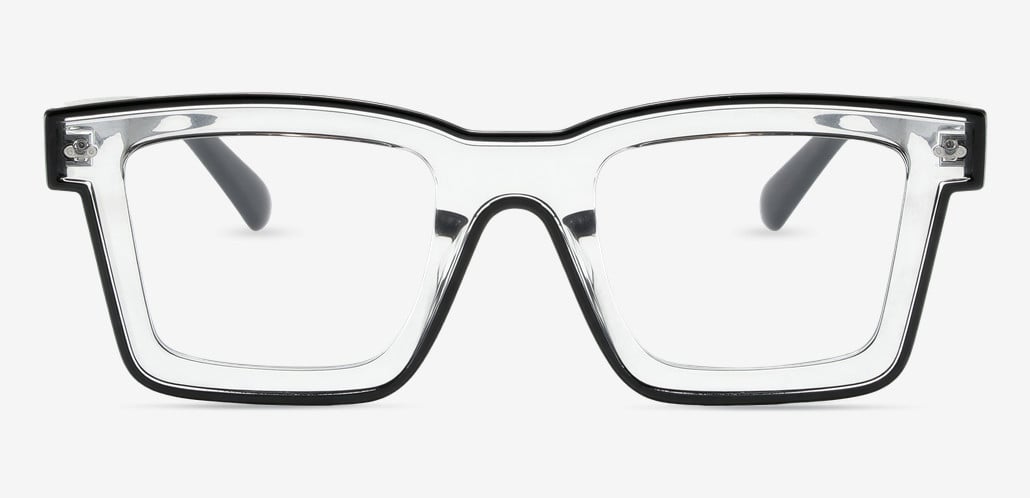
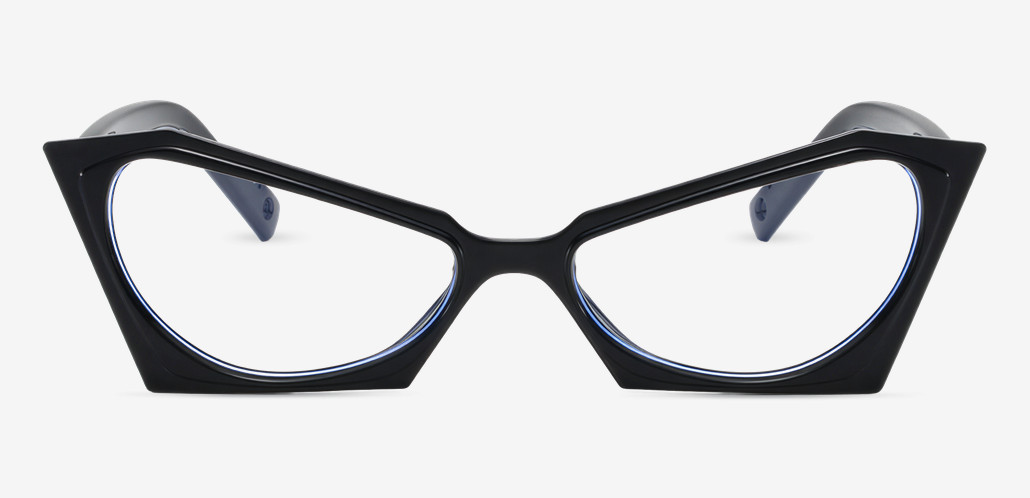
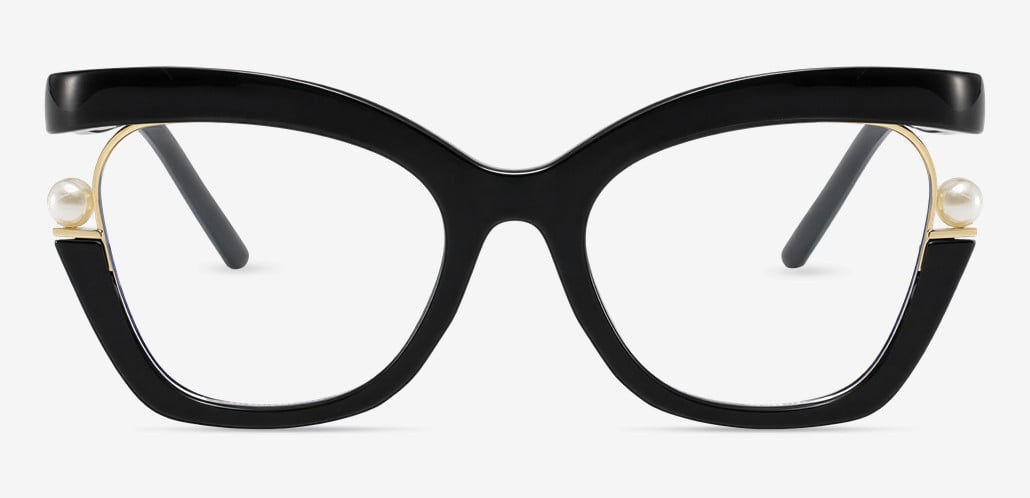
This is also why cool sunglasses don't have to be expensive. The features that carry at social distance — outline, width, lens color, mirror or gradient finish, the contrast between frame and lens — all get decided in the mold and the coating tank, not in hand-finishing. That's most of what sits in Aoolia's cool sunglasses collection: the spend goes into the shape and the lens, which is where ten feet can see it.

The off-face half
Now the part almost nobody writes about.
Eyeglasses go on in the morning and come off at night. Two cycles. Sunglasses are different in kind: they come off when you walk indoors, go on when you cross the parking lot, come off at the register, go on again outside. Fifteen, twenty, thirty cycles in a summer day is normal.
Which means a pair of sunglasses spends a large share of its life parked somewhere, and every parking spot does something to it. This is where good frames quietly stop being good, and why a pair you loved in May sits crooked by August.
| Where they go | What it does | What to look for when buying |
|---|---|---|
| Pushed up on your head | The widest part of your skull is wider than the widest part of your face. Every perch spreads the temples outward, and standard barrel hinges eventually take a permanent set. The most common cause of a frame that "stopped fitting." | Spring hinges, which flex and return. Or accept periodic re-adjusting. |
| Hanging from your collar | The load sits on one edge of the bridge, at an angle, all day. Thin wire bridges bend gradually and asymmetrically. | A deeper bridge area — acetate, or heavier-gauge metal. |
| Face-down on a table | The convex front of the lens touches first. On a mirrored lens every scratch shows as a bright line, because the coating sits on the outside surface. On a plain smoke tint the same scratch is nearly invisible. | If you want mirrored, you're also committing to a case habit. A pronounced brow bar lifts the lens off the surface. |
| Loose in a bag or a car door pocket | Hits the coating and the hinge at the same time. Statistically the most damaging spot. | Flat-folding frames pack smaller and get crushed less. |
| Removed with one hand | Repeated one-sided force splays one temple more than the other. The frame then sits low on one ear, which you'll read as "these look weird on me" long before you diagnose it as a fit problem. | Nothing to buy. Use two hands — the cheapest durability upgrade available. |
The head-perch row deserves emphasis because it's so universal and so invisible. People push sunglasses up onto their head constantly — it's practically the defining gesture of the object — and the mechanical consequence is a slow, symmetric-looking widening that nobody notices happening. Then one day the frame slides down your nose and you assume it was cheaply made.
It probably wasn't. It was perched on a skull four hundred times.
What the two halves add up to
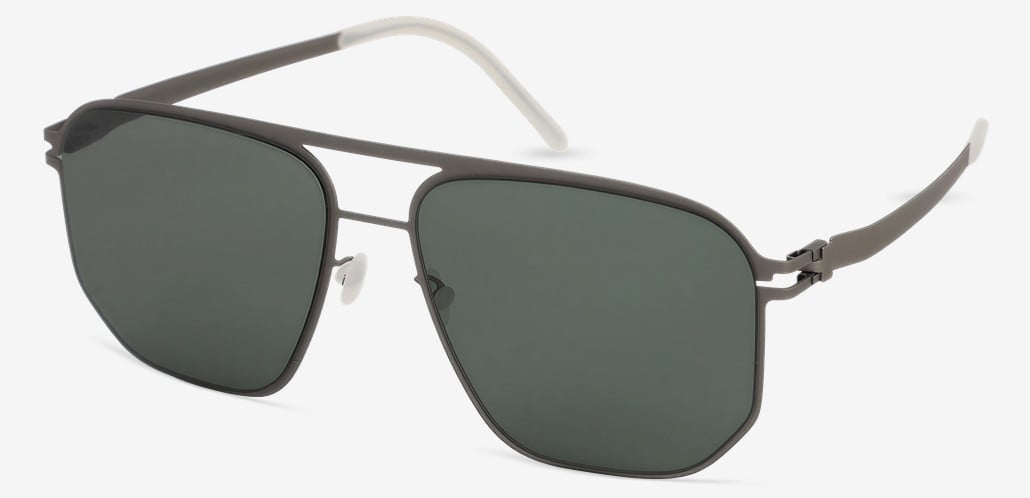
- Decide the frame at distance.Outline, total width, lens darkness, and the contrast between frame and lens are the four things doing the work in public. Get those right first and treat everything else as a bonus.
- Pick a lens finish you're willing to maintain.Mirrored lenses are the strongest statement available at ten feet and the least forgiving at arm's length. Gradients sit in the middle. Flat smoke is the most durable-looking of the three because it hides its own wear.
- Check the hinge, not the hinge's looks.Spring hinges aren't a luxury feature on sunglasses the way they are on eyeglasses. They're a response to a specific, predictable abuse pattern.
- Coarse contrast beats fine pattern.If you want the acetate to register at distance, it has to be organized in big zones.
The thing neither half settles
Whether the frame actually fits your face. Width, bridge, and how the temples sit over your ears are still a fit question, and the only honest way to resolve it before buying is to see the frame on your own face. Virtual Try-On covers most of the cool sunglasses collection and takes about as long as reading this paragraph. Shape-matching guidance is a starting point, not an answer — it tells you what tends to work, and try-on tells you what does.
If you'd rather the same logic without the tint, cool glasses runs on identical principles with clear lenses, though the off-face half matters a lot less there. Nobody perches their reading frames on their head forty times a day.