
The Oldest Trick in Style: Bet on Survivors
There's a simple logic here, and it's worth making explicit. Every year, eyewear introduces new shapes. Almost all of them disappear within a cycle or two. The handful that don't — that keep getting re-issued, re-worn, and re-photographed across generations — have passed a filter that no trend forecast can replicate. A frame that has stayed in production for seventy years has survived changing hairstyles, changing suit cuts, changing cameras, and changing faces. That's not nostalgia. That's stress testing.
Which means the safest possible purchase in men's eyewear is also the least exciting sentence in this article: buy a shape with a history. Here are the five with the strongest paper trail.
The Browline
Introduced by Shuron in 1947 as the Ronsir, the browline put a thick upper bar over a thin metal lower rim — deliberately echoing the line of a man's eyebrows — and became the defining American men's frame of the 1950s. It sat on the faces of professors, engineers, and, most famously, Malcolm X. When Ray-Ban re-cut the idea as the Clubmaster in 1986, it promptly ran another forty-year lap.
The browline's trick is structural: it adds weight and decision to the upper third of the face while leaving the lower half open. That makes it unusually kind to softer jawlines and rounder faces, and it reads as intentional without reading as loud. If your wardrobe leans Oxford shirts and knit ties — or you simply want glasses that suggest you've read the meeting agenda — this is the shortest route there.
The Round Wire
Round metal frames are the oldest silhouette in this article by a wide margin; thin wire rounds were the default of early mass-produced spectacles, long before eyewear had anything to do with fashion. The twentieth century then handed them one cultural endorsement after another — Gandhi, John Lennon, and eventually a boy wizard — without ever changing the basic geometry.
On the face, rounds do the inverse of the browline: they soften. Strong jaw, angular features, or a face that photographs more severe than you feel? A round wire frame takes the edge off. The classic proportions are modest — lens widths in the mid-40s to low-50s in millimeters — and the style punishes oversizing, so this is the one silhouette where smaller genuinely is safer. In thin gold, gunmetal, or matte black, it has not been out of style in a hundred years, and it is not going to start on your watch.

The Aviator
The teardrop aviator was engineered in the 1930s for U.S. military pilots who needed full eye-socket coverage against high-altitude glare, which is why the lens drops lower than any other classic shape. It crossed over from equipment to style in the postwar decades and never crossed back.
As an optical frame — clear lenses, thin metal, double bridge — the aviator is the most underused classic on this list. Most men still file it under sunglasses, which is exactly why a prescription aviator looks distinctive without looking risky: the shape is universally recognized, just rarely deployed. Its generous lens height suits longer faces and larger features, and the double bridge adds structure for wider faces. If every pair you've owned has been a rectangle, this is the lowest-effort way to look like you made a choice.
The Bold Square
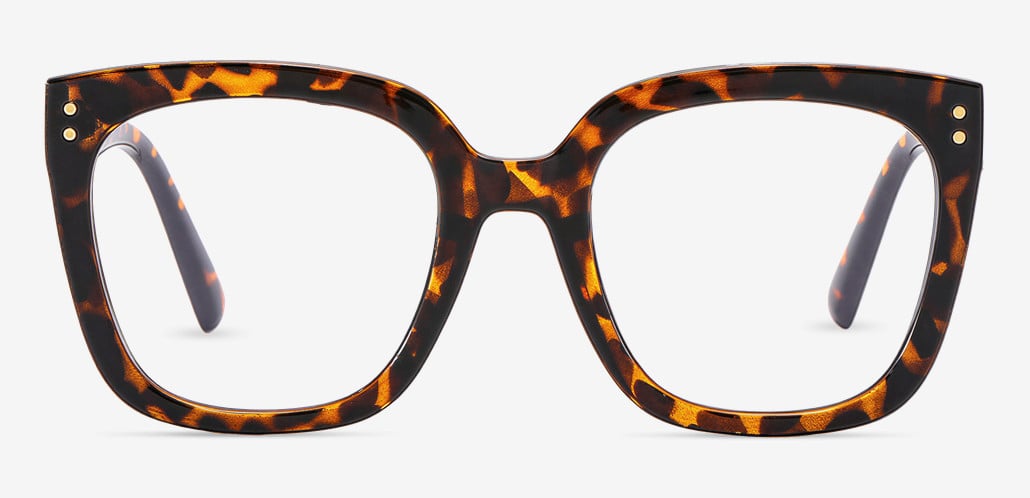
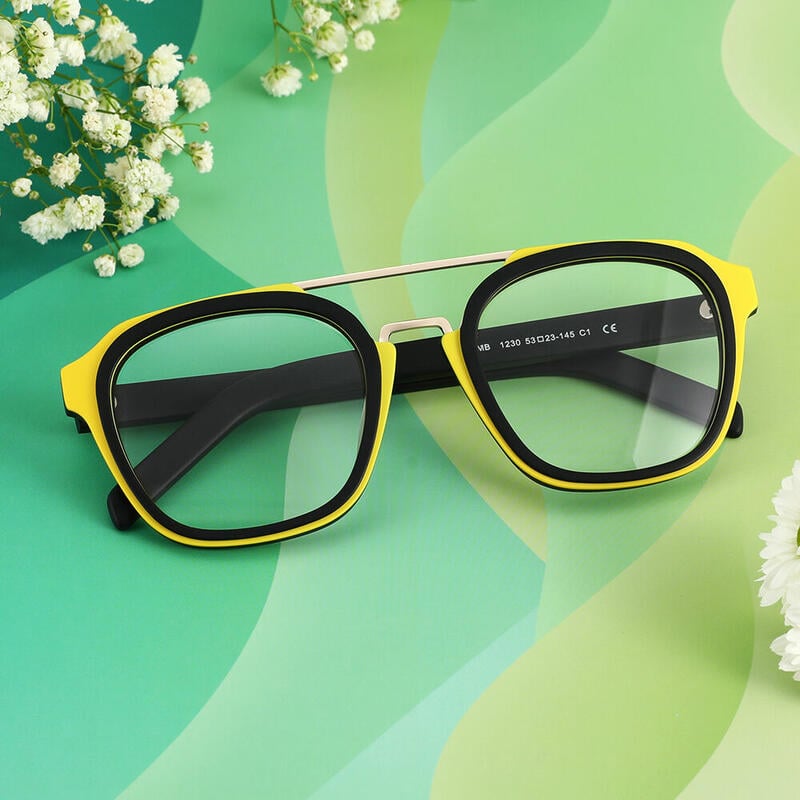
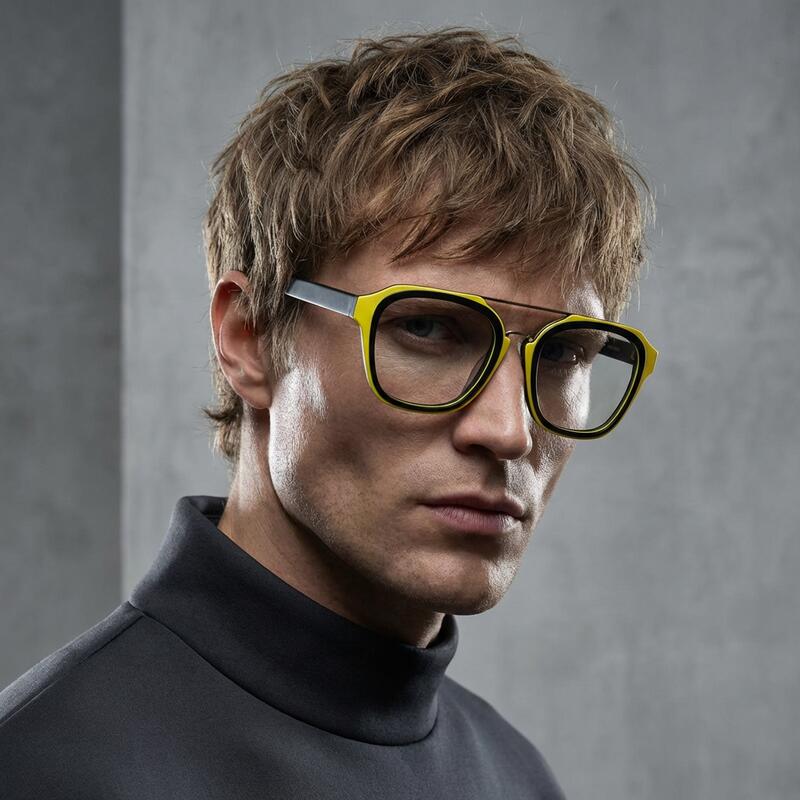
Thick, dark, squared acetate is the frame of mid-century certainty — Buddy Holly in 1957, Michael Caine's bespectacled spy in 1965, every architect's headshot since. It periodically gets re-labeled ("nerd glasses," "statement frames," lately "grandpa-core") and outlives each label in turn.
Two things keep the bold square evergreen. First, proportion: the strong horizontal line squares off round and oval faces, which describes most faces. Second, material: this silhouette is where acetate quality is most visible, because there's simply more of it. Genuine acetate glasses are cut from a solid block and hand-polished, so the color runs through the material and the edges come out glassy and smooth; cheap injection-molded plastic is painted on the surface and shows mold seams along the temples. On a bold square, that difference is the difference between "designer" and "dispensary."
The Slim Rectangle
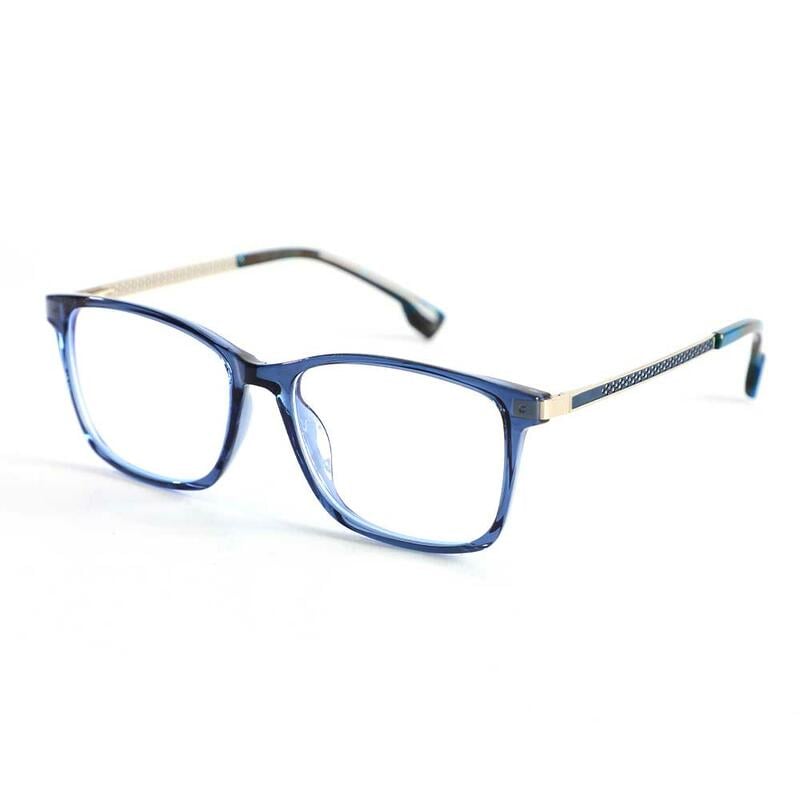
The rectangle is the quiet workhorse of men's eyewear — narrow lens, clean line, minimal commentary. It had its loudest moment in the wire-thin minimalism of the 1990s, but the shape itself predates and postdates the trend; it persists because it does the most common job in eyewear, which is correcting the vision of a man who does not particularly want to discuss his glasses.
Modern versions avoid the dated extremes: not the sliver-thin lenses of 1998, not oversized either — lens widths around 50 to 56 millimeters, in acetate for presence or titanium for near-invisibility. Titanium deserves a specific word here: at roughly half the density of conventional frame alloys, titanium frames all but disappear on the face over a twelve-hour day, and the material is hypoallergenic besides. For a first pair, a daily pair, or an only pair, a slim rectangle in dark acetate or brushed titanium is the closest thing eyewear has to a wrong-answer-proof choice.
What Actually Dates a Pair of Glasses
Here's the part most style guides skip: when glasses look dated, the shape is rarely the culprit. The five silhouettes above have been continuously wearable for fifty to a hundred years. What times out is everything bolted onto the shape.
Logos date fastest — a brand's moment passes and takes your temples with it. Extreme proportions date next: whatever the current size fashion is, its exaggerated version has a shelf life of about three years in either direction, micro or massive. Trend colors and novelty finishes follow. What never seems to expire: black, tortoise, crystal, gunmetal, gold wire, and dimensions that match your face rather than the year's mood.
Read that list again and notice what it implies about money. Every fast-expiring element is also the element you pay a premium for — the license to print the label is baked into a branded frame's price, while the parts that actually endure are materials and proportion. Paying more does not buy you more time. Sometimes it buys you less.

Judging Quality From a Product Page
Buying online removes the store mirror but not your leverage — you just need to know where to look.
Start with the numbers. Every frame lists three measurements, usually formatted like 52□18-145: lens width, bridge width, and temple length in millimeters. If you own a pair that fits, those numbers are printed inside its temple arm — match them and you've eliminated most sizing risk. Most men land between 52 and 58 on lens width; if you're above that or between sizes, look for wide fits, adjustable nose pads, or custom sizing rather than forcing a standard frame to behave.
Then read the construction details the way you'd read a spec sheet. Acetate should be described as hand-polished or block-cut, not just "plastic." Hinges matter more than any other component — barrel hinges (the interlocking metal knuckles, ideally five) and spring hinges survive years of one-handed removal; hidden or glued hinges don't. Metal frames should name their alloy; "metal" alone usually means the cheapest one. And regardless of frame, the lenses only work if the prescription behind them is current — eye-care providers generally recommend re-testing every year or two — and accurately entered, which is worth a few minutes of care (here's a full walkthrough on ordering prescription glasses online safely).
One Frame Strategy That Outlasts Every Trend Cycle
If you take a single tactic from this article, take this one: anchor first, experiment second. Your first or only pair should come from the five survivors above, sized to your measurements, in a color from the never-expires list. That pair will still be correct at your job interview, your wedding, and your kid's graduation. Once it's on your face, a second pair is where the crystal acetate, the green tortoise, or the geometric shape belongs — personality is a much better use of a backup than of a daily driver.
A closing note on the word "designer," because it's doing quiet work in a lot of price tags. At Aoolia, it doesn't mean a licensed logo — every frame is an original design, built in the materials this article told you to check for: block-cut acetate, titanium, five-barrel hinges — and every prescription order is reviewed by a qualified optician before it ships. Frames start at $9.95, which is what happens when the label isn't part of the bill. If any silhouette above sounded like your face, the full collection of designer men's eyeglasses frames is one click away — filters for shape, material, and size included, mirror optional.