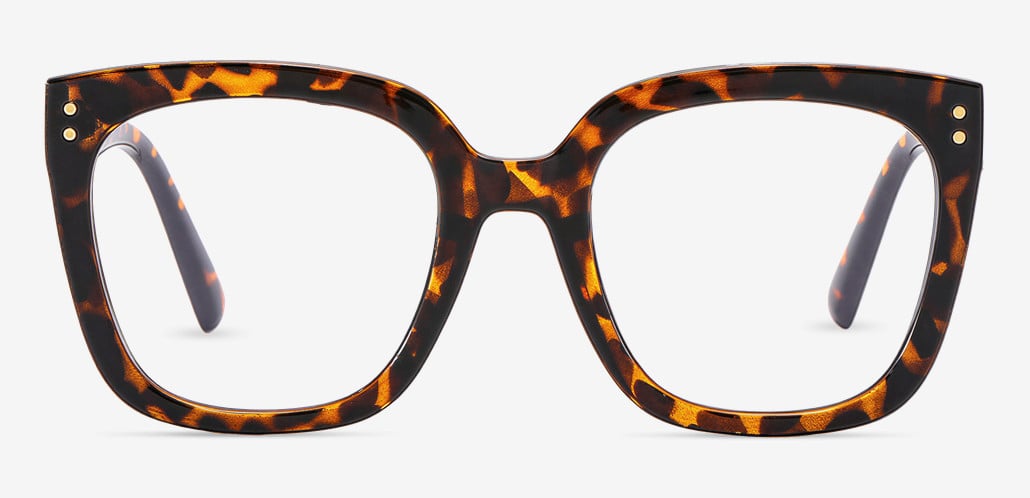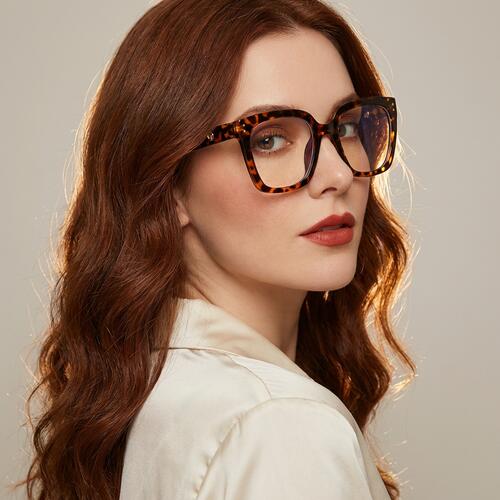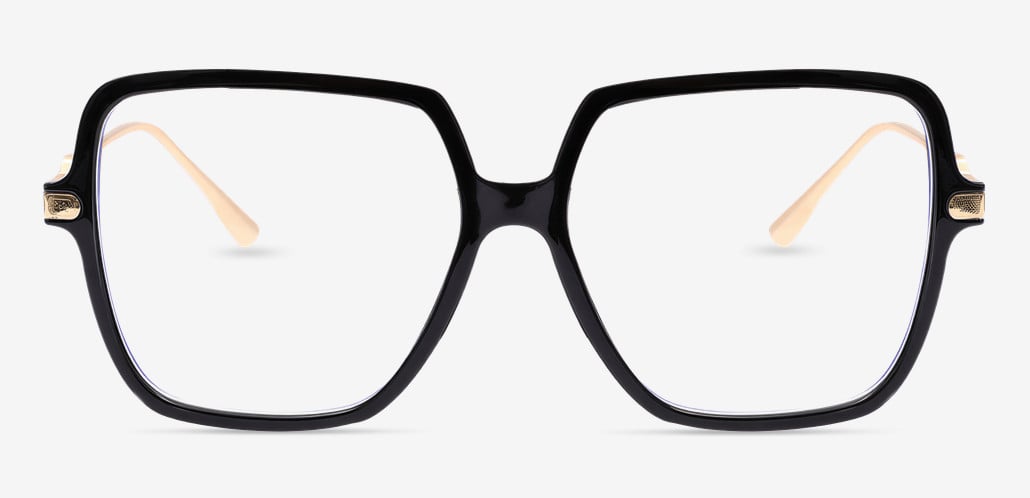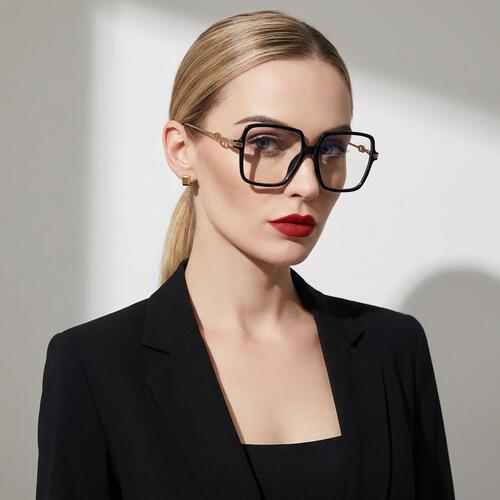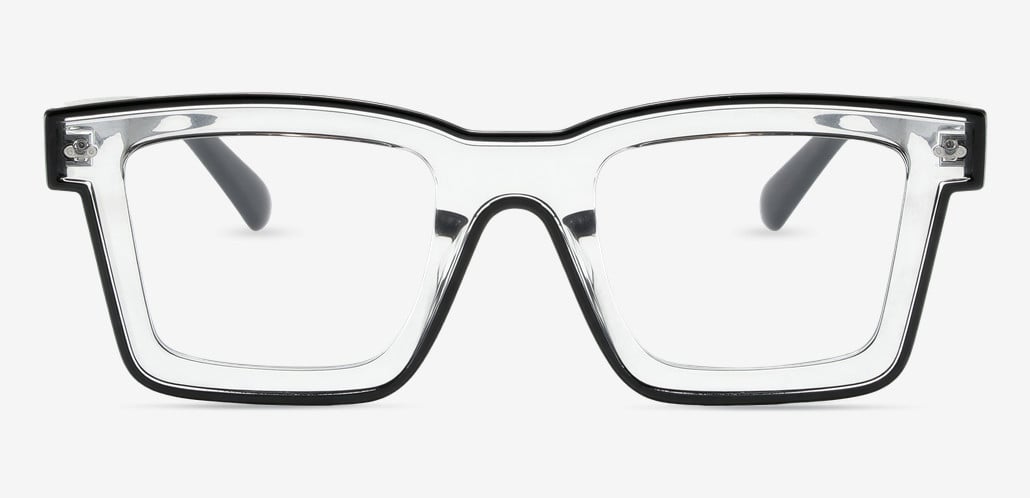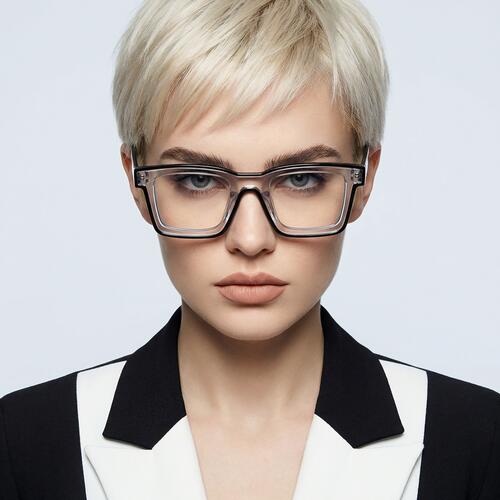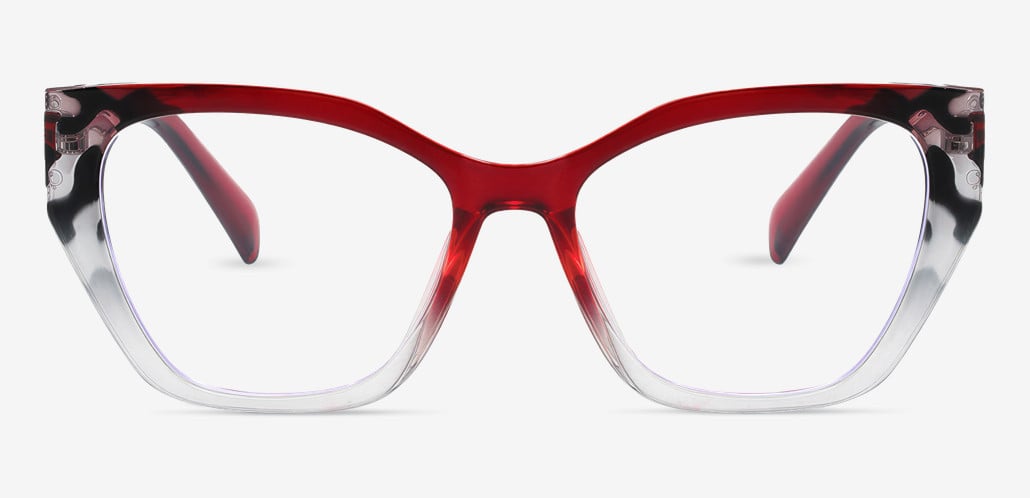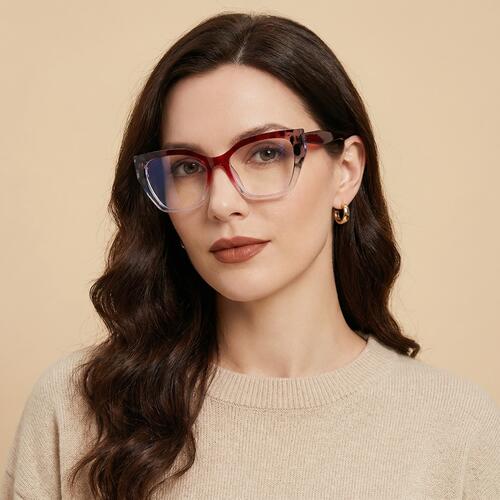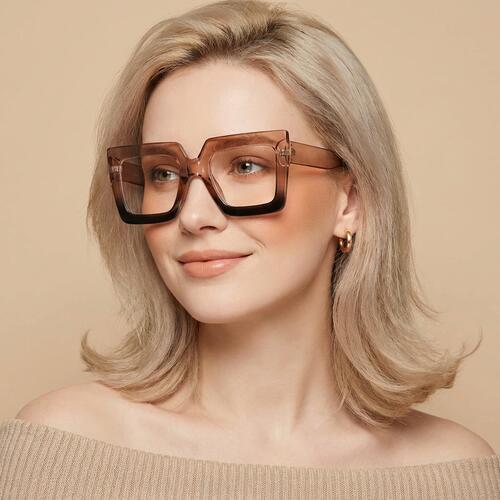

Fake glasses: the six places they actually cause problems
Clear lenses with no correction in them are uncomplicated almost everywhere you go. Six situations are the exception, and each one has either a written rule or a physical requirement sitting behind it.
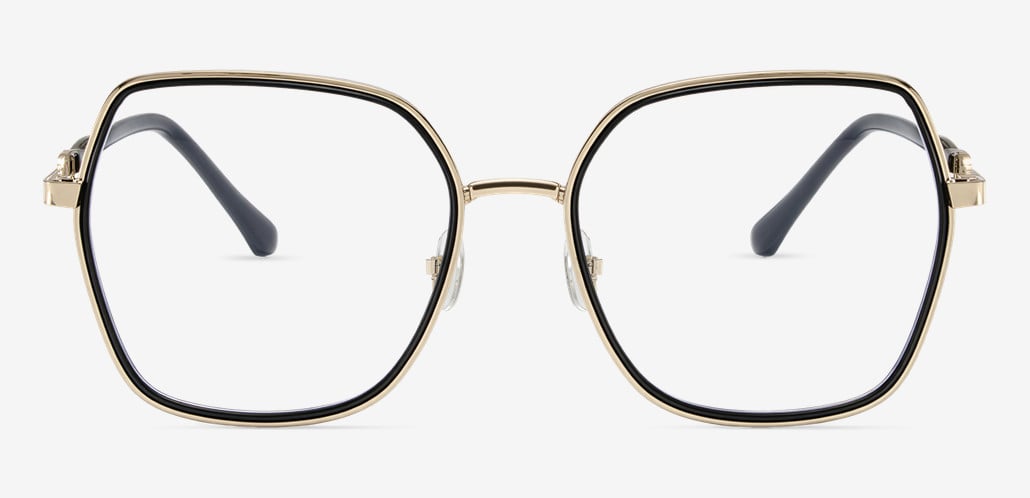
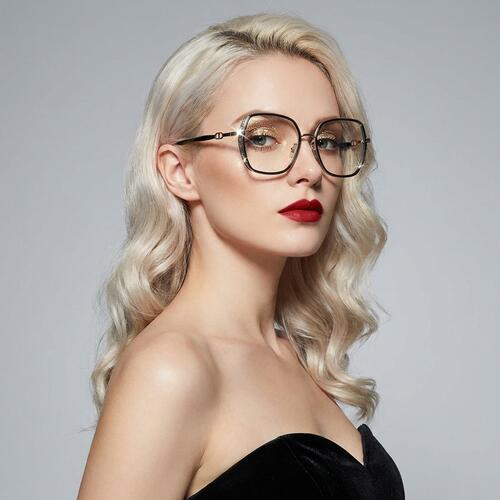
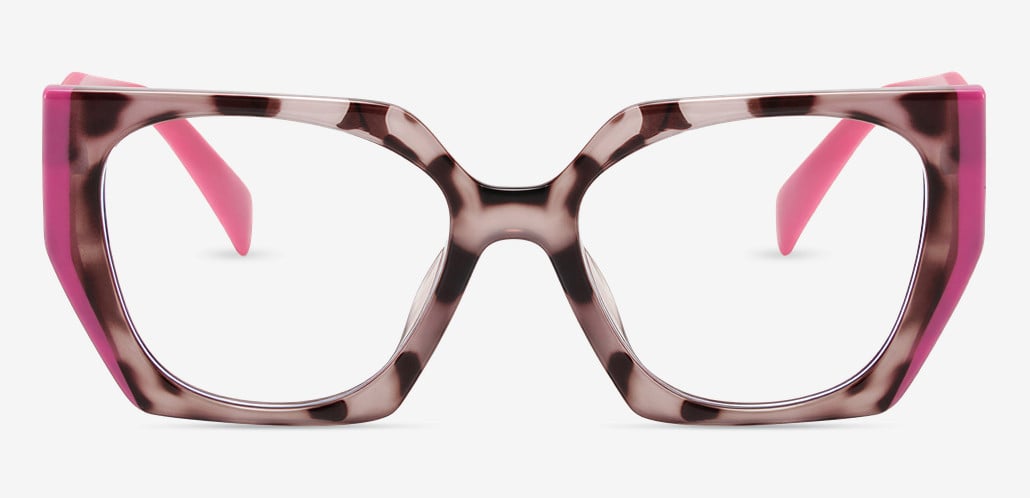
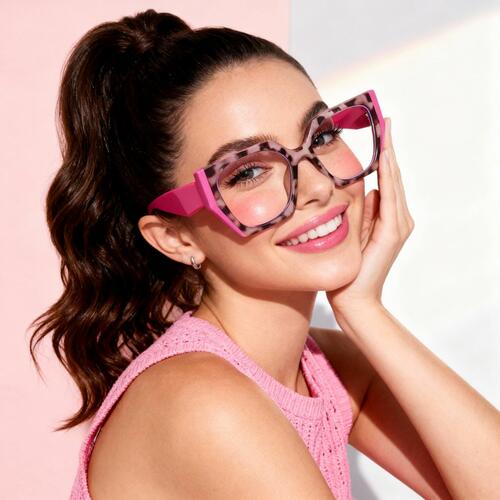
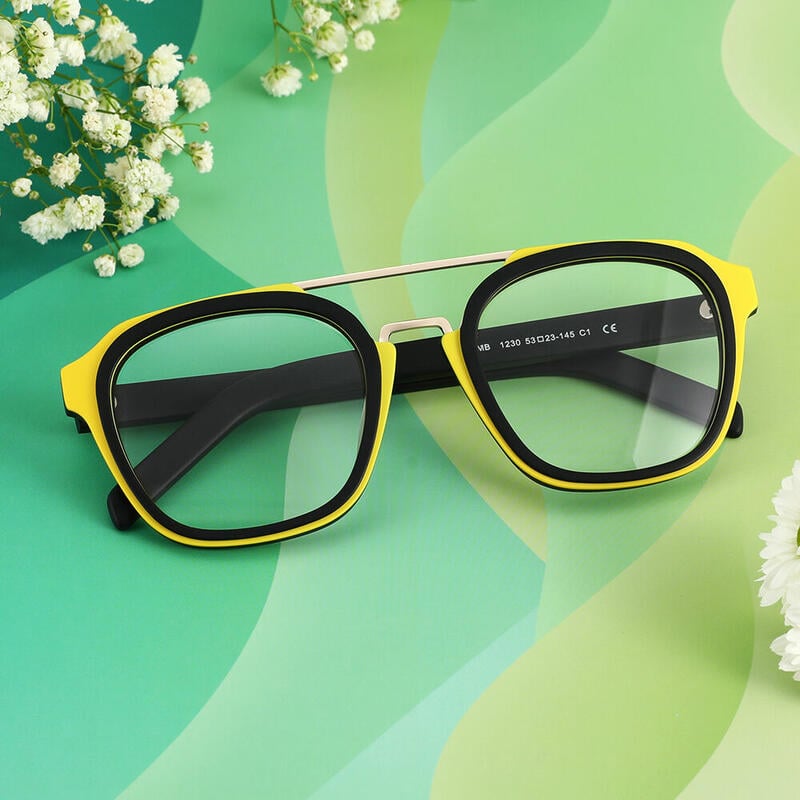
Fake glasses are eyeglasses fitted with clear lenses that have no corrective power. People wear them because they like how they look, and for the overwhelming majority of the day, nothing about that is complicated. You put them on, you go about your life, nobody asks.
Then there are the situations with an actual rule attached, or a physical requirement that clear plano lenses don't meet. Almost nothing written about fake glasses covers these. Most articles stop at "they're a safe fashion accessory," which is true, and also not the part anyone gets caught out by.
Here are the six that come up in real life, what the rule actually says in each case, and what to do about it.
Quick reference
| Situation | Can you wear fake glasses? | What decides it |
|---|---|---|
| US passport and visa photos | No | Department of State photo policy |
| Driver's license or state ID photo | Usually not | Your state DMV, following AAMVA guidance |
| Workplace with an eye-protection rule | No | OSHA rule pointing to the Z87+ marking |
| Sports with a ball, puck or racquet | Not these | Sports eye protectors built to ASTM F803 |
| Night driving and low light | Yes, if coated | Reflection off the lens surfaces |
| Video calls and photography | Yes, if coated | Where the light sits, and the frame finish |
| Eight-hour days | Yes, if it fits | Bridge width and temple pressure |
ID photos: the one that surprises people
If you have been wearing fake glasses long enough that they feel like part of your face, your passport photo is going to look strange to you, because you cannot wear them in it.
Since November 1, 2016, the US Department of State has not accepted eyeglasses in new passport or visa photos, except in rare circumstances supported by a signed medical statement. The official photo guidance says to take off eyeglasses, sunglasses and tinted glasses before the picture is taken. There is no separate carve-out for clear lenses with no correction in them. A frame is a frame as far as the reviewer and the facial-recognition software are concerned, and the stated reason is biometric: glare and shadow interfere with the eye region, which is the part of the face those systems lean on most.
State ID and driver's license photos are looser, but heading the same way. Rules are set state by state rather than federally, and the AAMVA now recommends removing glasses as best practice, with most states having adopted that as a requirement. Indiana, Nevada and Colorado all moved to no-glasses photo policies for the same facial-recognition reasons. A handful of states are still relaxed about it.
What to doCheck your own state's DMV page the week before your appointment rather than assuming, and expect to be told to take them off. If your fake glasses have become part of how people recognise you, be aware that your legal photo ID will show you without them, and that occasionally matters when someone is comparing your face to the card.
Workplaces with an eye-protection requirement
This is the one with real consequences, and it gets almost no coverage in articles about fake glasses.
If your job has an eye-protection requirement — a machine shop, a lab, a dental operatory, a warehouse with overhead work, construction, a maker space — the standard behind it is ANSI/ISEA Z87.1, and OSHA's eye and face protection rule points to it. Compliant eyewear is stamped. You will find a Z87 or Z87+ mark on the lens and on the frame front or temple. That marking is the whole point: it is how a supervisor or an inspector verifies protection at a glance.
Fashion frames, including good ones, do not carry it. Fake glasses will not satisfy an eye-protection requirement no matter how solid the frame feels, and a pair of clear lenses in front of your eyes can create a false sense that you are covered when you are not.
There is a second, more mundane problem. Most over-the-glasses goggles are cut for standard corrective frames. A chunky acetate front, which is exactly the look a lot of people buy fake glasses for, often will not sit under them.
What to doKeep the fake glasses for before and after the shift, and use properly marked eyewear on the floor. If you only occasionally need coverage, Z87-rated frames now come in shapes that look nothing like the wraparound style people picture.
Sports, and anything with a ball in the air
Every eyeglass lens sold in the US has to clear a basic impact-resistance requirement, and that requirement covers plano lenses too. It is a floor, not sports protection. The standard written for sports eyewear is ASTM F803, which covers racquet sports, basketball and similar, and it is a far more demanding test than the general one.
The failure point on fake glasses in sport is usually not even the lens. It is the hinge. Cheaper plano frames use a moulded plastic hinge with no screw in it, which snaps rather than flexes. A frame with a metal barrel hinge survives a shoulder to the face; a moulded one comes apart.

What to doTreat any fake glasses as street eyewear only. If you want the look on court, buy something built for it.
Night driving and low light
Nothing about a plano lens changes what you see, because there is no power in it. What does change is that you have added two more surfaces for light to bounce off.
At every boundary between air and lens material, roughly 4% of the light hitting it reflects instead of passing through. A lens has two of those surfaces, so an uncoated pair sends about 8% of the light somewhere other than your eye, and some of it bounces back and forth inside the lens. In a bright room you will never notice. Facing oncoming headlights on a wet road at night, you might: that stray light shows up as haloing around bright points and as faint ghost images of the headlights themselves.
An anti-reflective coating cuts that reflection down substantially. This is why the coating matters more on fake glasses than most buyers assume. You are not correcting anything, so the only thing a lens can do for you is stay out of the way, and an uncoated one doesn't fully manage that.
What to doIf you drive at night in them, pay for the anti-reflective option. It is usually the cheapest upgrade on the lens list and the one that makes the biggest difference to how the pair behaves. If your night vision is something you have been wondering about independently of glasses, that is a question for an eye care professional, not a frame purchase.
On camera
Same physics as the last one, different setting. Overhead office lighting and ring lights sit exactly where they need to be to bounce off an uncoated lens straight into a webcam, which is why some people show up on video calls with two white discs where their eyes should be.
Three things drive it: whether the lens is coated, whether the front of the frame is glossy or matte, and where the light sits relative to your face. The first two you buy. The third you fix by moving the light off-axis, or tilting the frame down a couple of degrees at the temples.
The eight-hour day
This is not a rule, it is the most common practical failure, and it deserves a place on the list because fake glasses buyers hit it harder than anyone else.
Someone buying corrective eyewear has worn glasses before. They know what a bad bridge fit feels like at hour six. Someone buying fake glasses often has never worn a frame for a full day in their life, and they buy entirely on how the pair looks in a photo, which is a completely reasonable thing to do, since looks are the whole point. The result is a pair that slides down the nose all afternoon, or presses behind the ears, and then lives in a drawer.
Two things cause almost all of it. The bridge is too wide, so the frame has nothing to sit on and creeps down. Or the temple arms are too short for the head, so all the holding pressure lands in one spot behind the ear.

What to doIf you own any pair of glasses or sunglasses that stays put, look inside the temple arm. The numbers printed there are lens width, bridge width and temple length. The middle one is the one to match. Then get the frame adjusted — a real hinge can be tightened, and most optical shops will heat and bend a frame to your head for very little, even one they didn't sell you.
What is actually in the lens
Worth knowing, because "fake glasses" covers a wide quality range and the lens is where the difference hides.
Acrylic
Cheap novelty and costume frames. Scratches almost immediately, and thin acrylic can carry visible optical distortion, so the edges of the room bend slightly when you turn your head. This is the material behind most "fake glasses gave me a headache" complaints, and it isn't the frame's fault.
CR-39
The long-standing plastic lens material. Good optical clarity, moderate scratch resistance, takes coatings well. A reasonable default for a plano lens you plan to wear daily.
Polycarbonate
Much tougher, which is why it dominates in sports eyewear. The tradeoff is a lower Abbe number, meaning slightly more colour fringing at the edges of your field of view. Most people never notice; some do, particularly in large lenses.
The general impact-resistance requirement applies to all three, including in a pair with no correction in it. What it does not do is make them equivalent. Two pairs of fake glasses at the same price can be a coated CR-39 lens seated properly in a hinged acetate frame, or a stamped acrylic disc pressed into a moulded front — and photographs of the two look identical.
What to check before you buy
- Is there a coating option? Anti-reflective is the single upgrade worth paying for on a plano lens.
- Does the hinge have a screw in it? If it does, the frame can be adjusted and tightened for years. If it doesn't, it can't.
- What is the bridge width? Match it to a pair you already wear. This is what decides whether the frame slides.
- Does the lens sit flush in the rim? Tap the front. A properly glazed lens sounds solid; a loose one rattles.
- Is it a frame, or a prop? Frames built as eyewear can have the clear lens swapped for a corrective one later at any lens lab. Costume pieces usually can't.
Common questions
Are fake glasses bad for your eyes?
A clear plano lens has no power in it, so it doesn't change what you see or ask your eyes to do anything different. What can cause discomfort is poor lens material with visible distortion, or a frame that doesn't fit. If you get persistent discomfort or headaches wearing any eyewear, stop wearing it and speak to an eye care professional rather than assuming the frame is the cause.
Can people tell they're fake glasses?
Generally not from the lenses, since a plano lens sitting in a well-made frame looks like any other clear lens. What gives a pair away is build: uncoated lenses flashing white under overhead light, a visible gap where the lens meets the rim, a hinge with no screw, and a frame sliding down the nose because it only comes in one bridge width.
Can I put real lenses in fake glasses later?
If the frame is built as eyewear, yes. Any lens lab can take the clear lens out and glaze a corrective one in. Novelty frames often use non-standard rim shapes or moulded-in lenses that make this impossible, so if there's a chance you'll want it later, buy a frame rather than a prop.
Do I need an eye exam to buy fake glasses?
No. There's nothing to prescribe. That said, if it's been more than a couple of years since your last exam, having one is worth doing on its own merits — plenty of people who bought fake glasses because they liked the look have found out at that appointment that they had a mild correction all along.
Fake glasses are, in almost every setting, exactly as uncomplicated as they seem. The six situations above are the ones where something specific is being asked of the eyewear rather than of you, and knowing which is which before you buy is what keeps the pair out of a drawer.