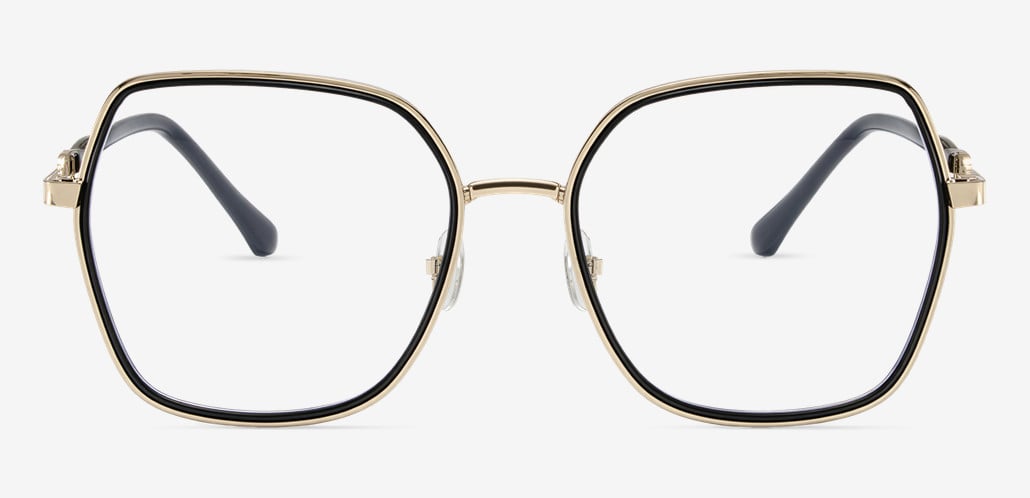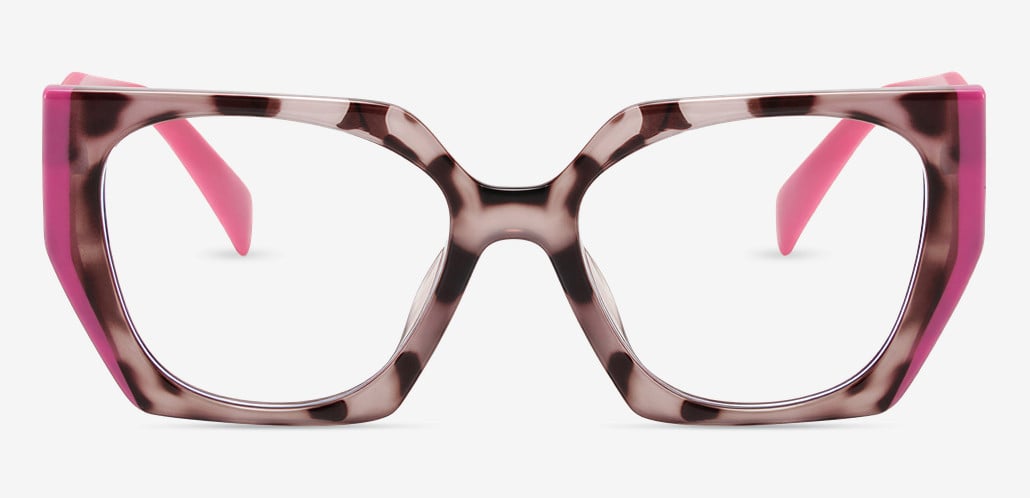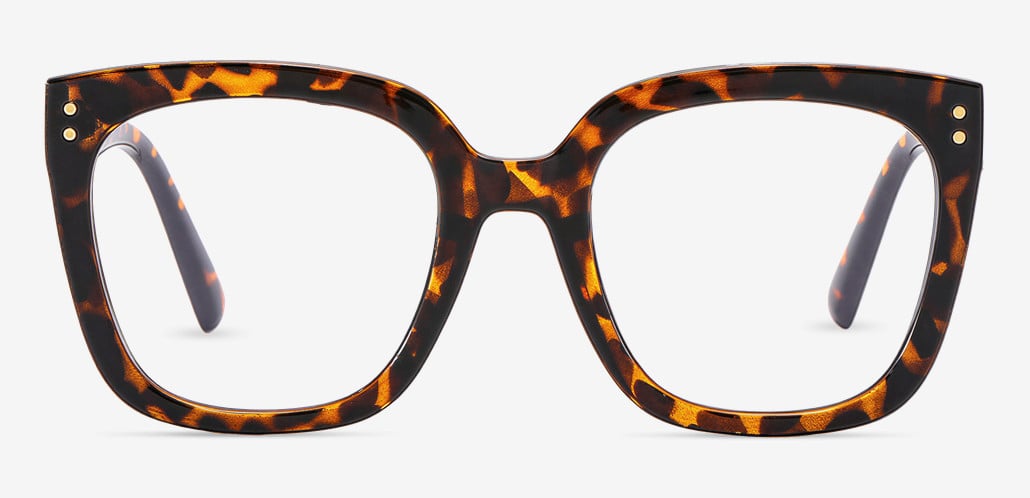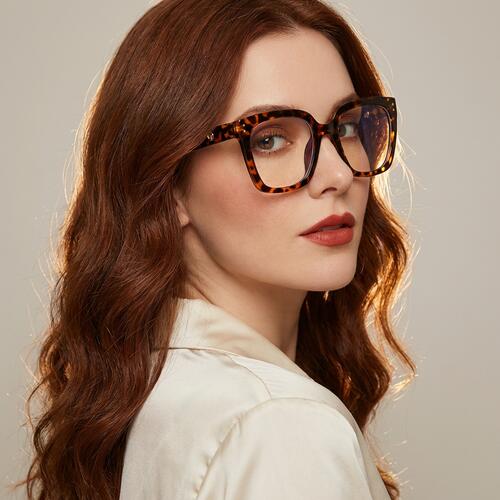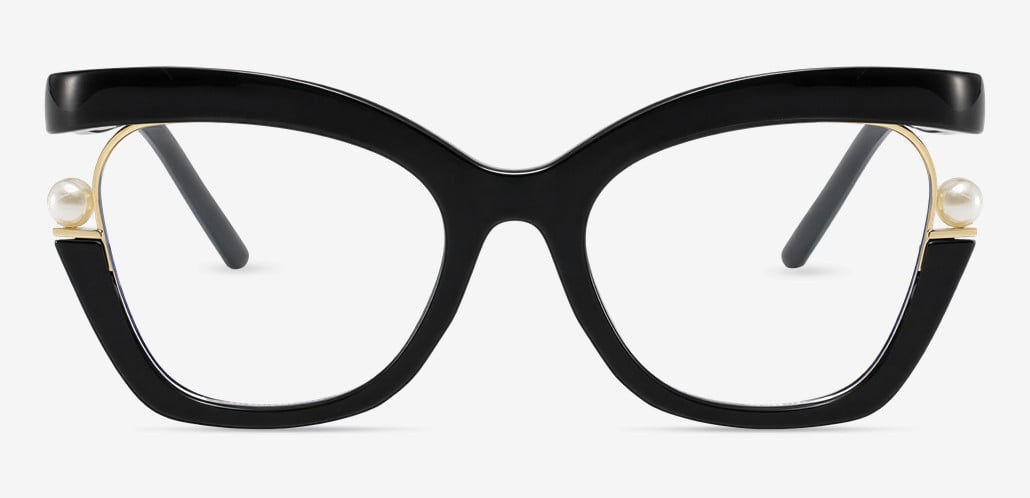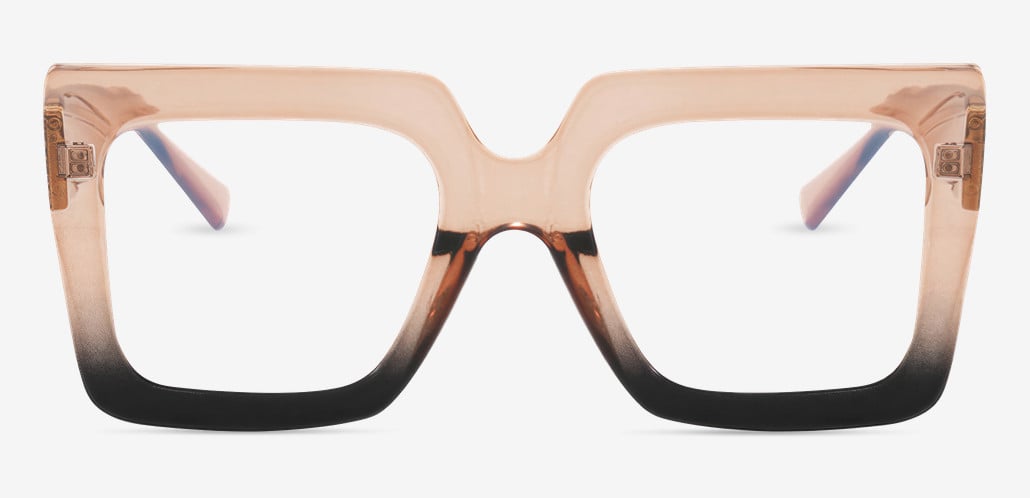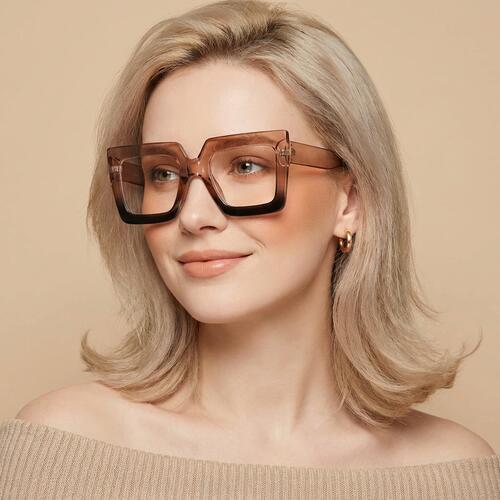

- Distance
- Corridor
- Reading
Multifocal Glasses: Three Fitting Steps Nobody Owns When You Buy Online
Multifocal glasses are eyeglasses whose lenses carry more than one focusing power, so one pair handles more than one viewing distance. The category includes bifocals and trifocals, which have visible dividing lines, and no-line lenses, which most American shoppers call progressives. What almost nobody explains before you buy is that a multifocal lens is only as good as its vertical position in front of your eye, and that position is set by a short chain of small steps. Order in a shop and one person owns every step. Order online and three of them belong to nobody.
This piece walks that chain. It is not a warning against buying multifocal glasses online, and it is not a measurement tutorial. It is an account of where responsibility actually sits, so you can pick up the parts that would otherwise be dropped.
Why position matters more on a multifocal than on anything else you have worn
An ordinary lens carries one power across its whole surface. Slide it up your nose, tip it forward, wear it crooked, and the power you look through does not change. There is nothing to miss.
A multifocal lens is the opposite. The powers are stacked vertically: distance up top, close-up down low, and a narrowing corridor of intermediate power running between them. Your eye does not move the lens. The lens sits where it sits, and your eye finds whichever band happens to be in front of it. Move the whole lens down two millimeters and every band moves down two millimeters with it. Your relaxed, looking-at-the-horizon gaze now lands in the corridor instead of the distance zone, which reads as soft distance vision that you cannot blink away.
So the number that decides whether a pair of multifocal glasses works is not really a lens number at all. It is a relationship: where your pupil sits inside the lens opening while you are wearing that specific frame, in the posture you actually hold. The trade calls that measurement fitting height, or segment height on older order forms. It is specific to one wearer in one frame, and it does not transfer to your next pair.

What an optical shop does, in order
Watch the sequence in a physical dispensary and it is tighter than it looks. Roughly:
- You pick a frame.
- Someone bends it to your face first, before any measuring: nose pads in or out, temples tightened, the forward tilt of the fronts set against your cheeks.
- You are asked to stand or sit the way you normally do, and to look at something far away.
- A mark goes on the demo lens at your pupil, and the distance from that mark down to the bottom of the lens is recorded.
- That number is adjusted by a millimeter or two based on how you carry your head. People who hunch over a desk get a slightly higher figure. Tall people who tilt their chin up get a slightly lower one.
- The order goes to the lab with an explicit note about which edge the measurement was taken from.
- When the finished pair arrives, it is put back on your face and bent again, because new lenses change the weight and balance of the frame.
Step 2 before step 4 is the part that matters. The frame is shaped to you and then measured. Everything downstream describes a frame that already sits the way it will sit for the next two years.
What happens when the same order goes through a checkout
Online, the sequence inverts. You choose a frame you have never held. A number is either estimated from a photo, copied from a pair you already own, or filled in by the site's default. The frame is manufactured, glazed, boxed, and shipped already finished. You put it on for the first time after every decision that depended on how it would sit has already been made.
Three specific steps fall out of that inversion. Each one has a clear owner in a shop and no owner at all in a browser.
Nobody shapes the frame before it is measured
A frame straight from the factory is set to a generic bend. Your face is not generic. Acetate temples that have not been heated and curved will hold the front further from your face and further down your nose than they eventually will. Metal nose pads sit at whatever angle the machine left them.
If you photograph yourself in an old pair to estimate a height, you are measuring a frame that has been broken in for years, and applying that number to a frame that has not been broken in at all. The two sit differently on the same face, often by two or three millimeters, and on a multifocal that is the whole intermediate corridor.
Nobody in the online chain checks this. The site cannot see your face, and the lab is not told there is anything to check.
Nobody asks what posture you live in
This one is rarely mentioned outside the trade, and it explains more complaints than any measurement error.
A fitting height is true for one head position. In a shop, the person measuring watches how you sit and quietly corrects for it, which is why the same face can legitimately produce two different numbers depending on the job the glasses are for. Someone who spends the day leaning into a monitor is looking downward through the lens most of the time. Someone who reads standing up in a workshop is not.
When you take the photo for an online order, you sit up straight and hold still, because that is what you do in front of a camera. You then spend the next two years wearing those glasses in a posture you did not photograph. The measurement is technically accurate and practically wrong.
This is also why a pair that feels fine on the first evening can feel wrong by the end of the first week at work. Nothing changed in the lens. What changed is that you stopped sitting the way you sat when you were paying attention to your glasses.
Nobody agrees on where the bottom is
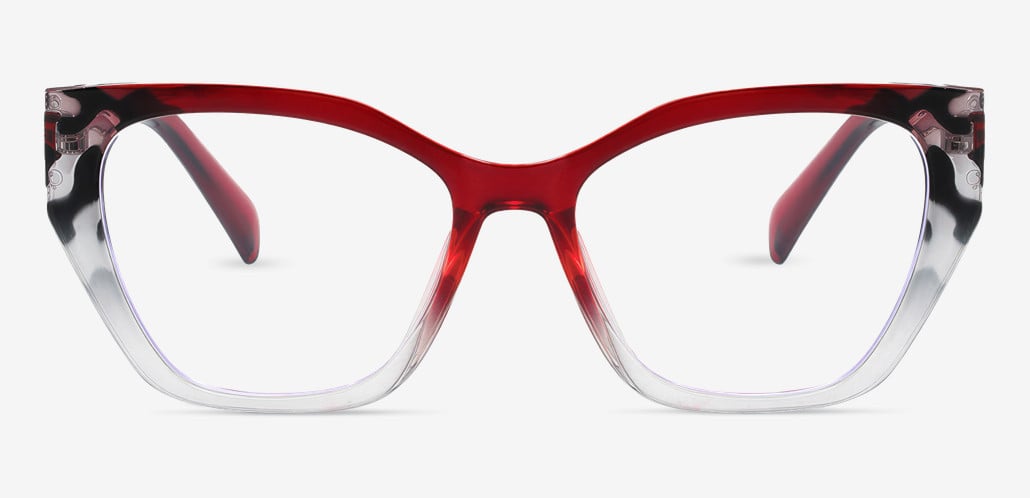
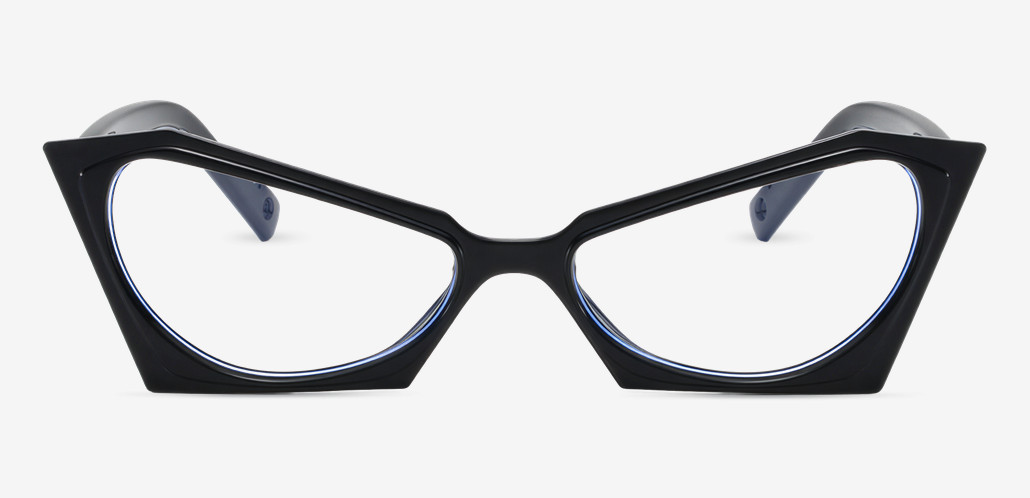
Fitting height is measured from your pupil down to the bottom of the lens. Not the bottom of the frame, and not the bottom of the rim. The lens edge is tucked a fraction of a millimeter inside the groove that holds it, and on a frame with any sweep to its lower edge, such as a cat-eye or a rounded rectangle, the lowest point of the lens and the lowest point of the frame can be several millimeters apart.
A shop and a lab share a written convention about this. An online buyer and a lab do not. If you measure to the rim and the lab reads it as lens edge, every zone in your finished lens shifts, and the failure shows up as a reading area that only works when you tilt your chin unusually far up.
The three steps, side by side
| Step | Who owns it in a shop | Who owns it online | What it looks like when it goes wrong |
|---|---|---|---|
| Shaping the frame before measuring | The person fitting you, before anything is written down | Nobody | Everything sits low; distance vision feels soft in the relaxed gaze |
| Matching the measurement to real posture | The person fitting you, by eye, adjusted a millimeter or two | Nobody | Fine at first, wrong after a week of normal use |
| Agreeing the measuring point | Shop and lab, by shared convention | Nobody | Reading area sits too low; constant chin lifting |
| Lens power and add | Your eye exam | Your eye exam | Usually fine, and usually blamed anyway |
| Left-to-right pupil spacing | Shop or exam | You, and the site asks for it | At least it gets asked for |
Notice the shape of the table. The steps that get blamed when multifocal glasses disappoint are the ones at the bottom, which are the ones somebody already owns. The steps at the top are the ones nobody owns, and they are the ones that move the lens.

What you can take ownership of instead
None of this requires equipment or expertise. It requires knowing that these steps exist, which almost no online buyer does.
- Measure in the frame you are actually buying, or in nothing at all. If you cannot hold the new frame, do not estimate from an old one that has settled differently. Say so, and let the retailer's default apply, which is at least a known quantity rather than a wrong one.
- Take the reference photo in your working posture. Sit the way you sit at your desk, or stand the way you stand at your bench. Chin where it normally is, not where a camera makes you put it.
- Write down which edge you measured from. One line in the order notes, saying you measured to the bottom of the lens opening rather than the frame edge, removes the single most common datum mismatch.
- Adjust the pair before you judge it. Push it up your nose and hold it there. If distance suddenly sharpens, the frame is sitting too low, and that is an adjustment problem, not a lens problem. Most acetate and metal frames can be brought up by a millimeter or two with a small nose pad or temple change.
- Give it a working week, not a working evening. First impressions of a multifocal are made standing still in a hallway. The real test is a day of the tasks you bought them for.
- Keep the return window in view. If distance is still soft in a relaxed gaze after a week of normal wear, the position is wrong and no amount of adaptation will move it. That is a remake, and it is a reasonable thing to ask for.
Frame choice changes how exposed you are
Everything above is about a number. Frame choice is about how much that number is allowed to be wrong.
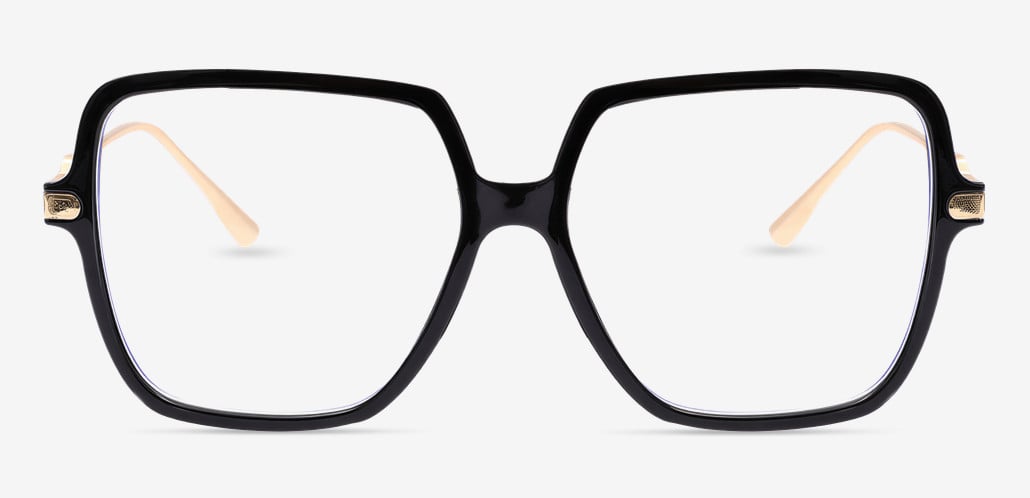
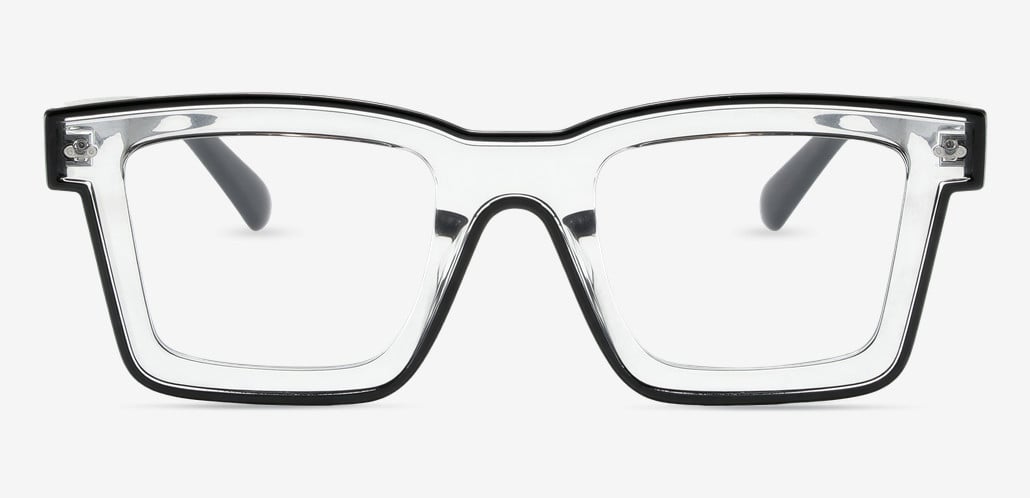
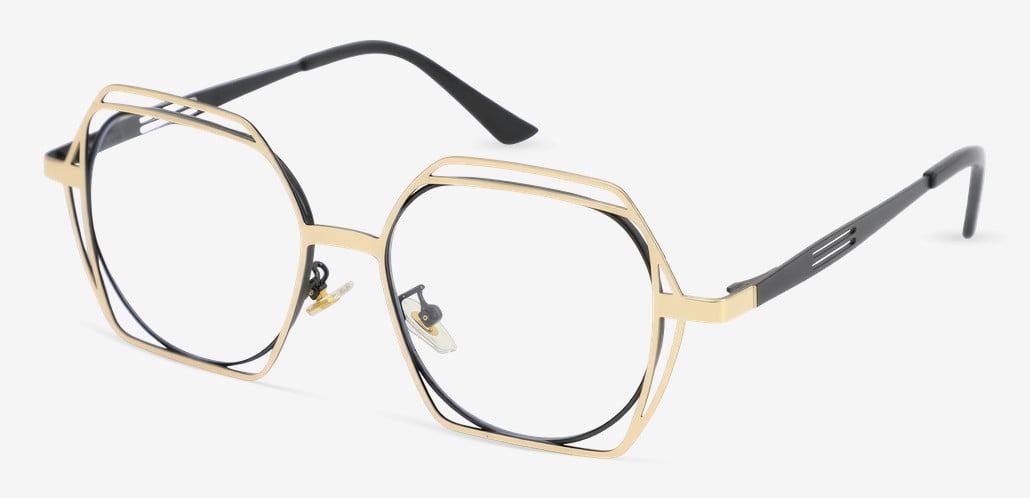
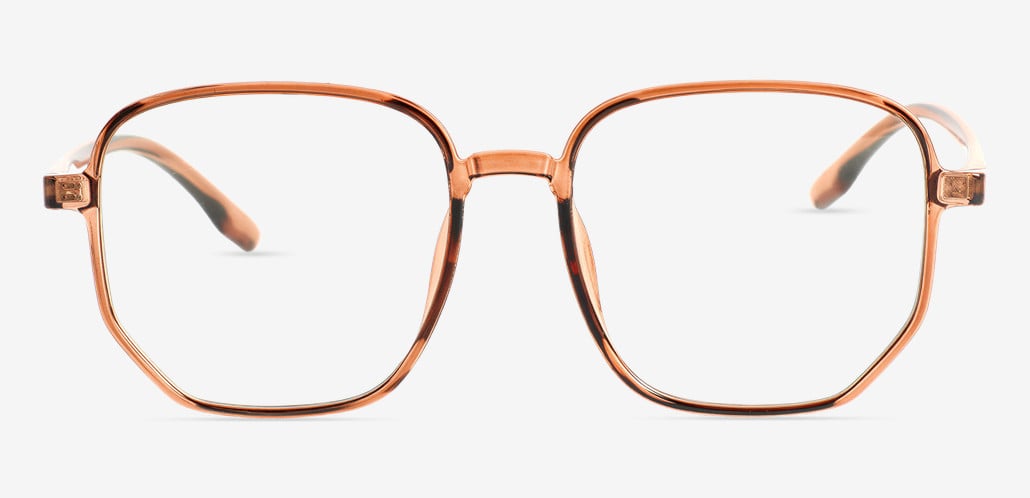
A deep lens opening gives every zone more vertical room, so a two-millimeter error still leaves a usable distance zone above your pupil and a usable reading zone below it. A shallow opening gives the same error nowhere to go. This is why a first multifocal in a small, low frame is a harder project than the same lenses in a deeper one, and why the frames that end up on people's faces for years tend to be squares, rectangles and aviators rather than narrow ovals.
It also means the frame is the one variable you can settle before any measuring happens at all. Aoolia lists frames for multifocal lenses only above a fixed lens-depth cutoff, which is set out on the multifocal glasses collection page along with the depth label carried on each product card. Choosing from a pre-filtered set removes one failure mode before you start.

When ordering multifocals online is the wrong call
Being straight about this is more useful than pretending otherwise.
- Your first pair ever, with a strong add. The bigger the difference between the top and bottom of the lens, the narrower the corridor and the less forgiving the position. A first pair is a bad place to be learning that.
- A frame with heavy wrap. Curved sports and wrap fronts change the geometry in ways a flat photo cannot capture.
- Large power differences between your two eyes. Vertical alignment stops being a comfort question and becomes a binocular one.
- You have already had one pair remade and it still is not right. At that point the useful next step is someone looking at the glasses on your face, not another order.
For a straightforward add, a repeat wearer, and a frame with depth to spare, an online multifocal order is a routine transaction that goes right far more often than it goes wrong. The difference between the two groups is mostly the three steps above.

Frequently asked
Are multifocal glasses and progressives the same thing?
Progressives are one kind of multifocal. Multifocal is the umbrella term and also covers bifocals and trifocals, which have visible lines. In American usage, someone saying multifocals usually means the no-line kind.
My multifocal glasses are blurry at the bottom. Is the lens faulty?
Usually not. Blur low in the lens most often means the reading zone is sitting lower than your gaze, either because the fitting height was measured low or because the frame has slipped down your nose. Push the frame up with a finger and see whether it clears. If it does, the fix is an adjustment.
Does a standard eye exam give me everything I need to order online?
Not always. The powers and the add are on the paperwork. Fitting height generally is not, because it depends on a frame that did not exist when the exam was done. Left-to-right pupil spacing is sometimes included and sometimes not.
Can I reuse the fitting height from my last pair?
Only if the new frame has the same lens depth and sits on your face the same way, which is rarer than it sounds. Treat a carried-over number as a starting point rather than a measurement.
How long should adapting take?
Most people settle into a well-positioned pair within a few days of normal wear. Persistent soft distance vision in a relaxed gaze after a week is a positioning signal, not an adaptation one.
The short version
Multifocal glasses are unforgiving about vertical position in a way that no other lens is, and the steps that control that position are the ones an online order quietly leaves unassigned. Knowing which three they are turns a coin flip into a decision: measure in a posture you actually hold, say which edge you measured from, choose a frame with depth to spare, and judge the result after a working week rather than an evening.
Browse Aoolia's multifocal glasses collection to start from frames that clear the depth requirement, and preview the deeper shapes with AR Try-On before you commit.