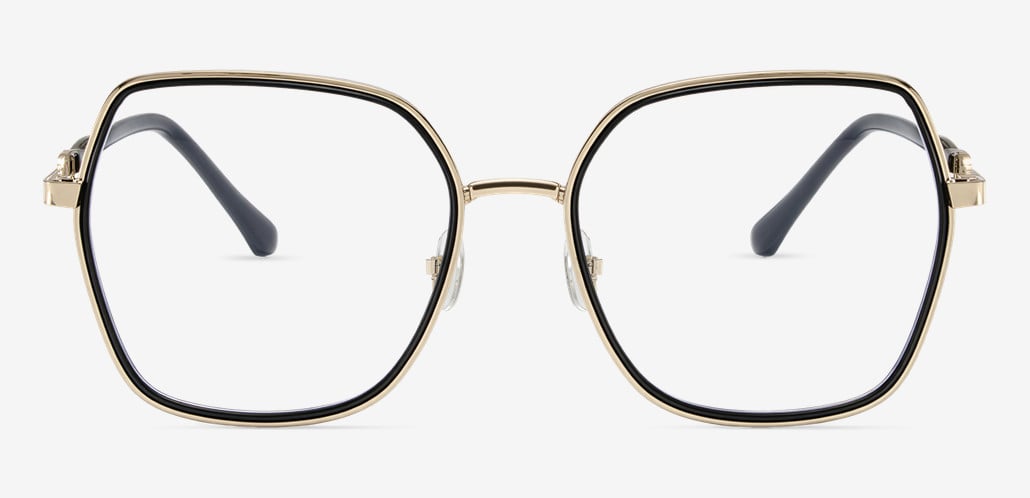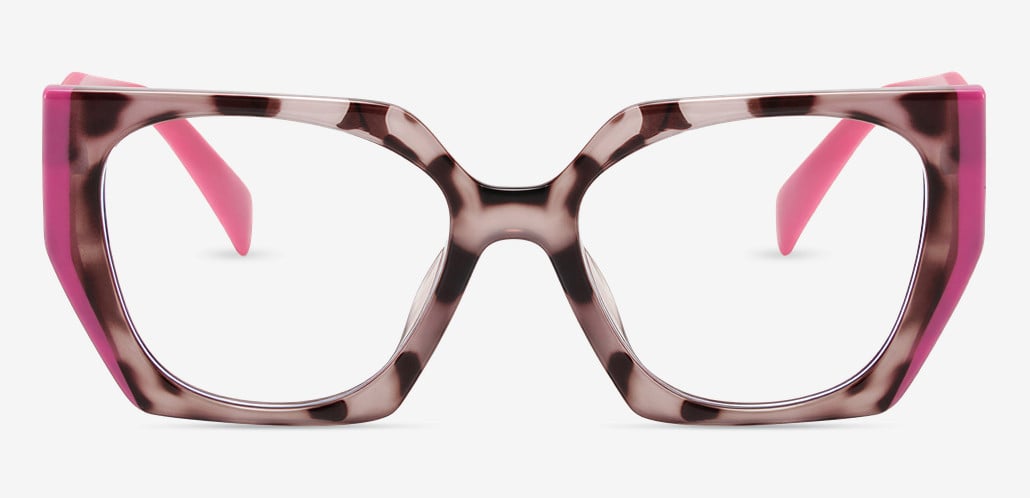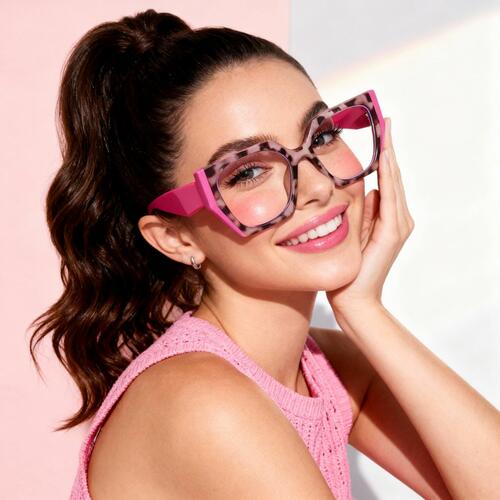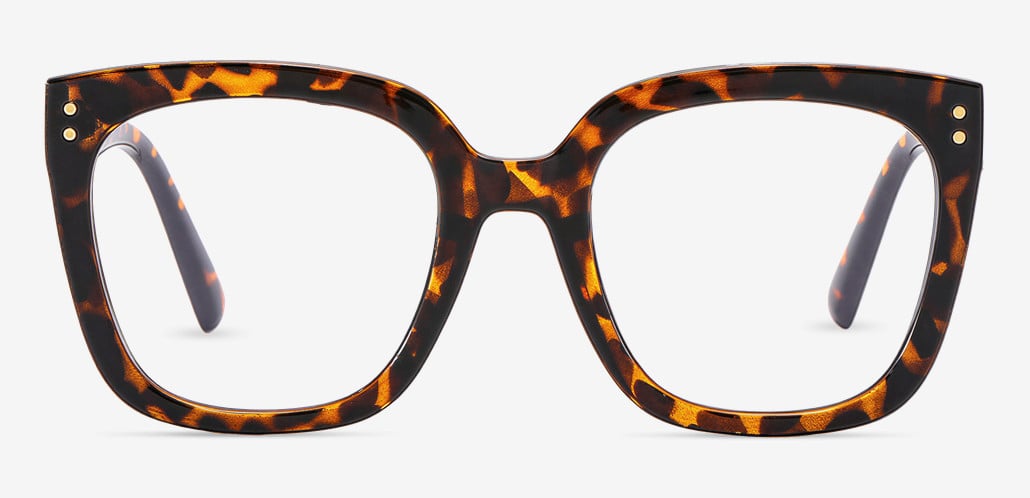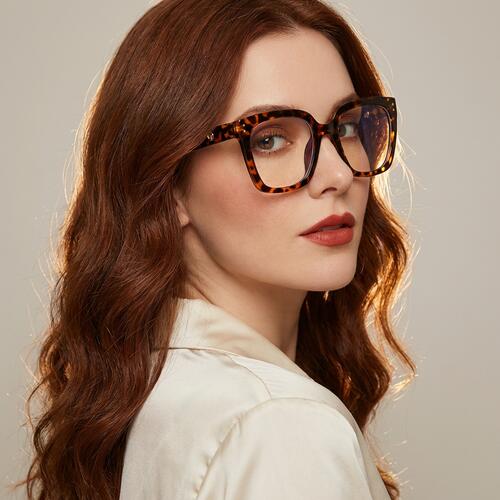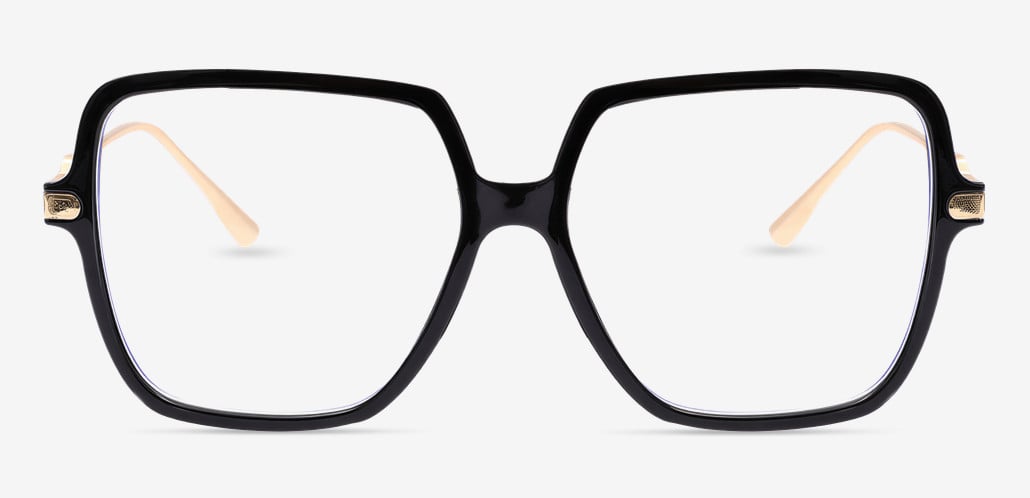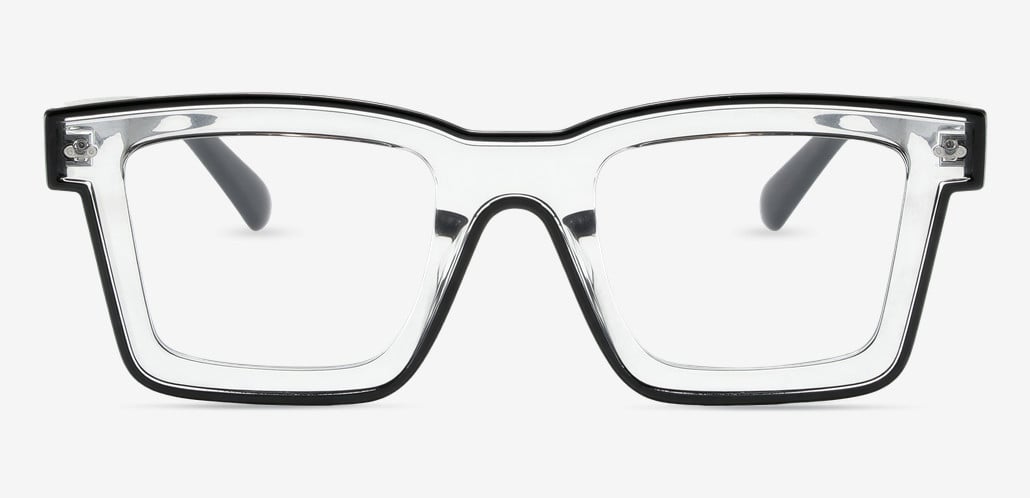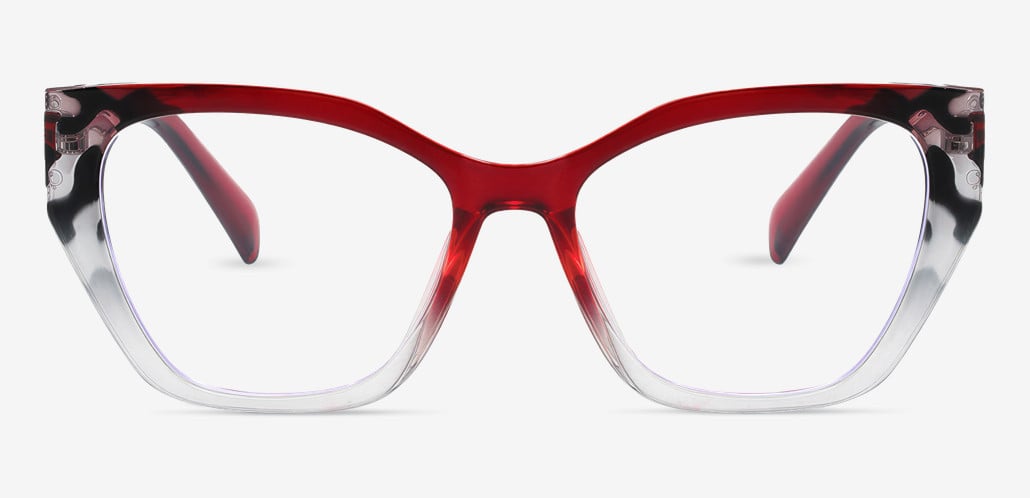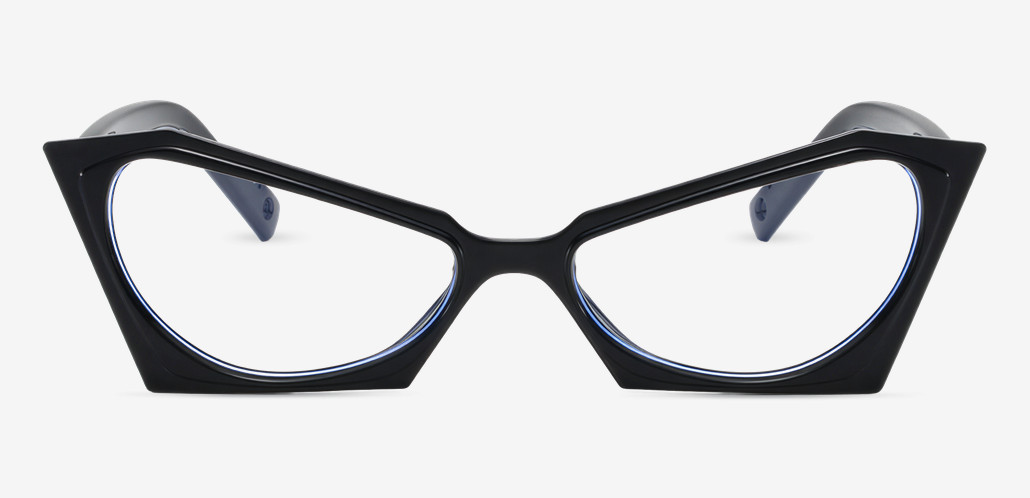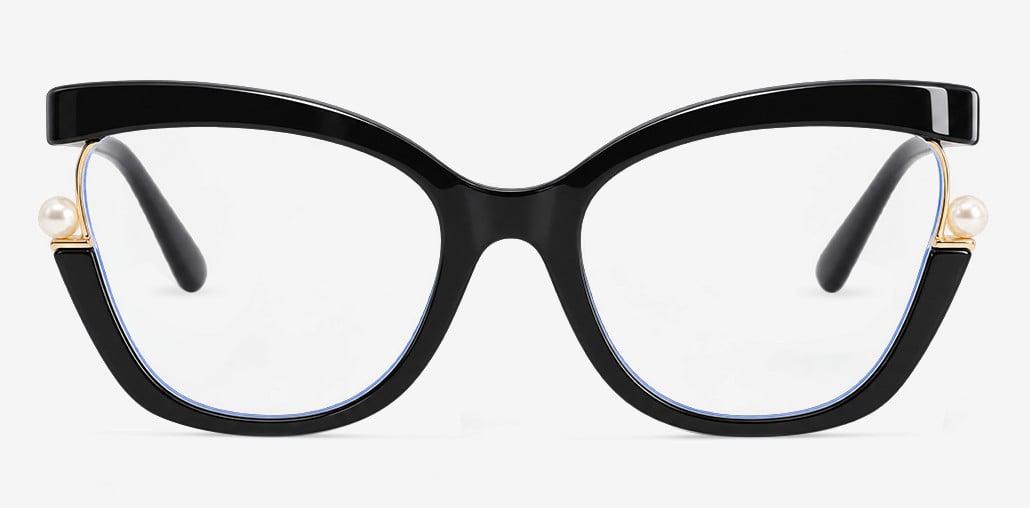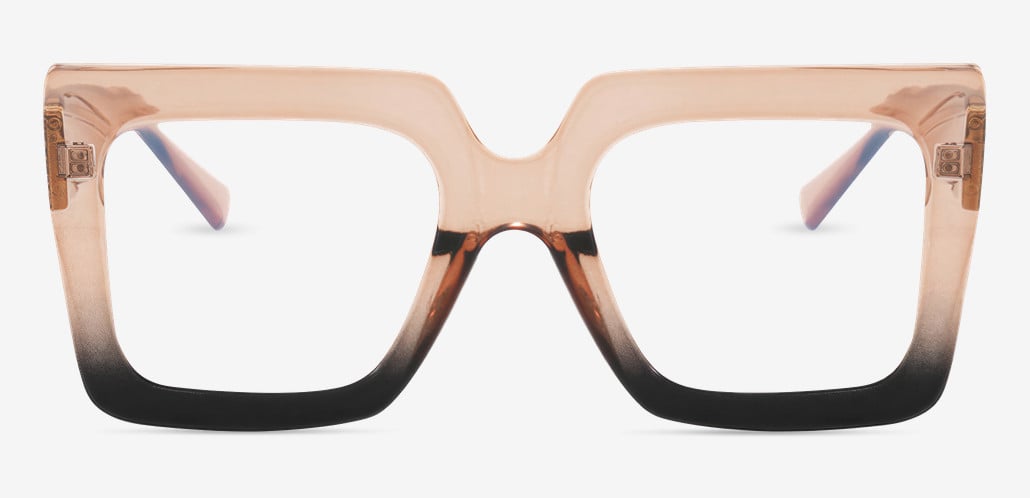

There's a specific moment that a lot of people hit while shopping for cute glasses. You've found a pair. Soft shape, good color, it does something nice for your face. And then the second thought arrives:
Can I actually wear this to work?
Most articles answer that question by dodging it. They tell you cute glasses are fine everywhere, that confidence is what matters, that any frame works if you own it. That's a comfortable thing to say and a useless thing to hear when you're about to spend money and then wear the result on your face for two years.
Here's a more honest map.
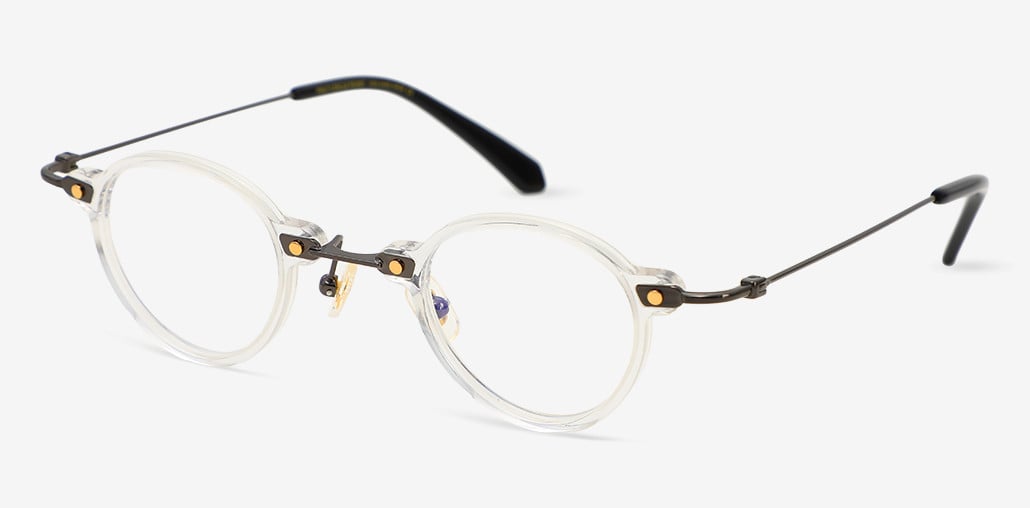
The line isn't about shape. It's about how loudly the frame announces itself.
The common assumption is that certain shapes are unprofessional — that round frames are too playful, cat-eye is too flirty, anything colorful is out. That's not how it works in practice. Plenty of people wear round frames in law firms and cat-eye in hospitals without anyone blinking.
What actually reads as not for work comes down to four signals, and shape isn't one of them.
Signal one
Applied decoration
There's a difference between a frame that is interesting and one that has had interest attached to it. Rhinestones, suspended glitter, charms on the temple tips — these read as added for effect, which invites the observation that you were trying to be noticed. A frame can be extremely cute with none of it. Most of the ones that survive a workday are.
Signal two
Novelty silhouette
Heart, star, cloud, cartoon-inspired. Genuinely fun, but a shape whose only purpose is to reference something else is a costume decision, not a wardrobe one — and neutral color won't override it. Round, oval, rounded-square and cat-eye are not novelty shapes. They're standard shapes that happen to be softer than a rectangle. That distinction is the whole ballgame.
Signal three
Saturation and gloss, together
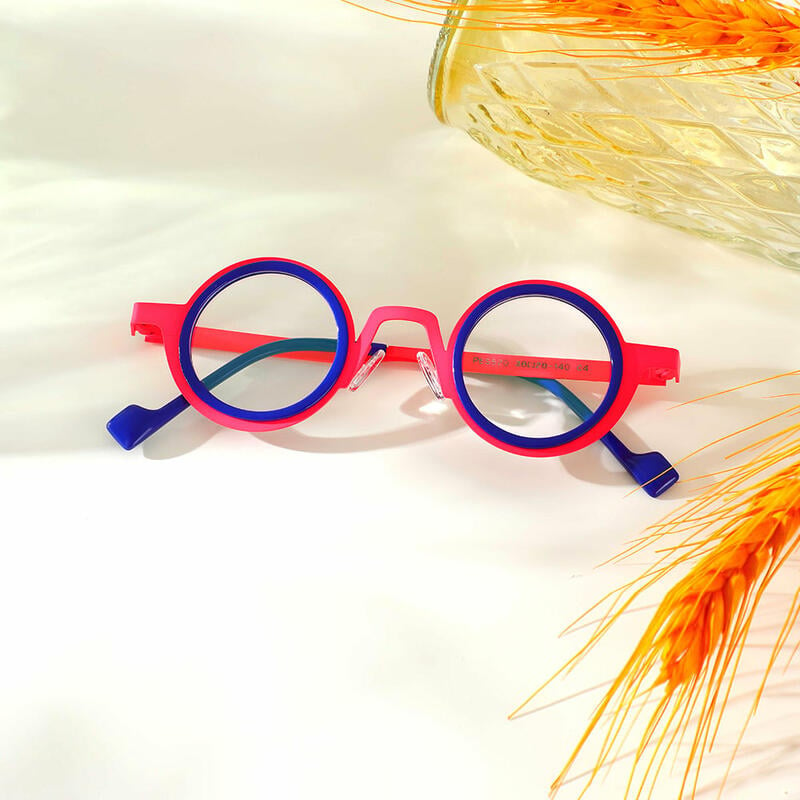
Either alone is usually fine. A glossy black frame is standard issue. A matte coral frame is a considered choice. Glossy and fully saturated coral produces visual noise right beside your eyes, and in a room of muted clothing it's the loudest thing present. Want strong color? Go matte or satin. Want gloss? Pull the color back toward tortoise, clear, dusty rose or sage.
Signal four
Scale that fights your face
Misread as a professionalism issue when it's really a fit issue. Frames wider than your face look borrowed; frames too small look like squinting. People register that something is off without naming it, and reach for "unprofessional" by mistake. The fix is boring and effective: read the frame width off a pair that already fits and stay within a few millimeters.
The same pair reads differently in different rooms
Here's where most advice fails. Professional is not one standard. A frame that's unremarkable at a design studio can be the most interesting object in a courtroom. Neither reaction is about the frame — it's about the range of what everyone else is wearing.
Roughly how much visual interest goes unremarked across common American work environments:

Law, finance, client-facing consulting
- Passes without comment
- Tortoise, black, clear, thin metal, muted brown or navy. Round and rounded-square are fine.
- Gets noticed
- Saturated color, gloss and brightness together, oversized acetate, any applied decoration.
Healthcare, education, government
- Passes without comment
- Muted pinks, greens and blues are common. Comfort and durability matter more than register here.
- Gets noticed
- Fragile-looking frames, glitter, novelty shapes around patients or young students.
Tech, startups, in-house creative
- Passes without comment
- Almost everything, including bold color and unusual shapes.
- Gets noticed
- Very little. The risk here is being under-styled rather than over.
Agency, media, fashion-adjacent
- Passes without comment
- Strong color and distinctive silhouettes work in your favor rather than against you.
- Gets noticed
- Frames that read cheap or ill-fitting. Execution matters more than register.
Retail, hospitality, service
- Passes without comment
- Whatever sits with the brand's own aesthetic. Uniformed roles often have more room than expected.
- Gets noticed
- Anything that conflicts with a stated dress code — check before you buy, not after.
Remote and hybrid, camera-forward
- Passes without comment
- Matte finishes, mid-tone colors, moderate frame width, slim temples.
- Gets noticed
- Gloss, very light colors, thick temples. More on this below.
Two practical notes on using this. First, the useful question isn't is this professional — it's how far is this from the median of what people in my specific room wear? One step past the median reads as personal style. Three steps past reads as a statement, which is sometimes what you want and sometimes not.
Second, the first ninety days at a new job are a different situation from year three at the same job. Early on you have no track record and people are building an impression fast, so a frame that would be a fine signature later can crowd out everything else now. That's a timing question, not a taste question.
The variable nobody accounts for
What your cute glasses do on a video call
If a meaningful share of your work happens on camera, the calculation changes — in ways that aren't obvious from a mirror.
- Gloss becomes a problem.A shiny frame front picks up your ring light, monitor or window and throws a bright band across the top of the lens. It moves every time you move. In person it's nothing; on a compressed feed it sits next to your eyes for the whole call. Matte and satin finishes largely solve it.
- Cameras flatten depth.Layered acetate, contrast interiors and gradient color often look muddy rather than interesting once compressed into a grid tile. Simpler frame fronts hold up better.
- Thick temples read wider than they are.From a straight-on webcam you see both arms flaring out from your face. Chunky temples that look proportionate in the mirror can make your head look wider on screen. Thin metal or slim acetate temples avoid it entirely.
- Very light colors can vanish or glow.Clear and pale frames are beautiful in person. On camera they either disappear into your skin tone or catch light and become the brightest thing in frame. Not fatal — but worth testing before an important call rather than during one.
Put the frame on, join an empty video meeting, and look at yourself in the tile — not in the mirror. Ninety seconds, and it tells you more than any style guide.
The colors that travel furthest
Across the widest range of workplaces, a handful of colorways do the most work.
Material does quiet work
Two frames in the same shape and color can land differently based on what they're made of.
Thin metal
Reads more formal and more restrained. It disappears into the face, which makes it the lowest-risk way to wear an unusual shape — a thin metal round is about as conservative as a round frame gets.
Acetate
Warmer and more deliberate. It has presence. A thicker acetate frame will always be more noticeable than a metal one; that's the trade — personality in exchange for visibility.
Mixed materials
A metal front with acetate temples, or the reverse, tends to land in a useful middle. They also photograph well, because the two surfaces catch light differently.
Titanium
Worth knowing for a different reason: it's very light, which matters at ten hours a day. Comfort isn't a style consideration until you're taking your glasses off every hour — at which point it's the only one.
If you already own a pair that's "too much"
This happens, and it's fixable without a return.
Adjust what's around it
A bold frame with a structured shirt or blazer reads as intentional. The same frame with casual clothing reads as the only thing you decided on that day. Structure elsewhere gives a loud frame somewhere to sit.
Assign it days
Internal-only days, Fridays, work-from-home stretches. Nobody requires a single pair to cover every context — and treating one pair as your everything-frame is what creates the anxiety in the first place.
Do the math on a second pair
This is where online eyewear pricing genuinely changes the equation. When a frame costs thirty or fifty dollars rather than three hundred, owning one restrained pair and one expressive pair stops being an indulgence and becomes the obvious solution. Most of the cute glasses in the Aoolia collection sit between $15.95 and $124.95 — generally the range where two-pair thinking makes sense. Split the decision instead of forcing one frame to be both things.
Before you order
Five questions that settle it
Run a pair through these. Clear all five and it will hold up in almost any American workplace that isn't formally uniformed.
One last step, if the retailer offers it: use virtual try-on before you commit, and look at the result on a phone screen rather than up close. Screen-sized is roughly how other people encounter your face across a table.
The part worth saying plainly
There's a version of this conversation that treats cute and professional as opposites — where wanting soft, warm, friendly glasses is something to be managed or apologized for. That framing is wrong, and it's also newer than people think. Visible, characterful eyewear has been normal in American offices for a couple of decades now.
The real constraint is narrower than it feels. Applied decoration, novelty shapes, gloss stacked on saturation, and bad fit. Everything else — round frames, cat-eye, clear acetate, tortoise, soft pink, sage green, thin metal, mixed materials — is fully available to you, in almost any job, right now.
Cute glasses and professional glasses were never separate categories. They're the same category, with four specific things left out.
Browse the cute glasses collection
Soft-cornered, small-fit frames with full measurements listed on every style — and virtual try-on before you decide.