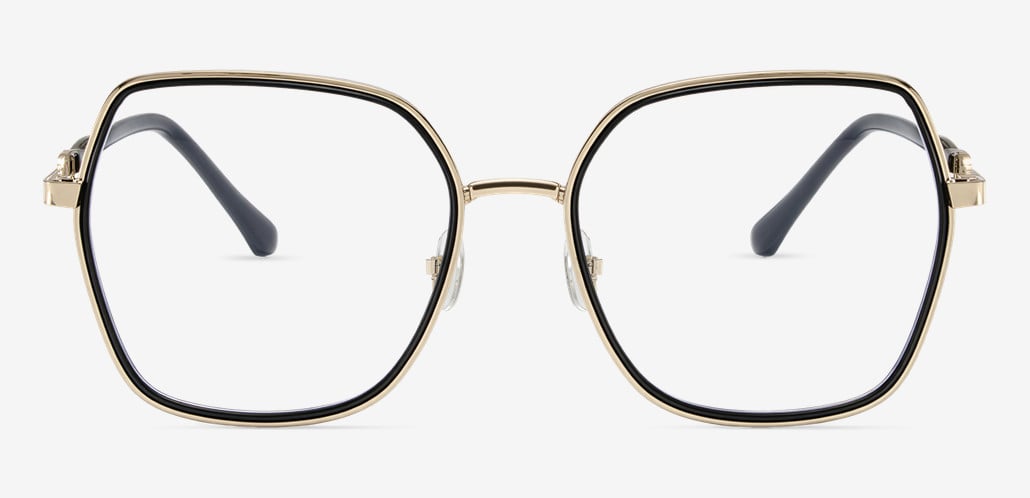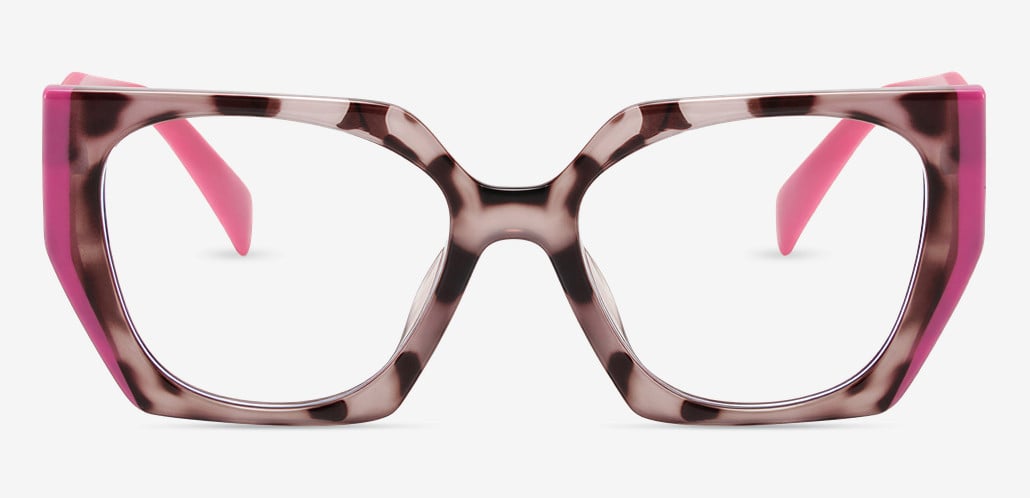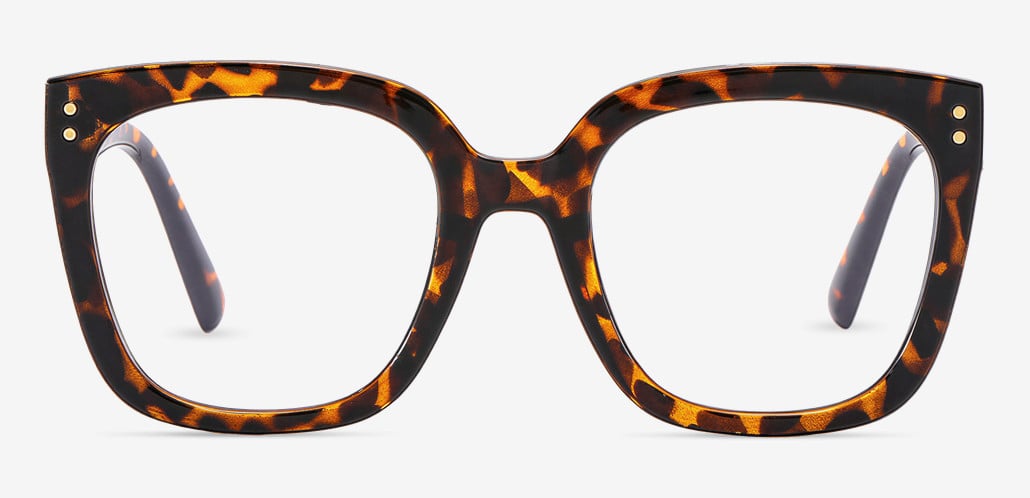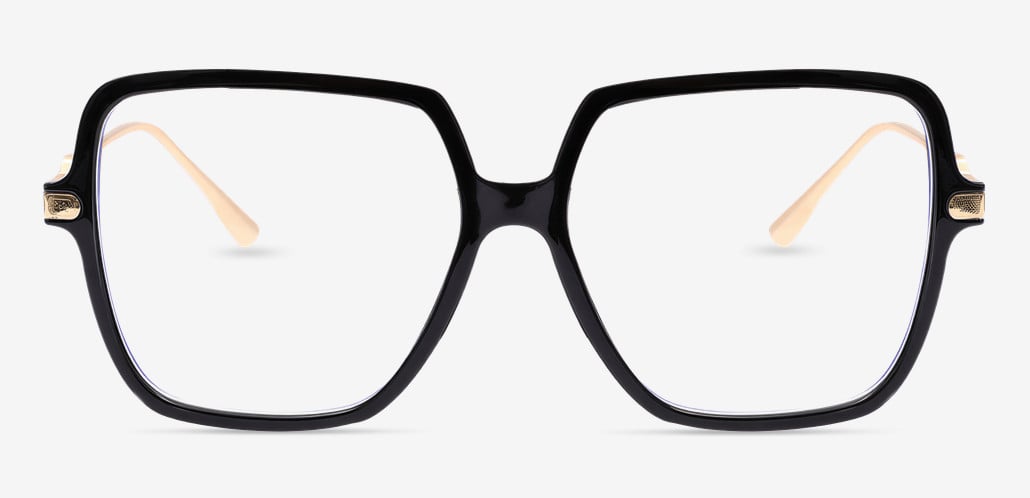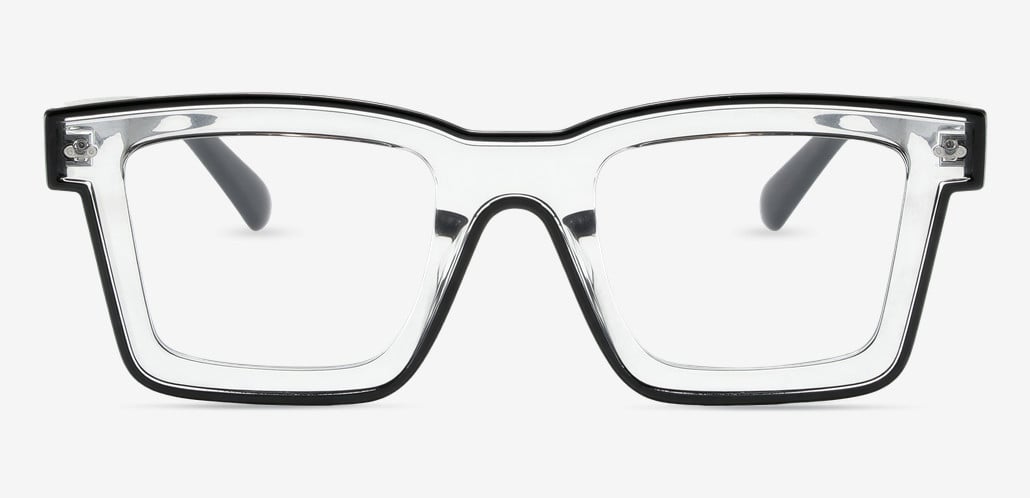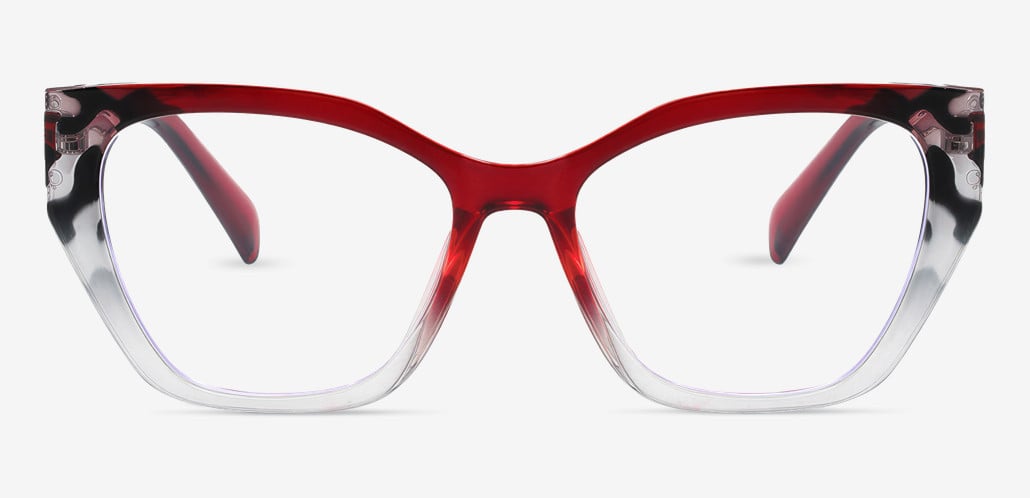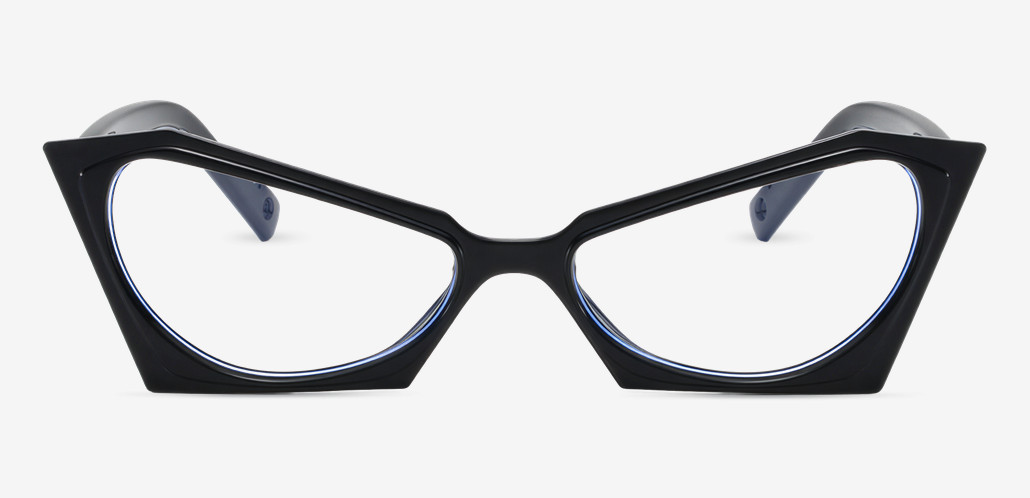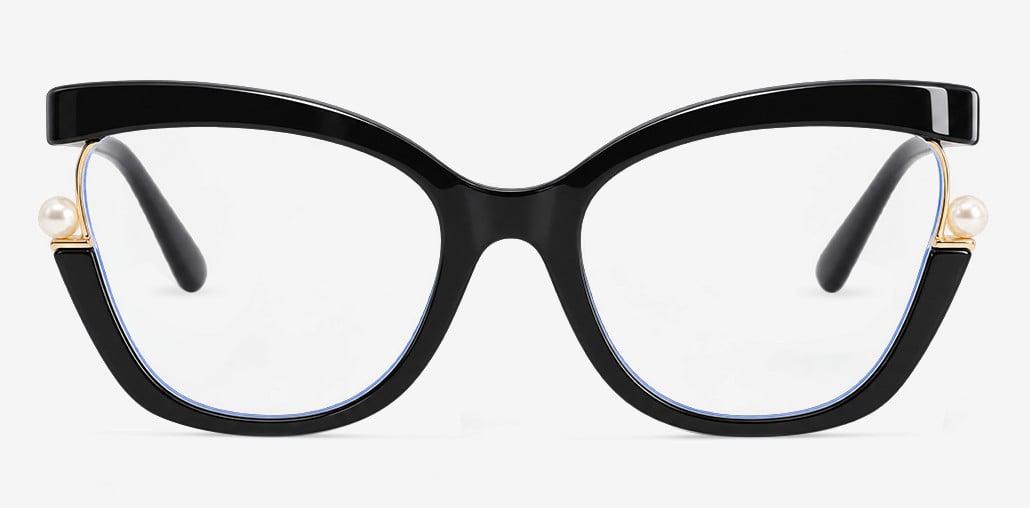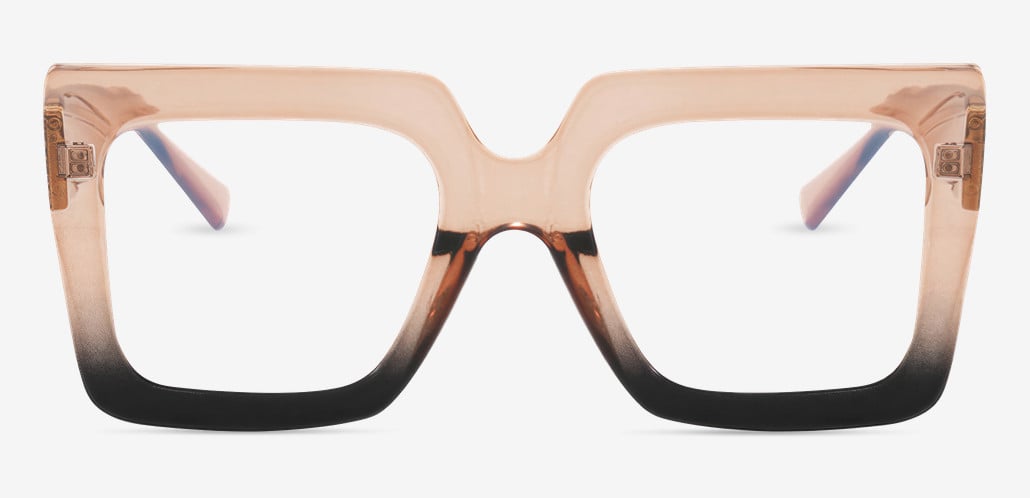

There is a particular kind of online eyewear disappointment that has nothing to do with color, style, or price. The box arrives. The frame looks exactly like the photo. You put it on, and within thirty seconds it has slid a centimeter down your nose. In the mirror, the lenses reach out past the edges of your face like they belong to someone larger. You tighten the temples, push them back up, and by lunchtime they are down again.
This happens to people shopping for round glasses for women more often than for almost any other shape, and it is not bad luck. It is a mismatch between one measurement on your face and one measurement on the frame — a measurement that most product listings do not publish. Once you know both numbers, the entire category stops being a lottery.
First, make sure the problem is actually width
Three different fit failures produce the same sensation, and only one of them is width. Fixing the wrong one wastes a return.

The temples are too long
If the frame feels fine across the front but drifts down whenever you look at your phone, look at the arms. A temple that runs past the crease behind your ear has nothing to hold onto. The classic tell: the glasses stay put when you're upright and slide the moment you tilt your head forward. Frames are commonly made in 135, 140, 145 and 150 mm temple lengths, and a lot of what gets sold as a general adult size defaults to 145.
The bridge is too wide
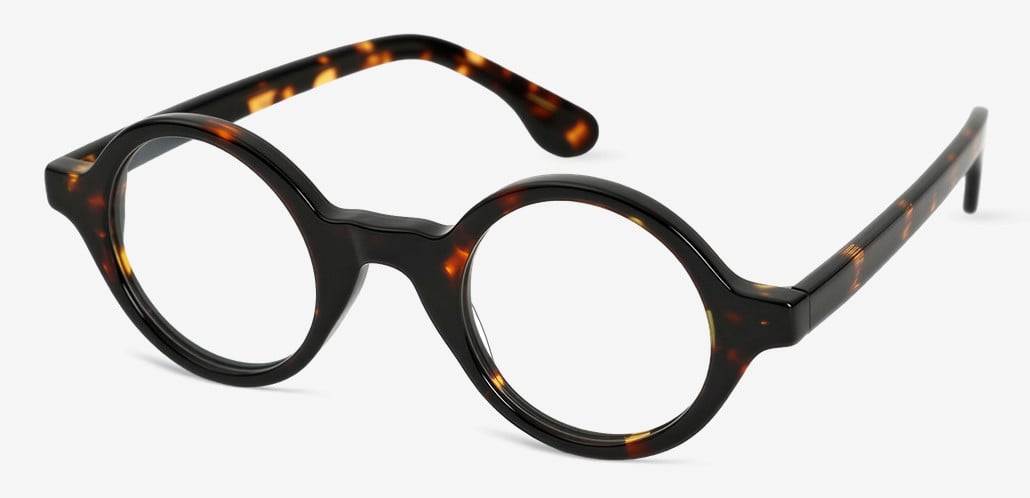
Take the frame off and look at where it rested. If the marks sit low on the sides of your nose, or if there were no marks at all because the frame was resting on your cheeks instead, the bridge is spanning further than your nose is wide. The frame drops until it finds somewhere to sit, which is usually somewhere too low. On a round frame this is especially visible, because the lowest point of a circular lens sits in the middle of the lens rather than at a corner.
The front is genuinely too wide
Stand square to a mirror and look at the outer edges of the lenses. If they extend past the sides of your face — past the point where your face turns to become the side of your head — the front is too wide. The second confirmation: look at the arms from above. If they angle outward from the hinge before bending back in, the frame is being held open by your head, and the spring in that flare is what pushes it forward and down all day.
These three can stack. A frame can be 6 mm too wide and have 145 mm temples, in which case adjusting the arms will help just enough to convince you the frame works, for about a week.
The measurement nobody prints
Look inside the left temple arm of any pair you own. You will find something like this:
Standard frame marking
48 □ 20 140
Lens width, bridge width, temple length — in millimeters, in that order. The little square is the industry symbol that tells you the first number is measured on a standardized boxing system rather than eyeballed.
Notice what is missing. The total width of the frame front — the edge-to-edge measurement that decides whether a frame fits your face — is not in that sequence. You can estimate it: double the lens width, add the bridge, then add roughly 6 to 10 mm for the two end pieces where the hinges attach. For the plate above, that lands somewhere around 122 to 126 mm.
Estimating is not ideal, and it is worth saying plainly that this is the weakest link in shopping for frames online. Two brands can both call a frame "small" and be 8 mm apart. If a retailer publishes total frame width, use their number instead of the arithmetic.
Why round frames come out wider than the number suggests
Here is the part that explains why this shape in particular keeps disappointing narrow faces.
On a rectangular frame, the widest point of each lens is its top outer corner — right where the end piece and hinge already sit. The frame's outer edge and the temple arm are in line with each other, and the arm carries straight back toward your ear.
On a round frame, the widest point of the lens is at its vertical midline, halfway down. That is lower on your face than the hinge, and it sits over the part of your face that is narrowing toward your cheekbone. So a round lens at 48 mm reaches further into visually "empty" space than a rectangle at 48 mm, and the frame's edge appears to hang past your face even when the total width is technically similar.
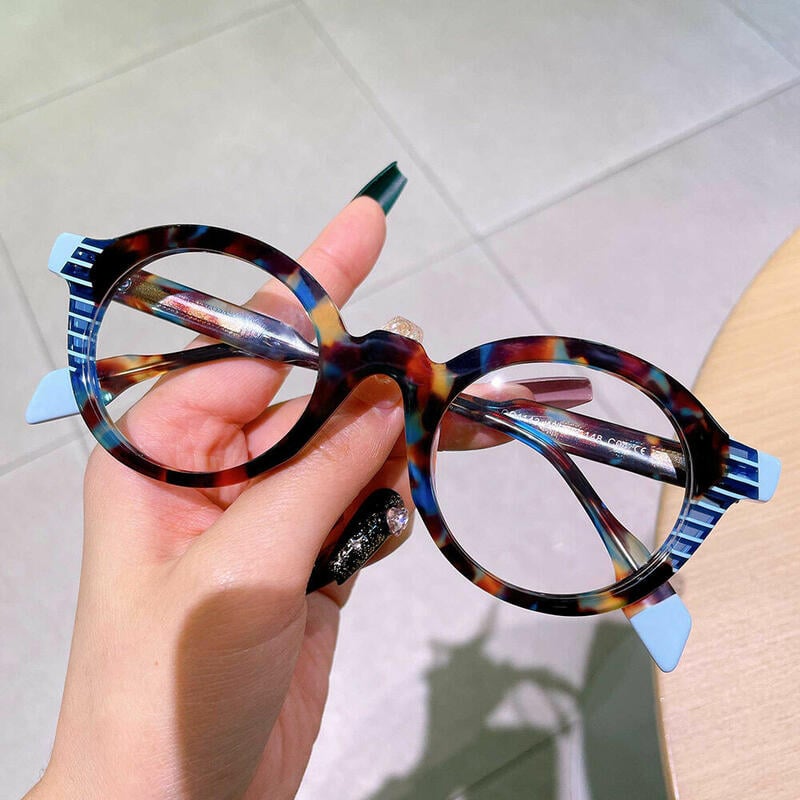
Round frames also tend to carry wider bridges than other shapes. Two circles set close together crowd the nose and read as goggles, so designers push them apart — bridges of 20 to 22 mm are common where a rectangular frame in the same lens size might use 16 or 18. Every millimeter of that goes straight into the total width. A round frame and a rectangular frame with identical lens numbers can finish 6 mm apart before either has been near a face.
Get your own number in two minutes
You need one figure: the width of your face at eye level, measured across the front, from the point on one side where your face turns toward your ear to the matching point on the other. Two ways to get it.

Method one: measure a frame that already works
If you own any pair that stays put, lay it face down and measure straight across the front, edge to edge, with a ruler. That number is your target, and it is more reliable than measuring your face, because it already accounts for how much overhang you personally tolerate. Write it down. It is the single most useful thing you can carry into an eyewear listing.
Method two: use a credit card as a ruler
Hold a standard bank or ID card flat against your forehead, look straight into your phone camera, and take a photo. Every card of that type is 85.6 mm wide by international standard, which gives you a known scale inside the picture. Open the photo, measure the card on screen, measure your face at eye level on screen, and convert. It is not laboratory-grade — a slight camera tilt will cost you a couple of millimeters — but it will tell you whether you are a 124 or a 137, and that distinction is the one that matters.
For reference, plenty of adult women land between roughly 125 and 138 mm, and frames marketed as "small" often start around 128 to 132 mm total width. If you measure 126, a great deal of what is sold as small is still not small.
Aim for a frame front within about 2 mm either side of your number. Slightly narrow is usually more comfortable than slightly wide, because a narrow frame grips and a wide one slides. Beyond about 4 mm too wide, nothing downstream will save it.
What adjustment can fix, and where it stops
A lot of advice about ill-fitting glasses ends with "take them to a shop and have them adjusted," which is good advice with an unstated ceiling. Adjustment changes how a frame holds. It does not change how much of your face the frame covers. Everything in the lower half of this list is available to you; nothing in the upper half is.
Fixed at manufacture — no adjustment reaches this
Adjustable in a few minutes at most eyewear counters
Two honest caveats. Acetate can only be warmed and bent so many times before the material is stressed, so this is not an unlimited resource. And not every shop will adjust a frame they did not sell — many will, some charge a small fee, and it is worth calling ahead rather than turning up hopeful.
The practical upshot: if you have measured a 9 mm gap between your face and the frame front, adjustment is not the answer. Return it. The gap is above the ceiling.

Six things to change about how you shop for round frames
- Filter by size before you look at anything else. Choose extra-small and small first, then browse color and material within what is left. Doing it in the other order means falling for a frame that was never going to fit, which is how most of these returns start.
- Take the bridge down before you take the lens down. Going from a 20 mm bridge to a 17 mm bridge removes 3 mm of total width and leaves the lens size untouched. The circles stay the size you liked. Shrinking the lens instead changes the whole look of the frame.
- Metal with adjustable nose pads is the highest-leverage combination. Pads let you control the height of the frame on your face independently of its width, and they can be narrowed to grip a slimmer nose. A molded acetate bridge offers none of that. If you are narrow-faced and have been buying acetate, this one change is worth more than the other five combined.
- Prefer a keyhole bridge over a saddle bridge. A keyhole rests on the sides of the nose rather than across the top, which holds better on a narrow or low bridge and keeps a round frame from sinking toward your cheeks.
- Thin rims read narrower at the same measurement. A thin metal round frame and a chunky acetate one can be identical on paper and look a size apart. If your measurements sit right at the edge of what works, wire buys you the visual difference.
- Check the temple length before you check out. If you have a smaller face, 135 or 140 is usually right and 145 is usually not. This number is printed on almost every listing and almost nobody reads it.
About the "just buy kids' frames" advice
You will see this suggested constantly, and it is half right. Children's frames genuinely are built narrower across the front, so the core measurement lands. What tends to go wrong is everything else: temples are often 125 to 130 mm and stop short of where an adult ear sits, bridges are shaped for a nose profile that is still developing, and lens height is frequently too shallow — which is a particular problem for round frames, since a circular lens needs vertical depth to still look circular. It can work. Check all three numbers before you assume it will.
If the frame is narrow enough and still slides
Then it is not a width problem, it is a bridge height problem. Some faces have a nose bridge that sits level with or below the pupils, and a frame designed for a higher bridge will rest on the cheeks and slip forward no matter how narrow the front is. That calls for a low bridge fit, which is a separate axis from width entirely.
When a perfect circle is not going to work
Below roughly 125 mm of face width, a true round frame — one where the lens curve is identical top and bottom — becomes genuinely difficult, because the shape needs a certain lens diameter before it reads as round rather than as a small circle floating in front of your eyes. Fewer frames exist, and the ones that do often come from children's ranges.
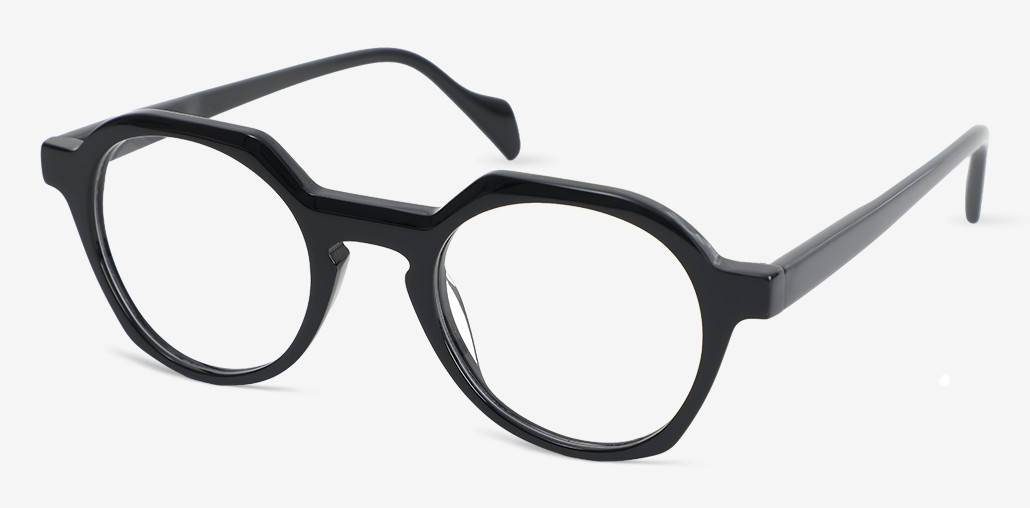
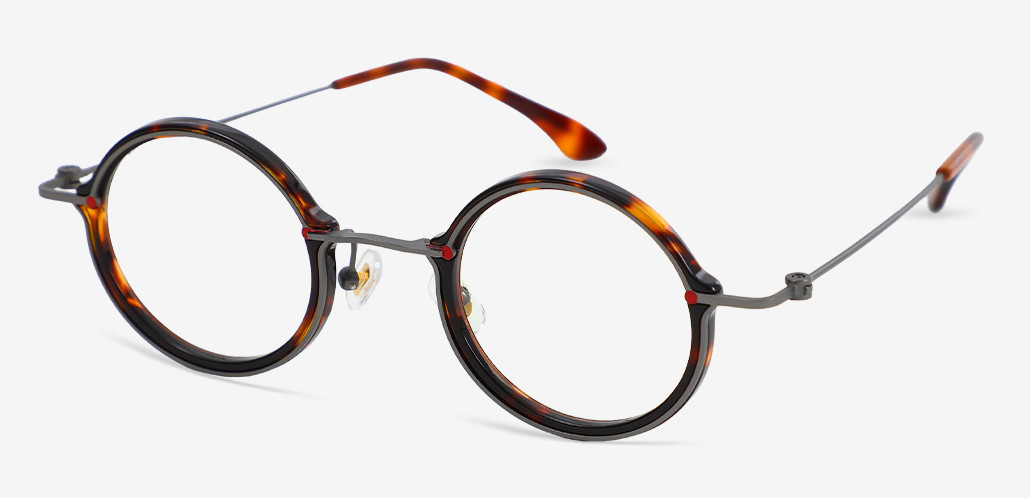
The alternative is not to give up on the shape. It is to move one notch along it. A panto frame — flatter across the top, fuller at the bottom — reads as round to everyone looking at you while covering measurably less of your face at the same lens width, because the flatter top edge pulls the outer corner inward toward the hinge. If you have been searching for round glasses for women and finding nothing narrow enough, panto is usually where the search should have started. It is the most wearable version of the shape and the least discussed.

Before your next order, have these four numbers
- The total front width of the pair that fits you best, measured edge to edge with a ruler.
- Your face width at eye level, from the credit card photo — as a cross-check on the first number.
- The temple length you currently wear, read off the inside of the arm.
- Whether your current pair has adjustable nose pads, and whether you have ever had them narrowed.
Four numbers on a note in your phone will do more for your next three eyewear purchases than any face-shape chart.
Start from the size, not the style
Aoolia's round collection is filterable by frame width, and every product page lists its measurements before you get to checkout. Sort to extra-small and small first, then use Virtual Try-On to compare what is left.