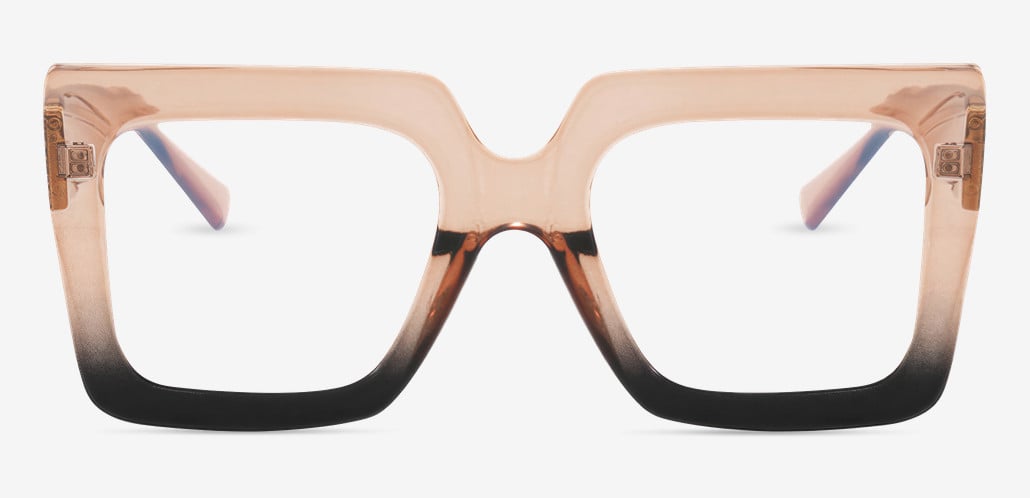

Frames & Fit
Lightweight Glasses: What Actually Changes the Weight, and What Only Changes the Feel
Five swaps, one variable at a time. Three of them move the number on the scale. Two of them move nothing at all and matter more than the other three combined.

There is a particular kind of disappointment that comes from buying lightweight glasses and finding out they are not, in the way that matters, light. The frame is thin. The material is the one everyone recommends. And by the middle of the afternoon you are still pushing them back up.
That is usually not a bad purchase. It is a measurement problem. The number on the box describes the frame; the thing on your face is a whole pair, and the two are not the same object.
So this piece does something narrow and, as far as we can tell, unusual for this topic: it changes one variable at a time. Same shape, same size, same everything else — swap a single thing and watch what the scale does. Five swaps in total. Three of them move the number. Two of them move nothing at all and change more than the other three combined.

First, a correction to the baseline
Frame weight is the figure the whole industry publishes, and it flatters everyone equally. A finished pair is the frame plus two lenses, and the lenses are not a rounding error. In common builds the frame accounts for roughly half to two thirds of the total, which means the part nobody lists can outweigh the part everyone advertises.
So a “17 g frame” is, in practice, a 25 g to 37 g object, and where it lands inside that spread is decided by choices made after you pick the frame.
Grams are also hard to picture, and the usual comparisons do not help much because fruit varies. A US quarter does not. It weighs exactly 5.670 g by law, and you probably have one within reach.
| Weight | In ounces | Roughly equal to |
|---|---|---|
| 12 g | 0.42 oz | About two quarters |
| 17 g | 0.60 oz | About three quarters |
| 23 g | 0.81 oz | About four quarters, or one AA battery |
| 30 g | 1.06 oz | About five quarters |
Hold four quarters in your palm. That is a mid-weight acetate frame, before lenses. It is less than people expect, which is exactly why the gram figure alone predicts so little about comfort.

Material. Real, and smaller than advertised.
Hold the shape, the size and the rim style constant, and change only what the frame is made of.
| Material | Typical frame weight | What it trades |
|---|---|---|
| Titanium | 10–20 g | Thin sections at full strength; limited color range |
| TR90 | 12–20 g | Flex and matte finishes; less crisp detailing |
| Metal / stainless | 18–28 g | Wide spread depending on wire gauge |
| Acetate | 25–35 g | Color depth and pattern that nothing else reproduces |
Moving from acetate to titanium in the same design usually takes off 10 g to 15 g. That is a genuine change and the single largest one available from the frame alone.
It is also where most advice stops, and it is the reason people end up confused. Ten grams is about two quarters. If your pair feels heavy by 10 g, material solves it. If it feels heavy for any other reason, material will not, and you will have spent the upgrade on the wrong variable.
Worth stating plainly
A chunky titanium frame can weigh more than a slim acetate one. Material sets a range. The build decides where inside that range a specific frame lands, which is why a weight printed on the individual frame is worth more than a material name.
Lens width. The one nobody mentions.
Now hold the material constant and change only the eye size — the first number stamped inside the temple arm.
Lens weight scales with lens area, and area scales with the square of the width. Going from a 54 mm eye size to a 50 mm eye size in the same material cuts the lens area by about 14%. In practice the saving is usually a little larger than that, because a wider lens also has to be thicker at the edge to reach across the extra distance.
On a pair of moderately strong lenses, that swap can take off 3 g to 6 g. That is a third to a half of what switching from acetate to titanium gets you, and it costs nothing. It is also compounding: the bigger frame you chose because it looked good is carrying a weight penalty you never saw itemized.
This is the swap that most often explains the disappointment described at the top. Someone buys a large, fashionable, genuinely lightweight frame, fills it with large lenses, and ends up heavier than they were in a smaller frame made of something ordinary.
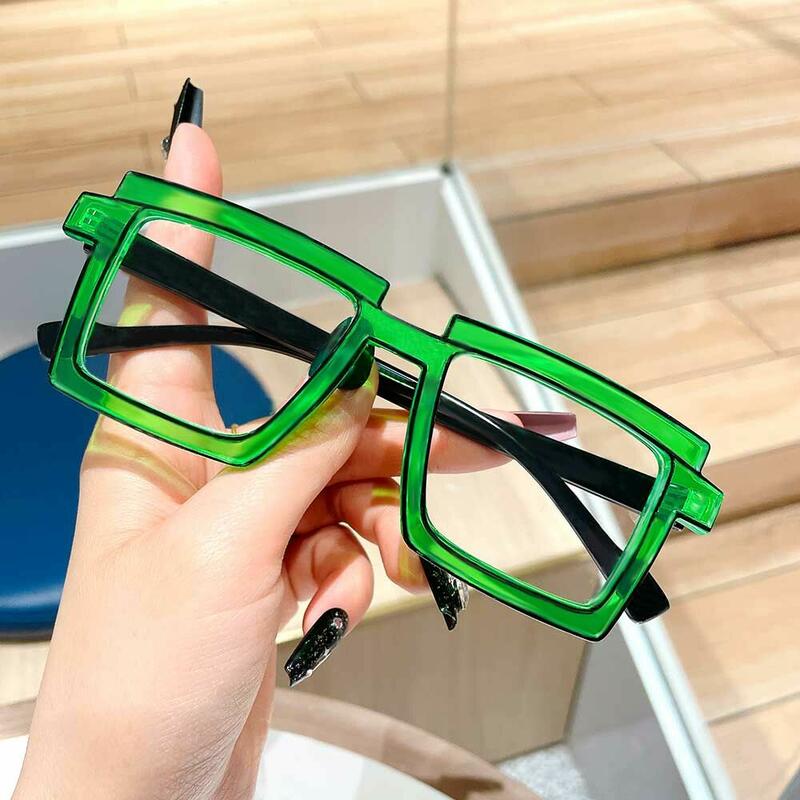
Lens material. Where the standard advice is backwards.
Same frame, same size, change only what the lenses are made of.
The common claim is that high index lenses are lighter. That is true only conditionally, and the condition gets left out.
Index measures how strongly a material bends light, which lets a lens do its job in less thickness. But the materials that bend light more strongly are also denser. Density runs roughly like this: Trivex around 1.11 g/cm³, polycarbonate around 1.20, standard plastic around 1.32, 1.67 around 1.36, 1.74 around 1.46.
So a high index lens is thinner and made of heavier stuff. Whether the pair gets lighter depends on which effect wins:
- Weak to moderate lenses. Thickness is already low, so there is little to remove. The density increase wins and the high index lens is the heavier one. Trivex or polycarbonate is the lightest choice here.
- Strong lenses. Thickness savings are large enough to beat the density penalty, and high index becomes genuinely lighter.
Buying the highest index available regardless of lens power is one of the most common ways people pay more and get a heavier pair. It is worth knowing before you pick.
Here is where the exercise turns. The next two swaps do not move the scale by a single gram.
Bridge design. Zero grams. Large difference.
Keep the frame, the size, the lenses and the material identical. Change only how the frame meets your nose: a fixed saddle bridge that rests across a broad area, versus two small adjustable pads.
The scale reads the same. What you feel does not, because what a nose registers is not force, it is pressure — force divided by the area carrying it. Two small pads might present something on the order of 100 mm² each. A well-fitted saddle bridge spreads contact across several times that. Same grams, a fraction of the pressure per square millimetre.
Which is better depends on the face rather than the spec. Adjustable pads can be moved to fit a bridge shape they were not designed for, and that adjustability is the whole point. A saddle bridge cannot be adjusted, so it either matches your nose or it does not, and when it matches it is hard to beat.
Neither option appears in any weight comparison anywhere, and it routinely outweighs the material decision in how a pair actually wears.
Where the weight sits, front to back.
Last swap. Same total grams, redistributed.
A pair of glasses is a lever. The bridge acts as a pivot, everything in front of it presses down, and everything behind it — the temple arms and their contact behind the ear — pulls the other way. Move mass forward and the bridge carries more of it. Move mass rearward and the load spreads along the sides of the head.
This produces a result that sounds wrong and is easy to verify: a heavier frame with mass in the arms can feel lighter, and stay put better, than a lighter frame with everything concentrated in the front. A thin metal front with substantial temples distributes. A chunky acetate front on wispy arms concentrates.
The answer to the most common complaint
Glasses slide because of bridge fit, temple grip and forward weight distribution. They do not slide because the number is high. Dropping 5 g from a frame that was always going to slip changes nothing about the slipping.
Aoolia labels this on each frame as nose-led, temple-led or even, which is the same distinction described here, applied per frame.
The five swaps, side by side
| Swap | Typical change in grams | Change in how it wears | Who decides it |
|---|---|---|---|
| Frame material | −10 to −15 g | Moderate | You, at the frame |
| Lens width / eye size | −3 to −6 g | Moderate | You, at the frame |
| Lens material | −4 to +3 g, depending on lens power | Small | You, at checkout |
| Bridge design | 0 g | Large | You, at the frame |
| Weight distribution | 0 g | Large | You, at the frame |
Read the last column. Four of the five are settled the moment you choose a frame, which is why “I’ll fix it with better lenses later” rarely works.
Two numbers to write down before you shop
Neither requires anything you do not already own, and both convert this from theory into a comparison you can make.
What your current pair actually weighs
Put the whole pair on a kitchen scale, lenses in. If the scale only reads in whole grams that is fine for comparison; a small jewellery scale with 0.01 g resolution costs very little if you want precision. Take three readings and use the middle one. Now you have a baseline, and “lighter” stops being a feeling and becomes a target. Most people are surprised at how low the number is.
The eye size of a frame that already fits you
It is the first of the numbers printed inside the temple arm, in millimetres. Carry it. Per Swap 2, it is the second largest weight lever available to you, and it is free.
With those two numbers, the shopping question stops being “is this lightweight” and becomes “is this below my current number, and does the weight sit where I want it.” That is a question a product page can actually answer, assuming the product page publishes anything.
When lighter is the wrong goal
The honest version of this topic includes a limit.
Weight comes out of a frame by removing material, and past a point the removal costs something. Very thin metal holds an adjustment less well and goes out of alignment more easily. Rimless builds carry the fewest grams and also offer the fewest places to adjust the fit afterwards, which matters because adjustability is what rescues a near-miss. And a frame that is extremely light but contacts your face in two small spots can press harder per square millimetre than something heavier and broader.
The floor
Once a full-rim pair is under about 20 g of frame, further reductions are unlikely to be noticeable, while the loss in adjustability and durability is. Spend the remaining effort on fit instead.
Frequently asked questions
How much do glasses weigh?
A typical adult frame weighs 15 g to 35 g, or about 0.5 oz to 1.2 oz. Lenses usually add another 8 g to 20 g, so a complete pair commonly lands between 25 g and 50 g. For reference, a US quarter weighs 5.670 g.
Do high index lenses weigh less?
Only for stronger lenses. Higher index materials are denser, so for weak to moderate lenses the density increase outweighs the thickness saving and the high index lens is heavier. Trivex, at roughly 1.11 g/cm³, is the least dense common lens material.
Are titanium glasses lighter than acetate?
Usually, by about 10 g to 15 g in the same design. Titanium reaches full strength in thinner sections. A heavily built titanium frame can still outweigh a slim acetate one, which is why an individually measured weight is more useful than a material name.
Why do my lightweight glasses still slide down?
Sliding is caused by bridge fit, temple grip and forward weight distribution rather than by total weight. A frame with mass concentrated in the front presses on the bridge and lifts behind the ears regardless of how few grams it contains. Check the bridge width and whether the frame has adjustable pads or a spring hinge before assuming the answer is a lighter frame.
What is considered lightweight for glasses?
Under 20 g is genuinely light for a full-rim adult frame, and under 14 g is light even by rimless standards. Both figures refer to the frame alone.
How we arrived at these numbers
The gram ranges above are typical values for adult frames and common lens builds, stated as ranges rather than exact figures because they vary with size and construction. The material densities are published properties of the materials themselves and can be checked against any supplier datasheet. The US quarter figure is a legal specification.
Every frame in Aoolia’s lightweight glasses collection is weighed on a 0.01 g scale, and the measured weight is printed on the product card in both ounces and grams, accurate to within 0.5 g. Each frame also carries an “as worn” range and a load split label, so the two swaps that do not change the number are visible before you buy rather than after.