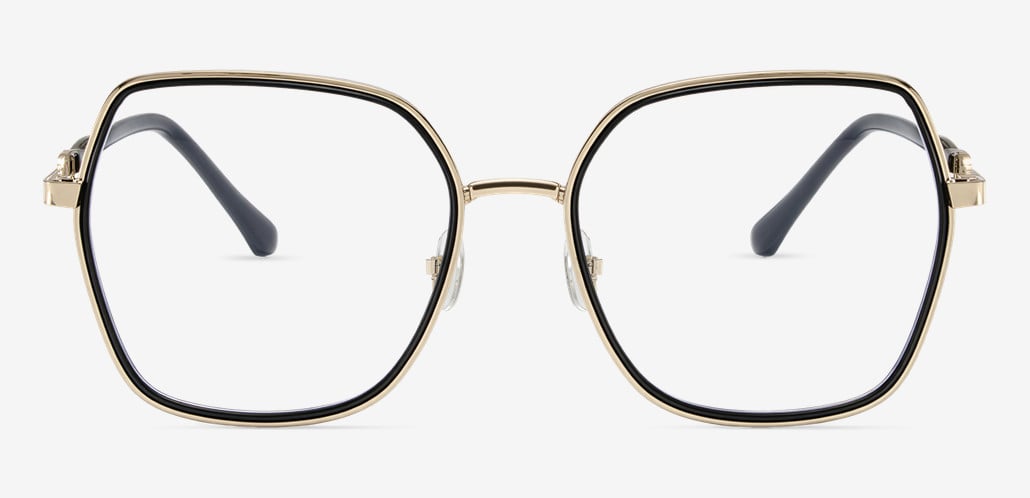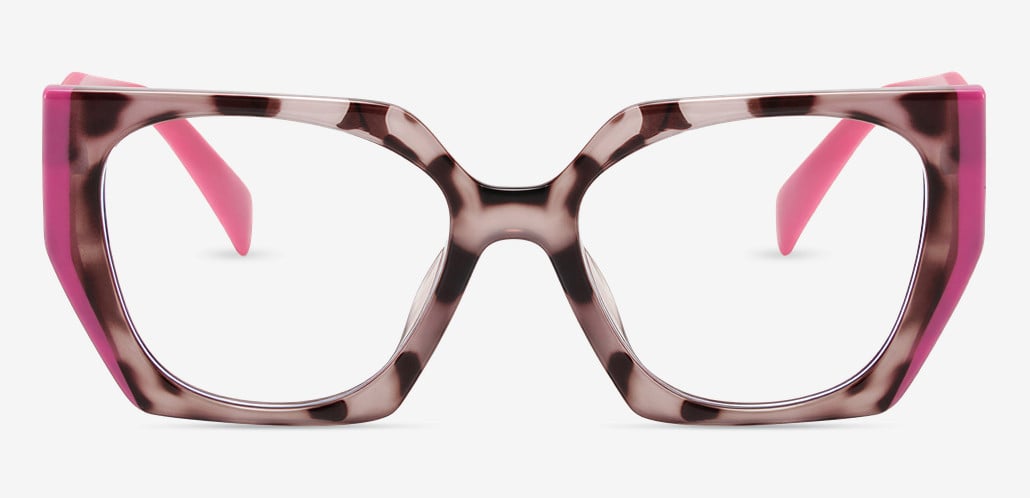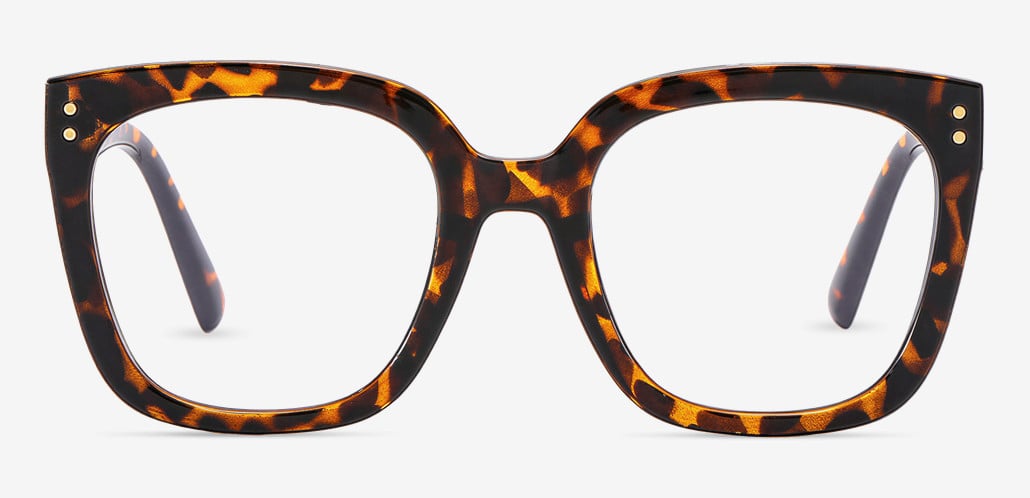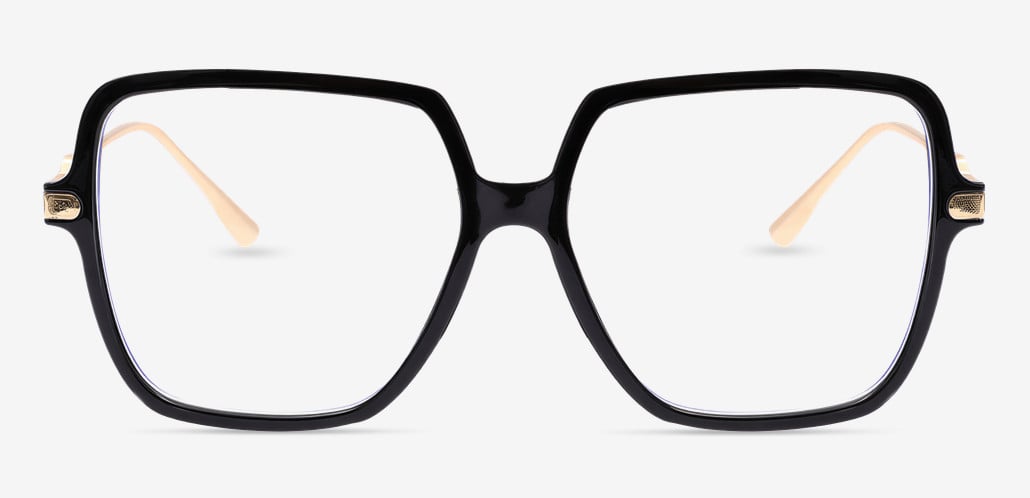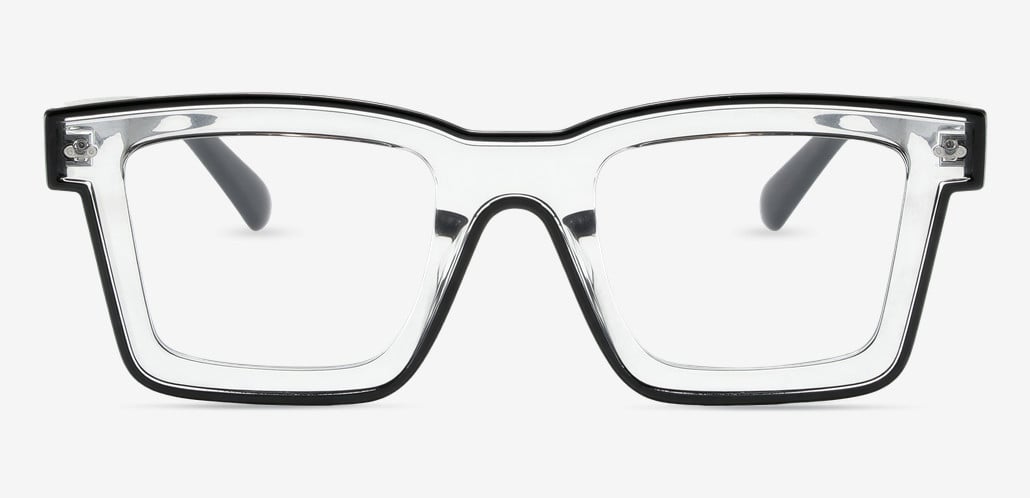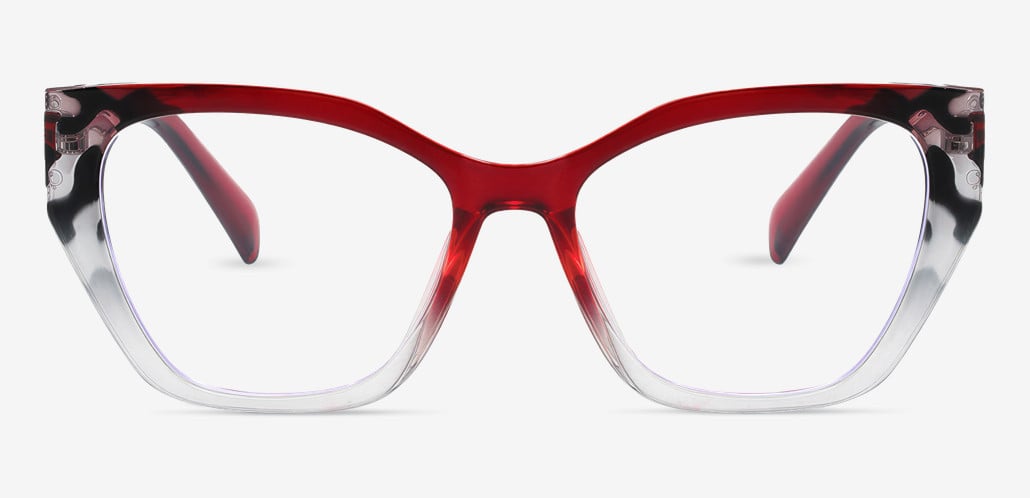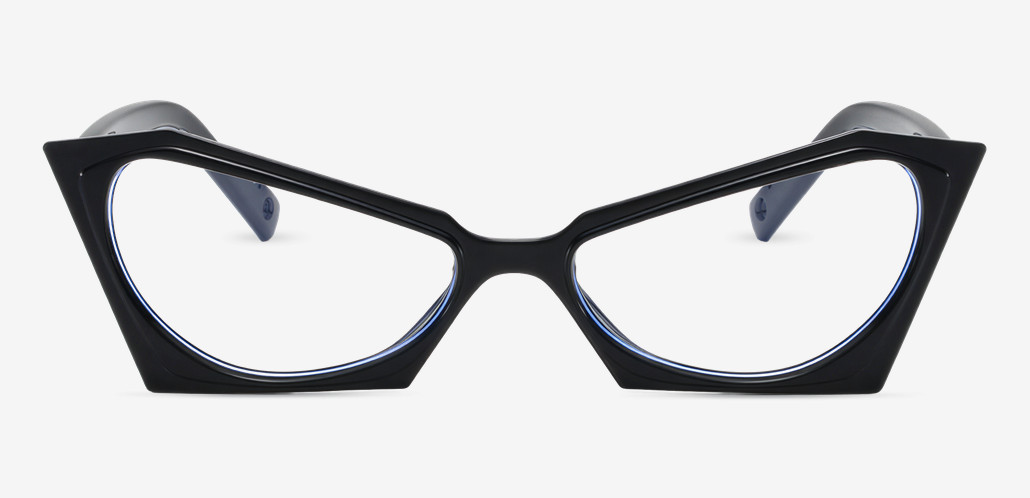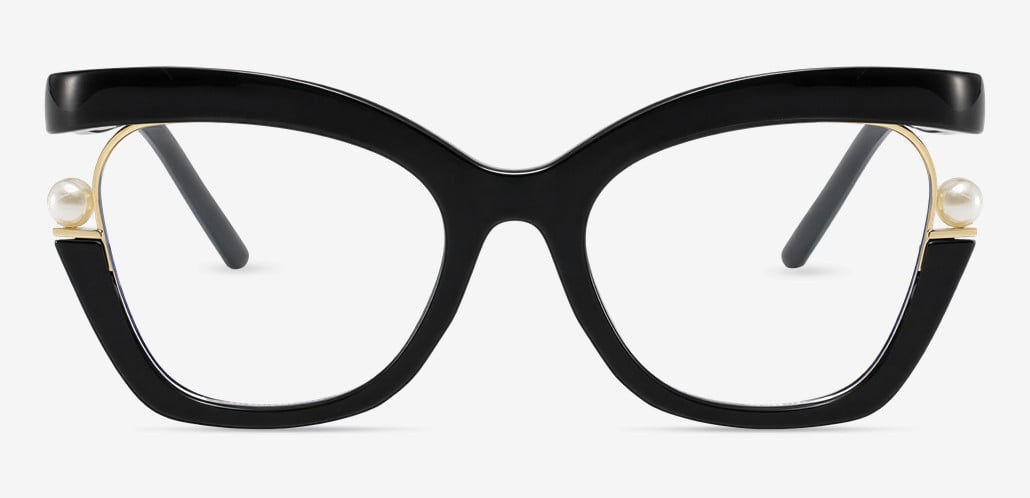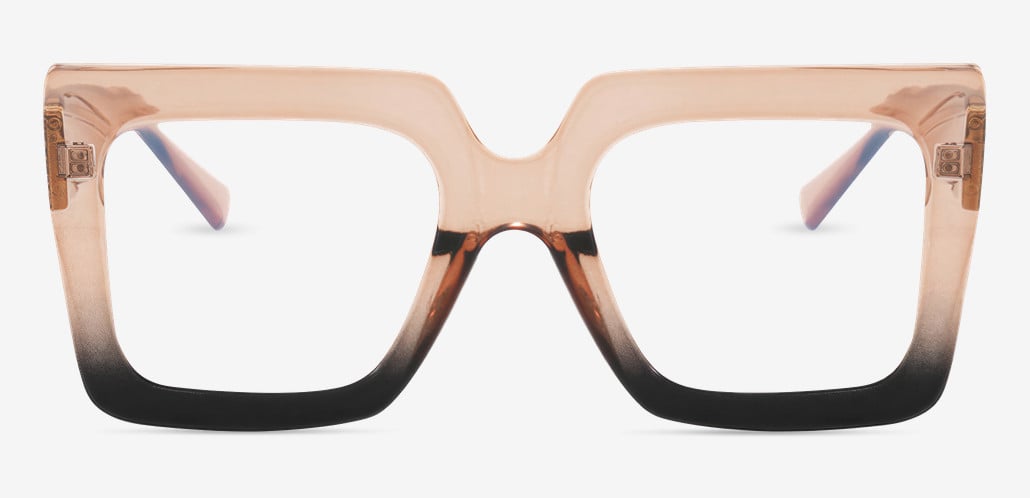

There is a specific kind of frustration that comes from knowing exactly what you want and being unable to make a search box understand it. You saw a pair on someone. Thick, dark, deliberate. You went home, typed nerdy glasses into a search bar, and got two thousand results ranging from a $4 lens-less costume prop to a $400 Japanese acetate frame that looks nothing like what you saw.
The problem is not the search engine. The problem is that "nerdy glasses," "hornrim," and "browline" are three words doing three completely different jobs, and only two of them describe something a factory can actually build.
Sort that out and the search stops being a lottery.
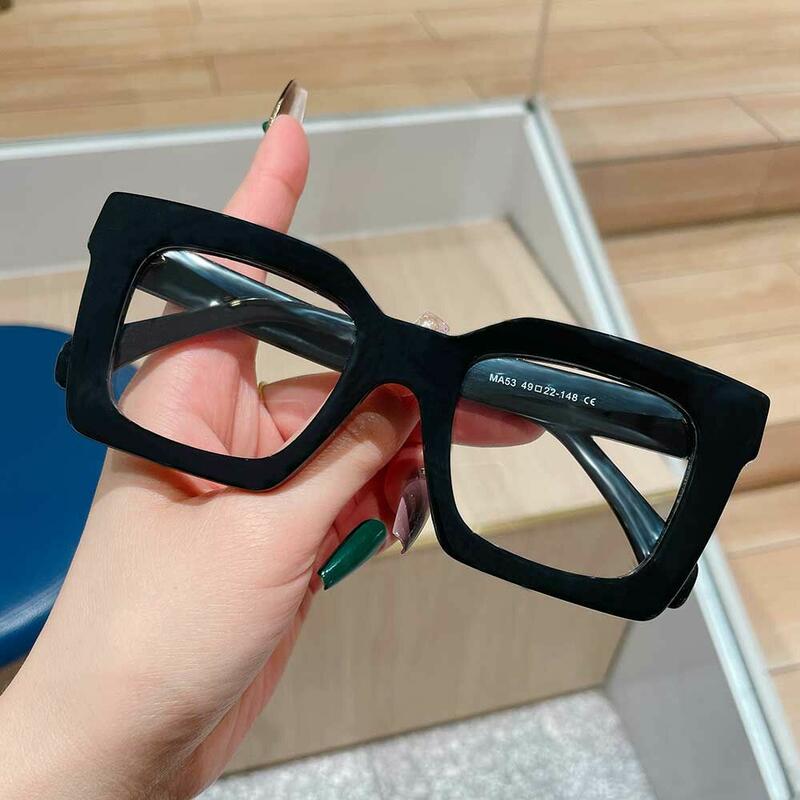
Two of these are specs. One is a verdict.
Here is the distinction that makes everything else make sense.
Hornrim and browline are manufacturing terms. They describe what a frame is made of and how its parts are assembled. An engineer could take either word and produce the correct object. They are closer to "cast iron" and "stainless steel" than to "rustic" and "modern."
Nerdy glasses is a reception term. It describes the impression a frame leaves on other people. Nobody has ever specified a nerdy frame on a technical drawing, because there is nothing there to specify. Thickness, shape, colour, size, and the face underneath all contribute, and none of them is required.
This matters commercially. When you filter a retailer's site by browline, you are filtering by construction, and every result will share that construction. When you search nerd glasses or nerdy glasses, you are filtering by a merchandiser's judgment about what reads as nerdy this season. Two retailers can tag two entirely different sets of frames with the same word and neither is wrong.
So the word is not useless — it is just a starting point rather than a destination. It gets you into the right neighbourhood. The construction words get you to the address.

Hornrim: a material that outlived its material
The name is literal in origin. Before plastics, frames in this family were cut from actual animal horn, or from hawksbill sea turtle shell, which was prized for its depth of colour and its warmth against skin. Both materials could be worked thick without becoming unbearably heavy, which is why the resulting frames had a substance that thin wire frames did not.
Celluloid arrived in the early twentieth century and imitated the look at a fraction of the cost. Cellulose acetate — what the industry still calls zyl — replaced celluloid, and the international trade ban on hawksbill shell in the 1970s ended the original material entirely. What survived was the silhouette and the name.
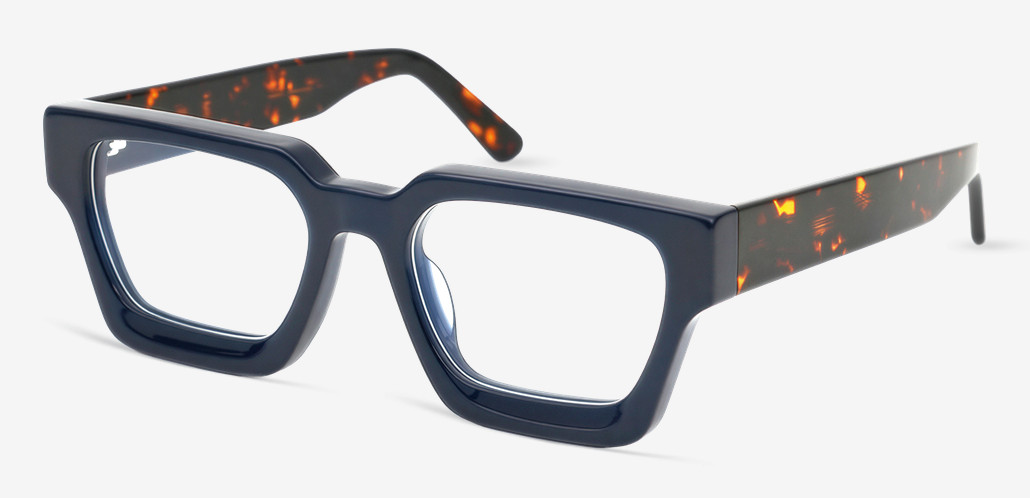
So today hornrim does not mean horn. It means a full-rim frame with a substantial plastic front, usually in a dark or mottled finish, thick enough that the rim itself is a visible feature rather than a border.
Two things follow from that, and both are routinely misunderstood.
Hornrim is not a shape. Harold Lloyd's frames from the silent film era, the ones that arguably set the entire visual template, were round. The frames on a 1960s engineer were square. Both are hornrims. If you search for hornrims expecting round, half of what you see will be square, and you will assume the site is broken. It is not.
Hornrim is not a thickness measurement. There is no threshold. A 3 mm acetate front and an 8 mm acetate front can both be described as hornrim by different sellers, and those two frames do not look remotely alike on a face. This is the single most common reason a pair arrives and feels underwhelming — it was in the right family and at the wrong weight.
Browline: the only one of the three with a birthday
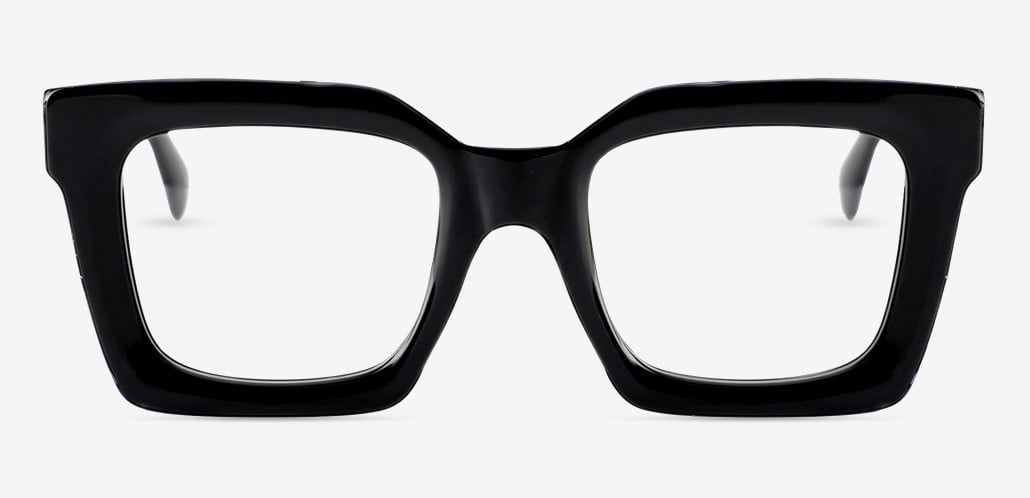
Browline frames have something the other two do not: a documented origin. The design was introduced by Shuron Ltd. in 1947, credited to Jack Rohrbach, and sold as the Ronsir. It solved a real problem for a real market — a frame that could be manufactured in one standard bottom with interchangeable plastic brow pieces, so a wearer could change the look without changing the whole frame.
The construction is what defines it, and it has three parts:
A thick plastic (or plastic-and-metal) upper rim that follows the line of your eyebrow.
A thin metal lower rim, or no lower rim at all, holding the bottom of the lens.
Metal temple arms attached at the outer edge of the brow piece.
That is the whole specification. It says nothing about colour, size, or lens shape. A browline can be black and heavy, or gold and barely there.
It became genuinely dominant. By the mid-1950s browlines accounted for an enormous share of eyewear sold in the United States — a share large enough that period photographs of American men from that decade look almost uniform. Malcolm X wore them. So did Vince Lombardi and Lyndon Johnson. Ray-Ban's Clubmaster, launched in the 1980s, is the sunglass descendant that keeps the construction in circulation.
The reason browlines read as intelligent has nothing to do with mystique and everything to do with geometry. The heavy top rim sits where your eyebrow sits, which visually raises and strengthens the brow line. Strong brows read as attentive. The thin bottom keeps the lower half of the face open, so the frame does not add width to the cheeks the way a full-rim hornrim can.
Nerdy glasses: the word that means what your audience thinks it means
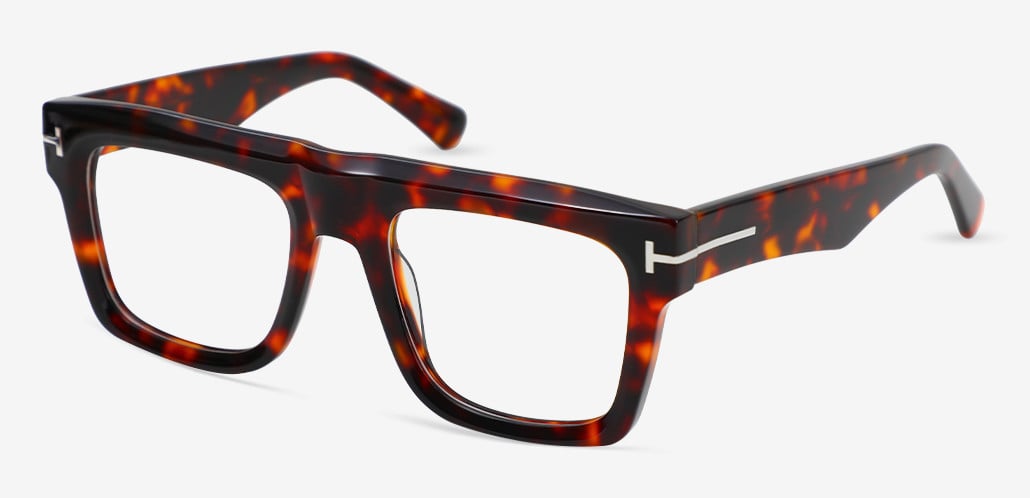
There is no optical definition, and it would be dishonest to invent one. Nerdy glasses is a cultural label that attached itself to corrective eyewear in the mid-twentieth century, at a point when thick lenses meant strong prescriptions, strong prescriptions meant a lot of reading, and a lot of reading meant a particular social position. The frames did not signal studiousness. The vision did, and the frames were the visible part.
The label stayed after the reason for it dissolved. Lens technology got thinner. Contact lenses arrived. Laser correction arrived. By the time thick frames came back around 2010 under the heading of geek chic, the look had been fully detached from the eyesight that produced it, which is why plenty of people now wear it with no correction at all.
Practically, when you search nerdy glasses, you are usually looking for one or more of these things:
A heavy acetate front, in black or tortoise, in a square or round shape.
A browline.
Something oversized relative to current minimalist frames.
Occasionally, a costume prop, complete with tape on the bridge.
Those are four different purchases. The word does not distinguish between them, which is why the results feel scattered.

Four ways the request gets lost in translation
These are the specific mismatches that send frames back in the return envelope.
You asked for browline; you wanted weight. What caught your eye was the density of the frame across the top of the face. You searched browline because that is where you saw the heaviness. But many browlines are made with a slim brow bar and a wire bottom, and on your face the whole thing disappears. If you want presence, a full-rim hornrim delivers more of it than a lightweight browline ever will.
You asked for hornrim; you wanted contrast. What you actually liked was the dark band above the eyes against an open lower face. A full-rim hornrim closes that lower half, and on a round or full face it can add width you did not want. Browline is the answer to that description.
You asked for nerdy glasses; you got thin black rectangles. Nothing about the term specifies rim depth, so retailers include frames at every weight. If thickness is the point, you need to filter on material and read measurements, not on the vibe word.
You wanted the professor look; you bought squares. The round, wire-thin or round-acetate frame that reads as academic and the chunky square that reads as tech-adjacent are both filed under nerd glasses on most sites. They are not interchangeable, and they suit different faces.

What each construction does to your actual lenses
This is the part almost no style article covers, and it decides whether you like the frame after it arrives with your prescription in it.
Full-rim hornrims are forgiving. A thick acetate rim physically covers the edge of the lens. If you are nearsighted, your lens is thinnest at the centre and thickest at the rim, and a substantial front hides that edge. This is why strong prescriptions and heavy frames have always gone together — it was never only fashion.
Browlines are conditionally forgiving. The top edge is covered; the bottom is not. On a browline with a wire lower rim or a nylon cord, the lower edge of the lens is exposed, and a strong minus prescription will show there. It is manageable — a higher index material and a narrower lens width do most of the work — but it is a real consideration rather than a theoretical one. Browlines with a very strong prescription are also more likely to need the lens edge polished so the exposed portion looks intentional.
Frame width matters more than either. Whatever construction you pick, a wider lens moves the lens edge further from its optical centre, and further from centre means thicker. A bold look and a sensible lens width are not in conflict; a 50 mm lens in an 8 mm acetate front is far more dramatic than a 56 mm lens in a 3 mm one.
If your prescription is above about -4.00, this is worth raising before you order rather than after. At Aoolia every prescription is checked by an optician before the lens is cut, and a frame-and-prescription combination that will produce a visibly thick edge gets flagged at that point. It is a much cheaper conversation to have before the lens exists.
What to check on a product page, whatever word got you there
Retailers rarely publish front thickness, so you have to read around it.
Material. Acetate is cut from sheet and can be worked genuinely thick. TR90 and injection-moulded plastics are usually thinner and lighter for the same footprint. If a listing says acetate, thickness is at least possible.
Rim type. Full rim, half rim, rimless, browline. This field is unambiguous and it is the fastest way to eliminate two-thirds of a catalogue.
The three numbers. Every frame carries a measurement like 52□18-145: lens width, bridge width, temple arm length, all in millimetres. Compare them to a pair you already own and like. This one habit removes most sizing disappointment.
Lens height. Less commonly listed but worth hunting for. A deep lens is a large part of what makes a frame read as a hornrim rather than as a modern narrow frame. Under about 36 mm, the effect largely disappears no matter how thick the rim is.
The product photo angle. A straight-on shot flatters thickness. A three-quarter or side shot shows you the true depth of the front. If a listing only has straight-on images, you are being shown the frame's best case.

How to ask for it out loud
If you are talking to a person rather than a search box, the useful sentence is not "I want nerdy glasses." It is some version of this:
"I'm looking for a full-rim acetate frame with a thick front, square, in black or tortoise, around 50 to 52 millimetres."
Or:
"I want a browline — heavy top, metal bottom — and I'd like the brow piece to be dark."
Both of those are answerable. The first version is not, and an optician will respond by handing you whatever they personally associate with the word, which may be nothing like what you pictured.
The same principle works on a website. Use nerdy glasses to find the section. Use construction, material, and measurements to find the frame.