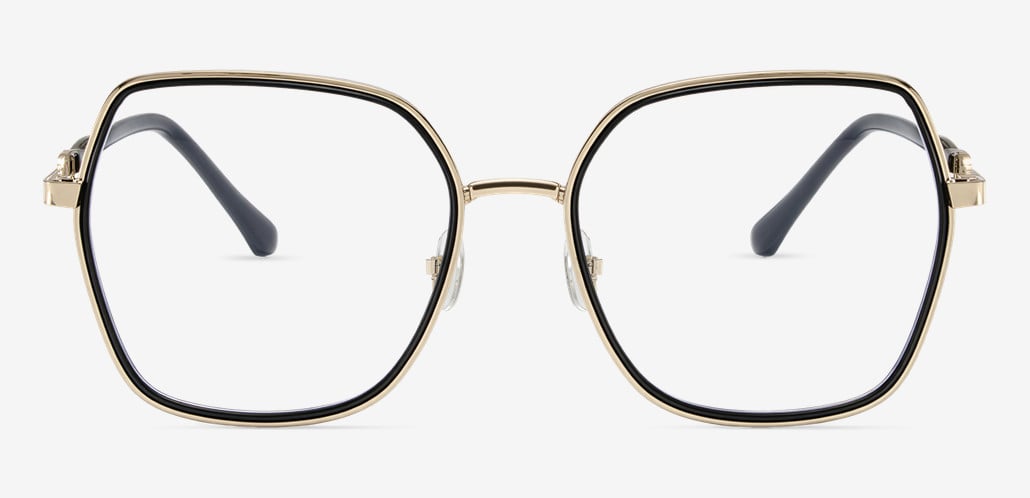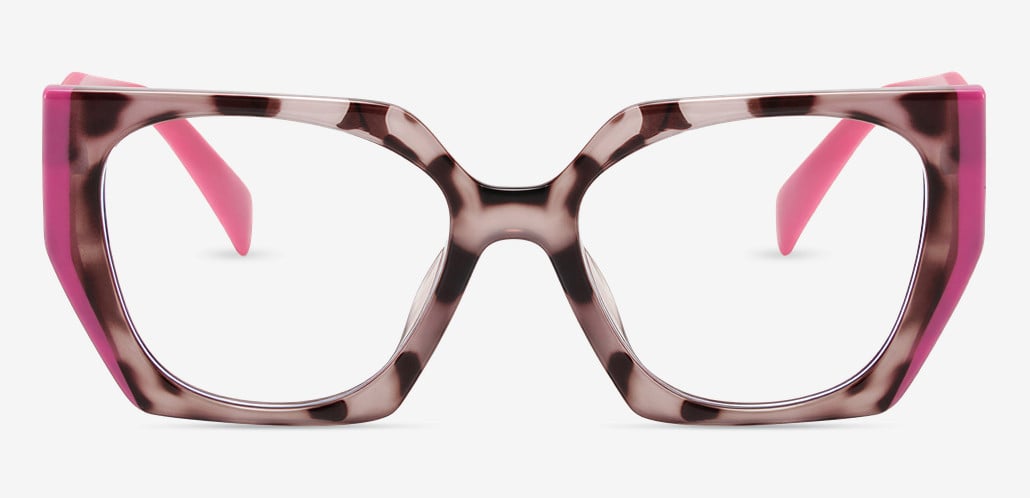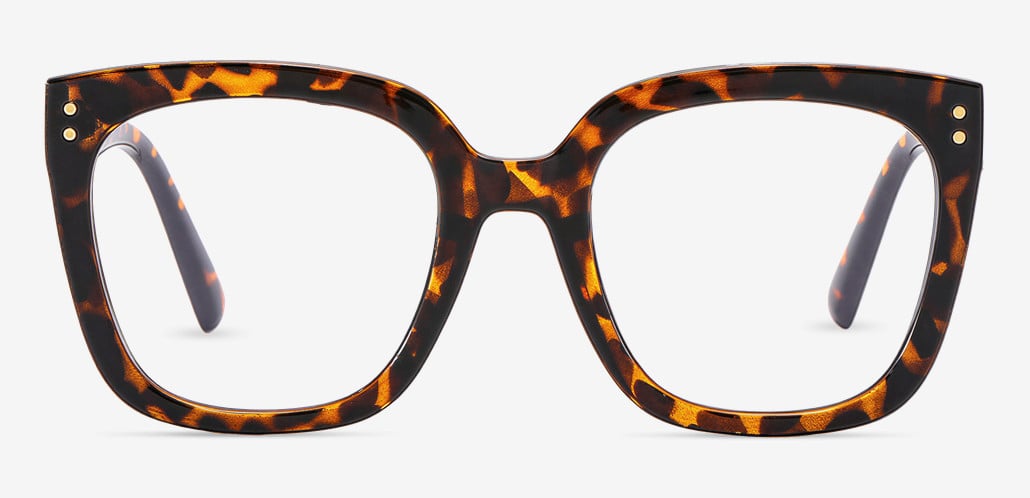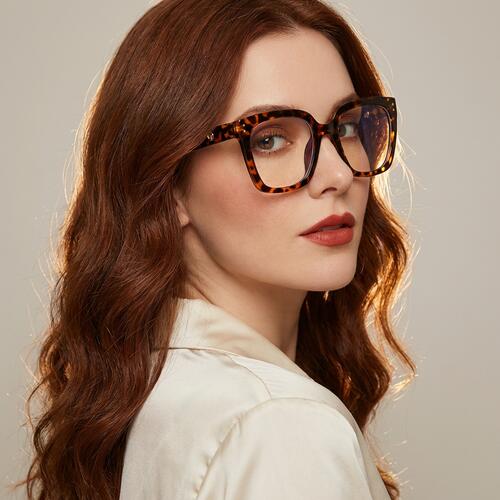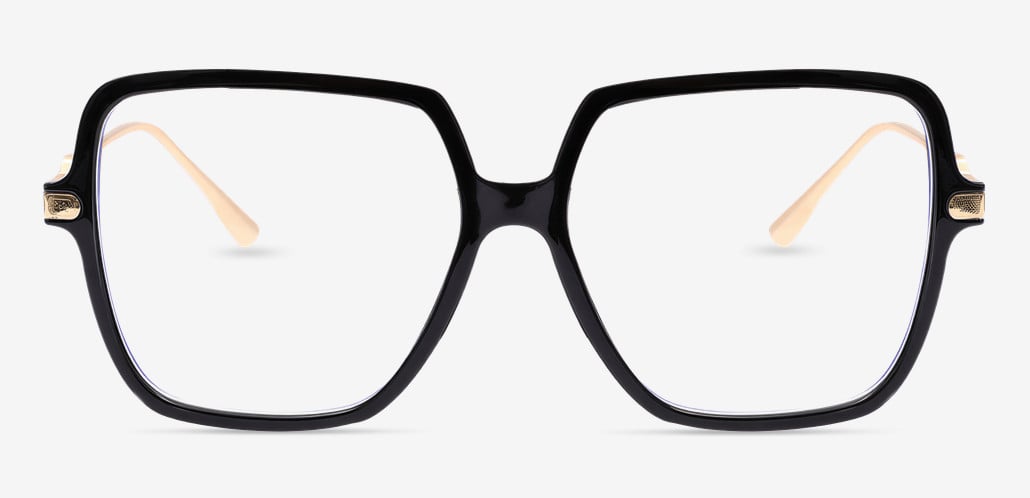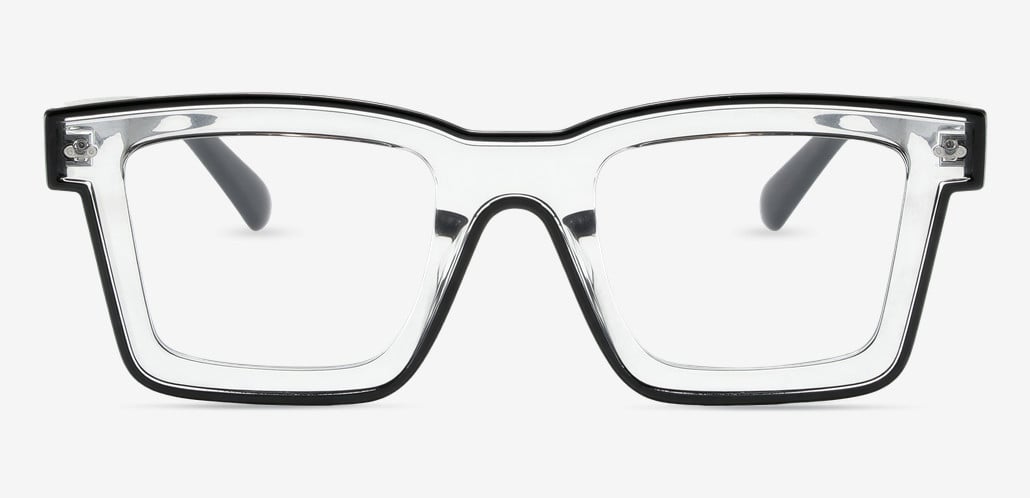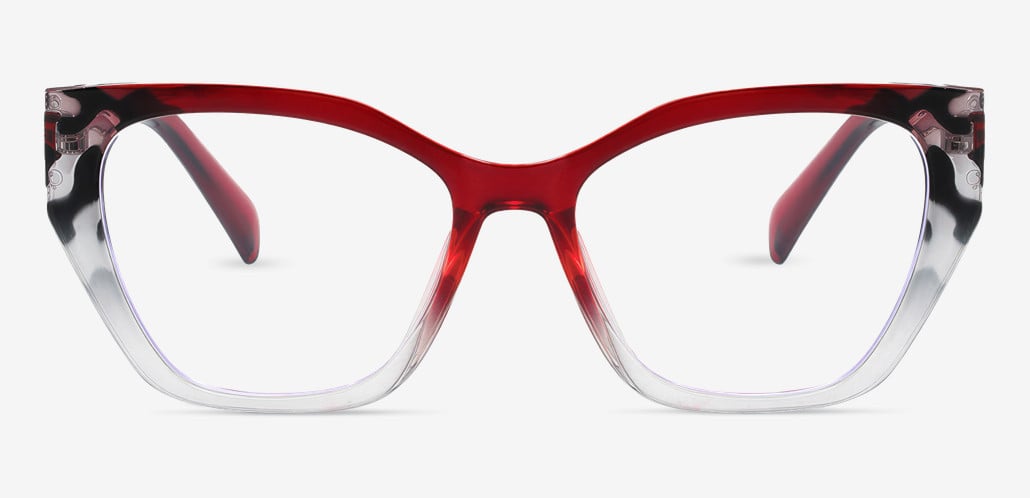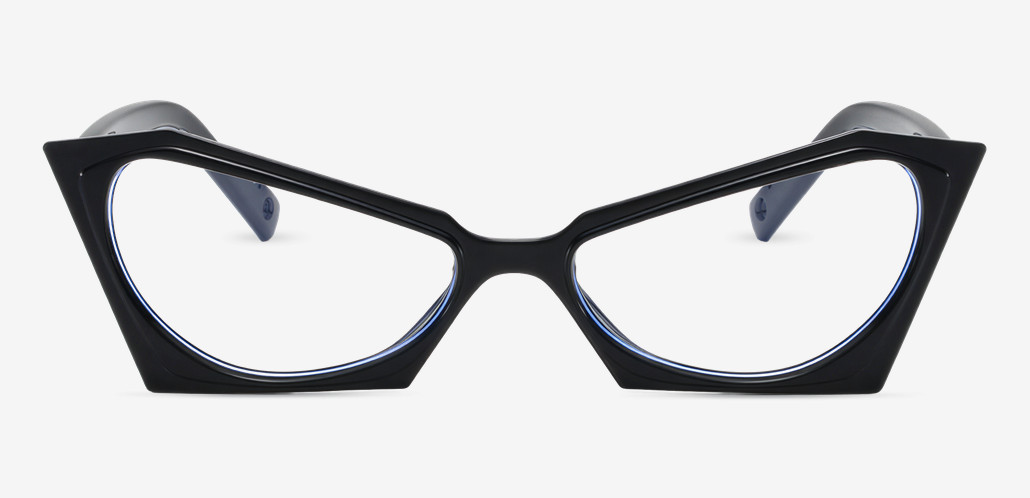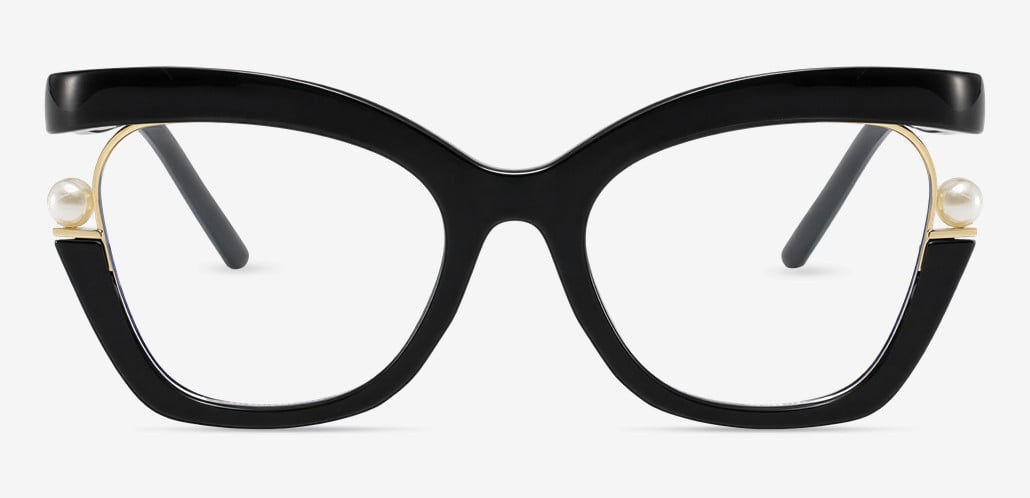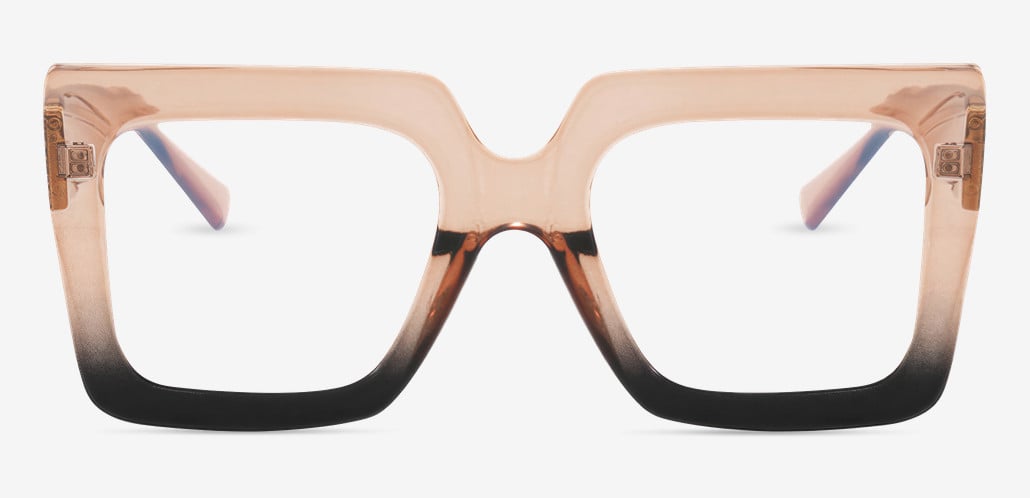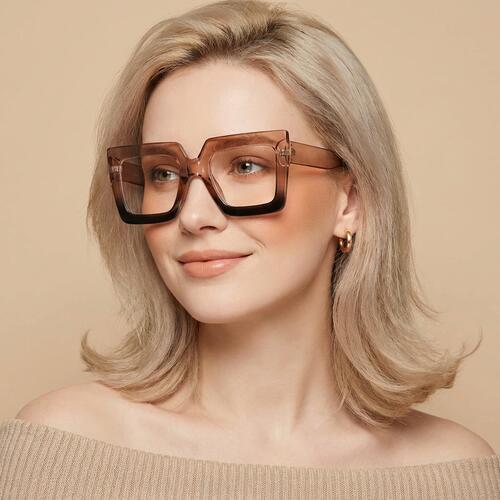

That advice is also where most guides stop, which is why plenty of people follow it exactly, buy a square frame, put it on, and find that something is still off. The face looks wider, or the glasses look small, or the mirror says fine and the photo says no.
At that point most people assume they picked the wrong style. Usually they didn't. They picked the right shape in the wrong proportions, and no style guide told them that shape and proportion are two separate decisions.
This piece is organized around what actually goes wrong. Find the symptom that matches what you're seeing, and you'll find the measurement behind it.
First: the numbers you already have
Pick up a pair of glasses you own and look at the inside of the left temple arm. You'll find something like 5218-145.
- 52 is the lens width in millimeters — the horizontal width of one lens.
- 18 is the bridge width, the gap between the two lenses.
- 145 is the temple length, from hinge to ear tip.
The square symbol between the first two numbers isn't decoration; it marks the boxing system these measurements come from.
Add them up and you get a rough front width: (52 × 2) + 18 = 122mm. The real frame front is usually a few millimeters wider than that, because the sum doesn't include the end pieces where the hinges sit. So treat it as a floor, not a precise figure.
Now here's the gap. There's a fourth measurement that matters more than any of these for a round face, and it is almost never printed on the frame: lens height, sometimes called the B measurement — how deep the lens runs from top to bottom. Retailers list it inconsistently. Aoolia publishes it on every product page, which is the only reason the rest of this article is actionable.
Write down your lens width and lens height before you keep reading. You'll need the ratio.
Symptom by symptom
“My face looks wider in these, not narrower”
Total frame width is too small.
This is the most common failure, and it's counterintuitive enough that people usually blame the shape instead. A round face is widest at the cheeks. When a frame front ends before that widest point, it draws a short horizontal line across a wider face, and the face reads as spilling out past the edges. A frame that reaches your cheekbones, or extends a few millimeters past them, does the opposite — it takes over as the widest line in the picture.
A standard credit card is 85.6mm wide. Hold one flat against your cheekbone, long edge horizontal, and see how far past the card your face extends on that side. Double it — that's a workable estimate of your face width at its widest point. Compare it to your frame's front width.
What to look for: a frame front width equal to or slightly greater than your cheekbone width. Slightly greater is safer than slightly less.
“Fine in the mirror, wrong in every photo”
Lens height is too deep relative to lens width.
Mirrors let you move and adjust to the angle you like. A camera flattens all of that into one frontal image — exactly the view where proportion becomes obvious. A round face has plenty of vertical volume already; a deep lens adds more vertical mass in the middle of the face. The angular shape is still there, but it stops elongating, because the frame is filling space rather than crossing it.
Divide lens width by lens height. For a round face, aim for roughly 1.3 : 1 or greater. A 54mm-wide lens at 38mm deep gives you 1.42 — that works. The same 54mm width at 45mm deep gives you 1.20, drifting toward a square that fills rather than widens.
This is a guideline, not a law. But if you've been disappointed by frames that were technically the right shape, run the ratio on them. The number is usually below 1.25.
“They sit on my cheeks, and they jump when I smile”
Bridge fit, and where the frame sits vertically.
Full cheeks are a defining feature of a round face, and they move. If the lower rim already rests on your cheek when your face is relaxed, every smile pushes the frame up your nose. Two things cause this: a bridge too wide for your nose, or a lens too deep (see Symptom 2) — even a well-positioned bridge can't save a lens that runs down past where your cheek starts.
Put on a pair you already own, relax your face, then smile as widely as you can while watching in the mirror. If the frame moves more than a millimeter or two, the fit is wrong regardless of how good the shape is.
What to look for: a narrower bridge measurement, or frames with adjustable nose pads, which let you lift the whole frame a few millimeters off your face without changing anything else.
“They look tiny on me”
Lens width, and total width again — but this time it reads as scale, not as face width.
Symptoms 1 and 4 share a root cause and present completely differently. In Symptom 1 the face looks wide; here the glasses look small, like an accessory borrowed from someone else. Round faces tend to have less prominent bone structure at the temples, so a small frame has nothing to anchor against and just floats.
What to look for: step up in lens width specifically, not just total width. Going from a 50mm to a 54mm lens changes the visual scale far more than adding 4mm of bridge would, because it's the lens that reads as the object.
If your prescription is strong, a wider lens gets thicker at the edges. That's a real constraint, not a reason to give up on a larger frame — high-index lenses at 1.67 or 1.74 keep the edge noticeably thinner and are worth the upgrade at that point.
“It's a square frame, but it doesn't look angular”
This one isn't a number, and that's the point. Two frames can both be filed under “square” and produce nothing like the same effect:
- Corner radius. A square with heavily rounded corners is functionally a soft shape wearing a square label. The corners are where the contrast lives.
- Rim thickness. A thin wire rim draws a faint line; an acetate rim in the same shape draws a definite one. On a round face, definite wins more often.
- Where the temple attaches. Arms that connect at the top corner pull attention upward. Arms that connect mid-rim leave the visual weight right where the cheeks are.
That last point is why browline frames perform so well on round faces and get bought so rarely. A heavy top bar with a light or absent bottom rim puts a strong horizontal line across the upper face and leaves the lower half open — the most efficient shape available for this face type, usually sitting at the bottom of the filter list with the smallest inventory count.
What to look for: in product photos, look at the corners at full zoom and check where the hinge sits on the rim. Neither is in the specs. Both are visible.
The conflict nobody mentions: progressives
If you wear progressive lenses, Symptom 2 and your prescription are in direct tension, and it's better to know that before you order.
Progressive lenses need vertical room to fit the corridor between the distance zone and the reading zone. Many standard progressive designs need somewhere around 28–30mm of fitting height to work properly; short-corridor designs need less. Meanwhile the advice for a round face is to go shallow.
These aren't incompatible, but the window is narrower than it looks. A lens around 34–38mm deep can satisfy both — enough height for a standard progressive, shallow enough to still read as horizontal against a 52–56mm lens width.
Below about 32mm you're into short-corridor territory, and that's a question for the lab rather than a style decision. If you're close to the line, ask before you buy. Aoolia's opticians review every prescription order before it ships, and confirming fitting height against a specific frame is exactly the kind of check that happens at that stage — but it's much easier to resolve before the frame is cut than after.
Putting it together
You now have four numbers: your face width at the cheekbones, and your current frame's lens width, lens height, and bridge. Here's the short version of what to do with them.
| What you measured | What to look for |
|---|---|
| Face width at cheekbones | Frame front width equal to or slightly greater |
| Lens width ÷ lens height | Target roughly 1.3 : 1 or higher |
| Frame resting on your cheeks | Narrower bridge, or adjustable nose pads |
| Glasses look small | Increase lens width specifically |
| Shape reads soft | Sharper corners, thicker rim, high temple attachment |
These are guidelines derived from how proportion works, not rules that override your own eyes. If a frame breaks the ratio and you like how you look in it, the frame is right and the ratio is irrelevant.
The numbers exist to explain the pairs that disappointed you and to narrow the field before you start trying things on — not to overrule the mirror. Which is the last step regardless. Virtual try-on with your face straight on and your hair back will confirm in thirty seconds what the specs suggested, and it catches the two things no measurement can: corner radius against your actual features, and whether the frame clears your cheek when you smile.
Once you know your numbers, filter by shape, size and lens depth in one pass — instead of working through it one disappointing pair at a time.
Shop glasses frames for round face