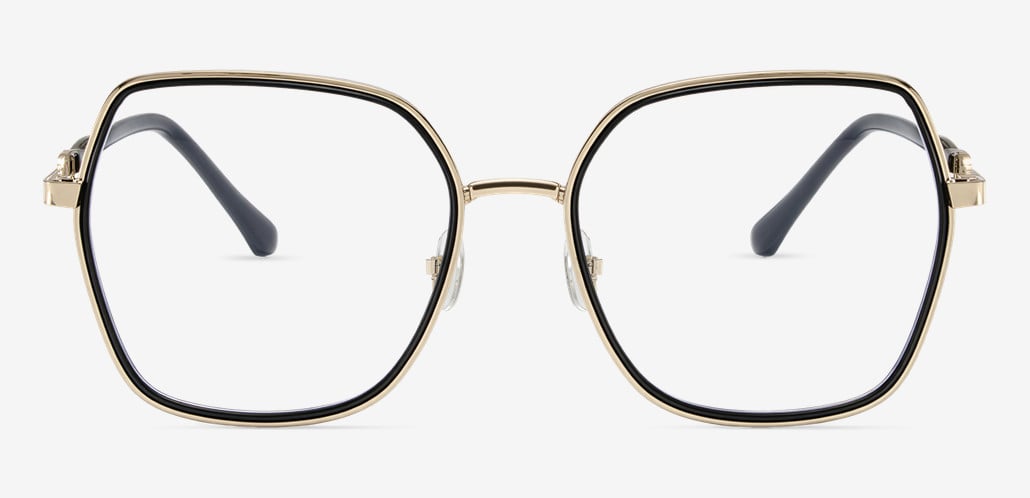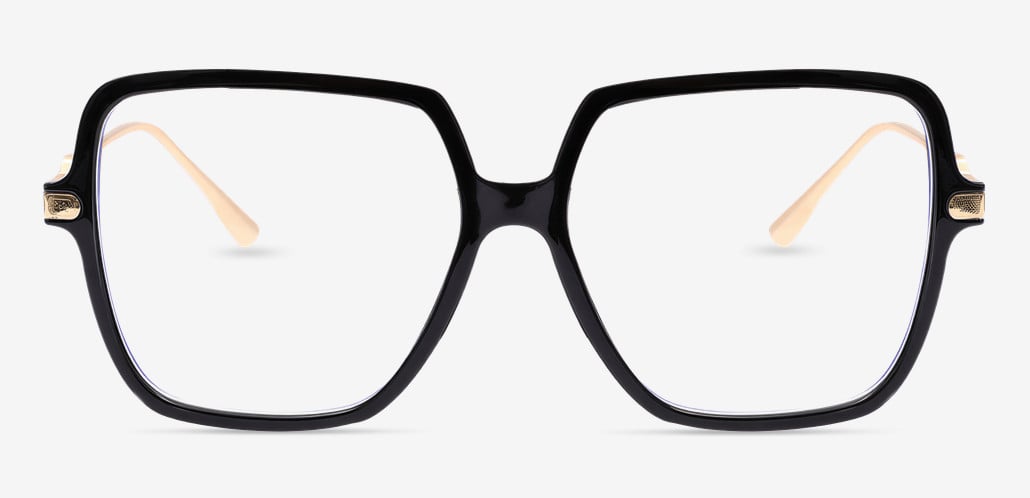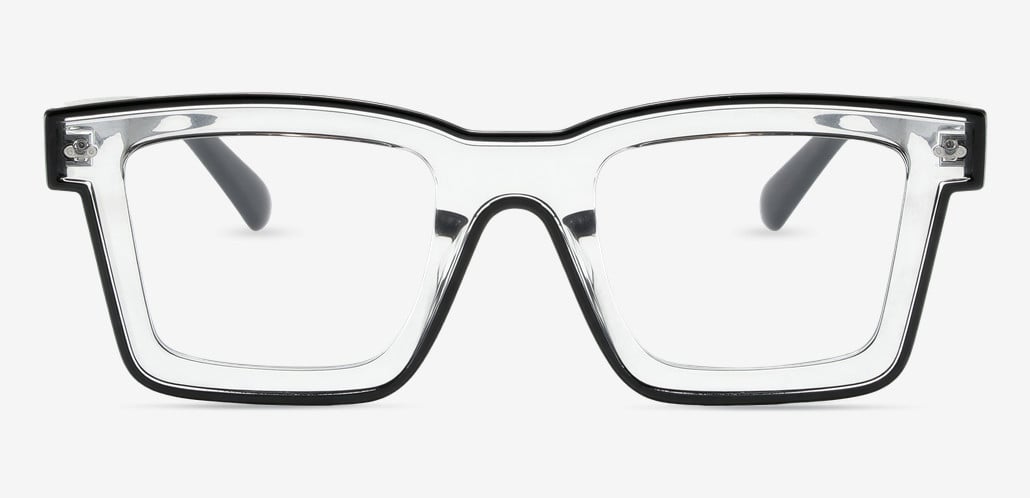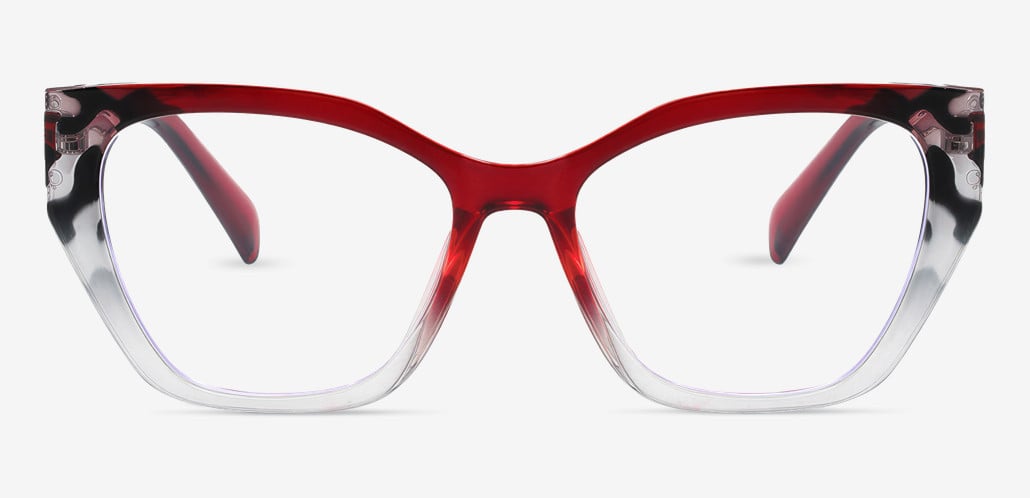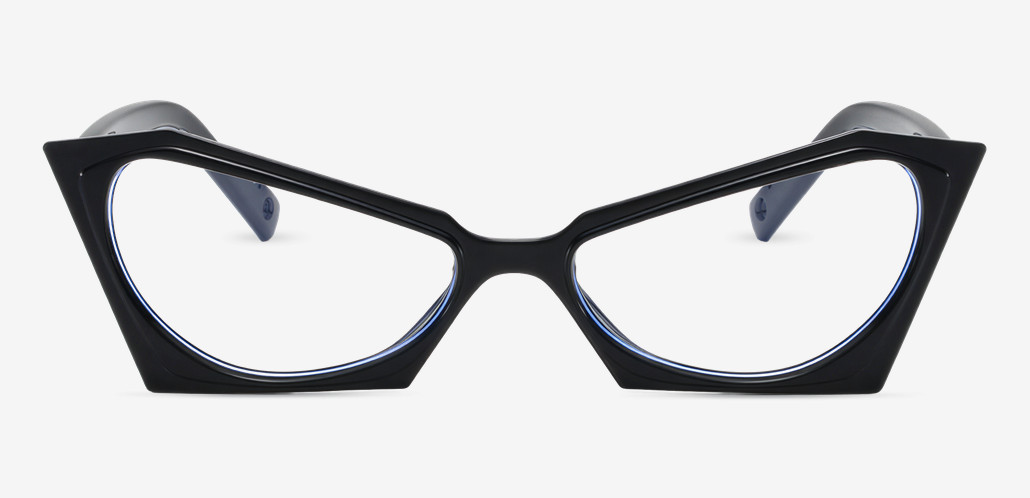

Y2K glasses are eyewear built to the proportions that dominated roughly 1998 to 2004: small lenses, narrow overall width, rims thin enough to nearly disappear, and hardware in silver, gunmetal, or gold rather than tortoiseshell. Shape-wise, the era belonged to slim rectangles, small ovals, and rimless designs where the lenses were drilled straight onto the temples.
That is the definition. What almost nobody explains is why frames looked that way, how to tell a genuine 2000s shape from something that only resembles one, and what those tiny proportions actually do once real lenses go into them. Those are the parts worth knowing before you buy — whether you are ordering new Y2K glasses or bidding on a pair from 2001 on eBay.
A five-step field test for spotting Y2K glasses
Run these checks in order on any frame — a product photo, a thrift-store rack, a pair in an old family album. Most frames fail somewhere in the first three steps, and that is useful information.
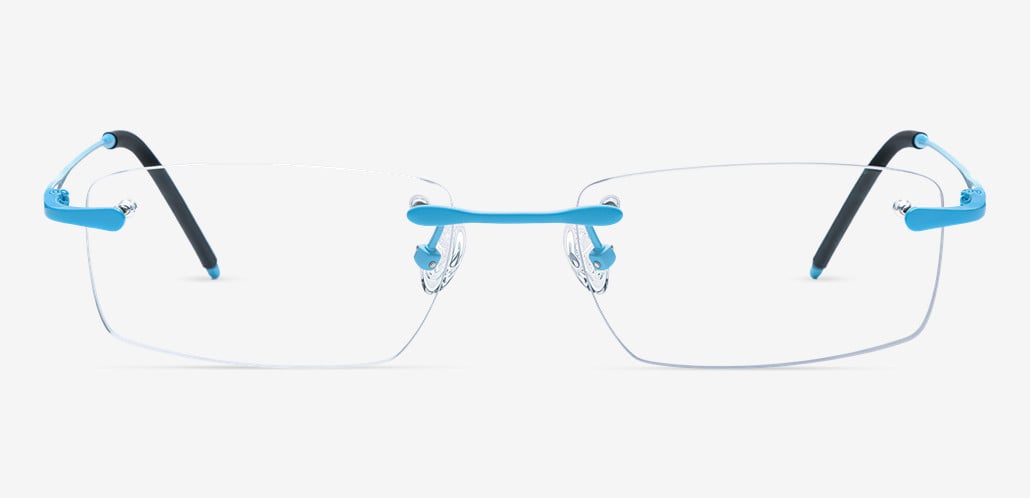
1. Is the rim thinner than the lens is thick? This is the fastest filter. Y2K metal frames used wire so fine it reads as a drawn line rather than a border. If the rim has visible mass — if you would describe it as a "frame" before you described the lens — you are looking at a different decade.
2. Is the lens shorter than it is tall by a wide margin? Divide the lens width by the lens height. Y2K rectangles usually land between 1.5 and 1.9. Modern rectangles land closer to 1.2 to 1.4. A frame that measures 52 × 40 mm is not a Y2K shape no matter what color it is.
3. Is the hardware cool-toned and reflective? Silver, chrome, gunmetal, and pale gold dominated. Warm brown acetate, honey tortoiseshell, and matte finishes belong to the decades on either side.
4. Where do the temples attach? On many 2000s frames the temple arms join high on the frame front — level with the top rim or above it — which is part of what makes them sit high on the face. Attachment at the mid-point of the lens is a later convention.
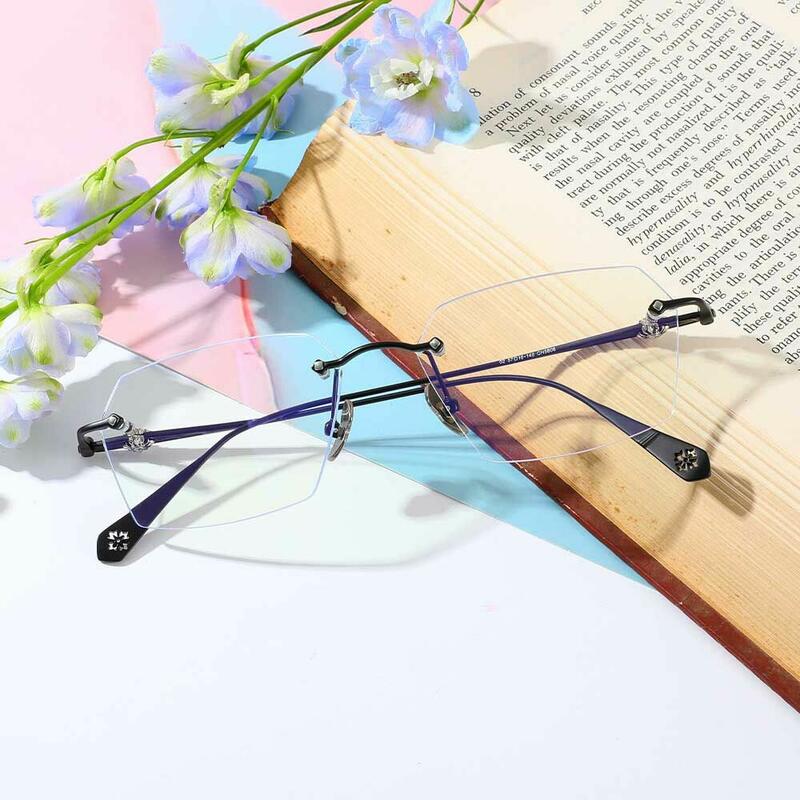
5. Is there any rim at all? Full rimless, with lenses drilled and bolted directly to a bridge and two temples, was mainstream in the early 2000s in a way it has not been since. Rimless alone is close to a positive identification.
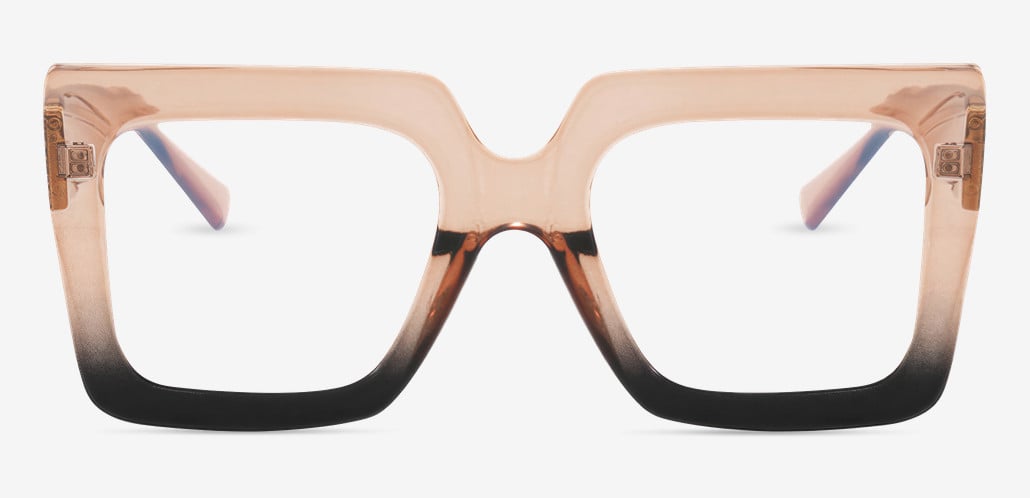
Instant disqualifiers. Thick acetate in any color. Round lenses of the wire-and-keyhole type. Oversized square frames. Heavy brow bars with a thin lower rim. Bold color-blocking. Every one of these belongs to a different revival.
Why frames shrank in the first place
Fashion writing usually stops at "it was a reaction against the 1990s." That is partly true, and it is also the least interesting half of the answer. The bigger driver was that the industry could suddenly build small frames that survived being worn.
Titanium and beta-titanium reached mass production. A rim under a millimeter thick is a structural problem: in ordinary metal it bends permanently the first time someone sits on it. Titanium alloys have a much higher strength-to-weight ratio and enough springback to return to shape, which is what made hairline rims commercially viable rather than merely fashionable. Nearly all of the surviving 2000s wire frames you will find in good condition are titanium or monel.
Drill-mount rimless became reliable. Rimless construction depends on drilling holes through a finished lens without cracking it and on hardware that will not loosen with daily flexing. Improvements in lens materials and in mount design made the process routine enough for high-street opticians rather than specialist workshops.
Thinner lens materials made small lenses look right. Higher-index plastics let a nearsighted prescription sit in a lens without the thick outer edge that had made small frames unattractive. Once a small lens could look flat and clean, small frames stopped being a compromise.
Sport eyewear crossed over. Wraparound shields from cycling and skiing pushed a narrow, close-to-the-face silhouette into general fashion, which is why the era's more aggressive shapes read as futuristic rather than retro.
Small frames were simply cheaper to make and ship during a period when eyewear was being sold hard as a seasonal accessory rather than a multi-year purchase.
Understanding this changes how you shop. The frames worth having from that era are the ones where the thin rim was engineered rather than merely styled — and the same holds for reissues today.

The era had three phases, not one look
People say "Y2K glasses" and picture different things depending on which year they are picturing. It helps to know which phase you actually want.
Roughly 1997–2000: the small oval. Tiny, rounded, sitting high on the face, in fine metal or thin dark plastic. This is the most extreme version of the aesthetic and the one that reads most obviously as a costume if the rest of your look leans retro. It is also the phase that returned first in the current revival.
Roughly 2000–2003: the wire rectangle and full rimless. Slim rectangular lenses in hairline gold or silver; rimless with drilled lenses; the occasional semi-rimless where the lower half of the lens is held by nylon cord. This is the most wearable phase and the one that translates cleanly to an office. If you want Y2K glasses you will still be wearing in three years, this is the phase to buy.
Roughly 2003–2006: the tinted and the wrapped. Frames grew slightly, picked up light lens tints in rose, amber, and blue-gray, and borrowed the wraparound curve from sport eyewear. Logos got larger. This phase is having its own separate revival and is often mislabeled as either Y2K or as 2010s.
Buying vintage versus buying new
A lot of people searching for Y2K glasses end up on resale platforms, and this is where the money gets wasted. A frame from 2002 has had twenty-plus years to develop problems that photographs hide.
What to check before you pay:
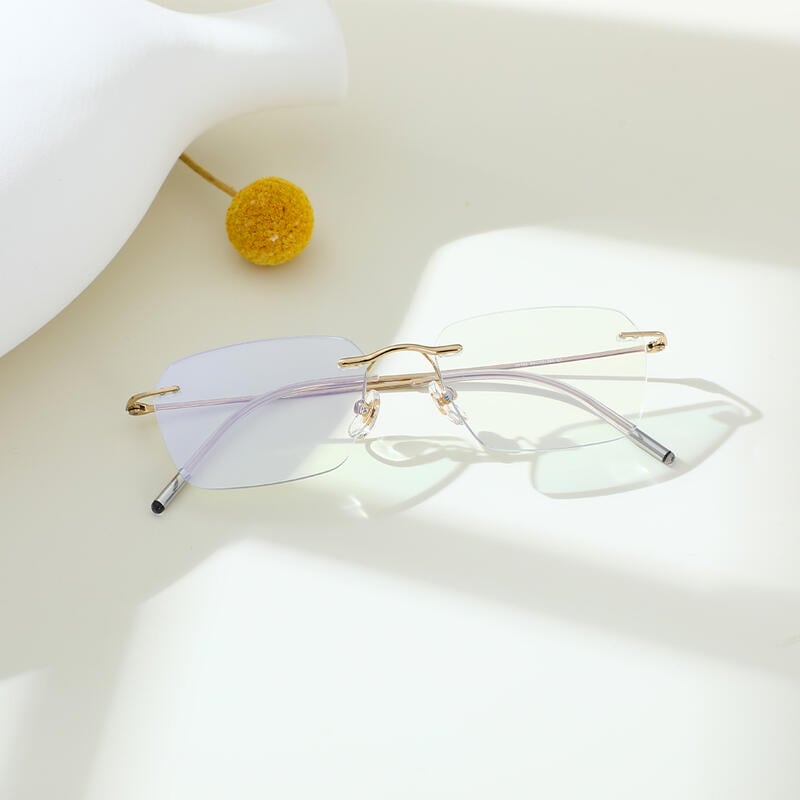
Hinge play. Open and close the temples. Any side-to-side wobble means the barrel has worn, and rebuilding a worn barrel on a hairline metal frame is often more expensive than the frame.
Plating wear at the bridge and behind the ears. These are the contact points. Once plating is through to base metal, corrosion spreads and can trigger skin reactions on nickel-containing alloys.
Nose pad condition. Silicone pads harden and yellow. They are replaceable — but on some proprietary 2000s mount designs the replacements no longer exist, and you will be gluing on generic pads that never sit quite right.
Screw corrosion at rimless mounts. On drill-mount frames the screws pass through the lens itself. Seized or rusted screws mean the old lenses may not come out without cracking, and a cracked lens can chip the mount hole.
Whether a lab will work with it. This is the one most people miss. Many optical labs decline to edge new lenses into vintage drill-mount frames, because if the lens cracks during mounting, the liability is theirs and the frame is irreplaceable. Ask before you buy, not after.
Missing measurements. Frames from that period were less consistently stamped. Without a lens width and bridge number, fitting becomes guesswork.
What buying new gets you instead: current-spec hinges and pads, published measurements, replaceable parts, a lab that will actually cut lenses for the frame, and a return path if the shape does not suit you. The trade-off is that a reissue is an interpretation rather than an artifact. If you want the era's silhouette to wear daily, new is the practical answer; if you want a specific frame from a specific year as an object, vintage is the only answer.

What tiny lenses actually do to your vision
This is where Y2K glasses stop being a style question, and where most articles on the subject go quiet.
Your clear field of view shrinks — but less than you would guess. Central vision does the vast majority of the work in reading, screens, and driving, and that is handled by the middle of any lens. What you lose with a short lens is the corrected periphery: glancing down or to the side more often takes you past the lens edge, so you see an uncorrected, blurrier version of the world at the margins. Most people adapt within days by moving their head slightly more. Some never fully stop noticing it.
A strong nearsighted prescription is often better in a small frame. A minus lens is thin at the center and thickens toward the edge, so the further the lens extends from its center, the thicker the rim gets. Shrink the lens and you cut the distance over which that thickening can happen. Someone who has been told their prescription is too strong for the frames they like may find a small Y2K shape is the exception rather than the problem.
Progressive lenses usually will not fit. A progressive lens needs vertical distance below your pupil for vision to transition smoothly from far to near — commonly around 30 mm of lens height, with modern short-corridor designs needing somewhat less. Most Y2K shapes do not have it. The result of forcing it is not a mild compromise; it is a narrow reading zone that feels like looking through a keyhole. Taller Y2K-adjacent rectangles are the workaround, and lens height is the number to check.
Pupillary distance matters more, not less. Your optical centers have to land in front of your pupils. A narrow lens gives a lens edger less room to shift the optical center sideways, so a PD that is off by a few millimeters produces a noticeable pulling sensation in a small frame where a larger one would have absorbed the error. If you are ordering online in this shape, get your PD right. Aoolia's opticians check it against the frame's dimensions on every prescription order for exactly this reason.
Rimless has its own limit. Drill-mounting needs enough lens thickness at the mount holes to hold a bolt. Very strong prescriptions in the thinnest lens materials can end up too thin at the edge to drill safely, which is a manufacturing constraint rather than a preference.

Will Y2K glasses still look current next year?
Splitting the aesthetic into its three phases makes this easier to answer honestly.
The wire-thin rectangle in gold, silver, or gunmetal is the low-risk purchase. That silhouette has cycled in and out of professional wardrobes for thirty years and never reads as a costume. Buy this one if you want a single pair to wear daily.
Rimless is mid-risk. It is unmistakably of its moment right now, and it is also the most quietly flattering option for anyone who dislikes the way frames divide their face.
The extreme micro oval is the volatile one. It is the shape that will date fastest, because it is the shape that carries the most era-specific signal. That is not a reason to avoid it — it is a reason to treat it as a second pair rather than your only one, and to keep the spend proportionate.
Wearing them without looking like you're in costume
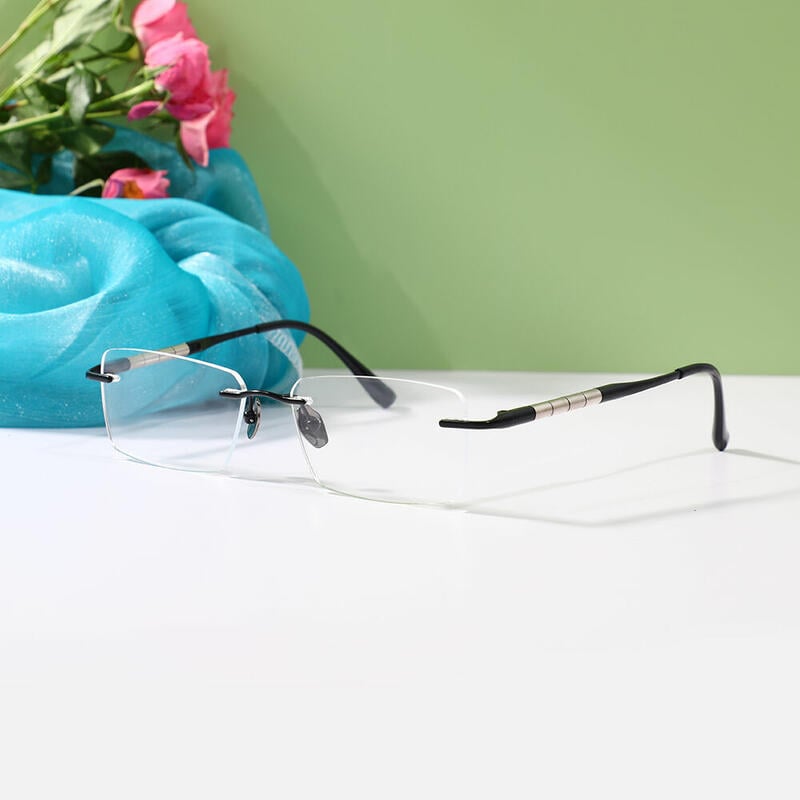
The failure mode is stacking signals. Y2K glasses paired with a full early-2000s outfit reads as a themed event; the same glasses with contemporary clothing read as a deliberate choice.
Keep tint honest about its job. A light tint at 20–40% density gives the era's look while staying wearable indoors. Past about 60%, you own sunglasses, and wearing them inside is where the costume effect kicks in.
Watch the brow line. Because these frames sit high, the top rim can land directly on your eyebrows, which flattens your whole expression. Sizing up a few millimeters in lens height fixes it without losing the silhouette.
Metal temperature matters more than shape. Silver and gunmetal read as neutral and modern; heavy yellow gold pushes hard toward pastiche. If you are uncertain, cool-toned metal is the safer first purchase.

Quick answers
What counts as "small" in a Y2K frame? A lens width of 48 mm or under, paired with a lens height of 30 mm or under. Either number alone is not enough — a 46 mm-wide lens that is 38 mm tall is a small modern frame, not a Y2K one.
Are Y2K glasses unisex? Largely yes, and they were sold that way at the time. Frame width is the variable that matters, not gendered styling: look for a total width of 138 mm or more for a broader face, and 132 mm or under for a narrower one.
Do I need a prescription to buy them? No. Any of these frames can be ordered with clear non-prescription lenses or with a light tint, which is how a good share of people wear the style. A prescription just makes the same frame do more.
Can you put lenses in a thrifted pair? Sometimes. Full-rim metal frames in good condition are usually straightforward. Drill-mount rimless frames are the risky category, and many labs will decline them. Confirm with a lab first.
Is "2000s glasses" the same search as "Y2K glasses"? Effectively yes for shopping purposes, though "2000s glasses" pulls in more of the later, chunkier, tinted phase, and "Y2K glasses" skews toward the thin metal and rimless years.

Where to go from here
If you want the shape and nothing more, start with a wire-thin rectangle in silver or gunmetal and non-prescription lenses. If you want it as your everyday glasses, work backwards from the numbers instead: find your current frame's lens width and total width, stay within a few millimeters, and check lens height before anything else.
Browse Y2K glasses with all four measurements listed on every frame, or read how to read your glasses prescription if you are ordering with an Rx for the first time. Related shapes worth a look: clear glasses, metal glasses, and non-prescription glasses.